
2027 What Does an EHS Manager Do: Responsibilities, Requirements, and Salary

Co-Founder and Chief Data Scientist
Choosing a career in environmental health and safety means choosing work that sits at the intersection of operations, compliance, worker protection, and environmental responsibility. EHS managers help organizations prevent injuries, meet regulatory obligations, reduce environmental risk, and build safer systems before problems become costly incidents.
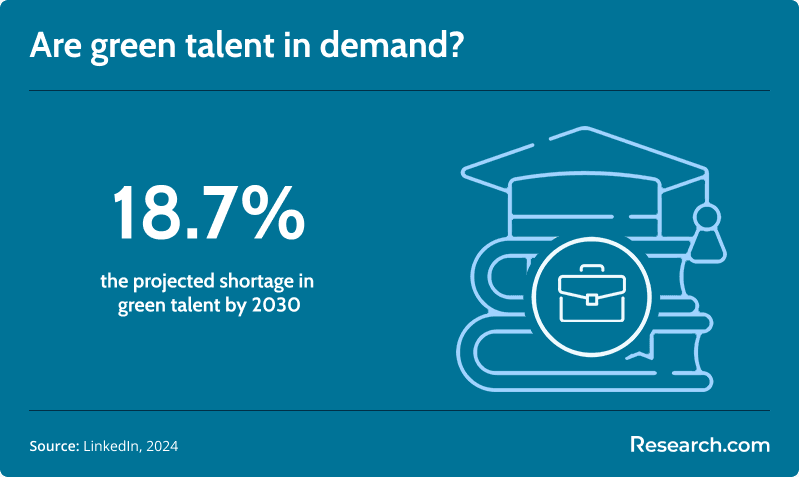
The role matters because safety and environmental failures can lead to fines, shutdowns, lawsuits, reputational damage, and serious harm to employees or communities. At the same time, companies are under growing pressure to document sustainability practices, manage emissions and waste, and use safety data more effectively. According to the U.S. Bureau of Labor Statistics (BLS), employment of health and safety engineers—one of the closest benchmark roles to EHS managers—is projected to grow 4% from 2024 to 2034, about as fast as the national average.
This guide explains what EHS managers do, where they work, what qualifications employers typically look for, how long the career path can take, what skills matter most, and how earnings vary by experience and industry.
Key Things You Should Know About Environmental Health and Safety Management
- EHS managers play a central role in workplace safety and environmental compliance. They oversee programs that protect employees, ensure adherence to OSHA and EPA regulations, and promote sustainable business operations across sectors.
- The average EHS manager salary in the U.S. is about $94,320 per year, with experienced professionals earning over $120,000 depending on industry and region.
- Most EHS managers hold at least a bachelor’s degree in environmental science, engineering, or occupational health. Certifications such as CSP (Certified Safety Professional) or CHMM (Certified Hazardous Materials Manager) can significantly enhance advancement opportunities.
What does an EHS manager do on a typical workday?
An EHS manager oversees the systems that keep a workplace safe, legally compliant, and environmentally responsible. A typical workday may include reviewing incident reports, walking a site to identify hazards, meeting with operations leaders, updating safety procedures, preparing for audits, and training employees on required practices.
The work is both field-based and analytical. An EHS manager may spend part of the day inspecting equipment, checking chemical storage areas, or observing job tasks, then shift to analyzing injury trends, reviewing environmental records, or documenting corrective actions in an enterprise EHS platform.
Common daily tasks
- Conducting inspections: Checking work areas, equipment, storage practices, emergency exits, and environmental controls for hazards or compliance gaps.
- Reviewing incident and near-miss data: Looking for patterns that point to root causes, weak controls, or training needs.
- Coordinating corrective actions: Working with supervisors, maintenance teams, engineers, and HR to fix unsafe conditions and prevent recurrence.
- Training employees and managers: Explaining safety procedures, emergency response steps, reporting expectations, and job-specific risks.
- Preparing for audits and inspections: Maintaining records, permits, logs, and evidence that the organization follows required standards.
- Supporting sustainability goals: Helping manage waste, reduce emissions, improve resource use, and align environmental practices with business operations.
The best EHS managers do more than enforce rules. They translate regulations into practical workplace systems, help leaders understand risk, and make safety part of everyday decision-making.
Which industries employ EHS managers the most?
EHS managers are needed wherever organizations face safety hazards, environmental obligations, hazardous materials, complex operations, or regulatory oversight. Heavy industry employs many EHS professionals, but the role is also common in healthcare, laboratories, logistics, corporate campuses, and sustainability-focused organizations.
- Manufacturing and construction: These employers focus on machinery hazards, fall prevention, chemical exposure, lockout/tagout procedures, contractor safety, and injury reduction.
- Healthcare and pharmaceuticals: EHS work often involves biological safety, infection control support, hazardous waste management, laboratory safety, radiation or chemical protocols, and employee exposure prevention.
- Energy and utilities: EHS managers help with emissions monitoring, spill prevention, environmental remediation, confined-space safety, electrical hazards, and regulatory reporting.
- Professional services and corporate offices: Responsibilities may include ergonomics, emergency preparedness, indoor air quality, sustainability reporting, office safety, and laboratory or R&D compliance.
- Logistics, warehousing, and transportation: EHS teams address vehicle safety, material handling, heat stress, warehouse ergonomics, hazardous materials transport, and high-volume incident reporting.
- Renewable energy and environmental services: These settings often combine field safety, environmental permitting, waste handling, remediation, and sustainability performance tracking.
Industry choice affects the daily work. A construction EHS manager may spend more time on active job sites, while a pharmaceutical EHS manager may focus more on lab controls, documentation, and hazardous material protocols. Candidates should compare industries by risk level, travel requirements, regulatory intensity, and preferred work environment.
What qualifications do you need to become an EHS manager?
Most EHS managers enter the field with a bachelor’s degree in environmental science, occupational safety, industrial engineering, public health, or a related technical discipline. Employers usually look for a mix of formal education, hands-on field experience, regulatory knowledge, and the ability to influence people who do not report directly to the EHS department.
Typical coursework may include environmental policy, toxicology, industrial hygiene, safety engineering, hazardous materials management, ergonomics, risk assessment, and environmental compliance. For leadership roles, some employers prefer candidates with graduate study or specialized training in environmental health and safety, public health, engineering management, or sustainability.
Certifications that can strengthen an EHS career
- Certified Safety Professional (CSP): Offered by the Board of Certified Safety Professionals, this credential is often associated with advanced safety management and can support progression into senior roles.
- Certified Industrial Hygienist (CIH): This credential is valuable for professionals focused on workplace exposure assessment, occupational health risks, and employee protection.
- Certified Hazardous Materials Manager (CHMM): This certification is useful for roles involving hazardous materials, waste management, environmental regulations, and compliance documentation.
Credentials alone are not enough. EHS managers must communicate clearly with executives, supervisors, frontline employees, auditors, and regulators. They also need strong judgment: the job often requires deciding which risks require immediate action, which controls are realistic, and how to build compliance without slowing operations unnecessarily.
How long does it take to become an EHS manager?
Becoming an EHS manager typically takes 4 to 6 years, depending on education, prior experience, industry, and the level of responsibility involved. A bachelor’s degree usually takes around four years, followed by entry-level work that builds practical knowledge of inspections, reporting, training, and corrective action management.
Many professionals spend 2 to 3 additional years in roles such as safety coordinator, environmental specialist, industrial hygiene technician, compliance analyst, or EHS specialist before moving into management. Highly regulated sectors such as energy, healthcare, manufacturing, and pharmaceuticals may require more experience because the consequences of compliance errors are higher.
Common timeline
- Years 1–4: Complete a relevant bachelor’s degree and seek internships, co-ops, fieldwork, laboratory experience, or safety-related campus roles.
- Years 4–6: Work in an entry-level or mid-level EHS position, learn applicable regulations, assist with audits, and build experience investigating incidents.
- After gaining experience: Pursue certifications, supervise projects or teams, lead training, manage compliance programs, and apply for EHS manager roles.
A graduate degree or focused certification may help some professionals advance faster, but it does not replace field experience. Employers want managers who can recognize hazards in real workplaces, communicate with employees under pressure, and defend their recommendations with data and documentation.
What are the core responsibilities of an EHS manager?
An EHS manager is responsible for building and maintaining the programs that protect workers, reduce environmental harm, and keep the organization compliant with applicable requirements. The role usually combines policy development, field oversight, employee training, documentation, incident response, and strategic risk management.
Main responsibility areas
- Safety management: Developing safety policies, conducting site inspections, leading incident investigations, organizing emergency drills, monitoring corrective actions, and helping reduce injuries and near misses.
- Environmental compliance: Ensuring the organization follows federal, state, and local requirements, including OSHA, EPA, and ISO standards where applicable. This may include permits, reporting, waste management, emissions control, spill prevention, and documentation.
- Health programs and training: Supporting programs related to ergonomics, exposure prevention, wellness, emergency preparedness, hazardous materials awareness, and job-specific safety training.
- Risk assessment: Identifying hazards, ranking risks, recommending controls, and tracking whether those controls are effective over time.
- Audit and regulatory readiness: Preparing records, responding to findings, managing inspections, and ensuring the organization can demonstrate compliance.
- Sustainability support: Working with operations, engineering, and leadership teams to reduce waste, improve resource use, and integrate environmental goals into business processes.
In manufacturing or energy settings, an EHS manager may work closely with engineers and plant leaders to design safer processes and reduce environmental impact. In office, healthcare, or research environments, the work may focus more on employee health, hazardous waste, laboratory safety, and documentation.
Professionals who combine compliance expertise with sustainability and technical problem-solving can qualify for broader leadership opportunities, especially in fields connected to environmental engineering salary potential.
What key skills make an effective EHS manager?
An effective EHS manager needs more than technical knowledge. The role requires credibility with frontline workers, enough regulatory fluency to protect the organization, and enough business judgment to recommend practical controls that leaders will actually implement.
- Regulatory expertise: EHS managers must understand OSHA, EPA, ISO 45001, and other relevant standards well enough to apply them to real operations, not just quote requirements.
- Risk analysis and problem-solving: Strong managers can interpret incident data, perform root-cause analysis, prioritize hazards, and design preventive actions that reduce repeat problems.
- Communication: The role involves explaining technical and legal issues to executives, supervisors, contractors, regulators, and employees with different levels of expertise.
- Leadership and influence: EHS managers often must change behavior without direct authority over every team. They need to build trust, coach supervisors, and hold people accountable.
- Technical proficiency: Familiarity with environmental monitoring systems, EHS software, mobile inspection tools, safety databases, and audit platforms is increasingly important.
- Documentation discipline: Compliance depends on accurate records. Reports, permits, training logs, inspection notes, and corrective action evidence must be complete and defensible.
- Strategic thinking: Strong EHS leaders connect safety and environmental performance to productivity, cost control, risk reduction, sustainability, and reputation.
A common mistake is treating EHS as a checklist function. In mature organizations, EHS managers use data, coaching, and operational insight to prevent problems before they become recordable incidents, violations, or environmental releases.
What are the biggest challenges EHS managers face in 2027?
EHS managers face a more complex operating environment in 2027 because safety, environmental compliance, sustainability, and workforce engagement are increasingly connected. Organizations expect EHS leaders to prevent incidents, support ESG-related goals, respond to regulatory change, and produce reliable data for internal and external stakeholders.
- Rapid regulatory changes: Updates to OSHA and EPA requirements can require policy revisions, retraining, new documentation practices, and faster coordination across departments.
- Sustainability pressures: Companies are expected to reduce environmental impact while maintaining productivity, which can create difficult trade-offs around cost, equipment, staffing, and process redesign.
- Data management: Digital reporting gives EHS teams more visibility, but it also requires clean data, consistent reporting habits, and the ability to turn dashboards into decisions.
- Workforce engagement: Safety programs fail when employees see them as paperwork or punishment. High turnover, multiple worksites, contractors, and language barriers can make consistent engagement harder.
- Climate and operational resilience: Extreme weather, heat exposure, supply chain disruption, and emergency preparedness can expand the scope of EHS planning.
- Balancing enforcement with partnership: EHS managers must correct unsafe behavior while maintaining enough trust for employees to report hazards and near misses honestly.
These challenges make the EHS manager a strategic partner, not only a compliance officer. The strongest professionals can connect regulatory obligations with business continuity, employee trust, environmental stewardship, and long-term risk reduction.
What technologies and tools do EHS managers use today?
Modern EHS programs rely on digital tools to improve visibility, speed up reporting, standardize audits, and analyze risk trends. Technology does not replace field judgment, but it helps managers identify patterns and document compliance more efficiently.
- EHS management software: Platforms like Intelex, VelocityEHS, and Enablon centralize incident reporting, compliance calendars, audits, training records, corrective actions, and performance metrics.
- Mobile inspection apps: These tools allow supervisors and EHS staff to document hazards, attach photos, assign corrective actions, and report field observations in real time.
- Data analytics dashboards: Dashboards help teams track incident trends, near misses, audit findings, emissions data, training completion, and recurring risk areas.
- Wearable safety devices: Wearables may be used to monitor heat, noise, location, fatigue, or potential exposure to hazardous conditions, depending on the workplace.
- Environmental monitoring tools: Air sampling devices, water testing equipment, gas monitors, and emissions tracking systems support compliance and exposure control.
- GIS and drone technology: These tools can help map environmental risks, inspect difficult-to-access areas, and document site conditions in construction, utilities, resource extraction, and remediation work.
Technology is most useful when the underlying safety culture is strong. If employees do not report near misses, complete inspections honestly, or close corrective actions, even the best system will produce weak data. EHS professionals who understand both field conditions and data tools are well positioned as environmental analytics becomes more connected to sustainability planning and programs such as urban planning degree online pathways.
What career paths are available for experienced EHS managers?
Experienced EHS managers can move into senior leadership, consulting, training, sustainability, risk management, or specialized technical roles. The right path depends on whether the professional wants to manage people, advise multiple organizations, deepen technical expertise, or shape corporate environmental strategy.
- Corporate EHS Director: Oversees safety and environmental programs across multiple sites, manages regional or divisional teams, sets policy, and reports performance to senior leadership.
- Sustainability Officer: Leads corporate sustainability initiatives, carbon reduction efforts, environmental reporting, and long-term resource management strategies.
- Risk Management Consultant: Advises organizations on compliance gaps, resilience planning, incident prevention, audit readiness, and industry-specific hazards.
- Health and Safety Trainer: Designs and delivers training for employees, supervisors, contractors, or professionals preparing for OSHA- or EPA-related compliance responsibilities.
- Industrial Hygiene or Environmental Compliance Specialist: Focuses on exposure assessment, hazardous materials, permitting, waste management, or emissions documentation.
- Policy, academic, or public-sector roles: Experienced professionals may contribute to regulation, teach future EHS practitioners, or work on community and environmental protection programs.
Professionals with interdisciplinary backgrounds can bring useful perspectives to EHS leadership. For example, those who understand human behavior, community impact, and organizational culture—including people exploring anthropology degree jobs—may be especially effective in roles that require employee engagement, stakeholder communication, or sustainability change management.
What are the educational requirements to become an EHS manager?
Most EHS managers hold at least a bachelor’s degree in environmental science, occupational health, engineering, public health, industrial hygiene, or a related field. Because EHS work is technical and compliance-driven, employers generally prefer candidates who can understand regulations, evaluate hazards, interpret data, and communicate corrective actions clearly.
- Bachelor’s in Environmental or Occupational Health: Prepares students in risk assessment, toxicology, industrial safety, environmental regulations, and workplace health protection.
- Engineering degrees: Build technical skills in process design, systems control, safety engineering, environmental controls, and hazard prevention.
- Public health or industrial hygiene programs: Emphasize exposure assessment, epidemiology, workplace health risks, and prevention strategies.
- Master’s degrees or graduate certificates: Programs in environmental management, environmental health and safety, public health, or sustainability can support advancement into leadership roles.
Professional certifications such as the Certified Safety Professional (CSP), Certified Industrial Hygienist (CIH), or Certified Hazardous Materials Manager (CHMM) can improve credibility and advancement potential, especially after a candidate has gained field experience.
Students should also look for programs that offer internships, lab work, field safety exposure, compliance projects, or partnerships with employers. Specialized scientific preparation can be useful in areas such as environmental risk modeling, energy systems, and technical compliance; related academic paths may include options connected to the best online physics degree or sustainability engineering tracks.
Continuing education is essential because regulations, reporting systems, technologies, and sustainability expectations change over time. EHS managers who stop learning can quickly fall behind in both compliance and leadership practice.
How much can you earn as an EHS manager?
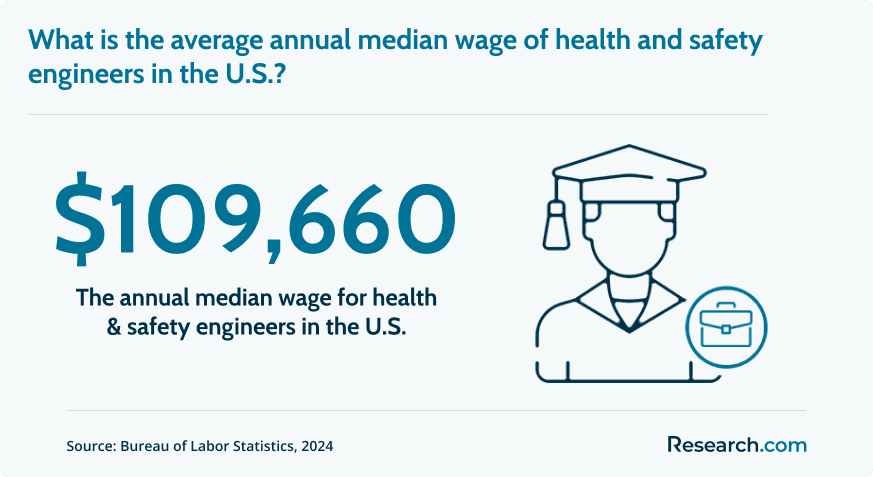
In 2025, EHS managers earn a median annual salary of approximately $104,000, according to U.S. Bureau of Labor Statistics data. Actual pay can vary widely by industry, employer size, location, risk level, education, certifications, and years of experience.
- Entry-level: $65,000–$80,000 per year, often in smaller organizations or support roles.
- Mid-career: $90,000–$120,000, typically reflecting greater program responsibility, stronger technical skills, and certification progress.
- Senior/Director-level: $130,000–$160,000 or more, especially in high-risk industries such as energy, pharmaceuticals, and manufacturing.
Regional differences also matter. EHS managers in states like California and Texas often command top salaries because of stricter environmental regulations and high industry density. Roles that involve multi-site responsibility, hazardous materials, environmental permitting, incident prevention in high-risk operations, or ESG-related reporting may also pay more than narrowly focused coordinator roles.
Professionals with technical or scientific expertise may find their compensation aligns with natural sciences masters salary ranges, particularly when they combine compliance leadership with sustainability analytics, environmental monitoring, or risk modeling.
Here’s What Graduates Have to Say About Their Path Into EHS Leadership
- Shawn: "I used to only think safety programs meant PPE, but I now track leading indicators, near-miss reporting quality, and ergonomic exposure like a portfolio manager looks at risk. I learned to argue using data, not just precaution. The most satisfying moment so far was when an executive said, ‘This is the first time I’ve been shown a forecast instead of a safety lecture.’ That is when I knew I was not only doing compliance — I was influencing strategy."
- Jacqueline: "Environmental compliance became simpler once I understood permitting, reporting thresholds, and what regulators actually care about. The science didn’t intimidate me after the certification modules — it empowered me. I now work with people who manage millions in emissions control budgets. I walk into meetings and I feel legitimate."
- Charlie: "Environmental compliance became simpler once I understood permitting, reporting thresholds, and what regulators actually care about. The science didn’t intimidate me after the certification modules — it empowered me. I now work with people who manage millions in emissions control budgets. I walk into meetings and I feel legitimate."
Key Findings
- EHS managers help organizations protect workers, meet environmental and safety obligations, reduce risk, and support sustainability goals.
- The role is common in manufacturing, construction, healthcare, pharmaceuticals, energy, utilities, logistics, professional services, and research settings.
- Most EHS managers need a relevant bachelor’s degree, field experience, and strong knowledge of safety and environmental regulations.
- Becoming an EHS manager typically takes 4 to 6 years, with many professionals gaining experience first as safety coordinators, EHS specialists, environmental specialists, or compliance analysts.
- Certifications such as CSP, CIH, and CHMM can strengthen advancement prospects, especially for professionals pursuing leadership or specialized compliance roles.
- In 2025, EHS managers earn a median annual salary of approximately $104,000, with senior or director-level roles reaching $130,000–$160,000 or more in some high-risk industries.
- The most competitive EHS managers combine regulatory expertise, communication, data analysis, leadership, technical tools, and practical field judgment.
Other Things You Should Know About EHS Management
An EHS manager typically needs a bachelor's degree in environmental science, occupational health, or a related field. Some positions may require advanced degrees or specific certifications like the Certified Safety Professional (CSP) or Certified Industrial Hygienist (CIH) in 2027.
In 2027, EHS managers should be proficient in using data analytics platforms, compliance management systems, and mobile inspection software. These tools help streamline safety procedures, ensure regulatory compliance, and enable effective incident tracking and reporting. **Question** What are the key responsibilities of an EHS manager in 2027? **Answer** In 2027, EHS managers are responsible for creating safety policies, ensuring regulatory compliance, conducting risk assessments, and fostering a culture of safety within organizations. They also need to manage incident investigations and implement corrective actions to mitigate future risks.
References
- Bureau of Labor Statistics. (2024). Health and safety engineers. U.S. Department of Labor. https://www.bls.gov/ooh/architecture-and-engineering/health-and-safety-engineers.htm#tab-1
- Bureau of Labor Statistics. (2024). Environmental scientists and specialists. U.S. Department of Labor. https://www.bls.gov/ooh/life-physical-and-social-science/environmental-scientists-and-specialists.htm
- Bureau of Labor Statistics. (2024). Environmental engineers. U.S. Department of Labor. https://www.bls.gov/ooh/architecture-and-engineering/environmental-engineers.htm
- Bureau of Labor Statistics. (2024). Occupational employment and wage statistics (OES) profile. U.S. Department of Labor. https://data.bls.gov/oesprofile/
- Energy.gov. (2024). DOE report shows clean energy jobs grew more than twice the rate of overall U.S. employment. U.S. Department of Energy. https://www.energy.gov/articles/doe-report-shows-clean-energy-jobs-grew-more-twice-rate-overall-us-employment
- GreenBiz Group. (2024). State of the sustainability profession 2024. https://info.greenbiz.com/rs/211-NJY-165/images/State%20of%20the%20Sustainability%20Profession%202024.pdf
- Zippia. (2024). EHS manager jobs. https://www.zippia.com/ehs-manager-jobs/


