
2027 Which Schools Offer Flexible Start-Anytime Enrollment for a Forensic Accounting Program?

Co-Founder and Chief Data Scientist
Choosing a forensic accounting program is not only about the curriculum. For many adults, the bigger question is whether school can fit around work schedules, family obligations, military service, tax-season workloads, or a career change already in progress. Start-anytime enrollment can make that possible by reducing the wait between deciding to enroll and actually beginning coursework.
This guide explains how start-anytime forensic accounting programs usually work, what to confirm before applying, and where flexible enrollment can create both advantages and complications. Nearly 45% of adult learners prefer programs with flexible start dates, and that preference matters in a field where many students are already employed in accounting, finance, compliance, auditing, or business operations.
You will learn how rolling admissions, transfer credit reviews, online formats, modular terms, tuition billing, accreditation, and employer perception affect the value of a flexible forensic accounting degree. The goal is to help you decide whether a start-anytime program is convenient, credible, and aligned with your career plans.
Key Benefits of Flexible Start-Anytime Enrollment for a Forensic Accounting Program
- Flexible start-anytime enrollment allows students to begin forensic accounting programs monthly, avoiding rigid academic terms and enabling immediate skill development.
- These programs often use accelerated or self-paced formats, helping working adults balance education with careers and personal commitments effectively.
- According to industry data, online forensic accounting enrollment increased by 20% annually, reflecting demand for flexible scheduling among career changers and professionals.
What Does "Start Anytime" Mean in a Forensic Accounting Program?
In a forensic accounting program, “start anytime” usually means the school offers multiple entry points during the year instead of requiring every student to begin in a traditional fall, spring, or summer semester. It does not always mean a student can apply today and begin tomorrow. Application review, transcript evaluation, financial aid processing, and course availability can still affect the actual start date.
For working adults and career changers, the main benefit is reduced waiting time. A student who misses a standard semester deadline may not need to delay enrollment for several months. Instead, the program may offer monthly, quarterly, rolling, or module-based start dates.
How flexible enrollment usually works
- Rolling admissions: Applications are reviewed continuously or in frequent cycles rather than only once or twice a year.
- Modular coursework: Classes may be divided into shorter units that begin at different points throughout the year.
- Online course access: Many programs provide 24/7 access to readings, lectures, assignments, and discussion boards.
- Individualized pacing: Students may be able to take one course at a time, study part time, or move faster if the program permits heavier course loads.
- Continuous advising: Advising is often available beyond the traditional semester calendar because students enter at different times.
The best start-anytime programs make expectations clear before enrollment. Students should ask whether courses are self-paced, instructor-led, asynchronous, synchronous, or offered in fixed modules. These differences affect workload, deadlines, interaction with faculty, and how quickly a student can complete the degree.
Flexible forensic accounting programs are part of a broader shift toward adult-friendly online education. Students comparing flexible graduate options in other fields may also see similar scheduling models in online EdD programs.
What Are the Admission Requirements for Start-Anytime Forensic Accounting Programs?
Admission requirements for start-anytime forensic accounting programs are usually similar to those for traditional accounting or forensic accounting degrees. The enrollment calendar may be more flexible, but reputable schools still review academic preparation, prior coursework, and professional readiness.
Common admission requirements
- Prior education: Most programs require a bachelor's degree, often in accounting, business, finance, or a related field. Applicants without an accounting background may need prerequisite coursework before starting advanced forensic accounting classes.
- Minimum GPA: Many programs require a minimum GPA of 2.5 to 3.0. Some schools may review applicants below that range if they have strong professional experience, later academic improvement, or relevant certifications.
- Standardized tests: GMAT or GRE scores are less commonly required for start-anytime forensic accounting programs. However, applicants should verify each school’s policy because test requirements can vary by institution and degree level.
- Professional experience: Some programs ask for a resume showing experience in accounting, auditing, fraud examination, compliance, banking, law enforcement, or financial analysis. Experience may strengthen an application, especially for graduate-level study.
- Supporting documentation: Applicants commonly submit official transcripts, letters of recommendation, a resume, a statement of purpose, and proof of prerequisite coursework or certifications related to accounting principles, auditing, taxation, or business law.
What applicants should confirm before applying
Flexible enrollment does not remove the need for careful planning. Before submitting an application, students should ask whether admission is rolling, whether incomplete applications are held for the next start date, and whether prerequisite courses can be completed after admission. This is especially important for career changers who may not have a full accounting background.
Applicants should also check how quickly the school processes transcripts and whether financial aid deadlines differ from course start deadlines. A program may advertise frequent start dates, but a student cannot begin smoothly if admissions, advising, and payment steps are not completed in time.
Students comparing flexible degree formats outside accounting can review programs such as an accelerated psychology degree online to understand how other disciplines handle adaptable scheduling.
Can Transfer Students Enroll Immediately in Start-Anytime Forensic Accounting Programs?
Transfer students may be able to enroll quickly in start-anytime forensic accounting programs, but immediate enrollment is not guaranteed. The main factor is how long the school takes to evaluate prior credits and determine whether the student has met prerequisites for upper-level accounting, auditing, fraud examination, or investigative coursework.
For transfer students, “start anytime” should be understood as “start after admission, credit review, and course placement are complete.” A fast enrollment calendar cannot replace the academic review required to protect degree quality.
What can speed up or delay a transfer start date
- Credit evaluation: Schools review official transcripts to decide which courses meet program requirements. This can take several weeks, particularly if syllabi or course descriptions are needed.
- Prerequisite alignment: Transfer students must show that prior coursework matches required accounting foundations. Missing prerequisites can delay enrollment in advanced forensic accounting courses.
- Application timing: Students who submit complete applications, official transcripts, and financial aid materials early are more likely to enter the next available module or term.
- Enrollment eligibility: Some programs reserve immediate starts for new first-year students or non-transfer applicants, while transfer students may need to wait for a specific term after credit approval.
- Course sequencing: Even if admission is approved, certain courses may only be available in a set order. This can affect how quickly a transfer student can progress.
When asked about her experience, one forensic accounting graduate said her transfer process was “more complex than expected.” She waited several weeks for official credit approval while trying to determine whether she would meet the next start date. “I thought start-anytime meant instant entry, but the credit review pace was the real bottleneck,” she said. In hindsight, she appreciated the careful evaluation because it clarified which additional courses she needed. Her advice to new transfer students was to gather transcripts early, request syllabi when possible, and communicate regularly with advisors.
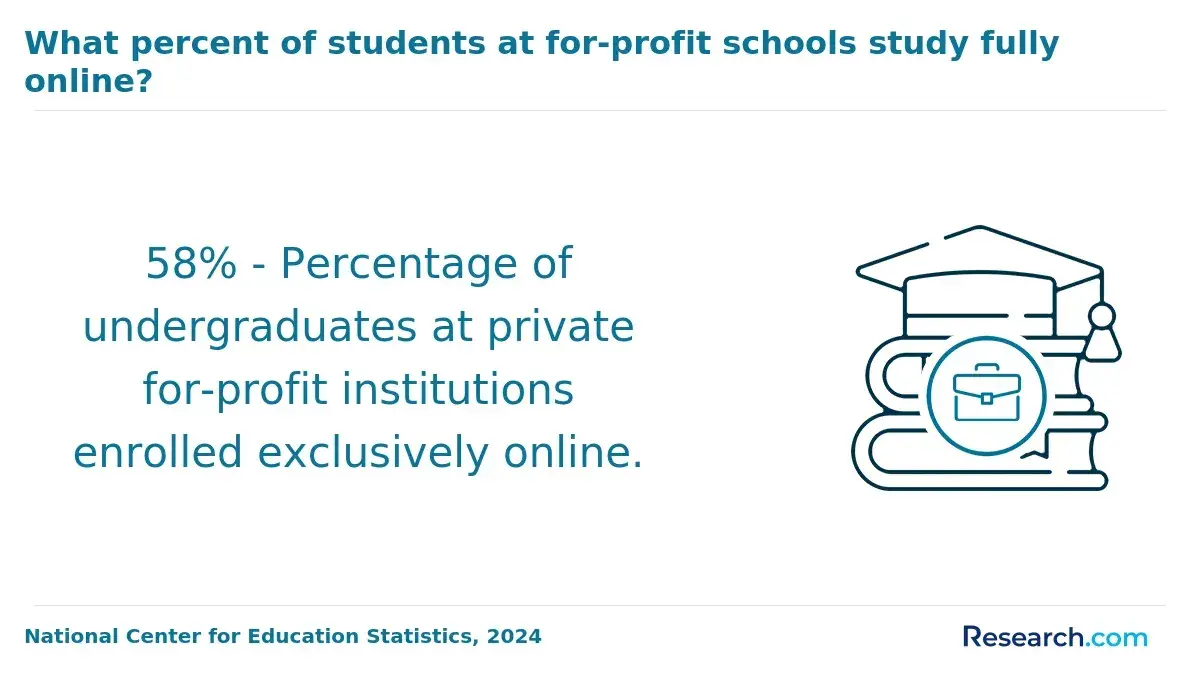
Breakdown of Private Fully Online For-profit Schools

Are Start-Anytime Forensic Accounting Programs Offered in Both Online and On-Campus Formats?
Start-anytime forensic accounting programs are most commonly offered online. Online delivery makes rolling enrollment easier because course materials, discussion boards, assignments, and assessments can be organized in shorter modules or asynchronous formats. On-campus start-anytime options exist less often because classroom space, faculty schedules, and cohort-based course sequencing are harder to adjust throughout the year.
Online vs. on-campus flexible enrollment
| Format | How start-anytime enrollment typically works | Best fit |
| Online | Students may begin at several points during the year, often through asynchronous or modular classes. | Working adults, students with long commutes, military learners, caregivers, and career changers who need schedule control. |
| Hybrid | Some coursework is online, while selected meetings, labs, exams, or residencies may occur on campus or live online. | Students who want flexibility but also value structured interaction with faculty and classmates. |
| On-campus | Rolling admission may be available, but courses usually follow fixed meeting times and traditional academic calendars. | Students who live near campus and prefer face-to-face learning, predictable class times, and in-person support. |
What to check before choosing a format
- Class schedule: Confirm whether online courses are fully asynchronous or require live attendance at set times.
- Exam requirements: Ask whether exams are proctored online, scheduled live, or completed on campus.
- Technology expectations: Forensic accounting courses may involve spreadsheets, data analysis tools, audit documentation, or case-based assignments. Students should confirm software and computer requirements.
- Student support: Flexible programs should still offer advising, tutoring, library access, technical support, and career services.
- Networking opportunities: Online students should ask how the program supports faculty interaction, peer collaboration, internships, or employer connections.
For most students who specifically need start-anytime enrollment, online programs offer the strongest match. However, the delivery format should not be the only deciding factor. Accreditation, faculty experience, curriculum depth, transfer policy, and career alignment matter just as much as convenience.
How Does a Start-Anytime Forensic Accounting Program Structure Academic Terms and Course Modules?
Start-anytime forensic accounting programs usually replace the traditional long semester with shorter academic terms or rolling course modules. This structure allows students to begin sooner, focus on fewer courses at once, and build a schedule around work or personal obligations.
Common academic structures
- Rolling terms: Instead of waiting for a fixed semester, students may enter during short terms that begin throughout the year.
- Modular courses: Courses may be divided into focused units lasting between four to eight weeks. This format can help students concentrate on one subject area before moving to the next.
- Part-time pacing: Students may take one course at a time to manage work, caregiving, or other commitments.
- Full-time pacing: Students with more availability may take heavier course loads if the school permits it and if courses are offered in the right sequence.
- Asynchronous modules: Many online programs allow students to review lectures and complete assignments on their own weekly schedule, although deadlines still apply.
- Advisor-guided progression: Programs often monitor course completion and help students plan the next module so they do not miss prerequisites or required sequence points.
How modular scheduling affects learning
Shorter modules can be convenient, but they can also be intense. A forensic accounting course may cover fraud schemes, audit evidence, litigation support, financial statement analysis, internal controls, or investigative reporting in a compressed timeline. Students should expect steady weekly work, especially in quantitative or case-based courses.
The most successful students treat flexible programs as structured programs, not casual self-study. Before enrolling, ask for a sample course calendar, typical weekly workload, assignment types, and the policy for extensions or pauses. Flexibility is valuable, but it works best when students understand the rhythm of the program before they begin.
How Do Tuition Payment Schedules Work for Start-Anytime Forensic Accounting Programs?
Tuition payment schedules in start-anytime forensic accounting programs are often tied to the student’s specific enrollment date rather than a single semester-wide billing calendar. This can make payments more flexible, but it also requires students to track individualized deadlines carefully.
Students should not assume that flexible course starts automatically mean flexible payment terms. Each school sets its own billing rules, refund policies, financial aid disbursement schedule, and late-payment consequences.
Common payment models
- Per-term or per-module billing: Students pay for the specific term or course module they enter rather than an entire academic year upfront. This often matches course segments of 6 to 8 weeks.
- Installment plans: Some programs divide tuition into monthly or multi-payment schedules. These plans can help adult learners manage cash flow while working and studying.
- Enrollment-based due dates: Payment deadlines may be based on the chosen start date, with tuition due before access to course materials or before the module begins.
- Financial aid timing: Students using federal aid, scholarships, employer reimbursement, or private funding should ask when funds are applied and whether the aid calendar aligns with rolling starts.
Financial planning questions to ask
- Is tuition charged per credit, per course, per term, or per program?
- Are technology fees, online learning fees, books, software, or exam fees billed separately?
- What happens if a student pauses between modules?
- What is the refund deadline after a course begins?
- Can employer tuition reimbursement be applied after course completion?
- Will a delayed financial aid disbursement affect access to classes?
Reports show over a third of adult learners seek programs offering this type of flexibility, and modular tuition schedules have increased accordingly. Students should still compare the full cost of attendance, not only the convenience of the payment schedule. Those interested in flexible business education models can also review online EMBA options that use comparable scheduling or payment structures.
Do Start-Anytime Forensic Accounting Programs Accept Transfer Credits?
Many start-anytime forensic accounting programs accept transfer credits, but policies vary widely. Transfer credit can reduce the number of courses a student must complete, lower overall cost, and shorten time to graduation. However, schools usually limit how much credit can be applied and which courses qualify.
How transfer credit is usually reviewed
- Accreditation of the prior school: Programs typically prefer credits from accredited institutions. Credits from unaccredited schools may not transfer.
- Course equivalency: The school compares prior coursework with current degree requirements in accounting, auditing, fraud examination, business law, taxation, ethics, or data analysis.
- Grade requirements: Transfer courses usually must meet a minimum grade standard to count toward degree requirements.
- Credit age: Some schools may question older coursework, especially in areas affected by current regulations, technology, or accounting standards.
- Program limits: Most programs restrict the proportion of transferable credits, often allowing between 25% and 50% of the degree requirements to be met through prior study.
What transfer credits may not cover
Even when credits are accepted, students may still need to complete core forensic accounting courses through the new institution. Schools often require students to take advanced courses, capstones, major-specific requirements, or residency credits within the program to ensure graduates meet the program’s learning outcomes.
Transfer credits also do not always guarantee immediate placement into advanced courses. If prior accounting coursework does not align with the program’s prerequisites, students may need additional foundational classes before moving into fraud investigation, forensic auditing, litigation support, or financial analysis coursework.
A student who transitioned into a start-anytime forensic accounting degree after leaving another major described the transfer process as both hopeful and frustrating. “I appreciated that my previous courses were recognized because it meant I wasn’t starting from zero,” he explained, but he also noted that collecting transcripts and waiting for evaluations required patience. “I had to clarify some course content with advisors to make sure everything matched the forensic accounting curriculum.” Once credit approval was complete, the ability to begin classes soon after made the flexible format workable alongside his job.
Are Start-Anytime Forensic Accounting Degree Programs Accredited?
Start-anytime forensic accounting degree programs can be accredited, but students must verify accreditation before enrolling. Flexible start dates and online delivery do not determine quality by themselves. Accreditation is what helps confirm that the institution or program has been reviewed against recognized academic standards.
Types of accreditation to check
- Institutional accreditation: This applies to the college or university as a whole. Regional accrediting bodies such as the Middle States Commission on Higher Education (MSCHE) or the Higher Learning Commission (HLC) are widely recognized.
- Programmatic accreditation: This applies to a specific school, department, or program. For accounting and business programs, students may see accreditation from organizations such as the Association to Advance Collegiate Schools of Business (AACSB). Program-specific accreditation for forensic accounting is less common.
Accreditation matters because it can affect credit transfer, graduate school admission, employer recognition, and eligibility for certain forms of financial aid. It may also matter for professional certifications, including the Certified Fraud Examiner (CFE) credential, which often requires a degree from an accredited school.
Students comparing a forensic accounting pathway with a broader accredited online accounting degree should verify both institutional accreditation and whether the curriculum supports their intended career or certification goals.
How to verify accreditation
- Check the school’s official accreditation page, not only marketing materials.
- Confirm the accreditor’s name and current status through recognized accreditation databases or the accreditor’s own website.
- Ask whether the forensic accounting program itself has any business or accounting-related accreditation.
- Confirm whether credits from the program are likely to transfer to other institutions.
- Ask employers, certification bodies, or licensing authorities if the credential meets their requirements when your career goal depends on formal recognition.
A start-anytime program should not ask students to trade credibility for convenience. The safest choice is a flexible program offered by an accredited institution with clear policies, transparent outcomes, and a curriculum aligned with forensic accounting practice.
Do Employers Respect Start-Anytime Forensic Accounting Degrees?
Employers can respect start-anytime forensic accounting degrees when the program is accredited, academically rigorous, and relevant to the work. Most employers care less about the enrollment calendar and more about whether a candidate can analyze financial records, detect irregularities, document findings, communicate evidence, and apply accounting principles ethically.
Employer acceptance of flexible learning has grown as more professionals complete degrees while working. Industry data shows that about 40% of graduate business students choose part-time or adaptable programs, reflecting demand for education models that fit the workforce.
What employers usually evaluate
- Accreditation: Employers are more likely to trust degrees from accredited institutions. Business or accounting-related accreditation, such as AACSB or ACBSP, may further strengthen credibility.
- Relevant skills: Forensic accounting roles require analytical thinking, auditing knowledge, investigative judgment, documentation skills, and clear written communication. Demonstrated ability matters more than the start-date model.
- Professional experience: Internships, accounting roles, audit experience, fraud examination exposure, or compliance work can make a candidate stronger.
- Certifications: Credentials such as the Certified Fraud Examiner (CFE) designation can add value when paired with a relevant degree.
- Program reputation: Faculty expertise, employer partnerships, alumni outcomes, and curriculum quality can influence how the degree is viewed.
- Student discipline: Completing a flexible program while managing work or family obligations can signal self-motivation and time-management ability.
How to present a start-anytime degree to employers
Graduates do not need to emphasize that the program used start-anytime enrollment unless it is relevant. On a resume, the degree should be listed like any other credential: institution, degree title, field of study, and graduation date. In interviews, students can focus on projects, case analyses, fraud-related coursework, data tools, research assignments, and practical outcomes.
Prospective forensic accounting students may also want to compare broader career and salary considerations when evaluating which bachelor degree is best suited to their long-term goals.
What Factors Should Students Consider When Choosing a Start-Anytime Forensic Accounting Program?
The right start-anytime forensic accounting program should offer more than convenience. It should be credible, affordable, academically appropriate, and clearly connected to the student’s career goal. A flexible calendar is useful only if the degree itself supports employment, certification, or advancement.
Key factors to compare
- Accreditation: Confirm institutional accreditation and, when available, business or accounting-related accreditation. This can affect employer confidence, transfer credit, financial aid, and certification pathways.
- Curriculum fit: Review whether the program covers fraud examination, forensic auditing, financial statement analysis, internal controls, litigation support, ethics, data analysis, and investigative reporting.
- Program format: Determine whether courses are online, hybrid, asynchronous, synchronous, self-paced, or instructor-led. These details affect how well the program fits your weekly schedule.
- Pacing and course sequence: Ask how often courses begin, whether prerequisites create delays, and whether students can pause without losing progress.
- Transfer credit policy: Generous transfer policies can reduce cost and time, but students should confirm limits, grade requirements, and whether major courses must be completed at the institution.
- Total cost: Compare tuition, fees, software, books, proctoring costs, payment plans, financial aid, scholarships, and employer tuition reimbursement.
- Faculty experience: Look for instructors with accounting, auditing, fraud investigation, litigation support, compliance, or law enforcement-related expertise.
- Career support: Strong programs offer advising, resume support, interview preparation, internship guidance, and help connecting coursework to forensic accounting roles.
- Employer recognition: Research whether graduates work in accounting firms, corporations, government agencies, insurance, banking, consulting, or compliance roles.
- Certification alignment: If you plan to pursue credentials such as the Certified Fraud Examiner (CFE), confirm whether the program supports the required academic foundation.
Common mistakes to avoid
- Choosing the fastest start date without checking accreditation.
- Assuming “start anytime” means no deadlines or no fixed assignment schedule.
- Ignoring prerequisite requirements before applying.
- Comparing tuition without adding fees and materials.
- Failing to ask how transfer credits affect the actual graduation timeline.
- Choosing a general accounting program when the career goal requires forensic accounting specialization.
For adult learners building a broader credential strategy, it may also be useful to explore online certifications that can pay well and complement a forensic accounting education.
What Graduates Say About Flexible Start-Anytime Enrollment for a Forensic Accounting Program
- : "Enrolling in a forensic accounting degree program with start-anytime enrollment was a game-changer for me. The flexibility allowed me to balance work and study without pressure, and the cost, which averaged around $20,000, was manageable compared to traditional programs. Since graduating, I've advanced rapidly in my career, now working as a specialist in financial fraud detection. — Johanna"
- : "I chose a forensic accounting degree with start-anytime enrollment because it meant I could begin my education immediately without waiting for a semester to start. Considering the program cost about $18,500, it was a worthwhile investment that fit my budget. Reflecting on my journey, this degree opened doors to consulting roles I hadn't anticipated. — Benjamin"
- : "Starting a forensic accounting degree program with flexible enrollment schedules was a smart professional decision. The cost hovered near $21,000, which I carefully weighed before committing, but the return has been invaluable. Today, I apply what I learned daily in investigations and reporting, which has elevated my standing in the financial sector. — Hunter"
Other Things You Should Know About Forensic Accounting Degrees
In 2027, schools such as Liberty University and Southern New Hampshire University offer forensic accounting programs with flexible start-anytime enrollment options, allowing students to begin their studies when it suits them best.
Forensic accounting programs with start-anytime models often offer courses on an online platform, ensuring resources are readily available once a student enrolls. These programs usually adopt a modular curriculum, where students can begin their studies asynchronously, aligning with personal schedules.
Most institutions offering start-anytime forensic accounting programs provide academic support such as tutoring, advising, and career services. These resources ensure that students adjusting to flexible schedules still receive guidance and assistance. Support availability may include online platforms, phone consultations, or in-person sessions depending on the school.
References
- Forensic Accounting MSc https://www.dmu.ac.uk/study/courses/postgraduate-courses/forensic-accounting/forensic-accounting-msc.aspx
- Top Online Forensic Science Degree Programs https://www.forensicscolleges.com/online
- Forensic Accounting Certification https://www.elearningcollege.com/learn/forensic-accounting-certification
- Forensic Accounting: Detect, Investigate & Prevent Fraud https://www.coursera.org/learn/forensic-accounting-detect-investigate-prevent-fraud
- Forensic Accounting and Fraud Investigations https://www.algonquincollege.com/online/program-info/forensic-accounting-and-fraud-investigations/
- Forensic Accounting | LSFL | London School of Finance and Law - Course Finder https://courses.lsfl.org.uk/forensic-accounting/
- Forensic Accounting & Fraud Examination (M.B.A.) https://setonhill.edu/guide/accounting-mba.html
- Undergraduate Student Admissions Guide | Accounting.com https://www.accounting.com/resources/undergraduate-application/
- Steps to Certification - American Board of Forensic Accounting https://abfa.us/steps-to-certification/
- Get Certified - The Forensic CPA Society https://fcpaglobal.org/get-certified/


