
2027 Certified Nurse Aide (CNA) License Education Requirements in North Carolina

Co-Founder and Chief Data Scientist
North Carolina offers a promising pathway for those pursuing a Certified Nurse Aide (CNA) license, with a growing healthcare sector needing skilled professionals. Recent data shows that over 35,000 CNAs are employed statewide, reflecting steady demand and competitive job opportunities. Obtaining a CNA license here can open doors to a rewarding career in patient care, fostering both professional growth and community impact.
This article explores the precise education requirements set by North Carolina for CNA licensure. Crafted by career planning experts, it aims to guide prospective students through the necessary steps, ensuring they find reliable, up-to-date information to start their healthcare journey with confidence and clarity.
Key Things to Know About CNA License Education Requirements in North Carolina
- Complete a state-approved CNA training program with at least 75 hours, combining classroom instruction and supervised clinical practice, ensuring readiness for real-world caregiving.
- Pass the North Carolina competency exam, which tests theoretical knowledge and practical skills, maintaining the state's high standard for patient care and safety.
- Stay informed on continuing education and renewal requirements, as North Carolina requires CNAs to renew licenses regularly to support workforce quality and adaptability.
CNA License Requirements in North Carolina: What to Know Before You Enroll
Becoming a Certified Nurse Aide in North Carolina is one of the fastest ways to enter direct patient care, but the process can be confusing because people often use the word “license” when North Carolina actually manages nurse aides through the Nurse Aide I Registry. If you want to work in a nursing home, hospital, assisted living facility, rehabilitation center, or home health setting, you need to understand the training rules, exam process, renewal requirements, and realistic job options before paying for a program.
This guide explains how CNA training works in North Carolina, what you will study, how long the process may take, how renewal works, whether out-of-state CNAs can transfer, and how this role can lead to LPN, RN, Nurse Aide II, medical assistant, or other healthcare paths. It is designed for first-time healthcare students, career changers, and current aides comparing next steps.
Quick Answer: How Do You Become a CNA in North Carolina?
To become a CNA in North Carolina, you generally complete a state-approved Nurse Aide I training program, meet program health and background requirements, pass the North Carolina Nurse Aide Competency Evaluation, and become listed on the Nurse Aide I Registry. Training includes classroom instruction and supervised clinical practice, and renewal is required every 24 consecutive months through verified paid work.
| Decision Point | What It Means in North Carolina | What to Check Before You Commit |
| Training approval | The program should be approved for Nurse Aide I preparation in North Carolina. | Confirm approval with the school and the state before paying tuition. |
| Training hours | Programs may list different total hour structures, including at least 75 hours, 115 hours, or 160 to 180 hours depending on how coursework and clinical practice are described. | Ask for the exact classroom, lab, and clinical schedule in writing. |
| Exam requirement | You must pass the competency exam to be placed on the state registry. | Ask when graduates can test and whether exam preparation is included. |
| Renewal | Registry status must be renewed every 24 consecutive months with at least eight hours of qualifying paid work. | Keep employment documentation and do not wait until expiration. |
| Career growth | CNA experience can support movement into Nurse Aide II, LPN, RN, medical assistant, and advanced nursing pathways. | Choose jobs and programs that build transferable clinical skills. |
- Education requirements for North Carolina CNAs
- Subjects covered in North Carolina CNA classes
- Steps to get listed as a CNA in North Carolina
- How long the North Carolina CNA process takes
- CNA renewal rules in North Carolina
- Allied health options for CNAs in North Carolina
- Continuing education expectations for CNAs
- Transferring an out-of-state CNA credential to North Carolina
- Employers that hire new CNAs in North Carolina
- Average CNA salary in North Carolina
- How CNAs can move into higher nursing rolesOther key decisions before choosing this path
What are the education requirements to become a CNA in North Carolina?
North Carolina CNA preparation starts with Nurse Aide I training. The goal is not only to teach basic care tasks but also to prepare students to work safely with vulnerable patients under the supervision of licensed nurses. Before enrolling, make sure the program is recognized for North Carolina Nurse Aide I preparation and that its schedule fits your work, transportation, and clinical-site availability.
- State-approved Nurse Aide I training: Candidates typically need to complete a Nurse Aide I program approved for North Carolina practice. Some descriptions of North Carolina CNA training refer to at least 75 hours, while individual programs may list longer schedules when classroom, lab, and clinical time are combined.
- Classroom instruction before direct care: Students receive classroom preparation before working with patients. A minimum of 16 hours is commonly identified before direct patient care begins, helping students learn safety, communication, infection control, and basic nursing principles before entering a clinical setting.
- Clinical practice: Supervised clinical time allows students to practice personal care, mobility assistance, hygiene, observation, and safety procedures with real patients or residents. This is where students learn whether they are comfortable with the physical and emotional demands of CNA work.
- High school diploma or GED policies: North Carolina generally does not make a high school diploma or GED a universal state entry requirement for every CNA training pathway, but schools and community colleges may set their own admissions rules. Always check the provider’s policy before applying.
- Health, age, and screening requirements: Programs and clinical sites commonly require proof of good health, current immunizations, and a background check. Some programs may require students to be at least 18 years old, especially when clinical placement policies or employer expectations apply.
- Competency exam readiness: Training should prepare you for the state competency evaluation. Passing the exam is the step that confirms you can be listed on the Nurse Aide I Registry and work in settings that require registry status.
If you are using CNA work as a starting point for a long nursing career, it can help to understand where the path may eventually lead. For example, Research.com’s guide to the psychiatric nurse practitioner career outlook can show how advanced nursing roles differ from entry-level direct care positions.
| Requirement Area | Why It Matters | Question to Ask the School |
| Program approval | Only appropriate training prepares you for North Carolina registry expectations. | Is this course approved for Nurse Aide I preparation in North Carolina? |
| Clinical placement | You need supervised practice to build confidence and meet program completion rules. | Where are clinicals held, and are evening or weekend options available? |
| Background check | Healthcare employers and clinical sites protect patients through screening. | What background issues could prevent clinical placement? |
| Immunizations and health forms | Missing documentation can delay your start date or clinical participation. | Which vaccines, tests, or physical exam forms are required? |
| Exam preparation | The exam determines whether you can move from training to registry listing. | Does tuition include test preparation, practice skills checks, or exam fees? |
What subjects are taught in CNA classes in North Carolina?
North Carolina CNA classes focus on the practical skills nurse aides use every shift. Students learn how to help patients with daily activities, observe changes in condition, communicate concerns, prevent infections, and respect patient rights. The curriculum is designed for entry-level care, so it is hands-on and highly task-oriented.
- Basic nursing skills: Students learn how to assist with bathing, dressing, feeding, toileting, repositioning, ambulation, and vital sign measurement. These tasks form the core of most CNA jobs.
- Anatomy and physiology: Coursework introduces major body systems so students can understand common health conditions, recognize changes, and report concerns accurately to nursing staff.
- Infection control: Training covers hand hygiene, personal protective equipment, standard precautions, sanitation, and practices that reduce the spread of illness in healthcare environments.
- Communication techniques: CNA students practice clear verbal and nonverbal communication with patients, families, nurses, and other members of the care team. This includes reporting changes without exaggerating, delaying, or leaving out important details.
- Patient safety procedures: Students learn fall prevention, safe transfers, emergency response basics, equipment safety, and ways to reduce avoidable harm.
- Nutrition and hydration: Classes explain feeding assistance, fluid intake, diet restrictions, swallowing concerns, and the importance of documenting intake when required.
- Personal care and hygiene: Training includes grooming, oral care, skin care, perineal care, bathing, and comfort measures that protect dignity and prevent complications.
- Law and ethics: Students study patient rights, confidentiality, abuse prevention, professional boundaries, and the limits of the CNA role.
- Cognitive and psychological support: CNA programs introduce strategies for working with patients who have dementia, confusion, anxiety, depression, or other behavioral and emotional needs.
- End-of-life and palliative care: Students learn comfort-focused care, respectful communication, emotional support, and the importance of reporting pain or distress.
- Rehabilitation and restorative care: Coursework may include range-of-motion assistance, mobility support, and techniques that help patients maintain independence.
- Critical thinking and problem solving: CNAs are not licensed nurses, but they must notice changes, prioritize safety, and know when to ask for help.
CNA training can also help students decide whether they enjoy direct patient care before committing to a longer nursing program. If you are comparing nursing specialties, Research.com’s guide on how long it takes to become a holistic nurse practitioner can help you understand how much additional education advanced roles require.
| CNA Class Topic | How You Use It on the Job | Why Employers Care |
| Vital signs | Measure and report temperature, pulse, respiration, and blood pressure when assigned. | Early reporting can help nurses respond to changes in condition. |
| Infection control | Use hand hygiene, PPE, and clean techniques during patient care. | Facilities must protect residents, patients, staff, and visitors. |
| Mobility support | Assist with transfers, walking, positioning, and fall prevention. | Improper movement can injure both patients and aides. |
| Patient rights | Respect privacy, dignity, choice, and confidentiality. | Legal and ethical care is part of safe healthcare practice. |
| Observation and reporting | Notice changes in skin, appetite, behavior, pain, or mobility. | Nurses depend on timely, accurate CNA observations. |
What steps are required to get a CNA license in North Carolina?
North Carolina does not treat CNA practice the same way it treats licensed nursing practice. The practical goal is to become eligible for placement on the Nurse Aide I Registry. Many people still call this a CNA license, but registry listing is the credential employers usually check.
- Choose a state-approved Nurse Aide I program: Enroll in a program that meets North Carolina requirements. Some program descriptions identify at least 115 hours of combined classroom instruction and clinical practice, so ask the provider for its exact approved hour structure.
- Complete admissions and health documentation: Schools may request valid identification, proof of immunizations, a physical exam, and sometimes a high school diploma or equivalent. Requirements vary by provider and clinical site.
- Finish classroom, lab, and clinical training: Use training time to master the skills checklist, not just to pass the course. Employers expect new CNAs to be careful, punctual, physically prepared, and comfortable with personal care tasks.
- Complete the criminal background check process: Background screening helps protect patients and is commonly required for clinical placement and employment.
- Pass the Nurse Aide Competency Exam: The exam includes a written or oral portion and a skills demonstration. Candidates must pass both sections within two years of training to qualify for registry listing.
- Get listed on the North Carolina Nurse Aide I Registry: Once you pass the required evaluation and meet state requirements, your registry status verifies your eligibility for CNA work in applicable settings.
- Keep your status active: You must complete qualifying paid work and renew on time to avoid losing active registry status.
| Step | Best Practice | Common Delay |
| Pick a program | Verify approval before enrolling. | Choosing based only on price or location. |
| Submit documents | Gather immunization, ID, and health records early. | Missing physical exam or vaccine documentation. |
| Complete training | Practice skills until you can perform them calmly and correctly. | Underestimating the skills test. |
| Schedule the exam | Ask about testing availability before the course ends. | Limited local test dates. |
| Maintain registry status | Track paid work hours and renewal deadlines. | Letting the 24-month period expire. |
How long does it take to receive a CNA license in North Carolina?
The full timeline depends on the training schedule, clinical placement dates, exam availability, background screening, and paperwork processing. A motivated full-time student may finish faster than someone taking evening or weekend classes, but testing slots and administrative steps can still affect the final date.
Some North Carolina Nurse Aide I programs describe completion in 160 to 180 hours, often spread across 6 to 16 weeks. Shorter full-time formats may move quickly, while part-time courses can be easier to balance with work or family responsibilities. After training, candidates register for the competency evaluation, and exam scheduling can take anywhere from a few days to several weeks depending on local demand.
After you pass the exam, results and registry processing may move quickly, but background checks or incomplete documentation can extend the process. A reasonable planning estimate is 8 to 12 weeks for a full-time path, while part-time students or applicants facing delays may need 3 or 4 months.
| Timeline Factor | Faster Scenario | Slower Scenario |
| Class schedule | Full-time or accelerated training. | Evening, weekend, or part-time training. |
| Clinical placement | Clinical site dates are already arranged. | Clinical availability is limited or postponed. |
| Exam scheduling | Testing appointments are open soon after graduation. | Nearby sites have waitlists or limited dates. |
| Paperwork | All forms and screenings are complete. | Missing documents or background check delays slow processing. |
| Overall estimate | 8 to 12 weeks. | 3 or 4 months. |
The best way to avoid surprises is to ask the school for a start-to-registry timeline, not just a course length. A program may be short on paper but still leave you waiting for clinicals or exam dates.
How often do you need to renew your CNA license in North Carolina?
North Carolina CNA renewal is tied to maintaining active Nurse Aide I Registry status. Renewal matters because an expired or delisted status can prevent you from legally working in roles that require active registry listing.
- Renewal cycle: CNA registry status in North Carolina must be renewed every 24 consecutive months. The renewal period is connected to the last date of qualifying work verified through the Employment Verification Form, and expiration falls on the last day of that month.
- Work requirement: To renew, a nurse aide must complete at least eight hours of paid, supervised nursing-related work under a Registered Nurse during the 24-month period.
- Responsibility for renewal: The nurse aide is responsible for renewing on time. Do not assume your employer will handle everything for you.
- Electronic submission: Renewal requires an online renewal form from the nurse aide and an employment verification form from the supervising RN. Paper submissions are no longer accepted.
- Consequences of missing renewal: If your status expires and you are delisted, you may be unable to work as a CNA until you meet relisting requirements, which can include retraining and retesting.
- Possible fees: Specific renewal costs may vary or may not be clearly posted in every source. Check the North Carolina Division of Health Service Regulation website for the current renewal process and any applicable fee information.
CNAs who want to keep moving upward should plan renewal and education together. If your long-term goal is advanced practice nursing, Research.com’s overview of direct-entry nurse practitioner programs may help you compare future options beyond entry-level care.
What continuing education is required for CNAs in North Carolina?
Continuing education for North Carolina CNAs is usually handled through employer-based in-service training. The purpose is to keep aides current on safety procedures, resident rights, infection control, communication, and care standards used in daily practice.
- Annual in-service expectation: CNAs on the North Carolina Nurse Aide I Registry must complete 12 hours of in-service training each year when the requirement applies through employment.
- Employer-based training: The 12-hour training requirement applies to nurse aides currently employed in healthcare settings. Employers are responsible for offering and documenting appropriate in-service education.
- Common topics: In-service sessions often cover infection control, emergency procedures, patient safety, communication, care techniques, and residents’ rights.
- Connection to active status: In-service education supports safe practice, while renewal also depends on the required paid work within the 24-month cycle.
- Training format: North Carolina may recognize online and in-person formats, but CNAs should confirm that any training used for employment documentation is accepted by their facility.
- Documentation: Facilities need accurate records of completed training hours. CNAs should also keep personal copies when possible.
If you later pursue graduate nursing credentials, continuing education becomes even more important. Research.com’s guide to a 1-year post-master’s FNP online pathway can help experienced nurses understand advanced certificate options, although that route requires far more education than CNA training.
Can CNAs transition to allied health roles in North Carolina?
Yes. CNA experience can help North Carolina workers move into allied health roles because it builds patient-care confidence, healthcare communication skills, and familiarity with clinical environments. The best transition depends on whether you want more bedside care, more administrative work, more technical procedures, or a clearer path toward nursing school.
One practical option is medical assisting, which may combine patient intake, vital signs, injections or lab-related support depending on training and employer policy, scheduling, documentation, and front-office duties. CNAs interested in a broader clinical-administrative role can review Research.com’s guide on how to become a medical assistant in North Carolina.
| Path After CNA | Best For | Trade-Off |
| Medical assistant | CNAs who want both patient care and office-based healthcare duties. | Scope and duties vary by employer and training program. |
| Phlebotomy or lab support | CNAs interested in specimen collection or technical clinical tasks. | May require additional short-term training or certification. |
| Home health aide or personal care role | CNAs who prefer one-on-one care in a home setting. | Work can involve travel, variable schedules, and less team support. |
| Rehabilitation support | CNAs who enjoy mobility, recovery, and restorative care. | The work can be physically demanding. |
| Nursing pathway | CNAs who want broader clinical authority and higher responsibility. | Requires additional education, exams, and licensure. |
Can out-of-state CNAs transfer their license to North Carolina?
North Carolina allows out-of-state certified nurse aides to seek transfer through reciprocity or endorsement when they meet state requirements. This route is intended for aides who already hold an active, unencumbered credential in good standing elsewhere and want to continue CNA work in North Carolina.
- Active credential required: Your out-of-state CNA status should be current and in good standing.
- Online endorsement application: Applicants must submit the required online endorsement application.
- Fee: The process includes a $188 fee.
- Background check: Applicants must complete a fingerprint-based background check through both the State Bureau of Investigation and the FBI.
- Registry verification: North Carolina requires verification from the original state’s nurse aide registry.
- Testing: Additional testing or a state exam is usually not required if all transfer requirements are satisfied and the credential is current.
- Processing time: The process typically takes several weeks, especially when background checks or registry verifications take longer than expected.
Before relocating or accepting a job offer, confirm whether the employer can wait for your transfer to be completed. Do not assume that holding a CNA credential in another state automatically allows you to start work immediately in North Carolina.
Which employers hire newly certified nurse aides in North Carolina?
New CNAs in North Carolina can find entry-level opportunities across long-term care, acute care, rehabilitation, assisted living, and home-based care. The right first job depends on your stamina, schedule needs, transportation, comfort with personal care, and interest in future nursing roles.
- Hospitals: Hospitals may hire CNAs to assist nurses with patient care, vital signs, mobility, safety checks, and unit support. These roles can expose new aides to a wider variety of conditions, but the pace may be demanding.
- Nursing homes and long-term care facilities: These employers rely heavily on CNAs for daily resident care, including bathing, dressing, feeding, repositioning, and observation. Long-term care can be a strong first job because aides quickly build routine care skills.
- Assisted living communities: Assisted living roles often focus on helping residents maintain independence while supporting hygiene, mobility, meals, and safety. The clinical intensity may be lower than in skilled nursing, depending on the facility.
- Home health agencies: Home health CNAs provide care in clients’ homes, often building close working relationships with patients and families. New aides should consider travel time, supervision structure, and safety policies before accepting this type of role.
- Rehabilitation centers: Rehab settings involve patients recovering from surgery, illness, or injury. CNAs in these facilities often help with mobility, personal care, restorative routines, and therapy-related goals under appropriate supervision.
| Employer Type | Why It May Fit a New CNA | What to Ask Before Accepting |
| Hospital | Broader exposure to different patients and care teams. | What orientation is provided for new CNAs? |
| Nursing home | Strong practice in daily care routines and long-term resident support. | What is the typical CNA-to-resident workload? |
| Assisted living | Good fit for aides who prefer supportive care in a residential setting. | What tasks are expected, and what requires nurse involvement? |
| Home health | One-on-one care and more independent workdays. | How are travel, supervision, and emergency situations handled? |
| Rehabilitation center | Useful experience with mobility and recovery-focused care. | How do CNAs coordinate with therapy and nursing staff? |
What is the average salary for CNAs in North Carolina?
CNA pay in North Carolina varies by employer type, shift, location, experience, overtime availability, and whether the role is in acute care, long-term care, assisted living, rehabilitation, or home health. Salary figures also vary by data source, so use them as planning estimates rather than guarantees.
- Reported hourly and annual pay: One commonly cited figure places typical CNA pay in North Carolina at about $12.76 per hour, or approximately $26,540 per year.
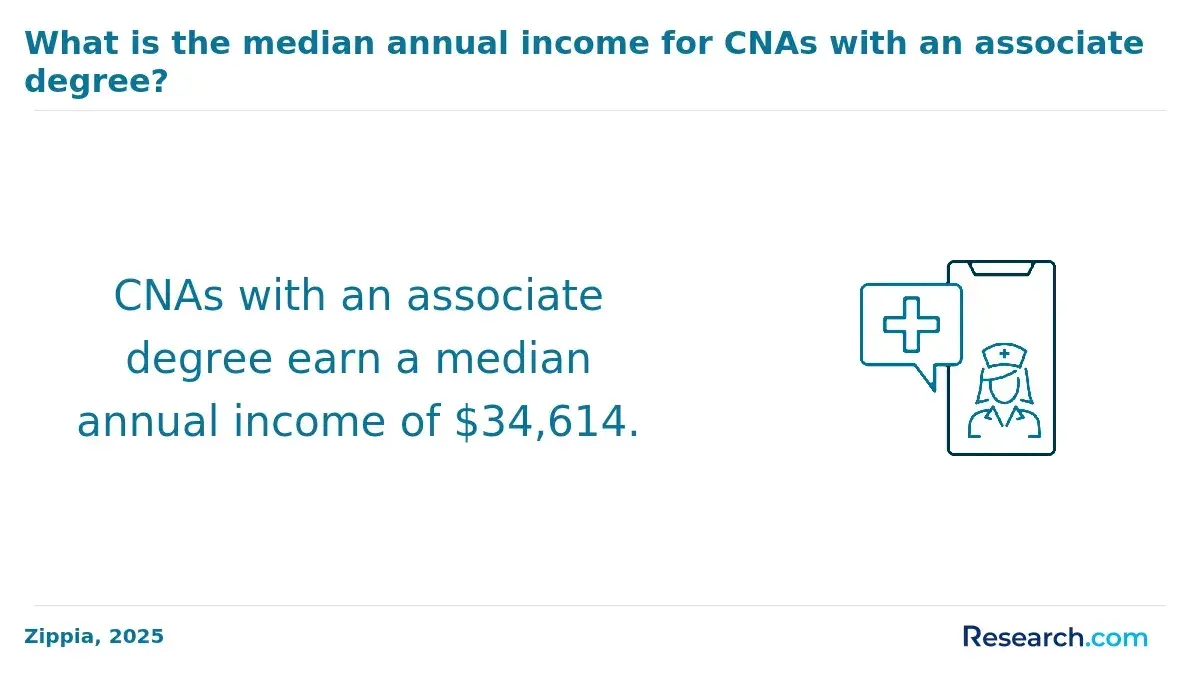
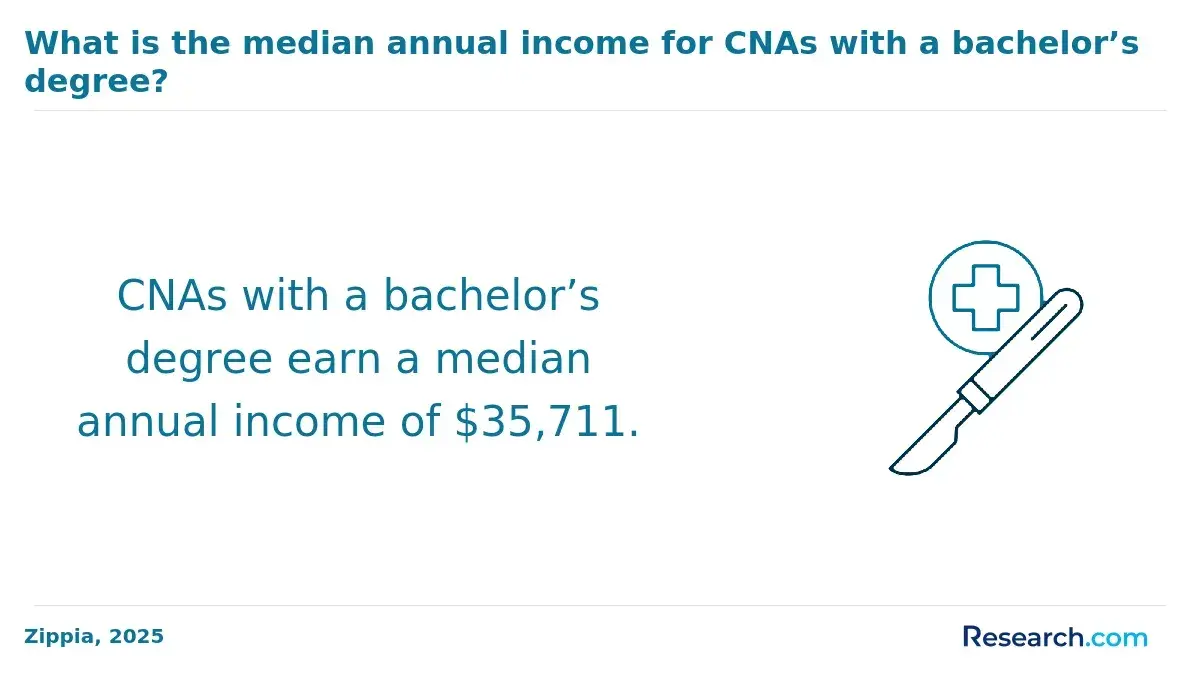
- Other salary ranges: Other sources report annual CNA earnings between $32,581 and $39,514, while ZipRecruiter lists an average hourly wage of $16.18.
- Experience effect: More experienced CNAs often have stronger pay opportunities, especially if they can work higher-demand shifts, train others, or qualify for more advanced aide responsibilities.
- Work setting differences: Hospitals may offer higher pay than some nursing homes or home health agencies, although benefits, schedule stability, commute, and workload should also be compared.
- Location differences: Urban areas may pay more than rural areas, but higher living costs can reduce the practical value of the wage difference.
- Extra earnings: Overtime, bonuses, weekend differentials, and evening or night shifts can affect total income.
If your long-term goal is to move into advanced behavioral health nursing, CNA work can provide early patient-care exposure, but it is only the beginning. Research.com’s affordable online PMHNP degree program guide can help future graduate nursing students understand later-stage education options.
| Salary Factor | How It Can Affect Pay | Decision Tip |
| Facility type | Hospitals, nursing homes, assisted living, rehabilitation, and home health may pay differently. | Compare total compensation, not just hourly wage. |
| Shift | Nights, weekends, and overtime may increase earnings. | Balance higher pay with fatigue and family obligations. |
| Experience | Experienced aides may access better schedules or higher-paying roles. | Document skills, training, and strong attendance. |
| Location | Urban and rural wages may differ. | Factor in commute time and cost of living. |
| Career advancement | Additional credentials can open higher-responsibility roles. | Ask employers about tuition support or internal promotion paths. |
How can CNAs in North Carolina advance to higher nursing roles?
CNA work can be a strong first step, but advancement requires planning. The experience helps you understand patient care, healthcare teamwork, and the realities of shift work. To move into higher-paying and higher-responsibility roles, you will usually need additional education, clinical training, and exams.
- Nurse Aide II: Nurse Aide II training allows qualified aides to perform additional approved tasks under RN supervision. This can be a useful bridge for CNAs who want more responsibility before entering nursing school.
- Licensed Practical Nurse: CNAs can apply to a state-approved practical nursing program, often lasting 12-18 months. Graduates must pass the NCLEX-PN exam to become LPNs.
- Registered Nurse: The RN path usually involves an Associate Degree in Nursing or a Bachelor of Science in Nursing, with two to four years of study and clinical training. Graduates must pass the NCLEX-RN exam.
- Specialized short-term credentials: Some CNAs pursue training in geriatrics, phlebotomy, or other focused areas to broaden job options or prepare for allied health roles.
- Long-term advanced nursing: CNAs who eventually become RNs may later consider graduate nursing, nurse practitioner, education, leadership, or specialty practice roles.
| Advancement Option | Typical Next Requirement | Best Fit |
| Nurse Aide II | Additional coursework and clinical preparation. | CNAs who want expanded duties under RN supervision. |
| LPN | Practical nursing program and NCLEX-PN. | CNAs ready for licensed nursing responsibilities in a shorter pathway than RN study. |
| RN through ADN | Associate Degree in Nursing and NCLEX-RN. | Students seeking registered nursing practice through a community-college route. |
| RN through BSN | Bachelor of Science in Nursing and NCLEX-RN. | Students who want broader academic preparation and future leadership or graduate options. |
| Specialized certificate | Short-term focused training or certification. | CNAs who want targeted skills without immediately entering nursing school. |
Other Things You Should Know About CNA License Education Requirements in North Carolina
Questions to Ask Before Choosing a CNA Program or Job
- Is the program approved for North Carolina Nurse Aide I preparation? Do not rely only on advertising language. Ask for confirmation that graduates are prepared for the state competency process.
- What is included in the total cost? Tuition may not cover uniforms, books, background checks, immunizations, exam fees, transportation, or supplies.
- How are clinical placements scheduled? A program that fits your classroom schedule may still require clinical hours that conflict with work or childcare.
- What is the exam pass support? Ask whether the school offers skills labs, practice exams, remediation, or help with test registration.
- What happens if you fail part of the competency exam? Understand retesting rules, fees, and time limits before you test.
- Does the employer support advancement? Some facilities may offer tuition assistance, flexible scheduling, or internal pathways toward Nurse Aide II, LPN, or RN study.
- What are the physical demands? CNA work can involve lifting, repositioning, long periods on your feet, and emotionally difficult situations. Make sure the job matches your health and stamina.
Common Mistakes to Avoid
- Choosing the cheapest program without checking approval: A low price is not helpful if the course does not prepare you for North Carolina registry requirements.
- Ignoring clinical logistics: Transportation, parking, clinical start times, and required documents can make or break your ability to finish.
- Assuming every online healthcare course qualifies: CNA training requires hands-on skills and supervised clinical practice. Online-only healthcare courses may not meet Nurse Aide I requirements.
- Waiting too long to schedule the competency exam: Skills can fade after training. Test as soon as you are prepared and eligible.
- Letting renewal lapse: Missing the 24-month renewal cycle can lead to delisting and may require retraining and retesting.
- Looking only at hourly pay: Benefits, workload, commute, shift differentials, staffing levels, and advancement support can matter as much as the base wage.
- Assuming CNA salary outcomes are guaranteed: Published averages are useful, but your actual pay depends on employer, location, schedule, experience, and available shifts.
Related Articles for Nearby States
- 2027 Certified Nurse Aide (CNA) License Education Requirements in South Carolina
- 2027 Certified Nurse Aide (CNA) License Education Requirements in Virginia
- 2027 Certified Nurse Aide (CNA) License Education Requirements in Georgia
- 2027 Certified Nurse Aide (CNA) License Education Requirements in Tennessee
- 2027 Certified Nurse Aide (CNA) License Education Requirements in West Virginia
- 2027 Certified Nurse Aide (CNA) License Education Requirements in Kentucky
- 2027 Certified Nurse Aide (CNA) License Education Requirements in Florida
- 2027 Certified Nurse Aide (CNA) License Education Requirements in Maryland
- 2027 Certified Nurse Aide (CNA) License Education Requirements in Alabama
- 2027 Certified Nurse Aide (CNA) License Education Requirements in Pennsylvania
References
- NC Nursing License Renewal | IntelyCare https://www.intelycare.com/career-advice/nc-nursing-license-renewal/
- Average Certified Nursing Assistant Salary in North Carolina https://www.vivian.com/cna/north-carolina/salary/
- Nurse Aide Disclosure | Stanly Community College - North Carolina https://www.stanly.edu/state-authorization/nurse-aide-disclosure.html
- Salary: Certified Nursing Assistant in North Carolina 2025 | Glassdoor https://www.glassdoor.com/Salaries/north-carolina-certified-nursing-assistant-salary-SRCH_IL.0,14_IS1282_KO15,42.htm
- North Carolina CEU Requirements | CEUfast https://ceufast.com/staterequirements/northcarolina
- CNA Training | Charlotte, North Carolina https://www.serenitynurseaide.com/cna-training-in-charlotte-north-carolina
- North Carolina Nurses CE Requirements, Accreditations & Approvals - NetCE https://www.netce.com/ce-requirements/nursing/nc/
- Nurse Aide ǀ Sandhills Community College https://www.sandhills.edu/programs/health-sciences/nurse-aide.html
- North Carolina CNA Requirements - NursingHome411 https://nursinghome411.org/cna-reqs/reqs-nc/
- The Physical Demands of CNA Career https://www.cnaprograms.org/blog/physical-demands-of-cna-career/
Key Insights
- In North Carolina, becoming a CNA usually means completing Nurse Aide I training, passing the competency evaluation, and being listed on the Nurse Aide I Registry.
- People often say “CNA license,” but registry status is the key credential employers verify for many nurse aide roles.
- Training hour descriptions can vary, with sources and programs referencing at least 75 hours, 115 hours, or 160 to 180 hours. Confirm the approved hour structure directly with the school.
- A full-time student may complete the process in about 8 to 12 weeks, while part-time schedules, exam delays, or paperwork issues can stretch the timeline to 3 or 4 months.
- Renewal is required every 24 consecutive months and depends on at least eight hours of qualifying paid supervised work.
- Employed CNAs may need 12 hours of annual in-service training, typically documented by the employer.
- Out-of-state CNAs may transfer through endorsement if they meet requirements, including an online application, $188 fee, fingerprint-based background check, and registry verification.
- CNA pay in North Carolina varies widely by source, employer, shift, and location, so compare total compensation rather than relying on a single average.
- CNA experience can be valuable, but advancement into Nurse Aide II, LPN, RN, or advanced nursing requires additional education, exams, and careful planning.
Other Things You Should Know About CNA License Education Requirements in North Carolina
To renew a CNA license in North Carolina for 2027, you must complete at least eight hours of paid nursing-related services during the past 24 months. Additionally, your renewal application must be submitted to the North Carolina Nurse Aide Registry by the due date.
In North Carolina, 2027, aspiring CNAs must complete a state-approved Nurse Aide I training program, which includes at least 75 hours of coursework and clinical training. This must be followed by passing the state's competency evaluation exam to earn a spot on the Nurse Aide Registry, necessary for licensure.


