
2027 How to Become a Medical Assistant in North Carolina Online

Co-Founder and Chief Data Scientist
Becoming a medical assistant in North Carolina is a practical way to enter healthcare without spending several years in school, but the online route comes with important decisions. You need to know which programs are credible, how clinical training works when classes are online, whether certification matters, what the timeline looks like, and how much the full path may cost.
This guide explains how to become a medical assistant in North Carolina online, what to look for in a program, how certification works, what employers usually expect, and when this path is worth considering. It is written for students, career changers, working adults, and anyone comparing online healthcare training options in North Carolina.
Quick Answer: Can You Become a Medical Assistant in North Carolina Online?
Yes. You can complete much of your medical assistant training online in North Carolina, especially classroom topics such as anatomy, medical terminology, insurance basics, scheduling, and patient documentation. However, medical assisting is not a fully online career pathway. You should expect in-person labs, clinical practice, or an externship because employers need proof that you can perform patient-facing tasks safely.
North Carolina’s healthcare sector is expanding, with medical assistant employment expected to grow by over 20% through 2030. The strongest candidates usually complete an accredited or employer-recognized program, finish supervised clinical hours, and prepare for a national certification exam such as the CMA, RMA, CCMA, or NCMA.
Key Things to Know About Becoming a Medical Assistant in North Carolina
- Online does not mean hands-off. A credible program should include real clinical practice through labs, externships, or partnerships with local healthcare sites.
- Accreditation affects certification eligibility. Programs accredited by CAAHEP or ABHES are often the safest choice if you want access to widely recognized certification exams.
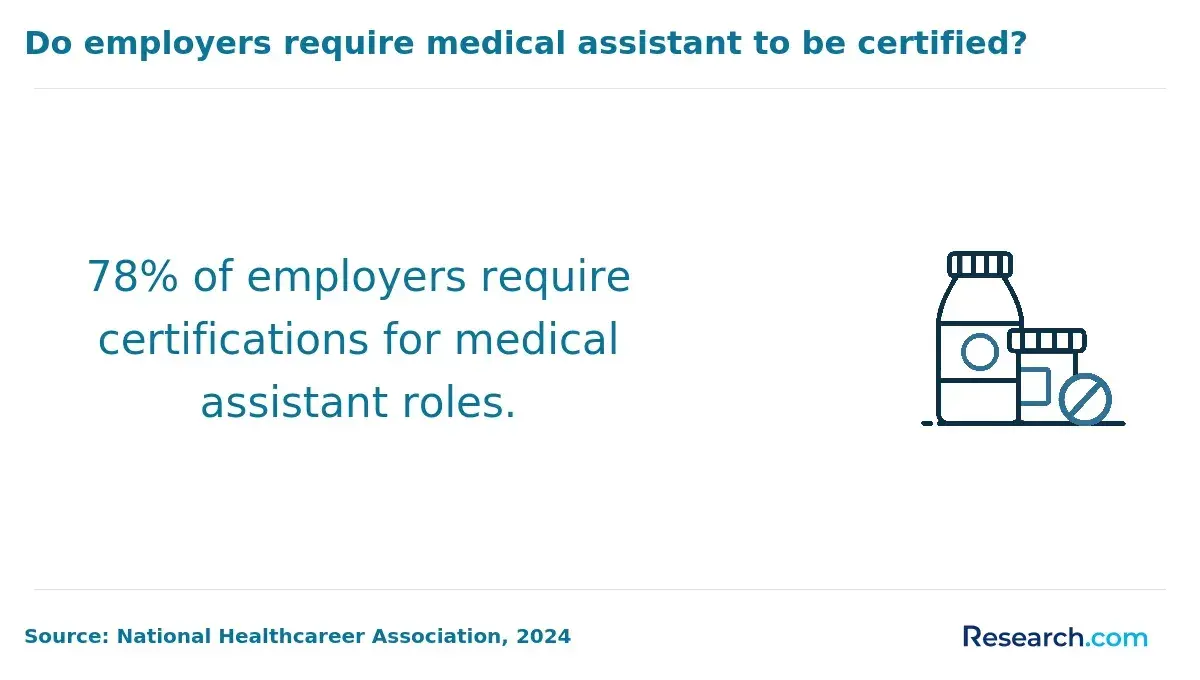
- Certification is not optional in many hiring situations. Even when a state license is not the main requirement, North Carolina employers often prefer applicants who can document national certification readiness.
- Total cost is more than tuition. Budget for books, supplies, background checks, immunizations, exam fees, CPR certification, and clinical-related expenses.
- The best program is the one that fits your timeline, budget, clinical location, and career goal. A short certificate may be enough for fast entry, while an associate degree may help if you plan to continue into nursing or healthcare administration later.
- Can you become a medical assistant in North Carolina through online programs?
- How long are online medical assistant programs in North Carolina?
- Are online medical assistant programs in North Carolina accredited?
- How do you get certified as a medical assistant in North Carolina online?
- How long does it take to become a medical assistant in North Carolina?
- How much does it cost to complete a medical assistant program in North Carolina online?
- Can you get financial aid for online medical assistant training in North Carolina?
- How can further certifications and specialized training expand your healthcare career?
- What is the average salary for medical assistants in North Carolina?
- Are online-trained medical assistants hired as often as campus-trained ones in North Carolina?
- Do online medical assistant programs in North Carolina lead to advanced healthcare careers?
Can you become a medical assistant in North Carolina through online programs?
You can use an online or hybrid program to prepare for medical assistant work in North Carolina, but you should choose carefully. Medical assistants handle both administrative and clinical duties, so a program that only offers videos and quizzes is usually not enough preparation for real healthcare settings.
A strong online medical assistant program usually combines digital coursework with supervised practice. The online portion covers the academic foundation, while in-person training helps you learn skills such as taking vital signs, preparing patients, assisting with procedures, collecting specimens, and following infection control protocols.
- Online coursework: Students typically study medical terminology, anatomy, physiology, pharmacology basics, medical office procedures, billing concepts, electronic health records, and patient communication through a learning platform.
- Hybrid skill development: Many programs add scheduled labs, simulations, proctored assessments, or in-person practice sessions so students can demonstrate clinical competence.
- Clinical training: Hands-on experience is a major part of job readiness. Some programs include over 200 hours of supervised clinical work before students complete training or sit for certification exams.
- Flexible pacing: Some certificate tracks may be completed in as little as four months, while associate degree routes can take up to sixteen months or longer depending on the school structure and student schedule.
- Student support: Advising, tutoring, technical help, exam preparation, and externship placement support matter more in online programs because students are not physically on campus every day.
- Certification preparation: Some North Carolina programs report certification exam pass rates as high as 95%, but students should verify how the school calculates and publishes those outcomes.
| Program Feature | Why It Matters | What to Ask Before Enrolling |
| Accreditation or recognized approval | Can affect certification exam eligibility, employer trust, and transfer options | Is the program accredited by CAAHEP or ABHES, or does it clearly state which certification exams graduates qualify for? |
| Externship placement | Online students still need real patient-care exposure | Does the school arrange clinical sites in North Carolina, or must students find their own placement? |
| Certification exam preparation | Certification can improve competitiveness for entry-level roles | Which exam does the curriculum prepare students for: CMA, RMA, CCMA, or NCMA? |
| Total program cost | Tuition alone may not include supplies, books, exam fees, and clinical costs | What costs are included, and what will be billed separately? |
| Career services | First healthcare jobs often depend on resume help, interview preparation, and local employer connections | Does the program provide job placement support or employer referrals after completion? |
If you are comparing nearby healthcare support careers, you may also want to review the fastest way to become a medical coder, especially if you prefer administrative healthcare work with less direct patient contact.
How long are online medical assistant programs in North Carolina?
The length of an online medical assistant program in North Carolina depends on the credential type, whether the program is self-paced or cohort-based, and how quickly you complete clinical requirements. Shorter programs focus on job-entry skills, while longer programs may include broader academic coursework that can support future education.
| Credential Type | Typical Length | Best For | Trade-Off |
| Certificate | 4 to 6 months | Students who want the fastest route into entry-level medical assisting | Less general education and may offer fewer transfer opportunities |
| Diploma | 9 to 12 months | Students who want more structured training than a short certificate | Takes longer but may provide broader preparation |
| Associate degree | Around 2 years | Students considering long-term advancement or additional healthcare education | Requires more time and usually costs more than a certificate or diploma |
A certificate can make sense if you need to enter the workforce quickly and already feel confident about your career direction. A diploma may be a better middle ground if you want more guided preparation. An associate degree is often the better fit if you plan to build toward nursing, healthcare administration, or another allied health program later.
Medical assisting also overlaps with other healthcare office roles. If you are weighing patient-facing work against administrative revenue-cycle work, this overview of the medical biller and coder role can help you compare day-to-day responsibilities.
Are online medical assistant programs in North Carolina accredited?
Some online medical assistant programs serving North Carolina students are accredited, while others are not. This distinction matters because accreditation can influence certification eligibility, employer confidence, financial aid access, and the value of your credential after graduation.
The two major programmatic accreditors to look for in medical assisting are CAAHEP and ABHES. A school may also hold institutional accreditation, but institutional accreditation alone does not always mean the medical assistant program meets the requirements for every certification exam. Always confirm the program-level details.
- Commission on Accreditation of Allied Health Education Programs: CAAHEP is a major accreditor for health science education. A CAAHEP-accredited medical assisting program is designed to meet recognized training standards and can support eligibility for exams such as the Certified Medical Assistant credential.
- Accrediting Bureau of Health Education Schools: ABHES focuses on health education programs and institutions. ABHES-accredited programs are commonly structured around certification preparation, student support, and clinical readiness.
| Accreditation Question | Why You Should Ask It |
| Is the medical assistant program itself accredited, not just the school? | Programmatic accreditation can affect certification exam eligibility. |
| Which certification exams can graduates take? | Employers may prefer one credential over another, and exam rules vary. |
| Are clinical hours included and documented? | Employers need evidence that online students completed hands-on training. |
| Will credits transfer to another college? | This matters if you later pursue an associate or bachelor’s degree. |
| Does the program meet employer expectations in North Carolina? | Local hiring standards may be different from national marketing claims. |
Accreditation is not just a badge on a website. It is a screening tool. Before enrolling, ask the admissions office to name the accreditor, list certification outcomes, explain externship requirements, and provide the total estimated cost in writing.
Students exploring allied healthcare roles may also find it useful to understand what medical billers and coders do, since medical assistants often work alongside billing, coding, and front-office teams.
How do you get certified as a medical assistant in North Carolina online?
To become certified after online training, you generally need to complete an eligible medical assistant program, finish required clinical experiences, apply for a national certification exam, and pass the exam. The exact route depends on the certification organization and your school’s accreditation status.
- Start with a high school diploma or GED. Most medical assistant programs require this before admission.
- Choose an accredited online or hybrid program. Give priority to programs accredited by CAAHEP or ABHES, or programs that clearly document eligibility for a recognized certification exam.
- Complete the academic coursework. Depending on the credential, this may take four months to two years and may include anatomy, clinical procedures, medical office systems, law and ethics, and patient communication.
- Finish labs, externship, or supervised clinical training. This is the part online students must plan for early because placement availability can affect graduation timing.
- Select the certification exam that matches your goal. Common options include CMA, RMA, CCMA, and NCMA. Ask local employers which credentials they recognize most often.
- Prepare for and take the exam. Some programs include review materials or the exam fee, while others charge separately.
- Keep documentation. Save transcripts, clinical hour records, certification results, CPR documentation, and immunization records because employers may request them.
The most important point is that certification should not be treated as an afterthought. Before you enroll, confirm that the program’s curriculum, accreditation, and clinical structure match the certification pathway you plan to use.
How long does it take to become a medical assistant in North Carolina?
Most students can prepare for medical assistant work in North Carolina in about one to two years, depending on the credential they choose. Certificate and diploma programs often take 9 months to a year, while associate degree programs take about 2 years. Clinical training is usually built into the program and may last four to eight weeks. Certification preparation can add extra time, especially if you study after graduation instead of during the program.
The fastest route is usually a short certificate with a coordinated externship and immediate certification exam preparation. The longer route is an associate degree, which may be more useful if you want additional academic coursework or a smoother transition into future healthcare education.
| Step | What Happens | Timeline Factor |
| Program admission | Submit application, proof of education, and any required background or health documents | Can be quick for open-enrollment programs but slower for cohort-based schools |
| Online coursework | Complete lecture-based topics and assignments | Self-paced programs may move faster if you have strong study habits |
| Clinical preparation | Meet requirements such as immunizations, CPR certification, and background checks | Delays here can push back externship placement |
| Externship or clinical hours | Train under supervision in a healthcare environment | Site availability and your work schedule can affect completion |
| Certification exam | Apply, study, schedule, and sit for the exam | Preparation time varies by student and program support |
A North Carolina medical assistant who completed an online certificate through a local community college described the timeline this way: “The program was built to finish in about a year, but work and family responsibilities pushed me closer to fourteen months. The flexibility helped, but I had to stay organized. Studying for certification while finishing clinical hours took planning, and the extra time helped me feel more confident before applying for jobs.”
How much does it cost to complete a medical assistant program in North Carolina online?
The cost of an online medical assistant program in North Carolina can vary widely. Some self-paced courses may cost around $79 per month, while credit-bearing certificate programs may total $13,500 to $16,200 depending on the number of credits required. Community college options may be less expensive, but students should still check whether certification exams, supplies, and clinical expenses are included.
- Tuition: Schools may charge monthly, by course, by term, or by credit. Compare total program cost, not just the advertised monthly payment.
- Textbooks and supplies: Some programs bundle materials into tuition, but others charge separately. Textbooks may cost approximately $200, and supplies may cost about $90.
- Technology expenses: Online students need reliable internet and a suitable computer. Some schools also charge platform or technology fees.
- Certification preparation and exam fees: Programs may include exam review, but others charge separately. A certification exam fee of around $160 may apply.
- Clinical-related costs: Students may need to pay for liability insurance, lab fees, background checks, immunizations, CPR certification, uniforms, transportation, or clinical apparel.
| Cost Item | Ask the School | Why It Matters |
| Tuition | What is the full program price from enrollment to completion? | Monthly pricing can hide the final cost if completion takes longer. |
| Books and supplies | Are textbooks, instruments, and required materials included? | Small add-ons can change affordability. |
| Certification exam | Is the exam fee included, and which exam is covered? | Different exams may lead to different employer recognition. |
| Externship costs | Are background checks, immunizations, uniforms, and insurance included? | Clinical requirements often create out-of-pocket expenses. |
| Refund policy | What happens if I withdraw or cannot secure a clinical placement? | Students should understand financial risk before signing enrollment paperwork. |
Before enrolling, request an itemized cost sheet. A program with higher tuition may be worth it if it includes books, exam fees, strong externship support, and career services. A cheaper option may still be a good choice, but only if you know exactly what you must pay for separately.
Can you get financial aid for online medical assistant training in North Carolina?
Financial aid may be available for online medical assistant training in North Carolina, but eligibility depends heavily on the school, program type, accreditation, and whether the program qualifies for federal aid. Short certificate programs do not always qualify for the same aid as degree programs, so students should verify funding options before enrolling.
- Federal financial aid: Grants and loans may be available for eligible accredited degree programs, but some certificate programs may not qualify.
- Institutional scholarships: Schools may offer need-based or merit-based awards that reduce tuition and do not require repayment.
- Payment plans: Many online programs allow students to divide tuition into installments, which can help with cash flow but does not reduce the total price.
- Employer tuition assistance: Current healthcare employees may be able to use workplace reimbursement or education benefits.
- Military benefits: Veterans, active-duty service members, and eligible dependents may be able to use GI Bill or military tuition assistance for qualifying programs.
One North Carolina graduate explained that paying for training required combining several options: “Federal aid was limited for my certificate program, so I had to be persistent. The payment plan helped, and scholarships from the school made the difference. It took more effort than I expected, but I was able to finish without stopping out.”
| Financial Aid Question | What a Clear Answer Should Include |
| Is this program eligible for federal financial aid? | The school should explain eligibility and direct you to the correct aid application process. |
| Are scholarships available for online students? | Online learners should not assume they qualify for the same awards as campus students. |
| Can I use employer benefits? | Ask your employer whether reimbursement requires preapproval, grades, or continued employment. |
| What happens if I fail or withdraw? | Refund, repayment, and retake policies should be clear before you enroll. |
How Can Further Certifications and Specialized Training Expand Your Healthcare Career?
Medical assisting can be a starting point rather than a final destination. After gaining experience, some professionals pursue additional certifications, specialized clinic roles, or further education in nursing, allied health, healthcare administration, or therapy-related fields.
Specialized training may help you move toward roles in cardiology offices, ophthalmology practices, urgent care clinics, pediatrics, or administrative leadership. If you are considering a longer clinical career path, you may also want to compare requirements for related professions, such as how to become an occupational therapist in North Carolina.
| Next Step | When It Makes Sense | What to Consider |
| Additional medical assistant certification | You want stronger credentials for clinical roles | Check which credentials local employers prefer. |
| Specialty clinic training | You enjoy a focused area such as pediatrics, cardiology, or ophthalmology | Specialty roles may require employer training after hire. |
| Nursing pathway | You want a broader clinical scope and more responsibility | You will need additional education and must meet nursing program requirements. |
| Healthcare administration | You prefer scheduling, operations, compliance, or office leadership | Administrative advancement may require business or management coursework. |
| Allied health programs | You want a technical patient-care role beyond medical assisting | Fields such as respiratory therapy or radiologic technology usually require separate programs. |
What is the average salary for medical assistants in North Carolina?
Medical assistant pay in North Carolina depends on location, experience, certification, employer type, shift, and clinical skill set. Online training by itself usually does not determine pay. Employers are more likely to evaluate whether you completed hands-on training, passed a recognized certification exam, and can perform the job safely.
- Entry-level pay: New medical assistants typically earn between $34,000 and $37,700 per year, or about $15 to $18 per hour.
- Median salary: The median annual salary is approximately $41,000, or around $19.72 per hour.
- Experienced wages: Medical assistants with several years of experience and additional credentials may earn about $49,000 per year or $22 per hour.
- Setting differences: Hospitals and specialty clinics may pay more than smaller practices or some outpatient settings because the work can involve more complex workflows.
| Salary Factor | How It Can Affect Pay |
| Certification | Can make entry-level candidates more competitive and may support better starting offers. |
| Experience | Medical assistants who can work independently and handle multiple clinical tasks may qualify for higher wages. |
| Healthcare setting | Specialty clinics, hospitals, and larger systems may offer different pay structures than small offices. |
| Location | Pay can vary across North Carolina based on local demand and cost of living. |
| Additional skills | Phlebotomy, EHR proficiency, scheduling, insurance knowledge, and patient communication can improve job readiness. |
Use salary figures as planning benchmarks, not guarantees. When comparing programs, ask whether the school publishes graduate employment outcomes and whether those outcomes separate medical assistant jobs from unrelated employment.
Are online-trained medical assistants hired as often as campus-trained ones in North Carolina?
Online-trained medical assistants can compete well for jobs in North Carolina when their programs include credible clinical training and certification preparation. Employers are usually less concerned with whether lectures were online and more concerned with whether the applicant can perform clinical and administrative duties correctly.
- Clinical training is the deciding factor: Employers expect hands-on practice. An online program with a strong externship may be more valuable than a campus program with weak clinical placement support.
- Certification improves credibility: A recognized credential such as the CCMA or RMA can help online graduates show standardized competence.
- Local employer relationships matter: Some campus programs have long-standing partnerships with nearby clinics. Online students should ask how the school helps secure North Carolina externship sites.
- Job readiness includes soft skills: Professionalism, communication, attendance, patient privacy, and teamwork are often just as important as technical skills.
- Demand supports multiple training models: North Carolina’s need for medical assistants is strong, and certified graduates with documented clinical experience can find opportunities across outpatient care, specialty clinics, and larger healthcare systems.
| Online Program Advantage | Possible Risk | How to Reduce the Risk |
| Flexible schedule for working adults | Students may fall behind without structure | Choose a program with deadlines, advising, and regular instructor access. |
| Can study from anywhere in North Carolina | Clinical placement may not be nearby | Confirm externship arrangements before enrolling. |
| May cost less than some campus options | Advertised tuition may exclude important fees | Request a complete written cost breakdown. |
| Can prepare for national certification | Not every program qualifies students for every exam | Ask which exams graduates are eligible to take. |
If you prefer healthcare work that is more records-focused than patient-facing, you can compare medical assisting with medical billing and coding classes online before choosing a program.
Do online medical assistant programs in North Carolina lead to advanced healthcare careers?
An online medical assistant program can lead to entry-level healthcare employment and may also help you explore future career options. It does not automatically qualify you for advanced clinical roles, but it can provide patient-care experience, healthcare vocabulary, and workplace exposure that make later education more informed.
- Nursing: Some medical assistants later apply to Licensed Practical Nurse or Registered Nurse programs. Prior clinical experience can help with confidence, although nursing programs set their own admission and credit policies.
- Healthcare administration: Medical assistants who enjoy operations, scheduling, compliance, or team coordination may later pursue business or healthcare administration education.
- Specialized medical assisting: Credentials such as Certified Clinical Medical Assistant can support movement into more focused clinical environments, including cardiology or ophthalmology offices.
- Allied health professions: Experience with patients can help students decide whether to pursue respiratory therapy, radiologic technology, or other allied health programs that require additional education.
- Bachelor’s or pre-professional study: Some healthcare workers use medical assisting as an early step before bachelor’s programs, pre-medical coursework, physician assistant preparation, or advanced nursing goals.
Medical assisting is most useful as a stepping stone when you document your experience, build strong references, and choose additional education deliberately. If you are comparing administrative healthcare credentials, research the certified medical coder and biller salary landscape as part of your broader career planning.
Common Mistakes to Avoid When Choosing an Online Medical Assistant Program
| Mistake | Why It Can Hurt You | Better Approach |
| Choosing based only on the lowest tuition | A cheaper program may exclude exam fees, supplies, books, or externship support. | Compare total cost and included services. |
| Ignoring accreditation | You may limit certification eligibility or employer confidence. | Confirm CAAHEP, ABHES, or clearly documented certification pathways. |
| Assuming online means fully remote | Clinical training usually requires in-person attendance. | Ask where and when labs or externships take place. |
| Waiting too long to plan clinical requirements | Background checks, immunizations, CPR, and site approvals can delay completion. | Start clinical paperwork as soon as the program allows. |
| Relying only on rankings or ads | Marketing claims may not reflect outcomes in your area. | Speak with admissions, career services, graduates, and local employers. |
| Assuming salary outcomes are guaranteed | Pay depends on location, employer, certification, and experience. | Use salary data as a planning range and build employable skills. |
Questions to Ask Before You Enroll
- Is the medical assistant program accredited by CAAHEP or ABHES?
- Which national certification exams will I be eligible to take after graduation?
- How many clinical or externship hours are required?
- Does the school place students in North Carolina clinical sites, or must I find my own?
- Are books, supplies, CPR certification, background checks, and exam fees included in tuition?
- What percentage of students complete the program, pass certification exams, and find medical assistant jobs?
- Can credits transfer if I later pursue an associate or bachelor’s degree?
- What happens if I cannot complete my externship on the original timeline?
- Does the program offer evening, weekend, or part-time options for working adults?
- What career services are available after graduation?
What Do Medical Assistants in North Carolina Say About Their Career?
- Erwin completed online medical assistant training through Carolina Health Academy and said the format helped him manage work and family responsibilities. He now works in a local school setting, where he supports student wellness and values the chance to contribute to a safer learning environment. Erwin
- Yonathan said his online program at Piedmont Medical Institute helped him build both technical skills and confidence. Working as a medical assistant in a North Carolina school has allowed him to support students and staff while strengthening his communication, patience, and empathy. Yonathan
- Veronica described her experience at Blue Ridge Medical Academy as a blend of online coursework and practical preparation. Her school-based medical assistant role has helped her understand how community, culture, and social factors affect student health, and she sees the position as a foundation for continued growth. Veronica
Related Articles for Nearby States
- 2027 How to Become a Medical Assistant in South Carolina Online
- 2027 How to Become a Medical Assistant in Virginia Online
- 2027 How to Become a Medical Assistant in Georgia Online
- 2027 How to Become a Medical Assistant in Tennessee Online
- 2027 How to Become a Medical Assistant in West Virginia Online
- 2027 How to Become a Medical Assistant in Kentucky Online
- 2027 How to Become a Medical Assistant in Florida Online
- 2027 How to Become a Medical Assistant in Maryland Online
- 2027 How to Become a Medical Assistant in Alabama Online
- 2027 How to Become a Medical Assistant in Pennsylvania Online
References:
- Average Medical Assistant Salary in North Carolina (Hourly and Annually) https://www.stepful.com/medical-assistant-salaries/north-carolina
- Clinical medical assistant online certification course https://ncat.edu2.com/product/4895/clinical-medical-assistant
- Medical assistant apprentice initiative https://www.ncchca.org/community-resources/programs-services/maai/
- Additional North Carolina salary reference https://www.stepful.com/medical-assistant-salaries/north-carolina
- Medical assistants North Carolina https://nccareers.org/occupation-profile/319092/1284
- Medical assistant salary in North Carolina ‐ CareerExplorer https://www.careerexplorer.com/careers/medical-assistant/salary/north-carolina/
Key Insights
- You can train online, but you cannot skip clinical practice. The best online medical assistant programs in North Carolina combine digital coursework with in-person labs or externships.
- Accreditation should be checked before cost or convenience. CAAHEP and ABHES accreditation can affect certification exam access and employer confidence.
- Program length depends on your goal. Certificates may take 4 to 6 months, diplomas often take 9 to 12 months, and associate degrees generally take around 2 years.
- Certification can improve job competitiveness. Employers often prefer candidates prepared for credentials such as CMA, RMA, CCMA, or NCMA.
- Budget beyond tuition. Books, supplies, exam fees, background checks, immunizations, CPR certification, and clinical costs can change the real price of attendance.
- Online graduates can be competitive. Employers focus on hands-on readiness, certification, professionalism, and documented clinical experience more than whether lectures were completed online or on campus.
- Medical assisting can be a launch point. With experience and additional education, graduates may move toward nursing, healthcare administration, specialty clinics, or other allied health careers.
Other Things You Should Know About Becoming a Medical Assistant Online in North Carolina
In 2027, popular online platforms offering medical assistant programs in North Carolina include Southern New Hampshire University, Purdue University Global, and Penn Foster. These institutions provide comprehensive, flexible programs that prepare students for certification and entry into the medical field.
In 2027, medical assistants in North Carolina are not required to be certified to practice. However, obtaining a certification such as the Certified Medical Assistant (CMA) or the Registered Medical Assistant (RMA) is advantageous for career advancement and employment opportunities.
The job outlook for medical assistants in North Carolina in 2027 is positive, with healthcare demand increasing. According to the Bureau of Labor Statistics, employment in this field is expected to grow due to an aging population and expanding healthcare services.


