
2027 How to Become a Medical Assistant in North Dakota Online

Co-Founder and Chief Data Scientist
Employment for medical assistants in North Dakota is projected to grow by 15% over the next decade, reflecting steady demand within the healthcare sector. This growth suggests stable job opportunities and competitive wages for those entering the profession. However, geographic and economic factors may influence career prospects differently across the state. Pursuing medical assistant training online offers flexibility for students balancing work or family commitments, making it a practical option.
This article explores the steps required to become a medical assistant in North Dakota through online education. Developed by career planning experts, it aims to provide clear, reliable guidance tailored to prospective students’ needs.
Key Things to Know About Becoming a Medical Assistant in North Dakota
- Complete an accredited online medical assistant program, ensuring it covers both administrative and clinical skills required by North Dakota employers.
- Gain hands-on experience through local externships or clinical placements, since online programs often mandate practical training in a healthcare setting.
- Consider obtaining certification like CMA or RMA, which can improve job prospects; North Dakota’s healthcare sector values certified medical assistants for nearly 10% faster employment growth.
- Can you become a medical assistant in North Dakota through online programs?
- How long are online medical assistant programs in North Dakota?
- Are online medical assistant programs in North Dakota accredited?
- How do you get certified as a medical assistant in North Dakota online?
- How long does it take to become a medical assistant in North Dakota?
- How much does it cost to complete a medical assistant program in North Dakota online?
- Can you get financial aid for online medical assistant training in North Dakota?
- Do online medical assistant programs in North Dakota provide effective job placement and career support services?
- What is the average salary for medical assistants in North Dakota?
- Are online-trained medical assistants hired as often as campus-trained ones in North Dakota?
- Do online medical assistant programs in North Dakota lead to advanced healthcare careers?
Can you become a medical assistant in North Dakota through online programs?
Online medical assistant programs in North Dakota offer significant flexibility, allowing students to balance education with work and family commitments. However, the necessity of hands-on experience creates challenges, as practical training is essential for skill development in healthcare settings. The key aspects of these education programs include:
- Online Coursework: Core classes such as medical terminology, anatomy, and healthcare law are often delivered entirely online, enabling students to study at their own pace from any location.
- Hybrid Learning Models: Many programs combine online lectures with mandatory in-person labs or externships to provide necessary practical experience in clinical procedures.
- Clinical Training Requirements: Despite online theoretical instruction, students must complete a set number of clinical hours, for example, a 180-hour internship, to qualify for certification exams and graduate.
- Virtual Simulations: To complement or partially replace in-person labs, some programs utilize interactive virtual simulations, video demonstrations, and study guides to enhance clinical skill training remotely.
- Program Duration and Flexibility: Options range from certificate to associate degrees, often taking between 4 and 24 months, with rolling admissions and self-paced study to accommodate diverse schedules.
- Certification Preparation: These programs typically prepare students to become certified medical assistants online in North Dakota, equipping them for national certification exams recognized by local employers.
- Student Support Services: Online students receive academic advising, technical help, and tutoring to improve their success rates in online learning environments.
Those exploring how long to study medical billing and coding might find similar self-paced options, which can inform their choice of program duration and format.
How long are online medical assistant programs in North Dakota?
The duration of online medical assistant programs in North Dakota can vary significantly depending on whether a student opts for a certificate, diploma, or associate degree. Each pathway offers a different balance of depth, clinical experience, and time investment, affecting how long to become a medical assistant online in North Dakota. Selecting the right program greatly depends on individual career goals and scheduling flexibility.
- Certificate Programs (9–12 Months): These are the shortest options, designed for students seeking quick entry into the healthcare workforce. Certificate programs focus primarily on core clinical and administrative skills required for entry-level roles, making them ideal for those who want to start working promptly. Graduates typically become eligible for national certification exams.
- Diploma Programs (Around 10 Months): Diplomas provide a slightly more comprehensive curriculum, including hands-on clinical labs and externships. This approach prepares students not only for certification but also ensures practical experience, which can improve job readiness in medical settings. Diploma programs balance pace and thorough preparation.
- Associate Degree Programs (16–24 Months): Associate degrees offer the most extensive training covering general education along with advanced medical assistant coursework. This path suits students who prefer a broader academic foundation or plan to pursue further education later. Graduates of associate programs may qualify for advanced certifications and expanded career opportunities.
Additionally, some programs provide flexible, self-paced formats allowing students to extend their studies up to 12 months or more, which benefits working adults balancing various commitments. To better understand the nuances between certification options related to these timelines, it is useful to explore the differences between CBCS and CPC certification, which further illustrate how credentials align with educational duration and career goals.
Are online medical assistant programs in North Dakota accredited?
Accreditation plays a critical role in ensuring that online medical assistant programs in North Dakota meet established standards of quality and prepare students effectively for their careers. Attending an accredited program helps guarantee that the curriculum, faculty, and training facilities adhere to rigorous guidelines, which can significantly impact a student’s readiness to enter the healthcare field and pursue certification.
In North Dakota, the two primary organizations responsible for medical assistant program accreditation are the Commission on Accreditation of Allied Health Education Programs (CAAHEP) and the Accrediting Bureau of Health Education Schools (ABHES). Both organizations evaluate online medical assistant programs based on curriculum quality, student support services, and outcomes such as certification exam passage rates. Choosing a program accredited by either CAAHEP or ABHES is a dependable way to ensure the education provided aligns with professional standards and prepares students for real-world healthcare settings.
Enrolling in an accredited online medical assistant program in North Dakota can enhance a student’s prospects by enabling eligibility for recognized certification exams, which employers often require or prefer. Accreditation also improves transferability of credits and access to financial aid options. While some non-accredited programs may offer flexible online options, they might not provide the same level of industry recognition, potentially limiting career opportunities. It’s also beneficial for students to understand what is involved in medical billing and coding, as gaining proficiency in these areas supports broader employment prospects within medical offices and clinics.
How do you get certified as a medical assistant in North Dakota online?
Certification represents a valuable credential for medical assistants in North Dakota, signaling professional competence and helping meet employer preferences, even though it is not legally required. Online education offers a flexible route to achieve certification by providing access to accredited programs while accommodating diverse schedules and locations.
- Earn a High School Diploma or GED: Completion of high school or an equivalent credential is a mandatory prerequisite for enrolling in accredited medical assistant programs.
- Complete an Accredited Online or Hybrid Training Program: Candidates should graduate from a program recognized for quality, which often offers coursework online or in a hybrid format and covers clinical, administrative, and legal aspects essential to the profession.
- Fulfill In-Person Clinical Requirements: Despite the convenience of online learning, most programs require hands-on clinical experiences completed under supervision in real healthcare settings to ensure practical proficiency.
- Prepare for National Certification Exams: Graduates can sit for exams such as the CMA, RMA, or CCMA, which assess both clinical and administrative capabilities and are widely respected across the industry.
- Apply for Certification Online: Candidates submit necessary documentation and exam applications remotely, streamlining the certification process without geographic constraints.
By combining online coursework with essential in-person practice, this approach broadens access to certification while upholding rigorous professional standards. Prospective medical assistants must consider both the flexibility and the commitment required to meet these comprehensive requirements effectively.
How long does it take to become a medical assistant in North Dakota?
The length of time to become a medical assistant in North Dakota depends largely on the type of educational program chosen, as well as the certification and clinical training requirements involved. Certificate or diploma programs, which are the most direct routes, typically last between nine and twelve months. In contrast, pursuing an associate degree generally requires around two years of study, offering a more comprehensive curriculum and greater preparation for specialized roles. Although certification is not mandated by state law, many employers favor candidates who hold national credentials, which can add additional time for exam preparation and scheduling. Clinical externships, an essential hands‑on component of these programs, usually take four to eight weeks and are integrated within the overall program duration.
Most students in North Dakota complete their medical assistant training and enter the workforce within one to two years, depending on their chosen path and pace of study. Those opting for shorter certificate or diploma programs often move more quickly into employment, while associate degree students typically benefit from broader training and potential for career advancement, albeit with a longer timeframe. Factors such as part-time enrollment, availability of clinical placements, and exam timing can either accelerate or extend the process. Balancing these variables thoughtfully allows prospective medical assistants to tailor their journey according to career goals and personal circumstances.
When speaking with a medical assistant from North Dakota who graduated from a local school’s online program, he reflected on the timeline saying, “Even though the coursework was flexible, the clinical externship took careful planning and felt like the most challenging part to schedule.” He noted that coordinating with local healthcare facilities was sometimes complex but that the hands-on experience was invaluable. “Overall, the process felt manageable but required patience, especially waiting for certification exam dates after finishing the program. It wasn’t just about completing classes quickly; it was about making sure each step prepared me fully for the job.” His experience highlights that while online programs offer convenience, successfully navigating the clinical and certification stages critically shapes the time it takes to become a medical assistant in North Dakota.
How much does it cost to complete a medical assistant program in North Dakota online?
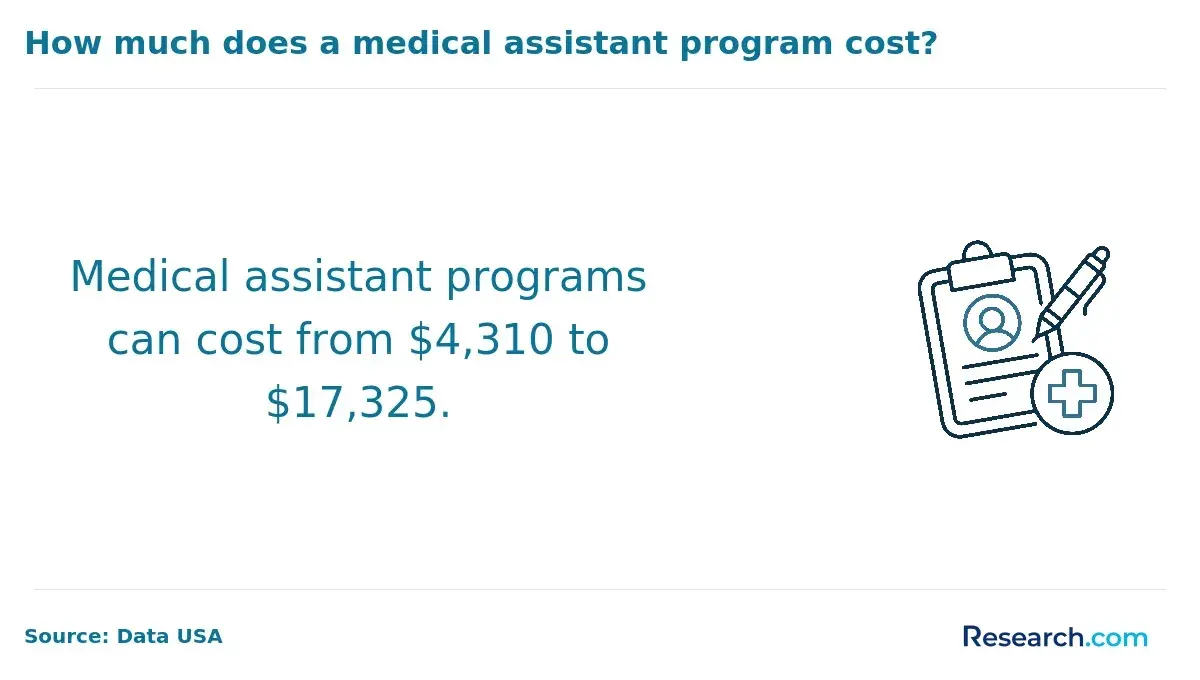
The total cost of completing a medical assistant program online in North Dakota can vary widely based on the institution, program length, and included services. Tuition alone differs from one provider to another, and additional expenses such as fees, supplies, and certification costs may significantly affect the overall budget.
- Tuition: Tuition is the primary expense and varies by school type. Community colleges may charge between $5,551 and $6,457 per semester for a certificate program, while private or national online providers often offer monthly payment plans totaling a few hundred dollars. Some programs bundle clinical and externship costs within tuition, but students should confirm these details upfront.
- Textbooks and Supplies: Depending on the program, textbook and supply costs range from $200 to $600. While some schools include essential items like stethoscopes and blood pressure cuffs, others require separate purchases, making it important to verify what materials are included.
- Technology Fees: Online learning platforms may charge technology fees ranging from $50 to several hundred dollars per semester. These fees help support course delivery, digital resources, and technical assistance, but vary considerably between institutions.
- Exam Preparation and Certification Costs: Certification exam costs, such as the Certified Clinical Medical Assistant (CCMA) exam fee of approximately $259, may or may not be included in tuition. Some programs cover exam fees and study materials, while others leave this as an additional out-of-pocket expense.
- Clinical and Externship Expenses: An in-person clinical component is typically required, and while often included in tuition, extra fees for background checks, liability insurance, or drug screening can add $100–$300 to the overall cost.
- Application and Enrollment Fees: These are usually modest, non-refundable fees, such as a $29 application charge, that can add to the upfront costs and should be factored into financial planning.
By carefully considering each cost component, prospective students can create a realistic budget that reflects potential variations among programs. This foresight minimizes unexpected expenses and helps maintain focus on completing the program and entering the medical assistant workforce prepared and confident.
Can you get financial aid for online medical assistant training in North Dakota?
Financial aid can significantly ease the cost of online medical assistant training in North Dakota, making education more accessible to a wide range of students. However, eligibility and aid availability depend heavily on the program’s accreditation and format, requiring careful assessment before enrolling.
- Federal Grants: Typically reserved for students in accredited, credit-bearing programs, federal grants like the Pell Grant often exclude non-credit certificate courses common in online training.
- Federal Student Loans: Available mainly for diploma or associate degree programs at recognized institutions, federal loans usually do not cover non-credit certificates.
- State and Institutional Scholarships: Some colleges offer scholarships targeting medical assistant students, often focusing on merit, need, or specific populations such as rural residents.
- Private Scholarships: Organizations like the AAMA provide scholarships that may apply to online students, though the criteria and deadlines vary.
- Employer Tuition Assistance: Healthcare employers may sponsor current employees pursuing relevant training, especially where shortages exist.
- Payment Plans: Many programs offer flexible monthly plans to lessen immediate financial strain when traditional aid isn’t available.
When I spoke with a medical assistant from North Dakota who completed her training online at a local school, she reflected on the complex financial aid landscape. “It wasn’t straightforward—some grants I hoped for didn’t apply because my program was non-credit,” she recalled. Yet, she managed support through an employer tuition reimbursement program combined with a manageable payment plan from the school. Navigating paperwork and eligibility was challenging, but she appreciated how these options eventually allowed her to complete the program without overwhelming debt. Her experience shows that while financial aid exists, persistence and a close look at each option are essential for success.
Do online medical assistant programs in North Dakota provide effective job placement and career support services?
Online programs increasingly integrate comprehensive career support services, ranging from resume development and interview coaching to direct connections with local healthcare employers. These initiatives help graduates transition smoothly into the workforce by facilitating networking opportunities, job fairs, and professional mentorship tailored to regional market demands. Additionally, some programs extend their guidance to allied healthcare careers, offering insights into pathways such as how to become an occupational therapist in North Dakota, further broadening career prospects without repeating previously covered training or certification details.
What is the average salary for medical assistants in North Dakota?
Salaries for medical assistants in North Dakota vary significantly based on factors like geographic location, years of experience, certification status, and the specific healthcare setting. While completing an online medical assistant program is widely accepted by employers, the mode of training itself does not substantially affect salary outcomes. Instead, experience and professional certification tend to have a greater impact on earning potential.
- Entry-Level Salary: New medical assistants generally earn between $17 and $18 per hour, translating to annual salaries around $36,000 to $38,100. These figures represent the lower quartile earnings and reflect what recent graduates might expect initially.
- Median Salary: The median annual wage ranges from $45,000 to $45,700, or about $21.25 to $21.99 hourly. This midpoint suggests that half of medical assistants earn above or below this level in the state.
- Experienced Medical Assistant Wages: With several years of experience or additional certifications, medical assistants may earn between $53,000 and $56,000 annually, often placing them within the top 10–15% of earners.
- Differences Across Healthcare Settings: Those employed by hospitals or large health systems tend to earn higher wages compared to peers in smaller private practices or outpatient clinics, where pay aligns more closely with average or entry-level salaries.
Understanding these salary variations enables prospective medical assistants in North Dakota to make informed decisions about education pathways, certification, and long-term career planning, ensuring realistic expectations as they pursue this healthcare profession.
Are online-trained medical assistants hired as often as campus-trained ones in North Dakota?
Employers in North Dakota often weigh the differences between online-trained and campus-trained medical assistants, particularly focusing on hands-on clinical experience. While the flexibility of online programs attracts many, some healthcare facilities prefer candidates who have completed in-person labs or externships, which offer direct patient care practice. Nevertheless, well-designed online curricula that incorporate essential clinical components are closing the gap in employer acceptance.
- Clinical Training Requirements: Hands-on clinical experience remains a critical factor, regardless of the mode of instruction. Most employers expect candidates to demonstrate competency through practical training, which accredited online programs achieve by requiring local clinical labs or externships to ensure graduates are job-ready.
- Employer Preferences: Certification and tangible experience often outweigh whether education was online or on campus. Although national pass rates attest to the effectiveness of online programs, some traditional clinics may favor candidates with a reputation for in-person training, reflecting varied regional attitudes.
- Job Readiness: Strong programs balance online coursework with real-world clinical training, equipping medical assistants with the skills needed for typical duties such as taking vital signs and assisting with procedures. This blend is increasingly recognized as comparable to campus-based preparation in the context of North Dakota online medical assistant employment.
- Regional Workforce Needs: Staffing shortages in rural and underserved areas encourage more flexible hiring practices. These communities often prioritize filling critical healthcare roles, supporting greater acceptance of qualified online-trained applicants to meet local demand.
- Accreditation and Certification: Graduation from accredited programs and possession of recognized certifications like CCMA or RMA remain non-negotiable for employers. Both online and campus options abide by these standards, making national certification a key indicator of an applicant's employability and readiness.
For those comparing educational pathways, understanding distinctions similar to the bachelors degree vs medical billing and coding certificate key similarities can also clarify how varied credentials impact career outcomes in healthcare fields.
Do online medical assistant programs in North Dakota lead to advanced healthcare careers?
Medical assisting offers a practical entry point into healthcare, developing key clinical and administrative skills that serve as a foundation for further professional growth. Online medical assistant programs in North Dakota provide significant flexibility, allowing students to balance training with personal and work commitments, which supports sustained career development. This adaptability is particularly valuable for those seeking online medical assistant programs in North Dakota for career advancement.
- Licensed Practical Nurse (LPN) or Registered Nurse (RN): Many medical assistants leverage their training and experience to enter nursing programs, often gaining admissions advantages due to prior healthcare work. Nursing remains in high demand in North Dakota, with thousands of professionals currently employed statewide, presenting robust opportunities for graduates.
- Healthcare Administration: Skills gained in patient records, billing, and office operations position medical assistants for advancement into healthcare management roles. Additional education can lead to positions such as office managers or clinical supervisors, addressing the growing need for capable administrators across North Dakota’s expanding healthcare facilities.
- Specialized Medical Assisting: Choosing to specialize in fields like cardiology or ophthalmology through further certification or training can enhance job security and earning potential. Specialized credentials are increasingly sought after by North Dakota employers aiming to improve clinical support services.
- Advanced Certifications: Pursuing certifications such as Certified Clinical Medical Assistant (CCMA) or Certified Phlebotomy Technician (CPT) can open doors to supervisory and teaching roles. Employers in North Dakota often require these qualifications for positions involving direct patient care or laboratory work.
- Pathway to Allied Health Professions: Experience as a medical assistant can facilitate entry into allied health roles, including respiratory therapy or radiologic technology, fields recognized for fast growth in North Dakota. Many state programs accept prior coursework and clinical experience, smoothing the transition to these careers.
Those considering allied pathways or administration might also explore medical billing and coding schools that accept FAFSA to complement their healthcare career growth. Overall, North Dakota medical assistant training for healthcare career growth offers a versatile foundation, though advancement requires thoughtful planning and often additional credentials to meet evolving job expectations.
What Do Medical Assistants in North Dakota Say About Their Career
- Completing the medical assistant program through Bismarck Technical Academy was a turning point in my life. The online flexibility allowed me to balance family and studies effortlessly while gaining hands-on skills that were immediately applicable. Starting my career in a local school district has been incredibly rewarding, as I get to support the health and wellness of students every day. Knowing I contribute to their success and well-being keeps me motivated and passionate about my role. Walter
- My journey as a medical assistant began after graduating from the Williston Health Institute’s online training program. North Dakota’s unique rural environment presents challenges, but it also offers unique opportunities to make a real difference in underserved communities. This role has provided me with constant professional growth, allowing me to expand my expertise while working closely with healthcare providers and educators. I appreciate how my career contributes directly to the community’s health and resilience. Fiona
- Choosing an online medical assistant certificate from the Fargo Career College opened doors I hadn’t imagined possible. Transitioning quickly into a school setting, I found my work incredibly fulfilling because I could see the positive impact on children’s daily lives. The program prepared me well for career advancement, and I’m excited about future opportunities to specialize or move into leadership roles. The sense of professional pride and community connection here in North Dakota fuels my dedication every day. Lorelai
Related Articles for Nearby States
- 2027 How to Become a Medical Assistant in South Dakota Online
- 2027 How to Become a Medical Assistant in Minnesota Online
- 2027 How to Become a Medical Assistant in Montana Online
- 2027 How to Become a Medical Assistant in Nebraska Online
- 2027 How to Become a Medical Assistant in Wyoming Online
- 2027 How to Become a Medical Assistant in Iowa Online
- 2027 How to Become a Medical Assistant in Wisconsin Online
- 2027 How to Become a Medical Assistant in Colorado Online
- 2027 How to Become a Medical Assistant in Kansas Online
- 2027 How to Become a Medical Assistant in Illinois Online
References:
- Online Clinical Medical Assistant Training | University of North Dakota https://und.edu/academics/development/courses/ccma-certified-clinical-medical-assistant.html
- Online Medical Assisting Programs for North Dakota Residents https://www.herzing.edu/healthcare/medical-assisting/north-dakota
- Online Certified Clinical Medical Assistant (CCMA) + Certified Electronic Health Records Specialist (CEHRS) (Vouchers Included) from North Dakota State University https://careertraining.ndsu.edu/training-programs/certified_clinical_medical_assistant_and_certified_electronic_health_records_specialist/
- Medical Assistant : Dakota College at Bottineau https://www.dakotacollege.edu/academics/programs/medical-assistant
Other Things You Should Know About Becoming a Medical Assistant Online in North Dakota
In 2027, online medical assistant programs in North Dakota often partner with local healthcare facilities to provide students with required hands-on clinical experiences. This ensures students not only learn theoretical knowledge online but also acquire practical skills through supervised clinical practicums in real-world settings.
Online learning can potentially reduce the time to become a medical assistant in North Dakota by offering flexible schedules and self-paced coursework, allowing students to complete training faster than traditional in-person programs. However, since medical assistant certification requires hands-on clinical experience, online programs often include mandatory in-person externships that limit how much time can be saved. Additionally, program lengths depend on state requirements and individual pacing, so the overall time reduction varies. Therefore, while online learning provides convenience and may shorten theoretical training, it does not drastically decrease the total time needed to become a certified medical assistant in North Dakota due to essential practical components.
Online medical assistant programs in North Dakota must include accredited curricula covering clinical skills, patient care techniques, medical ethics, and North Dakota-specific regulations. Instructors should be certified professionals, and programs must facilitate clinical placements in local healthcare settings to provide hands-on experience.


