
2027 How to Become a Medical Assistant in Washington Online

Co-Founder and Chief Data Scientist
Becoming a medical assistant in Washington can be a practical way to enter healthcare without spending several years in school, but the online route is not as simple as signing up for a fully remote course. Medical assistants perform patient-facing clinical tasks and front-office administrative work, so Washington students must look closely at accreditation, externship placement, state credentialing expectations, and certification eligibility before choosing a program.
This guide explains how online and hybrid medical assistant training works in Washington, how long it may take, what it can cost, how certification fits into the process, and what employers typically look for. It is designed for students comparing online programs, working adults who need flexible training, and career changers who want a realistic path into healthcare. The demand for medical assistants in Washington is projected to grow 18% from 2020 to 2030, faster than the national average, but your outcome depends heavily on choosing a legitimate program and completing the required hands-on training.
Quick Answer: Becoming a Medical Assistant in Washington Online
Yes, you can complete much of your medical assistant education online in Washington, but you should expect a hybrid format. Classroom subjects such as medical terminology, coding basics, billing, anatomy, pharmacology, and healthcare law may be delivered remotely, while labs and clinical externships must be completed in person at an approved healthcare site.
- Accreditation matters first: Prioritize programs accredited by the Commission on Accreditation of Allied Health Education Programs (CAAHEP) or the Accrediting Bureau of Health Education Schools (ABHES), especially if you plan to sit for a national certification exam.
- Online does not mean fully remote: Medical assisting requires supervised clinical practice. Students commonly need in-person labs and externship hours before graduating or applying for credentials.
- Certification can improve employability: Washington employers often value national credentials such as the Certified Medical Assistant (CMA) from the AAMA. Although certification is not legally required in every setting, it may strengthen job prospects and can increase earning potential by up to 20%.
- Can you train online to become a medical assistant in Washington?
- How long do Washington online medical assistant programs take?
- How do you check accreditation for online medical assistant programs?
- How do you earn medical assistant certification after online training?
- What is the full timeline from enrollment to employment?
- What does an online medical assistant program cost in Washington?
- Can online medical assistant students use financial aid?
- Which add-on certifications can help medical assistants advance?
- How much do medical assistants earn in Washington?
- Do employers hire online-trained medical assistants?
- Can medical assisting lead to other healthcare careers?
Can you become a medical assistant in Washington through online programs?
You can start a medical assistant career in Washington through an online program, but the best description is usually online-plus-clinical, not fully online. The academic portion may be completed through a learning platform, while skill-based training must be practiced in person. This distinction is important because employers need graduates who can take vital signs, document patient information, assist with exams, communicate with patients, and follow safety procedures in real clinical settings.
A good online medical assistant program should explain, before you enroll, where and how you will complete labs and externship requirements. If a school cannot clearly describe the in-person component, certification eligibility, or Washington-specific credentialing support, treat that as a warning sign.
| Training component | Can it be completed online? | What students should verify |
| Medical terminology, anatomy basics, billing, coding, ethics, and office procedures | Usually yes | Confirm whether classes are self-paced or instructor-led, and ask how exams are proctored. |
| Clinical skills labs | Usually no | Ask whether labs are held on campus, at a partner site, or through scheduled local sessions. |
| Externship or practicum | No | Confirm the number of required hours, who arranges the placement, and whether sites are available near you. |
| Career services and exam preparation | Often yes | Look for resume support, interview preparation, certification review, and employer connections. |
- Online coursework: Foundational subjects such as medical terminology, healthcare documentation, billing, coding, and professional ethics are well suited to remote study, especially for students balancing work or family responsibilities.
- Hybrid program design: Many Washington-focused programs combine virtual classes with required labs and clinical placements so students gain both book knowledge and hands-on competence.
- Clinical experience: A program that is entirely online may not meet certification or employer expectations. Some pathways reference supervised externship expectations such as a 180-hour externship.
- Flexible scheduling: Asynchronous lessons and multiple start dates can help working adults, but students still need reliable availability for in-person clinical requirements.
- Credential choices: Students may choose short certificate programs, diplomas, or associate degrees depending on how quickly they want to enter the workforce and whether they want broader college credit.
- Student support: Strong online programs provide advising, tutoring, technical support, clinical placement guidance, and job-search coaching rather than leaving remote learners to manage the process alone.
If you are also comparing administrative healthcare careers, it may help to review how long related training takes. Research.com’s guide to medical billing and coding program length explains timelines for a field that overlaps with the administrative side of medical assisting.
How long are online medical assistant programs in Washington?
Online medical assistant programs in Washington vary by credential level. The fastest options focus on job-ready clinical and administrative skills, while associate degrees include a wider general education foundation. The right choice depends on whether your priority is speed, transferability, career flexibility, or preparation for future healthcare education.
| Program type | Typical length | Best for | Main trade-off |
| Certificate | 9–12 Months | Students who want the shortest accredited route into entry-level medical assisting | Less general education and fewer transferable credits than a degree |
| Diploma | Around 10 Months | Learners who want focused career training without a full associate degree | May not carry the same transfer value as college-credit degree coursework |
| Associate degree | About 2 Years | Students who want broader academic preparation and possible future advancement | Takes longer and usually costs more than a certificate |
| Accelerated or self-paced program | 4–6 Months | Students seeking a very fast option and willing to verify details carefully | Accreditation, externship support, and certification eligibility must be checked closely |
- Certificate Programs (9–12 Months): Certificate tracks usually concentrate on the core clinical and administrative duties needed for entry-level work. They often include online coursework plus required labs or practicum hours, making them one of the fastest practical routes for Washington students.
- Diploma Programs (Around 10 Months): Diploma programs are generally career-focused and avoid many of the broader general education courses found in associate degrees. They can be a good fit for students who want targeted preparation for clinics, physician offices, and outpatient settings.
- Associate Degree Programs (About 2 Years): An associate degree usually combines medical assisting courses with general education. This route can make sense for students who may later pursue nursing, healthcare administration, or another allied health pathway.
- Accelerated and Self-Paced Options (4–6 Months): Fast programs may appeal to career changers, but speed should not be the only factor. Before enrolling, confirm accreditation, clinical training, and certification exam eligibility. If you are weighing other healthcare credentials, Research.com’s comparison of CBCS vs CPC certification can help you understand how credential choices affect career direction.
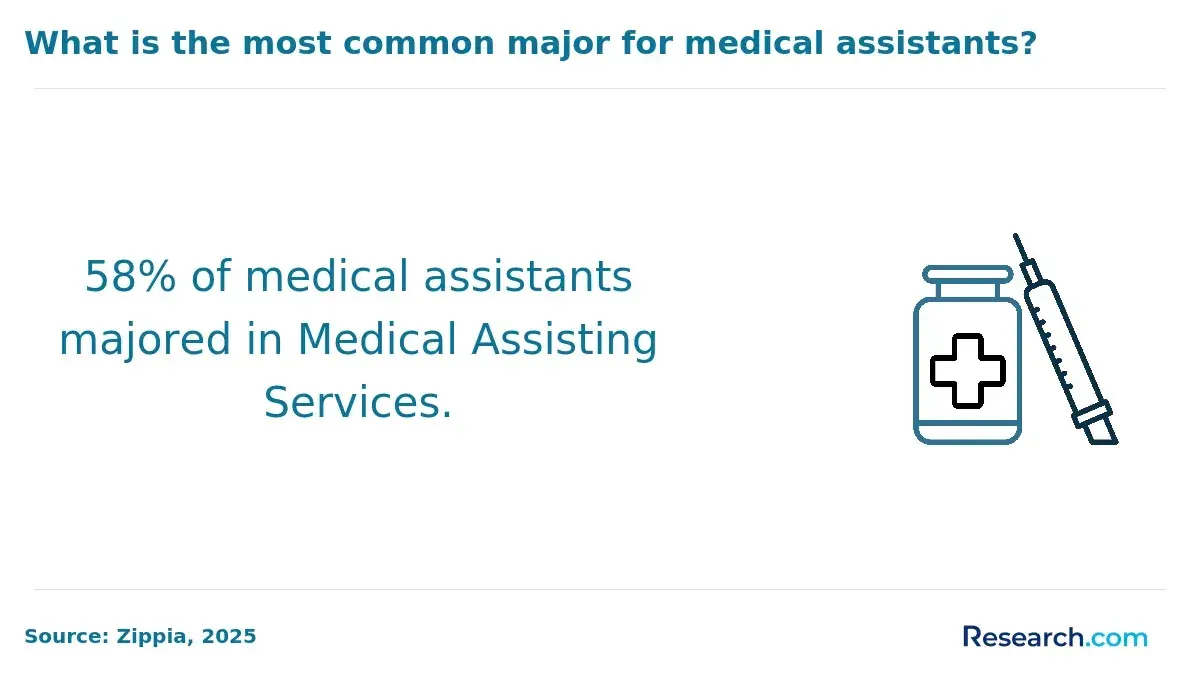
Are online medical assistant programs in Washington accredited?
Some online and hybrid medical assistant programs serving Washington students are accredited, but not all are. Accreditation is one of the most important checks you can make because it affects program quality, certification eligibility, employer confidence, and sometimes financial aid access. A low-cost or fast online program may seem attractive, but it can create problems if it does not meet recognized education standards.
The main programmatic accreditor to look for is the Commission on Accreditation of Allied Health Education Programs (CAAHEP). Another recognized accreditor in this field is the Accrediting Bureau of Health Education Schools (ABHES). Programs may also hold institutional or regional accreditation, but students should understand the difference: institutional accreditation applies to the school as a whole, while programmatic accreditation evaluates the medical assisting program specifically.
| Accreditation question | Why it matters | What to ask the school |
| Is the medical assistant program accredited by CAAHEP or ABHES? | Programmatic accreditation may affect certification exam eligibility and employer recognition. | “Can you provide the accreditor name and current accreditation status for this specific program?” |
| Is the school institutionally accredited? | Institutional accreditation can affect credit transfer and access to some aid options. | “Which agency accredits the institution, and does that apply to online students?” |
| Does the program meet Washington requirements? | State expectations can affect whether your training supports credentialing and employment. | “How does this program prepare Washington residents for state credentialing or employer requirements?” |
| Are externships included? | Employers and certification bodies expect real clinical experience. | “Who arranges placements, and what happens if there is no site near my location?” |
Accreditation also protects students from programs that overpromise. A credible school should make its accreditation status easy to verify, explain how the curriculum is reviewed, and provide clear information about certification outcomes. Medical assisting also shares an accuracy-focused work culture with billing and coding roles; Research.com’s overview of medical biller and coder responsibilities can help students understand why structured training and compliance matter in healthcare settings.
How do you get certified as a medical assistant in Washington online?
Online coursework can prepare you for certification, but certification itself is not earned by simply finishing remote classes. Students generally need to complete an approved program, document hands-on training, meet any exam requirements, and submit the required materials to the appropriate certifying or state body. Washington students should distinguish between a national certification, such as CMA, RMA, or CCMA, and any state credentialing process administered through Washington health authorities.
- Choose an accredited online or hybrid program: Look for recognition by ABHES, CAAHEP, or relevant regional accreditors. Some programs describe around 720 hours of training, including supervised clinical practice.
- Complete the required in-person clinical training: Even when lectures are online, students must demonstrate skills in a supervised setting. Washington-related program information may reference 160 hours of supervised, in-person clinical experience.
- Prepare for a national certification exam: Common options include CMA, RMA, and CCMA. Some certification pathways expect candidates to complete the exam within five years of finishing their program.
- Gather official documents: You may need transcripts, proof of program completion, externship documentation, identification, background check information, and professional conduct disclosures.
- Apply for jobs with your credential clearly stated: Employers want to see your program, externship, certification status, and practical skills. List clinical experience plainly on your resume.
The most common mistake is assuming that an online certificate automatically equals certification. It does not. A school-issued certificate of completion and a nationally recognized professional credential are different things. Before enrolling, ask the program which certification exams its graduates are eligible to take and whether exam fees are included.
How long does it take to become a medical assistant in Washington?
Most students can move from enrollment to entry-level employment in about one to two years, depending on the credential they choose, their schedule, externship availability, and whether they pursue certification immediately after graduation. Certificate and diploma programs generally take 9 to 12 months, while associate degree programs typically require about two years of full-time study.
| Stage | What happens | What can delay progress |
| Program research | Compare accreditation, cost, externship support, schedule, and certification eligibility. | Choosing based only on price or speed without checking legitimacy. |
| Coursework | Complete online classes in clinical, administrative, and professional topics. | Part-time enrollment, work obligations, or limited course availability. |
| Labs and externship | Practice hands-on skills under supervision in an approved setting. | Limited clinical sites, transportation issues, immunization requirements, or background check delays. |
| Certification preparation | Study for exams such as CMA, RMA, or CCMA if you choose that route. | Scheduling the exam late or graduating from a program that does not support exam eligibility. |
| Job search | Apply to clinics, physician offices, hospitals, school health offices, and outpatient centers. | Weak resume, no externship references, or lack of certification where employers prefer it. |
A former Washington medical assistant student described an online certificate pathway as manageable but demanding. The coursework could be completed from home, but the externship required careful scheduling. He explained that balancing remote assignments with clinical practice required discipline, yet the shorter timeline helped him enter the workforce sooner than a longer degree route would have allowed.
How much does it cost to complete a medical assistant program in Washington online?
The cost of online medical assistant training in Washington depends on the school, credential level, included materials, clinical requirements, and certification support. Tuition is only one part of the total price. Students should calculate the full cost of attendance before enrolling, especially if the program requires travel to labs or externship sites.
| Cost category | Typical amount or range mentioned by programs | Why it matters |
| Tuition | About $660 for exam-preparation courses to over $2,000 per quarter for fuller certificate or associate degree options | This is usually the largest expense, but it may or may not include books, fees, or exam vouchers. |
| Payment plans | Some options may start as low as $65 per month | Monthly plans can improve affordability, but students should still compare the total program cost. |
| Textbooks and supplies | Varies by program | Students may need books, uniforms, stethoscopes, and other clinical supplies. |
| Lab fees | Sometimes around $75 per lab course | Hands-on courses may carry separate fees even in hybrid programs. |
| Technology fees | Between $50 and $200 | Online platforms, support systems, and virtual course tools may be billed separately. |
| Exam preparation and certification fees | Exam-prep materials can cost about $80; exam registration commonly ranges from $125 to $250 | Some schools include the first exam attempt, while others make students pay separately. |
| Clinical readiness costs | Varies | Budget for immunizations, CPR certification, background checks, insurance, badges, and transportation. |
When comparing programs, ask for an itemized estimate in writing. A program with lower tuition may become more expensive once books, lab fees, technology fees, certification fees, and externship-related expenses are added. Also ask what happens financially if you cannot complete an externship on the original schedule.
Can you get financial aid for online medical assistant training in Washington?
Financial aid may be available for online medical assistant training in Washington, but eligibility depends on the school, program length, accreditation, enrollment status, and whether the program qualifies for specific aid programs. Not every short-term certificate is eligible for the same aid as a degree program, so students should verify funding before enrolling.
- Federal Grants: Grants do not have to be repaid, but they are generally tied to eligible accredited programs. Some certificate programs may not qualify.
- Student Loans: Loans may help cover tuition and related costs, but they must be repaid with interest. Borrow only after comparing expected earnings, total debt, and repayment terms.
- Scholarships: Schools, workforce organizations, and community groups may offer merit-based or need-based awards. Ask whether online students are eligible.
- Employer Tuition Assistance: Some healthcare employers help workers pay for training, especially when the credential supports advancement into clinical support roles.
- Payment Plans: Installment plans can help students avoid large upfront payments, but they are not the same as financial aid. Review fees, deadlines, and refund policies.
One Washington graduate said the hardest part was not only finding money but understanding which funding sources applied to an online certificate. Institutional scholarships and a payment schedule aligned with her part-time work made the program more manageable. Her experience shows why students should talk with both admissions and financial aid staff before signing an enrollment agreement.
What additional certifications can further enhance a medical assistant’s career in Washington?
Additional credentials can help medical assistants move into more specialized work, qualify for broader responsibilities, or stand out in competitive healthcare markets. The best add-on certification depends on whether you prefer direct patient care, diagnostic support, administrative work, or a future allied health pathway.
| Certification or skill area | How it can help | Best fit for |
| Phlebotomy | Builds blood-draw skills that may be useful in clinics, labs, and outpatient settings. | Medical assistants who want more hands-on clinical responsibility. |
| Electrocardiogram operation | Adds cardiac testing support skills for practices that perform EKGs. | Students interested in cardiology or diagnostic support. |
| Medical billing and coding | Strengthens administrative healthcare knowledge and documentation accuracy. | Medical assistants who may want front-office, revenue cycle, or hybrid clinical-administrative roles. |
| Specialty medical assisting | Can support work in areas such as ophthalmology or cardiology. | Experienced medical assistants who want a more focused clinical environment. |
Medical assisting can also help students explore other healthcare careers. For example, someone who enjoys patient support but wants a more advanced rehabilitation-focused role may later research how to become an occupational therapist in Washington. The key is to choose add-on credentials that support a clear career goal rather than collecting unrelated certificates.
What is the average salary for medical assistants in Washington?
Medical assistant pay in Washington varies by location, experience, certification, specialty skills, and employer type. Online training itself does not usually reduce salary potential if the program is credible, includes clinical experience, and prepares graduates for certification. Employers care more about competence, credentials, professionalism, and the ability to perform safely in a patient-care setting.
| Pay level | Annual salary figure | What it generally represents |
| Entry-level or lower 10th percentile | Around $43,810 per year | Newer medical assistants or workers in lower-paying settings or regions. |
| Median salary in Washington | $55,120 | A midpoint figure that reflects Washington’s relatively competitive healthcare labor market and cost conditions. |
| Experienced medical assistants | Upwards of $69,320 annually | Workers with stronger experience, advanced skills, certifications, or higher-paying employer settings. |
| Seattle-Tacoma-Bellevue area | Median salaries near $58,850 | Urban labor markets and larger healthcare systems may offer higher pay than some smaller practices. |
- Setting matters: Hospitals and large outpatient systems may pay differently than small private offices.
- Certification can matter: Employers may prefer or reward candidates who hold recognized credentials.
- Skills influence mobility: Phlebotomy, EKG, coding knowledge, and strong electronic health record skills may improve flexibility.
- Geography affects pay: Urban areas may offer higher wages, but students should also consider commuting costs and local cost of living.
Are online-trained medical assistants hired as often as campus-trained ones in Washington?
Online-trained medical assistants can be competitive for jobs in Washington when their programs are accredited, include meaningful in-person clinical practice, and prepare them for recognized certification. Employers are usually less concerned with whether lectures were online and more concerned with whether the graduate can safely perform clinical and administrative duties from day one.
- Clinical preparation is the deciding factor: Washington employers want evidence of supervised hands-on training. Programs may reference externship expectations around 180 hours, and students should be ready to explain where they trained and what they practiced.
- Certification helps standardize competence: Credentials such as Registered Medical Assistant (RMA) or Certified Clinical Medical Assistant (CCMA) can reassure employers that a candidate has met an external benchmark.
- Accreditation builds trust: A graduate from an accredited hybrid program is generally easier for employers to evaluate than a graduate from an unknown fully online course.
- Local partnerships can improve hiring access: Programs connected to Washington clinics, hospitals, or outpatient centers may help students secure externships that lead to references or job leads.
- Professionalism still matters: Attendance, communication, patient privacy, teamwork, and reliability often influence hiring as much as technical training.
Students comparing clinical and administrative healthcare pathways may also benefit from understanding the differences between medical billing and coding certificate and bachelor's degree options, especially if they are deciding between direct patient care and health information roles.
Common mistakes when choosing an online medical assistant program
- Choosing the fastest program without checking accreditation: A short timeline is useful only if the credential is respected and supports your employment goals.
- Assuming online means no clinical site visits: Medical assisting is a hands-on profession. In-person training is a normal and necessary part of legitimate preparation.
- Looking only at tuition: Books, lab fees, technology charges, certification exams, immunizations, CPR, transportation, and background checks can change the true cost.
- Not asking who arranges the externship: Some schools help place students; others expect students to find sites. That difference can affect your timeline.
- Confusing completion certificates with national certification: A school certificate and a professional credential are not the same.
- Ignoring state-specific requirements: Washington students should verify how the program supports state credentialing, employer expectations, and clinical documentation.
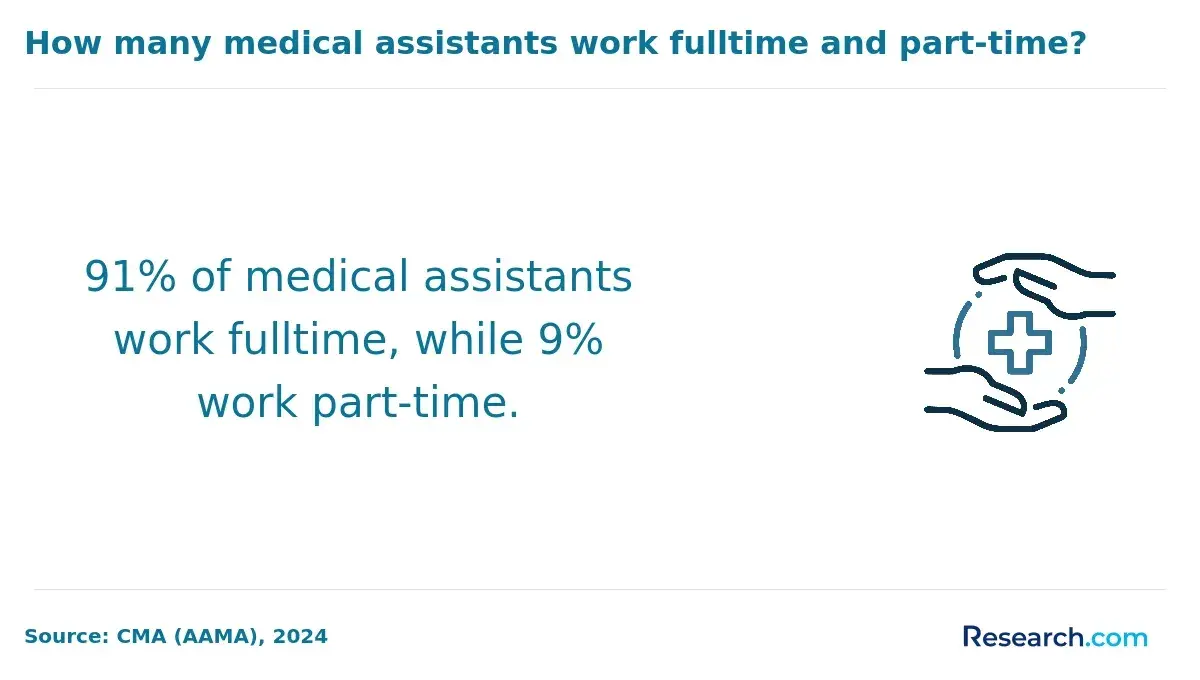
Do online medical assistant programs in Washington lead to advanced healthcare careers?
Medical assisting can be both a career and a stepping stone. The role exposes students to patient care, clinical workflow, documentation, insurance processes, scheduling, and interprofessional teamwork. That experience can help graduates decide whether they want to remain in medical assisting, specialize, or pursue further education.
- Registered Nurse (RN): Some medical assistants later apply to nursing programs after gaining patient-care experience. An associate degree route may be useful for students who want more transferable college coursework before moving toward nursing.
- Healthcare Administration: Medical assistants who enjoy operations, scheduling, compliance, and patient coordination may later pursue health services management or healthcare administration education.
- Specialized Medical Assisting: Areas such as ophthalmology, cardiology, and other specialty clinics may allow experienced medical assistants to deepen their clinical focus.
- Advanced Certifications: Add-on credentials in phlebotomy, EKG, or medical billing and coding can broaden job options. Students interested in the financial side of healthcare may also explore resources related to medical billing and coding programs with financial aid.
- Other Allied Health Fields: Experience as a medical assistant may help students clarify whether they want to pursue radiologic technology, respiratory therapy, occupational therapy support, or another clinical profession.
Questions to ask before enrolling
- Is the medical assistant program accredited by CAAHEP, ABHES, or another recognized accreditor?
- Does the program meet Washington-specific credentialing and employer expectations?
- How many clinical or externship hours are required, and where can they be completed?
- Does the school arrange clinical placements, or must students find their own?
- Which certification exams are graduates eligible to take?
- Are exam fees, books, supplies, CPR, background checks, and lab fees included in tuition?
- What percentage of coursework is online, and what must be completed in person?
- Are online students eligible for financial aid, scholarships, or payment plans?
- What happens if you cannot complete your externship on the original schedule?
- What career services are available after graduation?
What Medical Assistants in Washington Say About the Career
- Finishing an online medical assistant program through Cascade Health Academy gave me a way into healthcare while still managing responsibilities at home. The remote classes helped with flexibility, but the clinical practice showed me how much the role matters in daily patient care. Working in a local school setting made the impact even clearer because students depend on quick, calm, and accurate support throughout the day. Tyrone
- The online program at Washington Medical Training Institute was demanding, but it prepared me for the pace of healthcare work in the state. Once I started in an academic healthcare environment, I saw how useful the training was for communication, documentation, and supporting students from different backgrounds. The job has encouraged me to keep building my skills. Zara
- Studying online through Northwest Allied Health helped me move toward a career built around community service. The program emphasized practical skills and Washington-specific healthcare expectations, which made the transition into school-based medical assisting easier. Supporting young people’s physical and mental well-being is challenging, but it gives the work real purpose. Mindy
Related Articles for Nearby States
- 2027 How to Become a Medical Assistant in Oregon Online
- 2027 How to Become a Medical Assistant in Idaho Online
- 2027 How to Become a Medical Assistant in Montana Online
- 2027 How to Become a Medical Assistant in California Online
- 2027 How to Become a Medical Assistant in Nevada Online
- 2027 How to Become a Medical Assistant in Utah Online
- 2027 How to Become a Medical Assistant in Wyoming Online
- 2027 How to Become a Medical Assistant in Arizona Online
- 2027 How to Become a Medical Assistant in Colorado Online
- 2027 How to Become a Medical Assistant in New Mexico Online
References:
- Certified Clinical Medical Assistant (CCMA), University of the District of Columbia https://www.udc.edu/academics/continuing-education/certifications-and-trainings/certified-clinical-medical-assistant-ccma
- Medical Assistant Frequently Asked Questions, Washington State Department of Health https://doh.wa.gov/licenses-permits-and-certificates/professions-new-renew-or-update/medical-assistant/frequently-asked-questions
- Online Certified Clinical Medical Assistant (CCMA) with Workforce Development Kit, Eastern Washington University https://careertraining.ewu.edu/training-programs/certified-clinical-medical-assistant-wdk-vouchers/
- Online Medical Assisting Program for Washington Residents https://www.herzing.edu/healthcare/medical-assisting/washington
- Online Medical Assistant Certification for Washington https://healthprofessionalsinstitute.com/online-medical-assistant
- Can You Become a Medical Assistant Online https://www.chcp.edu/blog/can-you-become-a-medical-assistant-online/
- Online Medical Assistant Certificate Program, U.S. Career Institute https://www.uscareerinstitute.edu/online-medical-assistant-school
- Online Medical Assistant Program, Penn Foster https://www.pennfoster.edu/programs/healthcare/medical-assistant-associate-degree
- Online Medical Assistant Programs in Washington https://www.edumed.org/online-schools/medical-assistant-programs/washington-wa/
- Medical Assistant Program Costs, Edmonds College https://www.edmonds.edu/programs-and-degrees/areas-of-study/healthcare-and-health-sciences/allied-health-education/medical-assistant/costs.html
Key Insights
- Online medical assistant training in Washington is usually hybrid: lectures may be remote, but labs and externships must be completed in person.
- Accreditation is the first filter. Look for CAAHEP or ABHES programmatic accreditation when certification eligibility and employer recognition matter.
- Program length depends on the credential: certificates often take 9–12 Months, diplomas around 10 Months, associate degrees about 2 Years, and some accelerated options advertise 4–6 Months.
- Total cost includes more than tuition. Budget for supplies, lab charges, technology fees, exam fees, background checks, immunizations, CPR, and transportation to clinical sites.
- Certification is not the same as completing a school program. Ask which exams the program prepares you for and whether graduates are eligible for CMA, RMA, CCMA, or other credentials.
- Washington salaries can be strong for qualified medical assistants, with figures cited at around $43,810 for entry-level or lower 10th percentile workers, $55,120 as the state median, and upwards of $69,320 for experienced professionals.
- Employers are usually open to online-trained candidates when the program is accredited, includes solid clinical practice, and produces graduates who can perform safely and professionally.
- The best program is not simply the cheapest or fastest. Choose the option that gives you legitimate credentials, reliable externship support, transparent costs, and a clear path to your first healthcare job.
Other Things You Should Know About Becoming a Medical Assistant Online in Washington
In Washington, online medical assistant programs can be accredited by the Commission on Accreditation of Allied Health Education Programs (CAAHEP) and the Accrediting Bureau of Health Education Schools (ABHES). Accreditation ensures that programs meet educational standards and criteria required for certification and employment.
In 2027, medical assistant programs online in Washington typically include courses in medical terminology, anatomy and physiology, clinical procedures, and medical billing and coding. These foundational courses are designed to equip students with the necessary knowledge and skills to perform effectively in a healthcare setting.


