
2027 How to Become a Physical Education Teacher in Massachusetts

Co-Founder and Chief Data Scientist
Massachusetts employs over 6,000 physical education teachers, with projected job growth aligning closely to national averages, making it a stable yet competitive field. Despite budget constraints in some districts, the state's emphasis on holistic student well-being supports ongoing demand for qualified physical education instructors.
Salary averages tend to be higher than the national median, reflecting regional economic conditions and educational priorities. While some may question the long-term viability of this career given evolving educational landscapes, the physical and mental health focus within schools sustains its relevance.
This article, prepared by experts in career planning, explores the precise steps to become a physical education teacher in Massachusetts. It offers detailed, essential information to help prospective educators navigate credentialing, certification, and employment opportunities effectively.
Readers will find guidance designed to demystify the process and support informed decisions within this specific professional path.
Key Things to Know About Becoming a Physical Education Teacher in Massachusetts
- Earn a bachelor's degree in physical education or a related field from a state-approved program; this foundational step meets Massachusetts' educational requirements.
- Complete a state-approved teacher preparation program including supervised student teaching to gain practical classroom experience.
- Obtain Initial or Professional License through the Massachusetts DESE, which requires passing the MTEL exams in Communication and Literacy plus the relevant subject matter test for physical education.
- What are the education requirements to become a physical education teacher in Massachusetts?
- What skills are essential for physical education teachers in Massachusetts?
- Do PE teachers in Massachusetts need a teaching license?
- How do you get certified as a PE teacher in Massachusetts?
- Can out-of-state teachers transfer their license to Massachusetts for PE teaching?
- How long does it take to become a PE teacher in Massachusetts?
- What are the career advancement opportunities for PE teachers in Massachusetts?
- How much does it cost to become a PE teacher in Massachusetts?
- Are there scholarships for physical education teaching students in Massachusetts?
- Is there demand for physical education teachers in Massachusetts?
- What is the average salary of a PE teacher in Massachusetts?
What are the education requirements to become a physical education teacher in Massachusetts?
Formal education plays a fundamental role in preparing physical education teachers who can effectively design curriculum and encourage lifelong wellness among students in Massachusetts. This foundation ensures teachers not only understand physical development but also address wider health and educational goals.
To meet these expectations, specific academic and professional preparation requirements are established. The core education prerequisites typically include the following:
- Bachelor's Degree in Physical Education or Related Field: Aspiring teachers must earn at least a bachelor’s degree in a relevant discipline such as physical education, kinesiology, or exercise science. Obtaining a bachelor's degree in physical education in Massachusetts ensures a strong grounding in anatomy, physiology, and fitness principles.
- Completion of a State-Approved Educator Preparation Program: Candidates are required to complete an approved educator preparation program tailored to physical education. This approved educator preparation program for PE teachers in Massachusetts covers instructional methods, child development, and curriculum design specific to PE.
- Supervised Student Teaching or Practicum: Practical experience is gained through a supervised placement in a school setting, offering hands-on application of teaching strategies and classroom management under the guidance of seasoned PE educators.
- Comprehensive Coursework in Physical Education Content: Coursework includes topics such as sports psychology, nutrition, human biology, and motor skill development to equip teachers with a multidisciplinary understanding needed to promote student health holistically.
- Accreditation and Program Quality: Both the degree and the educator preparation program must hold accreditation from recognized agencies, upholding educational standards that align with Massachusetts’s expectations for effective physical education teachers.
Some candidates may also explore continuing education such as a best 1 year online masters degree in education program to deepen their expertise or expand career opportunities in educational leadership or specialized areas within physical education.
What skills are essential for physical education teachers in Massachusetts?
In Massachusetts, physical education teachers must possess a set of essential skills to effectively engage students, promote healthy lifestyles, and manage diverse classroom environments. Mastering these skills supports not only physical development but also student motivation and safety.
Below are some key capabilities that reflect the core attributes necessary for meeting physical education teacher qualifications in Massachusetts.
- Communication Skills: Clear and effective communication is crucial for conveying complex concepts related to movement, health, and teamwork to students of all ages and abilities. This skill helps maintain student engagement and promotes safety during physical activities by ensuring instructions and expectations are understood.
- Leadership: Physical education teachers must lead active, often large groups, guiding students to stay focused and cooperative. Strong leadership promotes a positive learning atmosphere, resolves conflicts, and encourages teamwork, which is vital in a state with diverse school settings and student populations.
- Adaptability: Given the wide range of student needs and varying resources available across Massachusetts schools, teachers need to be flexible in their instructional methods. The ability to modify lessons for different physical, cognitive, and emotional abilities ensures inclusive participation and effective teaching.
- Knowledge of Fitness and Health: A deep understanding of human biology, fitness principles, nutrition, injury prevention, and motor skills development underpins successful teaching. Staying current with research and aligning lessons with state and national standards is essential for fostering lifelong healthy habits.
Additional essential competencies include pedagogical expertise and a commitment to continued professional development, both of which are emphasized in Massachusetts educator preparation programs. For those exploring formal education pathways, the list of best online teaching degree programs offers options tailored to developing these skills.
Do PE teachers in Massachusetts need a teaching license?
Licensing requirements help maintain consistent teaching quality and ensure that physical education teachers in Massachusetts possess the necessary knowledge and skills to support student health and fitness effectively. These standards contribute to uniform student outcomes and uphold public confidence in the educational system.
In Massachusetts public schools, physical education teachers must hold an active teaching license issued by the Department of Elementary and Secondary Education (DESE).
This credential requires completing a bachelor’s degree from an accredited institution, passing two Massachusetts Tests for Educator Licensure (MTEL)—one in Physical Education and one in Communication and Literacy Skills—and obtaining at least an Initial License.
Educators can progress to Professional Licensure by gaining experience and additional qualifications. These rigorous requirements apply across grade levels from PreK–8 and 5–12, reflecting the state's emphasis on subject-specific expertise and pedagogical skill.
Private and charter schools typically operate under more flexible hiring standards. Private schools may accept teachers with relevant degrees or experience without state licensure, whereas charter schools, despite being publicly funded, often set their own criteria that might include alternative certifications or no formal license.
This flexibility can allow faster entry into teaching roles but may come with less job security and varied compensation compared to public school positions. Consequently, aspiring PE teachers in Massachusetts must carefully weigh these differences, as the choice of school type directly influences both the credentialing pathway and long-term career prospects.
How do you get certified as a PE teacher in Massachusetts?
Certification plays a vital role in preparing physical education teachers in Massachusetts to effectively support student health and wellness. By requiring educators to meet state standards, certification ensures teachers possess both subject expertise and practical skills necessary for promoting lifelong fitness habits among students.
Below are the typical steps for becoming a certified PE teacher in Massachusetts:
- Complete a Bachelor’s Degree in Physical Education or Related Field: Earn a bachelor’s degree from an accredited institution, focusing on subjects such as physical education, kinesiology, or exercise science. The coursework emphasizes understanding human movement, fitness concepts, and teaching strategies tailored to physical activity.
- Finish a State-Approved Teacher Preparation Program: Enroll in a Massachusetts Department of Elementary and Secondary Education-approved program that combines academic coursework with supervised student teaching. This step helps develop classroom management skills and practical lesson planning experience.
- Pass Required Massachusetts Tests for Educator Licensure (MTEL): Successfully complete two exams: the Communication and Literacy Skills test and the Physical Education Subject Matter test, which assess both content knowledge and essential communication abilities.
- Apply for Certification through the Massachusetts Department of Elementary and Secondary Education: Submit an application for licensure online after meeting education and testing requirements. Initial licensure typically lasts five years and can be renewed, with professional licensure requiring additional experience and professional development.
Licensed teachers also need ongoing professional development to maintain certification and stay current with evolving educational standards and fitness guidelines.
When speaking with a PE teacher from Massachusetts who completed this process after graduating from a local school, he emphasized the blend of challenge and reward involved. “The MTEL exams were definitely the hurdle that required focused preparation,” he explained, noting that balancing study with student teaching demanded careful time management.
He reflected on how the teacher preparation program was valuable in exposing him to real classroom scenarios but admitted that no course fully captures the complexities faced in an active school environment. “Applying for certification felt like a formal milestone—a confirmation that all the work and learning paid off.”
His experience illustrates how certification in Massachusetts is not just a bureaucratic step but a meaningful transition into professional practice, requiring determination and adaptability.
Can out-of-state teachers transfer their license to Massachusetts for PE teaching?
Massachusetts does not offer full, automatic reciprocity for out-of-state physical education teaching licenses. Instead, it participates in the NASDTEC Interstate Agreement, which helps facilitate the licensure transfer process but does not guarantee approval.
Out-of-state PE teachers must meet Massachusetts-specific requirements, including passing the Massachusetts Tests for Educator Licensure (MTEL). Candidates holding a valid out-of-state PE license with at least three years of teaching experience may qualify for a temporary license valid for one year.
However, to move beyond this temporary status, educators must pass both the Communication and Literacy Skills test and the PE content MTEL exams.
Additional coursework or other state requirements may also be necessary before obtaining an initial or professional license. This approach is designed to ensure all educators meet consistent standards in Massachusetts, regardless of their prior credentials from other states.
The process presents both benefits and challenges for PE teachers moving to Massachusetts. The temporary license allows experienced out-of-state teachers to begin working quickly, addressing immediate staffing needs and providing continuity for schools.
On the other hand, the requirement to pass state-specific tests and possibly complete further coursework means teachers must invest additional time and effort after relocation, which can delay their transition to a permanent role.
This requirement emphasizes subject-matter competency and alignment with state teaching standards but may pose a barrier for some experienced educators.
Despite these hurdles, Massachusetts’s streamlined but rigorous process reflects a balance between welcoming qualified teachers and maintaining high standards for physical education professionals within the state’s education system.

How long does it take to become a PE teacher in Massachusetts?
The time required to become a physical education teacher in Massachusetts varies, influenced by the degree program you select, the structure of your teacher preparation, and the state's certification process.
While the traditional path involves a sequence of defined steps, alternative routes and individual circumstances can adjust this timeline.
- Bachelor’s Degree Completion (4 years): Earning a bachelor’s degree in physical education or a related field typically takes about four years. This degree provides the essential academic foundation, covering areas such as health, fitness, and teaching methodologies, which are critical in PE teacher education requirements in Massachusetts.
- Educator Preparation Program (0–1 year): Many institutions integrate state-approved educator preparation within the undergraduate degree; however, if not included, an additional year may be needed. This component offers training in teaching techniques and classroom management, ensuring candidates are well-prepared for real-world school environments.
- Student Teaching Experience (1 semester to 1 year): Hands-on teaching experience under supervision is mandatory and usually spans one semester but can extend up to a full academic year depending on the program. This stage is vital to apply learned theory to practice and refine instructional skills in a classroom setting.
- State Licensing Exams (Variable): Candidates must pass specific Massachusetts Tests for Educator Licensure, including communication and subject matter tests. These exams are generally taken during or after the final academic year and are essential for demonstrating competency, although preparation times vary individually.
- Application for License and Background Checks (Weeks to months): After meeting educational and exam requirements, applying for the Initial License involves administrative procedures and background checks. Processing can take from several weeks to a few months, slightly extending the overall timeline.
For those exploring various degree options, it may be helpful to review a list of degrees in education to better understand pathways that fit their goals and timelines.
What are the career advancement opportunities for PE teachers in Massachusetts?
Physical education teachers in Massachusetts can expand their careers through diverse advancement routes that build on classroom experience and subject-matter expertise. Opportunities often include transitioning into departmental leadership, specialized coaching roles, curriculum development, and even administrative positions after pursuing further qualifications. Many educators enhance their competencies by obtaining additional certifications or engaging in graduate studies, which can pave the way toward roles in educational leadership or specialized athletic programs. Prospective candidates should evaluate their educational planning, for example by reviewing how long does it take to become a teacher in Massachusetts, to align career goals with the necessary steps for professional growth.
How much does it cost to become a PE teacher in Massachusetts?
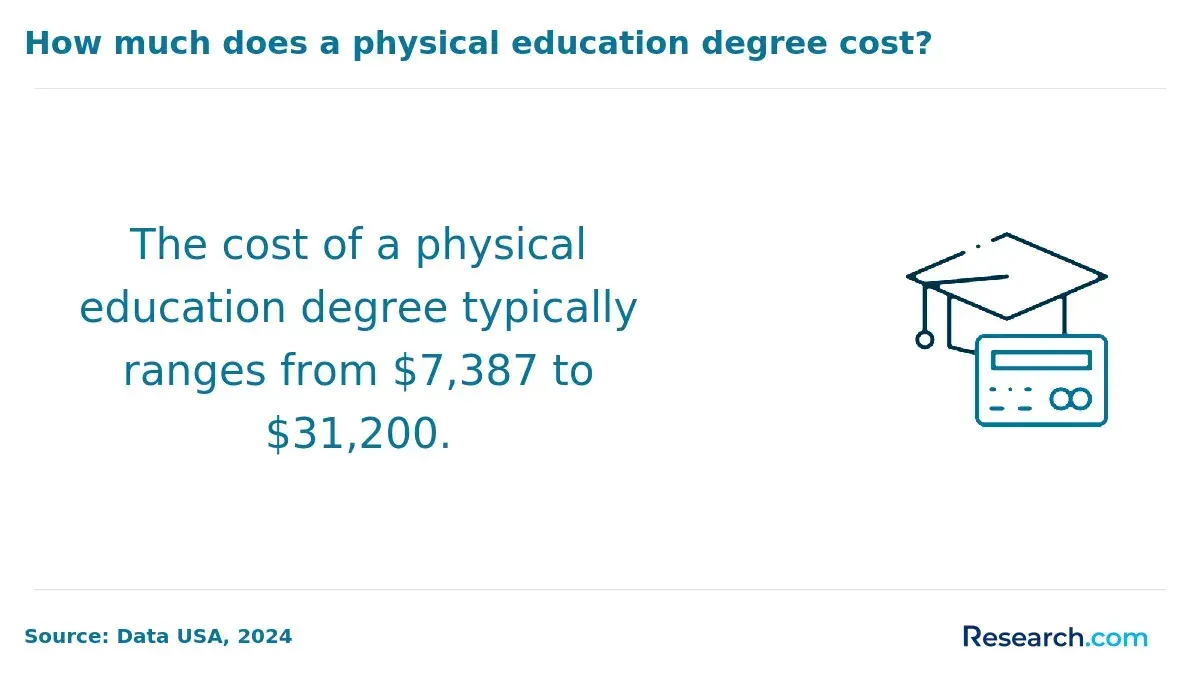
The cost of physical education teacher certification in Massachusetts encompasses several key expenses that prospective educators must weigh carefully. Tuition fees for a bachelor's degree form the largest portion, but additional costs such as teacher preparation programs, testing, and licensing fees also contribute significantly.
Understanding these components can help better plan the financial investment required. Below are the main cost factors to consider.
- Bachelor’s Degree Tuition: Most aspiring PE teachers in Massachusetts need a bachelor’s degree in physical education or a related area. Tuition varies widely depending on the institution, with public universities charging approximately $10,700 to $11,300 annually for in-state students, while private colleges may exceed $38,000 per year.
- Teacher Preparation Program: These programs, often included in undergraduate degrees, provide necessary pedagogy training. For those without an education degree, post-baccalaureate or alternative certification options are available but tend to be costly, commonly charging between $475 and $1,073 per credit, with total credits ranging from 30 to 40.
- Licensing and Exam Fees: Licensing requires passing state exams which presently cost $139 for the Physical Education Subject Matter test and $112 for the Communication and Literacy Skills test. Additionally, the initial application for the teaching license adds $100 to the expenses.
- Books, Materials, and Additional Costs: Course materials often add several hundred dollars annually. Fingerprinting and background checks range from $35 to $55, while ongoing professional development, mandatory for license renewal, can also affect the total cost. Incidental expenses like transportation for student teaching should be kept in mind as well.
Those weighing the Massachusetts PE teacher education tuition and fees might also consider more flexible options, such as enrolling in most affordable online library science masters degrees, which can sometimes offer cost-effective pathways related to education fields.
Are there scholarships for physical education teaching students in Massachusetts?
Managing education costs is a significant challenge for aspiring physical education teachers in Massachusetts. Scholarships and financial aid not only ease this burden but also encourage a diverse and skilled workforce to enter the profession. Various forms of support target different needs, from federal programs to state and institutional resources.
- Federal Student Aid (FAFSA): Completing FAFSA is essential to access federal grants, loans, and work-study options, forming the foundation for most financial aid in Massachusetts.
- Tomorrow’s Teachers Scholarship Program: Offers up to $25,000 per year for eligible students committed to teaching in Massachusetts public schools, covering broad educational expenses with a service obligation attached.
- Institutional Scholarships: Colleges frequently provide merit- or need-based awards for education majors that can supplement other aid sources.
- TEACH Grant: Provides up to $4,000 annually for students ready to teach in low-income schools, requiring a signed service agreement.
- Loan Forgiveness Programs: Federal and state initiatives like Public Service Loan Forgiveness help reduce debt for those teaching in high-need areas over time.
A PE teacher from Massachusetts, who graduated from a local university, shared how navigating multiple aid sources was both daunting and rewarding. She recalled, “Applying for different scholarships felt overwhelming at first, but each award I received allowed me to focus more on my studies than my finances.”
Her experience with the Tomorrow’s Teachers Scholarship was pivotal, especially because balancing part-time jobs with coursework was a constant challenge. She appreciated that the commitment to teach in Massachusetts public schools felt like a meaningful investment in her future community.
Reflecting now, she emphasizes that proactively seeking financial aid “makes a huge difference, even if the process seems complex early on.”
Is there demand for physical education teachers in Massachusetts?
Several key factors shape the demand for physical education teachers in Massachusetts, including school enrollment trends, state health initiatives, and workforce retirements. As schools place increasing emphasis on student well-being, both academically and physically, the need for qualified educators in physical education grows.
Retirement of veteran teachers further amplifies openings, creating a dynamic job market influenced by both policy and demographic changes.
The demand for physical education teachers is particularly strong in public schools, especially in urban centers and underserved districts where staffing shortages persist. While private schools also employ PE teachers, the majority of opportunities are concentrated in public education systems serving most K–12 students.
Job growth for K–12 teachers nationally is expected to be around 4% through 2030, and Massachusetts is projected to follow this trend due to its competitive salaries and higher cost of living.
Districts increasingly value candidates with expertise not only in physical education but also in health, wellness, and social-emotional learning aspects, widening the scope of skills needed for new hires.
This evolving landscape means many physical education teacher job openings in Massachusetts are tied to schools striving to meet broader student health goals.
These trends create a favorable job outlook for aspiring physical education teachers willing to work in high-need or underserved areas of Massachusetts. Candidates with advanced credentials or specialized skills in health education may find even more opportunities as districts seek to address holistic student wellness.
For those interested in furthering their qualifications, pursuing a phd in education online can be a strategic step to stand out in this evolving field.
What is the average salary of a PE teacher in Massachusetts?
In Massachusetts, PE teachers earn substantially more than the national average, with salaries ranging from $66,568 to $81,070, reflecting the state's higher cost of living and competitive education sector.
Salary remains a crucial factor for those considering a career in physical education in Massachusetts, as it impacts both financial stability and professional satisfaction.
Several key factors influence these salary variations across the state.
- Years of Experience: Entry-level PE teachers typically earn about $59,802 annually, while experienced educators can make up to $106,007, demonstrating the clear financial benefits of longevity in the profession.
- Education Level: Holding advanced degrees, such as a master’s or additional graduate credits, generally results in higher pay compared to only having a bachelor’s degree, reflecting state and district pay scales.
- School Type (Public vs. Private): Public school PE teachers usually receive higher salaries due to union contracts and state policies, whereas private schools may offer lower base salaries but different benefits.
- Geographic Location Within the State: Salaries vary moderately by location, with cities like Edgartown offering salaries about 7.7% above the state average, though differences rarely exceed 7%, indicating relative regional parity.
The earning potential for PE teachers in Massachusetts illustrates the balance between the challenges of rigorous certification and educational requirements and the rewards of competitive compensation in a state committed to quality education.
What Do Physical Education Teachers in Massachusetts Say About Their Career?
- Completing my physical education degree at Worcester Academy gave me a strong foundation in both theory and practice, preparing me well for the dynamic environment of teaching in Massachusetts. Starting my career in a local school was both exciting and challenging, allowing me to see firsthand how important physical activity is to children's overall development. Massachusetts offers abundant resources for PE teachers, from athletic facilities to community health initiatives, which has made my job incredibly rewarding. I especially appreciate the state’s focus on holistic student well-being, fostering a supportive atmosphere for growth beyond academics. Teaching here has truly fueled my passion for promoting lifelong healthy habits in young people. Whitney
- Reflecting on my time at Boston Latin School, where I completed my certification, I recognize how the rigorous academic environment prepared me to handle diverse student needs with patience and professionalism. Entering the workforce in a local school helped me develop not only my teaching skills but also a deeper understanding of how physical education can positively influence community health. Massachusetts’ emphasis on continuous professional development has allowed me to attend workshops and courses that keep me updated with the latest educational practices. This career path has been an eye-opening journey of personal growth and a chance to contribute meaningfully to students’ lives. Frederick
- Massachusetts’ unique blend of urban centers and natural landscapes has offered incredible opportunities to integrate outdoor activities into my teaching, which I found invaluable after completing my studies at Cambridge Rindge and Latin School. The variety of sports and wellness programs here caters to diverse student interests, encouraging inclusivity and teamwork. I’ve enjoyed the stability and career growth prospects that come with being a PE teacher in this state, especially with the support of a tight-knit educational community. This role allows me to be a positive role model, inspiring students to embrace an active lifestyle amidst the academic pressures they face. Koko
Related Articles for Nearby States
- 2027 How to Become a Physical Education Teacher in Rhode Island
- 2027 How to Become a Physical Education Teacher in Connecticut
- 2027 How to Become a Physical Education Teacher in New Hampshire
- 2027 How to Become a Physical Education Teacher in New York
- 2027 How to Become a Physical Education Teacher in Vermont
- 2027 How to Become a Physical Education Teacher in New Jersey
- 2027 How to Become a Physical Education Teacher in Maine
- 2027 How to Become a Physical Education Teacher in Pennsylvania
- 2027 How to Become a Physical Education Teacher in Delaware
- 2027 How to Become a Physical Education Teacher in Maryland
References:
- Teacher Fields and Grade Levels - Office of Educator Licensure https://www.doe.mass.edu/licensure/academic-prek12/teacher/field-grade-levels.html
- How to Become a PE Teacher in Massachusetts | Requirements for PE Teacher Jobs in MA https://www.peteacheredu.org/massachusetts/
- Physical Education PreK-8 and 5-12, Initial, Post-baccalaureate Licensure | Westfield State University https://www.westfield.ma.edu/academics/degrees/physical-education-prek-8-and-5-12-initial-post-baccalaureate-licensure
- Licensure https://massteacher.org/employment-and-licensure/licensure
- Physical Education: Initial Licensure | Springfield College https://springfield.edu/graduate-programs/physical-education-initial-licensure
- Physical Education Degrees in Massachusetts | Search Schools – Education Degree https://www.educationdegree.com/programs/physical-education/massachusetts/
- Physical Education, Master of Arts in Teaching | Salem State University https://www.salemstate.edu/academics/college-arts-and-sciences/sport-and-movement-science/graduate-programs-physical-education/physical-education-master-arts-teaching
- Some candidates may also explore continuing education such as a to deepen their expertise or expand career opportunities in educational leadership or specialized areas within physical education. https://research.com/degrees/best-1-year-online-masters-in-education-programs
- Teacher License Reciprocity: State Profiles - Education Commission of the States https://www.ecs.org/teacher-license-reciprocity-state-profiles/
- Physical education teacher salary in Massachusetts ‐ CareerExplorer https://www.careerexplorer.com/careers/physical-education-teacher/salary/massachusetts/
Other Things You Should Know About Becoming a Physical Education Teacher in Massachusetts
In 2027, to become a certified physical education teacher in Massachusetts, individuals must complete a bachelor’s degree, a teacher preparation program, and pass the Massachusetts Tests for Educator Licensure (MTEL). Additionally, obtaining Initial Licensure requires CPR and First Aid certification. --- **Question** What are the educational prerequisites for aspiring PE teachers in Massachusetts in 2027? **Answer** Aspiring PE teachers in Massachusetts in 2027 must have a bachelor’s degree preferably in physical education or a related field. Additionally, they need to complete a state-approved teacher preparation program to gain the necessary teaching credentials. --- **Question** Does Massachusetts offer alternative certification for PE teachers in 2027? **Answer** Yes, Massachusetts offers alternative certification routes in 2027. Individuals can work under a Preliminary License, gaining classroom experience while completing necessary coursework to earn full teacher certification in physical education. --- **Question** Are there any continuing education requirements for PE teachers in Massachusetts in 2027? **Answer** Yes, in 2027, PE teachers in Massachusetts must complete professional development activities to renew their teaching license. This may include workshops, courses, or other educational opportunities to ensure they remain updated with the latest teaching strategies and standards.
Massachusetts does offer alternative certification options for aspiring Physical Education (PE) teachers, primarily through programs designed to expedite licensure for individuals who hold a bachelor's degree but do not have traditional teacher preparation.
These alternative routes typically require candidates to enroll in a state-approved educator preparation program while teaching under a provisional license. This pathway allows candidates to gain practical experience in the classroom while completing necessary coursework.
However, certification specifically for PE teachers demands meeting state standards for health and physical education, and candidates must demonstrate competency in these areas alongside general teaching skills.
The Massachusetts Department of Elementary and Secondary Education oversees the certification process for PE teachers. It sets requirements, approves teacher preparation programs, and issues licenses. Aspiring teachers must apply to this department to obtain their initial teaching license for physical education.


