
2027 How to Become a Police Officer: Education Requirements in Pennsylvania

Co-Founder and Chief Data Scientist
Becoming a police officer in Pennsylvania offers a rewarding career dedicated to public safety and community service. In 2023, Pennsylvania employed over 18,000 sworn officers, reflecting steady job availability and growth in law enforcement. The profession demands not only physical readiness but also a solid educational foundation. Understanding the education requirements is crucial for those aspiring to join the force and succeed.
This article, prepared by career planning experts, will guide readers through Pennsylvania’s specific educational criteria. It aims to clarify necessary qualifications and provide practical insights to help aspiring officers confidently navigate their path into law enforcement.
Key Things to Know About Becoming a Police Officer in Pennsylvania
- A high school diploma or GED is the minimum educational requirement to begin police training in Pennsylvania.
- Many departments prefer candidates with at least 60 college credits or an associate degree in criminal justice to improve job prospects.
- Completion of the Municipal Police Officers’ Education and Training Commission (MPOETC) basic training academy is mandatory before official appointment.
- What is the minimum education requirement to become a police officer in Pennsylvania?
- Which majors are most recommended for aspiring police officers in Pennsylvania?
- What subjects are taught in Pennsylvania police academy?
- Can military service replace education requirements for police officers in Pennsylvania?
- How much does it cost to get a police officer education in Pennsylvania?
- Are scholarships available for aspiring police officers in Pennsylvania?
- Can police officers transition to legal and paralegal careers in Pennsylvania?
- What certifications benefit a police officer's career development in Pennsylvania?
- What roles can you get as a police officer in Pennsylvania?
- What is the average salary of police officers in Pennsylvania?
- What education trends are affecting law enforcement careers in Pennsylvania?
What is the minimum education requirement to become a police officer in Pennsylvania?
Education forms the foundation for effective law enforcement, equipping officers with knowledge of legal frameworks, ethical responsibilities, and procedural skills. Across the United States, the minimum education requirement for police officer roles varies, reflecting diverse local policies and workforce expectations. In Pennsylvania, this is clearly defined to ensure candidates meet essential criteria before entering the field. Understanding the minimum education requirement for a police officer in Pennsylvania helps hopeful candidates focus their preparation efficiently. Below are the core educational standards that aspiring officers must meet:
- High School Diploma or GED: Pennsylvania requires all police officer candidates to hold at least a high school diploma or a General Educational Development certificate. This establishes a foundational level of literacy and comprehension necessary for academy training and law enforcement duties.
- Standardization by MPOETC: The Municipal Police Officers’ Education and Training Commission oversees the minimum education requirements statewide, ensuring consistency across municipal departments. While some agencies may require more, a high school diploma or GED is universally recognized for eligibility.
- Documentation and Verification: Applicants must provide proof of their educational credentials when applying to police academy programs. This verification supports candidacy through the competitive selection process that includes written, oral, and physical exams.
Meeting the high school diploma or GED requirements for Pennsylvania police officer positions is an accessible entry point, enabling motivated individuals to pursue this demanding yet rewarding career. To complement these requirements, consider exploring specialized training or continuing education in forensic and law enforcement topics. For instance, if you're interested in advancing your knowledge, the top affordable forensic science master’s online can provide valuable expertise for career development.
Which majors are most recommended for aspiring police officers in Pennsylvania?
Choosing the right college major can significantly strengthen your qualifications as an aspiring police officer in Pennsylvania and help open doors to advancement opportunities within law enforcement. Departments across the state increasingly seek candidates with relevant academic backgrounds, recognizing the value of strong critical thinking, communication, and leadership skills developed through higher education. Below are the most recommended majors that align well with a successful policing career in Pennsylvania.
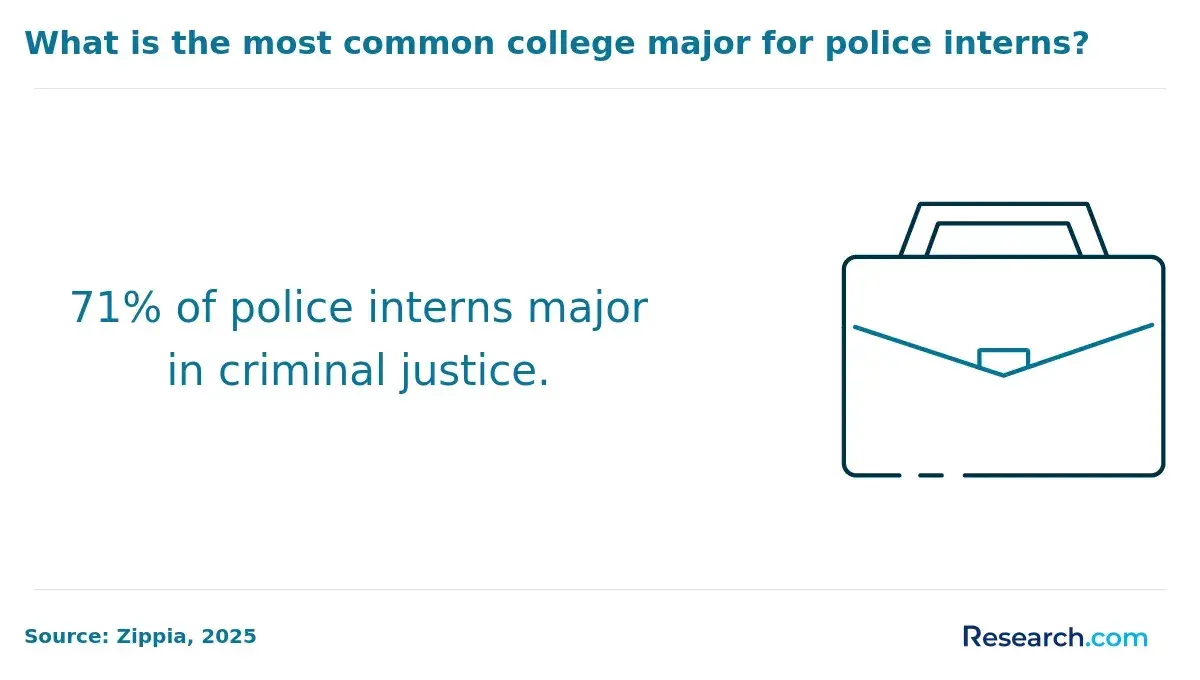
- Criminal Justice: This major is directly tailored for future police officers. It combines theoretical knowledge with practical training, often including preparation for the Act 120 Municipal Police Academy, essential for municipal policing in Pennsylvania. The curriculum covers law enforcement procedures, ethics, and community relations, giving graduates a comprehensive understanding that departments highly value.
- Criminology: Criminology explores the causes and prevention of crime and sharpens research and analytical skills. Officers with this background contribute by applying data-driven insights to crime trends, making them valuable assets to Pennsylvania law enforcement agencies seeking evidence-based strategies.
- Psychology: Understanding human behavior is crucial for policing. Psychology majors are well-prepared to manage mental health situations, support victims, and communicate effectively during stressful encounters. For those interested in specialized areas, exploring the top-ranked online forensic science programs can be a strong complement to traditional police training.
- Sociology: This major provides deep insight into social dynamics and community structures. Officers with sociology backgrounds are better equipped to serve diverse populations and address systemic issues, a quality increasingly valued in Pennsylvania police departments focused on community-oriented policing.
- Political Science: Knowledge of government systems and public policy gained through this major helps officers understand the regulatory environment and prepares them for future supervisory or administrative roles within law enforcement agencies.
- Law (Pre-Law or Legal Studies): A legal education equips candidates with an understanding of constitutional rights and court procedures, essential for upholding justice and ensuring fair policing. This background also signals professionalism and readiness for leadership positions.
- Public Administration: Focused on management and organizational skills, this major prepares officers for roles in supervision, training, and administration, areas where Pennsylvania police departments seek strong leadership capable of navigating complex bureaucratic processes.
What subjects are taught in Pennsylvania police academy?
Training at the Pennsylvania police academy equips recruits with a solid foundation of skills, knowledge, and ethical judgment required to serve their communities effectively. This rigorous program blends classroom learning with hands-on exercises to prepare officers for the complex challenges they will encounter in the field.
- Criminal Law and Procedures: Understanding the laws of arrest, search and seizure, and constitutional rights enables officers to enforce the law correctly while respecting individual freedoms, which is vital for just and lawful policing.
- Firearms Training: Mastery of handguns, shotguns, and patrol rifles, combined with stress-based scenario training, ensures officers can respond confidently and safely to threats, protecting both themselves and the public.
- Defensive Tactics: Training in self-defense, restraint, and less-lethal weapons teaches officers how to control confrontations safely and apply force responsibly, reducing risks during critical encounters.
- Emergency Vehicle Operations: Learning pursuit techniques, patrol driving, and crash investigation prepares officers to respond quickly and safely in emergencies, minimizing harm during high-stress situations.
- Ethics and Human Relations: Emphasizing ethical decision-making and cultural awareness helps officers build trust within diverse communities and promotes fair treatment for all individuals.
- Community Policing: Officers develop skills to engage collaboratively with community members, addressing local concerns and building partnerships that foster safer neighborhoods.
- Responding to Special Needs: Instruction on crisis intervention and mental health awareness equips officers to handle sensitive situations effectively, improving outcomes for individuals in crisis.
- Physical and Emotional Readiness: Recruits build fitness and stress management capabilities, ensuring they maintain resilience and well-being throughout their demanding careers.
Can military service replace education requirements for police officers in Pennsylvania?
In Pennsylvania, military service offers advantages in the police hiring process, but does not replace basic education requirements—a high school diploma or GED is still mandatory. Veterans may receive preference points under civil service rules and, if they served in military police, security forces, or investigative roles, may qualify for certain police training waivers. However, military experience alone cannot substitute for the state’s educational standards.
These training waivers allow some applicants with prior military police experience to bypass parts of the basic police academy, but they do not waive the need for proper educational credentials. In essence, Pennsylvania recognizes and rewards law enforcement experience gained in the military by streamlining certain training processes, but education remains a foundational requirement. Veterans interested in a career in Pennsylvania law enforcement should emphasize their military law enforcement roles to maximize these benefits while ensuring they meet the educational minimums mandated by the state.
When I spoke with a police officer from Pennsylvania about his journey, he reflected on the importance of balancing his military background with state requirements. A graduate of a well-regarded local police academy, he shared that although his years as military police brought valuable skills, he still had to complete the academy to meet the formal certification standards. "My military experience gave me a strong foundation in handling stressful situations and understanding law enforcement principles," he said. "But Pennsylvania’s standards required me to prove I had the educational basics and complete the academy training to legitimize my transition." He described moments of frustration coupled with pride during the process—knowing his service was respected, yet recognizing the necessity of adapting to civilian law enforcement education standards. This blend of respect for his past and commitment to new learning shaped his success and personal growth as a police officer in Pennsylvania.
How much does it cost to get a police officer education in Pennsylvania?
The cost of becoming a police officer in Pennsylvania varies widely depending on the educational path chosen. Candidates may opt for police academy tuition in Pennsylvania, pursue a community college program, or attend a university for a related degree, each with its own expenses. Knowing these costs upfront helps you plan your journey effectively and invest wisely in your future career.
- Police Academy Tuition: Municipal police academies typically charge for Act 120 basic training, with tuition often around $4,950 to $6,000, depending on the academy.
- Community College Tuition: Associate degrees in criminal justice at Pennsylvania community colleges generally range from $4,500 to $6,000 per year, totaling $9,000 to $12,000 for two years, excluding books and fees.
- University Tuition: Bachelor’s degree programs in criminal justice or police science cost between $8,000 and $18,000 annually for in-state students, with total expenses reaching $32,000 to $72,000 over four years.
- Uniforms and Equipment: Expect to spend about $300 to $700 on required uniforms and essential gear during academy training.
- Testing and Examination Fees: Some academies include physical fitness and reading exam fees in tuition; otherwise, these tests typically cost $50 to $150.
- Medical and Psychological Exams: Required evaluations usually range from $150 to $400 depending on the provider.
- Background Checks and Fingerprinting: These mandatory clearances generally cost between $30 and $75.
- Graduation and Certification Fees: Additional fees upon program completion average $25 to $100 for certification and graduation processing.
- Advanced or Graduate Education: For those pursuing higher-level roles, graduate programs like the University of Pennsylvania’s Master of Applied Criminology and Police Leadership can cost between $30,000 and $60,000 for the entire degree.
Planning your path carefully is key, especially when weighing police academy tuition in Pennsylvania versus community college or university expenses. For officers interested in specialized fields, education in areas such as forensic psychology schools can open additional career opportunities and require separate investment considerations.
Are scholarships available for aspiring police officers in Pennsylvania?
Scholarships and targeted financial aid play a vital role in helping aspiring police officers in Pennsylvania manage the costs of education and training. These funds reduce the economic pressure of police academy fees, degree programs, and related certifications, making the path to a law enforcement career more accessible and achievable.
- State and Local Law Enforcement Association Scholarships: Open primarily to Pennsylvania residents pursuing degrees in criminal justice or police-related fields, these scholarships typically require academic achievement and an essay, providing support for tuition and educational expenses to future officers committed to serving locally.
- Scholarships for Children of Police Officers: These awards provide financial assistance to families of active, retired, or fallen officers, covering tuition, room, board, or K-12 private education costs, with an annual award ranging from $1,000 to $10,000.
- Memorial and Community-Funded Scholarships: Targeted at high school seniors from specific districts, these locally funded awards encourage students to pursue public service careers by helping with undergraduate tuition.
- University and College-Based Criminal Justice Scholarships: Available through institutions like Indiana University of Pennsylvania, these scholarships support full-time criminology majors with strong academic records, sometimes honoring family ties to fallen officers, to ease the cost of higher education.
- General Criminal Justice or Public Service Scholarships: Offered by many Pennsylvania colleges, these scholarships are merit- or need-based and accessible to a broad range of students, helping cover tuition, fees, and occasionally books or equipment.
When I spoke with a Pennsylvania police officer who graduated from a local academy, she reflected on how scholarships were game changers in her journey. “Balancing work and studies was tough, but the financial aid made it possible to focus on training rather than stressing over bills,” she shared. She recalled applying for several local and association scholarships, each easing the way to her badge by covering tuition costs she couldn’t manage otherwise. “It wasn’t just money—it was encouragement knowing there were programs designed to support those of us committed to this career.” Her story underscores the real impact these awards have, transforming financial hurdles into stepping stones toward a career in law enforcement.
Can police officers transition to legal and paralegal careers in Pennsylvania?
Leveraging their extensive knowledge of law enforcement and on-the-ground experience, officers may consider alternative legal career paths that capitalize on their investigative and procedural skills. Transitioning into legal support roles, such as a paralegal, can provide a new avenue for career advancement and personal growth. Pursuing specialized education and professional certifications tailored to legal practices further enhances this opportunity, offering a structured pathway to diversify career options. For detailed guidance on the necessary steps and educational requirements, review how to become a paralegal in Pennsylvania.
What certifications benefit a police officer's career development in Pennsylvania?
Specialized certifications play a crucial role in enhancing a police officer’s abilities, boosting job performance, and unlocking new advancement opportunities within Pennsylvania’s law enforcement agencies. Pursuing these credentials reflects an officer’s dedication to mastering their craft and meeting evolving department expectations through advanced law enforcement training in Pennsylvania.
- Firearms Training Certification: This involves comprehensive instruction in handling firearms safely, marksmanship, and regular recertification. Officers skilled in advanced firearms training often qualify for tactical units or firearms instructor positions, which broaden leadership roles and specialized duties.
- Emergency Medical Response Certification: Building on basic academy skills like first aid and CPR, additional certifications—such as EMT training—enable officers to provide critical medical care at incidents. This expertise is highly valued in both urban and rural departments, enhancing an officer’s versatility and community impact.
- Criminal Investigation Certification: Focused on evidence gathering, interviewing techniques, and case management, this certification prepares officers for detective work and involvement in major crime units. It significantly improves prospects for promotion and participation in specialized task forces.
- Cybercrime and Digital Evidence Certification: Addressing the growing challenge of cybercrime, this training educates officers to collect, analyze, and secure electronic evidence. Departments increasingly need such skills to confront internet-related offenses, especially in larger jurisdictions.
- Crisis Intervention and Mental Health Training: Crisis Intervention Team (CIT) certification equips officers with strategies to manage encounters involving mental health crises, aiming to reduce escalation and strengthen community trust. This is a valued asset in today’s policing landscape.
- Leadership and Supervisory Training: This training hones skills in ethics, management, and supervision, positioning officers for sergeant and higher ranks. Departments prioritize these certifications when selecting candidates for leadership roles.
Achieving these police officer certification requirements in Pennsylvania not only sharpens practical skills but also signals readiness for career growth. Officers looking to deepen their knowledge and advance might also explore allied fields like forensic psychology degrees and careers, which complement law enforcement expertise and open additional pathways.
What roles can you get as a police officer in Pennsylvania?
Law enforcement careers in Pennsylvania extend far beyond basic patrol, offering officers the chance to develop specialized skills that fit their strengths and passions. Each role demands unique training and expertise, allowing officers to make meaningful contributions to public safety throughout the state.
- Patrol Officer: Handles general law enforcement duties like responding to emergencies and preventing crime, requiring foundational training and certification.
- Detective/Criminal Investigator: Conducts detailed investigations and gathers evidence, building on patrol experience with additional investigative training.
- K-9 Unit Officer: Works alongside trained police dogs in detection and search operations, needing specialized canine handler certification.
- SWAT Team Member: Responds to high-risk situations with advanced weapons and tactical training beyond standard police instruction.
- Community Outreach Officer: Builds trust through community engagement, requiring extra training in communication and conflict resolution.
- Traffic Enforcement Officer: Focuses on accident investigation and DUI enforcement, with added training in accident reconstruction and vehicle laws.
- Training Instructor/Field Training Officer: Educates recruits and officers, demanding certified expertise in specific law enforcement areas.
What is the average salary of police officers in Pennsylvania?
The average police officer salary in Pennsylvania can vary widely depending on factors such as location, years of service, education, and rank. Salaries tend to be higher in urban areas like Philadelphia, while smaller towns may offer lower pay. Education and specialized training also play a major role in increasing an officer’s earning potential within the Pennsylvania police officer pay scale.
- Entry-Level Salaries: Police academy recruits in cities like Philadelphia earn approximately $64,982 annually during training, rising to about $69,492 after graduation. In other parts of Pennsylvania, starting salaries generally range from $48,600 to $65,000 depending on local budgets and living costs.
- Mid-Career Earnings: Officers with 5 to 10 years of service typically earn between $65,000 and $75,000 per year. This group often receives longevity raises and can increase income with overtime or specialized roles.
- Senior and Top Earners: Veteran officers and supervisors may earn salaries from $75,000 to upwards of $93,888 in Philadelphia, or up to $92,220 statewide. High-ranking roles, such as Chief of Police, can exceed $100,000 annually.
The average salary range for Pennsylvania police officers is roughly $63,148 to $65,213, which places the state among the top ten nationally for compensation. Officers with advanced education or specialized skills, such as those who benefit from forensic science program scholarships, may find additional opportunities to enhance their pay and career advancement.
What education trends are affecting law enforcement careers in Pennsylvania?
Evolving education expectations are transforming law enforcement careers in Pennsylvania, reflecting the increasing complexity of policing in today’s society. Departments now seek candidates with stronger academic backgrounds and specialized skills to meet modern challenges effectively.
- Growing Preference for College Degrees: Many agencies favor candidates holding associate or bachelor’s degrees, offering incentives like college credit transfers and higher starting salaries to those with formal education.
- Impact of Specialized Majors: Degrees in criminal justice, psychology, and cybersecurity are highly valued for their relevance to handling mental health crises, cybercrime, and complex investigations.
- Continuing Education and Advanced Training: Officers must complete Act 120 certification and engage in ongoing Act 180 in-service training, with opportunities for electives in areas such as de-escalation and diversity awareness.
- Integration of College Credits and Academy Training: Pennsylvania police academies often award college credits for training, facilitating degree completion alongside law enforcement careers.
- Rise of Online and Flexible Learning: Online courses and part-time academy options expand accessibility for diverse candidates, balancing work and education.
Staying informed about these education trends is crucial for aspiring and current police officers striving for career advancement and specialized roles. Embracing higher education and continuous training enables officers to meet the evolving demands of public safety and build trust within their communities.
What Do Police Officers in Pennsylvania Say About Their Career
- Completing my training at the Pennsylvania State Police Academy was a defining step in my life. The curriculum was rigorous, but it truly prepared me for the realities of policing in our diverse communities. Starting my career in a local school allowed me to build trust with young people and help create a safer, more supportive educational environment. There’s an unmatched pride in knowing that your work contributes tangibly to the wellbeing of the youth. The career stability and progression opportunities here have allowed me to feel secure while making a real impact. Leonard
- When I graduated from the Delaware County Community College criminal justice program, I was eager to start my journey in law enforcement. Working within a local school has been an incredible experience, as it gave me a chance to engage directly with students and develop programs geared toward prevention and awareness. Pennsylvania’s rich history and community-oriented culture often meant unique challenges, but it also fostered a strong sense of camaraderie among officers. This role has truly sharpened my problem-solving skills and given me a profound sense of purpose. Jewel
- Starting as a police officer after my graduation from the Bucks County Police Academy, I immediately saw the potential for growth in my career and personal development. Serving in Pennsylvania schools, I encountered both challenges and triumphs that shaped me professionally, from navigating complex social situations to collaborating with educators to ensure student safety. The diverse environments here, from rural towns to urban centers, offer a broad spectrum of experience, which I find rewarding. It’s fulfilling to know that my role helps shape a positive future for the next generation while advancing my expertise continuously. Bryan
Related Articles for Nearby States
- 2027 How to Become a Police Officer: Education Requirements in New Jersey
- 2027 How to Become a Police Officer: Education Requirements in Delaware
- 2027 How to Become a Police Officer: Education Requirements in Maryland
- 2027 How to Become a Police Officer: Education Requirements in New York
- 2027 How to Become a Police Officer: Education Requirements in West Virginia
- 2027 How to Become a Police Officer: Education Requirements in Ohio
- 2027 How to Become a Police Officer: Education Requirements in Virginia
- 2027 How to Become a Police Officer: Education Requirements in Connecticut
- 2027 How to Become a Police Officer: Education Requirements in Rhode Island
- 2027 How to Become a Police Officer: Education Requirements in Massachusetts
References:
- Municipal Police Officers' Education and Training Commission | Municipal Police Officers' Education and Training Commission| Commonwealth of Pennsylvania https://www.pa.gov/agencies/mpoetc.html
- Training Management System and Courses for Pennsylvania Law Enforcement Agencies https://www.vectorsolutions.com/solutions/vector-lms/law-enforcement/pennsylvania-peace-officer-training-course/
- 037 https://www.pacodeandbulletin.gov/Display/pacode
- Employment Opportunities Listing https://www.pachiefs.org/employment-opportunities-listing
- Best Criminal Justice Schools In Pennsylvania https://www.criminaljusticedegreeschools.com/degree-by-state/pennsylvania/
- The Best Degrees for a Career in Law Enforcement https://westliberty.edu/graduate-programs/best-degrees-police-officers-career-advancement/
- Criminal Justice (BS) (AAS) | Undergraduate Programs | Commonwealth University of PA https://www.commonwealthu.edu/academics/programs/criminal-justice-as-ba
- Master of Applied Criminology and Police Leadership | Penn LPS https://www.lps.upenn.edu/degree-programs/mcpl
- The Best Degrees for Law Enforcement Jobs [Federal, State, Local] https://onlinedegrees.sandiego.edu/best-degrees-federal-law-enforcement-jobs
Other Things You Should Know About Being an Police Officer in Pennsylvania
To become a police officer in Pennsylvania in 2027, applicants must typically have at least a high school diploma or GED. Additional college coursework, such as an associate's degree or bachelor's degree, can be beneficial and is sometimes preferred. Successful completion of the Municipal Police Officers’ Education and Training Commission (MPOETC) academy is also required.
Pennsylvania doesn't have a POST program like some other states. Instead, the Municipal Police Officers' Education and Training Commission (MPOETC) sets standards and approves training for police officers.


