
2027 How to Become a Software Designer: Salary & Career Paths

Co-Founder and Chief Data Scientist
The software development industry remains one of the most robust sectors in the U.S. job market. In 2024, it employed more than 1.6 million workers (U.S. Bureau of Labor Statistics, 2024a), including professionals specializing in software design. As digital tools become central to business operations and daily life, software designers are in demand to help create intuitive, effective, and accessible applications.
A software designer typically works at the intersection of functionality and user experience. These professionals design how programs operate, map out user interactions, and contribute to building systems that meet technical and business requirements. This role is well-suited to individuals with strong analytical and design-thinking skills.
In this guide, we will explore how to become a software designer, outlining the steps from education to employment. We will also tackle salary ranges, common career paths, job growth, and other important details to help you make informed decisions as you prepare for this fast-paced career.
Key Things You Should Know About Becoming a Software Designer
- Aspiring software designers are not limited to a single degree and can explore several disciplines, including software engineering, computer science, and math.
- The job market is vast, with opportunities in different industries and diverse roles like software developer, UI/UX designer, systems analyst, or project manager.
- The salaries of software designers range from $79,900 to $211,000 or more, depending on the position, industry, and location.
- What is a software designer?
- How do you become a software designer for 2027?
- What is the typical career path for a software designer?
- What skills do you need to be a successful software designer?
- What career advancement options can software designers take?
- How much do software designers earn?
- How do software designer salaries vary by location?
- Can alternative education pathways fast-track my software design career?
- How do emerging technologies reshape software design roles?
- How can continuing education and specialization benefit software designers?
- How can I build an effective portfolio for software design?
- How can you leverage affordable education to advance your software design career?
- What is the job outlook for software designers?
- How can interdisciplinary learning enhance your role as a software designer?
- What career pathways are available to software designers?
- What are the biggest challenges software designers face?
- How can professional networking and mentorship advance a software designer's career?
What is a software designer?
Software designers help shape the functionality, structure, and overall user experience of software products. They work closely with developers, product managers, and end users to ensure that digital tools comply with functional and non-functional requirements (IEEE Computer Society, n.d.). While often confused with software developers, these roles are distinct—designers focus more on planning and system design while developers handle coding and implementation.
The main responsibilities of a software designer typically include:
- Designing Software Frameworks: They outline how a software system will be structured, including how different components interact. This involves creating diagrams, flowcharts, and documentation to guide development teams. Their work ensures that the final product is scalable, maintainable, and aligned with project goals.
- Creating User Workflows and Interactions: They design how users will navigate through the software, focusing on clarity, ease of use, and efficiency. This may include wireframes or prototypes that visualize the user experience.
- Collaborating With Cross-Functional Teams: They work closely with engineers, UX designers, and stakeholders to align technical capabilities with business objectives. Effective communication and coordination are essential to translate abstract ideas into practical solutions. This collaboration ensures the product stays on track from concept to deployment.
This role blends technical expertise with creative problem-solving, and software designers play a key role in shaping a final product. Understanding this role is essential for anyone considering a future in software design.
How do you become a software designer for 2027?
Becoming a software designer involves a mix of formal education, practical experience, and skill development. While the path can vary depending on your background and goals, most professionals follow a similar progression that starts with academic preparation and leads to specialized roles in the tech industry.
Here’s a general step-by-step process to becoming a software designer:
- Earn a Relevant Degree: Most software designers hold a bachelor's degree in software engineering, computer science, information technology, or a related field. These programs provide a foundation in programming, systems design, and user experience principles. Degrees from non profit schools can offer strong academic preparation with lower tuition and flexible learning options.
- Develop Technical and Design Skills: In addition to coding knowledge, software designers need to understand interface design, information architecture, and usability testing. These skills can be learned through coursework, online certifications, or hands-on practice with various tools.
- Gain Experience: Practical experience is key to understanding the software development lifecycle and the designer’s role within it. Internships, co-op programs, boot camps, or junior positions can provide mentorship and exposure to team-based projects. This stage also helps you build a portfolio that showcases your design thinking and problem-solving abilities.
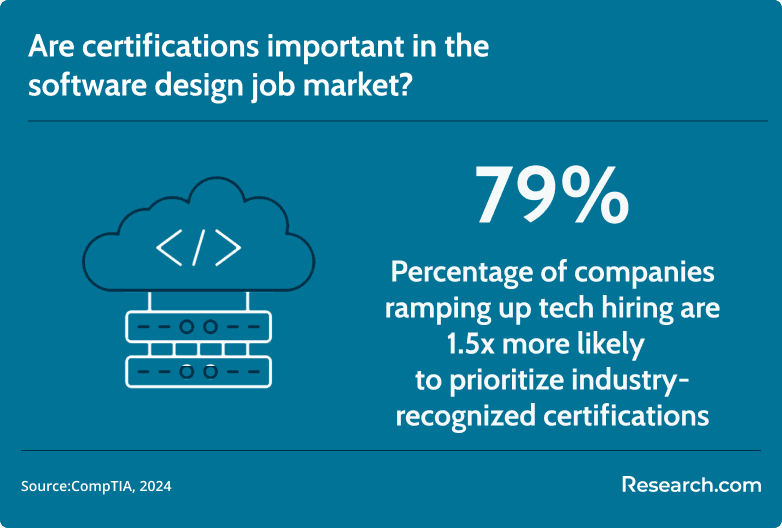
- Acquire Certifications: Earning certifications in areas like user experience design or front-end development can demonstrate specialized knowledge and validate your expertise to employers. In fact, a CompTIA report (2024a) finds that 79% of organizations planning major increases in tech hiring are almost 1.5 times more likely to depend on industry-recognized technical certifications.
Pursuing a career as a software designer takes time and commitment, but the steps are accessible for motivated learners from various backgrounds. With the right combination of education, skills, and experience, you can position yourself for success in a field that continues to grow and evolve.
What is the typical career path for a software designer?
The career path for a software designer can vary based on individual interests and industry focus, but many begin with foundational roles in design or development before moving into more advanced or specialized positions. Below are some common stages in the professional journey of a software designer:
- Entry-Level Roles: At the start of their career, professionals often take on support roles that help them build technical and creative skills. These positions typically involve working under more experienced designers or developers and contributing to specific features. Roles include front-end developer, UX/UI assistant, or junior designer. Earning a specialized credential such as a game programming degree may lead to more targeted opportunities in the entertainment or mobile app development industries.
- Mid-Level Roles: With several years of experience, professionals begin to take ownership of larger projects and may guide teams in design planning. They collaborate closely with product managers and developers to ensure technical and user-centered goals align. This is also a time when many designers start building a portfolio that reflects their personal design philosophy and strategic thinking. You may become a full-fledged software designer, interaction designer, or full-stack developer.
- Senior and Leadership Roles: Experienced professionals may move into roles that involve setting design standards, managing teams, or defining product vision. These positions require not only technical expertise but also strong leadership, communication, and decision-making skills. Job titles include senior software designer, project manager, and software development manager.
- C-Level Roles: Years of industry experience can lead to roles that influence company-wide technology and design strategy. These positions focus on innovation, vision, and aligning product goals with business outcomes. You can gain titles like Chief Technology Officer, Director of User Experience, or Chief Product Officer.
Overall, the career path of a software designer involves ongoing development, with skill-building playing a central role at every stage. As the tech field evolves rapidly, staying current requires a commitment to learning. According to a report from The Linux Foundation (Lawson & Hendrick, 2024), tech employers emphasize cross-skilling (47%) and upskilling (43%) as key strategies for developing talent. These trends reflect how essential continuous learning is for advancing in the field and staying ahead in a competitive industry.
In addition, as software designers progress in their careers, they gain access to a wide array of roles across the tech landscape. Although software development, programming, web, and QA remain prominent, there is consistent growth in IT support, cybersecurity, networking, and device repair (CompTIA, 2024b). Beginning in software design offers the flexibility to transition into these in-demand areas.
This chart displays the projected increase in tech occupations from 2023 to 2024.
What skills do you need to be a successful software designer?
To succeed in software design, professionals must blend technical knowledge with soft skills that support collaboration and problem-solving. A strong foundation in human-centered design principles, paired with the ability to understand complex systems, allows designers to build effective programs. Here are the essential skills for software design success:
- Technical Skills: Proficiency in programming languages is crucial for translating design concepts into functional code. In fact, in a survey, 27% of developers have been coding professionally for one to four years (Stack Overflow, 2024). Moreover, familiarity with version control systems, development frameworks, and design tools helps enhance workflow efficiency. Lastly, a deep understanding of software architecture and system design principles ensures scalable and maintainable solutions.
- Analytical Skills: Software designers must be able to evaluate user behavior, system performance, and feedback to identify design improvements. These skills help in making data-informed decisions during product development. Strong analytical thinking is especially useful when translating abstract ideas into structured, user-friendly solutions.
- Communication Skills: Effective communication is critical for explaining design concepts to developers, stakeholders, and non-technical audiences. It ensures alignment across teams and helps avoid costly misinterpretations. Designers must be able to present their ideas clearly in both visual and verbal formats.
- Creativity: Innovation lies at the heart of effective software design, and creative thinking helps designers find elegant and efficient solutions. Creativity also fuels problem-solving by encouraging the exploration of multiple solutions. People with a background in the cheapest online graphic design degree and an interest in technology may find software design to be a natural and rewarding career path since it provides foundational skills in layout, typography, and visual communication. When paired with basic programming knowledge, this combination allows them to create software designs that are both visually compelling and technically sound.
- Attention to Detail: Small design decisions can significantly impact usability and functionality. A careful eye for layout, color, spacing, and responsiveness helps ensure a polished, professional final product. Precision in documenting design specifications also improves development handoffs.
- Interpersonal Skills: Software design is a collaborative process that depends on teamwork and active listening. A software designer who can navigate diverse opinions and build rapport across departments will contribute more effectively to projects. These skills also enhance user research, helping designers better understand and meet user needs.
Developing these skills can help you stand out in a competitive job market and contribute meaningfully to software development projects. As the field continues to evolve, well-rounded designers who balance creativity, logic, and communication will remain in high demand. With practice and professional growth, you can build a lasting and rewarding career in software design.
What career advancement options can software designers take?
A career as a software designer offers numerous growth opportunities. By leveraging additional education, practical experience, and networking, you can unlock new paths that align with your long-term career goals. Here are several key pathways for advancing in the field of software design:
- Specializing Through Certifications: As a software designer, you can enhance your career by focusing on a specialized area like design patterns or software architecture and acquiring certifications in these areas. These certifications often increase your credibility in the job market and demonstrate a commitment to staying current with the latest design trends and technologies.
- Pursuing Advanced Studies: Earning an advanced degree, such as a master’s in software design or a related field, is another way to advance your career. Unlike online vocational schools, advanced study in graduate education focuses on deepening your theoretical knowledge, research skills, and strategic thinking. Advanced degrees can also enhance your qualifications for teaching, consulting, or executive positions within the industry.
- Expanding Into Related Tech Roles: With a strong foundation in software design, you can also consider expanding into roles such as product management, front-end development, or even becoming a full-stack developer. This career path requires developing additional technical skills but provides a more rounded perspective of the entire product lifecycle.
Advancing in software design requires a combination of experience, continuous learning, and the willingness to take on new challenges. Whether you choose to specialize, lead, or diversify your skill set, there are multiple ways to grow within this field. By making strategic decisions about your career development, you can increase your professional satisfaction and take full advantage of the opportunities the tech industry offers.
How much do software designers earn?
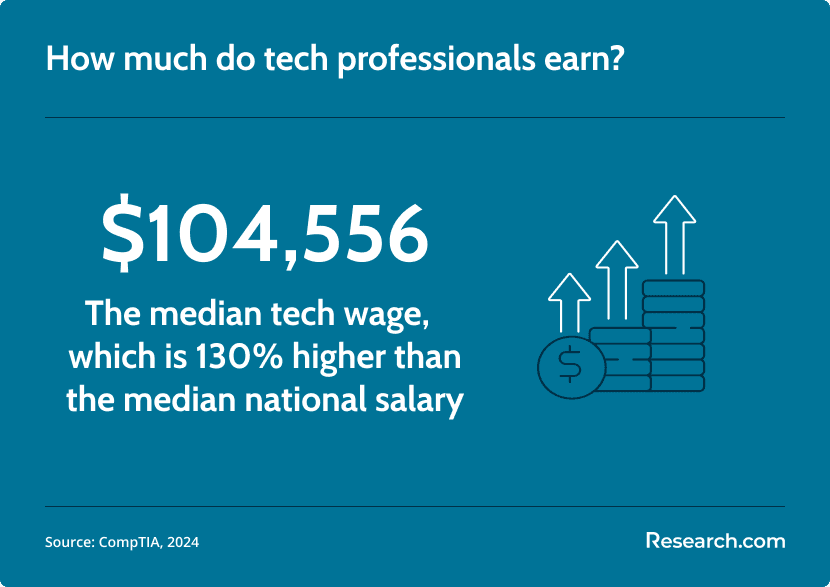
According to CompTIA (2024b), the median tech wage is $104,556, a whopping 130% higher than the median national salary. In particular, the BLS (2024a) records that software developers, which can include software designers, earn an average salary of $144,570 yearly, with the range extending from $79,850 (10th percentile) to $211,450 (90th percentile). Meanwhile, web and digital interface designers earn $111,450 annually on average, with a range that falls between $47,840 and $192,180.
The earnings potential for a software designer can vary widely depending on the industry they work in. For example, professionals in media streaming, social networking platforms, and other digital content sectors top the charts, with average salaries reaching $216,110, according to BLS data. Close behind are those in web search and information services ($211,520), like taxi and limo services ($190,470), motor vehicles manufacturing ($171,640), and semiconductors/electronic components manufacturing ($166,910).
Even in finance, across investment pools, securities, and other related sectors, software designers often earn upwards of $165,000. These figures highlight how even graduates from the cheapest online accounting degree, if they pivot to software design through targeted upskilling, can potentially tap into high-paying, specialized tech industries.
One’s level of experience can also affect salaries. As a rule of thumb, software designers with more experience and specialized skills tend to earn higher salaries. According to PayScale (2025), a software developer with one to four years of experience earns around $77,000 while a professional with 10 to 19 years of work takes home roughly $102,000.
Overall, the salary potential for software designers is strong, and the demand for their expertise is expected to continue growing. By continuously developing skills and staying current with industry trends, software designers can maximize their earning potential while enjoying a fulfilling career in the tech industry.
How do software designer salaries vary by location?
The salary of a software designer can also fluctuate depending on the state or metropolitan and nonmetropolitan areas in which they work. In tech-centric states like California, Washington, and New York, software developers typically earn higher salaries due to the concentration of technology companies and the cost of living in these areas. Consider the following annual wages (BLS, 2024a):
Top-Paying States for Software Developers:
- California: $185,750
- Washington: $175,600
- New York: $159,990
- Massachusetts: $153,650
- Maryland: $150,800
Top-Paying States for Web and Digital Interface Designers:
- California: $141,610
- Washington: $137,540
- New York: $125,270
- Rhode Island: $116,450
- Massachusetts: $114,270
Top-Paying States for Software QA Analysts and Testers:
- California: $130,250
- Washington: $130,110
- New Mexico: $126,740
- Virginia: $124,540
- Maryland: $122,300
Software developers working in California’s San Jose-Sunnyvale-Santa Clara areas also earn top dollar, at $226,510. It is followed by the San Francisco-Oakland-Fremont, CA and Seattle-Tacoma-Bellevue, WA areas where the annual salaries of software developers are in the $180,000 range.
Ultimately, location plays a significant role in determining the earning potential of software designers. Areas with a strong tech presence and higher living costs tend to offer more competitive salaries to attract and retain top talent. For professionals open to relocating, targeting high-paying regions can be a strategic way to boost income and career growth.
Can alternative education pathways fast-track my software design career?
Alternative education options provide practical avenues for acquiring industry-relevant skills in a shorter time frame. Programs such as intensive bootcamps, specialized certifications, and online accelerated courses emphasize hands-on training geared toward emerging technology trends and design principles. These alternatives can efficiently complement formal education and work experience, often leading to faster career progression. For instance, graduates from a 2-year computer science degree online program acquire core technical competencies and design thinking skills that directly translate to the demands of the software design industry.
How do emerging technologies reshape software design roles?
Rapid advancements in artificial intelligence, IoT, and data analytics are expanding the role of software designers beyond traditional boundaries. Designers are increasingly expected to integrate emerging technologies into user-centric frameworks that anticipate evolving market needs. This shift is encouraging professionals to broaden their expertise and engage with interdisciplinary projects to stay competitive. For instance, fields like health informatics are leveraging design skills to improve patient data visualization and user interaction, offering opportunities to explore health informatics careers salary as a benchmark for compensation and industry trends.
How can continuing education and specialization benefit software designers?
In a continuously evolving tech landscape, targeted continuing education and interdisciplinary specialization can offer software designers a significant competitive advantage. Pursuing advanced coursework and industry-recognized certifications enhances technical acuity and introduces innovative problem-solving frameworks—attributes that align with market demands. Additionally, integrating knowledge from complementary fields can lead to novel approaches in system architecture and data visualization. For instance, delving into interdisciplinary studies might reveal insights applicable to bioinformatics, where cross-domain expertise is increasingly valued. Explore the best online bioinformatics masters to identify how specialized programs can further refine your technical and analytical skills.
How can I build an effective portfolio for software design?
A well-crafted portfolio can serve as a decisive asset in demonstrating your design process, technical competence, and problem-solving abilities. Showcase a curated selection of projects that reveal end-to-end design work—from initial research and ideation to prototype development and final implementation. Emphasize case studies where user feedback prompted design iterations, and include clear documentation of your role and contributions. Leverage interactive elements and visual storytelling to convey complex ideas succinctly. For professionals pursuing interdisciplinary excellence, consider further specialization to enhance your portfolio’s impact; for example, explore the cheapest online bioinformatics masters to add a unique analytical edge to your design expertise.
How can you leverage affordable education to advance your software design career?
Many software designers benefit from educational programs that combine technical rigor with practical, industry-focused training. Cost-effective pathways—such as accredited online courses and certificate programs—enable students to develop key competencies in system design, human–computer interaction, and agile methodologies without incurring excessive debt. In this competitive field, targeted learning from institutions that emphasize both theoretical foundations and real-world application can accelerate career growth and skill diversification. For individuals seeking balanced options that maintain quality while reducing cost, explore programs offered by affordable engineering colleges.
What is the job outlook for software designers?
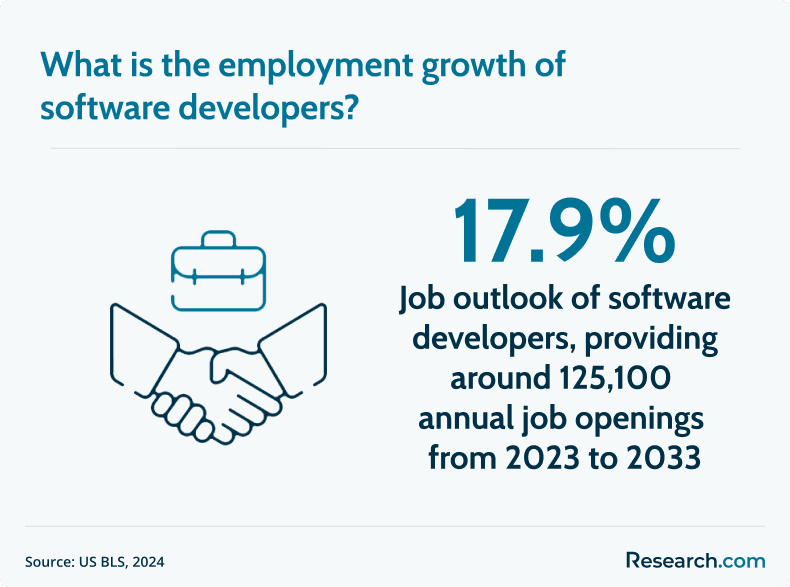
The demand for software designers will remain robust in the coming years. According to BLS data (2024b), the employment of software developers will increase by 17.9% from 2023 to 2033, providing around 125,100 annual job openings. Similarly, software QA analysts and testers will gain an 11.8% job growth (15,000 annual job openings), and web and digital interface designers will increase by 7.9% (9,900 annual job openings).
Several factors are driving this robust demand. One of the primary contributors is the rapid evolution and adoption of emerging technologies such as artificial intelligence (AI), the Internet of Things (IoT), robotics, and automation platforms. As companies continue to innovate and digitize their operations, the need for skilled software professionals who can design, develop, and maintain these advanced systems is growing significantly.
In addition, the increased focus on cybersecurity is opening up new areas for software designers to make an impact. As systems become more complex and cyber threats more sophisticated, there is a growing expectation that developers and designers embed security and privacy features directly into software products from the outset. The Cybersecurity & Infrastructure Security Agency (CISA), for example, is actively encouraging developers to take a more proactive role in safeguarding the software they create (Cable, 2024).
Further underscoring this trend, CompTIA’s (2024b) report predicted that four of the top high-growth tech occupations in 2024 included roles directly connected to software design and development. These roles were data scientists and analysts (5.5% growth), cybersecurity analysts and engineers (5.1%), software developers and engineers (4.8%), and software QA testers (4.3%).
Overall, these projections highlight not only the increasing reliance on software in nearly every sector but also the expanding scope of responsibilities and career trajectories available to software designers. The field is no longer limited to building applications or writing code. Rather, it now encompasses roles that demand cross-disciplinary skills, shifting a landscape that offers not just job security but also long-term career growth and impact.
How can interdisciplinary learning enhance your role as a software designer?
Integrating principles from complementary fields can unlock innovative problem-solving techniques and broaden career opportunities. Combining software design with disciplines such as health informatics, data analytics, or cybersecurity allows professionals to approach challenges with a multifaceted perspective, leading to designs that are both technically robust and highly user-centric. For example, pursuing studies through the best health informatics programs online equips designers with insights into data visualization and system interoperability, further enhancing their ability to create impactful software solutions.
What career pathways are available to software designers?
A career as a software designer opens up a wide range of possibilities beyond the typical role. With the skills and experience gained, professionals in this field can transition into many other high-demand positions. Below are potential career pathways that software designers may consider:
- UX/UI Designers ($80,048): They focus on enhancing user satisfaction by improving the usability, accessibility, and pleasure found in the interaction with software products. Software designers with a strong understanding of design principles often pivot into this area, where they work on the aesthetics and functionality of user interfaces.
- IT Managers ($95,182): These professionals oversee the planning, implementation, and management of an organization’s information technology infrastructure. They lead teams of IT professionals, develop technology strategies, and ensure systems align with business goals and security standards.
- Computer Programmers ($103,640): They write, test, and maintain code that allows software programs and applications to function correctly. They translate software designs into executable instructions and troubleshoot issues to improve performance and usability.
- Game Developers ($108,471): They design, code, and produce video games. For software designers with an interest in gaming, this is an exciting and creative career path that combines their design and technical skills.
- Product Managers ($108,598): They also oversee the development and lifecycle of a software product. Product managers ensure that products align with customer needs and market demands while working closely with design, engineering, and marketing teams.
- Quality Assurance (QA) Engineers ($110,260): They test software products to identify bugs, ensure functionality, and uphold quality standards before release. They execute test plans and maintain product reliability across various platforms. In industries like education, they help ensure digital tools used in online learning platforms, such as those that include an online course for medical coding and billing, deliver accurate, user-friendly experiences that meet accessibility standards.
- Statisticians ($112,330): They collect, analyze, and interpret numerical data to help organizations make informed decisions. They apply mathematical theories and statistical techniques to identify trends, solve problems, and guide strategic planning.
- Data Scientists ($124,590): They analyze complex data to help organizations make better decisions. Software designers with strong analytical skills and a passion for data-driven insights can pivot into this role.
- Systems Architects ($125,446): They design and implement complex IT systems that align with organizational goals, ensuring seamless integration of hardware, software, and network components. They analyze technical requirements, develop architecture frameworks, and guide development teams through the execution process.
- Security Analysts ($127,730): They protect systems and networks from cyber threats and attacks. Understanding the intricacies of how software operates makes software designers excellent candidates for ensuring system security.
These pathways enable software designers to leverage their skills and adapt to the rapidly evolving technology landscape. With the right combination of experience and expertise, the career growth potential in this field is vast.
This chart illustrates the salary differences between tech roles.
What are the biggest challenges software designers face?
A career as a software designer presents exciting opportunities but also comes with its own set of challenges. One of the most common obstacles is managing the balance between creativity and functionality. As a software designer, you need to create intuitive programs while ensuring these operate smoothly and meet technical requirements. This balancing act often requires navigating through functionality, design aesthetics, technological limitations, or budget constraints.
Another challenge software designers face is the fast-paced evolution of technology. The software design industry is constantly changing, with new programming languages, frameworks, and tools emerging regularly. Staying up to date with these changes while maintaining expertise in existing technologies can be overwhelming.
Communication and collaboration with cross-functional teams can also present difficulties. Software designers must often work closely with developers, product managers, and other stakeholders to ensure that the final product aligns with user needs and business goals. Miscommunication or lack of alignment between these teams can lead to misunderstandings, delays, or software that does not meet expectations.
Finally, burnout and stress can also be a challenge. In a survey among HR professionals in the tech industry, 52% said that burnout and stress are top concerns for staff retention and productivity (CompTIA, 2024a). Software designers deal with tight deadlines and the constant need to troubleshoot, often while juggling multiple projects. When paired with long work hours and the mental load of both creative and technical problem-solving, these can lead to exhaustion and decreased job satisfaction.
In conclusion, while the role of a software designer is rewarding, it requires navigating a variety of challenges. Therefore, understanding and preparing for these challenges will better equip aspiring software designers for success in their careers.
How can professional networking and mentorship advance a software designer's career?
Professional networking and mentorship offer invaluable opportunities for software designers to refine their skills and expand their industry insight. Engaging with professional communities—through conferences, tech meetups, or online forums—facilitates access to diverse perspectives and current industry trends. Moreover, mentorship programs deliver tailored guidance, helping designers navigate complex challenges and strategically plan their career growth. For those looking to deepen their technical expertise alongside soft skills, pursuing advanced educational opportunities, such as AI degrees online, can complement these efforts by providing cutting-edge insight into emerging technologies.
Here’s What Graduates Have to Say About Their Careers as Software Designers
- “Becoming a software designer has truly transformed my career. Working on diverse projects, from mobile apps to websites, keeps me constantly challenged and engaged. The flexibility of remote work is a huge bonus, and I can design solutions that impact real users. It's an exciting, ever-evolving field, and I’m proud to be a part of it.” - Josh
- “As a software designer, I’ve found that every project is a new adventure. The diversity of industries I’ve worked in has expanded my perspective on the role design plays in shaping experiences. I’m constantly learning and growing. This career has offered me endless opportunities for growth.” - Camden
- “The journey to becoming a software designer has been incredibly rewarding. I’ve found a career where I can apply my passion for technology. It’s amazing to know that my work helps make people’s digital experiences smoother and more enjoyable. The job is always evolving, so it keeps me on my toes. I feel fortunate to be in such a dynamic field.” - Emma
Key Findings
- 79% of organizations planning major increases in tech hiring are almost 1.5 times more likely to depend on industry-recognized technical certifications
- The median tech wage is $104,556, a whopping 130% higher than the median national salary.
- A software developer with one to four years of experience earns around $77,000 while a professional with 10 to 19 years of work takes home roughly $102,000.
- The top-paying state for software developers is California ($185,750).
- The employment of software developers will increase by 17.9% from 2023 to 2033, providing around 125,100 annual job openings.
References:
- CompTIA. (2024a, May). Workforce and Learning Trends 2024. https://www.comptia.org/content/research/workforce-and-learning-trends-2024
- CompTIA. (2024b, March). State of the Tech Workforce 2024. https://www.comptia.org/content/research/state-of-the-tech-workforce
- Lawson, A., & Hendrick, S. (2024, April). 22024 State of Tech Talent Report. The Linux Foundation. https://www.linuxfoundation.org/research/open-source-jobs-report-2024
- PayScale. (2025, January 29). Average Software Developer Salary. Retrieved April 11, 2025, from https://www.payscale.com/research/US/Job=Software_Developer/Salary
- Stack Overflow. (2024). 2024 Developer Survey. https://survey.stackoverflow.co/2024
- U.S. Bureau of Labor Statistics. (2024a). Software developers [Interactive data]. May 2024 OEWS Profiles, Occupational Employment and Wage Statistics (OEWS) Profiles. Retrieved April 11, 2025, from https://data.bls.gov/oesprofile
- U.S. Bureau of Labor Statistics. (2024b, August 29). Occupational projections, 2023–33, and worker characteristics, 2023 (Numbers in thousands). Employment Projections. https://www.bls.gov/emp/tables/occupational-projections-and-characteristics.htm
- ZipRecruiter. (2025, April 4). Game Developer Salary. Retrieved April 11, 2025, from https://www.ziprecruiter.com/Salaries/Game-Developer-Salary
Other Things You Should Know About Becoming a Software Designer
In 2027, entry-level software designers can expect to earn around $60,000 to $75,000 annually, depending on location and company size. As designers gain experience, salaries can rise significantly, potentially reaching $120,000 or more for senior positions.
In 2027, aspiring software designers need a strong foundation in programming languages like Python or Java, experience with design tools such as Sketch or Figma, and understanding of UX/UI principles. Analytical thinking and teamwork are also crucial for creating user-friendly designs.
In 2027, the job outlook for software designers is positive, with technology continuing to expand into various sectors. Increased demand in emerging fields like AI and IoT means abundant opportunities, making it an attractive career. Projected growth rates vary, but they generally outpace the average, reflecting ongoing digital transformation.


