
2027 How to Become a UX Designer: Salary & Career Paths

Co-Founder and Chief Data Scientist
Embarking on a UX Design career in the US involves unique informational hurdles. Sifting through opinions to find substantiated facts proves a consistent challenge. Many resources offer generic advice, failing to address the nuances of specific roles or industries. Identifying reliable salary data and understanding the required skill sets for different positions demands careful evaluation. As an expert in this field, I have written this introduction to provide clarity, offering insights to help you discern credible information and make informed decisions in your UX Design career journey. Let's cut through the noise and focus on what truly matters for your success.
Key Things You Should Know About Becoming a UX Designer in the USA
- Education: While a specific degree isn't always mandatory, many successful UX designers in the USA hold bachelor's degrees in fields like design, computer science, psychology, or human-computer interaction.
- Portfolio: A strong online portfolio showcasing your design process, projects, and problem-solving skills is crucial for landing UX design roles in the USA.
- Essential Skills: Developing key skills such as user research, wireframing, prototyping, usability testing, and effective communication is highly valued by US employers.
- Industry Tools: Familiarity with popular UX design tools like Figma, Sketch, Adobe XD, and prototyping software is often expected in the US job market.
- Networking: Engaging with the US UX design community through online platforms, local meetups, and conferences can open doors to opportunities.
- Internships: Gaining practical experience through internships at US-based companies provides valuable real-world application of UX principles.
- Online Presence: Maintaining a professional online presence, including a LinkedIn profile, can help you connect with recruiters and potential employers in the USA.
- Understanding User-Centered Design: A deep understanding of user-centered design principles and methodologies is fundamental for UX roles in the US.
- Collaboration: The ability to collaborate effectively with cross-functional teams, including developers and product managers, is highly sought after in US tech companies.
- Adaptability: The US tech landscape is dynamic, so being adaptable and willing to learn new technologies and trends is essential for long-term success.
- Job Market: The job market for UX designers in the USA is generally robust, particularly in major tech hubs and metropolitan areas.
- Communication Skills: Strong written and verbal communication skills are vital for presenting design ideas and rationales to stakeholders in the US business context.
- How can you become a UX designer for 2027?
- What does a UX designer do?
- What are the educational requirements for becoming a UX designer?
- What skills are required for UX designers?
- What is the certification and licensing process for UX designers?
- What ethical and legal guidelines should you observe as a UX designer?
- How much can you earn as a UX designer?
- How can an advanced degree enhance your UX design career?
- How Can Expanding Your Interdisciplinary Expertise Enhance Your UX Career?
- How can UX design skills drive success in specialized industries?
- How do emerging technologies shape the future of UX design?
- How Can Data-Driven Insights Elevate UX Design Strategies?
- What is the job market like for a UX designer?
- Could Biotechnology Expertise Enhance UX Design Innovation?
- What subspecialties and career paths are available for UX designers?
- What challenges should you consider as a UX designer?
- How Can Cross-Industry Education Strengthen a UX Designer’s Perspective?
How can you become a UX designer for 2027?
Becoming a UX designer involves a combination of education, skill development, and practical experience. There isn't one single path, but several common routes exist.
- Formal Education: Pursuing a degree in a related field can provide a strong foundation. Many graduates of the top online graphic design schools enter this field right after graduation.
- Bootcamps and Online Courses: Intensive programs offer focused training in UX principles and tools.
- Self-Learning: Utilizing online resources, books, and tutorials to acquire necessary knowledge and skills.
- Building a Portfolio: Creating projects to showcase your design process and abilities is crucial.
- Networking: Connecting with other designers and industry professionals can lead to opportunities.
- Gaining Experience: Internships or entry-level roles provide real-world application of skills.
Ultimately, a passion for user-centered design and a commitment to continuous learning are key to entering this field. Practical experience and a strong portfolio often outweigh specific educational backgrounds.
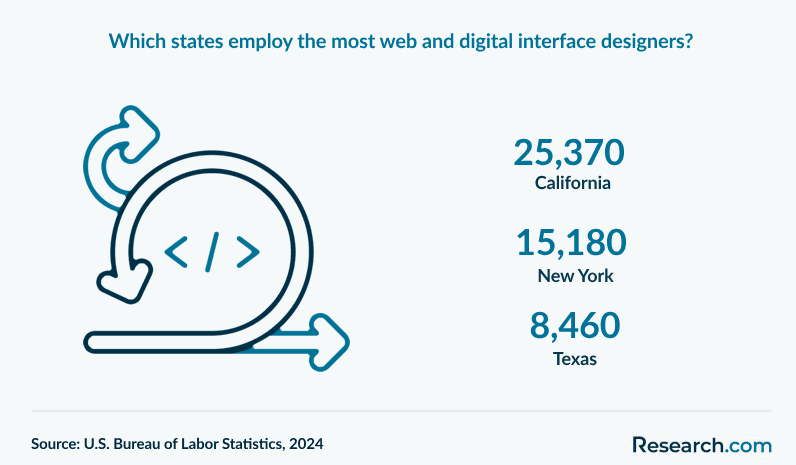
Did you know that in 2023, California had the highest employment for the occupation with 25,370 individuals, followed by New York with 15,180 individuals employed? Texas and Washington have similar employment figures, with 8,460 and 8,250, respectively. Florida reports the lowest employment among the listed states at 3,700. The data, shown in the graphic below, indicates a clear trend of higher employment numbers in larger and more economically diverse states like California and New York. States with significant technology sectors, such as Washington, also show substantial employment in this field.
What does a UX designer do?
UX designers focus on creating products and services that are user-friendly, effective, and enjoyable. Their work involves understanding user needs and translating them into design solutions.
- User Research: Conducting interviews, surveys, and usability testing to understand user behaviors and goals.
- Information Architecture: Organizing and structuring content in a clear and logical way.
- Wireframing and Prototyping: Creating low-fidelity and high-fidelity representations of interfaces.
- Usability Testing: Evaluating designs with users to identify pain points and areas for improvement.
- Interaction Design: Defining how users interact with the product or service.
- Visual Design (sometimes): Collaborating with visual designers or possessing visual design skills to ensure aesthetic appeal.
- Collaboration: Working with developers, product managers, and stakeholders throughout the design process.
In essence, UX designers advocate for the user and strive to create seamless and positive experiences. Their role is critical in ensuring the success and usability of digital products.
What are the educational requirements for becoming a UX designer?
While there isn't a strict educational prerequisite, certain academic paths can be beneficial for aspiring UX designers. Many successful designers come from diverse educational backgrounds.
- Bachelor's Degree in Design-Related Fields: Graphic design, interaction design, industrial design, and human-computer interaction (HCI) are common.
- Bachelor's Degree in Social Sciences: Psychology, sociology, and anthropology provide a strong understanding of human behavior. Online Masters degree programs in counseling can help you advance even more.
- Bootcamps and Certificates: Intensive, short-term programs focused specifically on UX/UI design.
- Online Courses: Platforms like Coursera, Udemy, and edX offer specialized UX design courses.
- No Specific Degree: A strong portfolio and demonstrable skills can sometimes outweigh formal education.
The emphasis is often placed on practical skills and a strong portfolio showcasing user-centered design thinking. However, formal education can provide a theoretical foundation and valuable skills.
What skills are required for UX designers?
A successful UX designer needs a diverse set of skills, encompassing both hard and soft skills. These skills enable them to effectively understand user needs and translate them into design solutions.
- User Research Skills: Ability to plan, conduct, and analyze various research methods.
- Wireframing and Prototyping Skills: Proficiency in creating low-fidelity sketches and interactive prototypes.
- Usability Testing Skills: Ability to plan, facilitate, and analyze usability testing sessions.
- Information Architecture Skills: Understanding how to organize and structure content effectively.
- Interaction Design Skills: Knowledge of design principles for creating intuitive user interactions.
- Visual Communication Skills: Ability to communicate design ideas visually.
- Empathy: Understanding and considering user perspectives and needs.
- Problem-Solving Skills: Identifying and addressing user pain points through design solutions.
- Communication Skills: Effectively conveying design rationale to stakeholders and team members.
- Collaboration Skills: Working effectively with cross-functional teams.
- Programming Skills: Code debugging in software development is a must for game designers. An accelerated computer science degree may be quite useful to get your programming skills up to speed.
These skills, both technical and interpersonal, are essential for navigating the complexities of the UX design process. Continuous learning and adaptation are also crucial in this evolving field.
What is the certification and licensing process for UX designers?
Currently, there isn't a widely recognized mandatory certification or licensing process for UX designers globally. While some organizations offer certifications, they are generally voluntary.
- Industry-Specific Certifications: Organizations like Nielsen Norman Group offer certifications in specific UX areas.
- Tool-Based Certifications: Some software companies offer certifications for their design tools (e.g., Figma, Sketch).
- General Design Certifications: Broader design certifications might touch upon UX principles.
- No Legal Requirement: Unlike professions like medicine or law, there is no legal requirement to be certified or licensed to work as a UX designer.
- Accredited Programs: Make sure your program of choice is offered by nationally accredited online universities.
While certifications can enhance credibility and demonstrate expertise, a strong portfolio and practical experience are often more valued by employers. The field currently emphasizes demonstrable skills over formal certifications.
According to data from the Bureau of Labor Statistics (BLS), the median hourly wage for Web and Digital Interface Designers is $47.37, which translates to an annual wage of $98,540. The data reveals a considerable range in earnings, with the 10th percentile earning an hourly wage of $23.18 ($48,210 annually) and the 90th percentile earning $84.85 per hour ($176,490 annually), as shown in the graph below. This indicates a positive correlation between experience/skill level and earning potential within the field. The significant difference between the lower and upper percentiles highlights the potential for substantial salary growth as designers gain expertise.
What ethical and legal guidelines should you observe as a UX designer?
UX designers have a responsibility to create products and services that are ethical, inclusive, and legally compliant. Considering the impact of design decisions on users is paramount.
- Accessibility: Designing for users with disabilities to ensure equal access.
- Privacy: Protecting user data and being transparent about data collection practices.
- Inclusivity: Designing for diverse user groups, considering different backgrounds and needs.
- Transparency: Being clear and honest about how the product or service works.
- Avoiding Dark Patterns: Refraining from using deceptive design elements that manipulate users.
- Data Security: Designing interfaces that protect user information from unauthorized access. The cheapest online cyber security degree programs can help you in this area.
- Copyright and Intellectual Property: Respecting the intellectual property of others in design work.
- Compliance with Laws and Regulations: Adhering to relevant data protection and accessibility laws.
Ethical considerations should be integrated into every stage of the design process, ensuring user well-being and responsible innovation. Legal compliance provides a framework for protecting user rights and ensuring fair practices.
How much can you earn as a UX designer?
The salary for a UX designer can vary significantly based on several factors. Experience level, location, company size, and specific skills all play a role in determining earning potential.
- Entry-Level: Typically lower salaries for those with less than 2 years of experience.
- Mid-Level: Increased earning potential with 2-5 years of experience and a proven track record.
- Senior-Level: Higher salaries for experienced designers with advanced skills and leadership abilities. Obtaining additional qualifications through cheap Masters in Computer Science online degrees can get you promoted quickly.
- Location: Salaries tend to be higher in major metropolitan areas and regions with a strong tech industry.
- Company Size and Type: Larger companies and tech giants often offer more competitive salaries.
- Specific Skills: Expertise in in-demand areas like UX research, UI design, or specific industries can command higher pay.
The average annual salary for a UX Designer is $117,666, according to Salary.com. Leadership roles in the field command higher compensation, with UX Design Leads earning $150,857 and UX Architects receiving $150,987 annually. UX Specialists and Senior UX & UI Designers report average salaries of $102,469 and $108,556, respectively, while UX Researchers earn an average of $105,767 (salary.com).
Notably, the average salary for UX Managers varies by location, with those in Florida earning $157,019 and those in Wisconsin earning $163,730 (salary.com). The highest average salary among the listed occupations is for UX Consultants at $170,932, while UX Strategists have the lowest reported average salary at $83,033 (salary.com). Overall, these figures shown in the graph below indicate a trend of higher earnings for specialized and leadership positions within the UX field. The data suggests that experience and specific roles significantly influence earning potential in UX-related occupations.
Generally, UX design is considered a well-compensated field, with salaries increasing with experience and expertise. Researching salary ranges specific to your location and experience level is recommended.
How can an advanced degree enhance your UX design career?
Research indicates that a solid technical foundation can distinguish a UX designer in a competitive market. Advanced education, such as pursuing an online master of computer science, can boost proficiency in data analysis, system architecture, and emerging technologies, providing a broader context for user-centered design decisions. This enhanced technical perspective may also lead to opportunities in roles bridging design and engineering, ensuring designs are not only empathetic but also robust and scalable.
How Can Expanding Your Interdisciplinary Expertise Enhance Your UX Career?
Diversifying your competencies by exploring complementary disciplines can provide a significant advantage in solving complex user experience challenges. Supplementary training in areas such as game design, visual storytelling, behavioral science, or digital marketing can introduce unique perspectives and innovative approaches to UX solutions. For instance, pursuing insights from game design college degree programs online may broaden your understanding of interactive elements and immersive user engagements. Integrating these interdisciplinary techniques can further enhance your ability to create intuitive and engaging digital experiences, positioning you as a versatile contributor in cross-functional teams.
How can UX design skills drive success in specialized industries?
UX design expertise is increasingly valuable in non-traditional sectors that demand intuitive interfaces and user-centered solutions. Industries such as healthcare, finance, and education are actively seeking professionals who can translate complex information into accessible digital experiences. For example, exploring careers in health informatics can open pathways where domain-specific knowledge meets innovative design. This interdisciplinary approach not only broadens career opportunities but also enriches industry practices through specialized, user-focused methodologies.
How do emerging technologies shape the future of UX design?
Emerging technologies are redefining the landscape of UX design by enabling more personalized, data-driven experiences. For instance, the integration of artificial intelligence offers deeper insights into user behavior and facilitates the creation of adaptive interfaces. Innovations in machine learning, real-time data processing, and augmented reality are driving designers to rethink user interactions, ensuring that digital products remain both intuitive and engaging. To leverage these advancements, professionals are encouraged to combine traditional UX methodologies with new technological proficiencies, such as exploring affordable online artificial intelligence programs. This strategic approach not only enhances design efficiency but also positions UX practitioners to lead in a rapidly evolving market.
How Can Data-Driven Insights Elevate UX Design Strategies?
Leveraging quantitative data alongside qualitative research enables UX design professionals to fine-tune interfaces and improve overall user engagement. Integrating data-driven methodologies supports the identification of user behavior trends, guides iterative design improvements, and refines testing protocols to validate design decisions. This approach not only enhances usability but also drives efficiency in meeting business objectives. For professionals looking to deepen their analytical skills, exploring affordable online master's programs in data science can provide valuable technical expertise that complements creative design strategies.
What is the job market like for a UX designer?
The job market for UX designers has generally been strong and continues to show promising growth. The increasing importance of user-centered design in technology and various industries drives demand.
- High Demand: Companies across various sectors recognize the value of good UX.
- Growing Field: The UX design field is relatively young and continues to evolve and expand.
- Diverse Opportunities: Roles exist in tech companies, startups, design agencies, and in-house design teams.
- Remote Work Opportunities: Many UX design roles offer the flexibility of remote work.
- Competitive Landscape: While demand is high, the field can also be competitive, especially for entry-level positions.
Aspiring UX designers should focus on building a strong portfolio and continuously developing their skills to stand out in the job market. The future outlook for UX design remains positive.
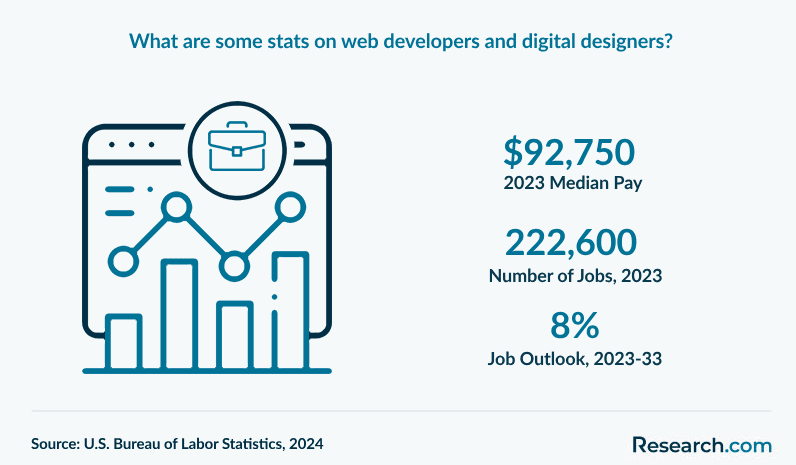
In 2023, the median pay for Web Developers and Digital Designers in the United States was $92,750 per year, or $44.59 per hour. Typically, a bachelor's degree is the entry-level education requirement, and on-the-job training or prior related work experience is generally not required. The number of jobs in this field in 2023 was 222,600, and the job outlook is projected to grow 8% from 2023 to 2033, which is considered faster than the average for all occupations, as shown in the graphic below..
This growth is expected to create approximately 18,600 new jobs over the next decade. The data indicates a promising job market with a strong median salary and above-average growth prospects for Web Developers and Digital Designers.
Could Biotechnology Expertise Enhance UX Design Innovation?
Integrating insights from biotechnology can offer a fresh perspective on user research and innovation. Advanced knowledge from this field often reveals nuanced understandings of human behavior and complex system interactions, which can inspire more intuitive and targeted UX solutions. For professionals eager to merge scientific rigor with creative design, exploring interdisciplinary opportunities may unlock novel approaches in fields such as digital health and personalized wellness. Additionally, gaining expertise in related areas—for instance, by investigating jobs with biotechnology masters—can further enhance a designer’s ability to craft solutions that are both empathetic and methodically sound.
What subspecialties and career paths are available for UX designers?
As UX designers gain experience, they can specialize in specific areas or pursue various career advancement paths. The field offers numerous opportunities for growth and focus.
- UX Researcher: Focusing primarily on understanding user needs through research methods.
- UI Designer: Specializing in the visual design and interface elements of digital products.
- Interaction Designer: Concentrating on defining how users interact with a product or service.
- Information Architect: Focusing on organizing and structuring content effectively.
- UX Writer: Crafting clear and concise user-facing content.
- Design Manager/Lead: Leading and mentoring a team of UX designers.
- Product Manager: Taking on broader responsibilities for the strategy and development of a product.
- UX Consultant: Providing UX expertise to various clients on a project basis.
These subspecialties and career paths allow UX designers to deepen their expertise in specific areas or broaden their impact within an organization. Continuous learning and professional development are key to navigating these opportunities.
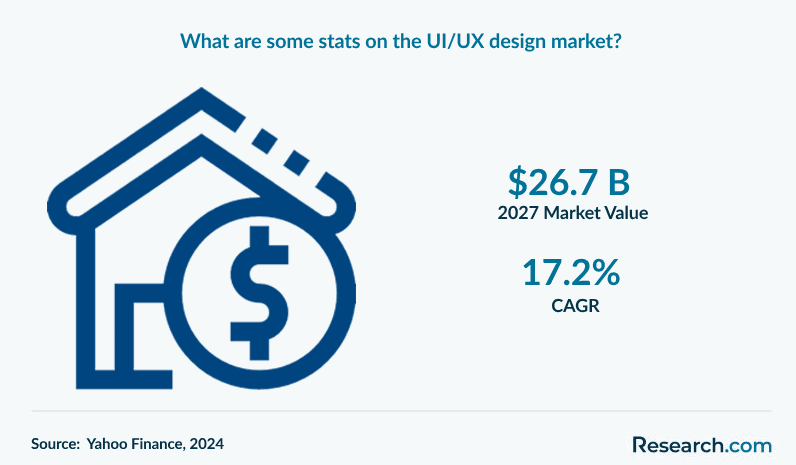
A significant transformation is occurring in how people engage with technology, as highlighted in a recent study. It anticipates a future where user needs are central, projecting that the UI/UX design market will experience substantial expansion and reach $26.7 billion in value by the year 2027. This growth, shown in the graphic below, represents a remarkable compound annual growth rate (CAGR) of 17.2%, underscoring the significant and accelerating demand for UI/UX design expertise. This substantial growth indicates a strong and expanding industry focused on creating user-centric digital experiences.
What challenges should you consider as a UX designer?
While UX design can be a rewarding career, it also comes with its own set of challenges. Being aware of these potential hurdles can help aspiring designers prepare and navigate the field effectively.
- Communicating the Value of UX: Convincing stakeholders of the importance of user-centered design.
- Balancing User Needs and Business Goals: Finding solutions that satisfy both user needs and business objectives.
- Dealing with Ambiguity: Working on projects with unclear requirements or evolving scopes.
- Managing Stakeholder Expectations: Navigating feedback and incorporating diverse perspectives.
- Keeping Up with Technology and Trends: The digital landscape is constantly changing, requiring continuous learning.
- Measuring the Impact of Design: Quantifying the ROI of UX design efforts can be challenging.
- Advocating for the User: Ensuring user needs are prioritized throughout the development process.
- Dealing with Tight Deadlines: Balancing quality with time constraints.
- Handling Subjectivity in Design: Design decisions can sometimes be subjective and require strong justification.
Overcoming these challenges often involves strong communication, problem-solving skills, and a user-centric mindset. Adaptability and resilience are also crucial for success in this dynamic field.
How Can Cross-Industry Education Strengthen a UX Designer’s Perspective?
UX designers can benefit significantly from expanding their academic and professional horizons beyond traditional design disciplines. Integrating insights from sectors such as healthcare, finance, or even informatics can foster innovative approaches to solving user challenges. For example, exploring courses in specialized fields—such as cheap online nursing informatics degree programs—helps designers understand complex data environments and user needs unique to those industries. This cross-industry education not only enhances a designer’s technical proficiency but also enriches their ability to craft more inclusive and effective user experiences.
Here's What Graduates Say About Their UX Designer Careers
Being a UX designer allows me to blend creativity with problem-solving, making technology more intuitive and enjoyable for users. It's incredibly rewarding to see my designs come to life and positively impact people's daily lives, plus the job security in the US is a huge relief. I love that every day brings new challenges and opportunities to learn and grow. Angela
The field of UX design has allowed me to collaborate with diverse teams and contribute to innovative projects that are shaping the future. I've found a career that not only challenges me intellectually but also aligns with my values of empathy and user advocacy. The flexibility and work life balance is something I didn't think was possible. Richard
As a UX designer, I get to be a champion for the user, ensuring their needs are met through thoughtful and engaging design solutions. The feeling of creating something that resonates with people and makes their lives easier is truly fulfilling. The salary is also amazing and allows me to live comfortably. Clementine
Key Findings
- Job Market Growth: The number of jobs for Web Developers and Digital Designers is projected to grow by 8% from 2023 to 2033, creating an estimated 18,600 new positions.
- Median Wages: The median annual wage for Web and Digital Interface Designers was $98,540 in 2023, based on an hourly rate of $47.37, according to the BLS.
- Salary Range: There is a considerable range in annual earnings for Web and Digital Interface Designers, from $48,210 at the 10th percentile to $176,490 at the 90th percentile (BLS).
- UX Designer Average Salary: The average annual salary for a UX Designer is $117,666, as reported by Salary.com.
- Leadership Compensation: UX Design Leads earn an average of $150,857 annually, and UX Architects receive $150,987 per year, demonstrating higher pay for leadership roles (Salary.com).
- Specialized Roles: UX Consultants have the highest average salary among the listed specialized roles at $170,932 annually (Salary.com).
- Employment Concentration: California had the highest employment in 2023 with 25,370 individuals, while New York followed with 15,180, indicating a trend of more jobs in larger states.
- UI/UX Market Growth: The UI/UX design market is projected to reach $26.7 billion by 2027, exhibiting a compound annual growth rate of 17.2%.
References:
- Salary.com. (2025). Senior UX & UI Designer Salary at Proxify. Salary.com.
- Salary.com. (2025). Salaries for UX Design Intern with a Master's Degree or MBA. Salary.com.
- Salary.com. (2025). UX Architect Salary. Salary.com.
- Salary.com. (2025). UX Consultant Salary. Salary.com.
- Salary.com. (2025). UX Design Lead Salary. Salary.com.
- Salary.com. (2025). UX Manager Salary in Florida. Salary.com.
- Salary.com. (2025). UX Manager Salary in Wisconsin. Salary.com.
- Salary.com. (2025). UX Manager Salary. Salary.com.
- Salary.com. (2025). UX Specialist Salary. Salary.com.
- Salary.com. (2025). User Experience Designer Salary. Salary.com.
- U.S. Bureau of Labor Statistics. (2024, March 29). Occupational employment and wages, May 2023: Software developers (OES Code 15-1255). U.S. Department of Labor.
- U.S. Bureau of Labor Statistics. (2024, August 29). Web developers and digital designers. U.S. Department of Labor.
- Yahoo Finance. (2024). User experience revolution: UI/UX. Yahoo Finance.
Other Things You Should Know About Becoming a UX Designer
In 2027, UX designers can explore various roles such as UX researcher, interaction designer, product designer, or UX strategist. Job responsibilities may include conducting user research, analyzing interactions, or developing strategic design solutions, depending on company needs and industry trends.
In 2027, UX designers can expect steady salary growth, reflecting the high demand for skilled professionals in this field. Entry-level positions may offer salaries around $70,000 annually, while experienced UX designers could earn upwards of $120,000, depending on location and expertise.
In 2027, focus on developing skills in user research, prototyping, and interaction design. Familiarity with tools like Figma and Adobe XD is essential. Additionally, cultivating a strong understanding of user psychology and staying updated with the latest trends in AI integration will be vital for success.


