
2027 How to Become a Wind Turbine Technician

Co-Founder and Chief Data Scientist
When your workplace is 300 feet above the ground, everyday comes with a view—and a legitimate sense of purpose. As the modern and sustainable world shifts toward renewable energy, wind power is gaining momentum, and with it comes a surge in demand for skilled technicians who can keep those towering turbines turning.
Wind turbine technicians are more than just mechanics—they're troubleshooters, climbers, electricians, and environmental stewards rolled into one. Every day, they scale turbines that stretches into the sky, performing inspections, maintenance, and repairs that keep the blades whirring and the grid alive. It’s a job that demands courage, technical know-how, and a deep respect for both machinery and nature.
But becoming a wind turbine technician isn't just about heights and harnesses. It requires specialized training, physical endurance, and a willingness to work in challenging environments—from offshore wind farms to remote plains. It’s a unique career path that blends adventure with job security, technical skill with environmental impact.
In this guide, I will walk you through exactly what it takes to break into the field, from certifications and education to day-to-day realities and long-term opportunities.
What are the benefits of becoming a wind turbine technician?
- Wind turbine technicians earn an average salary of $54,230, with opportunities to increase earnings through experience, training, and remote or offshore assignments (ZipRecruiter, n.d.).
- With a projected 60% job growth by 2032, the field offers rare stability in a rapidly changing job market, driven by the global shift toward renewable energy (BLS, 2024).
- Beyond the paycheck, the role offers a unique blend of hands-on technical work and environmental impact, attracting those who value purpose as much as profession.
- What does a wind turbine technician do?
- What skills do you need to become a wind turbine technician?
- What academic qualifications are needed to become a wind turbine technician?
- What is the average salary of a wind turbine technician?
- Where do wind turbine technicians work?
- What is the demand for wind turbine technicians?
- What are the alternative career pathways for a wind turbine technician?
- Why become a wind turbine technician?
- What are the biggest challenges for wind turbine technicians?
- What professional development opportunities are available for wind turbine technicians?
What does a wind turbine technician do?
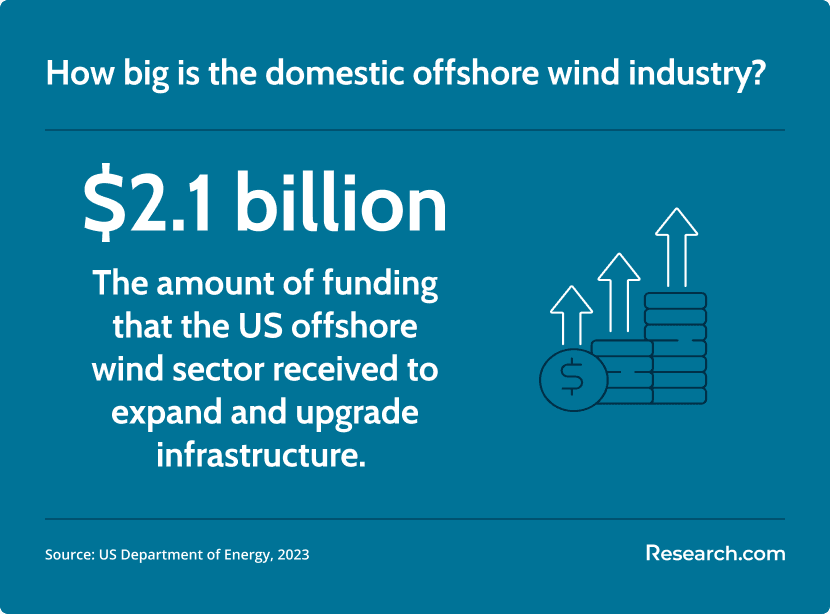
As wind energy becomes a cornerstone of the clean energy transition, the work of wind turbine technicians has grown more vital than ever before. In 2023 alone, over $2.1 billion was invested in the US offshore wind sector to build up ports, vessels, and transmission infrastructure, signaling a massive wave of industry growth and job opportunity. Against this backdrop, wind turbine technicians play a key role in ensuring that turbines—both onshore and offshore—are installed, maintained, and functioning at peak efficiency.
But what exactly does the job entail? Here's a closer look:
- Installation: Setting up wind turbines from the ground up, including assembling the tower, nacelle, and blades, and connecting electrical systems.
- Maintenance: Performing routine inspections and servicing of components like gearboxes, brakes, and hydraulic systems to prevent failures and maximize uptime.
- Troubleshooting: Diagnosing mechanical, electrical, and software issues using specialized tools and sensors, often under time pressure and in challenging conditions.
- Safety Checks: Conducting rigorous safety inspections to ensure that all systems comply with industry regulations and protect both workers and equipment.
- Climbing and Access: Scaling turbine towers—sometimes hundreds of feet tall—using harnesses and safety gear to reach components located at great heights.
- Data Reporting: Logging maintenance activities, component performance, and incident reports to help optimize long-term turbine efficiency and guide future improvements.
As the wind industry expands and technology evolves, the role of a wind turbine technician continues to grow in both scope and importance. It’s a dynamic, hands-on career that blends physical skill, technical knowledge, and a front-row seat to the future of energy.
What skills do you need to become a wind turbine technician?
Working as a wind turbine technician requires more than just a head for heights and a wrench in hand. It’s a profession that blends physical stamina with sharp technical thinking, where every climb and component check can mean the difference between smooth operation and costly downtime. Whether you're working on a remote hillside or in the middle of the ocean, success in this role depends on a unique combination of hard and soft skills.
Here are key skills you need to thrive as a wind turbine technician:
- Mechanical Aptitude: Understanding how gears, motors, and hydraulic systems work is essential for diagnosing issues and performing repairs on complex turbine components.
- Problem-Solving Skills: No two turbines break down the same way; technicians need to think on their feet and adapt quickly when something goes wrong.
- Attention to Detail: Small oversights can lead to big problems. From safety checks to component alignments, precision matters in every part of the job.
- Communication Skills: Whether it's reporting data, coordinating with team members, or explaining a repair to a supervisor, clear and professional communication is crucial.
- Comfort with Technology: Modern turbines use sensors, diagnostics software, and remote monitoring systems. As such, technicians must be tech-savvy and comfortable using digital tools.
- Physical Fitness: The job involves climbing towers over 200 feet tall, working in confined spaces, and carrying heavy tools. So, strength, balance, and stamina are key.
- Electrical Knowledge: Wind turbine technicians must be comfortable working with circuits, voltage testing, and electrical safety procedures. We recommend exploring our list of the best electrician trade schools to build a strong foundation in electrical systems.
Mastering these skills doesn’t just make you a better technician—it also builds a foundation for growth in a field that’s constantly evolving with new technologies and energy demands.
What academic qualifications are needed to become a wind turbine technician?
While becoming a wind turbine technician doesn’t require a traditional four-year degree, it does involve a mix of formal education and hands-on training. Most technicians start with a high school diploma or equivalent, then pursue a specialized technical program that provides the foundational knowledge needed for the field.
After completing their studies, new technicians typically receive extensive on-the-job training to develop the practical skills required for real-world turbine work.
- High School Diploma or Equivalent: The basic entry requirement, with a focus on math, science, and technical courses like physics or shop class being especially helpful.
- Technical School Program (2 years): Most aspiring technicians enroll in a wind energy technology program at a technical or community college, where they learn electrical systems, hydraulics, braking systems, and turbine-specific safety protocols.
- On-the-Job Training (12+ months): After graduating, technicians typically undergo a year or more of hands-on training with an employer, learning to inspect, climb, and service turbines under the guidance of experienced professionals.
Furthermore, some aspiring wind turbine technicians pursue additional education like trade school programs to expand their opportunities. This trend is reflected in recent survey data from Zippia. In the chart below, I provided a breakdown of wind turbine technicians by degree level, offering insight into the various educational paths professionals in this field have taken.
What is the average salary of a wind turbine technician?
Wind turbine technicians earn solid pay for their high-skill, high-altitude work. According to ZipRecruiter (n.d.), the typical salary hovers around $54,230 per year, offering strong compensation for a role that blends technical expertise with hands-on fieldwork. Those in the 25th percentile earn about $46,500, while technicians in the 75th percentile see around $59,500.
Top performers can bring in $70,500 or more, especially if they take on specialized roles, work offshore, or travel to high-demand locations. With the clean energy sector booming, the financial upside of this career is only expected to grow. Check out the chart below for a detailed breakdown of salary ranges by percentile.
Where do wind turbine technicians work?
Wind turbine technicians have a diverse range of workplaces that go far beyond the typical nine-to-five. Their skills are in demand across several industries, each offering unique environments and challenges. Whether it’s working on sprawling land-based wind farms or navigating the complexities of offshore platforms, these technicians find opportunities in a variety of settings that keep the turbines—and the clean energy movement—turning strong.
Here are the key industries and employment opportunities for wind turbine technicians:
- Onshore Wind Farms: The most common work setting where technicians maintain and repair turbines located on land across rural and semi-rural areas.
- Offshore Wind Farms: Emerging sites located in coastal waters, requiring technicians to work on platforms or specialized vessels, often with rotational schedules.
- Energy Companies: Employers that own and operate wind farms, providing in-house teams for ongoing turbine maintenance and emergency repairs.
- Turbine Manufacturers: Companies that design and build wind turbines, sometimes hiring technicians for installation, testing, and quality assurance roles.
- Maintenance Contractors: Specialized service firms hired by energy companies to provide routine inspections, repairs, and upgrades across multiple turbine sites.
- Government and Research Organizations: Agencies involved in renewable energy development and innovation, offering roles focused on testing, monitoring, and improving wind technology.
For those looking to expand their career opportunities, exploring the best trades to learn can be a valuable next step to increase versatility and long-term job security.
What is the demand for wind turbine technicians?
The demand for wind turbine technicians is experiencing remarkable growth, reflecting the rapid expansion of the renewable energy sector. Employment in this field is projected to increase by a striking 60% between 2023 and 2033, which is significantly faster than the average growth rate for all occupations. This surge is fueled by substantial investments in wind energy infrastructure, including new wind farms being built both onshore and offshore. The need for qualified technicians to install, maintain, and repair these complex machines becomes critical to ensuring a reliable energy supply. Additionally, as turbines age, regular maintenance and upgrades require ongoing skilled labor.
Here's what you need to know in a nutshell:
- Projected Growth: Employment is expected to increase by 60% from 2023 to 2033, driven by expansion in wind energy projects.
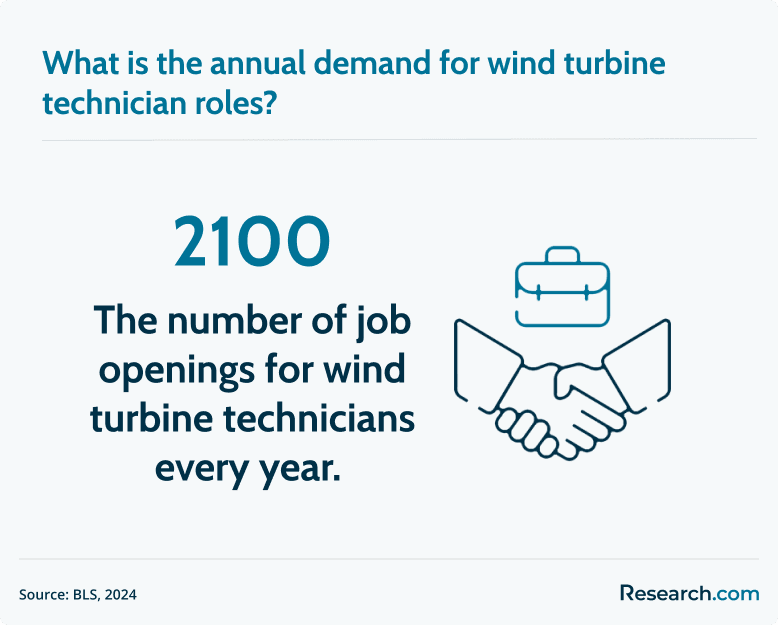
- Job Openings: On average, approximately 2,100 job openings for wind turbine technicians will arise each year over the next decade.
- Replacement Needs: A significant number of these openings will be to replace technicians who leave the field due to career changes or retirement.
With such robust growth and consistent turnover, careers as wind turbine technicians offer not only job security but also opportunities for advancement in a dynamic and impactful industry. For those interested in sustainable energy and hands-on work, now is an excellent time to enter the field.
What are the alternative career pathways for a wind turbine technician?
A career as a wind turbine technician opens doors to a variety of related fields and alternative career paths, especially for those interested in expanding their skills or shifting focus within the renewable energy and technical trades sectors.
Whether you’re looking to move into supervisory roles, diversify into other types of energy systems, or pursue further education, there are several promising options to consider beyond the turbine tower.
Outlined below are a few alternatives that you can explore.
- HVAC Technician: Transitioning to heating, ventilation, and air conditioning systems enables technicians to apply their mechanical and electrical skills in a different trade. Check out our list of the best online HVAC trade schools for your reference if this is an alternative career path you gravitate towards.
- Electrical Technician: This role involves working with electrical systems in various industries, including wiring, control panels, and power distribution. It’s a natural transition for technicians comfortable with electrical components and diagnostics.
- Construction Technician: Construction technicians apply their technical skills to building and maintaining energy infrastructure such as solar farms, power plants, or industrial facilities. This career offers hands-on work with a broad range of construction projects beyond wind turbines.
- Maintenance Supervisor: Moving into supervision allows you to lead teams, manage maintenance schedules, and ensure safety and quality standards are met. This path offers more responsibility and the chance to develop leadership skills.
- Renewable Energy Consultant: Consultants advise companies on designing, installing, and optimizing renewable energy systems. This career leverages technical expertise in a more strategic and advisory capacity.
- Electrical Engineering Technician: In this role, you assist engineers in designing, testing, and improving electrical equipment and systems. It often requires additional certifications but offers involvement in innovative technology development.
- Project Manager: Project managers oversee renewable energy projects from initial planning to completion, coordinating resources, timelines, and budgets. This career emphasizes organizational and leadership skills in managing complex initiatives.
Why become a wind turbine technician?
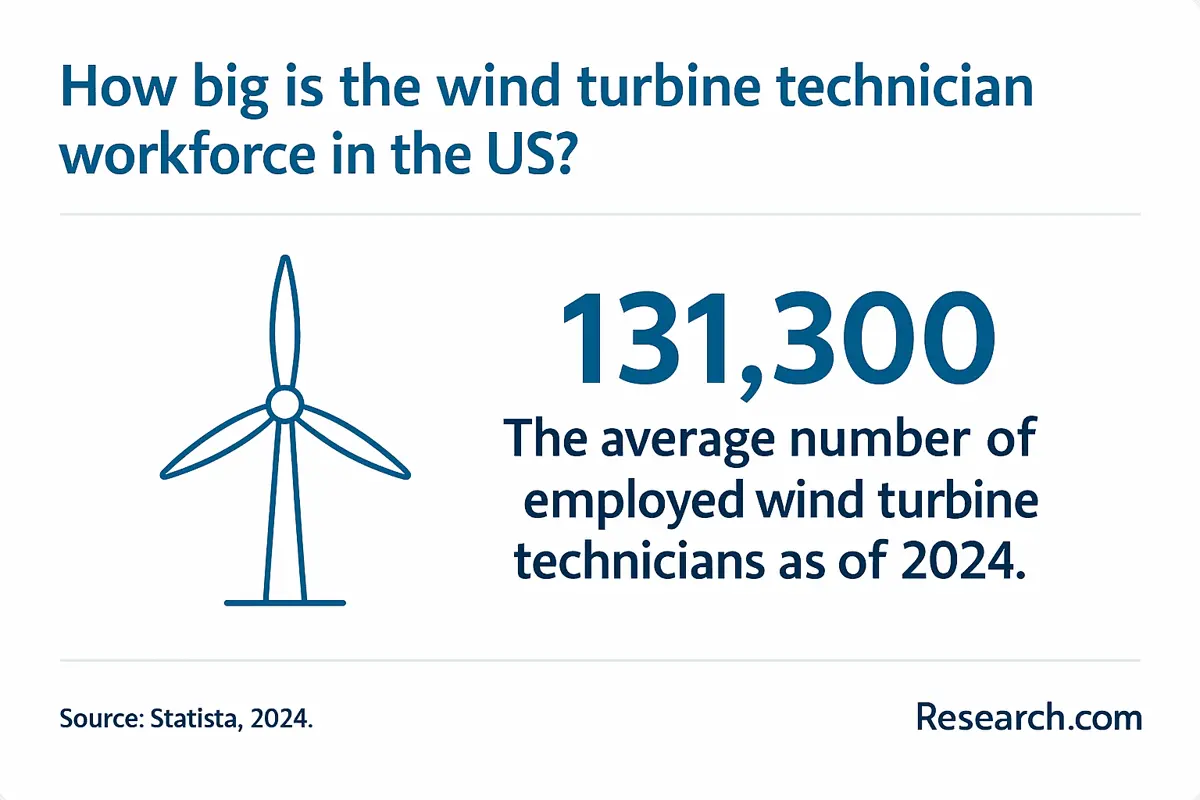
If you’re looking for a career that combines purpose, job security, and hands-on problem-solving, becoming a wind turbine technician might just be your ideal path. The wind energy sector in the US is growing at full tilt—not just in projects and infrastructure, but in people. In fact, as of early 2024, the workforce reached 131,300, marking an increase of over 11,000 new jobs since 2022 (Statista, 2024). That momentum shows no signs of slowing, making this one of the most promising trades in the clean energy revolution.
- High Job Demand: With 60% job growth rate in the next decade, the demand is outpacing many other skilled trades. This ensures strong job security and mobility across different regions and employers.
- Competitive Pay: Wind turbine technicians earn a solid salary, often exceeding $54,000 annually—with top earners making over $70,000. Wages are also projected to rise as the industry continues to expand and specialize.
- Meaningful Work: You’re not just tightening bolts; you’re helping power communities with clean, renewable energy. Each repair or inspection contributes directly to reducing carbon emissions and building a more sustainable grid.
- Room for Advancement: Technicians can move into supervisory, project management, or consulting roles with experience and training. Continued learning can also open doors to fields like electrical engineering or renewable energy design.
- Outdoor, Active Lifestyle: If you’d rather climb a tower than sit in a cubicle, this is your kind of job. Every day is different, offering a mix of physical activity, technical challenges, and spectacular views.
- Skills That Travel: The mechanical and electrical skills you develop are transferable across industries, from construction to aviation, giving you long-term flexibility. Even if you pivot later, the training stays valuable.
Wind turbine technicians are the backbone of one of the fastest-growing sectors in energy. Whether you’re drawn by the pay, the purpose, or the thrill of working hundreds of feet in the air, there’s never been a better time to make the climb.
What are the biggest challenges for wind turbine technicians?
Wind turbine technicians play a critical role in keeping renewable energy systems running smoothly, but the job isn’t without its obstacles. While the career offers strong job security and a sense of purpose, it also demands a high degree of resilience, technical precision, and physical stamina. These professionals regularly face complex conditions that push both their skill set and comfort zone. Understanding these challenges is key for anyone considering a future in the field—or for anyone supporting the workers behind our wind-powered grid.
- Working at Great Heights: One of the most defining challenges is the sheer altitude that wind turbine technicians must work in. After all, turbine towers can rise over 250 feet. Technicians must be comfortable with climbing, exposure to the elements, and maintaining focus in high-stress, high-elevation environments.
- Remote Locations: Wind farms are often built in isolated areas where wind is most consistent, like rural plains or offshore platforms. This means long travel times, limited nearby amenities, and the need for technicians to be self-sufficient while on-site.
- Harsh Weather Conditions: Wind doesn’t wait for good weather. Technicians frequently work in cold, hot, windy, or wet environments, which can impact both safety and efficiency on the job.
- Physical and Mental Fatigue: The job is physically demanding, involving lifting heavy tools, climbing ladders, and performing detailed repairs in awkward positions. Over time, this can lead to fatigue or injury if proper precautions aren't taken.
- Technical Complexity: Modern turbines are highly advanced machines, blending mechanical, hydraulic, and electrical systems. Going to a mechanic school is highly recommended to keep up with new technologies as systems evolve.
- Strict Safety Protocols: The occupation risk of injury is high. Just recently, an accident at the Orsted wind farm in Nebraska resulted in two fatalities following an equipment failure (Energy Watch, 2025). This is why following strict safety guidelines is non-negotiable.
Despite these challenges, many wind turbine technicians thrive on the unpredictability and problem-solving that come with the job. For those who enjoy hands-on work and aren’t afraid of heights, the hurdles can become part of the reward.
What professional development opportunities are available for wind turbine technicians?
Wind turbine technicians aren’t limited to a single role on a single tower. As the renewable energy industry evolves, so does the need for specialized knowledge, leadership, and cross-disciplinary skills. With the right training and development from industry events, L&D programs, or trade schools online, technicians can move into higher-paying roles, diversify into related fields, or even take on leadership and instructional positions.
Here are some key opportunities for growth, along with specific programs to help you get there:
- Advanced Certifications: Programs like the Global Wind Organization (GWO) Basic Safety Training and ETA International’s Wind Energy Associate Certification help technicians deepen their skills in safety, troubleshooting, and system diagnostics. These credentials are widely recognized by employers and often required for offshore or international work.
- Manufacturer-Specific Training: Companies like GE Renewable Energy, Siemens Gamesa Renewable Energy, and Vestas offer their own in-house technician training programs. These provide in-depth instruction on proprietary turbine models and often include job placement or internal advancement opportunities.
- Leadership and Project Management Roles: Technicians looking to lead can pursue programs such as PMI’s Certified Associate in Project Management (CAPM) or NCCER’s Project Supervision training, which are applicable to energy and construction projects.
- Cross-Training in Related Trades: Programs like the Solar Energy Technician Certificate from Solar Energy International (SEI) allow wind techs to branch into solar installation and maintenance. This broadens career options and makes technicians more versatile in the growing green energy market.
- Networking and Industry Events: Events like RE+ (formerly Solar Power International and Wind Energy Conference) and the American Clean Power Association (ACP) CLEANPOWER Conference connect technicians with industry leaders, new technologies, and potential employers. Attending these conferences can lead to mentorship, hiring opportunities, and early access to innovations in the field.
Here’s What Wind Turbine Technicians Have to Say About Their Careers
- “Climbing turbines isn’t just a job—it’s an adrenaline rush with a purpose. I get to work outdoors, contribute to clean energy, and solve problems that keep the grid running. The technical challenges keep me sharp, and no two days are ever the same. It’s demanding work, but there’s nothing like the view from the top.” — Louis
- “After finishing a two-year technical program, I landed a role within months, and the demand hasn’t slowed since. The pay is competitive, the job security is great, and I’m part of something that actually matters for the planet. I’ve worked in three different states already, and each project has taught me something new. It’s incredibly fulfilling to be part of a growing, future-focused industry.” — Garrett
- “What surprised me most was the sense of teamwork and trust—every day up there, your crew has your back. It takes real coordination and communication to work safely and efficiently on turbines. Plus, there’s constant learning, from electrical systems to new turbine tech, which keeps things exciting. I’ve found a career that challenges me and gives me purpose.” — Howard
Key Findings
- In 2023 alone, over $2.1 billion was invested in the US offshore wind sector to build up ports, vessels, supply chains, and transmission infrastructure.
- The typical salary hovers around $54,230 per year, offering strong compensation for a role that blends technical expertise with hands-on fieldwork.
- Employment in this field is projected to increase by a striking 60% between 2023 and 2033—significantly faster than the average growth rate for all occupations.
- Approximately 2,100 job openings for wind turbine technicians will arise each year over the next decade.
- As of early 2024, the workforce reached 131,300, marking an increase of over 11,000 new jobs since 2022.
References:
- Clean Power Alliance. (n.d.). Clean Power Expo 5K. Cleanpower.org. Retrieved 6 June 2025.
- Energy.gov. (2024). Wind market reports 2024 edition. Energy.gov. Retrieved 6 June 2025.
- Energy Watch. (n.d.). Renewables energy news. Energywatch.com. Retrieved 6 June 2025.
- Global Wind Safety. (n.d.). Basic safety training standard. Globalwindsafety.org. Retrieved 6 June 2025.
- National Center for Construction Education and Research. (n.d.). Project supervision. Nccer.org. Retrieved 6 June 2025.
- Project Management Institute. (n.d.). Certified Associate in Project Management (CAPM). Pmi.org. Retrieved 6 June 2025.
- RE+ (n.d.). Future dates. Re-plus.com. Retrieved 6 June 2025.
- Solar Energy International. (n.d.). SEI solar professionals certificate program. Solarenergy.org. Retrieved 6 June 2025.
- U.S. Bureau of Labor Statistics. (2024). Wind turbine technicians: Occupational outlook handbook. Bls.gov. Retrieved 6 June 2025.
- Universal Technical Institute. (n.d.). Wind turbine safety 101. Uti.edu. Retrieved 6 June 2025.
- ZipRecruiter. (n.d.). Wind turbine technician salary. Ziprecruiter.com. Retrieved 6 June 2025.
- Zippia. (2025). Wind turbine technician jobs demographics. Zippia.com. Retrieved 6 June 2025.
- Statista. (2024). U.S. wind energy employment statistics. Statista.com. Retrieved 6 June 2025.
Other Things You Should Know About Becoming a Wind Turbine Technician
In 2027, becoming a wind turbine technician often requires certifications like OSHA safety training and CPR/First Aid. Additional certifications from organizations like Global Wind Organisation (GWO) for safety and technical skills are highly valued in the industry. Employers also favor candidates with electrical and mechanical skill certifications.
In 2027, becoming a wind turbine technician typically requires completing a technical program or associate degree in wind energy technology. These programs cover electrical systems, safety protocols, and turbine mechanics. Additionally, gaining hands-on experience through internships or apprenticeships is highly beneficial.
Important high school subjects for aspiring wind turbine technicians include mathematics, physics, and computer science. Understanding technical concepts and problem-solving skills gained from these courses can provide a strong foundation for technical training programs and certifications required in this field.


