
2027 How to Become an Electrician in Alabama

Co-Founder and Chief Data Scientist
Aspiring electricians in the state of Alabama can earn a good living, considering that the median hourly wage of the role in 2024 ($25.20) was higher than that of all occupations across the United States (US) in the same year ($23.80). Moreover, employment for electricians all over the country is expected to grow by 11% between 2023 and 2033, which translates to an average of around 80,200 job openings yearly [US Bureau of Labor Statistics (BLS), 2025].
To help you get started on your career as an electrician, I created this comprehensive guide to educational requirements, skill requirements, certification and licensure, income potential, and job outlook.
Key Things to Know About Becoming an Electrician in Alabama
- Alabama requires electricians to complete an apprenticeship of 8,000 hours combined with 600 hours of classroom instruction to qualify for licensing.
- Electricians in Alabama must obtain a state license, which involves passing a trade examination and maintaining continuing education credits for renewal.
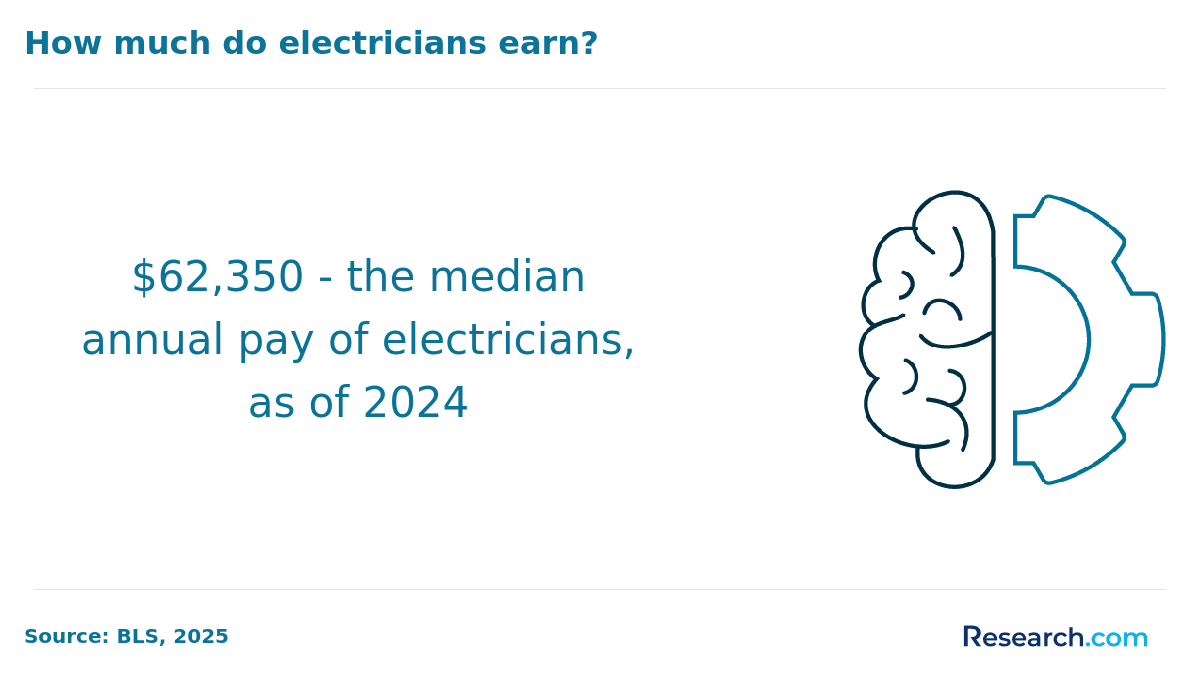
- In 2024, electricians in Alabama had a median hourly wage of $25.20, or a median annual wage of $52,420. These figures are lower than the 2024 national median hourly wage of electricians ($29.98), which is equivalent to a median annual wage of $62,350 (US BLS, 2025).
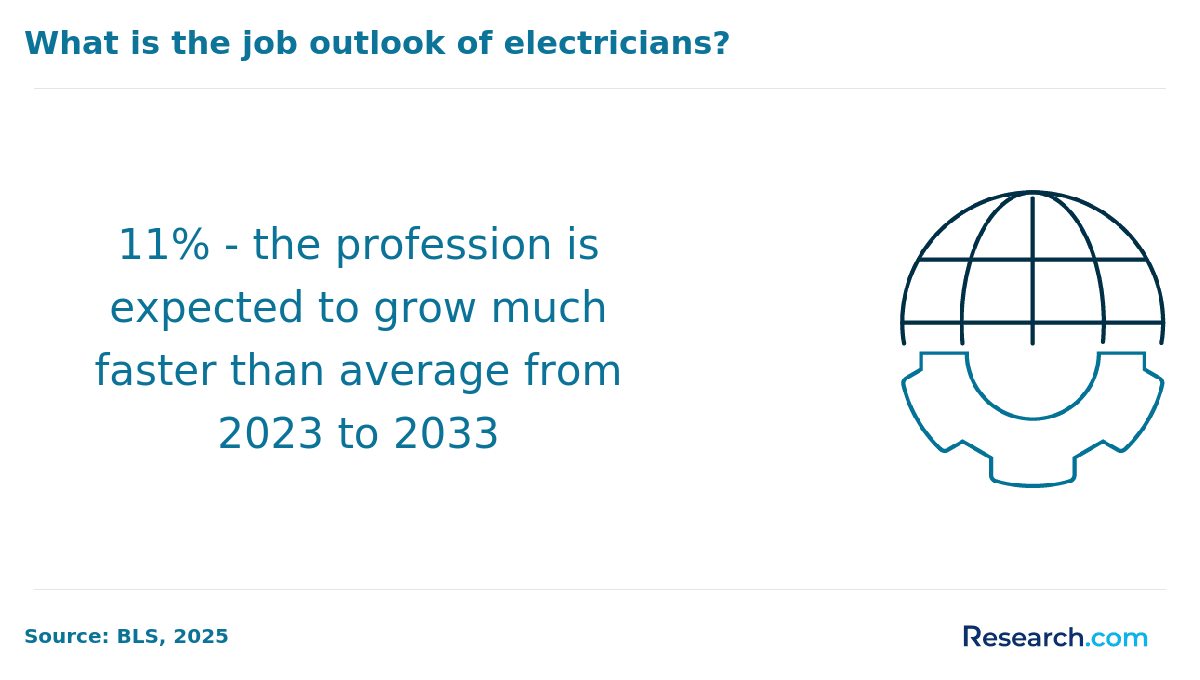
- Between 2023 and 2033, employment for electricians in the US is expected to increase by 11%, which translates to an average of about 80,200 job openings annually over the decade (US BLS, 2025).
- What education is required to become an electrician in Alabama?
- How do you get into an electrician apprenticeship program in Alabama?
- How much do electricians make in Alabama for 2027?
- What certifications do electricians need in Alabama?
- How long does an electrician apprenticeship take in Alabama?
- How much does electrician training cost in Alabama?
- What license do you need to be an electrician in Alabama?
- Can diversifying your skills with HVAC training enhance your career prospects in Alabama?
- Can business and management education boost your electrician career in Alabama?
- How are emerging technologies impacting electricians in Alabama?
- How do professional associations and unions support electrician career advancement in Alabama?
- How often do you need to renew your electrician license in Alabama?
- What are the essential skills needed to be a successful electrician in Alabama?
- What is the job outlook for electricians over the next 10 years in Alabama?
- Are there alternative career opportunities for electricians in Alabama?
What education is required to become an electrician in Alabama
Becoming a skilled electrician in Alabama starts with a solid educational foundation. Aspiring electricians typically enroll in technical schools or community colleges offering specialized courses such as electrical theory, blueprint reading, circuitry, safety practices, and the National Electrical Code (NEC). These courses blend classroom instruction with hands-on lab work, equipping students with practical skills and a deep understanding of electrical systems.
An essential step in this journey is completing an apprenticeship. These programs combine paid on-the-job training with classroom education and usually last four to five years. Apprenticeships are often organized through unions, trade associations, or independent contractors. During this time, apprentices gain invaluable experience by working under licensed electricians, learning to install, maintain, and repair electrical systems while accumulating thousands of practical work hours.
For those seeking structured and reputable training, Alabama offers several top programs. Notable examples include the Alabama Electrical Apprenticeship and Training Program, Lawson State Community College, and Wallace State Community College. These institutions provide comprehensive curricula designed to meet state licensing requirements and often offer exam preparation classes to help candidates succeed.
To excel on licensing exams, it’s crucial to engage with local review seminars and preparatory workshops, which many trade schools and unions provide. Resources like the Alabama Electrical Contractors Board offer study guides, practice tests, and updates on code changes—key tools to stay current with industry standards. Joining study groups and participating in online forums focused on Alabama’s licensing standards can also enhance understanding and confidence.
Consistent study paired with practical experience is the best strategy for mastering both the written and practical portions of the electrician licensing exam. Embrace every opportunity for hands-on learning and seek out community resources to sharpen your skills and knowledge. With dedication and the right preparation, success is within reach.
How do you get into an electrician apprenticeship program in Alabama?
Joining an electrician apprenticeship program in Alabama requires meeting specific criteria that ensure candidates are prepared for the demanding training ahead. Organizations like the Alabama Electrical Apprenticeship and Training Committee (AEATC) and the Wiregrass Electrical Joint Apprenticeship Training Committee are well-known for offering such programs. Typically, you must be at least 18 years old, have a high school diploma or GED, and pass a basic aptitude test focused on math and reading comprehension. These requirements help maintain a high standard for those entering the trade while offering a solid foundation for learning.
One of the unique aspects of electrician apprenticeship requirements Alabama enforces is the mandatory registration with the Alabama Department of Labor and the completion of at least 8,000 hours of on-the-job training paired with 576 hours of classroom instruction. This combination ensures apprentices gain hands-on experience alongside theoretical knowledge, which is essential for mastering the trade and preparing for licensure. Safety training and learning Alabama’s specific electrical codes are emphasized heavily, further distinguishing Alabama’s approach from other states.
Apprenticeships serve as a gateway to skill development and networking within Alabama’s robust construction industry. Working directly under licensed electricians, apprentices learn everything from residential wiring to complex commercial troubleshooting. This real-world exposure, coupled with opportunities to connect at union meetings, trade shows, and seminars hosted by groups like the Alabama Chapter of the National Electrical Contractors Association (NECA), helps build vital professional relationships. These connections often open doors to future job opportunities and career growth.
To succeed, making use of resources such as AEATC review classes, safety seminars, and Alabama-specific online modules is crucial. Staying consistent with attendance, showing eagerness to learn, and maintaining open communication with mentors can make a significant difference. Participating in study groups and using state codebooks can deepen your understanding and prepare you well for exams and practical challenges.
One electrician from Alabama shared that starting as an apprentice was both exciting and challenging. Early on, they found balancing work hours with classroom instruction demanding but rewarding. The hands-on training helped them gain confidence, especially when troubleshooting complex wiring in commercial settings. They emphasized the importance of safety seminars, which helped them avoid common pitfalls and understand the nuances of Alabama’s electrical codes. Networking through union meetings introduced them to seasoned professionals who provided invaluable advice and job leads. Their journey highlighted that persistence, curiosity, and actively seeking learning opportunities are key to thriving in Alabama’s apprenticeship programs.
For those wondering about career prospects, exploring a list of highest paying trade school careers can provide additional motivation and insight into the financial benefits of becoming a skilled electrician in Alabama.
How much do electricians make in Alabama?
Electricians in Alabama enjoy competitive salaries that reflect their experience, skills, and location. As of 2023, the average annual wage sits around $51,000, which breaks down to about $4,250 per month. Entry-level electricians typically start with wages ranging from $30,000 to $35,000 annually, acknowledging the foundational stage of their career while they gain hands-on experience and training. Over time, electricians can advance significantly, especially by obtaining certifications or mastering specialized fields.
Salary progression in Alabama follows a clear path: apprentices earn the least, journeymen electricians see noticeable increases after completing their apprenticeship and licensure, and master electricians command the highest pay. Master electricians with years of experience, particularly those in high-demand sectors like industrial or commercial construction, can earn $65,000 to $75,000 or more annually. Urban centers such as Birmingham, Huntsville, and Mobile stand out as the highest-paying cities, with Birmingham electricians earning about 10% more than the state average due to robust construction and industrial activity.
One Alabama electrician I spoke with shared his journey, reflecting on the challenges and rewards of the trade. He recounted starting as an apprentice, working long hours with modest pay but steadily building his expertise. He emphasized that pursuing additional certifications and staying updated with emerging technologies, like renewable energy systems and smart home installations, were crucial to increasing his earnings. The toughest part, he said, was balancing work, training, and family life, but the satisfaction of mastering complex projects and earning a solid income made it worthwhile. His story highlights how dedication and continuous learning can transform an electrician's career in Alabama.
For those considering this profession, it’s beneficial to explore resources available in the state, such as apprenticeship programs and networking through professional organizations. Additionally, aspiring electricians might find inspiration in other fields requiring advanced studies; for example, exploring anchors part-time Ph.D. in economics can offer insight into lifelong learning and career growth strategies.
The chart below provides a visualization of the highest-paying states in the US for electricians in 2024, according to 2025 data from the US BLS.
What certifications do electricians need in Alabama?
To build a successful career as an electrician in Alabama, understanding the state's licensing requirements is critical. The journey typically begins with the Apprentice Electrician Certificate, enabling hands-on experience under licensed supervision. Progressing from there, electricians pursue the Journeyman Electrician License, allowing independent work on diverse electrical projects. The ultimate goal for many is the Master Electrician License, which demands extensive journeyman experience and passing a rigorous exam. These certifications are central to meeting Alabama electrician licensing requirements and unlocking greater career opportunities.
Several respected institutions support aspiring electricians in achieving these credentials. The Alabama Electrical Workers Apprenticeship and Training Committee offers comprehensive programs blending classroom lessons with real-world training. Community colleges like Jefferson State and Wallace State provide electrical technology courses designed to prepare students for certification exams and state licensing. Choosing programs with a clear pathway to licensure helps avoid redundant training and ensures compliance with Alabama’s regulations.
Investing in these certifications substantially improves career prospects and earning potential. Licensed electricians in Alabama earn an average of $56,000 annually, with master electricians often exceeding $75,000 depending on specialization and experience. Additionally, the construction sector in Alabama is expanding, with a 3.5% growth in electrical jobs projected through 2025, increasing demand for certified professionals. Supplementing state licenses with national credentials from organizations like the National Institute for Certification in Engineering Technologies (NICET) or the International Association of Electrical Inspectors (IAEI) can further enhance credibility and open doors to supervisory roles.
For those navigating certifications needed to become electrician in Alabama, focusing on licenses recognized by state law is essential. Specialized certifications, such as those in solar photovoltaic systems or low voltage installations, align well with emerging industry trends and local market demands. Exploring options such as what is the best hvac trade school and certification online can offer additional insight for electricians interested in expanding their skill sets in related fields.
How long does an electrician apprenticeship take in Alabama?
In Alabama, an electrician apprenticeship typically takes about 4 to 5 years to complete, which translates to roughly 48 to 60 months. This duration aligns with national standards and includes around 8,000 hours of on-the-job training along with approximately 576 hours of classroom instruction. However, the length can vary depending on the specific program and the apprentice's background. For example, some apprenticeships in Alabama offer accelerated formats that enable completion in as little as 3 to 4 years. These faster tracks are often available through union-sponsored programs or private contractors who provide more intensive schedules or increased weekly training hours.
Several factors influence how long an apprenticeship lasts. An apprentice’s learning speed, prior experience, and availability for on-site training can all shorten or extend the timeline. Those with previous electrical knowledge or technical education often progress more quickly. Conversely, apprentices balancing work or personal commitments may take longer than five years. Understanding alabama electrician license requirements early on helps apprentices stay focused and meet benchmarks efficiently.
To make the most of your apprenticeship and possibly accelerate its completion, actively seek diverse hands-on experiences and maintain open communication with program supervisors. This approach ensures you fulfill all required hours and coursework in a timely manner. Additionally, pursuing relevant certifications such as the National Electrical Code (NEC) or OSHA safety training can boost your skills and readiness for journeyman exams. For those researching training options, consider exploring what are the best electrician trade schools to find programs that fit your goals.
How much does electrician training cost in Alabama?
Becoming an electrician in Alabama typically requires an investment ranging from $5,000 to $20,000, depending on the educational path you choose. Certificate or diploma programs at technical schools or community colleges usually cost between $5,000 and $10,000 and can be completed in less than a year. On the other hand, pursuing an associate degree in electrical technology might take around two years and cost $10,000 to $20,000. These longer programs often provide more in-depth training, which can improve your job prospects and earning potential.
Several factors influence the overall electrician training cost in Alabama. The type of program and its duration are the primary considerations, but you also need to budget for essential tools and equipment, which can add $500 to $1,500. Tools such as insulated pliers, wire strippers, multimeters, and conduit benders are necessary for hands-on learning. Some programs include toolkits in tuition, but many require students to purchase their own.
Alabama’s electrician apprenticeship expenses can be more manageable thanks to apprenticeship programs that often pay participants while they train, significantly reducing out-of-pocket costs. Additionally, the state’s technical colleges tend to offer more affordable tuition compared to private trade schools, and qualifying for in-state tuition can further lower expenses.
Financial aid is available to support aspiring electricians in Alabama. Eligible students can apply for federal aid through FAFSA, which offers grants and low-interest loans. Many Alabama technical colleges also provide scholarships and grants specifically for trade programs. For those researching options, consider exploring the best rated online trade schools to find flexible and affordable programs that fit your needs.
The chart below provides a visualization of the average annual wage gap experienced by electricians in the US, according to 2025 data from Zippia.
Can diversifying your skills with HVAC training enhance your career prospects in Alabama?
Expanding your expertise into complementary fields can create additional opportunities and improve your versatility in the evolving construction and building technology sectors. Acquiring HVAC training equips you with the knowledge to handle integrated systems in energy-efficient buildings, potentially making you a preferred candidate for projects that require a comprehensive understanding of both electrical and climate control systems. This cross-disciplinary skill set not only differentiates you from peers but also opens doors to roles in smart building initiatives and energy management. For guidance on branching out into HVAC, check out guides on how to become an HVAC technician in Alabama.
What license do you need to be an electrician in Alabama?
To work legally as an electrician in Alabama, you must obtain either a Journeyman Electrician license or a Master Electrician license. These licenses are essential credentials that demonstrate your competence and authorize you to perform electrical work within the state.
The licensure process in Alabama is unique because it is managed locally rather than through a single statewide board. While the Alabama Board of Electrical Contractors oversees licensing for electrical contractors, individual electrician licenses are issued by city or county boards. This means requirements and procedures can vary depending on your location, so it’s crucial to connect early with your local licensing authority.
The core requirements for each license are as follows:
- Journeyman Electrician License: Completion of a registered apprenticeship program, including approximately 8,000 hours (about four years) of supervised on-the-job training and 576 hours of classroom instruction.
- Master Electrician License: Must hold a Journeyman license for at least two years and pass a comprehensive exam demonstrating advanced knowledge and experience.
- Examinations: Both licenses require passing exams that test knowledge of the National Electrical Code (NEC), Alabama electrical laws, and safety regulations.
- Application Process: Submit proof of experience, complete local application forms, and pay fees that vary by jurisdiction.
Given this local control, you’ll find differences in continuing education requirements and renewal periods depending on the city or county. For example, Birmingham, Huntsville, and Mobile each have distinct boards with their own rules. However, all adhere to the 2023 NEC standards.
To navigate this process more smoothly, here are some tips:
- Start by contacting your local licensing board early to learn about specific local requirements and deadlines.
- Keep detailed records of your work hours, classroom training, and continuing education credits to simplify applications and renewals.
- Stay updated on changes to the NEC and Alabama electrical laws, as these directly influence exam content.
- Consider joining local trade organizations or unions for mentorship and exam preparation resources.
- Plan ahead for license renewal every one to two years and complete any continuing education promptly to avoid penalties.
By understanding these requirements and staying organized, you position yourself for success in Alabama’s growing electrical industry, where demand for licensed electricians continues to rise.
Can business and management education boost your electrician career in Alabama?
For electricians aiming to advance beyond technical roles, integrating business and management skills can offer a significant competitive edge. Gaining expertise in financial planning, operational management, and entrepreneurship can open pathways to independent contracting and leadership positions. Structured programs—like those offered by the top business schools in Alabama—provide targeted training in these areas, enabling electricians to effectively manage projects, navigate regulatory challenges, and optimize business operations. This strategic blend of technical proficiency and business acumen fosters resilient career growth and broadens the scope of professional opportunities in Alabama’s evolving electrical industry.
How are emerging technologies impacting electricians in Alabama?
Recent advancements in automation, smart grid systems, and renewable energy integration are reshaping the electrician profession in Alabama. Electricians are now expected to work with digital monitoring tools, IoT-based systems, and energy storage technologies, which demand a higher level of technical familiarity and adaptability. These developments are driving professionals to continuously update their skills through specialized courses and hands-on training in advanced technologies.
Moreover, expanding one’s expertise to include emerging tech not only enhances service offerings but also improves diagnostic accuracy and project efficiency. Diversifying your technical skill set can also open doors to hybrid roles and niche markets within the industry. For instance, gaining exposure to allied technical fields can broaden your career opportunities, similar to exploring how to become a radiology technician in Alabama.
How do professional associations and unions support electrician career advancement in Alabama?
Professional associations and unions play a pivotal role in fostering career growth for electricians in Alabama by offering access to exclusive training seminars, mentorship programs, and networking events. These groups provide updated industry insights and technical workshops to help members stay abreast of evolving safety standards and technological advancements. By participating in union-led initiatives and association forums, electricians can enhance their professional skills while also gaining guidance on strategic career decisions. Additionally, membership often includes access to industry-specific resources and job placement assistance, setting the stage for career diversification. For those with an interest in exploring related technical fields, consider reviewing how to become an ultrasound technician in Alabama as an example of leveraging specialized credentials in adjacent industries.
How often do you need to renew your electrician license in Alabama
Renewing your electrician license in Alabama is a vital step to maintain your professional standing and legal ability to work in the field. The Alabama Electrical Contractors Board (AEC Board) is the governing authority that manages this process, ensuring all electricians meet the state’s high standards for safety and knowledge.
The renewal cycle occurs every two years, and it requires electricians to fulfill key obligations designed to keep skills sharp and up to date with the latest codes and regulations.
- Complete a minimum of 12 hours of continuing education approved by the AEC Board within the two-year renewal period
- Submit the renewal application along with the required fee to the Alabama Electrical Contractors Board
- Resolve any outstanding fees, fines, or disciplinary actions prior to submitting the renewal
What sets Alabama’s renewal process apart is its strong emphasis on continuing education tailored specifically to state and national electrical codes. These courses help you stay informed about updates to the National Electrical Code (NEC), Alabama’s unique regulations, and essential safety protocols. This approach ensures your expertise remains relevant and your work complies with evolving industry standards.
As you plan your renewal, aim to complete your continuing education early in the license cycle. Waiting until the last minute can lead to processing delays or gaps in licensure, which may affect your ability to accept jobs or stay compliant with employers’ requirements.
Maintaining open communication with the AEC Board is another smart practice. Regularly check for updates or changes in the renewal process or continuing education offerings. The Board provides resources to guide you through any changes, making your renewal smoother and less stressful.
Staying proactive not only protects your license but positions you for success in Alabama’s growing electrical industry. With employment projected to rise by about 8% over the next decade, keeping your credentials current opens doors to a thriving career.
What are the essential skills needed to be a successful electrician in Alabama?
To thrive as an electrician in Alabama, mastering a blend of hard and soft skills is essential. The state’s growing construction industry and advancing technology demand electricians who are both technically skilled and adaptable in communication and problem-solving.
Key skills electricians need include:
- Technical Proficiency: Understand electrical systems, wiring, circuitry, and safety standards. Stay updated on Alabama’s electrical codes to work efficiently in residential and commercial settings.
- Technological Competence: Become familiar with smart home systems, energy-efficient technologies, and digital diagnostic tools. Learning software for blueprints and electrical design enhances your value.
- Problem-Solving Skills: Develop the ability to analyze electrical issues quickly and create effective solutions under pressure. This skill is vital for troubleshooting and maintaining safety on the job.
- Communication Skills: Practice clear, concise communication with clients, contractors, and team members. Strong interpersonal skills foster trust and smooth project coordination.
- Physical Dexterity and Stamina: Build manual precision and endurance for working in diverse environments, including cramped spaces and elevated areas.
- Attention to Detail: Cultivate precision in installations and repairs to avoid costly mistakes and uphold safety standards.
Aspiring electricians can develop these skills through formal education, apprenticeships, and hands-on experience. Participating in programs like those offered by the Alabama Electrical Apprenticeship and Training Center provides structured learning combined with practical training.
Continuing education and certifications are critical for staying current on evolving electrical codes and technologies. Networking through local trade unions or industry groups offers mentorship opportunities and hones your communication skills.
Embrace every chance to learn and practice both technical and interpersonal skills. This balanced approach not only prepares you for the challenges ahead but also opens doors to a successful, stable career in Alabama’s expanding electrical industry.
What is the job outlook for electricians over the next 10 years in Alabama?
The job outlook for electricians in Alabama over the next decade is strong and promising. According to the U.S. Bureau of Labor Statistics data from 2023, employment for electricians in Alabama is expected to grow by about 8% between 2023 and 2033, which slightly outpaces the national average growth rate of 7%. This steady increase is fueled by ongoing demand in residential, commercial, and industrial construction, as well as the need for maintaining and upgrading existing electrical systems.
For those considering a career as an electrician, Alabama offers a unique advantage due to its relatively low cost of living. The median annual wage for electricians in the state was around $52,000 in 2023, which is below the national median of $60,000. However, when adjusted for Alabama’s affordable housing, transportation, and general living expenses, electricians can enjoy a comfortable standard of living that compares favorably with many other states.
Key cities such as Birmingham, Huntsville, and Mobile stand out as major employment hubs. Huntsville, in particular, shows especially strong demand because of its rapidly growing aerospace and technology sectors, which require skilled electricians for both new construction and ongoing operational support. These metropolitan areas provide diverse opportunities for electricians to specialize and advance their careers.
The industries employing the largest numbers of electricians in Alabama include construction, manufacturing, and utilities. Construction remains the dominant sector, driven by growth in residential housing and infrastructure projects. Manufacturing plants, especially in automotive and aerospace industries around Huntsville and Birmingham, also offer significant employment. Additionally, Alabama’s expanding renewable energy initiatives are opening new roles for electricians specializing in solar and wind power systems.
For aspiring electricians, focusing on apprenticeship programs and technical training is essential. Hands-on experience is highly valued by employers across Alabama. With a stable job market, affordable living costs, and growing industries, pursuing an electrician career in Alabama presents solid long-term prospects for employment and wage growth.
Are there alternative career opportunities for electricians in Alabama?
Many licensed electricians in Alabama are increasingly exploring roles that extend beyond traditional installations. Advanced positions such as technical consultants, project supervisors, or electrical safety inspectors offer pathways to diversify professional portfolios while leveraging specialized expertise. Additionally, cross-training in complementary trades can open new prospects in sectors like renewable energy, smart building technologies, and integrated system management. For professionals seeking a broader technical skill set, exploring resources on how to become a mechanic in Alabama may provide valuable insights into transitioning to roles that blend electrical and mechanical competencies.
What Electricians in Alabama Say About Their Careers
- “Completing my apprenticeship through the Alabama Electrical Apprenticeship Program really set the foundation for a rewarding career. The hands-on training combined with classroom learning at Shelton State Community College gave me the confidence to tackle any job. Working in Alabama’s growing industries, I’ve seen firsthand how electricians are essential to powering our communities and supporting local businesses. It’s fulfilling to know that my skills contribute to both economic growth and people’s daily lives. I’m proud to be part of a profession that values hard work and continuous learning.” —Zachary
- “Attending Auburn University’s Electrical Engineering Technology program was a transformative experience that went beyond just technical skills. It taught me how to approach problems with a creative mindset and inspired me to give back to my hometown. Being an electrician in Alabama means adapting to unique challenges like rural electrification and hurricane preparedness, which makes every project interesting and meaningful. I love the sense of community and the opportunity to make a tangible difference in people’s lives. This career has helped me grow both professionally and personally in ways I never expected.” —Mark
- “The stability and career advancement options available to electricians in Alabama have been incredible for me. After graduating from Lawson State Community College’s electrical program, I quickly found opportunities in industrial maintenance and renewable energy projects, which are expanding rapidly here. The state’s focus on infrastructure and energy diversification means I’m always learning new technologies and advancing my expertise. I appreciate the professionalism and respect our trade commands, and it motivates me to continue pushing forward in my career. Being an electrician here feels like a smart and dynamic choice.” —Caleb
Related Articles for Nearby States
- 2027 How to Become an Electrician in Mississippi
- 2027 How to Become an Electrician in Tennessee
- 2027 How to Become an Electrician in Georgia
- 2027 How to Become an Electrician in Florida
- 2027 How to Become an Electrician in Louisiana
- 2027 How to Become an Electrician in Arkansas
- 2027 How to Become an Electrician in Kentucky
- 2027 How to Become an Electrician in South Carolina
- 2027 How to Become an Electrician in North Carolina
- 2027 How to Become an Electrician in Missouri
References:
- Birmingham Electrical JATC. (n.d.). Electrical Apprenticeship. https://bejatc.org
- Go Build. (n.d.). Central Alabama Chapter Independent Electrical Contractors, Inc., IEC. https://gobuildalabama.com/the-training/training/central-alabama-chapter-independent-electrical-contractors-inc-iec
- IEC Central Alabama. Apprenticeship Program. https://www.ieccal.org/apprenticeship-2
- Independent Electrical Contractors. (n.d.). Alabama Electrical Apprenticeship. https://www.myelectriccareer.com/electrician-apprenticeship/alabama
- Klag, M. (2024, December 30). How to Become an Electrician in Alabama. https://contractortrainingcenter.com/blogs/news/how-to-become-an-electrician-in-alabama
- Marathon Electrical Contractor. (n.d.). Apprenticeship Program. https://www.marathonelectrical.com/apprenticeship-program
- Montgomery Electrical Training Alliance. (n.d.). Wireman Apprenticeship. https://ibew443.org/wireman-apprenticeship
- North Alabama Electrical JATC. (n.d.). How to Apply. https://www.naljatc.org/index.php/how-to-apply
- US Bureau of Labor Statistics. (2025, April 18). Electricians. Occupational Outlook Handbook. https://www.bls.gov/ooh/construction-and-extraction/electricians.htm
- US Bureau of Labor Statistics. (2025, May 20). Occupational Employment and Wage Statistics, Area: Alabama. Occupational Employment and Wage Statistics Query System. https://data.bls.gov/oes/#/area/0100000
Other Things You Should Know About Becoming an Electrician in Alabama
In 2027, licensed electricians in Alabama must complete 14 hours of continuing education during each renewal cycle, including 7 hours on Alabama Electrical Code. This requirement ensures that electricians stay up-to-date with industry standards and regulations.
In 2027, aspiring electricians in Alabama need a high school diploma or GED to start. Following this, they can enroll in an apprenticeship program, typically offered by vocational schools, community colleges, or unions, which combines classroom instruction with on-the-job training.


