
2027 How to Become an Electrician in West Virginia

Co-Founder and Chief Data Scientist
Are you seeking a career that offers a blend of hands-on work, technical expertise, and reliable demand? Look no further than the field of electrical work in the Mountain State. In West Virginia, bright opportunities await those willing to learn the trade, with electricians earning a solid average annual income of around $56,000 as of 2023. This healthy compensation, coupled with a consistent need for skilled professionals in construction and maintenance, makes becoming an electrician an electrifying prospect.
West Virginia prioritizes safety and competence, which is why the state mandates licensing for electricians. This article provides the essential steps involved in becoming a licensed electrician in West Virginia, from navigating apprenticeship programs to understanding state licensing requirements. By providing a clear roadmap and key information, this guide empowers aspiring electricians to confidently embark on their journey toward a successful and fulfilling career in the electrical trades.
Key Things to Know About Becoming an Electrician in West Virginia
- Electricians in West Virginia must complete an apprenticeship, typically lasting 4-5 years, combining paid on-the-job training with classroom instruction.
- The average annual salary for electricians in West Virginia is approximately $50,000, slightly below the national average but with steady regional demand.
- Job outlook for electricians in West Virginia is positive, with expected growth driven by infrastructure upgrades and renewable energy projects.
- Licensing requirements include passing the state journeyman electrician exam, ensuring knowledge of local electrical codes and safety standards.
- What education is required to become an electrician in West Virginia?
- How do you get into an electrician apprenticeship program in West Virginia?
- How much do electricians make in West Virginia?
- What certifications do electricians need in West Virginia?
- How long does an electrician apprenticeship take in West Virginia?
- How much does electrician training cost in West Virginia?
- What license do you need to be an electrician in West Virginia?
- How often do you need to renew your electrician license in West Virginia?
- Can diversifying into HVAC training improve your career trajectory in West Virginia?
- How Can Cross-Disciplinary Mechanical Skills Benefit Electricians in West Virginia?
- Can acquiring business skills enhance an electrician's career in West Virginia?
- Can electricians transition into related technical fields in West Virginia?
- How can electricians diversify their skills for long-term career growth in West Virginia?
- What are the essential skills needed to be a successful electrician in West Virginia?
- What is the job outlook for electricians over the next 10 years in West Virginia?
What education is required to become an electrician in West Virginia?
Aspiring electricians in West Virginia must complete a combination of formal education and extensive hands-on training to become licensed professionals. Typically, candidates enroll in electrician training programs or apprenticeships that blend classroom learning with on-the-job experience. Core courses often include electrical theory, blueprint reading, wiring techniques, electrical code standards, and safety protocols, which establish a strong foundation for practical work.
Apprenticeships are a critical component, usually requiring about 8,000 hours (around four years) of supervised on-the-job training paired with approximately 576 hours of classroom instruction. This training covers essential skills such as installing and maintaining electrical systems, troubleshooting issues, and strictly following the National Electrical Code (NEC). Classroom subjects often extend to mathematics, physics, electrical circuitry, and occupational safety, ensuring apprentices are well-rounded in both theory and application.
West Virginia offers several reputable programs for aspiring electricians. Leading institutions include West Virginia University Tech in Beckley, which combines theoretical instruction with practical experience through its Electrical Technology program; Kanawha Valley Community and Technical College, known for its comprehensive Electrical Systems Technology curriculum; and BridgeValley Community and Technical College, which provides certificate and associate degree options in electrical technology. These programs prepare students not only for the journeyman electrician exam but also for real-world electrical work.
To excel on licensing exams, students should emphasize mastery of the NEC, electrical theory fundamentals, and practical wiring methods. Participating in review classes and seminars organized by the West Virginia Chapter of the National Electrical Contractors Association (WVNECA) or local trade unions can significantly boost exam readiness. These resources often offer practice exams, code updates, and troubleshooting workshops that sharpen problem-solving skills.
Looking ahead, as electrical technology evolves, future electricians may benefit from increasingly specialized training in smart systems and renewable energy integration. Leveraging available apprenticeships, technical education, and exam preparation will remain essential for success in West Virginia’s growing electrical industry.
How do you get into an electrician apprenticeship program in West Virginia?
Getting into an electrician apprenticeship program in West Virginia involves meeting several key requirements and connecting with established organizations that offer hands-on training. Prominent providers include the West Virginia State Building and Construction Trades Council, the International Brotherhood of Electrical Workers (IBEW) Local 466, and the Associated Builders and Contractors (ABC) of West Virginia. These organizations typically require applicants to be at least 18 years old, possess a high school diploma or GED, and successfully pass basic math and reading comprehension tests. Understanding these prerequisites is essential for anyone researching how to enter electrician apprenticeship West Virginia programs effectively.
West Virginia has unique electrician apprenticeship requirements that set it apart. One notable mandate is the registration with the West Virginia Division of Labor before starting work as an apprentice, ensuring compliance with state labor standards. Apprentices must also complete a minimum of 576 hours of classroom training annually—higher than the national average—highlighting the state’s dedication to thorough technical education. These requirements encourage a strong foundation in both theory and practical skills, preparing apprentices for the complexities of electrical work.
Apprenticeships in West Virginia offer invaluable opportunities for skill development and professional networking. Participants gain experience across residential, commercial, and industrial sectors, mastering tasks like blueprint reading, wiring installation, and adherence to the National Electrical Code as adapted locally. Networking during apprenticeships often leads to job placements, as contractors tend to hire electricians they have personally trained. This dynamic makes apprenticeship programs a strategic pathway to long-term career success in the electrical trade.
One electrician from West Virginia I spoke with shared a compelling reflection on their apprenticeship journey. They described early challenges balancing rigorous classroom hours with demanding job site responsibilities but emphasized that local resources like seminars from the West Virginia Apprenticeship Council and review classes at BridgeValley Community and Technical College were game changers. These offerings helped them excel in licensing exams and gain confidence on the job. The electrician noted that the apprenticeship not only honed their technical skills but also expanded their professional network, which proved crucial when seeking full-time employment after certification.
How much do electricians make in West Virginia?
Electricians in West Virginia earn an average annual salary of about $54,000, which breaks down to roughly $4,500 per month. Entry-level electricians typically start lower, around $32,000 to $38,000 annually, or $2,700 to $3,200 monthly. As they gain experience and certifications, their wages can rise steadily, with many reaching $65,000 to $70,000 or more in advanced roles. Cities like Charleston, Morgantown, and Huntington tend to offer the highest pay, with Charleston electricians earning about $58,000 annually due to its commercial and industrial activity. Morgantown’s educational institutions and infrastructure projects support wages between $56,000 and $60,000, while Huntington provides competitive salaries, especially in residential and commercial construction.
Salary progression in West Virginia generally mirrors national trends but is shaped by local economic factors and industry growth. Apprentices earn about 50% to 60% of a fully qualified electrician’s wage during their 4 to 5 year apprenticeship, gradually increasing as they gain experience. Upon achieving journeyman status and certification, electricians often see a significant salary boost. Master electricians, especially those who run businesses or take supervisory roles, can earn well over $75,000 annually.
An electrician from West Virginia shared their personal journey, describing the balance between the physical demands and the rewarding aspects of the trade. They spoke about the initial challenges of adapting to long hours on construction sites in Morgantown while studying electrical codes and safety protocols during off-hours. Over time, specialized certifications in renewable energy and smart home systems opened new doors, allowing them to command higher rates and more diverse projects. They emphasized how joining local unions not only improved their networking but also provided access to better contracts and benefits. For them, the profession’s evolving nature, especially with emerging technologies, has made continuous learning essential and fulfilling.
Just as aspiring medical billers and coders in West Virginia benefit from structured review programs and local seminars, electricians find that formal training combined with ongoing education and networking opportunities enhances their career prospects. For those interested in parallel educational growth, pursuing an anchors part-time Ph.D. in economics may become more common, reflecting a broader trend toward lifelong learning and professional development across fields.
What certifications do electricians need in West Virginia?
In West Virginia, aspiring electricians must navigate specific electrician certification requirements in West Virginia to build a successful career. The initial step typically involves registering as an apprentice electrician, which allows individuals to gain supervised, hands-on experience. After completing roughly 8,000 hours over four years, candidates become eligible to take the journeyman electrician license exam administered by the West Virginia State Fire Marshal’s Office. Achieving journeyman status enables electricians to work independently and handle a broad scope of electrical installations.
Beyond the journeyman level, electricians can pursue the master electrician license, representing the highest state certification. This license requires additional years of experience—usually at least two years beyond journeyman status—and passing a comprehensive exam. Master electricians can design electrical systems, supervise teams, and acquire permits for complex projects, making this certification essential for those aiming to lead or specialize in advanced electrical work in West Virginia.
Several accredited institutions offer training programs that align with West Virginia licensed electrician qualifications, including Bridgemont Community and Technical College, Southern West Virginia Community and Technical College, Eastern West Virginia Community and Technical College, and private trade schools like the West Virginia International School of Trades. These programs combine classroom instruction with practical training, often facilitating apprenticeships through partnerships with local unions or contractors.
Certification not only validates technical skills but also enhances career prospects. Certified electricians in West Virginia often command higher wages and enjoy greater job stability, especially when working on state or municipal projects. Those interested in expanding their expertise may consider continuing education through organizations such as the National Electrical Contractors Association (NECA) or the International Brotherhood of Electrical Workers (IBEW), which have active presences in the state. Additionally, staying current with the National Electrical Code (NEC) through ongoing education is crucial for maintaining compliance and competitiveness.
Looking ahead, electricians seeking to maximize their career trajectory might explore emerging training options, including online programs that complement traditional apprenticeships. For those curious about related trades or broader technical education pathways, resources on what are the best online HVAC trade schools and certifications provide valuable insights that can diversify skill sets and adapt to evolving industry demands.
How long does an electrician apprenticeship take in West Virginia?
In West Virginia, completing an electrician apprenticeship typically takes between 4 and 5 years. This period generally encompasses around 8,000 hours of hands-on work experience paired with approximately 576 hours of classroom instruction. However, the exact duration can vary significantly depending on the sponsoring organization and the apprentice’s individual abilities. Some union programs, such as those run by the International Brotherhood of Electrical Workers (IBEW), adhere closely to this timeframe, while contractor-sponsored apprenticeships might offer more flexibility.
For those seeking to shorten the apprenticeship period, accelerated formats are sometimes available. These programs increase weekly work and study hours to reduce the duration to as little as 3 years, but they require a high level of commitment and skill. Apprentices who demonstrate exceptional aptitude or are able to accumulate extra on-the-job hours through overtime or peak demand periods may qualify for these faster tracks. Factors influencing the duration also include the apprentice’s prior experience, availability to work full-time, and the specific requirements set by employers or unions.
To maximize the value and efficiency of the apprenticeship, aspiring electricians should pursue a diverse range of work assignments and actively engage in classroom learning. Consistent communication with mentors and program coordinators can help identify opportunities to accelerate progress. Additionally, obtaining relevant certifications after the apprenticeship, such as the state journeyman electrician license, enhances career prospects. Those interested in exploring further training options can consult the list of best online trade schools and construction programs.
Understanding the West Virginia electrician licensing process will also help apprentices plan their path strategically. By aligning training with industry trends and maintaining a proactive approach, many electricians can reduce apprenticeship time and enter the workforce sooner.
How much does electrician training cost in West Virginia?
The electrician training cost in West Virginia typically ranges from $5,000 to $20,000, depending on the chosen educational path. Certificate or diploma programs at technical schools or community colleges generally cost between $5,000 and $10,000 for one-year courses. More extensive associate degree programs, lasting about two years, can range from $10,000 to $20,000 in total tuition and fees. Apprenticeship programs, which combine paid on-the-job training with classroom instruction, usually span four to five years and often require minimal upfront expenses, making them an affordable option for many.
Several factors influence these West Virginia electrician program expenses. The type of degree or certification significantly impacts costs; longer programs tend to be more expensive due to extended tuition and materials. Program duration also affects living expenses and any lost income if students are not working concurrently. Additionally, students must budget for essential tools and safety equipment, which can add $500 to $1,500 to the overall cost. Common tools include insulated pliers, multimeters, wire strippers, and protective gear.
Becoming an electrician in West Virginia can be more affordable compared to other states, thanks to competitive tuition rates at community colleges and technical schools. However, costs may rise if students attend private institutions or relocate for training. Licensing fees for state journeyman or master electrician exams typically remain under $200. To explore diverse training options, prospective students may consider programs listed by the best rated online trade school.
Financial aid opportunities help offset the financial burden for aspiring electricians in West Virginia. Eligible students attending accredited institutions can access federal aid such as Pell Grants and student loans. The state also offers workforce development grants and scholarships tailored to vocational education. Apprenticeship programs often provide paid training, reducing the need for upfront funding. Veterans may benefit from education benefits like the GI Bill, which covers tuition and related costs, enhancing accessibility for many individuals pursuing this trade.
What license do you need to be an electrician in West Virginia?
To become a licensed electrician in West Virginia, candidates must obtain one of several classifications of electrical licenses, including Apprentice Electrician, Journeyman Electrician, and Master Electrician. Each classification reflects a different level of experience and expertise, with distinct requirements for licensure and scope of practice.
The licensure process is primarily governed by the West Virginia State Fire Marshal’s Office, which administers exams, issues licenses, and enforces compliance with state electrical codes. Local jurisdictions may impose additional requirements, but the State Fire Marshal remains the central authority for licensing and renewal.
Key steps to obtain an electrician license in West Virginia include:
- Completing a registered apprenticeship program or demonstrating equivalent work experience, which generally requires about 8,000 hours (approximately 4 years) of on-the-job training for journeyman applicants.
- Passing a comprehensive exam covering the National Electrical Code (NEC), electrical theory, safety practices, and West Virginia-specific regulations.
- Submitting an application with proof of experience, training, and exam results to the State Fire Marshal’s Office.
- Paying the applicable licensing fees, which vary by license classification.
What sets West Virginia apart is its centralized licensure system requiring all electricians statewide to hold a State Fire Marshal-issued license before performing electrical work. This contrasts with other states where local licensing boards may have broader authority. This centralized approach promotes uniform standards but requires applicants to focus on state-specific exam content and regulations.
Renewal of licenses occurs biennially and involves completing continuing education courses mandated by the state. These courses typically focus on updates to electrical codes, safety standards, and emerging technologies in the electrical industry.
To navigate the licensure and renewal process more smoothly, aspiring electricians should:
- Enroll in state-recognized apprenticeship or technical programs aligned with West Virginia’s licensing exams.
- Gain substantial hands-on experience under supervision to meet training hour requirements.
- Study the latest National Electrical Code and state amendments thoroughly.
- Use preparatory courses or practice exams designed specifically for West Virginia’s licensing tests.
- Stay updated on changes in licensing rules and continuing education mandates through the West Virginia State Fire Marshal’s official channels.
Looking ahead, the increasing incorporation of smart technologies and renewable energy systems may influence future licensing requirements and continuing education topics in West Virginia. Electricians who proactively engage with emerging trends and maintain up-to-date certifications will be well-positioned to capitalize on evolving career opportunities within the state’s growing electrical services market.
How often do you need to renew your electrician license in West Virginia
In West Virginia, renewing an electrician license is a structured process managed by the West Virginia Office of Miners’ Health, Safety and Training. Electricians must renew their licenses every two years to maintain legal practice within the state. This biennial renewal is designed to keep professionals up to date with evolving safety standards, electrical codes, and industry advancements.
The renewal process requires submission of a completed renewal application and payment of the applicable fee before the license expires. Missing the deadline can lead to penalties or suspension, which may hinder employment opportunities in the construction and electrical industries.
A key distinguishing factor in West Virginia is the mandatory continuing education requirement. Electricians must complete at least 12 hours of continuing education every two years. These hours focus on critical areas such as updates to the National Electrical Code, safety protocols, and state-specific regulations. This requirement reflects the state’s commitment to maintaining a highly skilled workforce amid growing construction activity and an expected 5% increase in electrician jobs through 2026.
The renewal application process can be summarized as follows:
- Complete the renewal form issued by the West Virginia Office of Miners’ Health, Safety and Training.
- Submit proof of 12 hours of continuing education completion.
- Pay the required renewal fee, which varies by license type.
- Ensure all documentation is submitted on time to avoid late fees or suspension.
West Virginia’s governing bodies actively enforce compliance by conducting random audits and verifying continuing education credits. This oversight safeguards public safety and industry standards. Aspiring electricians should maintain detailed records of their education and renewal submissions to simplify future renewals.
Looking forward, electricians who proactively engage with continuing education and timely renewals will be better prepared for emerging trends such as renewable energy integration and evolving electrical codes. Staying ahead in these areas not only ensures license validity but also enhances career opportunities in West Virginia’s expanding electrical sector.
Can diversifying into HVAC training improve your career trajectory in West Virginia?
Expanding skills across technical disciplines can provide electricians with competitive advantages in West Virginia’s evolving construction and maintenance sectors. Integrating specialized training in HVAC systems, for example, may open opportunities in projects that require coordinated electrical and climate-control installations, potentially leading to increased job security and higher earning potential. For further details on cross-training benefits and specialized certifications, review how to become an HVAC technician in West Virginia.
How Can Cross-Disciplinary Mechanical Skills Benefit Electricians in West Virginia?
Expanding expertise into mechanical systems enables electricians to effectively troubleshoot integrated building technologies and industrial equipment. By gaining insights into mechanical principles and maintenance strategies, professionals can enhance diagnostic accuracy for complex installations and collaborate more efficiently with multi-disciplinary teams. This cross-disciplinary approach not only streamlines project execution but also opens additional career pathways that value dual technical proficiency. For those interested in extending their skill set, review our article on how to become a mechanic in West Virginia to further complement electrical training and improve overall marketability.
Can acquiring business skills enhance an electrician's career in West Virginia?
Electricians aiming to expand their roles and increase profitability can benefit from developing robust business skills. By mastering client management, financial planning, and strategic operations, professionals are better equipped to transition into independent contracting or supervisory positions. This additional acumen facilitates efficient project management, resource allocation, and effective marketing strategies, all of which are crucial for building a sustainable and competitive practice in a dynamic market. Exploring educational options at top business schools in West Virginia can provide targeted training in key business principles that complement technical expertise.
Can electricians transition into related technical fields in West Virginia?
Electricians in West Virginia may leverage their technical proficiencies to pursue adjacent career fields that value hands‐on expertise and strict adherence to industry standards. By capitalizing on skills such as problem-solving, safety compliance, and familiarity with complex systems, professionals can explore roles in facility maintenance, industrial automation, or other technical sectors that require a similar skill set. Some electricians further their career by acquiring complementary certifications, which can facilitate transitions into emerging fields. For example, professionals interested in expanding their technical portfolio can examine opportunities in healthcare technology, including learning how to become a radiology technician in West Virginia, to diversify their career options and adapt to evolving market demands.
How can electricians diversify their skills for long-term career growth in West Virginia?
Electricians looking to secure a sustainable future in West Virginia can benefit from targeted professional development that expands their technical expertise. Advancing beyond core electrical training, obtaining certifications in emerging areas—such as smart grid technology or renewable energy systems—can open up new market opportunities and enhance career stability. Complementary training in other technical disciplines also plays a pivotal role; for example, exploring healthcare-related technical roles can provide a pathway to diversify skill sets. Interested professionals may review resources on how to become an ultrasound technician in West Virginia for an alternative technical trajectory. Integrating cross-disciplinary learning with current industry standards further equips electricians to navigate evolving market demands and secure long-term career growth.
What are the essential skills needed to be a successful electrician in West Virginia?
Electricians in West Virginia must cultivate a blend of hard and soft skills to keep pace with the state's growing electrical sector. As technology advances, technical proficiency remains foundational, requiring mastery of electrical systems, wiring, and safety codes like the National Electrical Code (NEC). Familiarity with modern diagnostic tools and emerging smart home technologies is increasingly vital for staying relevant.
- Technical Proficiency: Deep knowledge of electrical circuitry, installation, and safety protocols is essential. Understanding state-specific regulations and adapting to new technologies enhances job performance and compliance.
- Problem-Solving Abilities: Electricians should develop analytical skills to troubleshoot complex electrical issues efficiently, reducing downtime and maintaining safety standards.
- Physical Dexterity and Stamina: The work often involves physically demanding tasks, requiring endurance and the ability to operate safely in confined or elevated spaces.
- Communication Skills: Clear, precise communication facilitates teamwork and helps electricians convey technical information effectively to clients and contractors.
- Attention to Detail: Precision ensures installations meet safety codes and prevents costly errors, making meticulousness a critical asset.
- Time Management: Efficiently managing multiple projects and deadlines demands strong organizational skills and the ability to prioritize tasks.
Aspiring electricians can develop these competencies through a mix of formal education, apprenticeships, and continuous learning. Programs offered by community colleges and career technical education centers in West Virginia provide structured training and certifications. Apprenticeships remain invaluable, blending hands-on experience with classroom instruction under expert supervision.
Looking ahead, electricians who proactively engage with emerging trends—such as smart grid technology, renewable energy systems, and digital diagnostic tools—will gain a competitive edge. Pursuing ongoing education and joining professional organizations like the International Brotherhood of Electrical Workers (IBEW) Local 466 can offer access to advanced training and industry networking, helping electricians adapt to the evolving landscape of electrical work in West Virginia.
What is the job outlook for electricians over the next 10 years in West Virginia?
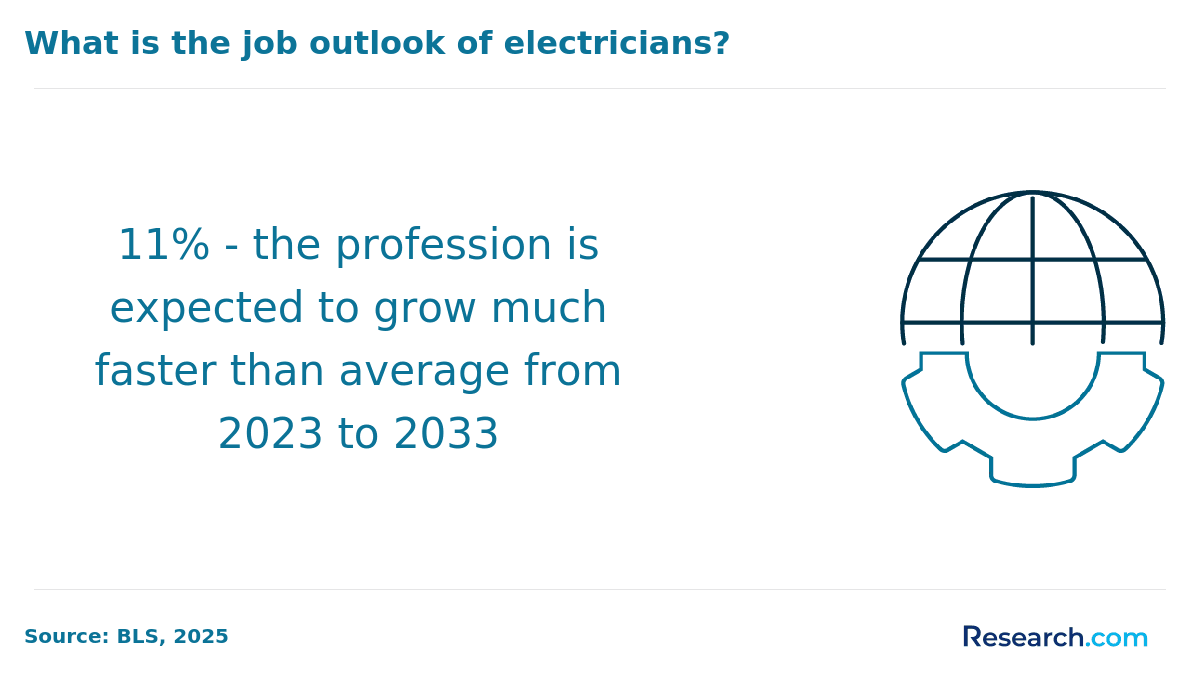
The job outlook for electricians in West Virginia over the next decade remains strong, supported by steady growth driven by both new construction and ongoing maintenance needs. According to the U.S. Bureau of Labor Statistics data from 2023, employment for electricians nationwide is expected to increase by about 7% between 2022 and 2032. This trend closely mirrors regional projections for West Virginia, where demand is rising across residential, commercial, and industrial sectors.
Key cities such as Charleston, Huntington, and Morgantown are central to this growth. Charleston, the state capital, has experienced heightened infrastructure investment, creating numerous job opportunities for electricians. Huntington benefits from a combination of manufacturing and energy industries, while Morgantown’s expanding healthcare and education sectors drive need for electrical installation and maintenance services. These urban centers are becoming hubs of skilled trade employment, offering diverse options for electricians.
Industry reports emphasize that the construction sector continues to be the largest employer of electricians in West Virginia. Residential housing developments and commercial building projects are primary sources of work. Furthermore, the energy industry—including coal, natural gas, and renewable energy facilities—plays a crucial role by requiring electricians for installation, upkeep, and safety inspections. This diversification across sectors provides stability and multiple career pathways.
Financially, aspiring electricians in West Virginia can anticipate median annual wages around $47,000 as of 2023. When adjusted for the state’s cost of living, which is approximately 15% below the national average, these wages translate into a comfortable living standard. Entry-level positions offer lower starting salaries but present clear opportunities for wage growth through gaining experience and earning certifications, especially in specialized fields like industrial systems or renewable energy.
Looking ahead, technological advancements and increased emphasis on energy efficiency are likely to expand demand for electricians with specialized skills. Certifications related to renewable energy systems, smart home technologies, and advanced safety standards could become increasingly valuable. For those considering a career in this field, West Virginia offers a promising combination of steady demand, competitive wages, and opportunities to grow in emerging areas of the electrical trade.
What Electricians in West Virginia Say About Their Careers
- Completing my apprenticeship through the West Virginia Northern Community College gave me a strong foundation in the trade. The hands-on experience combined with knowledgeable instructors really prepared me for the diverse electrical needs across our towns and rural areas. I love that my work directly supports the local community’s growth while providing job stability in a state rich with natural resources. It’s rewarding to see projects come to life and know I played a part in powering homes and businesses safely and efficiently. James
- Attending Marshall University’s electrical program was a turning point in my career and personal life. Beyond technical skills, I developed a passion for sustainable energy solutions that fit West Virginia’s unique landscape. Working in this field has allowed me to contribute to community resilience, especially in areas where energy challenges are real. It’s fulfilling to combine my technical knowledge with a commitment to environmental stewardship and community well-being. Mirella
- Starting as an apprentice through the Appalachian Power Company’s training program, I quickly saw the potential for advancement and leadership within this industry. West Virginia’s rugged terrain and weather conditions offer unique challenges that have sharpened my problem-solving skills every day. The career path here isn’t just a job; it’s a chance to grow professionally while serving a critical role in keeping the state’s infrastructure reliable. I’m proud to be part of a profession that values lifelong learning and adaptability. Andrew
Key Findings
- Apprenticeships are a critical component of electrician training, usually requiring about 8,000 hours (around four years) of supervised on-the-job training paired with approximately 576 hours of classroom instruction.
- With the construction industry in West Virginia projected to grow by 5% through 2025 and electrician jobs increasing by about 7%, the timing is ideal to invest in these programs
- Electricians in West Virginia earn an average annual salary of about $54,000, which breaks down to roughly $4,500 per month. Entry-level electricians typically start lower, around $32,000 to $38,000 annually, or $2,700 to $3,200 monthly.
- Apprentices earn about 50% to 60% of a fully qualified electrician’s wage during their 4 to 5 year apprenticeship, gradually increasing as they gain experience.
- After completing roughly 8,000 hours over four years, candidates become eligible to take the journeyman electrician license exam. Achieving journeyman status enables electricians to work independently and handle a broad scope of electrical installations
Related Articles for Nearby States
- 2027 How to Become an Electrician in Virginia
- 2027 How to Become an Electrician in Ohio
- 2027 How to Become an Electrician in Kentucky
- 2027 How to Become an Electrician in Pennsylvania
- 2027 How to Become an Electricician in Maryland
- 2027 How to Become an Electrician in North Carolina
- 2027 How to Become an Electrician in Tennessee
- 2027 How to Become an Electrician in Indiana
- 2027 How to Become an Electrician in South Carolina
- 2027 How to Become an Electrician in Georgia
References:
- Ashworth College. (n.d.). Online electrician school cost.
- CareerExplorer. (n.d.). Electrician salary in West Virginia.
- Electrician School Edu. (n.d.). Electrician salary in West Virginia – WV.
- Field Complete. (n.d.). What is electrician school cost? A complete breakdown of tuition and fees.
- IEC. (n.d.). How much does it cost to become an electrician?
- Outsource. (n.d.). How much will it cost to become an electrician?
- RSI. (n.d.). Understanding electrician training costs | Learn with RSI.
- SkillCat. (n.d.). Electrician apprentice salary in West Virginia.
- SoFi. (n.d.). How much electrician school costs and how to pay for it | SoFi.
- Tradeskills4U. (n.d.). Electrical courses | Electrician courses | C&G courses & training.
Other Things to Know About Becoming an Electrician in West Virginia
To become an electrician in West Virginia in 2027, you must have a high school diploma or GED. After completing your basic education, enrolling in a technical school or vocational program is advisable. These programs provide foundational electrical knowledge and practical experience, preparing you for an apprenticeship.
You can take the journeyman electrician exam in West Virginia after completing at least 8,000 hours of work experience under a licensed electrician. The exam is administered by the West Virginia State Fire Marshal and can be scheduled once eligibility is verified.


