
2027 How to Become an Occupational Therapist in Pennsylvania

Co-Founder and Chief Data Scientist
Pursuing a career as an occupational therapist in Pennsylvania offers rewarding opportunities with strong job growth. The state employs over 6,000 occupational therapists, and demand is projected to rise by nearly 18% over the next decade, reflecting an expanding need for rehabilitation services. This growth underscores the value of investing in this profession for those passionate about improving lives through therapeutic care.
This article outlines the essential steps to becoming an occupational therapist in Pennsylvania, including required education, licensure, and career pathways. Prepared by career planning experts, it delivers clear guidance and reliable information to support your journey toward a successful occupational therapy career in this state.
Key Things to Know About Becoming an Occupational Therapist in Pennsylvania
- Earn a master’s or doctoral degree from an ACOTE-accredited program, as Pennsylvania requires formal education meeting national standards to ensure competence in clinical skills.
- Complete at least 24 weeks of supervised fieldwork to gain hands-on experience, crucial in Pennsylvania’s diverse healthcare settings, from hospitals to schools.
- Pass the NBCOT certification exam and apply for a Pennsylvania state license to practice legally; the state’s growing demand for OTs reflects its expanding healthcare and rehabilitation sectors.
- What are the education requirements to become an occupational therapist in Pennsylvania? Educational Requirements
- How do you get a state license to practice occupational therapy in Pennsylvania? How do you get a state license to practice occupational therapy in Pennsylvania?
- How often do you need to renew an OT license in Pennsylvania? License Renewal
- What continuing education is required for OT license renewal in Pennsylvania? Continuing Education
- How much does it cost to become an occupational therapist in Pennsylvania? Cost
- What financial aid options are available for OT students in Pennsylvania? Financial Aid
- Can out-of-state occupational therapists work in Pennsylvania? Can out-of-state occupational therapists work in Pennsylvania?
- What skills do you need to be a successful occupational therapist in Pennsylvania? Skills
- What specializations are available for occupational therapists in Pennsylvania? Specializations
- What additional certifications can boost occupational therapy careers in Pennsylvania? boost
- What is the average salary of an occupational therapist in Pennsylvania? Salary
How to become an occupational therapist in Pennsylvania: education, licensure, costs, and career planning
Becoming an occupational therapist in Pennsylvania requires more than choosing a health care major. You need the right prerequisite courses, an accredited occupational therapy degree, supervised fieldwork, national certification, state licensure, continuing education, and a realistic plan for paying for graduate school. Missing one requirement can delay your ability to practice, even if you have completed most of your training.
This guide is for prospective occupational therapy students, career changers, occupational therapy assistants considering advancement, and licensed OTs moving to Pennsylvania. It explains the education path, Pennsylvania licensing process, renewal rules, continuing education requirements, costs, financial aid options, salary factors, specializations, and common mistakes to avoid before committing time and money to this career.
Quick answer: What does Pennsylvania require for occupational therapists?
To work as an occupational therapist in Pennsylvania, you generally need a bachelor’s degree or equivalent prerequisite preparation, graduation from an ACOTE-accredited occupational therapy graduate program, supervised fieldwork, a passing score on the NBCOT examination, and a license from the Pennsylvania State Board of Occupational Therapy Education and Licensure. Pennsylvania licenses must be renewed every two years, and occupational therapists must complete 24 contact hours of continuing education during each renewal cycle.
| Requirement | What it means for Pennsylvania OT candidates | Why it matters |
| Undergraduate preparation | Most candidates complete a bachelor’s degree with science, psychology, human development, anatomy, physiology, statistics, and research-related prerequisites. | Graduate OT programs expect applicants to be ready for advanced clinical coursework. |
| Accredited OT program | Students must complete a master’s (MSOT) or doctoral (OTD) program accredited by the Accreditation Council for Occupational Therapy Education (ACOTE). | Accreditation is tied to eligibility for certification and state licensure. |
| Supervised fieldwork | Graduate programs include at least six months of supervised clinical fieldwork with a licensed occupational therapist. | Fieldwork helps students apply classroom knowledge in hospitals, rehabilitation centers, schools, and other settings. |
| NBCOT examination | Candidates must pass the National Board for Certification in Occupational Therapy exam. | The exam verifies entry-level competency for professional practice. |
| Pennsylvania license | Applicants submit documentation, pay required fees, complete a background check, and meet insurance requirements. | A state license is required before practicing legally in Pennsylvania. |
Education requirements before licensure
The academic path usually begins with undergraduate study. While Pennsylvania does not require one specific bachelor’s major for every applicant, occupational therapy programs commonly expect coursework in natural sciences, behavioral sciences, psychology, human development, anatomy, and related subjects. The strongest undergraduate plan is one that matches the prerequisite list of the graduate programs you intend to apply to.
- Earn a bachelor’s degree or complete required prerequisite preparation: Common preparation areas include psychology, anatomy, human development, biology, physiology, statistics, and research methods. Students should compare prerequisite lists early because each OT program may organize admissions requirements differently.
- Choose an ACOTE-accredited graduate program: Pennsylvania students should look for a master’s (MSOT) or doctoral (OTD) occupational therapy program accredited by the Accreditation Council for Occupational Therapy Education. Accreditation confirms that the program follows recognized professional education standards.
- Complete supervised fieldwork: Occupational therapy programs include at least six months of supervised clinical fieldwork. This is where students practice evaluation, intervention planning, documentation, communication, and professional judgment under supervision.
- Verify accreditation before enrolling: A program connected to ACOTE or the American Occupational Therapy Association is the safer choice for students who want to qualify for certification and state licensure without unexpected barriers.
- Plan your timeline carefully: The OT path is longer than many short-term allied health training routes. If you are comparing health care careers with different training lengths, reviewing options such as medical billing and coding school timelines can help you understand how occupational therapy differs from non-clinical health care roles.
Who is this path best for?
Occupational therapy may be a strong fit if you want direct client contact, are comfortable with science-based graduate education, and enjoy helping people build or regain practical daily living skills. It may not be the right choice if you need the fastest possible entry into health care employment, want a mostly administrative role, or are not prepared for fieldwork, licensing, and ongoing continuing education.
How to get licensed as an occupational therapist in Pennsylvania
Licensure is the legal step that turns your education and certification into permission to practice in Pennsylvania. The state uses the licensing process to confirm that applicants meet education, examination, professional responsibility, and public safety requirements.
Pennsylvania OT licensure steps
- Graduate from an accredited occupational therapy program: Complete an approved occupational therapy degree pathway, including the required academic and clinical components. Your program should be accredited by ACOTE so that your education aligns with national professional standards.
- Finish supervised fieldwork: Pennsylvania applicants must show completion of at least six months of supervised fieldwork under licensed occupational therapists. This experience prepares candidates for independent decision-making in real practice environments.
- Pass the NBCOT examination: The National Board for Certification in Occupational Therapy exam is required for entry into professional practice. Passing it demonstrates that you have met a national competency benchmark.
- Apply to the Pennsylvania State Board: Submit the licensure application to the Pennsylvania State Board of Occupational Therapy Education and Licensure. Required materials typically include transcripts, NBCOT verification, and proof of fieldwork. The application fee is $30, and applicants who do not complete the process within one year must reapply and pay a new fee.
- Submit a recent criminal background check: Pennsylvania requires a criminal background check issued within the last 90 days. The board uses this information to evaluate professional suitability and public protection concerns.
- Carry professional liability insurance: Since 2013, occupational therapists in Pennsylvania have been required to maintain liability insurance with minimum coverage of $1,000,000.
| Licensure item | What to prepare | Common delay to avoid |
| Transcript documentation | Official proof that you completed the required OT degree | Requesting records too late after graduation |
| NBCOT verification | Evidence that you passed the national certification exam | Assuming certification automatically creates a Pennsylvania license |
| Fieldwork records | Confirmation that supervised clinical experience was completed | Not keeping program and supervisor documentation organized |
| Background check | A criminal background check issued within the last 90 days | Using an outdated background check |
| Liability insurance | Proof of required professional coverage | Waiting until after the license application to research policies |
If you are comparing occupational therapy with other allied health credentials, it can also help to understand how certification-based roles differ. For example, Research.com’s comparison of CBCS and CPC certification paths shows how non-licensure health care credentials can have different exam and employment requirements.
How often Pennsylvania occupational therapists must renew their license
Pennsylvania occupational therapy licenses follow a biennial renewal cycle. Licenses expire on June 30 of every odd-numbered year, and the renewal window generally opens about 60 days before the deadline. Licensees usually receive an email notice with renewal instructions, but the responsibility for renewing on time remains with the practitioner.
To renew in good standing, occupational therapists must complete 24 contact hours of continuing education every two years. The required total includes child abuse recognition and reporting training. If you miss the deadline, your license may become inactive, which means you cannot legally practice until you complete reinstatement requirements. Reinstatement can involve additional forms, fees, and processing time.
Practical renewal checklist
- Track the fixed deadline: Pennsylvania OT licenses expire on June 30 of every odd-numbered year.
- Do not rely only on email reminders: Renewal notices are helpful, but spam filters, job changes, and outdated contact information can cause missed messages.
- Save continuing education certificates: Keep course completion records in case the board audits your renewal.
- Finish child abuse training early: This requirement is state-specific and should not be left until the final week.
- Confirm your license status after submitting renewal: Do not assume payment alone means your license is active.
- Pennsylvania occupational therapist: "A Pennsylvania occupational therapist described renewal as a useful professional checkpoint rather than just paperwork. He said the notice that arrived about two months before the deadline gave him time to review his continuing education records, but his first renewal still felt stressful because he was balancing patient care, course selection, and documentation. After that experience, he began tracking hours throughout the cycle, which made later renewals much easier."
Continuing education requirements for Pennsylvania OT license renewal
Continuing education helps Pennsylvania occupational therapists keep their knowledge current, meet state rules, and respond to changes in clinical practice, documentation, ethics, technology, and client needs. The requirement applies to both occupational therapists and occupational therapy assistants.
- 24 contact hours every two years: Occupational therapists and occupational therapy assistants must complete 24 contact hours of approved continuing education during each biennial renewal period.
- Child abuse recognition and reporting training: At least 2 hours of board-approved child abuse recognition and reporting training must be included in the renewal total. Initial licensees complete 3 hours.
- Board-approved coursework matters: Not every webinar, employer training, conference, or online course automatically qualifies. Licensees should verify approval through the Pennsylvania State Board of Occupational Therapy Education and Licensure before counting a course.
- Records should be audit-ready: Keep certificates, course descriptions, dates, provider details, and proof of completion. Good documentation is your protection if you are selected for review.
- First renewal may be different: New licensees receive a partial exemption for the first renewal period, except for the child abuse training requirement.
- OTAs follow the same continuing education rule: Pennsylvania applies the 24 contact hour requirement to occupational therapy assistants as well as occupational therapists.
| Continuing education requirement | Applies to | What to verify |
| 24 contact hours | OTs and OTAs | That the course is accepted for Pennsylvania renewal |
| 2 hours of child abuse recognition and reporting | Renewing licensees | That the training is board-approved |
| 3 hours of child abuse recognition and reporting | Initial licensees | That completion is documented properly |
| Partial first-renewal exemption | New licensees | Which requirements still apply in the first cycle |
Some occupational therapists add non-OT skills to improve documentation, billing awareness, or interdisciplinary communication. If you are exploring supplemental health care training, options such as a short online medical billing and coding course may be useful for understanding administrative workflows, though such training should not be assumed to satisfy Pennsylvania OT continuing education rules unless approved.
How much it can cost to become an occupational therapist in Pennsylvania
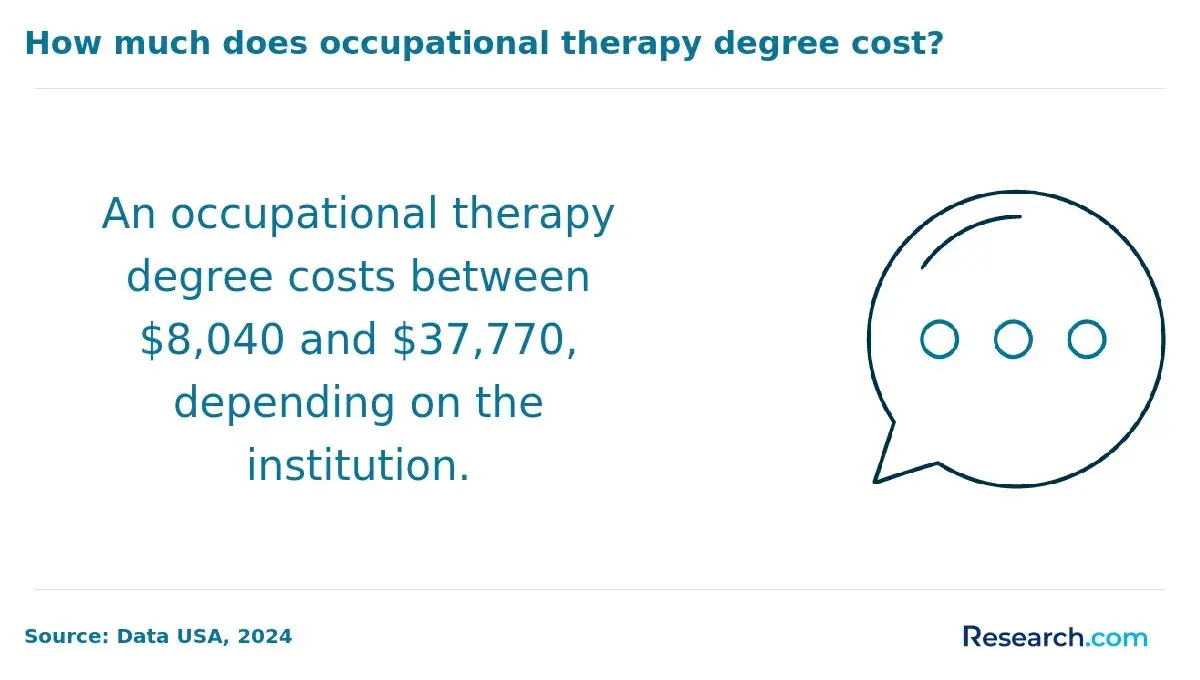
The cost of becoming an occupational therapist in Pennsylvania depends on the program you choose, whether you qualify for in-state tuition, how long you take to finish, exam fees, licensure costs, books, background checks, commuting or housing, and professional expenses. Because OT education is usually graduate-level, students should estimate the full pathway rather than looking only at one semester’s tuition.
| Cost category | Examples stated by programs or credentialing sources | Planning advice |
| OTD tuition and fees | Slippery Rock University lists an OTD cost of around $80,866.78 for in-state students. | Compare total program cost, not only per-credit pricing. |
| Annual tuition range | Saint Joseph’s University charges between $46,665 and $55,180 annually. | Ask whether fees, clinical costs, and supplies are included. |
| Per-term tuition | The University of Pittsburgh lists its Doctor of Occupational Therapy program at roughly $15,095 per term. | Multiply by the number of required terms before comparing programs. |
| NBCOT exam | The OTR exam generally costs around $555, while the COTA exam generally costs around $465. | Budget for the exam before graduation so certification is not delayed. |
| Licensure application | The Pennsylvania application fee is $30. | Also account for document requests, background checks, and insurance. |
| Background check | Moravian University lists a $30 FBI background check. | Check whether your program requires multiple screenings before fieldwork. |
| Books and memberships | Textbooks may cost around $450, and AOTA membership is about $75 annually. | Ask current students which materials are required versus optional. |
How to evaluate return on investment
A lower tuition program is not automatically the best value, and a more expensive program is not automatically better. Compare accreditation, NBCOT preparation, fieldwork placements, graduation timeline, commuting costs, faculty support, financial aid, and whether the program fits your intended specialty. Students should also ask whether they can work while enrolled, because fieldwork schedules can limit employment flexibility.
- Ask for the total estimated cost of attendance: Include tuition, fees, health requirements, background checks, transportation, housing, books, insurance, and exam costs.
- Confirm fieldwork expectations: Fieldwork placements may require travel, schedule changes, or temporary relocation.
- Compare completion time: A cheaper program that takes longer or creates scheduling barriers may not be the lowest-cost option overall.
- Review financial aid before enrolling: Graduate debt can affect your career flexibility after graduation.
Financial aid options for occupational therapy students in Pennsylvania
Because occupational therapy education can be expensive, students should build a funding plan before committing to a program. The best approach is usually a mix of federal aid, state aid when eligible, institutional scholarships, professional association awards, employer assistance, and careful borrowing.
- Federal Student Aid through the FAFSA: Completing the FAFSA is the starting point for federal loans, work-study, and eligible grant aid. It also helps schools determine institutional aid packages.
- Pennsylvania State Grants: Pennsylvania residents enrolled at least half-time may qualify for state grant support through the Pennsylvania Higher Education Assistance Agency. Students should file the FAFSA by May 1 each year to be considered.
- University scholarships and grants: OT programs may offer scholarships, assistantships, tuition discounts, or need-based grants. Availability varies by school, so students should contact both the OT department and the financial aid office.
- Professional association scholarships: Organizations such as the American Occupational Therapy Foundation and the Pennsylvania Occupational Therapy Association may offer competitive awards for enrolled students who meet academic and application requirements.
- Specialized and diversity-focused scholarships: Some awards support students from specific demographic, community, or professional backgrounds and can help expand representation in the OT workforce.
- Employer tuition assistance: Students already working in health care, education, or rehabilitation settings should ask whether their employer offers tuition reimbursement or professional development funding.
- External scholarships: Private foundations, civic organizations, and health care groups may fund students in accredited health professions programs.
- Payment plans and private loans: School payment plans can spread costs over a term. Private loans should be reviewed carefully because interest rates, repayment terms, and borrower protections can differ widely.
Questions to ask before borrowing for OT school
- What is the total estimated cost for the entire program?
- How much aid is gift aid, and how much is loan-based?
- Can scholarships be renewed each year or term?
- Will fieldwork reduce my ability to work part-time?
- What happens financially if I need to repeat a course or delay fieldwork?
- Does the program publish clear information about licensure preparation and student support?
Can occupational therapists licensed in another state work in Pennsylvania?
Occupational therapists licensed outside Pennsylvania may be able to work in the state, but they must first obtain a Pennsylvania license. Pennsylvania does not provide automatic reciprocity, so out-of-state practitioners need to apply through the endorsement process and submit the required documentation.
The endorsement route typically involves proof of education, NBCOT certification, professional liability insurance, and verification from any states where the applicant has held a license. Pennsylvania reviews whether the applicant’s prior licensing standards are substantially comparable to its own. The Occupational Therapy Licensure Compact is not active in Pennsylvania at this time, so therapists cannot use compact privileges to bypass the Pennsylvania licensing process.
| Out-of-state requirement | What Pennsylvania may request | Why it matters |
| License verification | Letters or official verification from each state where you have been licensed | Shows whether your licenses are active and in good standing |
| Education documentation | Proof that your OT education meets recognized standards | Helps the board compare your preparation with Pennsylvania requirements |
| NBCOT certification | Verification that you passed the required national exam | Demonstrates entry-level professional competence |
| Liability insurance | Evidence of required professional coverage | Pennsylvania requires minimum coverage of $1,000,000 |
| Background and application materials | Completed application, background check, and fees | Supports public protection and board review |
- Pennsylvania occupational therapist: "A Pennsylvania OT who trained in the state said colleagues moving from other states often found the endorsement pathway manageable once they understood the documentation requirements. In her view, the process can feel paperwork-heavy, but it gives applicants a clear route into Pennsylvania practice while helping the board protect clients."
Skills occupational therapists need to succeed in Pennsylvania
Occupational therapists need a combination of clinical judgment, communication ability, empathy, documentation discipline, and practical problem-solving. In Pennsylvania, OTs may work in hospitals, rehabilitation centers, schools, skilled nursing facilities, outpatient clinics, home health, early intervention, and community programs, so adaptability is especially important.
- Clinical reasoning: OTs must evaluate client needs, select interventions, adjust treatment plans, and connect therapy goals to meaningful daily activities.
- Communication: Therapists regularly explain treatment plans to clients, families, teachers, nurses, physicians, caregivers, and insurance-related stakeholders.
- Cultural competence: Pennsylvania includes urban, suburban, rural, immigrant, and economically diverse communities. Effective therapists adapt care to the client’s environment and life context.
- Ethical judgment: OTs handle vulnerable populations, confidential information, safety risks, documentation requirements, and professional boundaries.
- Problem-solving and flexibility: Treatment plans often change because of pain, fatigue, family support, school resources, home setup, transportation, or medical status.
- Documentation accuracy: Strong notes support continuity of care, reimbursement, legal compliance, and communication across teams.
- Technology readiness: Telehealth, assistive technology, adaptive equipment, and digital documentation tools are increasingly part of OT practice.
Occupational therapy specializations available in Pennsylvania
Specialization can help Pennsylvania occupational therapists focus their practice, deepen expertise, and pursue roles that match their preferred client population or care setting. A specialization is not just a label; it should align with your fieldwork experience, continuing education, employer demand, and long-term career goals.
| Specialization | Typical clients or cases | Common settings | Best fit for therapists who enjoy |
| Pediatrics | Infants, children, and adolescents with developmental delays, disabilities, sensory challenges, or school-related functional needs | Schools, outpatient clinics, and early intervention programs | Working with families, teachers, developmental milestones, and child-centered interventions |
| Geriatrics | Older adults managing arthritis, dementia, mobility limitations, chronic conditions, or age-related functional decline | Skilled nursing facilities, home health, rehabilitation hospitals, and community-based care | Supporting independence, safety, aging in place, and caregiver education |
| Mental health | Clients experiencing depression, anxiety, trauma-related conditions, or other psychiatric needs | Psychiatric hospitals, community mental health centers, and integrated care settings | Helping clients build routines, coping strategies, social participation, and life skills |
| Hand therapy | People recovering from hand, wrist, and upper-extremity injuries, fractures, tendon repairs, or orthopedic conditions | Orthopedic clinics and hospital rehabilitation departments | Detailed anatomy, splinting, post-surgical recovery, and upper-extremity function |
| Physical rehabilitation | Clients recovering from stroke, injury, surgery, neurological conditions, or functional loss | Acute care hospitals, inpatient rehabilitation, and outpatient rehabilitation centers | Restoring independence after major medical events |
Emerging practice areas such as telehealth and assistive technology can also shape OT careers, especially as employers expect clinicians to work across in-person and digital care environments. If you are comparing degrees and certificates across health care occupations, this guide to the difference between a bachelor’s degree and a medical billing and coding certificate can help clarify how credential level affects career direction.
Additional certifications and training that can strengthen an OT career
Advanced certifications can help occupational therapists demonstrate focused expertise, move into specialized clinical roles, or prepare for leadership. The right certification depends on your practice area. For example, pediatric OTs may prioritize school-based, sensory, or developmental training, while rehabilitation-focused therapists may pursue upper-extremity, neurorehabilitation, or assistive technology education.
Supplemental training outside traditional OT can also be useful when it supports your client population. For instance, learning more about caregiver expectations through resources on becoming a caregiver in Pennsylvania may help OTs communicate more effectively with family caregivers, home health aides, and support workers. However, optional training should be treated as career enhancement, not a substitute for OT licensure or required continuing education.
Occupational therapist salary in Pennsylvania
Occupational therapist pay in Pennsylvania varies by location, employer type, experience, specialization, schedule, and service setting. Salary figures should be viewed as estimates rather than guarantees because compensation can differ between hospitals, schools, home health agencies, private practices, rehabilitation facilities, and rural or urban markets.
| Pay factor | Details stated for Pennsylvania OT careers | How to use this information |
| Experience level | Entry-level occupational therapists usually start at around $71,421 per year. | Compare first-year offers with benefits, mentorship, caseload, and productivity expectations. |
| Employer type | Private practices, hospitals, schools, and home health agencies may use different pay structures. BAYADA Home Health Care may offer per-visit pay. | Look beyond the headline rate and ask how visits, cancellations, documentation, and travel are compensated. |
| Geographic location | Philadelphia hourly wages average around $66.98. | Balance higher wages against commute, cost of living, caseload, and work setting. |
| Specialization | Pediatric, geriatric, and other advanced practice areas may improve earning potential when employers need that expertise. | Choose a specialization based on demand, interest, and training requirements rather than salary alone. |
| Education and qualifications | Advanced education and additional training may support access to leadership or higher-responsibility roles. | Evaluate whether extra credentials lead to specific roles in your target setting. |
Students comparing clinical and non-clinical health care roles should also look at training length, licensing burden, and work environment. For example, people considering administrative health care careers may want to review what is needed to start working as a certified medical coder and biller before choosing between therapy practice and revenue-cycle roles.
Common mistakes to avoid before choosing an OT program
- Choosing a program without checking accreditation: Accreditation affects your ability to move forward into certification and licensure.
- Looking only at tuition: Fieldwork travel, fees, books, background checks, exam costs, and lost work time can change the real cost.
- Assuming online coursework eliminates clinical requirements: Occupational therapy is a hands-on profession, and supervised fieldwork remains essential.
- Ignoring state licensure rules: Requirements can differ by state, so students who may relocate should check licensing rules early.
- Waiting too long to plan continuing education: Tracking hours throughout the renewal cycle is easier than rushing before June 30 of an odd-numbered year.
- Assuming salary outcomes are guaranteed: Pay depends on market, setting, experience, benefits, schedule, and productivity expectations.
- Choosing a specialization too early without exposure: Fieldwork and early career roles can reveal practice areas you may not have considered.
What Pennsylvania occupational therapists say about their career path
- Arianne: "My occupational therapy education at Drexel University gave me both the academic preparation and the supervised experience I needed to begin working with students across Pennsylvania. Starting in a school setting showed me how quickly OT can affect a child’s confidence, participation, and independence. The state’s emphasis on inclusive education and community-based support has made this work feel both stable and meaningful."
- Kwame: "The University of Pittsburgh’s occupational therapy program helped me understand how culture, environment, family resources, and community conditions shape care in Pennsylvania. In a school-based role, I worked with children facing many different barriers, including socioeconomic challenges. That experience strengthened my commitment to practical, compassionate therapy that supports each student’s growth."
- Linh: "After completing Pennsylvania State University’s OT program, I entered a career with room for collaboration, development, and advancement. My first role in a local school allowed me to support students directly while working closely with educators and health professionals. That teamwork continues to shape how I practice and how I see occupational therapy’s value in Pennsylvania communities."
Related Articles for Nearby States
- 2027 How to Become an Occupational Therapist in New Jersey
- 2027 How to Become an Occupational Therapist in Delaware
- 2027 How to Become an Occupational Therapist in Maryland
- 2027 How to Become an Occupational Therapist in New York
- 2027 How to Become an Occupational Therapist in West Virginia
- 2027 How to Become an Occupational Therapist in Ohio
- 2027 How to Become an Occupational Therapist in Virginia
- 2027 How to Become an Occupational Therapist in Connecticut
- 2027 How to Become an Occupational Therapist in Rhode Island
- 2027 How to Become an Occupational Therapist in Massachusetts
References:
- PaTTAN occupational therapy resources https://www.pattan.net/Evidence-Based-Practices/Occupational-Therapy
- Pennsylvania Code and Bulletin licensing information https://www.pacodeandbulletin.gov/Display/pacode
- Temple University Occupational Therapy OTD program https://www.temple.edu/academics/degree-programs/occupational-therapy-otd-hp-othr-dot
- Penn State Berks occupational therapist assistant admission procedures https://berks.psu.edu/academics/associate-occupational-therapy/AOT-admission-procedures/OTA-first-year-admission-procedures
- Pennsylvania Department of State guidance for applicants licensed outside Pennsylvania https://www.pa.gov/agencies/dos/resources/professional-licensing-resources/act-41-2019
- Duquesne University Occupational Therapy Department https://www.duq.edu/academics/colleges-and-schools/health-sciences/academic-programs/occupational-therapy/index.php
- Gannon University occupational therapy program information https://www.gannon.edu/academic-offerings/health-professions-and-sciences/graduate/occupational-therapy/
- TrackFive occupational therapist skills overview https://trackfive.com/blog/occupational-therapist-skills-to-look-for-when-hiring/
- University of Scranton occupational therapy academic program information https://admissions.scranton.edu/academic-programs/majors-minors/programs/occupational-therapy.shtml
- TinyEYE guide to obtaining an OT license in Pennsylvania https://tinyeye.com/blog/how-to-obtain-your-ot-license-in-pennsylvania-a-step-by-step-guide.php
Key Insights
- Becoming an occupational therapist in Pennsylvania requires accredited OT education, supervised fieldwork, NBCOT certification, and state licensure before independent practice.
- Pennsylvania OT licenses renew every two years and expire on June 30 of every odd-numbered year, so licensees should track deadlines without relying only on reminder emails.
- Continuing education is mandatory: OTs and OTAs complete 24 contact hours every two years, including required child abuse recognition and reporting training.
- Program cost can vary substantially. Compare total cost of attendance, fieldwork logistics, financial aid, exam fees, background checks, insurance, and lost work time before enrolling.
- Out-of-state OTs cannot assume automatic reciprocity. Pennsylvania requires an endorsement application, verification, and proof that licensing standards are comparable.
- Specialization can improve career fit, but it should be based on your preferred population, practice setting, fieldwork exposure, and employer needs—not salary expectations alone.
- The safest decision is to verify accreditation, licensure eligibility, financial aid, and renewal obligations before committing to an occupational therapy program in Pennsylvania.
Other Things You Should Know About Becoming an Occupational Therapist in Pennsylvania
The current demand for occupational therapists in Pennsylvania as of 2027 is robust. With a growing awareness of the benefits of occupational therapy, especially in geriatric and pediatric populations, healthcare facilities across the state are actively seeking qualified professionals to meet the rising need.
To obtain licensure as an occupational therapist in Pennsylvania in 2027, candidates must complete a master's or doctoral degree from an accredited program, pass the NBCOT (National Board for Certification in Occupational Therapy) exam, and apply for state licensure through the Pennsylvania State Board of Occupational Therapy Education and Licensure.


