
2027 How to Become an Ultrasound Technician in Georgia

Co-Founder and Chief Data Scientist
In 2023, the US employed over 97,000 diagnostic medical sonographers, reflecting the growing reliance on imaging for accurate and timely care. Georgia, with its mix of advanced medical centers in Atlanta and community hospitals across the state, mirrors this national demand by expanding opportunities for skilled ultrasound technicians.
In this article, I will guide aspiring sonographers in Georgia through the essential steps to enter the field. I will also talk about education pathways, certification requirements, clinical training, and state-specific career prospects to help them navigate a profession that blends advanced technology with patient-centered healthcare.
Key Things to Know About Becoming an Ultrasound Technician in Georgia
- In Georgia, you must complete an accredited diagnostic medical sonography program, typically lasting 1 to 2 years, to meet educational standards.
- Hands-on clinical experience through practicums or internships is essential for building technical skills and meeting employer expectations in healthcare settings.
- Most employers in Georgia require ARDMS certification, which enhances job prospects and ensures compliance with widely recognized professional credentialing standards.
- What education is required to become an ultrasound technician in Georgia?
- What specialties can ultrasound technicians choose from in Georgia?
- Which certification exams are required to become an ultrasound technician in Georgia?
- Is a license required to practice as an ultrasound technician in Georgia?
- What to expect during ultrasound technician clinical training in Georgia?
- How much does it cost to become an ultrasound technician in Georgia?
- What is the average salary for ultrasound technicians in Georgia?
- What is the job outlook and demand for ultrasound technicians in Georgia?
- What are the career advancement steps for ultrasound technicians in Georgia?
- What are the common challenges ultrasound technicians face in Georgia?
- How do ultrasound technicians in Georgia keep their skills and certifications current?
- How are emerging technologies influencing ultrasound practices in Georgia?
What education is required to become an ultrasound technician in Georgia?
To become an ultrasound technician in Georgia, you need to follow a structured educational path centered on accredited ultrasound technician programs in Georgia. These programs combine theoretical coursework with clinical experience to prepare you for employment and certification.
- Minimum Degree Requirement: An Associate of Science in Diagnostic Medical Sonography is the standard minimum degree, typically completed in 18 to 24 months. Some advanced roles may require a bachelor’s degree.
- Accredited Program Completion: Graduation from a CAAHEP-accredited program is mandatory to qualify for national certification exams and increase job prospects.
- Prerequisite Coursework: Applicants must complete basic courses in anatomy, physiology, and medical terminology, usually with a minimum grade of “C.”
- Observational Hours: Many programs require at least 30 documented observational hours in a Diagnostic Medical Sonography environment, excluding 3D/4D ultrasound settings.
- Clinical Practicum Hours: During your degree, you must complete approximately 1,000 or more clinical internship hours, depending on the program.
- Entry Assessment: Some programs require passing an entry-level skills test like the TABE with a minimum score, ensuring readiness for the coursework.
- GPA Requirement: A cumulative GPA of at least 2.5 is often necessary for admission to sonography programs.
- Certification Preparation: Although Georgia does not mandate state licensure, most employers expect ARDMS certification, often attained through accredited programs.
- Recommendation Letters: At least one recommendation letter from a sonographer overseeing your observational hours is commonly required.
For more detailed insight into the best accelerated online sonography and ultrasound degree, prospective students should consider these prerequisites carefully.

What specialties can ultrasound technicians choose from in Georgia?
Ultrasound technicians in Georgia have several specialized paths to choose from, each focusing on distinct imaging techniques and patient needs. Selecting the right diagnostic medical sonography concentrations Georgia depends on your interests and the local demand for specific expertise.
Below is a concise overview of major specialties available to ultrasound technicians in the state.
- Abdominal Sonography: Focuses on imaging abdominal organs such as the liver and pancreas, with high demand in hospitals and imaging centers across Georgia.
- Obstetric and Gynecologic (OB/GYN) Sonography: Involves female reproductive system imaging and fetal monitoring, essential for prenatal care and women’s health in outpatient and hospital settings.
- Vascular Sonography: Specializes in blood vessel imaging and blood flow evaluation to diagnose cardiovascular conditions, a leading health concern in Georgia.
- Breast Sonography: Concentrates on breast tissue imaging to detect abnormalities like tumors, responding to increasing breast cancer screening rates.
- Adult Echocardiography: Uses ultrasound to assess adult heart structure and function, supporting cardiology teams in major medical centers.
- Pediatric Sonography: Focuses on imaging infants and children, including abdominal and cardiac studies, pivotal in children’s hospitals and pediatric practices.
- Interventional Sonography: Provides real-time imaging guidance for minimally invasive procedures like biopsies, common in large hospitals and outpatient centers.
For anyone considering these ultrasound technician specialties in Georgia, gaining foundational skills in abdominal and OB/GYN sonography is common, with advanced certifications expanding opportunities. Exploring career pathways through resources, such as becoming an X ray technician can provide valuable guidance.
Which certification exams are required to become an ultrasound technician in Georgia?
Certification exams play a vital role for ultrasound technicians in Georgia, as most employers require national certification to maintain high standards of patient care and professional competence. Although Georgia does not mandate state licensure or certification, passing recognized exams is essential to meet employer expectations and stay competitive in the job market.
- American Registry for Diagnostic Medical Sonography (ARDMS) Exam: The ARDMS is the leading certifying body for ultrasound technicians in Georgia. Exams cover ultrasound physics, anatomy, patient care, and specialties like obstetrics, abdominal, or vascular sonography. Candidates must complete an accredited sonography program or have equivalent work experience. Many Georgia employers strongly prefer or require ARDMS certification, and local sonography schools often integrate ARDMS exam prep into their curriculum.
- Cardiovascular Credentialing International (CCI) Exam: This exam targets professionals specializing in cardiac and vascular sonography. Certifications such as Registered Cardiac Sonographer (RCS) and Registered Vascular Specialist (RVS) require graduation from an accredited program or relevant clinical experience. CCI credentials are widely recognized in Georgia, particularly in cardiac and vascular imaging labs.
- American Registry of Radiologic Technologists (ARRT) Sonography Exam: The ARRT Sonography credential is for those completing approved education and meeting ethical standards. It assesses knowledge in patient care, imaging procedures, and evaluation. While less common than the ARDMS, some large healthcare providers in Georgia accept or require ARRT certification for specific roles.
Passing these nationally recognized exams not only confirms your professional credibility but also strengthens your job prospects and earning potential in Georgia. By aligning with employer expectations, certification demonstrates your commitment to high-quality patient care and professional excellence within the state’s healthcare industry. To put this into perspective, the chart below from Zippia outlines how ultrasound technician jobs are distributed by state.
Is a license required to practice as an ultrasound technician in Georgia?
No state license is required to practice as an ultrasound technician in Georgia. This matters because, unlike some states with strict licensing laws, Georgia relies primarily on national certification standards to regulate the profession. Understanding this helps prospective sonographers focus their preparation on recognized credentials rather than state licensure.
Georgia does not have any specific laws or agencies that issue or oversee ultrasound technician licenses. Instead, employers in the state typically require or prefer certifications from national organizations such as ARDMS, ARRT, or Cardiovascular Credentialing International (CCI). There are no provisions for provisional licensing or supervised practice under state regulation, so certification from these bodies is essential for legal employment and professional recognition.
To achieve these certifications, candidates must pass exams like the Sonographic Principles and Instrumentation (SPI) and one or more specialty tests in areas such as abdominal or vascular sonography. Most accredited programs in Georgia prepare students specifically for these exams, integrating exam readiness into their curriculum. Meeting these certification requirements improves employability and affirms a technician’s professional credibility in the absence of state licensure.
When I spoke with an ultrasound technician from Georgia who graduated from a local program, he reflected on his journey navigating the lack of state licensing. He shared that while he initially found it confusing not to have a state license to pursue, focusing on passing the national certification exams gave him clear goals to work toward. “It felt less like jumping through hoops and more like building real skills recognized nationwide,” he explained. He appreciated that his school’s close alignment with certification requirements helped him stay on track, and emphasized that employers value these credentials highly, often more than any separate state permission to practice.
What to expect during ultrasound technician clinical training in Georgia?
Clinical training is essential for ultrasound technician students in Georgia to develop the practical skills and confidence needed for certification and employment. This phase integrates classroom knowledge with real-world patient care and diagnostic imaging, guided by experienced professionals.
- Hands-On Patient Care: Students participate directly in patient assessments, preparation, and follow-up during imaging, learning to communicate effectively and ensure patient safety.
- Supervised Use of Imaging Equipment: Trainees operate ultrasound machines under licensed sonographer supervision, mastering technical aspects of image acquisition and equipment handling.
- Specialty Rotations: Clinical experiences include rotations in OB/GYN, vascular, abdominal, and cardiac sonography, allowing students to gain expertise across multiple medical fields.
- Mentorship from Licensed Professionals: Licensed sonographers and faculty provide continuous feedback, supervision, and professional guidance throughout training.
- Program-Specific Clinical Hours: Georgia programs require around 1,000 clinical hours, with total program durations of 18 to 24 months for associate degrees or up to 21 months for diplomas.
- Competency Evaluations: Students must pass assessments demonstrating proficiency in ultrasound procedures, safety, and patient care before graduation.
- Exposure to Diverse Healthcare Settings: Training often occurs at large hospitals, where students experience fast-paced environments demanding teamwork and adaptability.
- State or Program Requirements: While no state licensure is required, national certification is preferred; some programs mandate passing the TABE test and maintaining a minimum GPA for clinical placement.
These structured clinical experiences ensure students master the technical and professional skills necessary for certification exams and prepare them effectively for employment in Georgia’s healthcare sector.
How much does it cost to become an ultrasound technician in Georgia?
Pursuing a career as an ultrasound technician in Georgia entails expenses beyond tuition, including certification exams, materials, and clinical requirements. A comprehensive understanding of these costs enables aspiring sonographers to make informed financial decisions and select programs aligned with their professional objectives.
- Tuition and Fees: Associate degree programs at Georgia’s public technical colleges generally range from $8,500 to $12,000 for in-state students, while bachelor’s degree programs at universities such as Georgia Southern may cost $24,000 to $38,000. Private schools in the Atlanta area, like Cambridge College or South College, can exceed $40,000 for a full program. Certificate programs, such as the one at Grady Health System, are shorter in length but often similar in cost to an associate degree.
- Clinical Training Expenses: Students should expect additional costs for lab fees, uniforms, malpractice insurance, and travel to clinical sites, typically between $600 and $2,000, depending on the program’s structure and clinical placement locations.
- Certification and Exam Fees: Most Georgia employers require ARDMS certification. The SPI (Sonography Principles & Instrumentation) exam costs about $225, and each specialty exam costs another $250. Since students must pass both to earn credentials, total testing fees usually run around $475–$500.
- Licensing or State Fees: Georgia does not currently require a state license for sonographers, so no extra licensing costs apply. However, ARDMS certification requires annual renewal fees of $95 to maintain active status.
- Books and Materials: Program textbooks, medical references, and required software typically add $500 to $1,200 over the course of training. Some schools may bundle digital resources into tuition, but many require separate purchases.
- Living Expenses: Students attending full-time should budget around $10,000 to $15,000 annually for housing, food, transportation, and personal expenses. Those studying in metro Atlanta may face higher living costs than students in smaller Georgia cities.
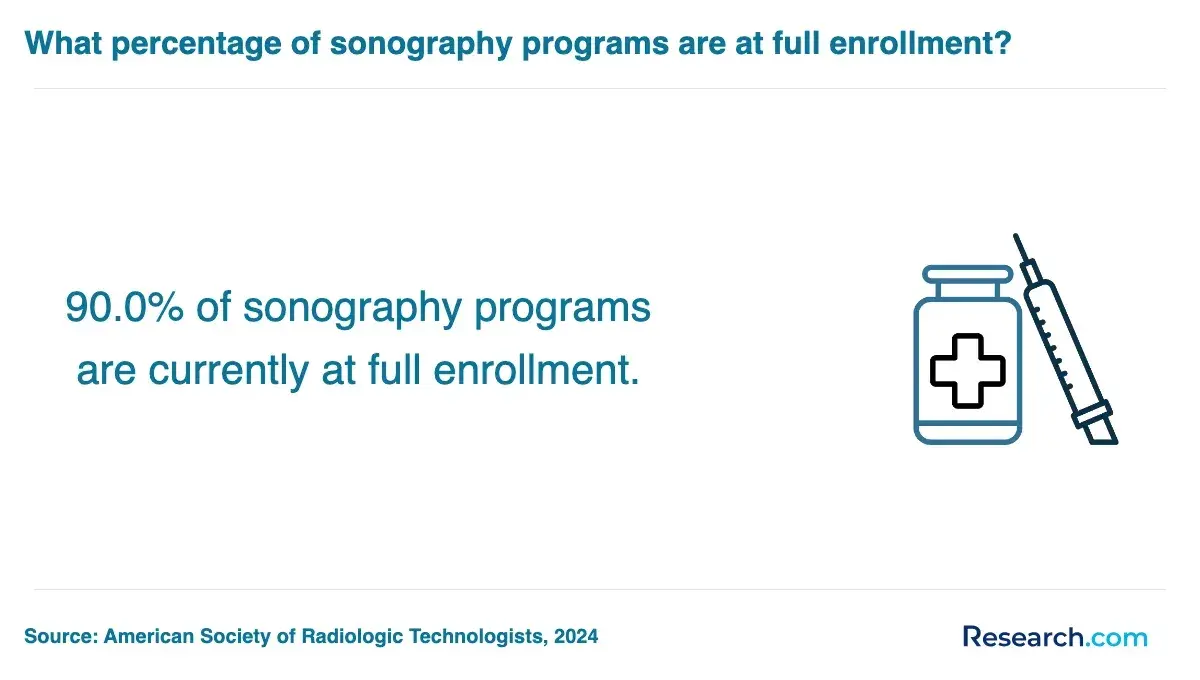
Careful budgeting ensures students are prepared for both direct and indirect expenses throughout their education. To better understand how competitive these programs can be, the image below highlights how many sonography programs are currently at full enrollment.
What is the average salary for ultrasound technicians in Georgia?
The average annual ultrasound technician salary in Georgia is $92,944, which is higher than the national average. Salaries vary widely, with some professionals earning as high as $2,647 per week and others as low as $641, though most fall between $1,315 (25th percentile) and $2,225 (75th percentile).
Location strongly impacts pay, with Rome offering salaries about 18.5% above the state average, while Dunwoody and Sandy Springs also trend higher. Part-time diagnostic medical sonographers in Georgia average $71,182, while roles in medical ultrasound technology typically pay around $57,727 annually.
Overall, salaries in Georgia reflect the state’s healthcare demand and geographic diversity, balancing pay to attract skilled technicians in both urban and rural areas. To see how experience influences earnings, the chart below illustrates the salary variation of ultrasound technicians by experience level.
What is the job outlook and demand for ultrasound technicians in Georgia?
The job outlook for ultrasound technicians in Georgia remains strong, with employment projected to reach 7,970 by 2032. The field is expected to see a 15% growth rate from 2022 to 2032, outpacing many other healthcare occupations. Furthermore, Georgia anticipates an average of 490 annual job openings during this period, reflecting both new demand and replacement needs across the state’s healthcare system.
- Population Growth and Aging: Georgia’s expanding and aging population boosts the need for imaging services, as older adults require more frequent diagnostic procedures.
- Healthcare Expansion: New clinics, hospitals, and outpatient centers in cities like Atlanta and Savannah are creating increased job opportunities statewide.
- Technological Advancements: Advances in ultrasound technology open doors to specialized fields like cardiac or vascular imaging, encouraging ongoing training and certification.
- Preventive Care Trends: A shift toward preventive healthcare increases reliance on ultrasound for early disease detection in both urban and rural settings.
- Regional Demand Variations: While urban areas offer more openings, rural locations often provide higher wages to attract skilled technicians amid local shortages.
When I spoke with an ultrasound technician from Georgia who graduated from a local school, she shared how these trends directly shaped her career path. She recalled starting her job search feeling uncertain about where opportunities would be most abundant. “In Atlanta, the volume is high but competition is intense, and wages are lower,” she explained. “I found better pay and more meaningful patient connections working in a smaller community outside the city.”
Her experience confirmed that staying flexible about location and continuing education allowed her to navigate Georgia’s evolving healthcare landscape successfully. “The demand is definitely there, but knowing where to look and how to adapt has made all the difference.”
What are the career advancement steps for ultrasound technicians in Georgia?
Ultrasound technicians in Georgia can build their careers by focusing on specialization, obtaining advanced certifications, or stepping into leadership roles. These practical steps help technologists increase their expertise, demand, and income. Exploring well-defined pathways ensures steady professional growth and broader healthcare impact.
- Specialization: Focus on areas like OB/GYN, vascular, or cardiac sonography to deepen expertise and become more valuable in the job market. Specialized skills often lead to higher demand and salaries, supporting career advancement opportunities for ultrasound technicians in Georgia.
- Advanced Certifications: Achieve credentials from organizations such as ARDMS, CCI, or ARRT, which showcase advanced knowledge and are frequently required by employers. These certifications open doors to specialized roles and better pay.
- Higher Education: Pursue a bachelor’s or master’s degree to unlock new career paths beyond entry-level roles, including management or clinical specialties. Education increases competitiveness as the field evolves.
- Leadership Roles: Progress into supervisory or administrative posts within hospitals or imaging centers, managing teams and improving clinical workflows. Rising to lead positions reflects experience and expands professional influence.
- Education and Training: Become an instructor or clinical trainer to teach and mentor future sonographers, diversifying career options while enhancing the profession.
- Research or Technology Development: Engage in medical imaging research or collaborate with equipment developers to support advancements in diagnostic technology. This pathway contributes to statewide healthcare innovation.
Following these steps helps technicians not only boost their earnings but also broaden their professional impact across Georgia. For those weighing their options, reviewing the ranking of the best ultrasound technician certification programs can provide valuable guidance.
What are the common challenges ultrasound technicians face in Georgia?
Recognizing the common challenges ultrasound technicians face in Georgia helps you plan a sustainable career by preparing for physical, emotional, and professional demands. Awareness of these obstacles allows you to develop strategies to manage workload, certification, and evolving technology effectively.
- Physical Strain and Ergonomics: The physical demands of sonography jobs in Georgia include musculoskeletal issues caused by repetitive scanning, patient positioning, and long hours on your feet.
- Emotional Stress: Working with patients facing serious health conditions can be mentally taxing, requiring emotional resilience to avoid burnout.
- Workload and Staffing Shortages: Many facilities have limited staff, so ultrasound technicians often handle heavy caseloads and cover extended shifts.
- Certification and Continuing Education Requirements: Staying current with ARDMS credentials demands balancing ongoing education with a busy work schedule.
- Technology Adaptation: Rapid advances in ultrasound equipment and digital systems require continuous learning to stay proficient.
- Job Market Competition: Regional differences in demand can affect job opportunities and career growth across Georgia.
Understanding these challenges helps ultrasound technicians in Georgia proactively seek support and develop skills to overcome obstacles, ensuring long-term career success. For guidance on initial steps, see the steps to becoming a medical sonographer.
How do ultrasound technicians in Georgia keep their skills and certifications current?
Continuing education plays a critical role in sustaining a high standard of care and meeting certification renewal requirements. Ultrasound technicians in Georgia are encouraged to pursue accredited refresher courses, specialized workshops, and industry conferences that focus on emerging diagnostic techniques and technology updates. Participation in professional associations and networking events also helps practitioners stay informed of practice innovations and regulatory changes. For those exploring overlapping fields, consider how to become a radiology technician in Georgia as a pathway to diversify skill sets and expand career opportunities.
How are emerging technologies influencing ultrasound practices in Georgia?
Advances in diagnostic imaging and digital integration are reshaping the role of ultrasound technicians in Georgia. AI-driven image analysis, enhanced telemedicine, and simulation-based training are streamlining workflows and improving diagnostic accuracy. These technological improvements demand that professionals adapt to continuous learning, optimize device handling, and collaborate more closely with interdisciplinary teams. Staying updated with these innovations not only reinforces clinical expertise but also positions technicians competitively in an evolving healthcare landscape. For insights into related career transitions, explore how to become a nurse midwife in Georgia.
What do ultrasound technicians in Georgia say about their career?
- Completing my ultrasound technician program at Augusta Technical College was a transformative experience that prepared me thoroughly for a rewarding career. Starting my work in a local school environment allowed me to apply my skills in a meaningful way, directly impacting the health and well-being of children in my community. The stability of this profession in Georgia gives me peace of mind, knowing I can grow professionally while serving those who need it most. I’m proud to contribute in a role that combines my passion for healthcare with a dedication to education and support. - Terrence
- Attending Georgia Piedmont Technical College opened doors I didn't even realize existed in the field of sonography. Working as an ultrasound technician within an academic institution has been both challenging and inspiring, especially navigating the unique healthcare demands shaped by Georgia’s diverse population and regional healthcare resources. This career has fostered my professional growth and allowed me to mentor others in health sciences, while continuously expanding my technical skills. I value the opportunity to contribute to the academic setting, where each day brings new learning and fulfillment. - Jocie
- After graduating from Chattahoochee Technical College, I found my calling as an ultrasound technician by serving the youth within my local school. This role has deepened my appreciation for community health and the difference targeted healthcare support can make for young people facing various challenges. Georgia’s rich cultural diversity offers unique patient interactions that have broadened my perspective and enriched my professional journey. Being able to advance my career while positively impacting lives fuels my enthusiasm every day. - Devon
Related Articles for Nearby States
- 2027 How to Become an Ultrasound Technician in South Carolina
- 2027 How to Become an Ultrasound Technician in Florida
- 2027 How to Become an Ultrasound Technician in Alabama
- 2027 How to Become an Ultrasound Technician in Tennessee
- 2027 How to Become an Ultrasound Technician in North Carolina
- 2027 How to Become an Ultrasound Technician in Mississippi
- 2027 How to Become an Ultrasound Technician in Kentucky
- 2027 How to Become an Ultrasound Technician in Virginia
- 2027 How to Become an Ultrasound Technician in Louisiana
- 2027 How to Become an Ultrasound Technician in West Virginia
References:
- Data USA (n.d.). Diagnostic Medical Sonographers. Retrieved from https://datausa.io/profile/soc/diagnostic-medical-sonographers?redirect=true
- O*NET OnLine (n.d.). Georgia Employment Trends 29-2034.00 - Radiologic Technologists and Technicians. Retrieved from https://www.onetonline.org/link/localtrends/29-2034.00?st=GA
- Zippia (2025). Ultrasound Technologist Demographics and Statistics in the US. Retrieved from https://www.zippia.com/ultrasound-technologist-jobs/demographics/
- Zippia (2025). Ultrasound Technologist Salary. Retrieved from https://www.zippia.com/salaries/ultrasound-technologist/
- ZipRecruiter (2025). Ultrasound Technologist Salary in Georgia. Retrieved from https://www.ziprecruiter.com/Salaries/Ultrasound-Technologist-Salary--in-Georgia
Other Things You Should Know About Being an Ultrasound Technician in Georgia
In 2027, while online coursework can supplement learning, Georgia requires hands-on clinical experience to become a licensed ultrasound technician. Accreditation from the Commission on Accreditation of Allied Health Education Programs (CAAHEP) and passing the ARDMS exam are typically necessary.
In 2027, to become an ultrasound technician in Georgia, you must complete a program accredited by the Commission on Accreditation of Allied Health Education Programs (CAAHEP). This typically involves earning an associate degree or a post-secondary certificate with hands-on clinical training.


