
2027 How to Become an Ultrasound Technician in Idaho

Co-Founder and Chief Data Scientist
Many aspiring healthcare professionals in Idaho are uncertain about starting a career as an ultrasound technician. With a projected 21% job growth by 2030—well above the national average—the field promises strong demand, competitive pay, and rewarding opportunities in a growing healthcare sector.
This article, prepared by career planning experts, outlines Idaho’s education, certification, and employment pathways, providing clear guidance for career success.
Key Things to Know About Becoming an Ultrasound Technician in Idaho
- Idaho ultrasound technicians must complete a CAAHEP-accredited associate degree, prerequisites, and over 1,300 clinical hours to qualify for certification.
- Professionals may specialize in OB/GYN, cardiac, vascular, or musculoskeletal sonography and earn ARDMS, ARRT, or CCI credentials that employers require.
- With job growth nearly double the national average, advancement comes through specialization, advanced certifications, leadership, and higher education despite workplace challenges.
Table of Contents
- What education is required to become an ultrasound technician in Idaho?
- What specialties can ultrasound technicians choose from in Idaho?
- Which certification exams are required to become an ultrasound technician in Idaho?
- Is a license required to practice as an ultrasound technician in Idaho?
- What to expect during ultrasound technician clinical training in Idaho?
- How much does it cost to become an ultrasound technician in Idaho?
- What is the average salary for ultrasound technicians in Idaho?
- How are emerging technologies reshaping ultrasound diagnostics in Idaho?
- What is the job outlook and demand for ultrasound technicians in Idaho?
- What are the career advancement steps for ultrasound technicians in Idaho?
- What are the common challenges ultrasound technicians face in Idaho?
- Can ultrasound technicians gain added value through midwifery training in Idaho?
What education is required to become an ultrasound technician in Idaho?
In Idaho, becoming an ultrasound technician requires completing accredited education that combines classroom learning with extensive clinical practice. These standards prepare students for certification and professional success in healthcare settings.
Below are the key educational requirements:
- Minimum Degree Requirement: An Associate of Science in Diagnostic Medical Sonography is the standard, though some programs accept a bachelor’s degree in a related medical field.
- Accredited Program Completion: Graduation from a CAAHEP-accredited program is required and is available through community colleges, technical schools, and universities in Idaho.
- Prerequisite Coursework: Applicants must complete college-level courses in science and healthcare, earning a “C” or better and maintaining a GPA between 2.5 and 3.0.
- Clinical Experience: Programs require extensive practicum hours, such as more than 1,300 at Idaho State University, to build essential hands-on skills.
- Patient Care Experience: Certain programs mandate at least 12 months of prior patient care experience before admission.
- Application Process: Admission is competitive, often requiring transcripts, proof of prior education, and application fees.
- Academic Performance Standards: Students must maintain grades of “C-” or higher in sonography coursework, with some schools requiring a 2.7 GPA or above.
- Certification Eligibility: Graduates qualify for ARDMS exams, including the Registered Diagnostic Medical Sonographer (RDMS).
- High School Diploma/GED: A high school diploma or equivalent is necessary before entering postsecondary sonography education.
For those also exploring related healthcare paths, consider learning more about how to become a radiologist, which shares foundational healthcare education elements.
What specialties can ultrasound technicians choose from in Idaho?
Ultrasound technicians in Idaho can specialize in several fields that align with both statewide healthcare needs and national credentialing standards. These options provide pathways for focused expertise and rewarding careers in diagnostic imaging. Below are the key specialties available.
- Obstetric and Gynecologic Sonography: Focuses on reproductive health and fetal development, representing one of the most sought-after specialties in Idaho’s healthcare sector.
- Abdominal Sonography: Involves imaging organs such as the liver, kidneys, and pancreas, forming a core specialty offered in most accredited programs statewide.
- Cardiac Sonography (Echocardiography): Specializes in evaluating heart function and structure, with Idaho programs providing strong training in this critical area.
- Vascular Sonography: Concentrates on arteries and veins to detect clots, blockages, and circulation issues, valuable in both hospital and outpatient settings.
- Breast Sonography: Provides detailed imaging of breast tissue to aid in early detection of cancer and support biopsy procedures.
- Musculoskeletal Sonography: Examines muscles, joints, tendons, and ligaments to diagnose injuries, reflecting the state’s growing demand for sports and orthopedic care.
For those embarking on or advancing within their diagnostic medical sonography specialties in Idaho, it’s valuable to recognize how programs may vary in specialization options. Programs often establish partnerships with local healthcare providers to ensure diversity in clinical placements. Exploring resources on radiology career options can also provide helpful guidance on career trajectories and specialties.
Which certification exams are required to become an ultrasound technician in Idaho?
Certification exams are the primary pathway for ultrasound technicians in Idaho to demonstrate national competency and readiness for patient care. Although the state does not mandate licensure, most employers require recognized credentials to ensure quality and professionalism. Below are the main certification options available.
- ARDMS Certification Exams: The American Registry for Diagnostic Medical Sonography is the most widely recognized credential. Candidates must pass the Sonography Principles and Instrumentation (SPI) exam along with a specialty exam such as Abdomen or OB/GYN. Eligibility requires a CAAHEP-accredited program or equivalent clinical training. Applicants with prior criminal records must secure approval before registration.
- ARRT Sonography Certification: The American Registry of Radiologic Technologists awards the Sonography (S) credential, covering patient care, imaging practices, and equipment use. Idaho programs, including Idaho State University, often integrate ARRT pathways, making this credential a common choice for local graduates.
- CCI Certification Exams: Cardiovascular Credentialing International provides specialized certifications such as Registered Cardiac Sonographer (RCS) and Registered Vascular Specialist (RVS). These exams evaluate cardiovascular anatomy, instrumentation, and scanning techniques. While not required statewide, they are valuable for technicians pursuing roles in cardiac and vascular imaging.
Is a license required to practice as an ultrasound technician in Idaho?
Idaho does not require a state-issued license to practice as an ultrasound technician. This absence of state regulation streamlines the pathway to employment but makes national certification especially important. Certification serves as the primary credential for demonstrating competency, meeting employer expectations, and advancing professionally in the field.
To work in Idaho, ultrasound technicians typically earn credentials from ARDMS, ARRT, or CCI, as the state does not provide provisional or supervised practice options. The Department of Health and Welfare regulates only x-ray and mammography technologists, leaving sonographers outside its scope.
Completing an accredited program and passing the SPI exam, along with a specialty exam, such as Abdomen or OB/GYN, ensures compliance with national standards, strengthens professional credibility, and improves job prospects. The chart below from Zippia shows the ultrasound technicians' educational attainment.
What to expect during ultrasound technician clinical training in Idaho?
Clinical training in Idaho provides students with immersive, real-world experience that bridges academic knowledge with patient care. This stage is essential for building technical expertise, professional judgment, and readiness for certification. Below are the main components of clinical training:
- Extensive Hands-On Patient Care: Students perform sonographic procedures while developing empathy and professionalism through direct interaction.
- Supervised Use of Imaging Equipment: Trainees operate advanced ultrasound machines under expert supervision, refining accuracy and safety skills.
- Specialty Rotations: Exposure to OB/GYN, abdominal, vascular, and cardiac sonography broadens understanding of diverse clinical applications.
- Mentorship from Licensed Sonographers: One-on-one guidance provides continuous feedback and supports professional growth.
- Physical and Technical Skill Development: Training includes patient positioning, equipment handling, and emergency response, enhancing adaptability.
- Clinical Hour Requirements: Programs require more than 1,300 supervised hours to ensure comprehensive preparation.
- Competency Evaluations: Assessments confirm proficiency in performing and interpreting imaging procedures.
- Background Checks and Drug Testing: Compliance with state and hospital policies ensures safe clinical participation.
- Assignment to Clinical Sites: Students rotate through hospitals and imaging centers across Idaho, gaining varied healthcare exposure.
- Program and State-Specific Entry Requirements: Admission requires completion of prerequisites and acceptance into an accredited Idaho sonography program.
How much does it cost to become an ultrasound technician in Idaho?
The overall cost of becoming an ultrasound technician in Idaho depends on program length, institution type, and individual living expenses. Students should budget not only for tuition but also for clinical, certification, and personal costs. Below are the primary expenses to consider.
- Tuition and Fees: Associate programs at community colleges range from $8,000 to $15,000, while bachelor’s programs at universities may cost $20,000 to $28,000 or more. Certificate programs are often less expensive but limited in availability.
- Clinical Training Expenses: Additional costs for lab fees, uniforms, liability insurance, and externship travel typically total $800 to $1,500.
- Certification and Exam Fees: ARDMS certification exams cost about $225–$250 per specialty, with extra fees for retakes or multiple credentials.
- Licensing or State Fees: Idaho does not currently require state licensure for ultrasound technicians, so no licensing fees apply.
- Books and Materials: Textbooks, imaging software, and supplies usually cost between $500 and $1,200 throughout the program.
- Living Expenses: Students should plan for $9,000 to $14,000 annually in housing, meals, transportation, and personal costs.
Costs for an ultrasound technician program in Idaho vary depending on the program type and the institution you attend. Students often lower expenses through financial aid, scholarships, or tuition reimbursement from healthcare employers. For those seeking faster pathways, exploring the best accelerated online sonography and ultrasound degree options can provide added flexibility.
What is the average salary for ultrasound technicians in Idaho?
The average annual salary for ultrasound technicians in Idaho is about $92,464, which is 19–38% lower than the national average. This reflects regional healthcare demand and market dynamics across the state. Below are the key factors that influence salaries in Idaho.
- Experience Level: Entry-level technicians typically earn around $86,571, while senior sonographers with advanced expertise can surpass $104,517 annually.
- Work Setting: Professionals in hospitals or large health systems may earn up to $48 per hour, while those in outpatient clinics or physician offices often see lower wages.
- Geographic Location: Salaries in urban centers like Boise average $93,532, whereas rural regions such as Rupert report averages closer to $78,734.
- Specialization: Skills in OB/GYN, cardiovascular, or abdominal sonography result in higher pay due to the demand and complexity of these specialties.
- Education and Certifications: Credentials such as ARDMS certification boost earning potential by signaling specialized expertise that employers value.
How are emerging technologies reshaping ultrasound diagnostics in Idaho?
In Idaho, ultrasound diagnostics are evolving with the integration of advanced imaging tools, such as AI-driven analysis and enhanced digital imaging systems. These innovations are optimizing clinical workflows, improving diagnostic precision, and facilitating more effective patient care. Professionals who adapt by acquiring targeted training can leverage these technological advancements to maintain a competitive edge in the field. For additional insights into expanding imaging roles, consider reviewing how to become a radiology technician in Idaho.
What is the job outlook and demand for ultrasound technicians in Idaho?
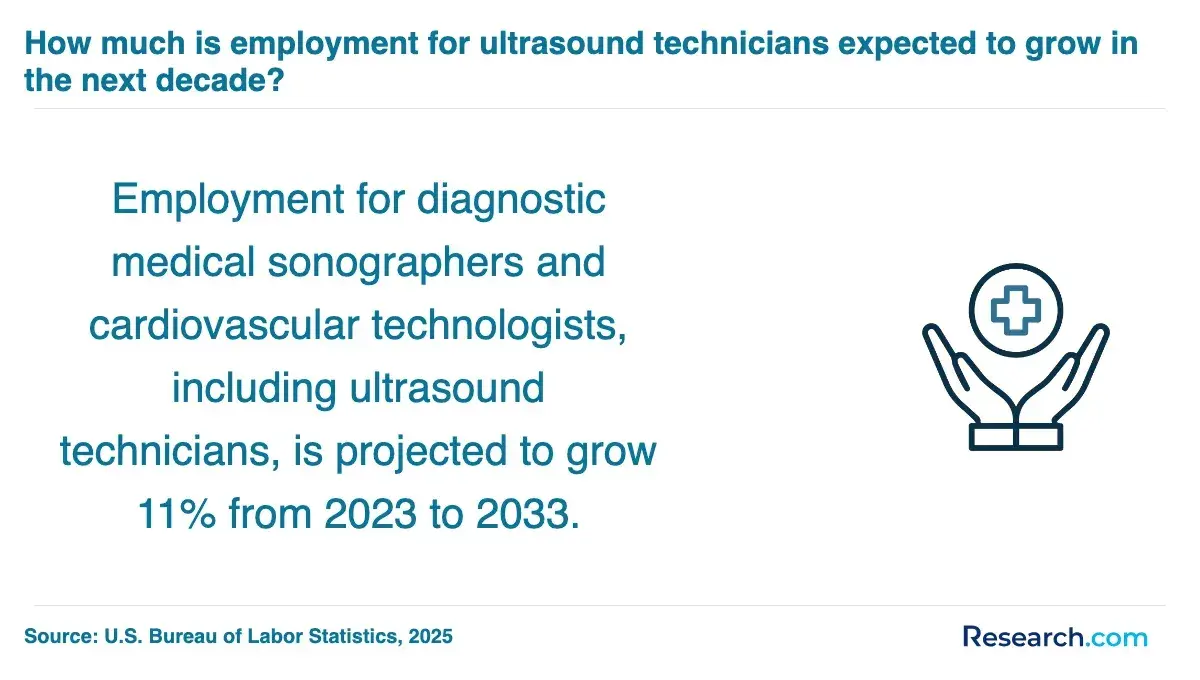
The job outlook for ultrasound technicians in Idaho is especially strong, with employment growth projected to nearly double the national average of 14.3%. This surge highlights the state’s growing healthcare needs and increasing reliance on diagnostic imaging. Below are the main factors contributing to this expansion.
- Population Growth and Aging: Idaho’s rising elderly population increases the need for ultrasound services, as older adults often require more frequent diagnostic exams.
- Healthcare Expansion: New hospitals, outpatient centers, and clinics throughout the state are fueling steady job creation for trained sonographers.
- Technological Advancements: Advances in ultrasound imaging support specialized roles in fields like vascular, cardiac, and musculoskeletal sonography, broadening career opportunities.
- Preventive Care Trends: The emphasis on early detection and non-invasive diagnostics enhances the role of ultrasound in routine and preventive care.
- Regional Demand Variations: While urban areas typically offer more positions, rural regions face greater recruitment challenges, creating incentives and unique opportunities for technicians.
What are the career advancement steps for ultrasound technicians in Idaho?
Ultrasound technicians in Idaho can advance their careers by building specialized skills, pursuing higher education, and stepping into leadership roles. These pathways not only expand career opportunities but also align with the state’s growing healthcare needs. Below are the key advancement steps available in Idaho:
- Specialization: Focusing on OB/GYN, vascular, or cardiac sonography establishes expertise in high-demand areas, improving employability and salary potential.
- Advanced Certifications: Credentials from ARDMS, CCI, or ARRT confirm advanced competencies and are often required for senior clinical roles and higher-paying positions.
- Higher Education: Completing a bachelor’s or master’s degree—offered at institutions such as Boise State University—prepares professionals for supervisory, academic, or research careers.
- Leadership Roles: Experienced sonographers can transition into supervisory or administrative positions, overseeing imaging teams and shaping clinical policies.
- Education and Training: Becoming a program instructor or clinical trainer allows seasoned professionals to mentor new technicians and influence future workforce quality.
- Research and Technology Development: Participation in imaging research or telemedicine initiatives supports innovation and strengthens Idaho’s expanding healthcare technology sector.
For those seeking deeper credentialing options, exploring what is the best ultrasound technician certification program can provide valuable guidance. Pursuing career advancement for ultrasound technicians in Idaho not only increases earning potential but also amplifies professional impact within the community and healthcare industry.
What are the common challenges ultrasound technicians face in Idaho?
Ultrasound technicians in Idaho face unique challenges that shape their daily responsibilities and long-term career paths. Recognizing these obstacles helps sonographers prepare strategies to stay healthy, effective, and motivated in a demanding healthcare environment. Below are the most common challenges in the state.
- Physical Strain and Ergonomics: Repetitive scanning and extended hours often cause musculoskeletal discomfort, making proper body mechanics and posture crucial.
- Emotional Stress: Assisting patients during difficult diagnoses requires emotional resilience while maintaining professionalism and compassion.
- Workload and Staffing Shortages: Heavy caseloads paired with limited staff create fatigue, requiring effective time management and self-care practices.
- Certification and Continuing Education Requirements: Maintaining credentials such as RDMS while working full-time demands disciplined scheduling and strong commitment.
- Technology Adaptation: Rapid advances in ultrasound systems and digital health records require continual learning and adaptability to new processes.
- Job Market Competition: Employment opportunities vary regionally, making networking and skill development vital for securing career advancement.
Recognizing these workplace stress for Idaho sonographers sharpens your focus and aids in crafting a successful path, supported by knowledge and perseverance. For those exploring a medical sonographer career salary and future, embracing these challenges with a proactive mindset is vital.
What do ultrasound technicians in Idaho say about their career?
Working as an ultrasound technician in Idaho has given me steady employment and the chance to make a meaningful impact on patients’ lives. The mix of rural and urban healthcare settings keeps my work dynamic, and the career stability is very reassuring. Natalie
This career in Idaho allows me to use both technical expertise and compassionate care, which makes every day rewarding. I value the strong demand for ultrasound technicians here, as it provides excellent job security and many opportunities for advancement and specialization. Cedrick
Becoming an ultrasound technician in Idaho has been an incredibly fulfilling journey. The variety of cases challenges me to keep improving, while the respect I receive as part of the healthcare team motivates me to grow. I’m grateful for this stable and meaningful career. Cielo
Can ultrasound technicians gain added value through midwifery training in Idaho?
Ultrasound technicians with expertise in obstetric imaging may enhance their professional profile by integrating targeted midwifery training. This dual focus not only improves diagnostic precision in prenatal care but also fosters deeper collaboration within obstetric teams, potentially opening doors to broader career pathways in maternal health. For detailed information on pursuing this complementary specialization, refer to how to become a nurse midwife in Idaho.
Related Articles for Nearby States
- 2027 How to Become an Ultrasound Technician in Montana
- 2027 How to Become an Ultrasound Technician in Washington
- 2027 How to Become an Ultrasound Technician in Oregon
- 2027 How to Become an Ultrasound Technician in Nevada
- 2027 How to Become an Ultrasound Technician in Utah
- 2027 How to Become an Ultrasound Technician in Wyoming
- 2027 How to Become an Ultrasound Technician in California
- 2027 How to Become an Ultrasound Technician in Colorado
- 2027 How to Become an Ultrasound Technician in Arizona
- 2027 How to Become an Ultrasound Technician in New Mexico
References:
- Diagnostic Medical Sonographers. Retrieved from Next Steps Idaho
- How to Become an Ultrasound Technician in Idaho. Retrieved from HealthJob
- Sonography Career Paths. Retrieved from UltrasoundSchoolsInfo
- How to Become a Medical Sonographer in Idaho (2025). Retrieved from Dreambound
- Occupation Details – Jobscape. Retrieved from Idaho Department of Labor
- OB/GYN Sonography Travel Jobs in Idaho. Retrieved from AMN Healthcare
- Diagnostic Medical Sonographers and Cardiovascular Technologists and Technicians. Retrieved from Bureau of Labor Statistics
- Diagnostic Medical Sonography. Retrieved from Idaho State University
- Diagnostic Medical Sonography Emphasis – Radiologic Sciences. Retrieved from Boise State University
- Diagnostic Medical Sonography. Retrieved from Spokane Community College
Other Things You Should Know About Becoming an Ultrasound Technician in Idaho
In 2027, to become an ultrasound technician in Idaho, you typically need to complete a formal education program, usually a two-year associate degree in diagnostic medical sonography. Afterward, obtaining certification from an organization like the American Registry for Diagnostic Medical Sonography (ARDMS) is highly recommended, although Idaho does not require state licensing.
Yes, you can become an ultrasound technician in Idaho with an accredited online program that includes in-person clinical training. Coursework may be completed virtually, but hands-on practice is required in healthcare settings. Graduates must also meet certification requirements, often including ARDMS exams, to qualify for employment in Idaho.
Yes, freelance and travel ultrasound technician opportunities are available in Idaho, particularly to address staffing shortages in rural areas. These roles offer flexibility, higher earning potential, and varied experiences. To qualify, technicians typically need ARDMS certification, licensure, and clinical expertise across ultrasound specialties, often working through staffing agencies or contracted facilities.


