
2027 How to Become an Ultrasound Technician in Mississippi

Co-Founder and Chief Data Scientist
Mississippi faces a shortage of qualified ultrasound technicians, limiting access to timely diagnostic imaging in many healthcare facilities. According to the U.S. Bureau of Labor Statistics, Mississippi expects a 10% job growth for diagnostic medical sonographers through 2032, outpacing many other healthcare roles in the state. The median annual wage for ultrasound technicians in Mississippi is approximately $61,000, reflecting strong demand and competitive compensation.
This article, prepared by experts in career planning, will outline clear steps to become an ultrasound technician in Mississippi. It provides data-driven guidance on education, certification, and employment opportunities to help readers successfully enter this growing field.
Key Things to Know About Becoming an Ultrasound Technician in Mississippi
- Complete an accredited diagnostic medical sonography program. Mississippi offers several accredited schools recognized by the Commission on Accreditation of Allied Health Education Programs (CAAHEP).
- Obtain certification through the American Registry for Diagnostic Medical Sonography (ARDMS), which is required by most Mississippi employers and improves job prospects.
- Expect an average annual salary of around $60,000 in Mississippi, with job growth projected at 17% through 2030, reflecting strong demand for ultrasound technicians statewide.
- What education is required to become an ultrasound technician in Mississippi?
- What specialties can ultrasound technicians choose from in Mississippi?
- Which certification exams are required to become an ultrasound technician in Mississippi?
- Is a license required to practice as an ultrasound technician in Mississippi?
- What to expect during ultrasound technician clinical training in Mississippi?
- How much does it cost to become an ultrasound technician in Mississippi?
- What is the average salary for ultrasound technicians in Mississippi?
- What is the job outlook and demand for ultrasound technicians in Mississippi?
- Can ultrasound technicians transition to a nurse midwife role in Mississippi?
- What are the career advancement steps for ultrasound technicians in Mississippi?
- What are the common challenges ultrasound technicians face in Mississippi?
- How can continuing education and professional development advance ultrasound technicians in Mississippi?
What education is required to become an ultrasound technician in Mississippi?
Accredited ultrasound technician programs in Mississippi require a structured combination of education and practical training to prepare candidates for certification and employment. The key educational and clinical prerequisites for entry into this profession are as follows:
- Minimum Degree Requirement: Completion of at least an Associate of Applied Science (AAS) in Diagnostic Medical Sonography, typically a two-year program, is mandatory for eligibility.
- Accreditation Requirement: Enrollment in a CAAHEP-accredited program is essential to qualify for certification exams and professional practice.
- Prerequisite Courses: Foundational courses include College Algebra, Human Anatomy and Physiology I and II with labs, and sometimes Medical Terminology to prepare students for advanced sonography training.
- High School Graduation Proof: Documentation of a high school diploma or equivalent (GED, HiSET, TASC, or state competency-based equivalency) is required for program admission.
- Standardized Test Scores: An ACT composite score of at least 19 is commonly needed to gain acceptance into community college programs.
- Clinical Internship Hours: Programs integrate multiple semesters of hands-on clinical practicum at hospitals or imaging centers to ensure real-world experience with ultrasound technology.
- Program Application: Candidates must submit a separate application to both the chosen college and the Diagnostic Medical Sonography program, adhering to institution-specific deadlines.
- Certification Eligibility: Graduating from a CAAHEP-accredited program grants eligibility to sit for the ARDMS certification exams, a critical step for employment in Mississippi.
For those exploring Mississippi ultrasound technician education requirements and career options, understanding these criteria is vital. This pathway aligns with national standards and ensures preparedness for professional success. For more detailed insight into how to become an ultrasound technician, further research can guide potential students through the process effectively.
What specialties can ultrasound technicians choose from in Mississippi?
Ultrasound technicians in Mississippi can pursue a variety of focused fields that enhance their technical skills and job prospects within healthcare. These ultrasound technician specialties in Mississippi cater to different medical imaging needs, allowing professionals to specialize in areas with specific patient populations or organ systems.
The following outlines key diagnostic medical sonography specializations that Mississippi offers for technicians seeking targeted expertise.
- Abdominal Sonography: Concentrates on imaging abdominal organs like the liver, kidneys, and pancreas, widely available in healthcare centers, including the University of Mississippi Medical Center.
- Obstetrics and Gynecology Sonography: Focuses on monitoring fetal development and female reproductive imaging, a high-demand specialty in prenatal care settings.
- Cardiac Sonography (Echocardiography): Involves heart imaging to evaluate cardiac function, critical for cardiology departments across the state.
- Vascular Technology: Uses Doppler ultrasound to assess blood flow and vascular diseases, essential in hospitals and specialized clinics.
- Musculoskeletal Sonography: Assesses muscles and joints to diagnose sports injuries and other disorders, notably offered at the University of Mississippi Medical Center.
- Pediatric and Small Parts Sonography: Provides imaging for small organs and pediatric patients, supporting specialized care in children’s health.
Training programs in Mississippi, such as those at Hinds Community College, equip students with skills aligned to these diagnostic medical sonography specializations, preparing them for diverse clinical roles. For those wondering does an X ray tech need a degree, selecting a specialty influences educational requirements and career pathways significantly.
These specialty paths also align with the practical skills ultrasound technicians rely on daily. As shown in the chart below, the most common skills for ultrasound techs in 2025 highlight both technical expertise and patient care as essential foundations.
Which certification exams are required to become an ultrasound technician in Mississippi?
Certification exams are essential for ultrasound technicians in Mississippi to demonstrate their expertise and meet employer expectations, even though state licensure is not mandated. Most healthcare employers in Mississippi strongly prefer or require nationally recognized certifications to ensure high standards of patient care and safety. These exams validate both foundational knowledge and specialized clinical skills necessary for employment and career advancement in the field.
- Sonography Principles & Instrumentation (SPI) Exam Administered by ARDMS, this exam tests core ultrasound physics, instrumentation, and safety concepts such as pulse-echo principles and Doppler imaging. Candidates must typically graduate from a CAAHEP-accredited program in Mississippi to be eligible. Passing the SPI is required before pursuing specialty certifications and is widely recognized by employers statewide.
- ARDMS Specialty Exams: After passing the SPI, candidates take one or more specialty exams to earn the Registered Diagnostic Medical Sonographer (RDMS) credential. Specialties include Abdomen, Breast, Fetal Echocardiography, Obstetrics & Gynecology, and Pediatric Sonography. Eligibility usually involves documented clinical experience and an associate degree in sonography or allied health, with Mississippi programs designed to meet these criteria.
- American Registry of Radiologic Technologists (ARRT) Sonography Credential: This credential is for technologists completing an ARRT-approved education program and passing the ARRT Sonography Examination. While more common for radiologic technologists, some Mississippi employers accept this certification, especially in multi-modality imaging settings. Applicants must satisfy education, ethics, and exam requirements.
- Cardiovascular Credentialing International (CCI) Exams: For ultrasound technicians focused on cardiac or vascular sonography, CCI offers credentials such as Registered Cardiac Sonographer (RCS) and Registered Vascular Specialist (RVS). These exams assess specialized clinical skills with eligibility based on relevant education and clinical experience. CCI credentials are less prevalent but may be required for certain Mississippi hospital positions.
Successful completion of these certification exams enhances professional credibility, expands career opportunities, and aligns with national and Mississippi-specific healthcare standards, benefiting ultrasound technicians across the state.
Is a license required to practice as an ultrasound technician in Mississippi?
Mississippi does not require a state license to practice as an ultrasound technician, setting it apart from some other healthcare professions that mandate licensure. While this absence of state regulation allows graduates to enter the workforce more quickly, employers still expect candidates to hold nationally recognized certifications that verify their clinical skills and ensure quality patient care. As a result, professional certification stands as the primary standard for credentialing in Mississippi’s sonography field.
Since no state agency oversees licensing or registration for ultrasound technicians, candidates must instead complete accredited education—preferably from programs recognized by CAAHEP—to become eligible for certification exams. ARDMS is the most widely accepted credential, though alternatives like ARRT or CCI may also be recognized. ARDMS certification, however, remains the benchmark most employers look for when hiring.
To achieve ARDMS certification, candidates must pass the SPI exam along with a specialty test, such as Abdomen or Obstetrics and Gynecology. These exams confirm a technician’s readiness for clinical work while enhancing employability and credibility in Mississippi’s healthcare system. Without a state license framework, certification plays an even greater role in shaping career opportunities, ensuring that technicians meet professional standards and are prepared to deliver safe, accurate, and trusted patient care.
What to expect during ultrasound technician clinical training in Mississippi?
Clinical training in Mississippi is essential for ultrasound technician students, bridging theoretical knowledge with practical patient care experience. This hands-on phase equips students with the necessary skills and competencies needed for certification and effective professional practice. It ensures alignment with both state and national standards, preparing candidates thoroughly for their future roles.
- Hands-on Patient Care: Students actively perform patient assessments and examinations, learning effective communication and compassionate care under supervision.
- Supervised Use of Imaging Equipment: Trainees operate ultrasound machines and related technology with guidance, building proficiency in image acquisition and ensuring equipment safety.
- Specialty Rotations: Clinical experiences involve rotations through OB/GYN, vascular, abdominal, and cardiac sonography, offering exposure to diverse patient cases and imaging techniques.
- Mentorship from Licensed Professionals: Each student receives direct mentorship from registered diagnostic medical sonographers or clinical instructors who provide feedback and professional guidance.
- Competency Evaluations: Students must pass formal assessments such as practical exams and image critiques that measure skill mastery according to program and ARDMS standards.
- Minimum Clinical Hours Requirement: Accredited programs demand completion of several hundred clinical hours to ensure adequate real-world exposure before graduation and board exam eligibility.
- Accreditation and Program Requirements: Training occurs within CAAHEP-accredited programs, ensuring curricula and clinical experiences meet rigorous state and national educational standards.
- Preparation for Certification Exams: Clinical training aligns with ARDMS and other credentialing bodies’ requirements, positioning students competitively for national certification.
- Professional Communication and Ethics: Emphasis is placed on patient confidentiality, ethical behavior, and teamwork, following guidelines set by the Society of Diagnostic Medical Sonography.
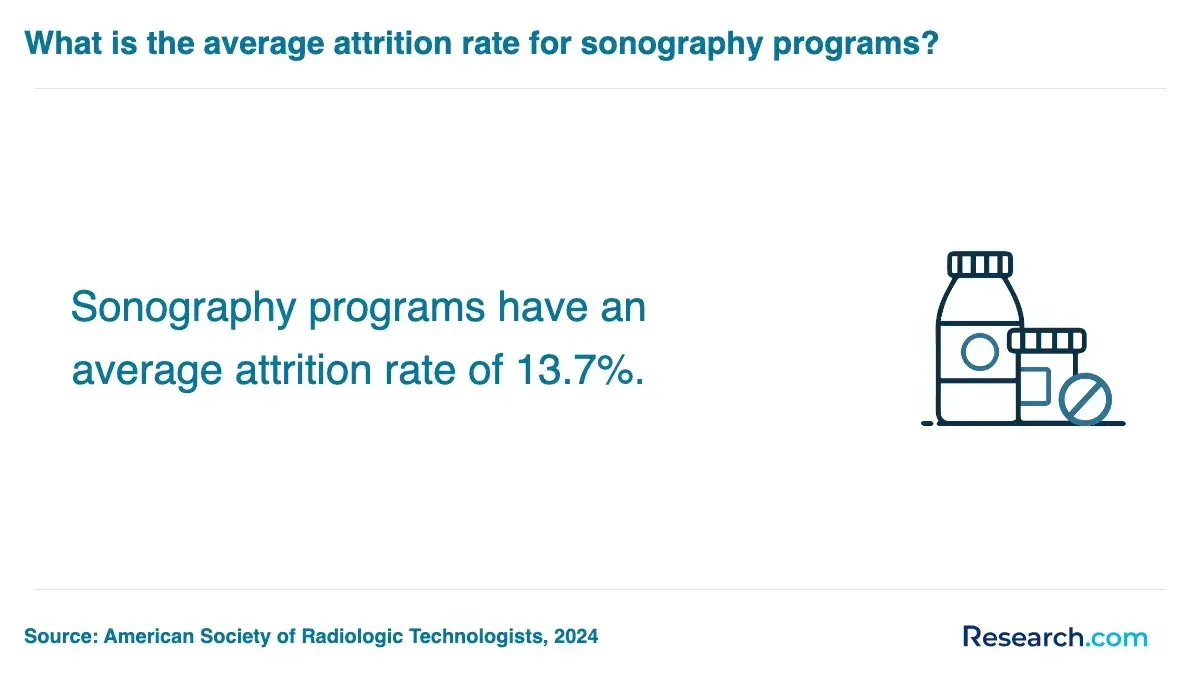
These combined experiences enhance technical competencies and interpersonal skills, enabling students to meet certification criteria and gain readiness for employment across Mississippi healthcare environments. While clinical training equips students with vital skills, program completion rates can vary. As shown below, sonography programs experience an average attrition rate of 13.7%, underscoring the rigorous demands of training and the importance of persistence for student success.
How much does it cost to become an ultrasound technician in Mississippi?
The cost of becoming an ultrasound technician in Mississippi varies depending on the institution, program format, and whether the student attends a community college or university. On average, tuition for an associate degree in diagnostic medical sonography ranges between $5,000 and $15,000 at community colleges such as Hinds Community College or Pearl River Community College.
For bachelor’s programs offered through universities, the cost can climb to $20,000 to $40,000, especially for out-of-state students. In addition to tuition, students should anticipate expenses for textbooks, scrubs, lab fees, and clinical liability insurance, which together may add another $1,000 to $3,000. Certification exams through the ARDMS also carry additional fees, typically a few hundred dollars.
Financial aid, scholarships, and payment plans are available at most institutions, helping reduce the upfront burden for many students. For those balancing work and study, the best online sonography program options can sometimes lower costs by minimizing commuting and offering flexible scheduling. Ultimately, the total investment reflects both tuition and ancillary expenses, but it positions graduates for strong job prospects and competitive salaries across Mississippi’s healthcare system.
While tuition and fees shape the upfront investment, long-term earnings potential is equally important. The chart below illustrates how degree level impacts salaries for ultrasound technicians, showing that higher education often translates into stronger wage outcomes over time.
What is the average salary for ultrasound technicians in Mississippi?
The average annual salary for ultrasound technicians in Mississippi is approximately $93,071, which is notably higher than the national median wage of around $84,470. Despite this, Mississippi ranks 50th among all states for ultrasound technician salaries, indicating a unique state-specific job market.
- Experience Level: Entry-level sonographers tend to earn less, while experienced professionals can make between $62,183 and $80,728, highlighting how tenure influences pay.
- Education and Certifications: Advanced degrees and certifications, such as ARDMS credentials, typically lead to higher salaries, especially with specialized skills.
- Work Setting: Hospitals and outpatient centers generally offer better compensation compared to smaller clinics or physician offices.
- Geographic Location: Urban areas like Jackson offer higher wages due to demand and cost of living, whereas rural regions may provide bonuses to attract talent.
- Specialization: Expertise in fields like OB/GYN, cardiovascular, or abdominal sonography usually commands increased pay due to higher employer demand.
Salaries in Mississippi reflect the state’s healthcare demands and provider distribution, balancing lower average compensation with regional and specialty-based variations.
What is the job outlook and demand for ultrasound technicians in Mississippi?
Employment for ultrasound technicians in Mississippi is projected to grow by 14% from 2022 to 2032, a rate that surpasses the average across all occupations and closely matches the national growth forecast for sonographers. This outlook is driven by multiple factors affecting healthcare delivery and technology adoption statewide.
- Population Growth and Aging: Mississippi’s aging demographic fuels increased need for diagnostic imaging, as older adults typically require more ultrasound exams for chronic disease management and preventative care.
- Healthcare Expansion: The rise of new clinics, hospitals, and outpatient centers throughout Mississippi elevates demand for ultrasound technicians to support diverse patient care and diagnostic services.
- Technological Advancements: Emerging ultrasound tools such as 3D imaging and portable devices create specialized job roles requiring proficiency with advanced equipment and techniques.
- Preventive Care Trends: Growing focus on early detection and routine screenings broadens ultrasound’s role in preventive health, increasing technician responsibilities beyond acute medical situations.
- Regional Demand Variations: Urban areas generally provide more job opportunities due to higher patient volumes, while rural locations often face staffing shortages, offering incentives to attract qualified technicians.
Ultrasound technology has proven to be a stable and expanding career path in Mississippi, offering opportunities for advancement in both clinical skills and employment settings. A local ultrasound technician noted that while entering the field felt competitive at first, gaining experience with advanced tools like 3D and portable devices opened new career doors. She explained that rural clinics often struggle to fill roles, highlighting the statewide demand for skilled sonographers. Her perspective reflects both the challenges and the optimism that define Mississippi’s technician workforce today.
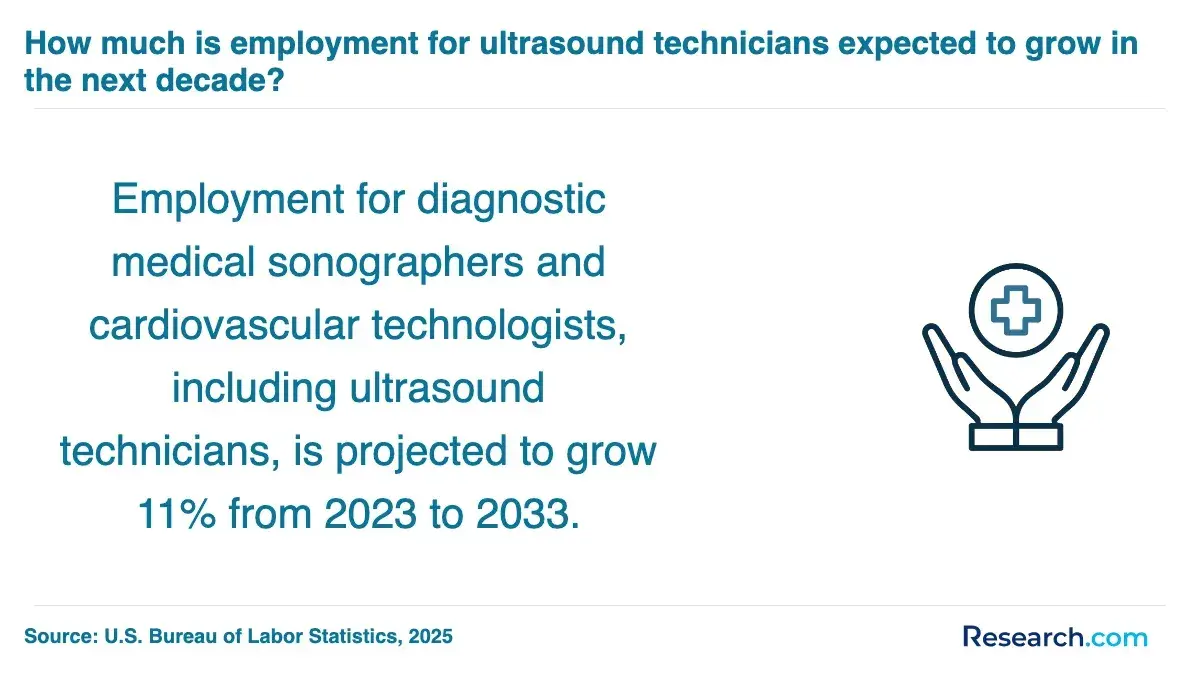
This growth outlook aligns with national projections. As shown below, employment for diagnostic medical sonographers and related technologists is expected to expand by 11% over the next decade, underscoring strong demand and stability in the ultrasound field.
Can ultrasound technicians transition to a nurse midwife role in Mississippi?
Ultrasound technicians with robust clinical experience may explore interdisciplinary pathways that extend their scope in patient care, particularly within maternal health. Transitioning into a nurse midwife role involves meeting additional academic requirements, clinical practice standards, and state-specific certification processes. For detailed, credential-specific guidance, review how to become a nurse midwife in Mississippi.
What are the career advancement steps for ultrasound technicians in Mississippi?
Ultrasound technicians in Mississippi can effectively advance their careers through strategic specialization, obtaining advanced certifications, or assuming leadership positions. These steps enhance both earning potential and professional scope within the medical imaging field. Key career advancement for ultrasound technicians in Mississippi involves targeted skill development and educational growth.
- Specialization: Focusing on ultrasound technician specialization opportunities in Mississippi such as OB/GYN, vascular, or cardiac sonography enables professionals to meet high-demand clinical needs and increase salary prospects by acquiring in-depth expertise.
- Advanced Certifications: Credentials from organizations like ARDMS, CCI, or ARRT validate specialized skills and are often required for supervisory roles, with ARDMS certification being mandatory for most employers in the state.
- Higher Education: Earning bachelor’s or master’s degrees in diagnostic medical sonography or related healthcare fields broadens opportunities for advanced clinical practice and management; institutions like Northeast Mississippi Community College support lifelong learning pathways aligned with the easiest medical degrees and beyond.
- Leadership Roles: Progressing into supervisory or administrative positions demands clinical expertise combined with strong organizational skills, offering increased influence and typically higher compensation.
- Education and Training: Becoming a program instructor or clinical trainer allows sonographers to impart practical skills to new professionals, requiring both experience and advanced credentials.
- Research or Technology Development: Engaging in research projects or collaborating with equipment vendors contributes to medical imaging innovation, supported by clinical experience and education in business or technology.
Advancing as an ultrasound technician in Mississippi improves salary potential while expanding the professional impact on healthcare quality and imaging innovation throughout the state. Furthermore, when considering long-term career development, educational pathways play an essential role. Some technicians evaluate degree options not only for professional advancement but also for accessibility. Resources such as the ranking of easiest medical degree programs provide perspective on balancing rigorous training with achievable milestones in the healthcare field.
What are the common challenges ultrasound technicians face in Mississippi?
Awareness of challenges for ultrasound technicians in Mississippi is vital to navigate the practical demands of the profession and maintain career longevity. With a relatively small workforce and specific regional factors, technicians must anticipate obstacles unique to this state’s healthcare environment.
- Physical Strain and Ergonomics: Repetitive scanning motions and long hours standing contribute to musculoskeletal problems and fatigue among sonographers.
- Emotional Stress: Working closely with patients facing high-risk or sensitive medical conditions requires emotional resilience and empathy.
- Workload and Staffing Shortages: Mississippi’s ultrasound technician job market remains limited, with only about 10 annual openings statewide, leading to heavy caseloads and minimal staff support.
- Certification and Continuing Education Requirements: Balancing ongoing credentialing demands with full-time work and personal life can be challenging.
- Technology Adaptation: Technicians must frequently adjust to updated ultrasound equipment and new digital imaging protocols.
- Job Market Competition: Regional disparities affect salary ranges and opportunities for advancement across the state.
Understanding these challenges enables technicians to proactively develop strategies to manage their workload and professional growth effectively. Those exploring career paths can learn more about how to become a medical sonographer and prepare accordingly.
What do ultrasound technicians in Mississippi say about their career?
- Completing my ultrasound technician program at Meridian Community College was a pivotal moment. The education I received was thorough and hands-on, which gave me the confidence to start my career at a local school where I provide essential health screenings for students. Knowing that my work helps kids get early diagnoses and better health outcomes is incredibly rewarding. Mississippi offers such a supportive community, and I feel proud to be part of this growing medical field here. Durant
- After graduating from Hinds Community College’s program, I began working as an ultrasound technician at a local academic institution. The experience has been deeply fulfilling, not just professionally but personally. Being able to contribute to the community’s health has opened my eyes to the unique challenges Mississippi faces in rural healthcare. It’s inspiring to know my skills can help bridge some of those gaps while offering steady career growth in a state that values its healthcare workers. Yena
- The program at Copiah-Lincoln Community College prepared me well for the realities of working as an ultrasound technician in Mississippi. This career has allowed me to grow professionally while making a tangible difference in the health and well-being of students from diverse backgrounds. Mississippi’s culture and environment require adaptability and empathy, qualities my job calls on every day. Pursuing this path has been both a challenge and a privilege, and I’m excited about the possibilities for advancement and further specialization. Esther
How can continuing education and professional development advance ultrasound technicians in Mississippi?
Ultrasound technicians in Mississippi can enhance their expertise and maintain best practices through targeted continuing education opportunities. Advanced workshops, specialized seminars, and certification update courses allow professionals to refine technical skills and stay current with industry innovations. Engaging with professional associations and tailored training modules also fosters leadership and collaborative skills, which are essential for career progression. For additional insights into expanding your diagnostic imaging capabilities, explore how to become a radiology technician in Mississippi.
Related Articles for Nearby States
- 2027 How to Become an Ultrasound Technician in Louisiana
- 2027 How to Become an Ultrasound Technician in Alabama
- 2027 How to Become an Ultrasound Technician in Arkansas
- 2027 How to Become an Ultrasound Technician in Tennessee
- 2027 How to Become an Ultrasound Technician in Florida
- 2027 How to Become an Ultrasound Technician in Missouri
- 2027 How to Become an Ultrasound Technician in Georgia
- 2027 How to Become an Ultrasound Technician in Kentucky
- 2027 How To Become an Ultrasound Technician in Texas
- 2027 How to Become an Ultrasound Technician in Indiana
References:
- AMN Healthcare. How Ultrasound Technologies are Changing the Medical World.
- CareerExplorer. Diagnostic medical sonographer salary in Mississippi.
- Concorde Career Colleges. Ultrasound Technician vs. Sonographer: What's the Difference?
- Dreambound. How to Become a Medical Sonographer in Mississippi.
- HealthJob. How to Become an Ultrasound Technician in Mississippi.
- Hinds Community College. Diagnostic Medical Sonography.
- Mississippi Board of Nursing. Frequently Asked Questions (FAQ).
- NurseJournal. Here Are The Steps To Becoming An Ultrasound Technician.
- Pearl River Community College. Diagnostic Medical Sonography.
- Ultrasound Schools Info. Sonography Career Paths.
Other Things You Should Know About How to Become an Ultrasound Technician in Mississippi
In 2027, ultrasound technicians in Mississippi must obtain the ARDMS certification, recognized by the American Registry for Diagnostic Medical Sonography. This requires passing the Sonography Principles & Instrumentation (SPI) exam and a specialty exam, ensuring compliance with state regulations.
In 2027, to become an ultrasound technician in Mississippi, you typically need to complete an accredited associate or bachelor's degree in diagnostic medical sonography. Accreditation by the Commission on Accreditation of Allied Health Education Programs (CAAHEP) is crucial. After graduation, obtaining certification through ARDMS enhances employment opportunities.


