
2027 How to Become an Ultrasound Technician in Nebraska

Co-Founder and Chief Data Scientist
Nebraska’s demand for ultrasound technicians is rising with an aging population and expanding healthcare. About 1,200 sonographers work in the state, with 17% job growth projected over the next decade, offering strong job security despite challenges in certification and educational pathways.
This article, crafted by career planning experts, unpacks these challenges and offers clear guidance on becoming a qualified ultrasound technician in Nebraska, enabling readers to make informed, strategic career decisions.
Key Things to Know About Becoming an Ultrasound Technician in Nebraska
- Complete an accredited diagnostic medical sonography program approved by the Commission on Accreditation of Allied Health Education Programs (CAAHEP), essential for Nebraska employment.
- Obtain certification through the American Registry for Diagnostic Medical Sonography (ARDMS), which enhances job prospects as Nebraska employers prioritize credentialed technicians.
- Consider Nebraska’s job market growth, projected at 17% through 2030, with an average annual salary of around $68,000, making certification a strategic investment in a thriving healthcare sector.
- What education is required to become an ultrasound technician in Nebraska?
- What specialties can ultrasound technicians choose from in Nebraska?
- Which certification exams are required to become an ultrasound technician in Nebraska?
- Is a license required to practice as an ultrasound technician in Nebraska?
- What to expect during ultrasound technician clinical training in Nebraska?
- How much does it cost to become an ultrasound technician in Nebraska?
- What is the average salary for ultrasound technicians in Nebraska?
- What is the job outlook and demand for ultrasound technicians in Nebraska?
- What are the career advancement steps for ultrasound technicians in Nebraska?
- What are the common challenges ultrasound technicians face in Nebraska?
- What ongoing professional development options are available for ultrasound technicians in Nebraska?
- How Do Ultrasound Technicians Collaborate with Nurse Midwives in Nebraska?
What education is required to become an ultrasound technician in Nebraska?
Choosing ultrasound technician training in Nebraska challenges many to reconsider the depth of preparation required beyond simple classroom hours. The balance of rigorous coursework, clinical experience, and practical skills forms the cornerstone of a competent sonographer. Below are the core Nebraska ultrasound technician degree requirements, reflecting the expectations set by accredited ultrasound technician programs in Nebraska:
- Minimum Degree Requirement: Completion of at least an Associate of Science in Diagnostic Medical Sonography is mandatory. Bachelor’s degrees are also available for expanded opportunities and training.
- Prerequisite Coursework: Approximately 79 transferable semester hours are needed, covering human anatomy, physiology, medical terminology, math, communication, and physics to build a solid foundation.
- GPA Threshold: Most programs, including those at UNMC, require a minimum cumulative GPA of 2.75 on a 4.0 scale to maintain academic rigor.
- Hands-On Patient Care: Before admission, applicants must document at least 500 hours of direct patient care, ensuring practical familiarity with clinical environments.
- Clinical Instruction Hours: Over 1,000 hours of supervised clinical practicum during the professional program marries theoretical learning with in-depth real-world experience.
- Admission Competitiveness: Fulfillment of prerequisites does not guarantee acceptance; essays and healthcare experience documentation are often necessary to stand out.
- Background and Substance Screening: Before clinical practice, passing a background check and substance abuse test is compulsory to safeguard patient safety.
This rigorous framework aligns with Nebraska’s healthcare demands and mirrors certification preferences seen nationwide, encouraging students to explore pathways such as how to become a radiologist for broader clinical roles.
What specialties can ultrasound technicians choose from in Nebraska?
Ultrasound technicians in Nebraska have access to a diverse range of specialties that extend beyond common perceptions of the field. The options reflect not only clinical demand but also the state’s educational infrastructure, allowing students to tailor their skills in focused areas. Nebraska sonography programs often emphasize cardiac and abdominal sonography, preparing technicians for critical roles in healthcare settings. Below is a detailed overview of available specialties.
- Abdominal Sonography: Concentrates on imaging abdominal organs such as the liver, kidneys, and pancreas to diagnose conditions including tumors and vascular diseases.
- Obstetric and Gynecologic (OB/GYN) Sonography: Focuses on imaging female reproductive organs and monitoring fetal development during pregnancy, a core element of sonography practice.
- Cardiovascular (Echocardiography) Sonography: Specializes in heart and blood vessel imaging, with programs like those offered at the University of Nebraska Medical Center providing targeted cardiovascular tracks.
- Breast Sonography: Involves imaging breast tissue to detect abnormalities, such as tumors and cysts; included in some Nebraska curricula.
- Small Parts Sonography: Covers smaller anatomical structures such as the thyroid, testicles, and prostate within multispecialty programs.
- Vascular Technology: Dedicated to assessing blood vessels body-wide to identify blockages and vascular disorders, often integrated with cardiovascular sonography training.
This spectrum challenges the idea that sonography is a one-dimensional career, showing how Nebraska’s offerings enable technicians to become specialists equipped for various diagnostic roles. For those exploring career paths, understanding these options alongside the ARRT careers landscape sharpens decision-making and professional development strategy.
Alongside these specialty tracks, Nebraska programs emphasize practical skill-building that supports diverse career options. As shown in the chart below, the most common skills for ultrasound technicians in 2025 highlight the balance between technical expertise, patient care, and certification readiness essential for success.
Which certification exams are required to become an ultrasound technician in Nebraska?
Certification exams serve as the cornerstone for validating the expertise and professionalism of ultrasound technicians in Nebraska, even though the state does not mandate formal licensure. Employers rely heavily on these credentials to confirm that technicians meet national standards, safeguarding patient care quality and maintaining competitive hiring practices in the medical imaging field.
- American Registry for Diagnostic Medical Sonography (ARDMS) Exams: Administered by the ARDMS, these exams, including the Sonography Principles and Instrumentation (SPI) and specialty tests like Abdomen, Obstetrics and Gynecology, and Vascular Technology, assess knowledge in ultrasound physics, instrumentation, and clinical applications. Candidates must complete an accredited sonography program or have equivalent clinical experience, with Nebraska programs such as Nebraska Methodist College aligning closely with these requirements.
- American Registry of Radiologic Technologists (ARRT) Sonography Credential: The ARRT offers a respected sonography certification emphasizing patient care, sonographic procedures, physics, and instrumentation. Eligibility hinges on completing an accredited education and clinical training. This credential is particularly advantageous within Nebraska’s hospitals and larger health systems, where cross-modality skills enhance professional versatility.
- Cardiovascular Credentialing International (CCI) Exams: Designed for specialization in cardiac and vascular sonography, CCI’s Registered Cardiac Sonographer (RCS) and Registered Vascular Specialist (RVS) certifications focus on cardiovascular anatomy, physiology, pathology, and technical skills. Applicants must complete relevant education and clinical experience, making these credentials valuable for roles in Nebraska’s cardiology clinics and vascular labs.
Successfully passing these exams demonstrates a technician’s dedication to clinical excellence and patient safety, elevating their professional standing. In Nebraska’s competitive healthcare environment, certification is not just a formality but a strategic asset that opens doors to advanced opportunities and ensures adherence to rigorous healthcare standards.
Is a license required to practice as an ultrasound technician in Nebraska?
Nebraska does not require a state license to practice as an ultrasound technician, distinguishing it from some neighboring states with stricter healthcare regulations. Instead of local licensure, the state relies on nationally recognized certifications to uphold professional standards and validate competency. This approach shifts the emphasis away from bureaucracy and places responsibility on education, training, and examination performance.
The practice of diagnostic medical sonography in Nebraska is guided by national organizations such as ARDMS, ARRT, and CCI. To qualify, most candidates complete an accredited program—often recognized by CAAHEP—and then pass exams like the Sonography Principles and Instrumentation (SPI) alongside a specialty test in areas such as abdominal or obstetric sonography. These credentials serve as the primary benchmark for employment and professional credibility across the state.
When I spoke with a Nebraska ultrasound technician who graduated from a local accredited program, she explained how the absence of a state license heightened the importance of national exams. “Without a state license requirement, the pressure to pass the ARDMS exams felt intense because that certification truly opens doors here,” she shared. Balancing clinical hours with preparation for the SPI and specialty exams was challenging, but she emphasized that certification ultimately defined her career path. Her experience underscores how Nebraska’s sonography profession is shaped more by national certification than by state licensing.
What to expect during ultrasound technician clinical training in Nebraska?
Clinical training in Nebraska for ultrasound technicians is the bridge between theoretical studies and real-world practice, emphasizing the hands-on skills and professional judgment needed for certification and employment. These programs are structured to provide immersive, supervised patient care experience while adhering to state and national standards.
- Hands-On Patient Care: Students are required to complete at least 500 hours interacting directly with patients, performing physical exams and medical procedures to build competence and confidence in patient communication and safety.
- Supervised Use of Imaging Equipment: Over 1,000 hours of clinical instruction involve daily practice on ultrasound machines under expert supervision, focusing on accurate image acquisition and interpretation.
- Exposure to Specialty Rotations: Training includes diverse rotations in OB/GYN, vascular, abdominal, and cardiac sonography, cultivating versatile diagnostic skills across multiple specialties.
- Mentorship from Licensed Professionals: Direct guidance from licensed sonographers and instructors ensures individualized skill development, ethical grounding, and professional conduct throughout clinical placements.
- Competency Evaluations: Regular assessments and skill checklists verify mastery of scanning protocols, patient safety, and equipment handling, maintaining readiness for certification standards.
- Program-Specific Clinical Hour Requirements: Nebraska mandates approximately 30 clinical hours per week, totaling over 1,000 hours in a 12-month program, all essential for graduation and exam eligibility.
- Background and Substance Abuse Checks: Students must undergo background screenings and drug testing before clinical placement, upholding patient safety and healthcare compliance.
- Integration with Academic Curriculum: Clinical hours are complemented by about 10 weekly classroom hours, blending anatomical and physiological knowledge with hands-on application.
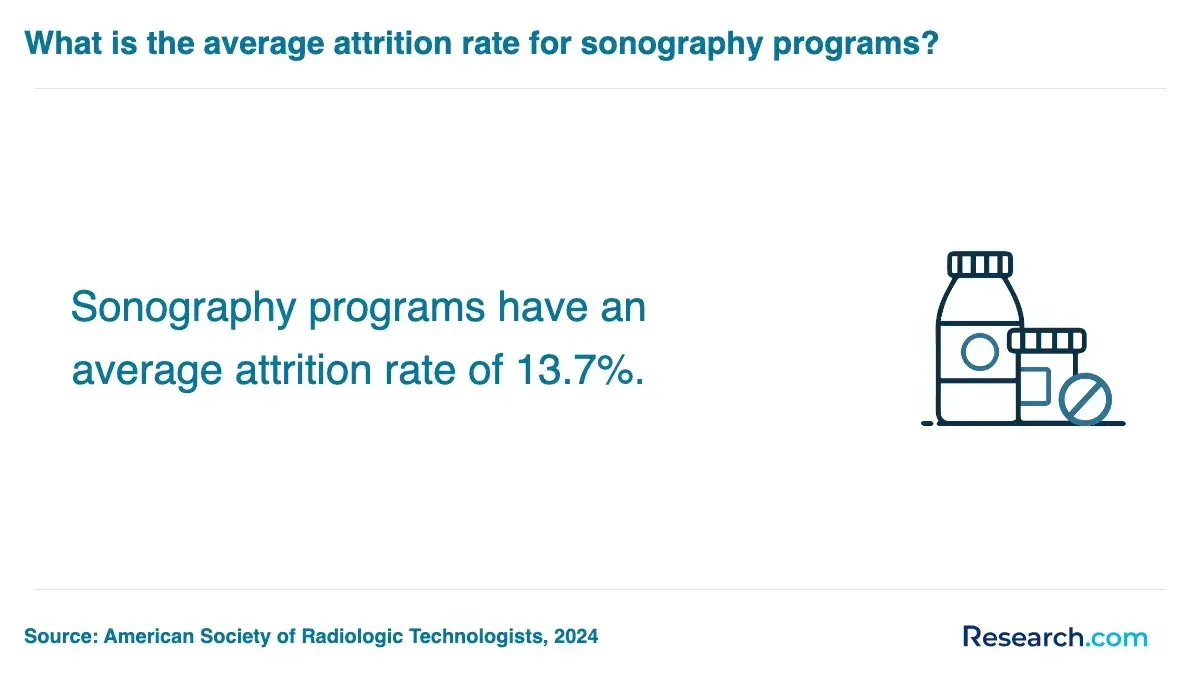
Such a comprehensive clinical training regimen equips students not only to pass essential certification exams like the RDMS but also to transition into Nebraska’s healthcare settings with confidence, technical skill, and a professional mindset. However, meeting these expectations is not without challenges. Program completion is demanding, and not every student reaches graduation. Sonography programs report an average attrition rate of nearly 14%, highlighting both the rigor of training and the level of commitment required to succeed in this field.
How much does it cost to become an ultrasound technician in Nebraska?
The cost of training varies based on program type and institution. Associate and certificate-level programs typically range from $6,000 to $20,000, while bachelor-level offerings can cost between $20,000 and $40,000. For instance, Nebraska Methodist College’s hybrid sonography associate program runs about $18,173 per year.
Beyond tuition, students must account for additional expenses like textbooks, lab fees, clinical rotation costs, scrubs, and certification exam fees—commonly pushing total program costs toward the higher end of the spectrum. Many schools in the state offer financial aid, scholarships, and grants—such as the Nebraska Health Care Foundation and institutional awards—to help ease the cost burden.
Students exploring flexible, less traditional learning paths may also consider the list of best online sonography programs, which could offer cost savings through reduced commuting and adaptable course formats—all while supporting certification readiness.
What is the average salary for ultrasound technicians in Nebraska?
The average annual salary for ultrasound technicians in Nebraska is approximately $93,900, which is about 9% higher than the national median of $84,470. This figure challenges the assumption that midwestern healthcare salaries lag behind national figures, revealing a competitive market in Nebraska.
- Experience Level: Entry-level technicians start toward the lower end around $60,000, while seasoned sonographers can approach $100,000 depending on expertise.
- Work Setting: Employment in large hospitals or outpatient centers typically offers better salaries than smaller clinics or physician offices.
- Geographic Location: Urban areas like Omaha deliver higher wages compared to rural regions, reflecting the concentration of healthcare systems and patient demand.
- Specialization: Specialized sonographers in OB/GYN or cardiovascular fields command premiums on their salaries due to greater complexity and demand.
- Education and Certifications: Advanced degrees and specialized certifications often result in noticeably higher pay due to employer preference for recognized credentials.
As shown in the chart below, salary levels for ultrasound technicians increase with higher education, with master’s and bachelor’s degree holders earning significantly more than those with associate-level credentials.
What is the job outlook and demand for ultrasound technicians in Nebraska?
Employment for ultrasound technicians in Nebraska is expected to grow by about 15% between 2010 and 2020, a rate slightly below the national average of 19% projected from 2020 to 2030. This subtle difference invites a deeper look into what truly shapes job demand in the state and how prospects might evolve beyond these numbers.
- Population Growth and Aging: Nebraska’s aging population significantly drives demand for imaging services, pushing ultrasound use as older adults require more frequent diagnostics.
- Healthcare Expansion: New clinics and outpatient centers are multiplying across Nebraska, broadening the need for skilled technicians to support these growing facilities.
- Technological Advancements: Emerging ultrasound technologies carve out specialized roles, expanding possibilities beyond traditional sonography into more intricate diagnostic fields.
- Preventive Care Trends: The increasing use of ultrasound for early detection reflects a shift towards noninvasive, preventive procedures, enhancing sonographers’ value in healthcare teams.
- Regional Demand Variations: Urban centers with large medical hubs offer abundant opportunities, while rural areas present fewer roles but potentially less competition for those positions.
An ultrasound technician from Nebraska described the career landscape as “a balancing act between opportunity and challenge,” noting that early on she had to adapt to both the fast pace of urban hospitals and the distinct rhythm of rural clinics. While steady demand created opportunities, competition in certain areas required versatility alongside technical skill. She highlighted how the growth of outpatient centers expanded options compared to a decade ago, reflecting how Nebraska’s evolving healthcare system relies on ultrasound technicians in increasingly dynamic and critical roles.
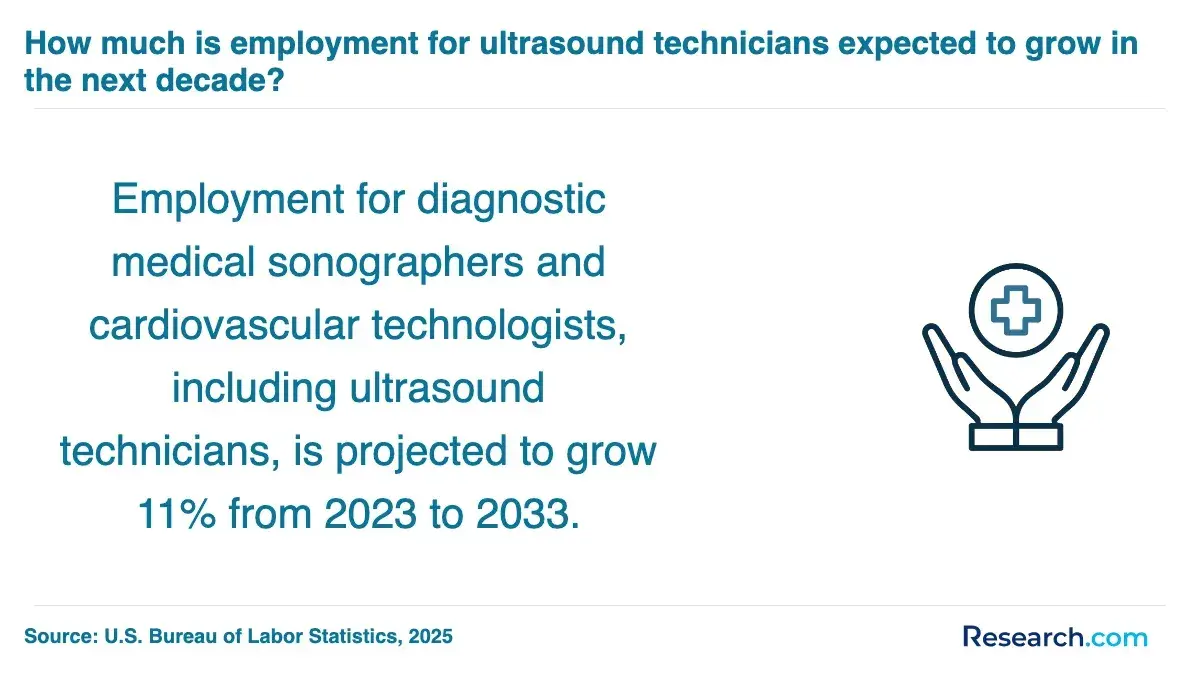
This local demand also mirrors national projections. As illustrated below, employment for diagnostic medical sonographers and cardiovascular technologists, including ultrasound technicians, is expected to grow by 11% between 2023 and 2033, reinforcing the profession’s long-term stability and growth potential.
What are the career advancement steps for ultrasound technicians in Nebraska?
Ultrasound technicians in Nebraska enhance their career trajectories by embracing specialization, acquiring advanced certifications, or stepping into leadership roles. Each pathway not only sharpens skills but also positions professionals as key contributors in the evolving healthcare landscape. Exploring these avenues allows for a richer and more impactful professional journey.
- Specialization: Concentrating on fields like OB/GYN, vascular, or cardiac sonography unlocks access to higher-paying roles and meets Nebraska’s growing demand for expert sonographers.
- Advanced Certifications: Credentials from ARDMS, CCI, or ARRT validate advanced competencies, enabling technicians to qualify for specialized positions and often receive elevated salaries.
- Higher Education: Pursuing a bachelor’s or master’s degree, such as Nebraska’s Bachelor of Science in Medical Imaging and Therapeutic Sciences, broadens career options into supervisory, administrative, or teaching roles.
- Leadership Roles: Transitioning into supervisory or administrative capacities empowers ultrasound technicians to influence healthcare delivery and operations within hospitals and clinics across the state.
- Education and Training: Becoming program instructors or clinical trainers ensures the transfer of expertise to future sonographers, reinforcing Nebraska’s strong foundation in sonography education.
- Research or Technology Development: Participating in medical imaging innovation through research or collaboration with manufacturers fosters advancements in sonography technology and practices.
Choosing a path in career advancement for ultrasound technicians in Nebraska not only boosts earning potential but also amplifies professional influence. For those eager to navigate this dynamic field, understanding the ranking of the best ultrasound technician certification programs is an essential step toward informed decisions and meaningful progress.
What are the common challenges ultrasound technicians face in Nebraska?
Facing challenges for ultrasound technicians in Nebraska requires more than skill—it demands resilience and strategic foresight. Recognizing workplace realities empowers technicians to navigate the demanding healthcare environment with clarity and strength. Nebraska ultrasound technician workplace issues are diverse, reflecting both physical and systemic complexities.
- Physical Strain and Ergonomics: Repetitive scanning and long hours cause musculoskeletal problems, risking chronic pain in wrists, neck, and shoulders.
- Emotional Stress: Working with patients in sensitive health situations can lead to emotional fatigue, requiring ongoing mental fortitude.
- Workload and Staffing Shortages: Heavy caseloads and limited staff support increase pressure, especially in rural and under-resourced areas.
- Certification and Continuing Education Requirements: Keeping credentials updated is mandatory but challenging amid demanding schedules.
- Technology Adaptation: Constantly evolving equipment and digital systems force technicians to prioritize continuous learning.
- Job Market Competition: Regional differences affect job availability and career growth, with urban centers often more favorable than rural locations.
By anticipating these Nebraska ultrasound technician workplace issues, professionals can better prepare physically, emotionally, and professionally. Resources such as adopting ergonomic best practices and exploring whether an is online associates degree in radiology affordable program can also mitigate some of these challenges.
What ongoing professional development options are available for ultrasound technicians in Nebraska?
Ultrasound technicians in Nebraska can further strengthen their expertise through targeted continuing education programs, specialized workshops, and industry conferences that emphasize the latest technological advances and clinical best practices. These initiatives not only support certification renewal but also foster skills diversification, enabling professionals to explore adjacent fields—for example, gaining insights into imaging modalities and integrating advanced techniques. Interested candidates may also consider resources on how to become a radiology technician in Nebraska for complementary training opportunities that expand their clinical repertoire and career horizons.
What do ultrasound technicians in Nebraska say about their career?
- Completing my ultrasound technician certification at Southeast Community College was a transformative experience that equipped me with hands-on skills specific to Nebraska’s healthcare needs. I began my career working in a local school’s health department, where I discovered a passion for supporting adolescent health through early diagnostics. The job stability here is remarkable, and I truly appreciate the balance between professional growth and community involvement. Nebraska’s supportive environment has allowed me to thrive both personally and professionally, making a real difference in the lives of young people. Keira
- After graduating from the University of Nebraska Medical Center’s diagnostic medical sonography program, I started working as an ultrasound technician in a local academic institution. The opportunity to contribute to the health education of students while advancing my career keeps me motivated every day. Nebraska’s unique rural communities present both challenges and rewards, giving me a chance to develop culturally competent care that truly resonates with the population. It’s deeply fulfilling to combine my clinical skills with a commitment to local youth wellness. Yandi
- My journey through Iowa Western Community College’s ultrasound program was rigorous but rewarding, opening up career opportunities in Nebraska’s diverse educational settings. Working in a school environment has made me appreciate the impact skilled imaging can have on early student health interventions. The collaborative spirit across Nebraskan healthcare networks fosters professional development and allows me to be part of a broader movement improving community wellness. This career has challenged me intellectually and enriched me emotionally by connecting me with families in meaningful ways. Diether
How Do Ultrasound Technicians Collaborate with Nurse Midwives in Nebraska?
Effective interdisciplinary collaboration is integral to enhancing patient care in obstetric settings. In Nebraska, ultrasound technicians work in tandem with nurse midwives to streamline diagnostic imaging and prenatal care. This cooperative workflow fosters timely decision-making, as both roles contribute distinct clinical insights that support comprehensive evaluations. For clinicians seeking to broaden their interprofessional scope, exploring opportunities on how to become a nurse midwife in Nebraska can provide additional context and pathways for integrated patient management.
Related Articles for Nearby States
- 2027 How to Become an Ultrasound Technician in Kansas
- 2027 How to Become an Ultrasound Technician in South Dakota
- 2027 How to Become an Ultrasound Technician in Iowa
- 2027 How to Become an Ultrasound Technician in Colorado
- 2027 How to Become an Ultrasound Technician in Missouri
- 2027 How to Become an Ultrasound Technician in Wyoming
- 2027 How to Become an Ultrasound Technician in Minnesota
- 2027 How to Become an Ultrasound Technician in Oklahoma
- 2027 How to Become an Ultrasound Technician in North Dakota
- 2027 How to Become an Ultrasound Technician in Illinois
References:
- Bryan College of Health Sciences. Sonography/Ultrasound.
- DRSONO. Top 6 Online Ultrasound Tech Schools and Sonography Programs.
- Dreambound. How to Become a Medical Sonographer in Nebraska.
- Methodist College. Accredited Multispecialty Sonography Program.
- Methodist College. How to Become a Sonographer.
- Sonography Technician Schools. Sonography Technician Schools in Nebraska (NE).
- Ultrasound Schools Info. Find Accredited Ultrasound Technician Schools in Nebraska.
- University of Nebraska Medical Center. Diagnostic Medical Sonography.
- University of Nebraska Medical Center. Diagnostic Medical Sonography | College of Allied Health Professions.
- Washburn University. Diagnostic Medical Sonography.
Other Things You Should Know About How to Become an Ultrasound Technician in Nebraska
In Nebraska, ultrasound technicians are not required to have a state license to practice in 2027. However, obtaining certification from a recognized accrediting body, like the American Registry for Diagnostic Medical Sonography (ARDMS), can enhance job prospects and professional credibility.
Completing an online program can be a viable pathway to becoming an ultrasound technician in Nebraska, as many accredited programs offer comprehensive coursework and clinical components that meet state requirements. However, because hands-on clinical experience is essential for competency, online programs typically include in-person clinical practicums at approved healthcare facilities in Nebraska.
It is important to ensure that the online program is accredited by CAAHEP or a similar recognized body, as this accreditation is often required for certification and licensure. Ultimately, combining accredited online coursework with supervised clinical training allows candidates to fulfill Nebraska’s qualifications for an ultrasound technician career.


