
2027 Steps to Become a Registered Dietitian in Kentucky

Co-Founder and Chief Data Scientist
Kentucky’s growing focus on public health and nutrition is shaping career opportunities for dietitians and nutritionists. By 2032, the state projects 1,330 employed professionals in these roles, reflecting an ongoing demand for expertise in food science, disease prevention, and wellness promotion. This growth is significant for a state facing health challenges such as high obesity and chronic disease rates, making registered dietitians key contributors to improving community health outcomes.
In this article, I will cover the step-by-step process to become a registered dietitian in Kentucky. I will discuss the academic preparation and supervised practice to licensing requirements and career pathways in various settings statewide.
Key Things to Know About Becoming a Registered Dietitian in Kentucky
- In Kentucky, you will need an ACEND-accredited degree, supervised practice, and a passing CDR exam score to become a registered dietitian.
- State licensure from the Kentucky Board of Licensure is required and must be renewed through ongoing continuing education.
- Dietitians in Kentucky experience consistent job growth and earn an average annual salary of $66,008, with higher pay possible based on experience and workplace.
- What degree is required to become a registered dietitian in Kentucky?
- How many supervised practice hours are needed to become a registered dietitian in Kentucky?
- What are the eligibility requirements for the dietetic registration exam in Kentucky?
- How can you get a license after passing the dietetic registration exam in Kentucky?
- What types of dietitian specializations can you pursue in Kentucky?
- What is the average salary of a registered dietitian in Kentucky?
- What professional development opportunities are available for registered dietitians in Kentucky?
- What are the financial considerations for becoming a registered dietitian in Kentucky?
- What do you need to keep your dietitian registration active in Kentucky?
- How long does it take to become a registered dietitian in Kentucky?
- Can international students qualify to become registered dietitians in Kentucky?
- What career paths can registered dietitians pursue in Kentucky?
What degree is required to become a registered dietitian in Kentucky?
Getting your credentials right is key to becoming a registered dietitian in Kentucky. Here’s a quick rundown of the degrees and programs you’ll need to complete to get started.
- Bachelor’s Degree in Dietetics or Nutrition Science: You need at least a bachelor’s degree from an accredited school in dietetics, nutrition, or a related field, with the program recognized by the Accreditation Council for Education in Nutrition and Dietetics (ACEND) to qualify for licensure.
- Completion of ACEND-Accredited Didactic Program in Dietetics (DPD): This coursework covers essential topics like food science and medical nutrition therapy and prepares you for supervised practice.
- Supervised Practice/Internship Requirement: After the didactic program, you must finish an ACEND-accredited supervised internship, usually about 1,000 to 1,200 hours across clinical, community, and food service settings.
- Master’s Degree Requirement: Since 2024, a master’s degree in dietetics, nutrition, or a related field is required to take the registration exam, aligning Kentucky with national trends for a master’s degree in nutrition and dietetics in Kentucky.
- Eligibility for Registration Examination for Dietitians (RD Exam): Once you’ve completed your education and internship, passing the national RD exam is the final step to legally practice as a registered dietitian in Kentucky.
If you’re exploring options for your education, consider checking out the best rated nutrition certification online to find programs that fit your goals.
How many supervised practice hours are needed to become a registered dietitian in Kentucky?
To become a registered dietitian in Kentucky, you need to complete between 1,000 and 1,210 supervised practice hours. These hours must come from accredited programs that meet national standards, ensuring you’re fully prepared for the field.
Here’s a quick rundown of the essentials regarding these supervised practice hours in Kentucky:
- ACEND-Accredited Programs: All supervised practice hours must be completed through an ACEND-accredited Dietetic Internship or Coordinated Program, either in Kentucky or another state, guaranteeing compliance with national and state licensing standards.
- Program Types Available: Kentucky offers Didactic Programs in Dietetics followed by internships, as well as Coordinated Programs that combine coursework and practice, with several options available statewide.
- Practice Areas Covered: Supervised practice typically includes medical nutrition therapy, community nutrition, food systems management, and leadership, providing well-rounded experience.
- Documentation and Attendance: Interns must carefully track hours and adhere to attendance rules, making up any absences to avoid disciplinary actions.
- State vs. National Requirements: Kentucky follows national Commission on Dietetic Registration standards, with no extra state-specific hour requirements beyond those set by ACEND and CDR.
- Recent Trends: Some programs now exceed the minimum hour requirements, offering up to 1,210 hours to deliver more comprehensive training.
What are the eligibility requirements for the dietetic registration exam in Kentucky?
Getting ready to take the dietetic registration exam in Kentucky means first meeting specific eligibility requirements that ensure you’re well-prepared for the profession. This readiness is crucial, as the risk of developing type 2 diabetes rises notably after age 45.
In 2025, approximately 18.3% of the U.S. population is aged 65 or older, and this demographic is projected to grow to nearly 23% by 2050. Such shifts signal an increasing need for skilled registered dietitians who can support aging populations with targeted nutrition care.
Below is a brief overview of the steps you must complete to qualify for the exam in Kentucky.
- Minimum Graduate Degree: You must have at least a master’s degree from a U.S. Department of Education (USDE)-recognized, accredited institution. This requirement remains the current mandatory academic standard for all candidates seeking to sit for the exam.
- Required Nutrition Coursework: Completing an ACEND-accredited dietetics program is essential. In Kentucky, this includes Didactic Programs in Dietetics (DPD), Coordinated Programs (CP), or Graduate Programs (GP) that cover everything from medical nutrition therapy to foodservice management.
- Verification by Program Director: Once you finish your coursework and supervised practice, your program director submits your eligibility verification to the Commission on Dietetic Registration (CDR) through the Registration Eligibility Processing System (REPS).
- Register and Pass the National Exam: After your eligibility is confirmed, you need to register for and pass the national dietetic registration exam, which is the key step before applying for state licensure in Kentucky.
- State-Specific Licensure: Kentucky requires passing the national exam to apply for licensure through its Board of Licensure and Certification for Dietitians and Nutritionists; no extra state exam is needed. Also, those with dietitian credentials typically qualify for nutritionist certification, reflecting Kentucky’s licensure approach.
Along with coursework, completing supervised practice is part of the path, but the focus here is on eligibility steps. If you want to explore career options in this field, check out this nutrition career guide for more details. Kentucky offers a solid ACEND-accredited dietetics program that Kentucky residents can pursue to meet these requirements and start their journey as a registered dietitian.
How can you get a license after passing the dietetic registration exam in Kentucky?
Ready to get your dietitian license in Kentucky? Once you’ve successfully passed the dietetic registration exam, the next phase is securing your state license, a requirement to legally practice and provide nutrition services. Licensing ensures you meet Kentucky’s professional standards and are recognized as a qualified practitioner.
Here’s a simple breakdown of the steps you’ll want to follow after passing the dietetic registration exam:
- Get Your Registration Card: The Commission on Dietetic Registration mails you your official card a few weeks after passing the exam—this proves you’re a Registered Dietitian.
- Download the Application: Grab the licensure application from the Kentucky Board of Licensure and Certification for Dietitians and Nutritionists website to get started.
- Choose Your Credentials: Make sure to check if you want dual certification as an RD, LD, or Certified Nutritionist since Kentucky lets you hold multiple credentials with one application.
- Submit Required Docs: Send in your registration card, completed application, and any other paperwork the board asks for.
- Pay the Fee: Include the $50 application fee when you mail your materials to the board’s address in Frankfort.
- Wait for Approval: The board reviews everything and, once approved, issues your license so you can legally practice in Kentucky.
- Keep It Current: Don’t forget to renew your license every year by October 31 and complete 15 hours of continuing education to stay compliant.
What types of dietitian specializations can you pursue in Kentucky?
In Kentucky, employment for dietitians and nutritionists is projected to grow 9% between through 2032, creating new opportunities across various healthcare and wellness settings.
If you’re pursuing a career as a registered dietitian in the state, you’ll have ample options to specialize, whether in managing specific health conditions, working with targeted populations, or integrating culinary expertise into nutrition care. This diversity allows you to align your professional path with both your skills and personal interests while meeting the state’s evolving nutrition and public health needs.
Here’s a quick rundown of the main types of dietitian specializations you can pursue in the state.
- Common Dietitian Specializations in Kentucky: These options let you focus your expertise in unique areas based on where you want to make the biggest impact.
- Clinical Dietitian: Work directly with patients in hospitals or clinics, managing nutrition therapies for chronic diseases like diabetes and heart conditions.
- Community Dietitian: Focus on public health by creating nutrition programs and fighting food insecurity in schools and community groups.
- Food Service Management Dietitian: Oversee meal planning and food safety in places like schools and correctional facilities, ensuring healthy and compliant menus.
- Pediatric Dietitian: Specializes in nutrition for kids and teens, addressing growth, allergies, and childhood illnesses in hospitals or schools.
- Geriatric Dietitian: Provide nutrition care for older adults, helping with age-related issues such as malnutrition and chronic disease management.
- Sports Dietitian: Help athletes optimize performance and recovery with personalized nutrition plans, supported by local sports nutrition programs.
- Renal Dietitian: Offers specialized diets for people with kidney disease or on dialysis, usually working in hospitals or dialysis centers.
- Research Dietitian: Conduct nutrition studies at universities or research centers, advancing scientific knowledge and evidence-based practice.
- Culinary Nutrition Dietitian: Combine cooking skills with nutrition expertise to teach healthy recipes and cooking techniques.
- Eating Disorders Dietitian: Support individuals recovering from eating disorders with tailored meal plans and counseling.
What is the average salary of a registered dietitian in Kentucky?
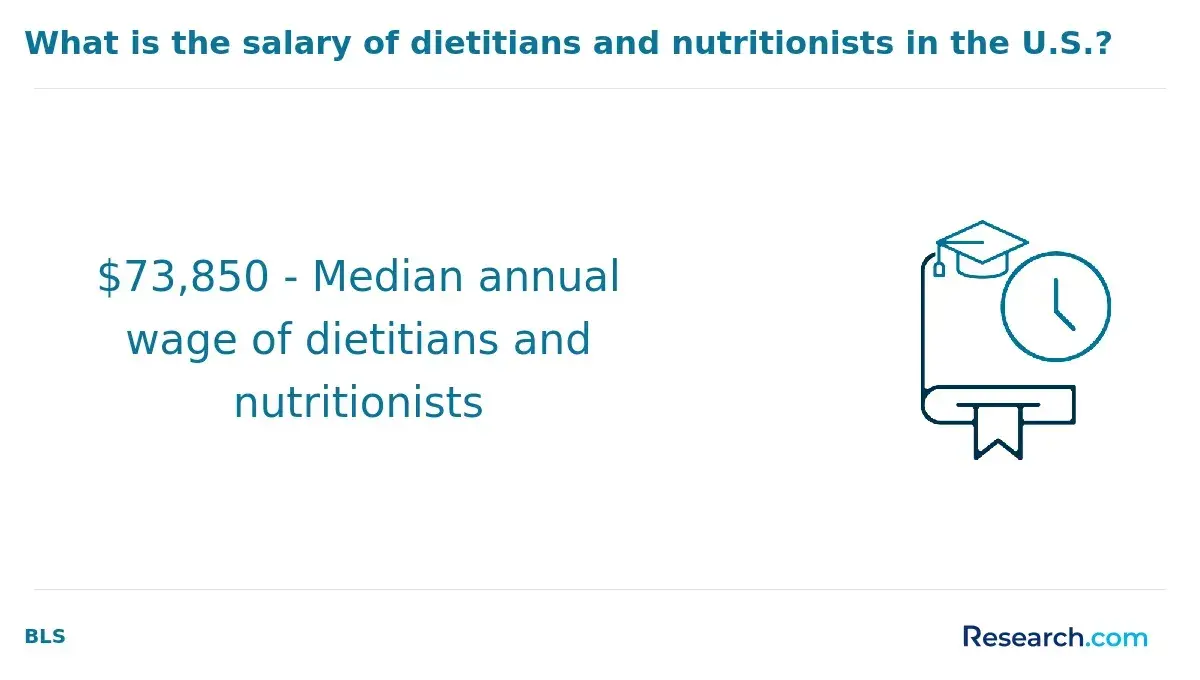
The average annual pay for a dietitian in Kentucky is about $66,008, which translates to roughly $31.73 per hour, or about $1,269 per week and $5,500 per month. While this figure reflects the statewide average, earnings can vary significantly by location and specialization.
Some salaries outpace the state average, with Hazard at the top, followed by Lexington and Florence. Florence offers pay rates 14.3% higher than the Kentucky average, while Hazard exceeds it by 20.7%, driven by factors such as local demand, cost of living, and the strength of regional healthcare systems.
Specialization also plays a major role in earning potential. For example, an Outpatient Dietitian can make around $77,988, a Research Dietitian averages $65,369, and a Nutrition Consultant earns about $59,847. These variations highlight how career focus, employer type, and years of experience can directly influence salary outcomes for registered dietitians in Kentucky.
What professional development opportunities are available for registered dietitians in Kentucky?
Kentucky offers a spectrum of professional development resources that extend beyond licensure and registration maintenance. Engaging with state and national dietetic associations provides access to specialized workshops, conferences, and mentorship programs that are essential for staying abreast of emerging research and industry trends. Many local organizations also sponsor seminars focused on public health challenges, advanced nutrition practices, and changes in regulatory standards. These opportunities can enhance career progression and broaden expertise in diverse settings, while also supporting transitions into related roles—for example, if you are exploring alternative paths, check out how to become a nutritionist in Kentucky.
What are the financial considerations for becoming a registered dietitian in Kentucky?
Evaluating the financial investment is a critical step before embarking on a dietetics career. Prospective dietitians should budget for tuition, required fees for accredited programs and supervised practice, as well as expenses related to registration exams and state licensure applications. It is important to factor in additional costs such as textbooks, professional memberships, and continuing education courses, all of which can influence the overall return on investment when compared with projected earnings. For those exploring alternative healthcare paths, consider learning more about how to become a medical assistant in Kentucky to weigh your options effectively.
What do you need to keep your dietitian registration active in Kentucky?
Keeping your dietitian registration active in Kentucky is essential to legally practice and stay current in your field. It helps protect public trust and ensures you’re always up-to-date with the latest nutrition knowledge. Missing renewal deadlines or skipping continuing education can cost you your license and ability to work.
- Annual License Renewal: Renew your Kentucky license every year by October 31 through the eServices portal to avoid expiration.
- Continuing Education: Complete at least 15 hours of approved continuing education each year to meet state requirements.
- CDR Continuing Education: Finish 75 hours of continuing professional education every five years for your national registration.
- Renewal Fees: Pay a $50 fee annually, with late fees if renewing after October 31 but before December 31.
- Documentation: Keep records of all education and renewals in case of audits by the state board.
How long does it take to become a registered dietitian in Kentucky?
Becoming a registered dietitian in Kentucky generally takes about six to seven years from the moment you start college until you earn your credential. This timeline includes finishing your bachelor’s degree and, since 2024, a master’s degree is also required, which adds extra time to the process. Along the way, you’ll complete supervised practice and pass the national registration exam before applying for state licensure.
When considering registered dietitian education requirements in Kentucky, most students follow a pretty standard path: four years for the bachelor’s, around two years for the master’s, and about 8 to 12 months for the dietetic internship. Some accelerated or coordinated programs can shorten this timeline, but part-time study or delays in internship placement might extend it. It’s a commitment, but knowing the general timeframe helps you plan ahead.
If you’re looking into how many years to become a dietitian in Kentucky and want to explore program options, it’s helpful to check out resources like the best online nutrition programs. These can offer flexible ways to complete your education without sacrificing your timeline. Overall, the process is designed to ensure you’re well-prepared for a career in nutrition and dietetics.
Can international students qualify to become registered dietitians in Kentucky?
International students can definitely pursue the registered dietitian credential in Kentucky, but there are some extra steps to take if your degree is from outside the U.S. Meeting these requirements ensures your education lines up with U.S. standards and lets you move forward smoothly.
- Foreign Degree Equivalency Evaluation: You’ll need to have your academic credentials evaluated by an approved service to confirm they match U.S. standards before applying to an ACEND-accredited program.
- Admission to ACEND-Accredited Programs: Acceptance into an accredited program, like those at the University of Kentucky or Murray State University, is necessary. These programs include coursework and at least 1,000 hours of supervised practice.
- English Language Proficiency: Most universities require proof of English skills through tests like TOEFL or IELTS as part of your application.
- Visa and Legal Authorization: Maintaining proper visa status, such as F-1 or J-1, is crucial for studying and completing supervised practice legally in the U.S.
- Credentialing Exam Eligibility: After finishing your education and supervised practice, you must meet the requirements to sit for the CDR exam. Note that, a master’s degree is required to be eligible.
- Licensure in Kentucky: Once credentialed, apply for state licensure through the Kentucky Board of Licensure and Certification for Dietitians and Nutritionists to practice professionally.
For those looking for flexible pathways, you might find the best online nutrition degree programs helpful, offering examples of options that balance study with other commitments.
What career paths can registered dietitians pursue in Kentucky?
There are plenty of exciting career opportunities for registered dietitians in Kentucky, whether you prefer working directly with patients or behind the scenes in research or business. Email remains a key tool in these roles, with 93% of dietitians and nutritionists reporting they use it every day to communicate with clients, collaborate with healthcare teams, and manage professional tasks.
Here’s a quick look at some popular roles, typical settings, and what you might expect in salary and job growth.
- Clinical Dietitian: Work in hospitals or rehab centers providing personalized nutrition plans; expect strong job growth and higher pay in cities like Louisville.
- Community Nutritionist: Focus on public health and education through nonprofits or health departments; salaries match the state average with steady demand.
- Food Service Manager: Manage meal planning and safety in schools or hospitals; salaries range from about $51,950 to $87,050, depending on experience, offering leadership roles.
- Corporate Wellness Consultant: Help businesses develop health programs to cut costs; these roles often pay above average, especially in large organizations.
- Private Practice Dietitian: Run your own counseling business specializing in weight management or sports nutrition; income varies widely but can exceed state averages with experience.
- Research and Product Development Specialist: Work in academia or industry creating new food products or conducting nutrition research; usually requires advanced degrees.
- Sports Nutritionist: Support athletes with tailored nutrition plans in gyms or sports teams; pay is similar to other dietitian roles but can be higher in specialized positions.
- Educator or Academic Faculty: Teach and mentor future dietitians at colleges; these positions often require advanced degrees and offer stable salaries plus research opportunities.
- Public Health Official: Design large-scale nutrition programs for government agencies with competitive benefits and steady job prospects.
If you’re considering a path in clinical and community nutrition jobs in Kentucky, you’ll find a variety of options with solid salaries and growth potential. For those looking to boost qualifications, exploring a masters in nutrition can open even more doors.
What do registered dietitians in Kentucky say about their careers?
- Completing my dietetics program at the University of Kentucky truly prepared me for a fulfilling career here in the Bluegrass State. Starting my work as a registered dietitian within a local school system allowed me to directly influence children's health and nutrition, which is incredibly rewarding. Kentucky’s strong community ties and emphasis on education have given me a stable yet inspiring environment to grow professionally. Every day, I feel passionate about helping students develop lifelong healthy habits that positively impact their academic performance and well-being. - Jaden
- Graduating from Western Kentucky University’s nutrition program was a pivotal moment in my career, opening doors to unique opportunities in Kentucky’s school districts. The challenge of addressing dietary needs in rural areas has pushed me to innovate and adapt, deepening my understanding of how culture and environment shape health behaviors. Witnessing personal growth among students and families motivates me deeply. Kentucky’s commitment to supporting dietitians through professional development has also enhanced my career trajectory significantly. - Lina
- My experience at Eastern Kentucky University laid a solid foundation for my role as a registered dietitian in a local academic institution. The chance to contribute to community wellness by tailoring nutrition programs that reflect Kentucky’s agricultural richness has been incredibly fulfilling. The state’s blend of tradition and progress provides a unique landscape for professional growth and meaningful impact. Being part of a team that prioritizes student health has truly deepened my passion for this work. - Amaia
Related Articles for Nearby States
- 2027 Steps to Become a Registered Dietitian in Indiana
- 2027 Steps to Become a Registered Dietitian in Ohio
- 2027 Steps to Become a Registered Dietitian in Tennessee
- 2027 Steps to Become a Registered Dietitian in West Virginia
- 2027 Steps to Become a Registered Dietitian in Virginia
- 2027 Steps to Become a Registered Dietitian in Illinois
- 2027 Steps to Become a Registered Dietitian in Missouri
- 2027 Steps to Become a Registered Dietitian in North Carolina
- 2027 Steps to Become a Registered Dietitian in Georgia
- 2027 Steps to Become a Registered Dietitian in Mississippi
References:
- Academy of Nutrition and Dietetics. (2024). Compensation & Benefits Survey of the Dietetics Profession 2024 (biennial). https://www.cdrnet.org/vault/2459/web//Compensation%20Benefits%20Survey%20of%20the%20Dietetics%20Profession%202024-TOC_Exec%20Sum.pdf
- Commission on Dietetic Registration. (2026, January 26). Nutrition Dietetics Technician, Registered (NDTR) and Dietetic Technician Registered by Region. Retrieved January 2026, from https://www.cdrnet.org/registry-statistics?id=6925&actionxm=All
- National Center for Health Workforce Analysis. (2025, December). State of the U.S. Health Care Workforce, 2025. https://bhw.hrsa.gov/sites/default/files/bureau-health-workforce/data-research/State-of-US-Health-Care-Workforce-2025.pdf
- O*NET OnLine (n.d.). Dietitians and Nutritionists 29-1031.0. Retrieved from https://www.onetonline.org/link/summary/29-1031.00
- O*NET OnLine (n.d.). Kentucky Employment Trends 29-1031.00 - Dietitians and Nutritionists. Retrieved from https://www.onetonline.org/link/localtrends/29-1031.00?st=KY
- U.S. Bureau of Labor Statistics. (2025, August 28). Occupational projections and worker characteristics. Retrieved January 2026, from https://www.bls.gov/emp/tables/occupational-projections-and-characteristics.htm
- Zippia (2025). Registered dietitian demographics and statistics in the US. Retrieved from https://www.zippia.com/registered-dietitian-jobs/demographics/
- ZipRecruiter (2025). Dietitian Salary in Kentucky. Retrieved from https://www.ziprecruiter.com/Salaries/Dietitian-Salary--in-Kentucky
Other Things You Should Know About Being a Registered Dietitian in Kentucky
To become a registered dietitian in Kentucky in 2027, you need to earn a bachelor's degree in dietetics, complete a supervised practice program (dietetic internship), pass the Commission on Dietetic Registration (CDR) exam, and obtain licensure from the Kentucky Board of Licensure and Certification for Dietitians and Nutritionists.
Dietetics students in Kentucky have access to several scholarships and financial aid opportunities aimed at supporting their education and career goals. The Kentucky Dietetic Association offers annual scholarships specifically for students enrolled in accredited dietetics programs in the state, helping to alleviate tuition costs.
More so, students can explore federal financial aid options such as Pell Grants and student loans by completing the FAFSA. Many universities in Kentucky also provide institutional scholarships and work-study programs for dietetics students, making education more affordable while gaining relevant experience. Prospective registered dietitians should actively seek out these funding sources early to maximize their financial support during their studies.


