
2027 Steps to Become a Registered Dietitian in Louisiana

Co-Founder and Chief Data Scientist
Many aspiring nutrition professionals in Louisiana face uncertainty about the precise steps required to become a registered dietitian. With Louisiana ranking higher than the national average in diet-related health issues, such as obesity affecting over 36% of adults, the demand for qualified dietitians continues to grow. Pursuing this career in Louisiana offers strong job prospects and competitive salaries, reflecting the state’s healthcare needs.
This article, prepared by experts in career planning, outlines the essential educational, experiential, and licensing requirements. It provides clear guidance to help candidates navigate the pathway toward becoming a registered dietitian in Louisiana with confidence and clarity.
Key Things to Know About Becoming a Registered Dietitian in Louisiana
- Complete a minimum of a bachelor’s degree in dietetics or nutrition from an ACEND-accredited program to meet educational requirements.
- Fulfill a supervised practice internship of at least 1,200 hours approved by the Commission on Dietetic Registration (CDR) to gain essential hands-on experience.
- Pass the CDR national registration examination and apply for licensure through the Louisiana State Board of Medical Examiners to legally practice as a registered dietitian in Louisiana.
- What degree is required to become a registered dietitian in Louisiana?
- How many supervised practice hours are needed to become a registered dietitian in Louisiana?
- What are the eligibility requirements for the dietetic registration exam in Louisiana?
- How can you get a license after passing the dietetic registration exam in Louisiana?
- What types of dietitian specializations can you pursue in Louisiana?
- What is the average salary of a registered dietitian in Louisiana?
- What do you need to keep your dietitian registration active in Louisiana?
- What additional credentials can complement my registered dietitian qualification in Louisiana?
- How can registered dietitians effectively collaborate with interdisciplinary healthcare teams in Louisiana?
- How long does it take to become a registered dietitian in Louisiana?
- Can international students qualify to become registered dietitians in Louisiana?
- What career paths can registered dietitians pursue in Louisiana?
What degree is required to become a registered dietitian in Louisiana?
The pathway to becoming a registered dietitian in Louisiana involves completing specific degree requirements designed to ensure comprehensive knowledge and competence in the field. These degrees align with the standards set by accredited programs to meet state qualifications.
- Bachelor’s Degree: A minimum of a bachelor’s degree from an ACEND accredited dietetics programs in Louisiana is required, providing foundational coursework in nutrition and dietetics.
- Didactic Program in Dietetics (DPD): Completion of a DPD accredited by the Accreditation Council for Education in Nutrition and Dietetics is mandatory to qualify for supervised practice opportunities.
- Supervised Practice Program: After the degree, candidates must complete a supervised practice or internship program approved by ACEND, essential for hands-on experience and skill development.
- Master’s Degree Requirement: Recent regulations emphasize a master’s degree requirement for registered dietitian Louisiana credentials, reflecting the evolving standards in nutrition education.
For those exploring educational pathways, understanding what are the best nutrition online certifications can provide valuable insight into program options and career advancement in the dietetics field.
How many supervised practice hours are needed to become a registered dietitian in Louisiana?
To become a registered dietitian in Louisiana, candidates must complete a supervised practice experience totaling at least 1,200 hours. This requirement aligns with national standards set by the Accreditation Council for Education in Nutrition and Dietetics (ACEND) and ensures eligibility for licensure and the registration examination. The following points summarize key aspects of supervised practice hour requirements and relevant state-specific considerations.
Below are the key factors regarding supervised practice hours in Louisiana:
- Alignment with ACEND Requirements: All ACEND-accredited dietetic internships in Louisiana require completion of supervised practice hours consistent with national standards.
- Program Structure: Hours are usually completed over 11 to 18 months, with weekly commitments often exceeding 32 hours, including clinical, community, and food service rotations.
- Licensure Requirement: Louisiana law mandates completion of supervised practice for licensure, with a minimum state threshold lower than ACEND standards, ensuring all accredited programs exceed the legal minimum.
- Direct Supervision: Supervised practice must be conducted under the direct oversight of a licensed or registered dietitian/nutritionist, complying with state licensure regulations.
- No Additional State Hours: Louisiana does not impose supervised practice hour requirements beyond the ACEND minimum, so completing an accredited program suffices.
- Program Variability: Some programs may require slightly more than the minimum hours due to curriculum design, but none accept fewer than the established 1200-hour standard.
What are the eligibility requirements for the dietetic registration exam in Louisiana?
Meeting the eligibility requirements for the dietetic registration exam in Louisiana involves completing specific educational and administrative steps. These ensure candidates possess the foundational knowledge and credentials necessary to pursue a career as a registered dietitian. The process aligns with both national standards and Louisiana-specific regulations.
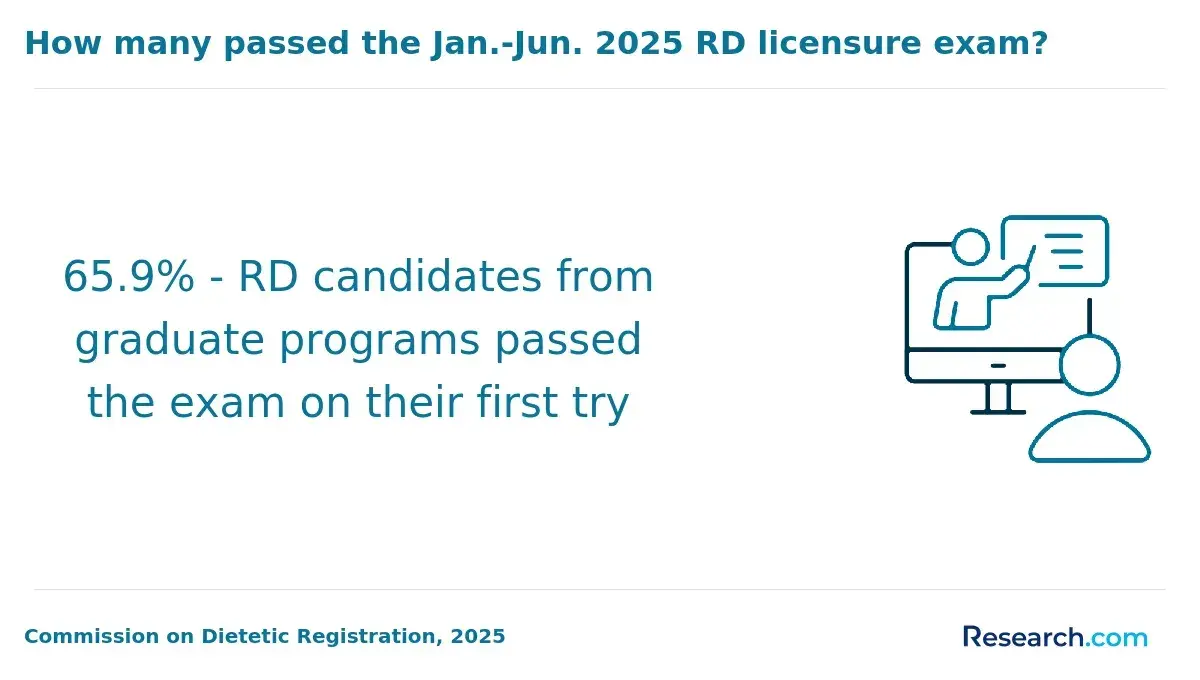
- Minimum Educational Qualifications: Candidates must hold at least a graduate degree (master’s or higher) from a U.S. Department of Education-recognized institution; this applies uniformly across Louisiana and the nation.
- Louisiana ACEND-accredited dietetics program requirements: Completion of an ACEND-accredited nutrition program is mandatory, including Didactic Program in Dietetics (DPD), Coordinated Program (CP), or Graduate Program (GP), which provide essential dietetics coursework.
- Submission of Eligibility by Program Director: After fulfilling all academic and coursework prerequisites, the program director submits the candidate’s eligibility to the Commission on Dietetic Registration (CDR) via the Registration Eligibility Processing System (REPS), confirming readiness for exam registration.
- Registration and Passing of the National Exam: Eligible candidates must register for the CDR national exam, administered in Louisiana at Pearson VUE Centers located in Baton Rouge, Metairie, and New Orleans. Passing this exam is required to earn the Registered Dietitian (RD) or Registered Dietitian Nutritionist (RDN) credential.
- State-Specific Licensure Variations: Louisiana recognizes the CDR exam as the official licensing exam and offers alternative pathways for military-trained dietitians who meet equivalent standards, with strict background checks required.
For those pursuing this career, understanding these eligibility requirements for registered dietitian exam in Louisiana is critical. Candidates should also be aware that supervised practice hours under ACEND accreditation are part of the pathway, though these details are addressed separately. Aspiring dietitians can explore the broader nutrition career path to gain insight into related opportunities and requirements.
How can you get a license after passing the dietetic registration exam in Louisiana?
To obtain a license after passing the dietetic registration exam in Louisiana, follow these essential steps carefully:
- Confirm Eligibility: Ensure completion of an accredited academic program and a supervised practice of at least 900 hours verified by an ACEND-accredited institution.
- Prepare Documentation: Collect all required documents including transcripts, supervised practice verification, and proof of exam passage, aligned with LBEDN standards.
- Complete the Application: Accurately fill out and submit the licensing application to the Louisiana Board of Examiners for Dietitians and Nutritionists (LBEDN).
- Pay Required Fees: Include non-refundable application and licensing fees as mandated by LBEDN to avoid processing delays.
- Consent to Release Information: Authorize LBEDN to verify your educational and exam records as part of the review process.
- Await Board Review: The board evaluates your submission for compliance with state regulations and may request additional information if necessary.
- Respond to Board Requests: Promptly provide any further documentation or clarification to prevent delays in approval.
- Receive License: Obtain your provisional or full license before legally practicing as a dietitian or nutritionist in Louisiana.
- Maintain and Renew License: Comply with annual renewal requirements including continuing education to sustain professional credentials.
What types of dietitian specializations can you pursue in Louisiana?
Dietitians in Louisiana have the opportunity to specialize in diverse areas that reflect the state’s healthcare demands and nutritional challenges. These specializations enable dietitians to develop targeted expertise, enhancing their ability to provide specialized care in various settings. Below are some prominent dietitian specializations available in Louisiana.
- Clinical Dietitian: Provides medical nutrition therapy to patients in hospitals, outpatient clinics, and long-term care facilities, focusing on chronic diseases like diabetes and heart disease.
- Community Dietitian: Works with public health departments and organizations to implement nutrition education and address food insecurity, embodying key community nutrition careers in Louisiana.
- Food Service Management Dietitian: Manages menu planning, food safety, and nutrition compliance in institutions such as schools and hospitals.
- Pediatric Dietitian: Specializes in nutritional care for infants, children, and adolescents, often tackling childhood obesity and feeding disorders.
- Renal (Nephrology) Dietitian: Delivers nutritional support for patients with kidney disease, a critical role given Louisiana's elevated rates of chronic kidney conditions.
- Geriatric Dietitian: Focuses on the unique dietary needs of older adults in nursing homes and home health settings, supporting healthy aging.
- Sports Dietitian: Advises athletes and active individuals on nutrition strategies to optimize performance and recovery.
- Oncology Dietitian: Provides specialized nutrition care for cancer patients to manage treatment side effects and improve quality of life.
- Private Practice Dietitian: Offers personalized nutrition counseling independently or in groups, addressing a broad range of health concerns.
- Research Dietitian: Conducts scientific studies related to nutrition and health, contributing to the advancement of regional health knowledge.
What is the average salary of a registered dietitian in Louisiana?
The average salary for a registered dietitian in Louisiana is approximately $67,290 per year, with an average hourly wage of about $30.71 as of August 2025. This salary is slightly above the national median, which typically hovers around $65,000 annually, although Louisiana ranks 50th among states for dietitian pay, indicating less competitive wages compared to other regions.
- Location within the State: Metropolitan areas like New Orleans and Baton Rouge offer higher salaries due to increased demand and living costs, while rural areas tend to pay less.
- Experience Level: Entry-level dietitians start near $65,000 annually, with experienced professionals earning up to $81,045 per year.
- Work Setting: Dietitians employed in hospitals and clinical environments generally receive higher compensation than those in schools or public health roles.
- Industry Demand: Facilities with specialized care or high patient volumes tend to offer premium wages to attract qualified dietitians.
Regional salary trends show that urban centers lead in compensation, reflecting local economic factors. Although salary growth has been moderate, projections suggest stable increases aligned with healthcare demand, despite Louisiana’s overall lower state ranking for dietitian salaries.
What do you need to keep your dietitian registration active in Louisiana?
Maintaining an active dietitian registration in Louisiana is vital to ensure compliance with state regulations and continued professional credibility. It protects public health by confirming that practitioners meet ongoing education and licensing standards necessary for safe practice.
- Annual License Renewal: Licenses expire June 30 each year and must be renewed online through the state board to avoid expiration.
- Continuing Education: Licensees must complete 15 hours of dietetics and nutrition continuing education annually or provide proof of current CDR registration.
- CDR Registration: Active Registered Dietitians maintain CDR registration requiring 75 hours of continuing education every five years, typically fulfilling state requirements.
- Renewal Fees: Standard renewal fees are $83 if paid on time, with higher fees for late renewal; inactive status offers reduced fees but prohibits practice.
- Proof of Registration: Submission of current CDR registration proof is required at renewal.
When I spoke with a registered dietitian from Louisiana who graduated from a local university, he reflected on the challenges of maintaining licensure without full reciprocity from other states. “Moving here meant I had to carefully track Louisiana’s specific renewal deadlines and continuing education requirements, which differ slightly from where I was licensed before,” he explained. This meant extra effort but also gave him a clearer sense of control over his professional standing.
He appreciated that the state’s strict but transparent process encouraged ongoing learning and reinforced his commitment to quality care. “Knowing exactly what’s needed each year helps me stay proactive rather than reactive, which is a big advantage in this field.”
What additional credentials can complement my registered dietitian qualification in Louisiana?
Beyond meeting core registration requirements, obtaining supplementary certifications and engaging with professional associations can elevate your career profile. Earning specialized credentials—such as certifications in clinical nutrition, sports nutrition, or pediatric nutrition—demonstrates a commitment to advanced expertise and can open doors to niche roles. Moreover, active participation in professional networks and local dietetic organizations offers opportunities for mentorship, collaboration, and insight into emerging trends. For professionals exploring alternative paths or diversified roles in the nutrition field, learn how to become a nutritionist in Louisiana.
How can registered dietitians effectively collaborate with interdisciplinary healthcare teams in Louisiana?
Registered dietitians play a critical role in fostering comprehensive patient care by engaging collaboratively with various healthcare professionals. In Louisiana, effective interdisciplinary teamwork involves working closely with physicians, nurses, and allied health staff to develop integrated treatment plans that address complex nutritional needs. Such collaboration enhances care outcomes by bridging specialized expertise and ensuring cohesive service delivery. Additionally, exploring complementary roles—learn how to become a medical assistant in Louisiana—can provide valuable insights into allied healthcare support dynamics, further strengthening the collaborative network.
How long does it take to become a registered dietitian in Louisiana?
The time required to become a registered dietitian in Louisiana typically spans six to seven years, beginning with undergraduate education and culminating in licensure. This timeline incorporates the necessary academic credentials, supervised practice, and successful completion of the registration exam. Variations in duration may occur based on program structure and enrollment status.
The registered dietitian education and training length Louisiana mandates includes a bachelor’s degree followed by a mandatory master’s degree, together accounting for about six years of full-time study. Candidates also complete an accredited dietetic internship, which generally requires 6 to 12 months of supervised practice. This phase ensures practical experience before eligibility for the Commission on Dietetic Registration exam.
Additional factors affecting the timeline include the availability of coordinated programs that blend coursework and internships, potentially reducing the overall length of training. Processing times for licensure with the Louisiana Board of Examiners can extend the journey slightly. Prospective students seeking flexibility might consider programs such as the best rated online nutrition program, which can offer alternative pacing options.
Can international students qualify to become registered dietitians in Louisiana?
International students can become registered dietitians in Louisiana by fulfilling specific criteria that verify their education and professional qualifications align with U.S. standards. These steps ensure that international candidates meet the same rigorous standards required for licensure as local applicants.
- Foreign Credential Evaluation: International degrees and coursework must be evaluated for equivalency by an agency approved by the Accreditation Council for Education in Nutrition and Dietetics (ACEND) to confirm alignment with U.S. dietetics education standards.
- Completion of ACEND-Accredited Program: Regardless of prior education, international students must complete coursework and supervised practice within an ACEND-accredited program, such as a Didactic Program in Dietetics or a Coordinated Program.
- English Language Proficiency: Proof of English proficiency, commonly through TOEFL or IELTS scores, is required if previous education was not in English, ensuring effective communication within supervised practice and professional settings.
- Visa and Immigration Status: Appropriate student visas (typically F-1 or J-1) must be secured to participate legally in academic and supervised practice components within the U.S.
- Eligibility for CDR Registration Exam: Only after completing an accredited program and supervised practice can international students sit for the Commission on Dietetic Registration (CDR) exam, a prerequisite for licensure in Louisiana with testing available in locations such as Baton Rouge and New Orleans.
- State Licensure Application: Upon passing the CDR exam, candidates must apply for licensure with the Louisiana Board of Examiners for Dietitians and Nutritionists, submitting all required documentation including credential evaluations and supervised practice verification.
For additional guidance on educational pathways, prospective students may find valuable information on anchors part-time Ph.D. in economics, which highlights the importance of accredited programs in professional advancement.
What career paths can registered dietitians pursue in Louisiana?
Registered dietitians in Louisiana have access to a variety of career opportunities across healthcare, community services, and industry sectors. These roles offer diverse work environments, competitive salaries, and positive job prospects, particularly in metropolitan areas.
- Clinical Dietitian: Employed in hospitals and clinics, these professionals provide medical nutrition therapy for chronic conditions, earning an average of $72,790 statewide with experienced roles reaching $96,160, reflecting strong demand in clinical nutrition careers in Louisiana.
- Community and Public Health Dietitian: Working with public health agencies and WIC programs, they develop nutrition education and food security initiatives, with entry-level salaries ranging from $33,300 to $42,100.
- Food Service Management Dietitian: Overseeing meal planning and safety in institutions like schools and hospitals, these dietitians enjoy leadership roles with salaries around the state average.
- Private Practice and Consulting Dietitian: Operating independently, they offer personalized nutrition services, with income varying widely based on clientele and expertise.
- Research Dietitian: Employed by universities and research centers, these specialists conduct nutrition studies and typically earn salaries at or above the state average.
- Corporate Wellness and Industry Dietitian: Focused on workplace health programs, they benefit from regular hours and competitive pay amid growing employer demand.
- Long-Term Care and Geriatric Dietitian: Serving older adults in nursing facilities, they address malnutrition and chronic conditions, with salaries consistent with or exceeding state averages.
- School Nutrition Dietitian: Managing school meal programs and compliance, they enjoy stable employment and salaries comparable to public sector dietitians.
For those exploring what can you do with a nutritional science degree, these registered dietitian jobs in Louisiana provide a robust foundation for a meaningful and well-compensated career.
What do registered dietitians in Louisiana say about their career?
- Completing my dietetics program at Louisiana State University gave me a strong foundation and a deep appreciation for the unique nutritional needs of our local communities. Starting my career as a registered dietitian in a local school has been incredibly rewarding, as I get to work directly with students to promote healthy eating habits that can last a lifetime. The cultural richness and diverse food traditions here in Louisiana have allowed me to tailor programs that truly resonate with families. It's inspiring to see the positive impact we can have on children's well-being and academic success through nutrition education. This journey has fueled my passion and commitment every day. Orlando
- Graduating from the University of Louisiana at Monroe opened doors for me to engage with academic institutions across the state, where I began my career as a registered dietitian working with students. The experience has been both challenging and fulfilling, particularly because Louisiana's unique food environment and health disparities require creative solutions and culturally sensitive approaches. Over time, I’ve seen tremendous personal growth and professional development, gaining skills that have helped me advocate for better nutrition policies in schools. The stability and support within this career path provide a solid foundation for long-term success. Jeremy
- Attending Tulane University was a transformative experience that prepared me to serve diverse communities across Louisiana. Working as a registered dietitian in a local school setting has been a powerful way to contribute to community health, especially by addressing childhood obesity and food insecurity that are prevalent in our region. This role pushes me to innovate and adapt nutrition programs that honor Louisiana’s cultural heritage while promoting healthier lifestyles. The professional advancement opportunities here are impressive, encouraging continuous learning and leadership. I feel proud knowing my work supports both the youth and the broader community in meaningful ways. Leila
Related Articles for Nearby States
- 2027 Steps to Become a Registered Dietitian in Mississippi
- 2027 Steps to Become a Registered Dietitian in Arkansas
- 2027 Steps to Become a Registered Dietitian in Texas
- 2027 Steps to Become a Registered Dietitian in Alabama
- 2027 Steps to Become a Registered Dietitian in Tennessee
- 2027 Steps to Become a Registered Dietitian in Missouri
- 2027 Steps to Become a Registered Dietitian in Oklahoma
- 2027 Steps to Become a Registered Dietitian in Florida
- 2027 Steps to Become a Registered Dietitian in Kentucky
- 2027 Steps to Become a Registered Dietitian in Georgia
References:
- BecomeANutritionist.org. (n.d.). State Requirements for Nutritionist and Registered Dietician. BecomeANutritionist.org
- Board of Examiners in Dietetics and Nutrition. (2025). Rules, Regulations and Procedures. BEDN
- Commission on Dietetic Registration. (2025). Registered Dietitian (RD) and Registered Dietitian Nutritionist (RDN). CDR
- Franciscan Missionaries of Our Lady University. (2025). Nutritionist vs. Registered Dietitian: What’s the Difference? FRANU
- Louisiana Tech University. (2025). College of Applied and Natural Sciences. Louisiana Tech
- McNeese State University. (2025). Concentration in Nutrition and Dietetics. MSU
- NutritionED.org. (n.d.). Becoming a Nutritionist in Louisiana. NutritionED.org
- Polner, M. (n.d.). Dietitian vs. Nutritionist. Allied Health
- Tulane University. (2025). How to Become a Registered Dietitian. Tulane University
- Zippia Team. (2025). Registered dietitian education requirements. Zippia
Other Things You Should Know About Becoming a Registered Dietitian in Louisiana
To become a registered dietitian in Louisiana in 2027, obtain a bachelor's degree in dietetics approved by ACEND, complete a supervised practice program, pass the CDR registration exam, and apply for state licensure. Continuing education is also required to maintain licensure.
Registered dietitians in Louisiana must complete 75 hours of continuing professional education every five years, as mandated by the Commission on Dietetic Registration. This requirement ensures dietitians remain current with industry standards and practices.


