2027 Steps to Become a Registered Dietitian in Minnesota

Co-Founder and Chief Data Scientist
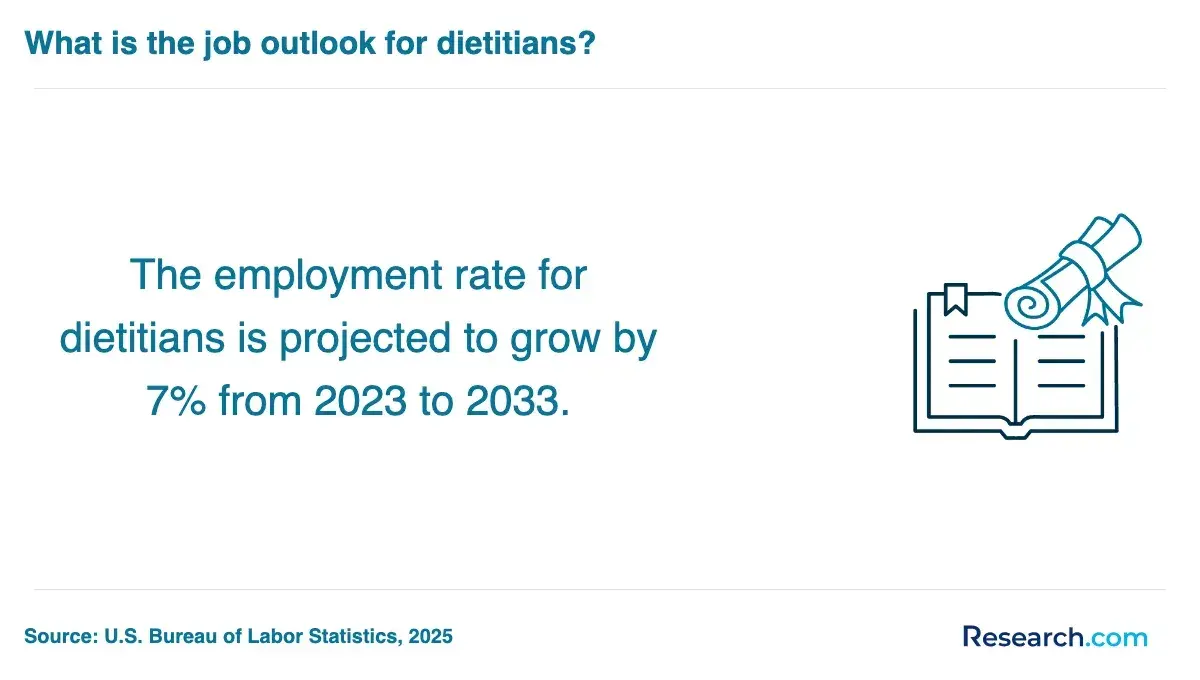
Pursuing a career as a registered dietitian in Minnesota is a good move, with the demand for these professionals in the state projected to grow by 15% over the next decade. This demand is driven by an increasing focus on health and nutrition. Additionally, Minnesota offers competitive salaries and diverse job opportunities in healthcare and community settings, making this career path financially and professionally rewarding.
This article will give you a clear, step-by-step guide to meeting educational, internship, and licensing requirements for dietitians in Minnesota. Prepared by career planning experts, it aims to simplify the process and equip you with practical strategies to make informed career decisions.
Key Things to Know About Becoming a Registered Dietitian in Minnesota
- Complete a minimum of a bachelor’s degree in nutrition or dietetics from an accredited program to meet Minnesota licensure educational standards.
- Finish a supervised dietetic internship of at least 1,200 hours to gain practical experience required for the Registered Dietitian Nutritionist (RDN) credential.
- Pass the national CDR exam and apply for Minnesota state licensure, which is mandatory to practice legally and earn an average salary of around $65,000 annually in the state.
- What degree is required to become a registered dietitian in Minnesota?
- How many supervised practice hours are needed to become a registered dietitian in Minnesota?
- What are the eligibility requirements for the dietetic registration exam in Minnesota?
- How can you get a license after passing the dietetic registration exam in Minnesota?
- What types of dietitian specializations can you pursue in Minnesota?
- What is the average salary of a registered dietitian in Minnesota?
- What do you need to keep your dietitian registration active in Minnesota?
- How long does it take to become a registered dietitian in Minnesota?
- Can international students qualify to become registered dietitians in Minnesota?
- What career paths can registered dietitians pursue in Minnesota?
- What professional organizations support registered dietitians in Minnesota?
- What distinguishes a registered dietitian career from that of a medical assistant in Minnesota?
What degree is required to become a registered dietitian in Minnesota?
To become a registered dietitian in Minnesota, you need to meet specific educational credentials. These degrees provide the foundational knowledge and practical skills you need for the profession.
- Bachelor’s Degree: A bachelor’s degree from an accredited institution is required, ideally with coursework covering nutrition, biology, and chemistry to meet the standards of ACEND-accredited dietitian programs in Minnesota.
- Master’s Degree in Nutrition and Dietetics: A master’s degree in nutrition and dietetics in Minnesota or a related field is increasingly preferred or required, providing advanced training necessary for clinical practice and leadership roles.
- Didactic Program in Dietetics (DPD): Completion of an ACEND-accredited DPD is mandatory before applying for a supervised practice program, ensuring candidates have met essential academic requirements.
- Supervised Practice Program: After academic coursework, candidates must complete a supervised practice program accredited by ACEND, which is a critical step toward eligibility for registration.
For those researching options on gaining the right credentials, resources explaining what are the best nutrition online certifications can offer additional pathways to complement formal degrees and enhance practical skills.
How many supervised practice hours are needed to become a registered dietitian in Minnesota?
Aspiring registered dietitians in Minnesota must complete a minimum of 900 supervised practice hours. This requirement aligns with national standards set by programs accredited by the Accreditation Council for Education in Nutrition and Dietetics (ACEND) and is mandated by both state law and professional guidelines.
Below are the key factors and practical considerations regarding supervised practice hours for aspiring dietitians in Minnesota:
- Supervision Requirements: Supervised practice must be completed under a registered dietitian, a state-licensed nutrition professional, or an individual with a doctoral degree from an accredited U.S. institution to ensure proper guidance and quality training.
- Location of Experience: All supervised hours must be obtained within the United States or its territories; foreign doctoral credentials require approval by the Minnesota Board to be considered valid.
- Alignment with National Standards: Minnesota’s 900-hour minimum follows ACEND’s benchmark, maintaining consistency with nationwide educational standards for dietetic practice.
- State-Specific Requirements: There are no additional or altered supervised practice hour requirements beyond the ACEND baseline for Minnesota licensure.
- Documentation and Verification: Applicants must submit formal evidence of completed supervised hours when applying for licensure, ensuring transparency in credentialing.
- Dietetic Technician Distinction: Programs for dietetic technicians require fewer hours but do not qualify graduates for registered dietitian licensure in Minnesota.
For those exploring nutrition pathways, reviewing the rankings of the best careers to pursue with a nutrition masters degree can provide invaluable insight into the professional landscape awaiting you.
What are the eligibility requirements for the dietetic registration exam in Minnesota?
Meeting the dietitian exam eligibility requirements in Minnesota involves completing specific academic and credentialing steps. These ensure that candidates are prepared for the national registration exam and fulfill state licensure standards. Here is a practical breakdown of the key requirements to guide you through the process:
- Minimum Graduate Degree Requirement: Applicants must hold at least a graduate degree from a U.S. Department of Education-recognized accredited institution or an equivalent foreign degree evaluated for equivalency in Minnesota.
- Completion of Accredited Nutrition Coursework: Candidates need to finish required nutrition and dietetics coursework via ACEND-accredited programs such as Didactic Programs in Dietetics (DPD), Coordinated Programs (CP), or Graduate Programs (GP).
- Verification of Academic Eligibility: Program directors from ACEND-accredited programs must submit formal verification of a candidate’s academic completion to the Commission on Dietetic Registration (CDR) before exam registration.
- Registration for the National Exam: After academic eligibility is verified, candidates must register with the CDR to take and pass the national Registration Examination for Dietitians to earn the RD credential.
- State-Specific Licensure Pathways: Minnesota requires dietitians to obtain state licensure in addition to passing the national exam; applicants licensed in other states with equivalent standards may qualify for licensure in Minnesota.
While supervised practice hours are essential for eligibility, they must be completed through ACEND-accredited programs and verified by program directors to meet CDR registration exam requirements in Minnesota. Maintaining licensure in the state also involves continuing education distinct from national requirements. For those researching career prospects, understanding these steps complements knowledge about the nutrition career salary and growth opportunities in the field.
How can you get a license after passing the dietetic registration exam in Minnesota?
Follow these essential steps to secure your dietitian license in Minnesota after passing the registration exam:
- Online Application: Complete the application on the Minnesota Board of Dietetics and Nutrition Practice website, choosing either the online or paper form.
- Fee Payment: Submit the $283.25 total fee, covering application, license, and background check costs, via check or money order.
- Official Transcript: Provide a direct transcript from your college confirming your relevant degree completion.
- Supervised Practice Verification: Include proof of at least 900 hours of supervised dietetic practice signed by an approved supervisor.
- CDR Documentation: Attach a notarized copy of your current Commission on Dietetic Registration card or official exam results.
- Background Check Completion: Follow board instructions to complete the required criminal background screening.
- Notarization: Get your application and supporting documents notarized as per Minnesota rules.
- Mail Application Packet: Send the entire notarized packet with fees and documents to the specified board address.
- License Receipt: Expect your official license by mail about two weeks after the board processes your application.
What types of dietitian specializations can you pursue in Minnesota?
Dietitians in Minnesota can specialize in numerous fields, each offering unique career opportunities and allowing you to focus your expertise on specific populations or settings. Choosing a specialization can help tailor your professional path to your interests and strengths.
Here are some common dietitian specializations available in Minnesota:
- Clinical Dietitian: These dietitians work in healthcare environments such as hospitals and clinics, providing medical nutrition therapy for patients with conditions like diabetes and heart disease.
- Community Dietitian: Focused on public health, they develop nutrition programs for groups such as children and seniors, often collaborating with government or nonprofit organizations.
- Food Service Management Dietitian: They manage large-scale food services in institutions, overseeing menu planning, food safety, and compliance with nutritional standards.
- Pediatric Dietitian: Specializing in nutrition for infants and adolescents, they address issues like childhood obesity and food allergies in clinical or community settings.
- Geriatric Dietitian: These professionals focus on the dietary needs of older adults, managing conditions such as dementia and malnutrition in long-term care or senior centers.
- Sports Dietitian: Working with athletes, they optimize performance and recovery through customized nutrition plans, employed by schools, teams, or private practices.
- Research Dietitian: They conduct nutrition science studies at universities or healthcare institutions to advance dietary guidelines and public health knowledge.
- Consultant Dietitian: Providing expert nutrition advice, they serve organizations or individuals, often working independently or within multidisciplinary teams.
What is the average salary of a registered dietitian in Minnesota?
The average salary for a registered dietitian in Minnesota in 2025 is approximately $72,590 per year, with hourly wages ranging from $35.17 to $35.79. This places Minnesota dietitians near the national average, which has a median annual wage around $66,450 according to the U.S. Bureau of Labor Statistics. Salaries in Minnesota range broadly from entry-level positions at about $59,408 to top earners making up to $97,941.
Exact salary figures are influenced by these factors:
- Location within Minnesota: Urban areas like Minneapolis-St. Paul offer higher salaries due to demand and living costs, while rural regions may pay less but have more openings.
- Experience and Credentials: Entry-level dietitians earn less, but advanced degrees and certifications significantly boost salary potential.
- Work Setting: Hospitals and government agencies typically pay more than schools or community programs.
- Specialization and Demand: Clinical and sports nutrition specialists often command higher wages, especially in metropolitan hospitals.
- Job Market Activity: The market is stable with moderate competition, affecting salary growth pace.
The chart below shows the industries where dietitians and nutritionists in the U.S. enjoy the highest wages.
What do you need to keep your dietitian registration active in Minnesota?
Maintaining an active dietitian registration in Minnesota is essential to continue practicing legally and uphold professional standards. Staying compliant protects your ability to serve clients confidently and avoid penalties or suspension. Here are the key requirements to keep your registration current:
- Annual License Renewal: Renew your license online every year by November 30, paying a $75 fee; licenses issued after November 1 expire the following year.
- Continuing Education: Complete at least 45 hours of board-approved education every three years to stay updated with nutrition science and practices.
- Fee Payments: Aside from the annual $75 renewal fee, initial licensure involves additional application and background check fees.
- Legal Compliance Verification: Confirm electronically each renewal that you understand Minnesota’s dietetics statutes and rules.
- Record Keeping: Maintain documentation of continuing education and national registration for audits and renewal verification.
A registered dietitian from Minnesota who graduated locally shared that maintaining registration felt manageable but required careful planning, especially balancing continuing education deadlines with work demands. He noted that Minnesota does not offer broad license reciprocity, so those moving here must meet all state-specific requirements, which can be challenging but ultimately ensures high standards.
He appreciated holding both state and national credentials, saying, “It’s reassuring knowing I meet Minnesota’s strict criteria, and it’s opened doors professionally.” This perspective highlights how commitment to ongoing requirements supports a stable and respected career in dietetics.
How long does it take to become a registered dietitian in Minnesota?
The typical pathway to becoming a registered dietitian in Minnesota spans five to seven years, depending on your educational pace and program choice. This timeframe includes completing your undergraduate and graduate degrees alongside the required supervised practice. Understanding how many years to become a registered dietitian in Minnesota helps you plan your academic and professional milestones effectively.
Starting with a bachelor’s degree in a dietetics-related field generally takes about four years of full-time study. Since 2024, a master’s degree has become mandatory, adding one to two more years to the process. Many students also complete an ACEND-accredited internship during or after graduate coursework to fulfill supervised practice hours, which is essential for eligibility to sit for the registration exam.
Factors like part-time study or accelerated programs can affect the total duration. Coordinated programs sometimes reduce the timeline to around five years by combining components efficiently. If you want to explore related graduate programs, consider reviewing this list of the best online masters in dietetics degree programs to find options that suit your schedule and goals while meeting registered dietitian education requirements Minnesota.
Can international students qualify to become registered dietitians in Minnesota?
International students can pursue the registered dietitian credential in Minnesota by meeting the same professional and educational standards as U.S. candidates. With careful planning, the process is achievable and involves several specific steps tailored to international credentials.
- Credential Evaluation of Foreign Degrees: Academic transcripts must be evaluated by a recognized credentialing agency to confirm U.S. equivalency, ensuring the foreign education meets dietetics standards.
- Admission to ACEND-Accredited Programs: Students need to enroll in an ACEND-accredited program in Minnesota, either at the bachelor’s or master’s level, with a master’s degree now required to sit for the registration exam.
- Supervised Practice Requirement: Completion of at least 900 hours of supervised practice in an ACEND-accredited internship within the U.S. is necessary to gain practical experience aligned with local standards.
- Verification Statement: After finishing coursework and supervised practice, students must obtain an official Verification Statement from their program, which is essential to qualify for the registration exam.
- Passing the CDR Exam: Students must successfully pass the Commission on Dietetic Registration exam to earn the Registered Dietitian Nutritionist credential.
- Obtaining Minnesota Licensure: Following exam success, applicants must apply for Minnesota licensure, providing documentation of international education and practice experience.
What career paths can registered dietitians pursue in Minnesota?
Registered dietitians in Minnesota have diverse career opportunities across healthcare, community, industry, and education. Exploring these options helps you find the best fit for your skills and goals while addressing the growing demand for medical nutrition therapy jobs Minnesota.
- Clinical Dietitian: Work in hospitals or outpatient centers providing medical nutrition therapy, with average salaries near $69,680 and strong job demand.
- Community Dietitian: Develop nutrition programs in public health settings, earning between $55,000 and $70,000 as public health initiatives grow.
- Food Service Management Dietitian: Oversee meal planning and food safety in institutions like schools and hospitals, with salaries from $60,000 to $72,000 driven by regulatory needs.
- Pediatric Dietitian: Specialize in nutrition for children in hospitals or schools, starting salaries around $62,000 and growing with experience.
- Geriatric Dietitian: Serve older adults in nursing homes or home health, with steady demand and pay between $60,000 and $70,000.
- Food Industry Dietitian: Engage in product development and nutrition marketing, starting near $60,000 with potential for higher earnings.
- Research Dietitian: Conduct nutrition studies in academic or government settings, earning $65,000 to $80,000 with advanced degrees.
- Private Practice Dietitian: Provide personalized counseling in areas like weight management, with earnings ranging widely from $55,000 to over $100,000.
- Academic Dietitian: Teach nutrition at colleges or universities, with salaries from $60,000 to $75,000 depending on rank and institution.
For those aiming to enhance qualifications, consider pursuing an online master's in nutrition to expand career opportunities for registered dietitians in Minnesota.
What professional organizations support registered dietitians in Minnesota?
Engaging with established professional organizations can provide critical networking, mentorship, and continuing education opportunities for registered dietitians. In Minnesota, local dietetic associations and specialized networks facilitate access to industry events, policy updates, and collaborative projects that enhance career development. These organizations also serve as a resource for guidance on alternative career trajectories, offering insights on diverse roles within the nutrition field and supporting informed decision-making. For additional perspective on alternative career pathways, refer to how to become a nutritionist in Minnesota.
What distinguishes a registered dietitian career from that of a medical assistant in Minnesota?
Registered dietitians in Minnesota focus on providing evidence-based nutrition therapy, personalized dietary planning, and patient education through rigorous academic and clinical training. In contrast, medical assistants perform a broader range of clinical and administrative tasks that support healthcare delivery in various settings. For professionals evaluating different healthcare career paths and seeking complementary roles, learning how to become a medical assistant in Minnesota can offer valuable insights into alternative qualifications, scope of practice, and career progression.
What do registered dietitians in Minnesota say about their careers?
- Completing my dietetics program at the University of Minnesota was a transformative experience that grounded me in both scientific knowledge and practical skills. Starting my career as a registered dietitian in a local school has allowed me to directly impact children’s health and nutrition, fostering lifelong healthy habits. I love how Minnesota’s strong community focus and abundant natural resources support a holistic approach to wellness. It’s incredibly fulfilling to see students thrive and know I played a part in their growth. The stability and support in this field here make it a rewarding path. Joanne
- My journey through the dietetics program at St. Catherine University prepared me well for the unique challenges of working in Minnesota’s diverse academic settings. Beginning as a registered dietitian in a local school has given me a deep appreciation for the cultural nuances and varied dietary needs of our community. This role has pushed me to grow professionally and personally, constantly learning how to tailor nutrition education effectively. Minnesota’s commitment to health equity really shines through in my work, making every day meaningful. Kristen
- Graduating from Augsburg University’s dietetics program opened doors to incredible career advancement opportunities within Minnesota’s educational system. Working as a registered dietitian in a local school has been both challenging and inspiring, especially given the state’s unique environmental factors and seasonal influences on food availability. I’ve developed a passion for advocating sustainable nutrition practices while mentoring students and colleagues alike. The professional growth here is outstanding, and the chance to contribute to community well-being keeps me motivated. Dell
Related Articles for Nearby States
- 2027 Steps to Become a Registered Dietitian in Wisconsin
- 2027 Steps to Become a Registered Dietitian in Iowa
- 2027 Steps to Become a Registered Dietitian in North Dakota
- 2027 Steps to Become a Registered Dietitian in South Dakota
- 2027 Steps to Become a Registered Dietitian in Nebraska
- 2027 Steps to Become a Registered Dietitian in Illinois
- 2027 Steps to Become a Registered Dietitian in Missouri
- 2027 Steps to Become a Registered Dietitian in Michigan
- 2027 Steps to Become a Registered Dietitian in Kansas
- 2027 Steps to Become a Registered Dietitian in Indiana
References:
- Become a Nutritionist. (n.d.). Becoming a Licensed or Non-Licensed Nutritionist in Minnesota. becomeanutritionist.org.
- Commission on Dietetic Registration. (2026, January 26). Registered Dietitian (RD) and Registered Dietitian Nutritionist (RDN) by Region. Retrieved January 2026, from https://www.cdrnet.org/registry-statistics?id=6926&actionxm=All
- Become a Nutritionist. (n.d.). Ultimate Guide to Becoming a Registered Dietitian. becomeanutritionist.org.
- Commission on Dietetic Registration. (n.d.). Registered Dietitian (RD) Examination - Eligibility Requirements. CDRNET.org.
- Commission on Dietetic Registration. (n.d.). Registered Dietitian (RD) or Registered Dietitian Nutritionist (RDN) Certification. CDRNET.org.
- Evans, M. C. (2025, August 18). U.S. adults rate their diet as healthy, worry about food safety. Gallup. https://news.gallup.com/poll/693497/adults-rate-diet-healthy-worry-food-safety.aspx
- Kikuchi, E., Pula, I., Tyson, A., & Yam, E. (2025, May 7). Americans on healthy food and eating. Pew Research Center. https://www.pewresearch.org/science/2025/05/07/americans-on-healthy-food-and-eating/
- Minnesota Board of Dietetics and Nutrition Practice. (n.d.). Application for Dietitian Licensure | Requirements for Licensed Dietitian. mn.gov.
- NutritionED.org. (n.d.). Steps to Become a Registered Dietitian in Minnesota. nutritioned.org.
- U.S. Language Services LLC. (n.d.). How to Work in the U.S. As a Foreign-Educated Dietician or Nutritionist. uslanguageservices.com.
Other Things You Should Know About Becoming a Registered Dietitian in Minnesota
1. Earn a bachelor's degree with accredited coursework in dietetics. 2. Complete a supervised practice program accredited by ACEND. 3. Pass the CDR's national RD exam. 4. Obtain licensure through the Minnesota Board of Dietetics and Nutrition Practice. 5. Maintain certification with continuing education every five years.
In Minnesota, you do not need to major specifically in dietetics or nutrition to qualify for dietetics prerequisites, as long as you complete the required coursework outlined by the Commission on Dietetic Registration and the Minnesota Board of Dietetics/Nutrition. Many students choose related majors such as biology, chemistry, or health sciences, which can fulfill prerequisite requirements if they include the necessary classes in nutrition, biology, chemistry, and food science.
However, simply holding a degree in an unrelated field without completing these specific courses will not meet eligibility criteria for becoming a registered dietitian. Therefore, while any major can potentially work, careful planning to include the mandated prerequisite courses is essential to qualify for dietetics programs and eventual registration in Minnesota.
To become a Registered Dietitian in Minnesota in 2027, follow these steps: obtain a bachelor's degree from an ACEND-accredited program, complete a Dietetic Internship, pass the CDR exam, and apply for licensure with the Minnesota Board of Dietetics and Nutrition Practice.