
2027 Steps to Become a Registered Dietitian in Missouri

Co-Founder and Chief Data Scientist
Pursuing a career as a nutrition professional in Missouri offers competitive salaries and opportunities in healthcare, community programs, and education. With over 2,500 dietitians currently practicing statewide, demand for qualified experts remains strong, reflecting a 12% projected job growth in the region.
This article, prepared by career planning experts, aims to help those who struggle to understand the precise steps to become a registered dietitian in Missouri. It outlines the state's specific licensure requirements, education pathways, and credentialing process to help you navigate your academic and professional journey.
Key Things to Know About Becoming a Registered Dietitian in Missouri
- Complete a bachelor's degree accredited by the Accreditation Council for Education in Nutrition and Dietetics (ACEND), ensuring your coursework meets Missouri’s eligibility standards.
- Finish a supervised dietetic internship with at least 1,200 hours of practical experience, a crucial step for gaining hands-on skills and meeting Missouri’s registration requirements.
- Pass the national Commission on Dietetic Registration (CDR) exam to earn your Registered Dietitian (RD) credential, unlocking career opportunities in Missouri’s growing healthcare and wellness sectors.
- What degree is required to become a registered dietitian in Missouri?
- How many supervised practice hours are needed to become a registered dietitian in Missouri?
- What are the eligibility requirements for the dietetic registration exam in Missouri?
- How can you get a license after passing the dietetic registration exam in Missouri?
- What types of dietitian specializations can you pursue in Missouri?
- What is the average salary of a registered dietitian in Missouri?
- What are the emerging trends shaping the future of dietetics in Missouri?
- Can additional allied health certifications enhance your career prospects as a registered dietitian in Missouri?
- What do you need to keep your dietitian registration active in Missouri?
- How long does it take to become a registered dietitian in Missouri?
- Can international students qualify to become registered dietitians in Missouri?
- What career paths can registered dietitians pursue in Missouri?
What degree is required to become a registered dietitian in Missouri?
Achieving the right degree is a foundational step toward becoming a registered dietitian in Missouri. The path involves targeted education designed to meet state and national standards.
- Master’s Degree in Nutrition or Dietetics: You must obtain a master’s degree from an accredited institution, which is now a requirement to become a registered dietitian in Missouri. This degree ensures you have the advanced knowledge and skills essential for professional practice.
- Completion of ACEND Accredited Dietetics Programs: Enrolling in programs accredited by the Accreditation Council for Education in Nutrition and Dietetics (ACEND) is vital, as these programs fulfill the educational prerequisites necessary for dietetic registration and licensing.
For those exploring their options, it's helpful to research the best careers to pursue with a nutrition masters degree, which provides insight into how this degree can open doors beyond clinical dietetics. Focusing on programs that meet these standards will position you well for certification and a successful career as a registered dietitian in Missouri.
The chart below highlights the most common majors chosen by registered dietitians on this career path.
How many supervised practice hours are needed to become a registered dietitian in Missouri?
To become a registered dietitian in Missouri, you must complete a supervised practice component that meets national standards set by ACEND. The state requires candidates to finish an ACEND-accredited program that includes comprehensive supervised practice hours. Below is a concise overview of the supervised practice hour requirements and relevant considerations specific to Missouri.
- Nationally Standardized Requirement: Missouri follows the ACEND mandate, requiring completion of an accredited supervised practice program before licensure eligibility.
- Comprehensive Experience: Required hours encompass diverse hands-on experiences, including management, medical nutrition therapy, counseling, and research.
- Program Types: Supervised practice can be completed through Coordinated Programs or Dietetic Internships, offered full- or part-time at Missouri institutions.
- Licensing Process: Documentation and verification of supervised practice hours are necessary when applying for licensure through the Missouri Division of Professional Registration.
- Educational Update: Since 2024, a master’s degree is also required nationally, but supervised practice hours remain consistent with ACEND standards.
- No State-Specific Deviations: Missouri does not impose additional hour requirements beyond the national ACEND standards.
What are the eligibility requirements for the dietetic registration exam in Missouri?
Meeting the eligibility requirements for the dietetic registration exam in Missouri is a critical step toward becoming a registered dietitian. These requirements ensure that candidates have the proper educational background and training to succeed in the field. Below are the key criteria you need to fulfill before sitting for the exam.
- Minimum Educational Qualification: Candidates must hold at least a graduate degree (master’s or higher) from a USDE-accredited institution as of January 1, 2024, ensuring a solid academic foundation.
- Completion of Nutrition Coursework: Applicants are required to finish an ACEND-accredited dietetics program, such as a Didactic Program in Dietetics (DPD) or Coordinated Program (CP), which covers essential nutrition coursework aligned with national standards.
- Verification Statement Submission: After completing coursework and supervised practice, the program director submits a verification statement to the Commission on Dietetic Registration (CDR), confirming the candidate meets all academic and practical prerequisites.
- Registration for the National Exam: Eligible candidates must register for and pass the national Registration Examination for Dietitians administered by CDR, available at Missouri test centers including St. Louis and Kansas City.
- Missouri Licensure Pathway: Missouri requires dietitians to be both registered with the CDR and licensed by the state, recognizing CDR exam success as a primary means to state licensure; applicants must also be at least twenty-one years old.
For those with foreign degrees, it’s important to have your qualifications validated as equivalent to a U.S. baccalaureate or master’s degree and then obtain a verification statement from an ACEND-accredited program. This approach ensures fairness and maintains high professional standards. If you’re exploring nutrition career options, understanding these eligibility requirements for dietitian exam in Missouri will help you navigate your path effectively and confidently.
For more insight on career paths and necessary qualifications, consider reviewing various nutrition career options.
How can you get a license after passing the dietetic registration exam in Missouri?
Obtaining a state license is the final step to legally practice as a registered dietitian in Missouri. After passing the national exam, candidates must follow Missouri’s licensing process below to ensure compliance with state regulations.
- Confirm National Registration: Obtain your official RD card from the Commission on Dietetic Registration as essential proof for state licensing.
- Prepare Application Materials: Gather your registration card, transcripts, and verification of supervised practice to meet state requirements.
- Complete Application: Fill out the Missouri licensure form accurately to avoid processing delays.
- Pay Application Fee: Submit a $50 non-refundable fee by check or money order to the State Committee of Dietitians.
- Mail Application Packet: Send your complete documents to the State Committee’s address in Jefferson City.
- Application Review: Wait for the committee to verify your qualifications and adherence to state law.
- Receive License and Renew: After approval, practice legally with your license and remember to renew every two years with a $20 fee.
A registered dietitian from Missouri who graduated from a local program shared about her licensing journey. She shared that although reciprocity options exist, she chose to complete the full Missouri licensure process to avoid any uncertainties, explaining, “It gave me peace of mind knowing I met all the state-specific requirements directly.”
Her experience highlighted how navigating the paperwork and waiting for approval was stressful at times, but ultimately rewarding. She also noted the advantage of being fully licensed in Missouri without relying on reciprocity, which sometimes complicates renewals or professional mobility. Her path reflects the importance of thorough preparation and patience when pursuing licensure in Missouri’s regulated environment.
What types of dietitian specializations can you pursue in Missouri?
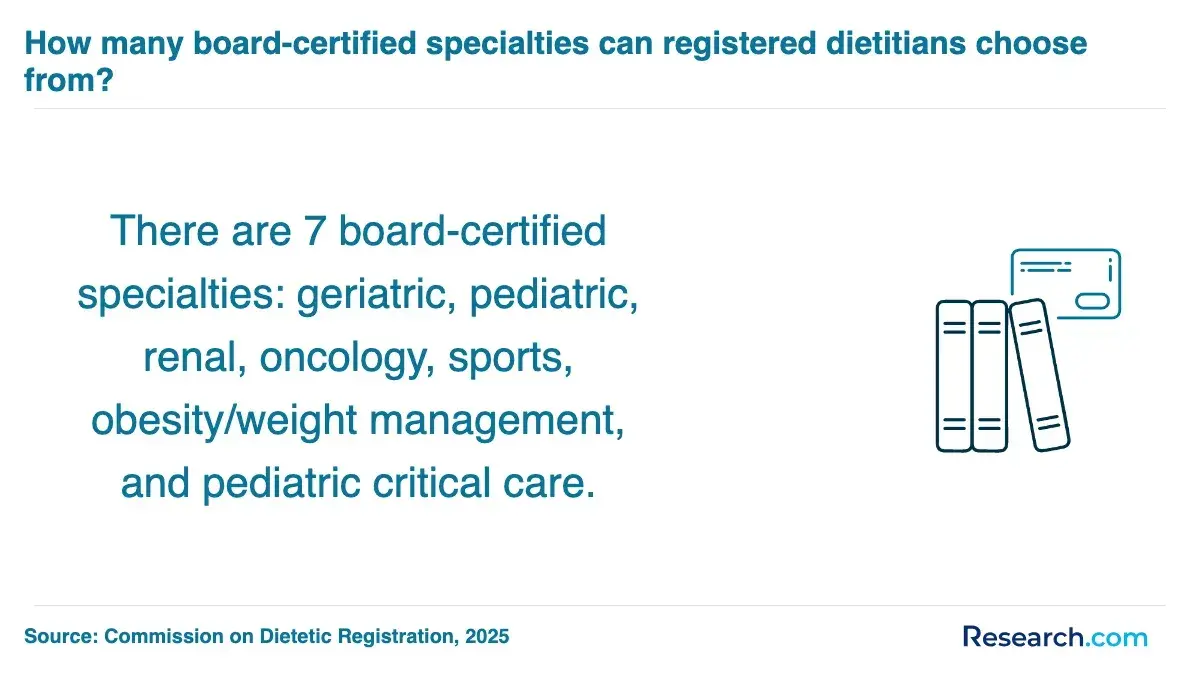
Missouri offers a broad spectrum of dietitian specializations that align with its diverse healthcare and community needs. Focusing your career in one of these areas can lead to rewarding opportunities and allow you to make a meaningful impact. Below are some of the key dietitian specializations you can pursue in Missouri:
- Clinical Dietitian: Work directly with patients in hospitals and clinics, providing medical nutrition therapy for various health conditions like diabetes and cardiovascular disease.
- Community Dietitian: Develop and lead nutrition programs aimed at health promotion and disease prevention within public health agencies and nonprofit organizations.
- Food Service Management Dietitian: Oversee meal planning and food service operations in institutions such as schools and long-term care centers, ensuring compliance with nutrition and safety standards.
- Private Practice/Consulting Dietitian: Offer personalized nutrition counseling in areas like weight management or sports nutrition, either independently or through healthcare contracts.
- Pediatric Dietitian: Specialize in nutritional care for infants, children, and adolescents, addressing issues like food allergies and growth challenges.
- Geriatric Dietitian: Focus on the nutritional needs of older adults, managing malnutrition and chronic conditions in nursing homes and senior centers.
- Sports Dietitian: Provide nutrition guidance to athletes and active individuals to improve performance and recovery, working with sports teams and fitness centers.
- Research Dietitian: Conduct nutrition-related studies at universities or research institutes to advance evidence-based practices.
- Industry Dietitian: Engage in food product development, regulatory compliance, and education within Missouri’s food production and agricultural sectors.
What is the average salary of a registered dietitian in Missouri?
The average salary for a registered dietitian in Missouri is approximately $62,120 per year as of May 2024, with an hourly wage around $30. This figure is about 12% lower than the national average, reflecting regional economic factors and demand within the state’s healthcare landscape.
Understanding what influences the salaries that go with becoming a nutritionist or dietitian can empower you to strategically plan your career path:
- Experience Level: Early-career dietitians typically earn around $50,680 annually, while those with significant experience can reach $84,080 or more.
- Location: Metropolitan areas like St. Louis offer higher pay, averaging $68,290, compared to rural regions where salaries tend to be lower.
- Work Setting: Positions in hospitals and specialized clinics often come with better compensation than roles in schools or community programs.
- Demand and Market Trends: Areas with more healthcare facilities or public health initiatives generally provide stronger salary growth opportunities.
- Education and Certification: Advanced degrees and certifications can boost your earning potential by demonstrating expertise.
Salary growth in Missouri remains steady, with opportunities to increase earnings by gaining experience, advancing education, or moving into leadership roles. The demand for registered dietitians is expected to persist, supporting a positive outlook for future salary increases.
What are the emerging trends shaping the future of dietetics in Missouri?
Registered dietitians in Missouri are observing shifts driven by technological integration, increased emphasis on preventive care, and evolving service models that prioritize personalized nutrition therapy. Advanced data analytics and telehealth solutions are expanding opportunities in chronic disease management, community-based programs, and corporate wellness initiatives. These trends are prompting professionals to pursue innovative practices and additional competencies that complement traditional dietetic training. Prospective practitioners can also explore how to become a nutritionist in Missouri to diversify their expertise and adapt to the competitive landscape.
Can additional allied health certifications enhance your career prospects as a registered dietitian in Missouri?
Registered dietitians looking to diversify their skill sets may benefit from acquiring allied health certifications. These credentials can improve collaborative practice in interdisciplinary teams and expand professional opportunities beyond traditional roles. For example, pursuing complementary certifications can enhance clinical versatility and support entry into integrated healthcare settings. Professionals interested in broadening their expertise might also consider learning how to become a medical assistant in Missouri.
What do you need to keep your dietitian registration active in Missouri?
Keeping your dietitian registration active in Missouri is essential to maintain your legal ability to practice and uphold the trust your clients place in you. It ensures you stay aligned with professional standards and avoid costly interruptions in your career.
Here are the key requirements to maintain your credential smoothly:
- Biennial State License Renewal: Renew your Missouri dietitian license every two years by April 1 of even-numbered years; a renewal form is mailed in advance.
- Renewal Fees: Pay the $20 renewal fee on time; a $50 delinquent fee applies if you renew after a 29-day grace period.
- No State Continuing Education: Missouri does not require continuing education for license renewal, but national and employer requirements may still apply.
- National Registration Maintenance: Keep your Commission on Dietetic Registration (CDR) status current by renewing every five years and completing 75 hours of continuing professional education.
- Address Updates: Notify the Missouri State Committee of Dietitians promptly of any address or contact changes to receive important notices.
A registered dietitian from Missouri, who graduated from a local university, shared her experience with maintaining registration. She explained that Missouri’s lack of license reciprocity with some states initially caused concern, but it also motivated her to stay meticulous with deadlines and documentation. “Missouri’s process is straightforward, but you really have to track your CDR requirements carefully,” she noted.
She also appreciated that while no state continuing education is required, the national CDR’s demanding 75-hour CPE cycle helped her stay engaged professionally. She found that timely renewals and keeping contact info updated prevented any lapses, which in other states might have meant reapplication hurdles. Her advice: “Being proactive is the best way to keep your credentials active and your practice uninterrupted.”
How long does it take to become a registered dietitian in Missouri?
The path to becoming a registered dietitian in Missouri typically spans about six to seven years from starting college to earning the credential. This timeline includes completing a combination of academic degrees, supervised practice, and passing the national registration exam. For those wondering how long it takes to become a registered dietitian in Missouri, it’s important to note that the process involves multiple stages that build upon each other.
Most candidates complete an ACEND-accredited bachelor’s and master’s degree in nutrition or dietetics, which can take around four to six years depending on the program structure. Afterward, a supervised practice or dietetic internship lasting nine to twenty-four months must be completed. This hands-on experience is essential before sitting for the registration exam and applying for Missouri licensure.
Some students accelerate their journey through combined or intensive programs, but many follow a more traditional timeline. If you are exploring options, consider reviewing the list of cheapest nutrition and dietetics online degree programs to find affordable paths that fit your schedule. Understanding registered dietitian education requirements Missouri will help you plan effectively and move confidently toward your career goals.
Can international students qualify to become registered dietitians in Missouri?
International students can achieve the registered dietitian credential in Missouri by carefully completing a series of specialized educational and credentialing steps. With determination and guidance, these requirements open the door to a rewarding nutrition career in the state.
- Foreign Degree Validation: Your academic credentials must be evaluated to confirm equivalency with a U.S. regionally-accredited bachelor’s or master’s degree. This crucial evaluation follows the Commission on Dietetic Registration (CDR) guidelines to ensure eligibility.
- Enrollment in ACEND-Accredited Programs: You need to enroll in an ACEND-accredited program, such as a Dietetic Internship or Coordinated Program, where you will complete the required coursework and supervised practice.
- Supervised Practice Requirement: Completing at least 1,000 hours of supervised practice through an ACEND-accredited program is essential. This hands-on experience is typically part of your internship or coordinated program.
- Master’s Degree Requirement: Starting January 1, 2024, a master’s degree is mandatory to sit for the RDN exam. The degree can be in any field, but your dietetic coursework and supervised practice must meet ACEND standards.
- Passing the CDR Registration Examination: After meeting academic and practice prerequisites, passing the national exam administered at Pearson VUE centers in Missouri is required, with a $200 fee.
- State Licensure Application: Once you earn your RD or RDN credential, you must apply for licensure through the Missouri Division of Professional Regulation State Committee of Dietitians to practice legally.
The chart below demonstrates that dietetics and nutrition is a female-dominated field, with more than 90% of the workforce being women.
What career paths can registered dietitians pursue in Missouri?
Exploring registered dietitian jobs in Missouri reveals a wide array of fulfilling career opportunities that match diverse interests and skills. From clinical roles to corporate consulting, each path offers unique settings, promising outlooks, and competitive salaries.
- Clinical Dietitian: Work in hospitals and long-term care facilities providing medical nutrition therapy, with steady demand and an average salary around $62,120.
- Community Nutritionist: Employed by public health agencies and non-profits, focusing on education and wellness programs, earning salaries near the state average.
- Food Service Management Dietitian: Manage nutrition standards in schools and hospitals, often earning salaries at or above the state average.
- Outpatient and Private Practice Dietitian: Provide personalized counseling in clinics or telehealth, with salaries ranging from $50,000 to over $84,000 depending on location.
- Corporate Wellness and Industry Consultant: Advise businesses on nutrition policies and wellness programs, often earning above-average compensation.
- Research and Academia: Teach or conduct nutrition research at universities, offering stable employment with salaries varying by rank.
- Sports Dietitian: Support athletes and fitness centers, with salaries typically between $50,000 and $75,000.
- Specialized Pediatric or Geriatric Dietitian: Focus on nutrition for children or older adults in clinical settings, providing strong job security and competitive pay.
To understand more about what you can do with an online nutritional science degree, consider exploring opportunities that align with your passion and goals in this growing field.
What do registered dietitians in Missouri say about their careers?
- Completing my dietetic program at the University of Missouri was a transformative experience that deeply connected me to the state's rich agricultural heritage. Starting my career as a registered dietitian in a local school allowed me to blend evidence-based nutrition with community traditions, fostering a positive impact on students’ health and wellness. Missouri’s supportive network of professionals and resources helped me grow both personally and professionally. I feel truly fortunate to contribute to nurturing healthy habits in young people here. Wilma
- My journey began after finishing my studies at Saint Louis University, and stepping into a role at a local academic institution in Missouri was both challenging and rewarding. The state's diverse population and unique food culture demanded innovative approaches to nutrition education, which fueled my passion for creative problem-solving. Being part of a school community has deepened my commitment to lifelong learning and professional development. Missouri’s stability in educational careers has offered me invaluable opportunities to advance and specialize. Nadine
- Graduating from Missouri State University gave me the foundation to embrace a career dedicated to community impact. Working as a registered dietitian in local schools has been profoundly fulfilling, allowing me to witness firsthand the difference nutrition education makes in children’s lives. Missouri’s natural resources and agricultural focus provide unique challenges and opportunities that keep my work dynamic and meaningful. This path has nurtured my personal growth and reinforced my dedication to fostering wellness for future generations. Lucia
Related Articles for Nearby States
- 2027 Steps to Become a Registered Dietitian in Kansas
- 2027 Steps to Become a Registered Dietitian in Iowa
- 2027 Steps to Become a Registered Dietitian in Nebraska
- 2027 Steps to Become a Registered Dietitian in Arkansas
- 2027 Steps to Become a Registered Dietitian in Oklahoma
- 2027 Steps to Become a Registered Dietitian in Illinois
- 2027 Steps to Become a Registered Dietitian in Kentucky
- 2027 Steps to Become a Registered Dietitian in Tennessee
- 2027 Steps to Become a Registered Dietitian in Indiana
- 2027 Steps to Become a Registered Dietitian in South Dakota
registered dietician
References:
- Be Well Solutions. (n.d.). What to Do after Passing the RD Exam. bwsdi.com.
- Become a Nutritionist. (n.d.). Becoming a Registered Dietitian in Missouri. becomeanutritionist.org.
- Become a Nutritionist. (n.d.). Ultimate Guide to Becoming a Registered Dietitian. becomeanutritionist.org.
- Commission on Dietetic Registration. (n.d.). Registered Dietitian (RD) Examination - Eligibility Requirements. CDRNET.org.
- Commission on Dietetic Registration. (n.d.). Registered Dietitian (RD) or Registered Dietitian Nutritionist (RDN) Certification. CDRNET.org.
- Commission on Dietetic Registration. (n.d.). State Licensure. CDRNET.org.
- Missouri Division of Professional Registration. (n.d.). Committee of Dietitians. pr.mo.gov.
- Missouri Nutrition Alliance. (n.d.). Guide to Credentials. missourinutritionalliance.org.
- NutritionED.org. (n.d.). Steps to Become a Registered Dietitian in Missouri. nutritioned.org.
- U.S. Language Services LLC. (n.d.). How to Work in the U.S. As a Foreign-Educated Dietician or Nutritionist. uslanguageservices.com.
Other Things You Should Know About Becoming a Registered Dietitian in Missouri
Becoming a registered dietitian in Missouri typically takes about 5-7 years. This includes completing a bachelor's degree (4 years), a supervised practice program or internship (6-12 months), and passing the CDR exam. Starting in 2024, a master's degree is also required, adding an additional 1-2 years.
In 2027, aspiring registered dietitians in Missouri must complete a dietetic internship accredited by ACEND, consisting of at least 1,200 supervised practice hours. The experience must be in various settings like clinical nutrition, community nutrition, and food service management.


