2027 Steps to Become a Registered Dietitian in Pennsylvania

Co-Founder and Chief Data Scientist
Many aspiring health professionals struggle to understand how to become a registered dietitian in Pennsylvania amid complex educational and licensing requirements. Currently, Pennsylvania employs over 2,000 registered dietitians, reflecting a growing demand driven by rising public awareness of nutrition’s role in chronic disease prevention. Pursuing this career in Pennsylvania offers competitive salaries and diverse job opportunities across healthcare, community programs, and private practice.
This article, prepared by experts in career planning, will clarify each step—from education to licensure—enabling readers to navigate the pathway efficiently and confidently, turning ambition into a rewarding professional reality.
Key Things to Know About Becoming a Registered Dietitian in Pennsylvania
- Complete a Didactic Program in Dietetics accredited by the Accreditation Council for Education in Nutrition and Dietetics (ACEND) to ensure eligibility for supervised practice and the registered dietitian exam.
- Enroll in and finish a supervised practice program (Dietetic Internship) of at least 1,200 hours, often required for licensure in Pennsylvania.
- Pass the Commission on Dietetic Registration (CDR) Registration Examination for Dietitians and apply for Pennsylvania licensure to practice legally.
- What degree is required to become a registered dietitian in Pennsylvania?
- How many supervised practice hours are needed to become a registered dietitian in Pennsylvania?
- What are the eligibility requirements for the dietetic registration exam in Pennsylvania?
- How can you get a license after passing the dietetic registration exam in Pennsylvania?
- What types of dietitian specializations can you pursue in Pennsylvania?
- What is the average salary of a registered dietitian in Pennsylvania?
- What do you need to keep your dietitian registration active in Pennsylvania?
- How do I choose the right dietetics program in Pennsylvania?
- Can registered dietitians broaden their clinical impact by integrating allied health roles?
- How long does it take to become a registered dietitian in Pennsylvania?
- Can international students qualify to become registered dietitians in Pennsylvania?
- What career paths can registered dietitians pursue in Pennsylvania?
What degree is required to become a registered dietitian in Pennsylvania?
To pursue a career as a registered dietitian in Pennsylvania, obtaining the right degree is essential. The educational path ensures you gain the knowledge and skills needed to excel in this rewarding field.
- Bachelor’s Degree in Nutrition or Dietetics: A foundational undergraduate degree from an accredited nutrition program in Pennsylvania is the typical starting point for aspiring registered dietitians.
- Didactic Program in Dietetics (DPD): Completion of a DPD accredited by the Academy of Nutrition and Dietetics is required, providing the prerequisite coursework necessary for supervised practice.
- Supervised Practice Experience: After coursework, you must complete an accredited dietetic internship or coordinated program involving supervised fieldwork to fulfill certification requirements.
- Master’s Degree (Optional but Increasingly Required): Some programs and employers now prefer or require a master’s degree in nutrition or a related field, enhancing your expertise and career prospects.
For those exploring the field, reviewing a list of the best careers to pursue with a nutrition masters degree can be a helpful step to understand the broader opportunities your education can open up.
How many supervised practice hours are needed to become a registered dietitian in Pennsylvania?
To become a registered dietitian in Pennsylvania, candidates must complete a minimum of supervised practice hours as mandated by both national and state authorities. The national standard, set by ACEND, requires at least 1,000 hours, while Pennsylvania’s state licensure demands a slightly lower minimum of 900 hours. Below are key factors that outline the supervised practice hour requirements and related standards in Pennsylvania.
- ACEND-Accredited Program Standards: Nationally, ACEND requires 1,000 supervised practice hours to qualify for the Registered Dietitian Nutritionist (RDN) exam. Pennsylvania dietetic programs typically follow this benchmark.
- Pennsylvania State Licensure Requirement: The state board requires at least 900 supervised hours under qualified supervision for licensure as a Licensed Dietitian-Nutritionist (LDN), reflecting a state-specific minimum.
- Pathways to Completion: Candidates can fulfill supervised hours through Dietetic Internships, Coordinated Programs, or Graduate Programs, all of which are ACEND-accredited and incorporate supervised practice.
- Supervision Standards: Supervised hours must be overseen by a registered dietitian, licensed dietitian-nutritionist, or an individual holding a doctoral degree in an approved nutrition-related field.
- Additional State Requirements: Beyond hours, Pennsylvania mandates coursework on child abuse recognition and reporting, ensuring well-rounded professional preparedness.
- Program Availability: Pennsylvania offers numerous accredited programs, including 10 Didactic Programs in Dietetics, 9 Dietetic Internships, and 10 Graduate Programs, providing ample opportunities to complete supervised practice.
These supervised hours aren’t just a box to tick—they build the core competencies employers expect. The chart below highlights the skills RDNs most often showcase on resumes—patient care, medical nutrition therapy, home health, and more—direct outcomes of ACEND-aligned supervised practice in Pennsylvania programs.
What are the eligibility requirements for the dietetic registration exam in Pennsylvania?
Meeting the eligibility requirements for the dietetic registration exam in Pennsylvania is a vital step on your path to becoming a registered dietitian. These requirements ensure you have the foundational knowledge and credentials needed to succeed in the field. Below are the key points to guide you through the process.
- Minimum Educational Qualification: Candidates must hold at least a graduate degree from a U.S. Department of Education-recognized accredited institution or its equivalent. This graduate degree requirement for dietitian registration Pennsylvania took effect in 2024, raising the standard from a bachelor’s degree.
- Completion of Required Nutrition Coursework: Applicants need to complete an ACEND-accredited program, which may be a DPD, Coordinated Program (CP), or Graduate Program (GP), ensuring they receive the necessary academic training in nutrition and dietetics.
- Submission of Eligibility Verification: After finishing the accredited program, the program director submits a formal verification of eligibility to the CDR, confirming completion of all required coursework and supervised practice components.
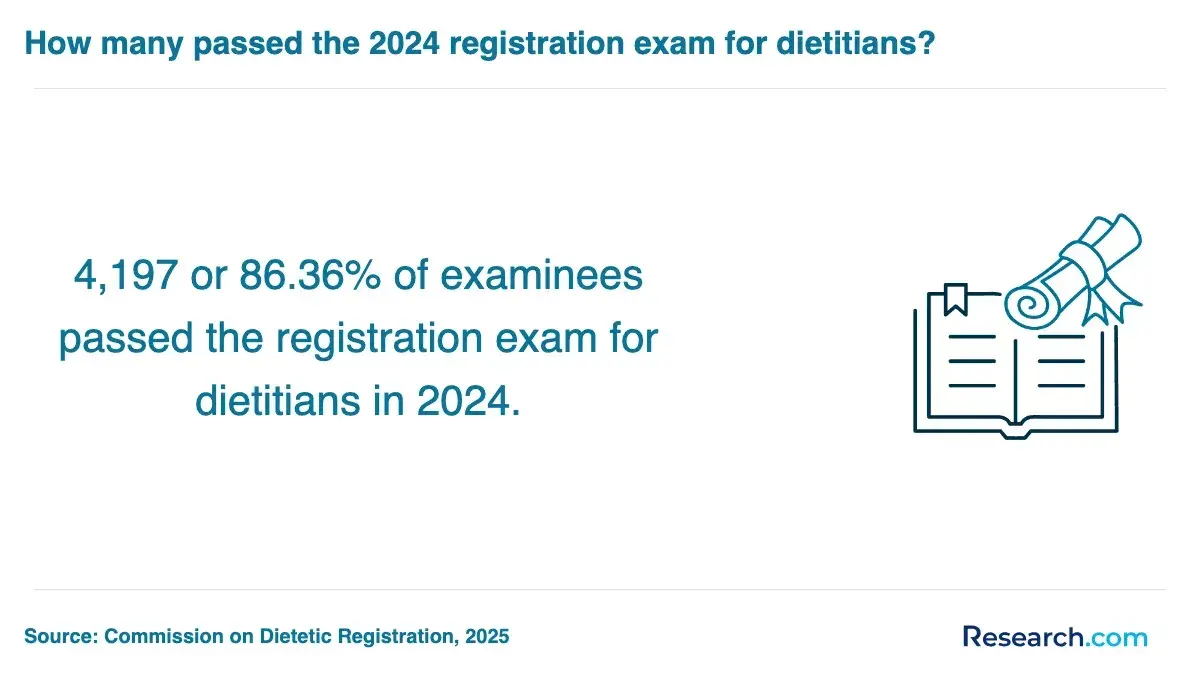
- National Registration Exam: Candidates must register for and pass the national RDN examination administered by the CDR. Passing this exam is essential to obtaining the registered dietitian credential recognized across the U.S.
- State-Specific Licensure Pathways: While Pennsylvania’s licensure is voluntary and not required to practice, some employers may require it. To apply for licensure, candidates must show proof of passing the national exam, hold at least a bachelor’s degree in a relevant field, and complete supervised experience hours.
For those with foreign degrees, credential evaluation is necessary to ensure equivalency. If you are exploring related healthcare fields, consider roles like a nutrition nurse, which also play vital roles in patient wellness and dietary care.
How can you get a license after passing the dietetic registration exam in Pennsylvania?
After passing the dietetic registration exam, follow these essential steps to secure your Licensed Dietitian-Nutritionist credential in Pennsylvania:
- Application Submission: Complete the online application through the State Board of Nursing, providing all personal and educational details accurately.
- Fee Payment: Pay the $45 initial licensure fee promptly to avoid delays in processing.
- Education Verification: Arrange for your official transcripts from a regionally accredited institution to be sent directly to the Board.
- Exam Verification: Request the Commission on Dietetic Registration to send official proof of your exam passage to the Board.
- Supervised Practice Documentation: Submit evidence of at least 900 hours of supervised dietetic experience under qualified supervision.
- Child Abuse Training: Complete a mandatory three-hour approved course in child abuse recognition and reporting, ensuring direct submission of proof to the Board.
- Criminal Background Check: Fulfill the required criminal history check using the forms provided by the Board.
- Application Review: Allow the Board sufficient time to process your documents—plan for at least 10 days for training certificates to be received.
- License Approval: Upon meeting all criteria, receive your official Pennsylvania LDN license, authorizing legal practice in the state.
One Pennsylvania-registered dietitian, who graduated from a local university, shared her experience with me about navigating this process. She noted how the lack of license reciprocity between states initially complicated her move back home after working elsewhere.
“I had to start the process from scratch, which was daunting,” she admitted, but she also recognized the advantage of Pennsylvania’s rigorous standards, ensuring high professional credibility. “It felt reassuring that the state truly values thorough preparation, which in turn made clients trust my expertise more.” Her story highlights that while the pathway demands patience and attention to detail, the result is a respected credential that opens many doors in healthcare and community nutrition.
What types of dietitian specializations can you pursue in Pennsylvania?
Dietitians in Pennsylvania have the opportunity to specialize in various fields that align with their interests and the evolving demands of healthcare and nutrition services. Each specialization offers a unique way to impact individual and community health, requiring different skills and work environments. Here are some of the main types of dietitian specializations you can pursue in Pennsylvania:
- Clinical Dietitian: Provides medical nutrition therapy in hospitals and clinics, developing treatment plans for chronic diseases like diabetes and heart conditions.
- Community Dietitian: Works with public health organizations to create nutrition programs and wellness initiatives targeting groups rather than individuals.
- Dietetic Technician: Supports registered dietitians in various settings and can be certified by passing the national DTR exam after completing accredited programs.
- Food Service Management Dietitian: Oversees food production and service operations, including menu planning, budgeting, and staff management in institutions.
- Certified Nutrition Specialist: Offers advanced nutrition counseling and expertise, often working in private practice or integrative health settings.
- Research Dietitian: Engages in scientific studies to advance nutrition knowledge, typically employed by universities or research institutes.
- Entrepreneurial Dietitian: Pursues independent consulting or business ventures, focusing on wellness coaching, product development, or media.
- Pediatric Dietitian: Specializes in nutrition for infants and children, supporting growth and managing disease-specific dietary needs.
- Geriatric Dietitian: Addresses the unique nutritional requirements of older adults in various care settings.
- Sports Dietitian: Provides nutrition strategies to enhance athletic performance, recovery, and injury prevention for athletes.
What is the average salary of a registered dietitian in Pennsylvania?
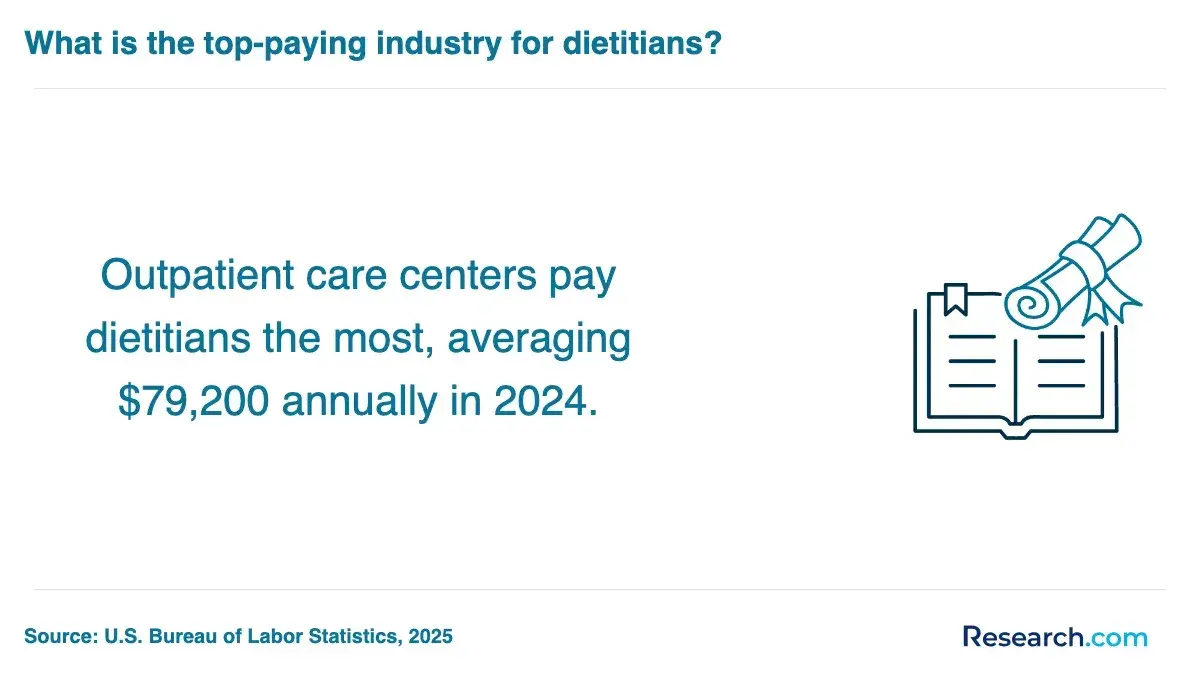
The average salary for a registered dietitian in Pennsylvania is about $76,183 per year or $36.00 per hour as of August 2025. This is somewhat below the national average hourly wage of approximately $51.22. Understanding these numbers helps set realistic expectations as you plan your career in dietetics within the state.
- Location: Salaries in urban centers like Philadelphia tend to be higher, with average annual pay around $66,573, while rural areas offer lower wages due to less demand and cost of living.
- Experience: Entry-level dietitians typically start near $57,000 annually, whereas seasoned professionals can earn $87,000 or more, especially if they supervise others.
- Work Setting: Hospitals and specialized healthcare facilities generally offer better compensation than outpatient clinics, schools, or community health centers.
- Education and Specialization: Advanced degrees or certifications in areas like oncology or renal nutrition can significantly boost your earning potential.
- Demand and Market Activity: While Pennsylvania’s dietitian job market is currently slow, regions with larger healthcare systems provide more competitive salaries and opportunities.
Notably, the top 10% of dietitians in Pennsylvania earn over $100,000 annually, especially in metropolitan areas. Salary projections show potential growth, especially for those who invest in advanced credentials or specialized roles, making this an encouraging field for long-term career development.
What do you need to keep your dietitian registration active in Pennsylvania?
Keeping your dietitian registration active in Pennsylvania is a vital commitment to your professional growth and public trust. Staying current means you uphold high standards, maintain legal eligibility, and continue providing evidence-based care that patients rely on. This ongoing dedication strengthens your credibility and supports a rewarding career.
- Biennial License Renewal: Renew your state license every two years with a $65 fee to stay legally authorized to practice.
- Continuing Professional Education (CPE): Complete at least 30 hours of Board-approved education every two years, including 2 hours specifically approved by the Board.
- Child Abuse Training: Complete three hours of approved training in child abuse recognition and reporting at initial licensure and each renewal.
- Criminal History Check: Submit a background check initially and potentially at renewal to ensure ethical practice.
- Documentation and Reporting: Retain CPE records for five years and verify completion on your renewal application.
- CDR Credential Renewal: Renew your Commission on Dietetic Registration credential every five years by completing 75 continuing education credits.
- Online Renewal System: Use the Pennsylvania Licensing System (PALS) to submit renewal applications promptly.
I recently spoke with a registered dietitian from Pennsylvania who graduated from a local university. He shared how navigating license reciprocity was a defining moment early in his career. “Because I trained here, the renewal process felt straightforward, and I appreciated how the state’s system encouraged continuous learning,” he said.
However, he acknowledged colleagues who moved from other states faced additional hurdles, making early planning essential. Reflecting on his journey, he emphasized, “Maintaining my registration isn’t just about paperwork; it’s about honoring the trust my patients place in me every day.” His experience highlights the practical realities and rewards of staying active and engaged in Pennsylvania’s dietetic profession.
How do I choose the right dietetics program in Pennsylvania?
When evaluating dietetics programs, focus on identifying accredited institutions that offer a well-rounded curriculum, robust internship placements, and career placement support. Examine each program’s alignment with ACEND standards, as this ensures that you receive a quality education designed to meet industry expectations. Additionally, consider factors such as faculty expertise, program cost, and the availability of specialized tracks to match your specific career goals. For individuals interested in exploring related paths, learn more about how to become a nutritionist in Pennsylvania.
Can registered dietitians broaden their clinical impact by integrating allied health roles?
Registered dietitians may enhance their professional scope by acquiring complementary skills that support interdisciplinary patient care. Integrating allied health roles can diversify your expertise, making you a more versatile healthcare provider in competitive clinical environments. For example, supplementing your nutrition background with competencies typical of medical assistants can improve care coordination and streamline patient management. Exploring additional credentials—such as learning how to become a medical assistant in Pennsylvania—can open pathways to collaborative practice models that meet evolving healthcare needs.
How long does it take to become a registered dietitian in Pennsylvania?
Becoming a registered dietitian in Pennsylvania is a rewarding path that generally takes about six to seven years from starting college to achieving your credential. This timeframe includes completing your education and gaining the necessary supervised experience. While the journey is structured, there are ways to tailor it to your pace and goals.
The timeline largely depends on meeting registered dietitian education requirements Pennsylvania, including earning a bachelor's degree and a master's degree, which became mandatory in 2024. Afterward, completing a dietetic internship further adds to the duration, typically requiring up to two years. Some programs offer combined or accelerated options that help reduce the total time needed.
For those exploring flexible study options, researching the best rated online bachelors degrees in nutritional science can be a smart move. These programs may offer more convenience without compromising the quality of education. Ultimately, your dedication and program choice will shape how quickly you become credentialed and ready to practice.
Your timeline also depends on your undergraduate major. The chart shows most RDs start in Dietetics or Food and Nutrition—paths that usually align with ACEND prerequisites and keep you on schedule. Majors like Nutrition Science or Food Science may add catch-up courses, extending time.
Can international students qualify to become registered dietitians in Pennsylvania?
International students have a clear pathway to become registered dietitians in Pennsylvania by meeting specific credentialing and educational standards. These requirements ensure your foreign education and training align with U.S. professional expectations.
- Credential Evaluation of Foreign Degrees: Have your foreign degree evaluated to confirm it matches the standards of a U.S. regionally accredited institution, as required by the CDR.
- Completion of ACEND-Accredited Coursework: Complete all required coursework and supervised practice within an ACEND-accredited program, regardless of previous international education.
- Supervised Practice in the U.S.: Finish an ACEND-accredited supervised practice program in the U.S., such as a Dietetic Internship or Coordinated Program, to gain practical experience essential for registration.
- Verification Statement Requirement: Obtain a Verification Statement upon completing your accredited program and supervised practice, which is mandatory to sit for the CDR exam.
- Passing the CDR Registration Examination: Successfully pass the national CDR exam, offered at multiple Pearson VUE centers across Pennsylvania, including Allentown and Harrisburg.
- Visa and Work Authorization: Secure the appropriate student visa (usually F-1) and necessary work authorization like Optional Practical Training (OPT) to complete internships and work components.
- Background Checks and Health Clearances: Prepare for FBI fingerprinting, state background checks, drug screenings, and proof of health insurance, which are standard prerequisites for supervised practice placements in Pennsylvania.
For international students seeking to advance their careers, exploring options such as an online master's in nutrition may broaden opportunities while completing dietitian credentialing requirements. With determination and adherence to these steps, you can confidently pursue your professional goals in Pennsylvania.
What career paths can registered dietitians pursue in Pennsylvania?
If you’re exploring career opportunities for registered dietitians in Pennsylvania, you’ll find a variety of roles that match different interests and skills. Each path offers unique settings, job outlooks, and salary ranges to consider as you plan your future.
- Clinical Dietitian: Work in hospitals and clinics providing nutrition care for patients with medical conditions; these roles are in high demand, with salaries from $66,180 in Pittsburgh to $73,890 in Philadelphia.
- Community Dietitian: Focus on public health and education in government or non-profits, earning around $68,810 with steady growth due to preventive health priorities.
- Long-Term Care Dietitian: Support nursing home residents with tailored meal plans, earning $70,000 to $85,000 and benefiting from strong job security.
- Food Service Management Dietitian: Manage food operations in institutions, offering stable jobs near the state average salary.
- Pediatric Dietitian: Work in pediatric hospitals or schools focusing on child nutrition, with hourly wages between $24.64 and $36.96 in Philadelphia.
- Outpatient/Private Practice Dietitian: Provide personalized nutrition counseling, with earnings comparable to statewide averages.
- Research Dietitian: Conduct nutrition studies in academic or industry settings, with salaries varying based on experience and funding.
- Education Dietitian: Teach and mentor at colleges, enjoying competitive pay and stable academic positions.
- Corporate Wellness Dietitian: Design workplace health programs, with compensation often enhanced by bonuses.
Exploring what can you do with a nutritional science degree is a great step toward these paths, and understanding the landscape of clinical dietitian jobs in Pennsylvania will help you target your goals effectively.
What do registered dietitians in Pennsylvania say about their career?
- Completing my dietetic program at Drexel University truly prepared me for the diverse opportunities available here in Pennsylvania. Starting my career as a registered dietitian in a local school allowed me to combine my passion for nutrition with my love for education. I find it incredibly rewarding to witness the positive impact on students’ health and academic performance firsthand. Pennsylvania’s rich agricultural resources make it easier to promote fresh, local foods in school meal programs, which aligns perfectly with my values. I’m excited about the professional growth possibilities in this supportive community. Eric
- Graduating from Penn State’s nutrition program gave me a solid foundation to thrive professionally and personally. Beginning my career in a local school environment challenged me to adapt nutrition education to a variety of cultural backgrounds, reflecting Pennsylvania’s diverse population. This experience has deepened my understanding of how food influences community health and has pushed me to pursue further certifications. The stability and career advancement opportunities here have been crucial as I continue to expand my role within the school system. It’s fulfilling to know my work contributes to shaping healthier futures for children. Reina
- Attending Temple University for my dietetic studies opened doors to unique challenges and rewards in Pennsylvania’s urban and rural settings. Starting as a registered dietitian in a local school, I quickly realized the importance of tailoring nutrition programs to meet the specific needs of each community. The chance to engage with families and educators has fostered significant personal growth and a deep sense of purpose. Pennsylvania’s commitment to school wellness initiatives offers exciting opportunities to innovate and lead. I feel privileged to be part of a profession that empowers young people toward better health outcomes every day. Dinah
Related Articles for Nearby States
- 2027 Steps to Become a Registered Dietitian in New Jersey
- 2027 Steps to Become a Registered Dietitian in Delaware
- 2027 Steps to Become a Registered Dietitian in Maryland
- 2027 Steps to Become a Registered Dietitian in New York
- 2027 Steps to Become a Registered Dietitian in West Virginia
- 2027 Steps to Become a Registered Dietitian in Ohio
- 2027 Steps to Become a Registered Dietitian in Virginia
- 2027 Steps to Become a Registered Dietitian in Connecticut
- 2027 Steps to Become a Registered Dietitian in Rhode Island
- 2027 Steps to Become a Registered Dietitian in Massachusetts
References:
- Become a Nutritionist. How to Become a Licensed or Non-Licensed Nutritionist in Pennsylvania.
- Cedar Crest College. Nutrition: Undergraduate.
- Indiana University of Pennsylvania (IUP). Dietitian-Nutritionist Master of Science Degree Program.
- Jefferson (Thomas Jefferson University). Becoming a Registered Dietitian Nutritionist.
- NutritionED.org. How to Become a Registered Dietitian in Pennsylvania — Exam, License, and Education Requirements in Pennsylvania.
- Penn State College of Health and Human Development. B.S. in Nutritional Sciences — Nutrition and Dietetics Option.
- Pennsylvania Academy of Nutrition and Dietetics. Licensure & Consumer Protection.
- University of Pittsburgh. Coordinated Master in Nutrition and Dietetics, MS (Program Catalog).
- University of Pittsburgh School of Health and Rehabilitation Sciences (Pitt SHRS). Dietitian Nutritionist Program (MS).
- West Chester University of Pennsylvania. Dietetics (DPD).
Other Things You Should Know About Registered Dietitians in Pennsylvania
To become a registered dietitian in Pennsylvania in 2027, one must earn a bachelor's degree in a related field, complete an ACEND-accredited dietetic internship, pass the CDR exam, and apply for state licensure. Continuing education is also required to maintain the credential.
Scholarships and financial aid are available to dietetics students in Pennsylvania through various sources, including universities, professional organizations, and state programs. Many Pennsylvania universities with dietetics programs offer merit-based and need-based scholarships specifically for nutrition and dietetics students.
Additionally, the Academy of Nutrition and Dietetics provides national scholarships and grants that Pennsylvania students can apply for, helping to offset tuition and related costs. Prospective registered dietitians should also explore federal financial aid options such as Pell Grants and student loans to support their education journey in the state.