
2027 Virtual vs. In-Person Therapy: What Mental Health Professionals Should Know

Co-Founder and Chief Data Scientist
In the mental health landscape, virtual therapy is emerging as a prominent alternative to traditional in-person sessions. A 2025 study indicated that online therapy could help mitigate burnout among mental health professionals, especially when environmental sensitivity is considered. However, concerns about privacy, data security, and the potential for reduced therapeutic rapport persist.
According to data from the Kaiser Family Foundation, over 35% of all outpatient mental health visits in the U.S. are now conducted via teletherapy, showing how widespread virtual care has become. This article explores the effectiveness, challenges, and future directions of these therapeutic modalities.
Key things you should know about the mental health profession
- Career options for mental health professionals include roles such as licensed professional counselor (LPC), clinical psychologist, marriage and family therapist (MFT), psychiatric social worker, and mental health nurse practitioner
- As of May 2024, the median annual wage for substance abuse, behavioral disorder, and mental health counselors was $59,190.
- Becoming a licensed mental health counselor typically requires a four-year bachelor's degree, followed by a two to three-year master's program in counseling or a related field, then one to two more years to obtain 2,000 to 4,000 hours of supervised clinical experience.
- Is virtual therapy as effective as in-person therapy? Effectiveness
- Which mental health conditions respond better to in-person therapy than virtual therapy? Which mental health conditions respond better to in-person therapy than virtual therapy?
- What assessment steps should clinicians use to triage teletherapy suitability? Assessment Steps
- How do I adapt my interventions for teletherapy sessions? How do I adapt my interventions for teletherapy sessions?
- What are the top HIPAA (and equivalent) privacy concerns for teletherapy? What are the top HIPAA (and equivalent) privacy concerns for teletherapy?
- What are the licensing rules for providing teletherapy across state or country lines? What are the licensing rules for providing teletherapy across state or country lines?
- How do I choose a secure video platform that integrates with my practice management? Platform Considerations
- What documentation is required after an online session when a client is high-risk? Required Documentation
- What core competencies should therapists demonstrate before offering teletherapy? Teletherapy Competencies
- What training programs and certifications exist for teletherapy practice? Teletherapy Credentials
- What cultural competence issues arise in teletherapy, and how can therapists address them? What cultural competence issues arise in teletherapy, and how can therapists address them?
- What steps reduce digital divide disparities when offering teletherapy? What steps reduce digital divide disparities when offering teletherapy?
- What continuing education opportunities can advance teletherapy practice? What continuing education opportunities can advance teletherapy practice?
Is virtual therapy as effective as in-person therapy?
The American Psychological Association (APA) discovered in 2024 that online cognitive behavioral therapy (CBT) led to improvements in depression symptoms comparable to traditional in-person sessions.
Notably, patients reported high satisfaction with the format, citing its convenience, flexibility, and reduced stigma as major benefits. Treatment adherence was also strong, with many individuals more likely to complete sessions when delivered virtually.
Similarly, a randomized clinical trial conducted at Yale found that telehealth interventions were just as effective as face-to-face care in improving the quality of life for patients receiving palliative care. This finding is especially significant, as it demonstrates that even in sensitive and complex medical contexts, virtual care can meet patient needs without compromising outcomes.
Taken together, these studies suggest that virtual therapy is not just a temporary substitute, but a viable long-term model of care. For many individuals and conditions, ranging from depression to chronic illness support, virtual therapy matches the effectiveness of in-person therapy while also expanding access to those who might otherwise face barriers such as distance, mobility issues, or lack of local providers.
These discoveries highlight the growing role of telehealth in addressing mental health needs in modern times and point toward a future where digital and in-person care complement one another to create more accessible, patient-centered systems.
Which mental health conditions respond better to in-person therapy than virtual therapy?
While virtual therapy is effective for many mental health conditions, there are some cases where in-person therapy may be a better option. For those pursuing education in a highly technical field, the convenience of remote learning combined with high standards of quality is essential, making an ABET online engineering degree a highly sought-after credential.
Mental health issues, however, require high levels of support, crisis intervention, or intensive therapeutic techniques, and may be better handled face-to-face.
- Severe Personality Disorders: People with severe personality disorders, such as borderline personality disorder (BPD), benefit from in-person therapy due to the need for real-time emotional regulation strategies and deeper therapeutic engagement. In-person sessions allow therapists to better assess non-verbal cues and ensure the stability of the client during these emotional moments.
- Crisis Situations: Individuals in acute crisis or those with suicidal ideation may need quick intervention. An in-person therapist can immediately assess the situation and take appropriate action if a crisis arises.
- Trauma Survivors with Complex PTSD: For those with complex PTSD or survivors of abuse, in-person therapy can establish a safe space to process traumatic memories. Face-to-face interaction enables therapists to apply physical grounding methodologies that may not be productive through a screen.
For a related education path, you can check the fastest online bachelor's in emergency management programs.
What assessment steps should clinicians use to triage teletherapy suitability?
Clinicians should evaluate the client's mental health status, access to technology, and comfort with remote sessions. They should also consider any potential safety or privacy concerns.
- Assessing Mental Health Condition: Assess whether the client may require the immediacy and support that in-person therapy provides. For conditions like suicidal ideation or personality disorders, in-person care may be more necessary.
- Technology Access and Proficiency: The client should have reliable internet and a private environment for teletherapy sessions. Clinicians should also find out the client’s comfort level with technology.
- Client Comfort and Safety: Clinicians should discuss the client's ability to maintain privacy during sessions. The client should feel confident in the virtual setting, as any concerns about confidentiality may impede the therapeutic process.
- Emergency Response and Crisis Management: Clinicians should gauge the client’s risk of crises and the ability to respond in an online setting. For clients with a history of self-harm, suicidal thoughts, or other urgent needs, clinicians must have an emergency plan in place.
As of recent data, student attendance rates do not differ much among modes of therapy.
How do I adapt my interventions for teletherapy sessions?
To adapt interventions for virtual therapy, clinicians must be informed about the unique dynamics of virtual sessions. In this setting, flexibility and creativity in modifying traditional in-person therapy techniques are must-haves.
- Building Rapport Remotely: Focus on active listening and clear communication through verbal and non-verbal cues on video. Using open-ended questions and maintaining eye contact through the camera can foster a sense of connection and empathy.
- Adjusting Therapeutic Techniques: Techniques like CBT or dialectical behavior therapy (DBT) can be adapted to teletherapy by sharing screens or virtual worksheets. Clinicians may need to alter some in-person exercises (e.g., role-playing) to make the therapy more manageable.
- Managing Crisis Situations: In case of a crisis, clinicians should have a clear, predefined plan during emergencies. This could be providing clients with local emergency contact information.
- Creating a Safe Virtual Space: Help clients create a quiet space to promote confidentiality and minimize distractions. Check in with clients about their tech skills and change plans when needed.
What are the top HIPAA (and equivalent) privacy concerns for teletherapy?
Teletherapy raises several concerns under the Health Insurance Portability and Accountability Act (HIPAA) and similar regulations globally. To deal with these concerns and minimize risks, clinicians should be wary of:
- Insecure Technology Platforms: One of the primary concerns is using non-compliant or unsecured video conferencing platforms that do not meet HIPAA standards. According to the U.S. Health & Human Services, therapists should use platforms that are HIPAA-compliant and include end-to-end encryption.
- Unauthorized Access to Confidential Information: Unauthorized third parties may have access to virtual therapy sessions. Clients should verify their identity before starting each meeting.
- Data Storage and Retention: Another concern involves the storage and retention of electronic records, such as session notes or client data. Telehealth providers must store all data in a HIPAA-compliant manner to stop breaches of client confidentiality.
- Session Recording and Monitoring: The recording of teletherapy sessions can pose threats if done without proper consent and measures. Therapists should obtain explicit consent from clients before recording any session and keep these recordings with restricted access.
- Cross-border Data Privacy Issues: For international clients, teletherapy may involve the transmission of personal health information across borders, which may not be subject to the same privacy protections. Clinicians must be aware of the international data privacy laws, such as the GDPR in Europe.
Browse these online ethical hacking training programs for future reference.
What are the licensing rules for providing teletherapy across state or country lines?
Providing teletherapy across state or country lines involves analyzing a complex landscape of licensing rules and regulations, which vary by jurisdiction. Adhering to these rules maintains the integrity of the therapeutic relationship.
For those looking to expand their knowledge or skills quickly, considering 8 week college courses online can be a good option to efficiently manage continuing education or career exploration.
- State Licensure for U.S. Teletherapy: In the U.S., therapists must be licensed in the state where the client resides, regardless of where the therapist is located. Some states have compact agreements, like the Psychology Interjurisdictional Compact (PSYPACT), that allow licensed professionals to provide services across state lines without attaining multiple state licenses.
- International Teletherapy Licensure: Mental health professionals must comply with the licensing requirements of the country where the client is located. Some countries allow teletherapy across provincial lines with specific regulations, while others have strict rules about providing services to clients outside the therapist’s jurisdiction.
- Temporary Licenses and Emergency Provisions: During crises, many states and countries temporarily relax licensing requirements to permit teletherapy across borders. These provisions entail temporary licensure or exceptions, but therapists should be aware of when these provisions expire and the requirements for continued practice.
- Interjurisdictional Agreements: Some U.S. states and other regions have entered into interjurisdictional agreements that streamline the licensing process for telehealth. These agreements, such as the Nurse Licensure Compact (NLC) or the Counseling Compact, help professionals practice across state lines, though eligibility may vary.
How do I choose a secure video platform that integrates with my practice management?
A well-chosen platform should come with robust security features and work smoothly with your scheduling, billing, and record-keeping systems. This integration helps expedite administrative tasks while complying with regulations. Just as those pursuing online masters in sports journalism, having a good platform is crucial.
- HIPAA Compliance: The platform must be compliant for secure communication. It should also give access controls to safeguard client data.
- Integration with Practice Management Software: Look for platforms that can be merged with your existing systems. This lessens administrative work, making it easier to oversee appointments, payments, and documentation in one place.
- User-Friendliness and Client Access: Choose a platform that is user-friendly for both you and your clients. It must not create barriers to accessing care.
- Security Features: Confirm that the platform has rigorous protocols, such as two-factor authentication (2FA) and the ability to lock meetings. These features ensure the confidentiality of therapy sessions.
- Customer Support and Reliability: Select a platform that has reliable customer support in case of technical issues. Assistance must be timely to resolve any issues that may occur.
Therapists traversing the IT certification career path will not have a hard time with remote therapy.
What documentation is required after an online session when a client is high-risk?
When working with high-risk clients in an online session, documentation becomes critical for legal protection, continuity of care, and risk management. These records guarantee that all actions, decisions, and settlements are transparent and can be reviewed later on.
- Session Notes: File the date, time, platform used, and a summary of the session content. Emphasize any risk factors observed, interventions used, and the client’s response.
- Risk Assessment Update: Document the client’s current level of risk (e.g., suicidal ideation, self-harm, violence). Include protective factors, triggers, and any changes compared to previous sessions.
- Safety Planning: Note any safety plan reviewed, updated, or created during the session. Specify the crisis resources provided, next steps, and the client’s commitment to follow them.
- Consultation/Collaboration Records: Record any consultations with supervisors, colleagues, or emergency services. This leads to accountability and shows adherence to professional standards.
- Follow-Up Plan: Outline agreed appointments, check-in frequency, or referrals to higher levels of care. Indicate whether emergency follow-up is mandated and by whom.
- Client Communication: Log any post-session communications (emails, texts, or calls). List the time, method, and purpose to monitor the client’s situation.
What core competencies should therapists demonstrate before offering teletherapy?
Therapists must exhibit core competencies to be able to facilitate a virtual environment. The following competencies encompass technical proficiency, ethical awareness, and communication skills.
- Technical Proficiency: Therapists must be an expert at the tool they are using. They should also understand how to preserve confidentiality while using technology.
- Confidentiality and Security Knowledge: Therapists must be mindful of data security protocols. This includes knowing the risks and laws related to digital communication.
- Cultural Competence: The ability to adapt therapeutic practices to a virtual space while respecting the cultural backgrounds of clients is important. Therapists should know how technology impacts individuals from various backgrounds and tailor their approach accordingly.
- Clear Communication Skills: Therapists must convey empathy, understanding, and professionalism in a digital venue. Those who took the accelerated master's degree in reading and literacy may excel in this discipline.
- Crisis Management: A therapist should know how to respond if a client is in crisis, even in a virtual setting. This includes teaming up with local establishments and devising a direct plan.
- Adherence to Ethical Standards: Therapists must exercise professional boundaries and ethical guidelines while working remotely. Thiey should gather appropriate documentation, obtain informed consent, and be transparent about the limitations and challenges of teletherapy.
What training programs and certifications exist for teletherapy practice?
Several reputable programs award certifications that equip clinicians with the pertinent therapy skills and knowledge. These programs teach various aspects, namely legal and ethical considerations, technological proficiency, and best practices for remote therapy. For students seeking foundational credentials with flexibility, the best online bachelor's programs offer a great pathway to a degree from anywhere.
- Board Certified–TeleMental Health Provider (BC-TMH): Offered by the Center for Credentialing & Education (CCE), the BC-TMH credential fulfills the demand for trained mental health professionals in telemental health. This certification provides the training, knowledge, and credibility that clients and employers strive for.
- TeleMental Health Training Certificate (THTC): The THTC program delivers evidence-based and comprehensive training for remote behavioral health services. This certification is ideal for those looking to boost their competence in teletherapy.
- Certified Clinical Telemental Health Provider (CTMH): The CTMH certification improves skills in areas such as ethics, technical and logistical setup, safety concerns, and technology platforms. This certification is particularly advantageous for clinicians planning to specialize in clinical telemental health.
- Telehealth Certification Institute (TCI) Programs: The TCI grants online certificates, courses, webinars, and resources for behavioral health professionals. Their programs are approved by numerous accrediting bodies, including the National Board for Certified Counselors (NBCC), the APA, and the Association of Social Work Boards (ASWB).
- Telehealth.org Training Courses: Telehealth.org provides expert-led telehealth training and courses for healthcare professionals. Their programs center on topics such as ethical and legal standards in virtual care, compliant communication techniques, and risk management.
- Certified Professional in Telehealth (CPATH): Offered by the American Telemedicine Association, the CPATH certification validates the mastery of professionals in telehealth practices. This certification is recognized as a standard for telehealth professionals.
- American Heart Association Telehealth Certification: The American Heart Association offers a certification for telehealth professionals, proving their commitment and capabilities in high-quality digital healthcare services. This certification provides professionals with recognition and potential for more referrals and professional growth.
What cultural competence issues arise in teletherapy, and how can therapists address them?
Cultural competence is an aspect of holistic therapy, but complications are inevitable in these settings. Therapists must be proactive in tackling these issues for an inclusive therapeutic experience.
Language and Communication Barriers
In face-to-face therapy, therapists can pick up on subtle non-verbal cues. In virtual sessions, this can be difficult. Clients who speak different dialects or have accents may find it harder to express themselves, and therapists may miss important nuances.
Therapists should assess the client's language proficiency early in the process. They should arrange for interpreters or perform therapy in a language the client is most fluent in. They should also be mindful of using culturally appropriate language and expressions to avoid misunderstandings.
For those interested, here are the shortest ESL graduate certificate programs online.
Technology Accessibility and Familiarity
Some clients may be unfamiliar with digital platforms, making it a struggle for them to attend teletherapy.
Therapists should take the time to weigh up a client's technological background before the first session. If technology is a deterrent, offering alternative forms of therapy, such as phone therapy or setting up the client's PC and internet connection, can suffice. Being versatile with how therapy is delivered allows the therapist to cater to the client both culturally and technologically.
Confidentiality Concerns
Confidentiality concerns are usually heightened in teletherapy, specifically for clients from cultures where family or community involvement is pivotal. These clients may fear that personal information shared in therapy could be disclosed to others, which could jeopardize their reputation or relationships.
Therapists should reassure clients by clearly explaining the steps taken to uphold confidentiality. They should also clarify the boundaries of family involvement and reiterate that client autonomy and privacy will be respected unless explicitly stated otherwise.
Cultural Norms and Expectations Around Therapy
In other cultures, seeking mental health support may be stigmatized. Clients who grew up in these kinds of upbringings may hesitate to participate in teletherapy.
Therapists should approach these concerns with cultural sensitivity, explaining the perks and confidentiality of therapy while acknowledging the client’s principles. A smart technique is to build trust, letting the client express their thoughts about therapy in a non-judgmental way and remodeling the approach to fit their cultural context.
These issues seem to have somehow been sorted out, as the number of U.S. adults seeking mental health treatment has increased in 2024.
What steps reduce digital divide disparities when offering teletherapy?
The digital divide can hinder clients from pursuing teletherapy. Some steps therapists can take to curtail these disparities are as follows:
- Assess Technology Access Early On: Before beginning teletherapy, therapists should assess their clients' access to technology and internet connectivity. This includes learning the devices the client has and whether they can reliably access online sessions.
- Offer Alternative Communication Methods: If clients lack access to video conferencing platforms, therapists should offer other options. This helps clients receive care even if they cannot join video sessions.
- Provide Technical Support and Resources: Therapists should guide clients in using the platform. Giving step-by-step instructions or direct assistance can empower clients to get involved in teletherapy.
- Offer Low-Cost or Subsidized Services: Financial limitations can exacerbate the digital divide. Therapists should offer sliding-scale fees or subsidized therapy options.
- Use User-Friendly Platforms: Therapists should deploy platforms that are intuitive and easy to use for all tech skill levels. Simple platforms should be introduced to clients who may not be adept with complex technology.
- Address Digital Literacy in Sessions: Therapists can teach digital literacy during the process. Clients with technical communication degree jobs can easily navigate the format.
- Leverage Community Resources: Therapists should connect clients to community resources or programs that provide access to technology or subsidized internet services. This can help clients overcome technology disparities and show up for therapy.
What continuing education opportunities can advance teletherapy practice?
To remain at the forefront in a rapidly evolving digital landscape, mental health professionals should pursue continuing education that deepens both clinical expertise and digital proficiency. Advanced workshops and specialized courses provide strategies for integrating emerging technologies with evidence-based interventions. These programs also help clinicians stay informed about evolving legal, ethical, and compliance issues, ensuring that their teletherapy practices adhere to the highest standards. In addition, exploring interdisciplinary opportunities—such as supplementing skills with behavioral analysis through the cheapest BCBA program online—can significantly enhance a therapist’s ability to meet diverse client needs in virtual environments.
Here’s What Mental Health Professionals Have to Say About Virtual vs. In Person Therapy
- Elliot: "Offering therapy both virtually and in-person has allowed me to meet clients where they are—whether that's in the comfort of their own home or in a more traditional setting. Virtual therapy has been a game-changer for clients with mobility issues, and I’ve seen increased engagement in those sessions. It’s truly rewarding to see how accessible therapy has become for so many."
- David: "Being able to switch between virtual and in-person sessions has given me flexibility and the ability to offer more personalized care. Some clients thrive in the intimacy of in-person sessions, while others feel more at ease opening up remotely. This balance has made therapy feel more inclusive and adaptable to each client’s unique needs."
- Sharon: "I’ve noticed that some clients who initially struggled to attend in-person sessions have become more consistent in virtual therapy. The convenience of accessing therapy from home has reduced many barriers, and I’ve seen clients open up in ways that they didn’t before. Combining both formats has truly expanded my ability to reach people and support their mental health journey."
Key Findings
- Factors affecting suitability to remote therapy are the client's mental health condition, access to technology, comfort with remote sessions, and potential safety or privacy concerns.
- Around 77% attendance rate is recorded for fully video therapy sessions.
- Therapists should use platforms that are HIPAA-compliant for privacy and confidentiality purposes.
- In 2024, 60 million Americans receive mental health aid.
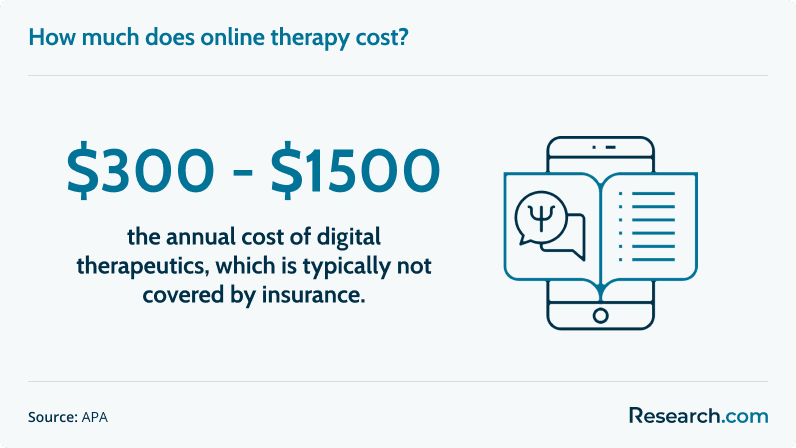
- The cost of digital therapeutics is between $300 and $1,500.
References:
- Cavarretta, M. et al. (2025, March 31). The effectiveness of online therapy in promoting wellbeing and reducing burnout among psychotherapists. Retrieved September 29, 2025, from Frontiers.
- European Commission. (n.d.). Data protection in the EU. Retrieved September 29, 2025, from European Commission.
- U.S. Department of Health & Human Services. (n.d.). The HIPAA Privacy Rule. Retrieved September 29, 2025, from U.S. Department of Health & Human Services.
- Wu, D. (2025, August 12). Illinois bans AI therapy as some states begin to scrutinize chatbots. Retrieved September 29, 2025, from The Washington Post.
Other Things You Should Know About the Mental Health Profession
In 2027, mental health professionals can assess effectiveness by evaluating client outcomes, utilizing standardized assessment tools, and soliciting client feedback. Comparing session retention rates and symptom improvement across both formats can also provide insight into their relative effectiveness.
In 2027, internet access and digital literacy remain barriers to virtual therapy, while logistical issues can hinder in-person therapy. Mental health professionals should prioritize improving digital accessibility and offering flexible scheduling or hybrid models to accommodate diverse needs.
By 2026, studies have shown that both virtual and in-person therapy can be effective, with outcomes often depending on individual preferences and specific mental health issues. Virtual therapy offers greater accessibility, while in-person sessions can provide a more personal touch. Therapists are encouraged to consider client-specific factors when recommending modes of therapy.


