
2027 What Does a Chief Medical Information Officer Do: Responsibilities, Requirements, and Salary

Co-Founder and Chief Data Scientist
In today’s healthcare systems, the role of a chief medical information officer has become essential in ensuring that technology supports safe and effective patient care. With hospitals increasingly relying on data-driven decisions and electronic health record systems, there is a growing need for leaders who can bridge the gap between clinical practice and information technology. In acute care hospitals—where operational safety is most critical—labor statistics indicate that about 70% of organizations now employ a chief medical information officer. This article explains what a chief medical information officer does, the qualifications required, and the current salary outlook for this pivotal healthcare leadership role.
Key Things You Should Know About What a Chief Medical Information Officer Does
- A chief medical information officer leads the integration of clinical expertise and information technology to improve patient outcomes and healthcare efficiency.
- The position serves as a bridge between medical staff and IT teams, ensuring that digital health systems align with clinical needs and regulatory standards.
- The demand for skilled chief medical information officers continues to rise as healthcare organizations adopt advanced data systems, telehealth platforms, and artificial intelligence tools.
- What are the main responsibilities of a chief medical information officer? Responsibilities
- What degree do you need to become a chief medical information officer? Degree Requirements
- What technical skills does a chief medical information officer need to succeed? Skills
- What steps should physicians take to become a chief medical information officer? Steps for Physicians
- How can IT professionals transition into the chief medical information officer field? Steps for IT Professionals
- What is the average salary of a chief medical information officer in 2027? Salary
- What is the projected job growth for chief medical information officer over the next decade? Job Outlook
- What industries outside of hospitals are hiring chief medical information officers? What industries outside of hospitals are hiring chief medical information officers?
- What is the chief medical information officer’s role in digital transformation initiatives? What is the chief medical information officer’s role in digital transformation initiatives?
- What are the biggest challenges facing chief medical information officers today? What are the biggest challenges facing chief medical information officers today?
What are the main responsibilities of a chief medical information officer?
A chief medical information officer oversees how technology supports clinical operations and patient care. The position focuses on aligning digital systems with medical workflows to ensure efficiency, safety, and compliance. This leadership role requires both clinical insight and technical knowledge to enhance how healthcare data is managed, analyzed, and used for better outcomes.
Key responsibilities include:
- Leading electronic health record (EHR) initiatives: Ensuring the EHR system meets clinical requirements and complies with healthcare regulations.
- Improving data-driven decision-making: Using analytics to identify trends in patient outcomes, costs, and hospital performance.
- Integrating technology into clinical workflows: Enhancing interoperability between departments to minimize inefficiencies.
- Ensuring compliance and cybersecurity: Overseeing privacy measures that protect sensitive patient data.
- Training and engagement: Helping physicians and staff adapt to evolving health IT systems through workshops or certification programs such as fast-track ISC2 CGRC training online.
What degree do you need to become a chief medical information officer?
Most employers expect a chief medical information officer to have a strong foundation in both medicine and information technology. A medical degree (MD or DO) is often paired with a master’s degree in health informatics, business administration, or public health. Advanced education provides the necessary leadership and technical skills to manage complex data systems while maintaining patient care quality.
According to labor insights, 46% of executives said a master’s degree is required for chief executive roles, while 32% cited a bachelor’s degree as sufficient. In contrast, 48% of computer and information systems managers only need a bachelor’s degree, and 14% require a master’s degree.
This shows that aspiring chief medical information officers typically benefit from advanced study to stand out in both medical and technology-focused roles. Professionals looking to gain a technical edge may also consider earning certifications through specialized programs such as the shortest CCNA online training course.
What technical skills does a chief medical information officer need to succeed?
A chief medical information officer must possess a unique blend of technical, analytical, and clinical expertise. These skills ensure the ability to oversee large-scale health IT projects, integrate data systems, and maintain compliance with healthcare standards.
Core technical competencies include:
- Patient data management and analytics (22.8%) — understanding how to organize and interpret patient information.
- Electronic transcription systems (9.8%) — ensuring accurate digital documentation.
- Patient care systems (7.0%) — integrating technology to enhance clinical outcomes.
- Rehabilitation and workflow optimization (6.0%) — managing software used in rehabilitative services.
- Chart completion and data quality assurance (5.2%) — ensuring accuracy and completeness in electronic records.
- ICD-10 coding (3.9%) — maintaining standardized diagnosis codes for billing and reporting.
- JCAHO compliance (3.1%) — ensuring adherence to accreditation standards.
To strengthen their IT foundation, professionals can pursue shortest online cyberops training programs to gain cybersecurity and operations management experience—skills increasingly vital to CMIO leadership.
What steps should physicians take to become a chief medical information officer?
Physicians aspiring to become a chief medical information officer can transition into the role through deliberate career development and strategic learning. Beyond clinical practice, they need to understand health informatics, data systems, and technology governance.
Essential steps include:
- Pursue education in health informatics or IT management.
- Gain experience with EHR systems and hospital data workflows.
- Obtain leadership experience through medical committees or project management roles.
- Earn relevant certifications such as those available through fastest online CCSP training bootcamps to build cloud and data security expertise.
- Engage in networking and mentorship programs that connect clinicians to digital health leaders.
How can IT professionals transition into the chief medical information officer field?
Information technology professionals can enter the healthcare domain by developing a strong understanding of clinical processes and regulatory requirements. While most chief medical information officers have medical backgrounds, IT experts with healthcare exposure can succeed by aligning their technical capabilities with medical informatics principles.
Professionals should start by pursuing roles that involve electronic health record management, data integration, and healthcare analytics. Gaining certifications in cybersecurity and governance, such as through accelerated CISM online training, can enhance credibility in managing sensitive patient data.
Collaborating with clinicians and participating in cross-functional projects are also effective ways to bridge the gap between IT and clinical operations—an essential skill set for any chief medical information officer.
What is the average salary of a chief medical information officer in 2027?
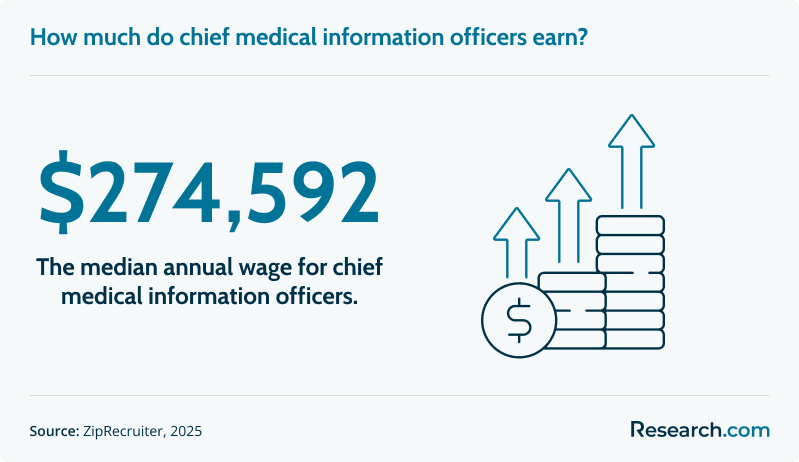
The average salary of a chief medical information officer in 2027 is approximately $274,592 per year, reflecting the high level of responsibility and expertise required for the role. Compensation packages often include performance bonuses, stock options, and benefits that align with senior executive positions in healthcare organizations.
Earnings can vary based on geographic location, hospital size, and years of experience. Chief medical information officers in large metropolitan hospitals or academic medical centers often command higher salaries due to the complexity of their systems.
Those looking to enhance their earning potential can pursue advanced security and leadership credentials, such as those offered through accelerated CISSP certification training online, to demonstrate advanced proficiency in protecting healthcare data and systems.
What is the projected job growth for chief medical information officer over the next decade?
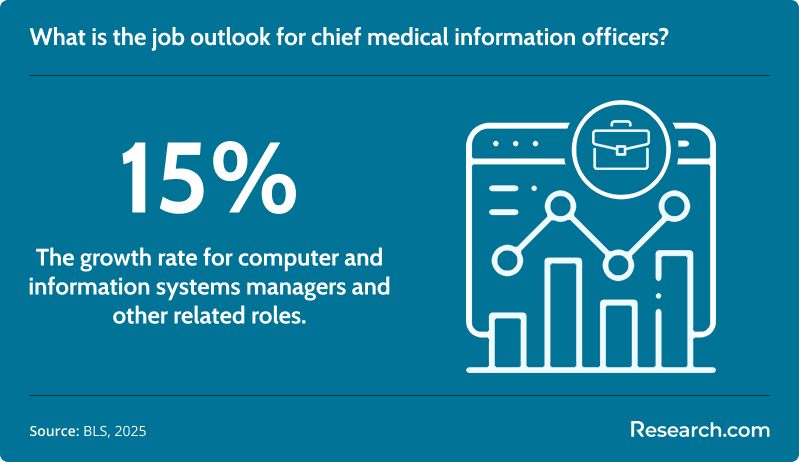
The demand for chief medical information officers is expected to increase steadily over the next ten years, driven by the ongoing digital transformation of healthcare systems. According to employment data for computer and information systems managers—a closely related category—job growth is projected to rise by 15% from 2024 to 2034, much faster than the average for all occupations. This growth translates to roughly 55,600 openings per year as healthcare organizations expand their data management and cybersecurity infrastructure.
As hospitals and healthcare networks continue to rely on advanced data analytics, telemedicine, and artificial intelligence tools, the expertise of a chief medical information officer will remain essential to ensure that technology supports safe and effective patient care.
What industries outside of hospitals are hiring chief medical information officers?
While hospitals continue to employ the largest number of chief medical information officers, other healthcare-related sectors are increasingly seeking professionals with this expertise. In 2024, medical and health services managers held around 616,200 jobs, with a significant portion employed beyond the hospital setting.
The main industries hiring chief medical information officers include:
- Offices of physicians (14%) – where CMIOs help streamline clinical documentation and telehealth services.
- Nursing and residential care facilities (9%) – focusing on patient data continuity and digital care coordination.
- Government health agencies (7%) – enhancing data transparency and interoperability across healthcare programs.
- Outpatient care centers (7%) – implementing information systems that improve patient scheduling, billing, and diagnostics.
These sectors demonstrate the expanding reach of digital healthcare leadership, where the role of a chief medical information officer extends well beyond traditional hospital environments.
What is the chief medical information officer’s role in digital transformation initiatives?
A chief medical information officer plays a critical role in leading digital transformation across healthcare organizations. This position ensures that the adoption of new technologies—such as artificial intelligence, telehealth systems, and predictive analytics—aligns with clinical goals and regulatory standards.
The chief medical information officer works closely with executives, clinicians, and IT teams to identify areas where digital tools can enhance care delivery. They also oversee the integration of health data systems, guide cybersecurity strategies, and monitor outcomes to ensure that digital initiatives improve both patient safety and organizational efficiency.
In essence, the chief medical information officer acts as the architect of healthcare’s digital evolution, ensuring innovation is both strategic and clinically sound.
What are the biggest challenges facing chief medical information officers today?
Despite their growing importance, chief medical information officers face several complex challenges in today’s healthcare landscape:
- Data security and patient privacy: Balancing accessibility and protection of sensitive health data amid rising cybersecurity threats.
- Interoperability issues: Ensuring seamless data exchange across multiple systems and care networks.
- User resistance to technology: Managing change and promoting digital adoption among clinicians and administrative staff.
- Budget constraints: Securing funding for major IT upgrades while demonstrating measurable returns on investment.
- Regulatory compliance: Staying aligned with evolving healthcare data laws and accreditation standards.
Here’s What Graduates Have to Say About What a Chief Medical Information Officer Does
- Rachel: "Transitioning from clinical practice to informatics opened my eyes to the power of data-driven medicine. As a chief medical information officer, I help design systems that directly impact patient outcomes and reduce physician burnout. The learning curve was steep, but seeing digital tools save time and improve care makes every effort worth it. I now collaborate daily with both doctors and data engineers—a rewarding balance of science and strategy."
- Daniel: "I entered this field after years in IT, drawn by the challenge of bridging technology and healthcare. Working as a chief medical information officer taught me how clinical workflows can be transformed by automation and analytics. Leading a hospital-wide EHR upgrade was one of the most fulfilling experiences of my career. It reinforced how critical the CMIO role is in shaping modern healthcare."
- Maria: "As a recent graduate in health informatics, joining a team under a chief medical information officer gave me a front-row seat to healthcare innovation. I saw how decisions about data systems directly affect doctors’ ability to deliver safe, coordinated care. The CMIO role inspired me to pursue leadership training, knowing that the future of medicine depends on people who understand both patient needs and digital technology."
Key Findings
- The average annual salary for a chief medical information officer is about $274,592, reflecting the high-level responsibilities of the position.
- Employment in related fields, such as computer and information systems management, is projected to grow 15% from 2024 to 2034, indicating strong career prospects.
- Approximately 70% of acute care hospitals currently employ a chief medical information officer to ensure operational and patient safety.
- The largest employers of health information leaders include hospitals (29%), physicians’ offices (14%), and nursing or residential care facilities (9%).
- Successful CMIOs combine clinical expertise with IT proficiency, often holding master’s degrees in health informatics or similar fields.
- Major challenges include cybersecurity threats, interoperability gaps, and limited funding for digital transformation projects.
References
- BLS. (2025, August 28). Computer and Information Systems Managers. bls.gov.
- BLS. (2025, August 28). Medical and health services managers. bls.gov.
- Dropstat. (2024, February 27). What is a CMIO? What are 4 duties of a CMIO? - Dropstat. dropstat.com.
- ONET OnLine. (2025). 11-1011.00 - Chief Executives. onetonline.org.
- ONET OnLine. (2025). 11-3021.00 - Computer and Information Systems Managers. onetonline.org.
- Zippia. (2025, January 8). Health Information Manager skills for your resume and career. zippia.com.
- ZipRecruiter. (2025). What is Chief Medical Information officer salary by state?. ziprecruiter.com.
Other Things You Should Know About What a Chief Medical Information Officer Does
To become a Chief Medical Information Officer in 2027, a candidate typically needs a medical degree, experience in clinical practice, and expertise in health informatics. Additional qualifications may include certifications like the Certified Professional in Health Informatics (CPHI) to enhance job prospects.
In 2027, a Chief Medical Information Officer is expected to oversee the implementation of digital health technologies, develop policies for data security in clinical settings, and integrate emerging technologies like AI into healthcare practices to enhance patient care and operational efficiency.
In 2027, a Chief Medical Information Officer can expect to earn an average salary ranging from $180,000 to $250,000 annually, depending on the organization's size, location, and specific responsibilities. This compensation reflects the high level of expertise and leadership required in the role. --- **Question** What are the qualifications needed to become a Chief Medical Information Officer in 2027? **Answer** To become a Chief Medical Information Officer in 2027, an individual typically needs a medical degree, board certification, and experience in healthcare IT. Advanced education in health informatics or a related field and leadership experience are highly beneficial. --- **Question** What is the role of a Chief Medical Information Officer in improving patient care in 2027? **Answer** In 2027, a Chief Medical Information Officer plays a crucial role in improving patient care by implementing and managing electronic health records (EHRs), ensuring data accuracy, promoting interoperability, and using data analytics to enhance clinical outcomes and operational efficiency. --- **Question** What challenges do Chief Medical Information Officers face in 2027? **Answer** Chief Medical Information Officers in 2027 face challenges such as maintaining data security and patient privacy, integrating emerging technologies like AI into healthcare processes, and aligning IT initiatives with clinical and operational goals to improve overall healthcare delivery.


