
2027 Best Online MBA in Energy Programs

Co-Founder and Chief Data Scientist
The energy sector faces a critical leadership gap, with 75% of employers struggling to find qualified applicants. For experienced professionals like you, this gap can feel like a career ceiling. Your deep operational expertise gets projects done, but it may not be enough to get you into the boardroom where strategic decisions are made.
To break through, you need to become bilingual—fluent in your technical craft and the language of finance, policy, and global markets. An online MBA in energy management is the most direct path to gaining that fluency. The career planning experts who created this guide have 10 years of experience helping professionals translate their field experience into executive influence.
What are the benefits of getting an online MBA in energy management?
- You gain access to executive-level roles that require a sophisticated understanding of both energy operations and business strategy.
- Your earning potential increases significantly, with experienced energy managers commanding average salaries exceeding $88,000.
- The online format provides the flexibility to earn a top-tier credential without having to step away from your current career.
What can I expect from an online MBA in energy management?
An online MBA in energy management is a rigorous graduate program that typically requires 15 to 24 months to complete. It's designed specifically for working professionals, blending foundational business principles, such as corporate finance and global strategy, with specialized energy-focused coursework.
It’s a mistake to assume that the online format means a less demanding academic experience. The curriculum is just as challenging as a traditional on-campus program. The key difference isn't the quality of education but the mode of delivery.
This structure offers the flexibility you need to balance your studies with your professional and personal responsibilities. It allows you to immediately apply what you learn in the classroom to the challenges you face at work, making the education both practical and immediately relevant.
Where can I work with an online MBA in energy management?
Graduates with an online MBA in energy management work across a wide range of sectors, including energy corporations, financial institutions, top-tier consulting firms, and government agencies. The opportunities extend far beyond traditional producers, as energy strategy has become a critical function for a diverse set of global industries.
You will find graduates in investment banking, financing multi-billion dollar infrastructure projects, and in management consulting, guiding clients through the energy transition. They also hold key roles shaping policy in regulatory bodies. Furthermore, many graduates lead sustainability and efficiency initiatives at major manufacturing and technology companies, proving the degree's versatility in today's economy.
How much can I make with an online MBA in energy management?
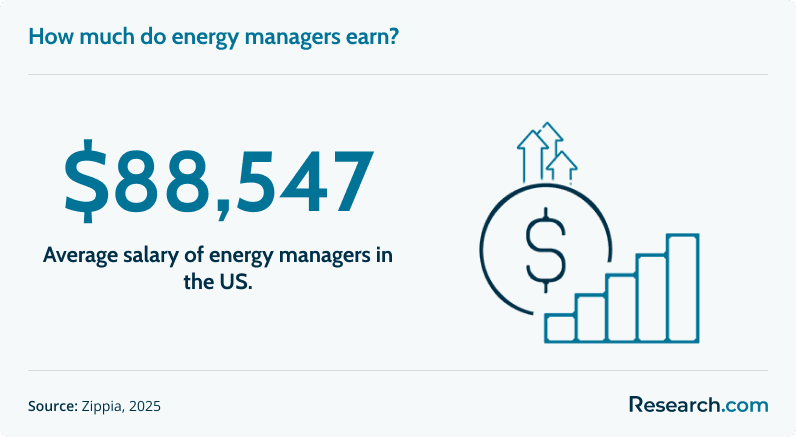
The average salary for an energy manager in the US is $88,547, with a typical range between $61,000 and $126,000. An MBA is designed to position you at the higher end of this scale and open doors to senior executive roles where compensation is significantly greater.
However, your specific earning potential is also a direct result of your strategic choices. The energy industry is not monolithic, and compensation differs between sub-sectors. For example, professionals in traditional oil and gas often earn a wage premium of approximately 15% more than their counterparts in the clean energy sector.
- List of the Best Online MBA in Energy Management Programs for 2027 List of Programs
- How long does it take to complete an online MBA in energy management program? Completion Time
- How does an online MBA in energy management program compare to an on-campus program? How does an online MBA in energy management program compare to an on-campus program?
- What is the average cost of an online MBA in energy management program? Program Cost
- What are the financial aid options for students enrolling in an online MBA in energy management program? Financial Aid
- What are the prerequisites for enrolling in an online MBA in energy management program? What are the prerequisites for enrolling in an online MBA in energy management program?
- What courses are typically in an online MBA in energy management program? What courses are typically in an online MBA in energy management program?
- What types of specializations are available in an online MBA in energy management program? Specializations
- How to choose the best online MBA in energy management program? How to choose the best online MBA in energy management program?
- What career paths are available for graduates of an online MBA in energy management program? Career Paths
- What challenges do students face during an online MBA in energy management program? What challenges do students face during an online MBA in energy management program?
- What is the job market for graduates of an online MBA in energy management program? Job Market
List of the Best Online MBA in Energy Management Programs for 2027
How do we rank schools?
We understand that choosing a program is a major career decision, and you need trustworthy, clear-eyed information to make the right choice. Our selection process is built on a foundation of comprehensive, reliable data from respected national sources, including the Integrated Postsecondary Education Data System (IPEDS), the College Scorecard, and the National Center for Education Statistics (NCES).
We analyze this data to give you a clear and objective view of what each online MBA in energy management program offers. For a detailed explanation of our process, you can review our methodology page.
1. University of Oklahoma-Norman Campus - Executive MBA in Energy
The University of Oklahoma offers a 15-month hybrid program focused exclusively on the energy sector, blending online modules with three immersive, one-week residencies, including a global trip to Europe. Students gain C-suite-level skills through an "all energy, only energy" curriculum that culminates in two capstone projects.
- Program Length: 15 months
- Specializations: Hydrocarbons and Renewables
- Required Credits to Graduate: 36
- Cost per Credit: $2,445
- Accreditation: Association to Advance Collegiate Schools of Business (AACSB)
2. Rice University - Online MBA Program
Rice University offers a flexible online MBA program that can be completed in 24 months, enabling students to establish a solid foundation in core business principles. The program is highly customizable with seven focus areas, including energy, preparing graduates to tackle complex challenges and advance their careers.
- Program Length: 2 years
- Required Credits to Graduate: 54
- Cost per Credit: $2,282
- Accreditation: Association to Advance Collegiate Schools of Business (AACSB)
3. Texas Christian University - Energy MBA
Texas Christian University offers its Energy MBA in a flexible hybrid format, enabling working professionals to attend classes in person or online over 16 months. The curriculum provides deep industry knowledge and includes three residency weekends and a 10-day international trip to an energy-rich region.
- Program Length: 16 months
- Required Credits to Graduate: 42
- Cost per Credit: $2,145
- Accreditation: Association to Advance Collegiate Schools of Business (AACSB)
4. Midwestern State University - MBA Program
Midwestern State University offers an affordable and flexible MBA program that can be completed in one to two years, with courses available in online, face-to-face, or hybrid formats. Students can add an Energy Management concentration to gain specialized knowledge in the dynamics of the oil and gas industry.
- Program Length: 1 to 2 years
- Concentration: Energy Management
- Required Credits to Graduate: 33
- Cost per Credit: $574.95 (in-state), $979.95 (out-of-state)
- Accreditation: Association to Advance Collegiate Schools of Business (AACSB)
5. Norwich University - Master of Business Administration
Norwich University's online MBA is structured for in-depth learning, with students progressing through one course at a time in 11-week terms over an 18-month period. The program offers an energy management specialization that covers sustainability, efficiency, and procurement, preparing leaders for a global business environment.
- Program Length: 18 months
- Specialization: Energy Management
- Required Credits to Graduate: 36
- Cost per Credit: $799
- Accreditation: Accreditation Council for Business Schools and Programs (ACBSP)
6. Duke University - Weekend Executive MBA
Duke University's Weekend Executive MBA allows students to add an Energy & Environment concentration by completing two specialized electives and an independent project. This track is designed for leaders who want to develop subject matter expertise in how energy and sustainability issues create both risks and opportunities for modern businesses.
- Program Length: 2 years
- Concentration: Energy & Environment
- Required Credits to Graduate: 79
- Cost per Credit: $2,258.23
- Accreditation: Association to Advance Collegiate Schools of Business (AACSB)
7. University of Texas Permian Basin - MBA with Certificate in Energy Business
The University of Texas Permian Basin offers a fully online MBA that includes a Certificate in Energy Business, which can be completed in as few as four semesters. The program offers highly marketable leadership skills, with an in-depth focus on key industry topics, including energy finance, law, and risk management.
- Program Length: As few as 4 semesters
- Required Credits to Graduate: 36 to 45
- Cost per Credit: $274.87
- Accreditation: Association to Advance Collegiate Schools of Business (AACSB)
8. University of Wyoming - Online MBA
The University of Wyoming provides a 100% online MBA designed for experienced professionals, which can be completed in as few as three semesters. Its optional energy concentration was developed with industry leaders and includes specialized courses in the energy value chain, project evaluation, and industry-specific accounting.
- Program Length: As few as 3 semesters
- Concentration: Energy
- Required Credits to Graduate: 30
- Cost per Credit: $398 (in-state), $606 (out-of-state)
- Accreditation: Association to Advance Collegiate Schools of Business (AACSB)
9. Texas Tech University - Professional MBA
Texas Tech University's Professional MBA is a hybrid program designed for working professionals, featuring online coursework and in-person classes held one weekend per month. Students can add an Energy Business concentration to gain intensive exposure to the oil and gas industry, covering topics from geopolitics to project finance.
- Program Length: 2 years
- Concentration: Energy Business
- Required Credits to Graduate: 42
- Total Tuition: $54,500 to $65,000 (location-dependent)
- Accreditation: Association to Advance Collegiate Schools of Business (AACSB)
10. Carnegie Mellon University - Energy and Sustainability MBA Track
Carnegie Mellon University's Tepper School of Business offers an interdisciplinary Energy and Sustainability track that integrates business education with the university's renowned engineering college. The program prepares leaders to navigate the energy transition through specialized coursework and a semester-long capstone project with a partner firm.
- Program Length: 32 months
- Track: Energy and Sustainability
- Cost per Credit: $769
- Accreditation: Association to Advance Collegiate Schools of Business (AACSB)
How long does it take to complete an online MBA in energy management program?
Most high-quality online MBA programs in energy management are designed to be completed in 1 to 2 years. Like many of the best online RN to BSN programs without statistics, these MBA pathways are built with working professionals in mind, allowing students to advance their education without stepping away from their careers. The timeline is structured to deliver two rigorous learning outcomes—core business leadership and specialized knowledge of the energy sector.
This commitment of time is what separates graduates from the field. While U.S. Census Bureau data shows that the vast majority of energy managers hold a bachelor’s degree, completing a master’s degree places you in a much more exclusive and qualified group of professionals. This distinction is what unlocks access to senior-level roles and higher compensation.
Accelerated Paths and Their Trade-offs
It’s natural to want to finish a degree quickly, but it’s crucial to consider what can be lost in an accelerated format. A significant portion of the value in an MBA comes from the network you build. The energy industry is currently navigating a massive generational shift in its workforce, often referred to as the “Great Crew Change.”
The relationships you form with experienced peers in your cohort are a primary way that decades of institutional knowledge get transferred. A slightly longer program often allows for deeper connections, which can become a career-long asset for insight and opportunities. While some students explore fast track online energy policy degree programs, it’s essential to weigh the benefits of speed against the long-term value of building a robust professional network.
How does an online MBA in energy management program compare to an on-campus program?
In top-tier programs, the academic rigor of an online MBA is equivalent to its on-campus counterpart. Much like the best online master’s in web development programs, the online MBA format is designed for working professionals who want flexibility without sacrificing quality. For energy-sector leaders, the virtual structure can even provide a unique networking advantage that a traditional classroom environment cannot replicate.
The curriculum, faculty, and degree you earn are of the same high quality. The key difference is the composition of your peer group. Top universities have invested heavily in their online platforms, erasing the old prestige gap and making elite education accessible globally. This allows them to assemble a student body of experienced professionals from every corner of the energy industry.
The Power of a Concentrated Global Network
Consider the difference in your cohort. A general, on-campus MBA program at a top university might have only a handful of students with a background in energy. By contrast, a specialized online MBA in energy brings together a cohort of dozens of experienced professionals who live and breathe the industry every day—from project managers in Houston and Calgary to policy advisors in Dubai and Singapore.
This creates a vibrant learning environment and a powerful, career-long global network. You aren't just learning theory; you're debating real-world challenges with peers who are on the front lines of the energy transition. That immediate, relevant, and global connection is an asset that a campus-based program often cannot replicate.
What is the average cost of an online MBA in energy management program?
The cost of an online MBA in energy management varies significantly, with tuition ranging from under $20,000 to over $120,000 for the entire program. Data from our research shows the average total tuition for an online MBA is approximately $70,000. As with the best masters in public administration online no GRE programs, the real question isn’t just what you pay—it’s what you gain.
However, viewing this number as a simple cost is a mistake; it's an investment in your career, and the most important metric is your potential return on that investment (ROI). The key is to align a program's cost with your specific career goals and the earning potential those goals represent.
Calculating Your Potential ROI
A useful way to begin calculating your potential ROI is to start with a baseline. The average salary for an energy manager in the United States is around $88,000. An MBA is designed to provide you with the credentials and skills to access roles that pay significantly more than the average, not to mention executive-level positions that offer the highest compensation in the industry.
When evaluating a program's tuition, consider it in the context of the salary increase you can reasonably expect over the next five to ten years. A more expensive program from a top-tier university may provide access to a more powerful network, unlocking higher-paying opportunities that justify the initial investment.
What are the financial aid options for students enrolling in an online MBA in energy management program?
While traditional financial aid options, such as federal loans and university scholarships, are available, the single most significant funding source for working professionals in this field is employer sponsorship. Many experienced employees mistakenly assume their company won't cover the cost. Still, in today's competitive energy market, you likely have more leverage than you think.
The energy sector is in a talent retention war. With a wave of retirements and a shortage of skilled leaders, companies are highly motivated to invest in their proven top performers. For many organizations, sponsoring your MBA is a strategic investment that is far cheaper and less risky than recruiting a new senior leader from the outside.
Framing the MBA as a Corporate Investment
The key to unlocking sponsorship is to frame your request not as a personal benefit, but as a direct investment in the company's future success. When approaching your manager, be prepared to present a clear and compelling business case. Focus on the specific, high-value skills you will bring back to the organization.
For example, you can build your case with talking points like these:
- "This program will give me the financial modeling skills to properly evaluate our multi-million dollar capital projects, improving our ROI."
- "I will gain a deep understanding of the regulatory landscape for renewables, allowing me to de-risk our transition strategy and identify new revenue opportunities."
- "The network I build will become a corporate asset, giving us a direct line to talent, expertise, and potential partners across the energy value chain."
What are the prerequisites for enrolling in an online MBA in energy management program?
The primary prerequisites for enrolling in an online MBA in energy management are a bachelor's degree from an accredited institution and significant, relevant work experience. Similar to admissions standards for the best online master's in political science programs, many MBA options for working professionals no longer require the GMAT or GRE, placing greater emphasis on your leadership potential and career accomplishments.
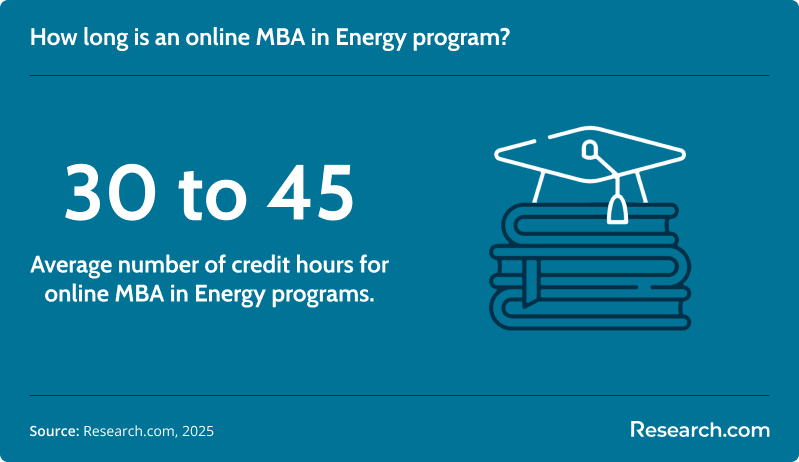
You don't need a specific undergraduate degree in business or engineering to be a strong candidate. These programs typically require between 30 and 45 credit hours for completion and seek a diverse cohort of experienced individuals. Your professional background is your greatest asset in the application process.
Meeting the Standard for Strategic Roles
Admissions committees employ a holistic review process, which means they evaluate your entire profile—comprising work history, academic record, and career goals—to assess your potential. They are looking for evidence that you are ready for a rigorous, graduate-level business education.
While your experience is key, it's also important to recognize that educational standards for senior roles are rising. For those interested in shaping policy, for example, a graduate degree is quickly becoming a necessity. Data shows that 60% of climate policy analysts hold a master's degree. This highlights a growing "qualification chasm" where a bachelor's degree is no longer sufficient for entry into these influential roles. An MBA can be the credential that bridges that gap, amplifying the value of your existing expertise, such as in environmental engineering careers.
What courses are typically in an online MBA in energy management program?
The curriculum in an online MBA in energy management is designed to make you a bilingual leader. It achieves this by combining core MBA subjects, such as corporate finance, global strategy, and marketing, with a suite of specialized courses focused directly on the energy sector, including energy economics, project valuation, and carbon management.
It’s a common mistake to think that only the specialized energy courses matter. In reality, the foundational business courses are what provide the strategic toolkit. They teach you the language of capital, risk, and markets, allowing you to translate your operational knowledge into executive-level decisions.
As the chart below shows, clean energy employment is growing across many sectors, and this broad curriculum prepares you to lead in any of them.
From Technical Execution to Strategic Leadership
The core purpose of this curriculum is to elevate your perspective from project execution to portfolio management. The training is fundamentally different from more tactical programs. For instance, online solar technician training teaches you how to install and maintain a solar project.
An MBA, by contrast, teaches you how to evaluate a portfolio of 20 potential solar projects, decide which three to finance, secure the capital, and manage them to maximize both financial return and environmental impact. This strategic, systems-level thinking is what the energy industry demands from its next generation of leaders.
What types of specializations are available in an online MBA in energy management program?
When pursuing an online MBA in energy, you generally have two strategic paths to choose from. You can enroll in a deeply specialized program focused exclusively on the energy industry, or you can pursue a broader, more traditional MBA that offers a concentration in energy.
This is a critical, long-term career decision that strikes a balance between depth and flexibility. Choosing a more specialized path can lead to significant financial benefits. In major markets, professionals with an energy specialization saw wage increases of up to 9%, outpacing their peers in more general business roles. This highlights the market's demand for true subject matter experts.
Specializing in Energy Policy and Law
For professionals seeking to influence the rules governing the energy transition, some programs offer the opportunity to specialize in energy policy and law. This track is ideal for the Mission-Driven Builder who wants to lead from a position of authority in regulatory agencies, corporate sustainability offices, or non-governmental organizations.
These programs offer a comprehensive understanding of the legal frameworks governing renewable project development and the intricate interplay between state and federal energy policies. For those whose interests lie primarily in this area, exploring the best online energy policy degree programs can provide an even more targeted educational path.
How to choose the best online MBA in energy management program?
The best online MBA in energy management is the one that aligns perfectly with your long-term career goals. While university rankings can be a starting point, the most critical factors are a program's accreditation, faculty expertise, and the strength of its alumni network. Your first step should always be to ensure any program you consider is accredited by the Association to Advance Collegiate Schools of Business (AACSB).
With that baseline established, your most important decision is choosing between a specialized program and a generalist program with a concentration. This choice will define your career trajectory for years to come.
The Case for the Specialist MBA
A specialized energy MBA, like the one offered at the University of Oklahoma, is the optimal choice for a professional who is fully committed to a lifelong career in the energy sector. The curriculum is hyper-relevant, the faculty are often industry veterans, and your entire cohort is composed of experienced energy professionals. This path offers unmatched depth and an immediate, concentrated network. It is the most direct route to the C-suite of an energy firm.
The Case for the Generalist MBA
A generalist MBA with an energy concentration from a globally recognized university, such as Rice or Duke, offers maximum career flexibility. This path offers a "blue-chip" credential that is highly valued across all industries. It is the ideal choice for professionals who want to lead at the enterprise level—perhaps as a future CFO or COO—where they need a holistic business perspective to understand how energy strategy integrates with all other corporate functions. It's also the right choice for those who want to keep their options open for a potential career pivot outside of the energy sector.
What career paths are available for graduates of an online MBA in energy management program?
The career paths available after graduation are a direct outcome of the Specialist versus Generalist choice you make in selecting your online MBA in energy management program. Both paths lead to senior-level roles but in distinctly different contexts.
A specialist degree is designed to cultivate the future leaders of the C-suite in the energy industry. Graduates are prepared for executive roles within integrated energy companies, renewable project developers, and utilities, with titles like Vice President of Strategy, Director of Asset Management, or Chief Financial Officer.
A generalist degree with an energy concentration opens doors to a broader set of industries. Graduates can become a CFO at a manufacturing company, a management consultant in a tech practice, or an investment banker on a sustainability team—roles where energy expertise provides a critical strategic advantage.
Careers in Policy and Regulation
For graduates passionate about shaping the future of the industry, the degree opens up influential career paths in the public and non-profit sectors. This is the most direct route to becoming a Chief Sustainability Officer for a Fortune 500 company or a director-level advisor in a federal or state regulatory agency.
These roles require a deep, nuanced understanding of both market dynamics and public policy. The MBA provides the credibility and the "bilingual" toolkit needed to lead in these complex environments. Exploring specific energy policy jobs can give you a clearer picture of the opportunities available in this impactful field.
What challenges do students face during an online MBA in energy management program?
Online MBA programs in energy management demand a high level of self-discipline and effective time management as students balance rigorous coursework with professional obligations. Common challenges include adapting to a fully digital learning environment, navigating advanced learning platforms, and managing limited face-to-face interactions, which can impact peer networking and real-time feedback. Additionally, students must proactively seek out and utilize support services—such as technical assistance and academic advising—to overcome these hurdles. Evaluating programs based on the robustness of their online support infrastructure, as well as comparing cost efficiencies found in options like the cheapest online MBA degree, can help prospective students identify programs that best align with their personal and professional needs.
What is the job market for graduates of an online MBA in energy management program?
The job market for graduates with an online MBA in energy management is exceptionally strong. While many associate the energy sector with the volatility of oil and gas prices, the reality is that the permanent, global energy transition has created a deep and structural demand for a new kind of leader—one who can navigate complexity, manage risk, and lead strategic change.
This has created a seller's market for talent. With 75% of energy employers reporting difficulty in hiring qualified applicants, graduates who possess a combination of in-depth industry experience and a strategic business education have significant leverage. The demand is not just for technical specialists, but for strategic thinkers who can manage the complex interplay of finance, technology, and policy.
Growth Sectors and Market Demand
The data confirms the massive scale of this opportunity. The global market for energy management systems is projected to reach $161.9 billion by 2030, a clear indicator of the massive investment flowing into the sector.
This investment is translating directly into high-quality jobs. In 2023, the clean energy sector alone saw job growth of 4.2%, more than double the rate of the overall U.S. economy. For graduates of these programs, this is not a cyclical hiring boom; it is a long-term, structural shift that ensures strong demand for their unique skills for decades to come.
Here’s What Graduates Have to Say About Their Online MBA in Energy Management Program
- Javi: "For years, I felt like I was just tinkering around the edges of the sustainability problem. This MBA gave me the tools to think at scale and the credibility to be heard. I learned how to build a data-driven, financially sound proposal for a utility-scale renewables project that my company is now actually building. The online structure connected me with a classmate working in German energy policy, and her insights were vital to getting my project approved."
- Dina: "I work in a very specialized part of the LNG market, and I honestly wasn't sure how much an MBA could teach me. But the network I built was astounding. Last month, I had a complex supply chain issue, and I was able to call a classmate in Singapore who gave me the exact piece of market intelligence I needed. The fact that the program was online meant my network was global from day one."
- Brian: "The moment it all clicked for me was in a corporate finance class. We were discussing capital budgeting, and I realized we were using the exact framework to evaluate a multi-million dollar offshore wind investment at my company. For the first time, I could see the entire picture, from the engineering challenges on the ground to the financial metrics in the boardroom. That connection is something no amount of on-the-job experience alone could have taught me."
Key Findings
- The leadership gap in the energy sector is substantial, with 75% of employers reporting difficulties in hiring qualified applicants, creating a prime opportunity for MBA graduates to fill senior roles.
- With an average salary of $88,547 for an energy manager, this MBA equips graduates with the strategic financial skills necessary to secure the highest-paying executive positions in the industry.
- The job market is expanding rapidly, as demonstrated by the 4.2% growth in clean energy jobs in 2023, a rate more than double that of the overall U.S. economy.
- A graduate degree is becoming a mandatory credential for strategic roles, with data showing that 60% of climate policy analysts now hold a master's degree or higher.
- The market opportunity is immense, with the global energy management systems market alone projected to grow to a value of $161.9 billion by 2030.
- An MBA provides a clear, quantifiable advantage, placing graduates in the top 18% of energy managers who have attained a master's degree.
References:
- Allied Market Research. (2022). Energy management systems market. Retrieved September 25, 2025, from Allied Market Research.
- International Energy Agency. (2024a). World energy employment 2024. Retrieved September 25, 2025, from IEA.
- International Energy Agency. (2024b). World energy employment 2024: Executive summary. Retrieved September 25, 2025, from IEA.
- International Energy Agency. (2024c). World energy outlook 2024. Retrieved September 25, 2025, from IEA.
- U.S. Bureau of Labor Statistics. (2025a). Occupational employment and wages, May 2024, 17-2081 Environmental Engineers. Retrieved September 25, 2025, from BLS.
- U.S. Bureau of Labor Statistics. (2025b). Occupational employment and wages, May 2024, 19-2041 Environmental Scientists and Specialists, Including Health. Retrieved September 25, 2025, from BLS.
- U.S. Bureau of Labor Statistics. (2025c). Occupational outlook handbook: Environmental engineers. Retrieved September 25, 2025, from BLS.
- U.S. Bureau of Labor Statistics. (2025d). Occupational outlook handbook: Environmental scientists and specialists. Retrieved September 25, 2025, from BLS.
- U.S. Department of Energy. (2024). DOE report shows clean energy jobs grew more than twice the rate of overall U.S. employment. Retrieved September 25, 2025, from DOE.
- U.S. Energy Information Administration. (2024). Renewable energy explained: Portfolio standards. Retrieved September 25, 2025, from EIA.
- Zippia. (2025a). Energy manager jobs: Education requirements and degrees. Retrieved September 25, 2025, from Zippia.
- Zippia. (2025b). Energy manager salary. Retrieved September 25, 2025, from Zippia.
- Zippia. (2025c). Environmental engineer jobs: Education requirements and degrees. Retrieved September 25, 2025, from Zippia.
Other Things You Should Know About Online MBA in Energy Management Programs
In 2027, top online MBA in Energy programs emphasize skills in data analytics, renewable energy technologies, and energy market analysis. These programs often integrate advanced coursework in sustainable practices and the latest energy sector software tools to prepare students for evolving industry demands.
Admission requirements for online MBA in energy management programs typically include a bachelor's degree, professional experience, and GMAT or GRE scores. Some programs may waive test scores based on work experience or prior education. International students must often provide proof of English proficiency, such as TOEFL or IELTS scores.
In 2027, graduates of online MBA programs in Energy can expect diverse job prospects, particularly in renewable energy sectors, energy policy roles, and consulting positions. The rapid transition to sustainable energy solutions is driving demand for skilled leaders who understand both energy systems and business strategies.


