
2027 Best PsyD Programs in Michigan: APA Accredited Online & Campus

Co-Founder and Chief Data Scientist
Choosing a PsyD program in Michigan is a high-stakes decision because the wrong program can delay licensure, limit internship options, or leave graduates with a credential that does not meet employer or state expectations. For students who want to become licensed clinical psychologists, APA accreditation is one of the most important filters to apply before comparing tuition, format, faculty, or specializations.
This guide explains what prospective students need to know about APA-accredited PsyD options in Michigan, including how many programs are available, whether online PsyD programs are realistic for licensure-focused students, what admissions committees look for, how internships work, and what career and salary outcomes may look like after graduation.
Quick answer: Are there APA-accredited PsyD programs in Michigan?
Michigan has one APA-accredited PsyD program: the PsyD in Clinical Psychology at the Michigan School of Psychology in Farmington Hills. It is campus-based, and no fully online or hybrid APA-accredited PsyD program is currently available in Michigan. Students who need flexibility may compare out-of-state hybrid doctoral psychology programs, but they should confirm APA accreditation and Michigan licensure eligibility before applying.
Why APA accreditation matters for PsyD students in Michigan
- Licensure alignment: APA accreditation helps students meet the educational expectations commonly connected to clinical psychologist licensure in Michigan and other states.
- Clearer internship pathways: Accredited doctoral programs are typically built around supervised practicum and internship preparation, which is essential for clinical training.
- Employer recognition: Hospitals, health systems, community mental health agencies, universities, and government employers often prefer or require graduates from accredited doctoral psychology programs.
- Mobility across states: Students who may relocate after graduation usually benefit from attending a program that meets nationally recognized training standards.
- Quality control: APA accreditation requires a program to undergo self-study, external review, site evaluation, and continuing monitoring rather than relying only on institutional reputation.
- Claims still need verification: Some materials may cite advantages such as graduate employment rate improvements of up to 20%, but applicants should ask each program for its own licensure, internship match, attrition, and employment data.
- Best PsyD programs in Michigan: APA-accredited, online, and campus options
- Why APA accreditation matters for PsyD students in Michigan
- How many APA-accredited PsyD programs are available in Michigan?
- What are the best APA-accredited PsyD programs in Michigan?
- Who is eligible to apply to APA-accredited PsyD programs in Michigan?
- What are the requirements to get into an APA-accredited PsyD program in Michigan?
- What PsyD specializations are available in Michigan?
- What courses are typically included in APA-accredited PsyD programs in Michigan?
- How do PsyD students find internships in Michigan?
- What are the pros and cons of online and campus PsyD programs in Michigan?
- What jobs can you get with a PsyD in Michigan?
- What is the average salary of PsyD graduates in Michigan?
- What should students ask before choosing a PsyD program?
- Do Michigan universities offer mentorship opportunities for PsyD students?
- What are common challenges in completing PsyD internships in Michigan?
- What should students look for when choosing accredited PsyD programs in Michigan?
- Do online Michigan PsyD programs help students secure local practicum placements?
- References
Best PsyD programs in Michigan: APA-accredited, online, and campus options
The most important fact for applicants is simple: Michigan’s APA-accredited PsyD market is very small. If your goal is to earn a licensure-focused clinical psychology doctorate within the state, the Michigan School of Psychology is the primary PsyD option to evaluate. Students who want other formats may need to compare PhD programs in Michigan or hybrid doctoral psychology programs outside the state.
| Option | Program type | Format | Best for | Important caution |
| Michigan School of Psychology | PsyD in Clinical Psychology | Campus-based | Students who want Michigan’s sole APA-accredited PsyD pathway | Applicants should plan for in-person attendance in Farmington Hills and verify current tuition, practicum, internship, and outcome data before enrolling. |
| Western Michigan University | PhD in Clinical Psychology | Campus-based | Students open to a research-focused doctoral path that still includes clinical training | This is not a PsyD, so applicants should compare the research expectations and faculty fit carefully. |
| Eastern Michigan University | Clinical psychology doctoral option | Campus-based | Students comparing Michigan-based alternatives to a PsyD | Students should confirm accreditation status and licensure alignment directly with the program and relevant licensing board. |
| University of Michigan | PhD in Clinical Science | Campus-based | Students interested in a research-intensive clinical science model | The program is accredited by PCSAS rather than APA, so students should evaluate how that fits their licensure and career plans. |
| The Chicago School of Professional Psychology | Hybrid PsyD comparison option | Online coursework with required in-person components | Michigan residents exploring flexible doctoral psychology formats outside the state | Students must verify APA accreditation, residency obligations, state authorization, internship expectations, and Michigan licensure eligibility. |
| National University | Hybrid PsyD comparison option | Online classes with local clinical training components | Working adults who need remote coursework but can complete clinical requirements | Applicants should not assume online coursework alone satisfies psychologist licensure requirements. |
| University of Arizona Global Campus | Hybrid doctoral psychology comparison option | Online coursework paired with local clinical experiences | Students researching flexible doctoral psychology pathways | Students should distinguish between doctoral psychology programs and licensure-focused APA-accredited clinical psychology PsyD programs. |
Applicants comparing psychology and behavioral health careers may also want to understand adjacent credentials. For example, students exploring behavior-focused work can review what are some jobs you can get with an ABA certification before committing to a clinical psychology doctorate.
How many APA accredited PsyD programs are available in Michigan?
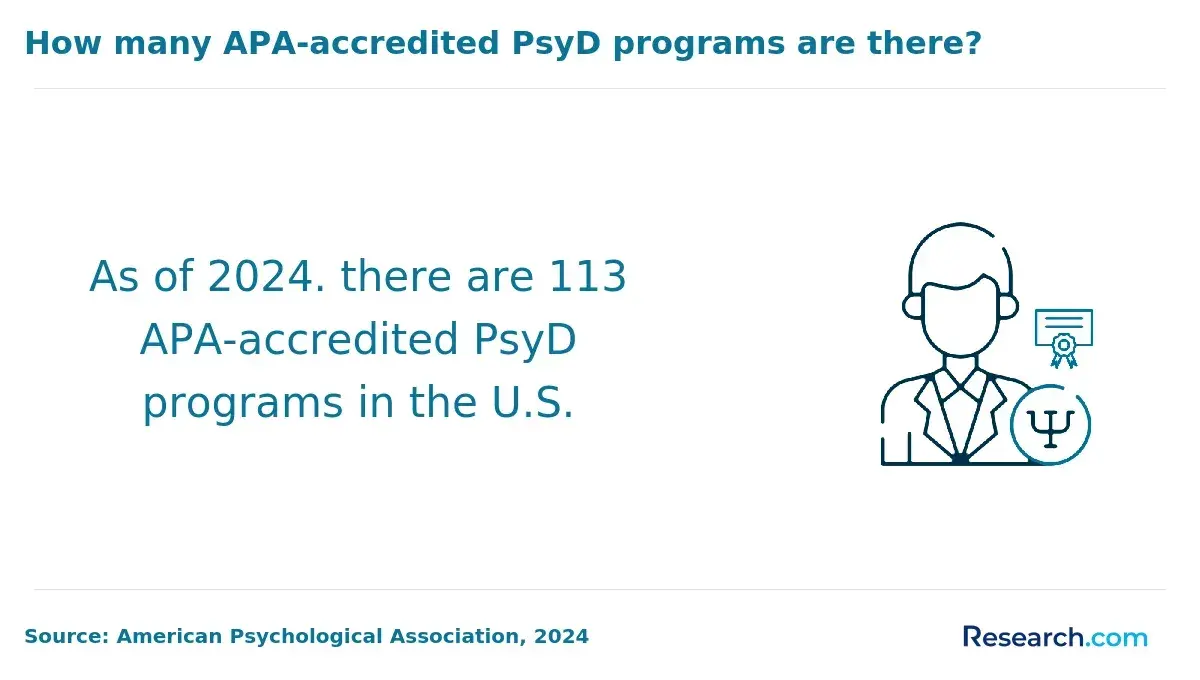
Michigan offers only one APA-accredited PsyD program: the PsyD in Clinical Psychology at the Michigan School of Psychology in Farmington Hills. The program is campus-based and does not offer an online or hybrid version. That means students who specifically want an APA-accredited PsyD in Michigan should expect in-person doctoral study.
APA accreditation involves a detailed review process that includes a program self-study, an on-site visit by evaluators, and ongoing review to confirm that the program continues to meet recognized training standards. For clinical psychology students, this matters because accreditation is often tied to internship access, licensure eligibility, employer confidence, and professional mobility.
Students who want Michigan-based alternatives can compare campus-based PhD programs at Western Michigan University and Eastern Michigan University. The University of Michigan also offers a PhD in Clinical Science accredited by PCSAS rather than APA. These may be strong options for students who are comfortable with a PhD model, but they are not identical to a practitioner-oriented PsyD.
Michigan’s mental health sector is expected to grow by 15% through 2030, which helps explain why interest in doctoral psychology training remains strong. Even with that demand, no APA-accredited online or hybrid PsyD program has emerged within Michigan. Future programs may adopt more flexible delivery models, but any new option would still need to meet rigorous accreditation standards.
What are the best APA accredited PsyD programs in Michigan?
The best APA-accredited PsyD program in Michigan is the one that meets accreditation, licensure, training, affordability, and fit requirements for your goals. Because the state has only one APA-accredited PsyD, applicants should evaluate that program closely rather than rely on broad rankings that imply many in-state choices.
- Michigan School of Psychology - PsyD in Clinical Psychology: This is Michigan’s sole APA-accredited PsyD. It follows a practitioner-scholar model, includes over 2,000 supervised practicum hours, offers training options such as child/adolescent psychology, lists tuition at approximately $47,880 annually, and reports an 85% employment rate within six months.
- Western Michigan University - PhD in Clinical Psychology: This is a PhD rather than a PsyD, but it may interest students who want clinical training combined with empirical research over six years.
- The Chicago School of Professional Psychology - Hybrid PsyD: Michigan students sometimes compare this type of option when they need online coursework plus required residencies and clinical placements. Applicants should verify accreditation and licensing implications directly.
- National University - Hybrid PsyD: This option is often considered by students seeking online classes with local clinical training. Before applying, students should confirm whether the program structure supports Michigan licensure goals.
- University of Arizona Global Campus - Hybrid Doctoral Psychology Programs: This may appeal to students looking for remote coursework with local clinical experiences, but applicants should carefully distinguish general doctoral psychology study from an APA-accredited clinical psychology PsyD route.
| Selection factor | Why it matters | Question to ask the program |
| APA accreditation | It can affect licensure, internships, and employer recognition. | Is the exact PsyD program currently APA-accredited, and where can I verify it? |
| Clinical training network | PsyD students need supervised practicum and internship experiences. | Which Michigan practicum sites regularly accept your students? |
| Internship outcomes | Internship placement is a major milestone before graduation and licensure. | What percentage of students match to accredited internships? |
| Cost and funding | Doctoral psychology programs can be expensive, especially when full-time study limits employment. | What is the full cost of attendance, including fees, commuting, insurance, and living expenses? |
| Faculty fit | Mentorship influences clinical development, dissertation work, and professional networking. | Which faculty members supervise students in my area of interest? |
| Licensure preparation | Graduation alone does not equal licensure. | How does the curriculum prepare students for Michigan psychologist licensure requirements? |
Who is eligible to apply to APA accredited PsyD programs in Michigan?
Strong applicants for APA-accredited PsyD programs in Michigan usually have a bachelor’s degree, a solid psychology foundation, relevant clinical or research exposure, and a clear commitment to doctoral-level clinical work. These programs are designed for people who want to assess, diagnose, and treat mental health conditions as future licensed psychologists.
Campus-based PsyD study is often a good fit for recent psychology graduates, master’s-level clinicians who want to expand their scope, and career changers who can commit to intensive in-person training. The format works best for students who value direct faculty access, cohort relationships, supervised clinical practice, and a structured academic schedule.
Online or hybrid PsyD formats outside Michigan may appeal to working professionals, parents, and students who live far from a doctoral psychology campus. However, flexibility should not be the only deciding factor. Students must confirm that any program meets APA accreditation expectations, includes supervised clinical training, and supports Michigan licensure. Learners considering applied behavioral roles may also compare the behavior therapist career path before choosing a doctoral clinical psychology route.
What are the requirements to get into an APA accredited PsyD program in Michigan?
Admission to an APA-accredited PsyD program is selective because doctoral clinical psychology training requires academic readiness, interpersonal maturity, ethical judgment, and evidence of commitment to helping professions. Applicants should prepare early, especially if they need prerequisite psychology coursework or stronger clinical experience.
- Educational background: Applicants generally need a bachelor’s degree, often in psychology or a related field, with at least 18 semester hours in psychology coursework.
- Minimum GPA: A minimum undergraduate GPA of 3.0 is commonly expected, although stronger GPAs usually make an application more competitive.
- Relevant experience: Research assistantships, clinical employment, crisis line work, internships, behavioral health roles, and volunteer experience can strengthen an application.
- Prerequisite coursework: Programs may expect prior study in subjects such as personality theory, psychological assessment, and statistics.
- Standardized tests: GRE scores may be optional, recommended, or waived depending on the program’s current policy.
- Letters of recommendation: Most applicants submit two or three letters from faculty members, supervisors, or professionals who can evaluate readiness for doctoral work.
- Personal statement: The essay should explain clinical interests, long-term goals, fit with the program, and reasons for pursuing a PsyD rather than a different psychology degree.
- Interview or assessment: Programs often use interviews to evaluate communication skills, professionalism, self-awareness, and alignment with the program’s training model.
Applicants should also understand that fully online PsyD programs remain unaccredited by APA as of 2025, while some hybrid options may exist through accredited institutions. Students considering behavioral analysis roles can compare doctoral psychology with a behavior analyst career path. Admission may be highly competitive, with acceptance rates below 25%, so applicants should build a focused profile rather than apply with only general interest in mental health.
| Applicant profile | PsyD fit | Better next step |
| Recent psychology major with research and volunteer experience | Strong fit if the student wants clinical licensure and can attend full time | Strengthen recommendation letters and clarify clinical interests. |
| Working counselor or behavioral health professional | Potential fit if doctoral licensure is the goal | Ask how prior graduate credits, employment, and practicum scheduling will be handled. |
| Student who needs a fully online doctorate | Risky fit for licensure-focused clinical psychology | Confirm APA accreditation and Michigan licensing acceptance before applying. |
| Student mainly interested in research or academia | A PhD may be a better fit than a PsyD | Compare faculty research labs, funding, and publication expectations. |
| Student unsure about becoming a licensed psychologist | May be too costly and time-intensive | Explore master’s-level counseling, social work, behavior analysis, or school psychology pathways first. |
What PsyD specializations are available in Michigan?
PsyD specializations help students tailor clinical training toward the populations, settings, and services they want to provide. In Michigan, students should first verify what the specific program actually offers, because a small program market means specialization choices may be narrower than in states with many doctoral psychology schools.
- Clinical Psychology: This is the broadest route for students who want to conduct assessment, diagnosis, psychotherapy, and treatment planning for a wide range of mental health concerns.
- Child and Adolescent Psychology: This focus prepares students to work with children, teens, families, schools, and pediatric behavioral health settings.
- Neuropsychology: Students interested in brain-behavior relationships, cognitive testing, rehabilitation, dementia, and traumatic brain injury may look for neuropsychology coursework, practicum sites, and postdoctoral training pathways.
- Health Psychology: This area connects psychological care with medical treatment, chronic illness management, behavior change, and integrated healthcare teams.
- Counseling Psychology: Students drawn to life transitions, multicultural counseling, career concerns, trauma support, and university counseling settings may prefer this orientation where available.
- School Psychology: This pathway focuses on psychoeducational assessment, student support, intervention planning, and school-based mental health; it is primarily associated with Michigan State University in the original program landscape discussed here.
What courses are typically included in APA accredited PsyD programs in Michigan?
APA-accredited PsyD coursework is designed to produce clinicians who can integrate psychological science, assessment skills, ethical decision-making, and supervised practice. Exact course titles vary by institution, but students can expect a curriculum that combines theory, research, diagnosis, treatment, diversity, and professional practice.
- Behavioral Psychology: Students study how observable behavior is learned, maintained, measured, and changed through evidence-based interventions.
- Cognitive Psychology: This coursework examines memory, attention, problem-solving, decision-making, and cognitive processes relevant to assessment and treatment.
- Clinical Assessment and Diagnosis: Students learn psychological testing, diagnostic interviewing, case formulation, and treatment planning.
- Research Methods: This area teaches students how to evaluate evidence, design studies, interpret data, and apply research to clinical practice.
- Ethics in Psychology: Students examine confidentiality, informed consent, boundaries, mandated reporting, cultural humility, documentation, and professional responsibility.
- Psychotherapy Techniques: Coursework introduces major therapy models and helps students build intervention skills for different clients and presenting concerns.
| Training area | What students learn | Why it matters after graduation |
| Assessment | Testing, interviewing, diagnosis, report writing, and case conceptualization | Many psychologist roles require advanced evaluation skills beyond general counseling. |
| Intervention | Therapy models, treatment planning, crisis response, and evidence-based care | Clinical psychologists must be prepared to treat complex mental health needs. |
| Research literacy | Study design, statistics, literature review, and evidence evaluation | Practitioners need to choose interventions based on evidence rather than habit or preference. |
| Ethics and law | Professional standards, risk management, confidentiality, and scope of practice | Ethical errors can harm clients and threaten licensure. |
| Diversity and culture | Culturally responsive assessment, treatment, supervision, and consultation | Michigan psychologists serve clients across varied urban, suburban, rural, and underserved communities. |
How do PsyD students find internships in Michigan?
PsyD internships are a major bridge between doctoral coursework and independent professional practice. Students should begin preparing well before the internship application year because competitive sites often expect strong practicum evaluations, clear clinical interests, polished essays, and strong supervisor recommendations.
Common internship search strategies for PsyD students in Michigan include:
- APPIC Match System: The APPIC Match is a central route for applying to psychology internships and helps students compare sites by training focus, location, and eligibility requirements.
- Program-based internship preparation: Doctoral programs may offer workshops or courses on application essays, interview practice, ranking strategy, and site selection.
- Faculty and supervisor networking: Faculty mentors, practicum supervisors, and alumni can help students identify sites that match their clinical strengths.
- Community mental health partnerships: Nonprofit agencies and community clinics can provide exposure to diverse client populations and high-need services.
- Career fairs and online directories: Virtual events and platforms such as Mojozy.org can help students expand their search by specialty and geography.
- Direct outreach to health systems: Large Michigan employers may offer structured psychology training opportunities, especially in hospitals, primary care, rehabilitation, and behavioral health departments.
- Geographic planning: Students who focus only on one city may limit their options; those able to consider multiple Michigan regions may have broader placement possibilities.
What are the pros and cons of online and campus PsyD programs in Michigan?
The biggest trade-off is flexibility versus accreditation certainty. Campus-based training in Michigan offers the clearest APA-accredited PsyD route, while online and hybrid formats may be more convenient but require careful verification. Students should never assume that an online psychology doctorate automatically leads to psychologist licensure.
| Format | Advantages | Drawbacks | Best fit |
| Campus-based PsyD in Michigan | Direct faculty access, structured clinical training, stronger cohort interaction, and clearer APA accreditation status | Requires commuting or relocation, has less schedule flexibility, and may add housing and transportation costs | Students who can attend in person and want the most straightforward Michigan PsyD route |
| Hybrid PsyD outside Michigan | May allow some online coursework while preserving required residencies and clinical training | Accreditation, state authorization, practicum placement, and licensure eligibility require extra scrutiny | Working adults who need flexibility but can travel and complete supervised clinical requirements |
| Fully online PsyD | Maximum convenience for coursework and location | APA accreditation is a major concern, and clinical psychology licensure may not be supported | Students pursuing non-licensure goals only after confirming the credential’s limitations |
Pros and cons of online PsyD programs
- Pro - scheduling flexibility: Remote coursework may help students balance school with work, caregiving, or geographic constraints.
- Pro - broader access: Students who live far from Farmington Hills or other doctoral campuses may be able to continue their education without relocating immediately.
- Pro - technology-supported learning: Online platforms can support simulations, discussion boards, digital assessment practice, and virtual collaboration.
- Con - limited APA accreditation: Michigan’s sole APA-accredited PsyD is campus-based, and fully online APA-accredited PsyD options remain highly limited.
- Con - practicum complexity: Students may need to secure local supervised clinical experiences, which can be difficult without strong program support.
- Con - weaker in-person networking: Online students may have fewer informal opportunities to build relationships with faculty, peers, supervisors, and local employers.
- Con - licensure uncertainty: State licensing boards may evaluate program structure, supervision, internship, and accreditation carefully.
Pros and cons of campus PsyD programs in Michigan
- Pro - direct clinical preparation: In-person programs can provide more structured access to supervised training and immediate feedback.
- Pro - stronger professional community: Students can build relationships with faculty, classmates, practicum supervisors, and local clinical agencies.
- Pro - clearer accreditation pathway: Michigan’s APA-accredited PsyD option is campus-based, which simplifies the first accreditation screening step.
- Pro - structured learning environment: Regular in-person participation can help students stay accountable through a demanding doctoral curriculum.
- Con - location constraints: Students may need to move, commute, or rearrange family and work responsibilities.
- Con - less flexibility: Fixed class schedules and clinical placements can make full-time employment difficult.
- Con - added expenses: Beyond tuition around $47,880 annually, students should consider fees, transportation, housing, books, technology, and lost income.
- Con - intensive time commitment: Traditional doctoral training, practicum, dissertation work, and internship requirements require sustained multi-year planning.
What jobs can you get with a PsyD in Michigan?
A PsyD is primarily designed for practice-oriented psychology careers that involve assessment, therapy, supervision, consultation, and clinical leadership. Graduates usually still need to complete licensure requirements before practicing independently as psychologists.
- Licensed Clinical Psychologist: Clinical psychologists provide psychotherapy, diagnostic assessment, psychological testing, and treatment planning in hospitals, private practices, community clinics, and integrated care settings.
- Counseling Psychologist: These professionals often support clients through trauma, stress, relationships, identity concerns, life transitions, academic issues, and career challenges.
- Forensic and Correctional Psychologist: Forensic psychologists may conduct evaluations, risk assessments, competency-related work, treatment planning, and consultation in legal or correctional settings.
- Neuropsychologist or Assessment Specialist: These clinicians focus on cognitive and psychological assessment for concerns such as dementia, traumatic brain injuries, neurological conditions, and rehabilitation planning.
- Faculty Member or Clinical Supervisor: PsyD graduates may teach, supervise trainees, contribute to applied research, or help manage clinical training programs.
Telepsychology, integrated primary care, and community-based mental health services continue to influence how psychologists work in Michigan, especially in areas with access gaps. Students who want a broader view of behavioral science education options can compare the list of best online behavioral psychology degree programs.
What is the average salary of PsyD graduates in Michigan?
PsyD graduates in Michigan earn average salaries ranging from $88,000 to $95,000 for clinical psychologists and $82,000 to $90,000 for counseling psychologists. The original data reviewed here does not show a significant salary difference between graduates of APA-accredited online and traditional programs; licensure, role, employer, specialization, and experience are typically more important. Nationally, these Michigan figures are slightly below median wages reported by the BLS and APA, which estimate $98,000 to $106,600 for clinical and counseling psychologists.
- Licensure status: Fully licensed psychologists can practice more independently and often qualify for higher-paying roles than limited-license professionals.
- Years of experience: Earnings often rise during the first 10-15 years as psychologists gain clinical depth, referrals, leadership opportunities, and specialization.
- Specialization and credentials: Neuropsychology and industrial-organizational psychology may command premium compensation because of specialized expertise and market demand.
- Employer type: Health systems and private practice may offer stronger earning potential than some nonprofit, academic, or public-sector roles.
- Regional demand: Areas facing mental health workforce shortages may offer more competitive compensation to attract qualified clinicians.
Students should evaluate salary in relation to total program cost, debt, time out of the workforce, and licensure timeline. Those comparing psychology with applied behavior analysis can also review masters in applied behavior analysis requirements to understand how different credentials connect to different career paths.
What should students ask before choosing a PsyD program?
Because Michigan has only one APA-accredited PsyD program, students should use direct questions rather than marketing language to judge whether a program is a good investment. Ask for evidence, not general assurances.
| Question | Why it matters | Red flag |
| Is the exact program APA-accredited right now? | Institutional accreditation is not the same as APA accreditation for clinical psychology training. | The school discusses accreditation generally but does not confirm program-level APA status. |
| What are the practicum and internship outcomes? | Clinical placement quality affects licensure readiness and employability. | The program cannot provide recent placement or match information. |
| How much will the full degree cost? | Tuition is only one part of the investment. | The school emphasizes tuition but avoids discussing fees, living costs, or financing. |
| Does the program meet Michigan licensure requirements? | Students need a path from admission to supervised training, internship, graduation, and licensure. | Advisors tell students to “check later” after enrollment. |
| How are online or hybrid students supported with local placements? | Remote coursework does not replace supervised clinical experience. | Students are expected to find sites without meaningful program assistance. |
| What are the faculty’s clinical and research areas? | Faculty fit influences training quality, dissertation support, and mentorship. | No faculty member aligns with the student’s intended population or specialty. |
Common mistakes to avoid when choosing a PsyD program
- Assuming all doctorates in psychology lead to licensure: A doctoral psychology degree may not meet clinical psychologist licensing requirements unless the program structure, accreditation, internship, and supervised experience align with state rules.
- Choosing based only on online convenience: Flexibility is useful, but it should not outweigh APA accreditation, practicum support, internship outcomes, and licensure eligibility.
- Looking only at tuition: Students should estimate total cost of attendance, including fees, commuting, relocation, books, technology, insurance, and reduced work hours.
- Relying only on rankings: A program with a strong general reputation may still be a poor fit if it lacks your specialization, preferred training model, or licensure alignment.
- Ignoring internship competitiveness: Internship placement is not automatic. Students should ask how the program prepares applicants for APPIC and other internship routes.
- Assuming salary outcomes are guaranteed: Salaries vary by licensure, employer, location, experience, specialization, and business model.
Do Michigan universities offer mentorship opportunities for PsyD students?
Campus-based doctoral psychology programs typically provide mentorship through faculty advising, clinical supervision, dissertation guidance, practicum preparation, and professional development. Applicants should ask how often students meet with advisors, whether mentorship begins in the first year, and how students are matched with faculty.
What are common challenges in completing PsyD internships in Michigan?
Common internship challenges include competition for preferred sites, geographic limitations, balancing dissertation work with applications, securing strong recommendation letters, and matching with sites that fit a student’s clinical focus. Students in online or hybrid programs may face additional placement challenges if the program has limited local relationships.
What should students look for when choosing accredited PsyD programs in Michigan?
Students should prioritize APA accreditation, licensure alignment, supervised clinical training, internship outcomes, faculty fit, specialization options, total cost, student support, and graduate employment data. For Michigan specifically, students should also consider whether they can realistically attend a campus-based program in Farmington Hills.
Do online Michigan PsyD programs help students secure local practicum placements?
No APA-accredited online PsyD program is currently available in Michigan. Students considering online or hybrid programs outside the state should ask whether the school has established practicum relationships in Michigan, who approves sites, how supervision is documented, and whether placements meet Michigan licensure requirements.
Key Insights
- Michigan has one APA-accredited PsyD program: the campus-based PsyD in Clinical Psychology at the Michigan School of Psychology in Farmington Hills.
- No fully online or hybrid APA-accredited PsyD program is currently available within Michigan, so students who need flexibility must verify out-of-state options carefully.
- APA accreditation matters because it can affect licensure eligibility, internship access, employer recognition, and interstate mobility.
- The Michigan School of Psychology reports over 2,000 supervised practicum hours, tuition of approximately $47,880 annually, and an 85% employment rate within six months.
- Applicants should compare PsyD and PhD pathways before applying, especially if they are interested in research, clinical science, or academic careers.
- Strong applications usually include a bachelor’s degree, at least 18 semester hours in psychology coursework, a minimum GPA of 3.0, relevant experience, recommendation letters, a personal statement, and an interview.
- Michigan PsyD graduates may pursue roles such as licensed clinical psychologist, counseling psychologist, forensic psychologist, neuropsychologist, assessment specialist, faculty member, or supervisor.
- Reported Michigan salary ranges are $88,000 to $95,000 for clinical psychologists and $82,000 to $90,000 for counseling psychologists, with licensure and experience playing major roles.
- The safest decision process is to verify accreditation first, confirm licensure alignment second, and then compare cost, fit, format, faculty, and clinical training outcomes.
Related Articles for Nearby States
- 2027 Best PsyD Programs in Ohio: APA Accredited Online & Campus
- 2027 Best PsyD Programs in Indiana: APA Accredited Online & Campus
- 2027 Best PsyD Programs in Wisconsin: APA Accredited Online & Campus
- 2027 Best PsyD Programs in Illinois: APA Accredited Online & Campus
- 2027 Best PsyD Programs in Minnesota: APA Accredited Online & Campus
- 2027 Best PsyD Programs in Pennsylvania: APA Accredited Online & Campus
- 2027 Best PsyD Programs in Kentucky: APA Accredited Online & Campus
- 2027 Best PsyD Programs in West Virginia: APA Accredited Online & Campus
- 2027 Best PsyD Programs in Iowa: APA Accredited Online & Campus
- 2027 Best PsyD Programs in Missouri: APA Accredited Online & Campus
References:
- Corewell Health psychology internship information: https://corewellhealth.org/medical-education/west/psychology-internship
- Henry Ford Health psychologist job posting in Detroit, Michigan: https://henryford.referrals.selectminds.com/jobs/psychologist-sr-staff-internal-medicine-72118
- APA accreditation program database and public notices: https://accreditation.apa.org/public-notice-programs-database
- Psychology School Guide overview of Michigan psychology PhD and PsyD programs: https://www.psychologyschoolguide.net/psychology-phd-psyd-programs-michigan-accredited/
- Michigan School of Psychology doctoral degree information: https://msp.edu/academics/doctoral-degree/
- American Psychological Association Monitor article on psychology challenges: https://www.apa.org/monitor/2025/07-08/psychology-under-siege
- Life Skills Psychological Services doctoral internship resources: https://www.lifeskillspsychologists.com/doctoral-internships
- Campus Explorer overview of online PsyD degree programs: https://www.campusexplorer.com/doctorate-degree/online-psyd-programs/
- Counseling Degrees Online overview of APA-accredited PsyD programs with no GRE requirements: https://www.counselingdegreesonline.org/apa-accredited-psy-d-programs-with-no-gre-requirements
- Psychology.org guide to psychologist licensure requirements in Michigan: https://www.psychology.org/online-degrees/michigan/
Other Things You Should Know About PsyD Programs in Michigan
Admission into the top PsyD programs in Michigan typically requires a bachelor's degree in psychology or a related field, a minimum GPA of 3.0, GRE scores, and relevant clinical experience. Some programs also ask for letters of recommendation or a personal statement.
In 2026, completing an APA-accredited PsyD program in Michigan typically takes between 4 to 7 years, depending on the program structure, chosen specializations, enrollment status, and internship length. Students attending full time and completing internships efficiently may finish closer to the 4-year mark.


