
2027 Best PsyD Programs in New Mexico: APA Accredited Online & Campus

Co-Founder and Chief Data Scientist
New Mexico residents who want to become licensed psychologists face an important reality before they compare tuition, online formats, or specializations: as of November 2025, New Mexico does not have an APA-accredited Doctor of Psychology program. That does not mean the PsyD path is closed, but it does mean students must be careful about accreditation, internship access, licensure rules, relocation options, and whether a PhD alternative may be a better fit.
This 2026 guide explains what APA accreditation means, why it matters for licensure, which psychology doctoral options New Mexico students can realistically consider, and how to evaluate out-of-state, hybrid, or online-adjacent PsyD programs without making costly assumptions. It is written for prospective doctoral students, career changers, master’s-level clinicians, and New Mexico residents comparing PsyD, PhD, and related behavioral health career paths. The salary stakes are meaningful: clinical psychologists in the state earn an annual mean wage of $87,710, according to the U.S. Bureau of Labor Statistics.
Quick answer: Are there APA-accredited PsyD programs in New Mexico?
No. As of November 2025, there are no APA-accredited PsyD programs in New Mexico in campus-based, hybrid, or fully online formats. Students who specifically need an APA-accredited PsyD should look at programs outside New Mexico and confirm that the program’s accreditation, practicum structure, internship pathway, and curriculum meet New Mexico psychologist licensure requirements. Students who want to remain in the state may need to consider APA-accredited PhD options, internships, or other psychology-related doctoral paths instead.
Key Benefits of APA Accredited PsyD Programs in New Mexico
- Licensure alignment matters. APA accreditation is often one of the clearest signals that a doctoral psychology program has been reviewed for curriculum quality, faculty qualifications, student support, and clinical training standards.
- Clinical training is central to the PsyD model. A strong PsyD program should provide supervised practicum experiences, assessment training, therapy preparation, and a pathway toward an accredited internship.
- Flexibility should not replace verification. Hybrid and online coursework can help students manage work, family, and location barriers, but students must confirm that the doctoral program is APA-accredited and acceptable for New Mexico licensure before enrolling.
- How many APA accredited PsyD programs are available in New Mexico?
- What are the best APA accredited PsyD programs in New Mexico?
- Who is eligible to apply to APA accredited PsyD programs in New Mexico?
- What are the requirements to get into an APA accredited PsyD program in New Mexico?
- What PsyD specializations are available in New Mexico?
- What courses are typically included in APA accredited PsyD programs in New Mexico?
- How do PsyD students find internships in New Mexico?
- What are the pros and cons of online and campus PsyD programs in New Mexico?
- What jobs can you get with a PsyD in New Mexico?
- What is the average salary of PsyD graduates in New Mexico?
How many APA accredited PsyD programs are available in New Mexico?
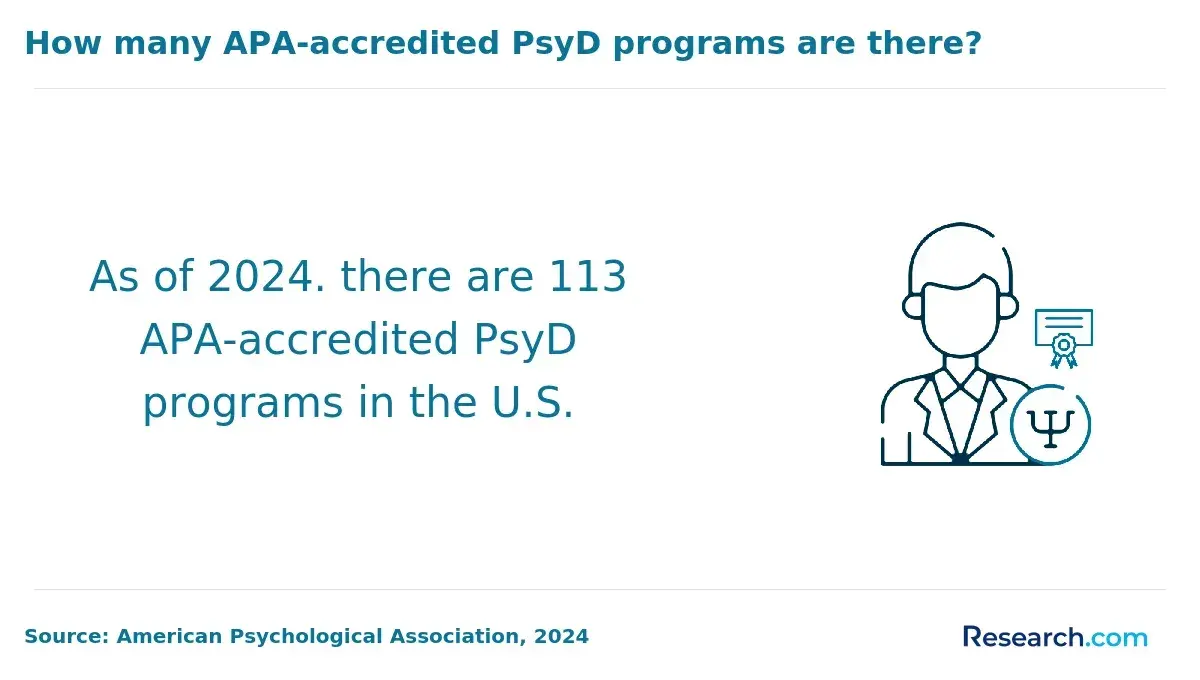
As of November 2025, New Mexico has zero APA-accredited PsyD programs. That includes traditional campus programs, hybrid programs, and fully online programs marketed to New Mexico residents. Students should be especially cautious with online doctoral psychology programs because the APA currently does not accredit fully online PsyD programs.
APA accreditation is more than a reputation marker. The American Psychological Association evaluates doctoral psychology programs through a formal review of curriculum, faculty, training resources, student outcomes, practicum expectations, and program operations. Programs also undergo site visits, self-studies, and reaccreditation reviews every 7 to 10 years. For students seeking psychologist licensure, this review can affect internship eligibility, employer recognition, state board acceptance, and long-term professional mobility.
New Mexico students who want doctoral psychology training inside the state should compare alternatives rather than assume a local PsyD exists. Options mentioned in the state’s doctoral psychology landscape include the PhD in Counseling Psychology at New Mexico State University, the APA-accredited clinical psychology internship at the University of New Mexico, and the non-APA-accredited PhD in Educational Psychology at the University of New Mexico.
The key decision is whether you need the PsyD specifically or whether your career goal can be served by another doctoral path. A PsyD is usually practice-oriented and designed for clinical service. A PhD often includes deeper research expectations, although APA-accredited clinical and counseling psychology PhD programs can also prepare graduates for licensure.
| Option for New Mexico students | Best for | Main caution |
| Out-of-state APA-accredited PsyD | Students committed to the PsyD model and willing to relocate or complete required in-person components | Confirm New Mexico licensure fit before enrolling |
| APA-accredited PhD in psychology | Students open to research training and clinical licensure preparation | Admissions can be highly selective and research fit matters |
| Non-APA-accredited doctoral program | Students pursuing non-licensure academic, educational, or specialized goals | May not satisfy psychologist licensure requirements |
| Master’s-level behavioral health pathway | Students who want a faster route into counseling, behavior analysis, or related services | Scope of practice differs from licensed psychologist roles |
What are the best APA accredited PsyD programs in New Mexico?
There are no best APA-accredited PsyD programs in New Mexico because none currently exist in the state. A more useful question is: which APA-accredited psychology training options or out-of-state PsyD routes should New Mexico residents investigate?
Students should use the APA accreditation directory and the New Mexico psychology licensing board’s requirements as the final authority. Do not rely only on a school’s marketing page, a ranking list, or the phrase “licensure eligible.” Licensure eligibility depends on the exact program, delivery format, supervised training hours, internship type, and state board rules.
| Program or option named in New Mexico-related searches | How to evaluate it | Decision point for students |
| University of New Mexico - PhD in Clinical Psychology (Campus-Based) | Review its APA accreditation status, clinical training model, research areas, practicum access, and internship outcomes. | Consider it if you are open to a PhD rather than a PsyD and want campus-based doctoral psychology training. |
| New Mexico State University - PhD in Counseling Psychology (Campus-Based) | The program has been accredited since 1995 and reaccredited through 2031; the five-year curriculum emphasizes multicultural counseling and diverse populations, and tuition is listed as $8,634 per year. | Consider it if counseling psychology, multicultural practice, and doctoral research training fit your career goals. |
| The Chicago School of Professional Psychology (Online/Hybrid) | Check the exact campus, delivery format, APA accreditation status, internship placement record, and residency requirements. | Investigate only after confirming the program’s current accreditation and New Mexico licensure compatibility. |
| Capella University (Online) | Verify accreditation directly with APA and confirm whether the program structure meets licensure rules in New Mexico. | Be cautious with fully online claims; do not assume online doctoral psychology training satisfies psychologist licensure requirements. |
| Liberty University Online (Hybrid) | Review whether the specific PsyD program, not just the institution, is APA-accredited and whether in-person requirements are sufficient for licensure. | Ask the state board and the program for written clarification before committing tuition dollars. |
New Mexico’s clinical psychology field is described as growing rapidly, with a projected increase of 23.3%, and earning a median salary of $81,640. Students comparing related behavioral health careers may also want to review how compensation differs in BCBA and ABA salary pathways by state, especially if they are weighing psychology against applied behavior analysis.
How to choose an out-of-state APA-accredited PsyD as a New Mexico resident
- Confirm APA accreditation for the exact program. Institutional accreditation is not the same as APA accreditation for the doctoral psychology program.
- Ask whether New Mexico accepts the program for psychologist licensure. Get guidance before enrolling, not after graduation.
- Review internship outcomes. Strong programs should prepare students for competitive internships through APPIC or other accredited training routes.
- Calculate total cost. Include tuition, fees, travel, residencies, relocation, lost income, application costs, and internship-related expenses.
- Match the faculty and clinical training to your goals. A program with strong fit in child psychology may not be the best choice if you want forensic assessment, health psychology, or rural integrated care.
Who is eligible to apply to APA accredited PsyD programs in New Mexico?
Because New Mexico does not currently offer an APA-accredited PsyD, eligibility should be understood in two ways: who is typically competitive for APA-accredited PsyD programs outside the state, and who may be better served by an in-state PhD or master’s-level mental health route.
Competitive PsyD applicants usually have a strong undergraduate record, psychology prerequisites, relevant clinical or research exposure, thoughtful career goals, and recommendation letters from faculty or supervisors who can speak to their readiness for doctoral-level training. Recent psychology graduates, master’s-level clinicians, and early-career professionals may all apply, but they need evidence that they understand the demands of doctoral clinical training.
Campus-based programs are often best for students who want structured schedules, regular in-person mentorship, university clinic training, local practicum relationships, and direct access to research teams. These programs can be a strong fit for students who learn best through face-to-face supervision and can relocate or commute.
Hybrid programs may appeal to working adults, rural students, caregivers, and applicants who cannot easily move. However, flexibility has limits in psychology training. Even when coursework is partly remote, supervised practicum, assessment training, clinical skills evaluation, and internship preparation typically require substantial in-person engagement.
Some students compare PsyD preparation with shorter credentials in related areas. If your goal involves autism services, behavioral intervention, or school-based behavior support rather than psychologist licensure, it may be useful to compare doctoral psychology training with online applied behavior analysis certification costs and credential requirements.
| Student profile | Likely best-fit path | Why |
| Wants to become a licensed psychologist and prefers clinical practice | APA-accredited PsyD outside New Mexico or APA-accredited clinical/counseling psychology PhD | Licensure preparation requires careful accreditation and supervised training alignment |
| Wants to stay in New Mexico for doctoral study | In-state PhD option or related doctoral program | No in-state APA-accredited PsyD is currently available |
| Wants faster entry into behavioral health services | Master’s-level counseling, social work, ABA, or related pathway | May reduce time and cost compared with a doctoral psychology degree |
| Needs maximum schedule flexibility | Hybrid program only after accreditation and licensure verification | Convenience is not enough if the program does not meet licensing standards |
What are the requirements to get into an APA accredited PsyD program in New Mexico?
There are no New Mexico-based APA-accredited PsyD admissions requirements because the state does not currently have such a program. Still, New Mexico residents applying to APA-accredited PsyD programs elsewhere can expect demanding admissions standards. These programs evaluate academic preparation, interpersonal maturity, clinical readiness, writing ability, and fit with the program’s training model.
- Accredited bachelor’s degree: Most programs require a bachelor’s degree from an accredited institution. A psychology major is helpful, but some programs admit students from related fields if prerequisites are completed.
- Undergraduate GPA: A minimum 3.0 GPA is often expected, while competitive applicants may exceed 3.5.
- Psychology prerequisites: Common prerequisites include General Psychology, Statistics, Research Methods, and Abnormal Psychology. Some programs expect 18 psychology credits with grades of B or higher.
- Research or clinical exposure: Lab work, independent study, human services experience, crisis work, assessment experience, or supervised helping roles can strengthen an application.
- GRE policies: GRE requirements vary. Some programs require the GRE, some may ask for the Psychology GRE subject test, and others waive standardized testing.
- Recommendation letters: Three letters are commonly requested, ideally from psychology faculty, research supervisors, clinical supervisors, or licensed psychologists who know the applicant well.
- Personal statement: Applicants must usually explain their professional goals, clinical interests, reasons for choosing the program, and readiness for doctoral training.
- Interview: Programs often use interviews to assess communication skills, ethical judgment, emotional readiness, and fit with the training community.
- Official application materials: Transcripts, resumes or CVs, essays, application forms, and sometimes centralized systems such as PSYCAS may be required.
Admissions can be highly competitive, with acceptance rates often below 15%. Students should apply broadly, prepare early, and avoid treating any single program as a guaranteed option. Those comparing doctoral psychology with behavior analysis careers may also want to explore career options with an applied behavior analysis degree before choosing the longer doctoral route.
Common application mistakes to avoid
- Applying before checking accreditation. A doctoral psychology program can sound impressive and still fail to meet the requirements you need for licensure.
- Using one generic personal statement. PsyD programs expect applicants to explain why their training model, faculty, and clinical experiences fit the applicant’s goals.
- Ignoring internship outcomes. A program’s ability to place students in quality internships affects licensure progress and early career credibility.
- Assuming online equals easier. Doctoral clinical training requires intensive assessment, ethics, supervision, and practicum work regardless of delivery format.
- Comparing only tuition. Travel, residencies, relocation, fees, books, supervision costs, and unpaid training time can change the real price of attendance.
What PsyD specializations are available in New Mexico?
Since there are no APA-accredited PsyD programs in New Mexico, students will not find an in-state PsyD specialization menu. However, New Mexico residents comparing out-of-state PsyD programs or in-state psychology PhD alternatives should understand the major specialization areas and how each one connects to career goals.
- Clinical Psychology: Focuses on assessment, diagnosis, psychotherapy, and treatment planning for mental health disorders across the lifespan. This is the broadest route for students seeking clinical psychologist licensure.
- Addictions Psychology: Prepares students to work with substance use disorders and behavioral addictions through assessment, intervention, relapse prevention, and culturally responsive treatment planning.
- Multicultural and Diversity Psychology: Emphasizes culturally informed assessment, therapy, consultation, advocacy, and service delivery with diverse communities, which is especially relevant in New Mexico’s Hispanic, Native American, rural, and border-region contexts.
- Health Psychology: Connects mental and physical health through behavioral medicine, chronic illness support, pain management, adherence interventions, and integrated care.
- Child and Adolescent Psychology: Centers on developmental psychopathology, school and family systems, youth assessment, and interventions for children, teens, and families.
- Quantitative Methods and Research: Builds advanced skills in statistics, psychometrics, measurement, program evaluation, and research design for academic, institutional, or government roles.
- Online PsyD Specializations: Students may encounter online or hybrid programs advertising concentrations such as forensic psychology or organizational psychology. Before enrolling, confirm whether the specific program is APA-accredited and whether its practicum and internship model is acceptable for New Mexico licensure.
| Specialization | Best fit if you want to... | Questions to ask before choosing |
| Clinical Psychology | Provide therapy, assessment, and diagnosis in healthcare or private practice settings | Does the program provide strong assessment training and APA-aligned internship preparation? |
| Addictions Psychology | Work in substance use treatment, community mental health, or rehabilitation settings | Are there supervised placements with addiction-focused populations? |
| Multicultural and Diversity Psychology | Serve culturally diverse, rural, tribal, immigrant, or underserved communities | Is cultural competence integrated across the curriculum or limited to one course? |
| Health Psychology | Practice in hospitals, primary care, pain clinics, or integrated health systems | Are practicum sites available in medical or interdisciplinary settings? |
| Child and Adolescent Psychology | Work with youth in schools, hospitals, clinics, or family-focused practices | Does the program offer supervised child assessment and family intervention training? |
A useful way to choose a specialization is to start with the population you want to serve, then work backward to the training required. For example, a student who wants to work in rural integrated care should prioritize health psychology, multicultural training, telehealth exposure, and supervised placements with underserved populations. A student interested in court evaluations should examine forensic assessment training, expert testimony preparation, and local practicum access.
What courses are typically included in APA accredited PsyD programs in New Mexico?
Although New Mexico does not currently have an APA-accredited PsyD, students can expect APA-accredited PsyD programs elsewhere to include coursework that builds competence in assessment, intervention, research literacy, ethics, diversity, consultation, and supervised practice. The exact sequence varies by school, but the core academic areas are usually similar.
- Advanced Psychopathology: Students learn how mental disorders develop, present, and are diagnosed, often using DSM-5 concepts to support case formulation and treatment planning.
- Psychotherapy Techniques: Courses introduce evidence-based interventions such as CBT, psychodynamic approaches, and other therapy models used with individuals, groups, couples, or families.
- Psychological Assessment: Training covers test selection, administration, interpretation, report writing, cognitive assessment, personality assessment, and ethical use of assessment tools.
- Cultural and Ethical Issues: Students examine professional ethics, legal responsibilities, multicultural competence, informed consent, confidentiality, boundaries, and culturally responsive care.
- Pre-Clinical & Clinical Practicum: Practicum experiences place students in supervised clinical settings where they apply assessment and therapy skills before internship.
| Course area | Why it matters for licensure preparation | What to look for in a program |
| Assessment | Licensed psychologists are often expected to conduct evaluations and write defensible reports | Supervised testing opportunities, feedback on reports, and access to assessment materials |
| Intervention | Students must learn evidence-based therapy methods and treatment planning | Multiple therapy modalities and supervised client contact |
| Ethics and law | Licensure requires professional judgment and compliance with legal standards | Courses tied to real clinical dilemmas, documentation, supervision, and state rules |
| Diversity and culture | Psychologists must serve clients across cultural, linguistic, socioeconomic, and geographic differences | Training embedded throughout clinical work, not isolated in one lecture |
| Research methods | Even practice-focused psychologists must evaluate evidence and outcomes | Applied research, program evaluation, and statistics that support clinical decision-making |
How do PsyD students find internships in New Mexico?
Internship planning should begin early because it is one of the most important steps between doctoral coursework and licensure. New Mexico residents enrolled in out-of-state PsyD programs may still seek internship or practicum experiences in New Mexico, but availability depends on the site, program approval, supervision requirements, and match outcomes.
- Use the APPIC Match: The APPIC Match is a national process that connects doctoral psychology students with internship sites. It helps students apply to structured training programs, including sites that may serve New Mexico populations.
- Research local consortia and accredited sites: Options such as the New Mexico Psychology Internship Consortium may appeal to students interested in rural mental health, community-based care, and culturally responsive practice.
- Review university-affiliated training programs: The University of New Mexico Health Sciences Center offers competitive APA-accredited internship training with multiple clinical rotations.
- Consider federal and state agency placements: The New Mexico VA Health Care System and related public-sector settings can provide experience with complex clinical populations and interdisciplinary care.
- Search job boards and state internship portals: Platforms such as Indeed and the New Mexico Department of Workforce Solutions may help students identify training, employment, or supervised experience opportunities, though doctoral internship requirements must still be verified.
- Lean on faculty mentorship: Faculty advisors can help students choose realistic sites, strengthen essays, prepare for interviews, and avoid applying to internships that do not match their training background.
- Use professional associations and career services: Psychology associations, program career offices, and alumni networks can provide application workshops, site lists, and interview preparation.
- Prioritize culturally responsive and rural placements: Students committed to practicing in New Mexico should seek training with Hispanic, Native American, rural, veteran, bilingual, and underserved communities when possible.
Internship search timeline for PsyD students
| Stage | What to do | Why it matters |
| First doctoral year | Learn the program’s practicum and internship expectations | Early planning prevents accreditation and hour-tracking problems later |
| Practicum years | Build supervised experience with populations tied to your career goals | Internship sites look for readiness, focus, and strong supervisor evaluations |
| Year before internship | Review APPIC materials, identify sites, request letters, and refine essays | Competitive applications require time and strategic site selection |
| Application season | Submit materials, interview, rank sites, and prepare backup plans | The process can be stressful and competitive, so organization matters |
| After match | Confirm requirements for graduation, licensure, and postdoctoral supervision | Internship is a major milestone, but not the final licensure step |
Students should not choose a doctoral program before understanding how internship placement works. Ask for recent internship match outcomes, the percentage of students placed at accredited sites, geographic flexibility, and how the program supports students who want to train in New Mexico.
What are the pros and cons of online and campus PsyD programs in New Mexico?
The comparison is not simply online versus campus. For New Mexico students, the real comparison is accredited, licensure-aligned training versus convenient but risky training. Since there are no APA-accredited PsyD programs in New Mexico, students considering online, hybrid, or out-of-state options should weigh flexibility against accreditation, supervision, internship access, and licensure acceptance.
Pros and Cons of Online PsyD Programs in New Mexico
| Potential advantage or risk | What it means for New Mexico students |
| Flexible scheduling | Remote coursework may help students continue working or caring for family while studying. |
| Broader school search | Students in rural New Mexico may be able to explore programs outside commuting distance. |
| Lower relocation pressure | Some hybrid models may reduce the need to move full time, although residencies and clinical requirements may still apply. |
| Possible savings on commuting or housing | Students may reduce some living costs, but tuition, travel, residencies, and unpaid training time can still be substantial. |
| Accreditation risk | The APA currently does not accredit fully online PsyD programs, so students must verify claims carefully. |
| Practicum challenges | Students may need to arrange local supervised placements that satisfy both the program and the state board. |
| Networking limitations | Remote students may have fewer spontaneous mentoring, peer, and clinical networking opportunities. |
| Licensure uncertainty | State boards and employers may scrutinize programs with limited in-person clinical training. |
Pros and Cons of Campus-Based PsyD Programs in New Mexico
| Potential advantage or risk | What it means for New Mexico students |
| Stronger in-person clinical training | Campus programs often have established practicum relationships with clinics, hospitals, schools, and community agencies. |
| More direct faculty mentorship | Face-to-face supervision can help students develop clinical judgment and professional identity. |
| Clearer training structure | Students may benefit from scheduled coursework, supervised labs, and predictable clinical milestones. |
| Research and community engagement | Campus settings can provide access to labs, conferences, training clinics, and community-based projects. |
| Relocation burden | Because New Mexico lacks an APA-accredited PsyD, students may need to move to another state. |
| Higher indirect costs | Housing, commuting, campus fees, and lost work hours can increase the total cost. |
| Less schedule flexibility | Fixed class times and in-person clinical requirements may be difficult for working adults. |
| Competitive admissions | APA-accredited doctoral psychology programs often admit small cohorts and expect strong fit. |
Online vs. campus decision rule
Choose the most flexible option only after it passes the accreditation and licensure test. If a program cannot clearly document APA accreditation, supervised practicum arrangements, internship outcomes, and New Mexico licensing compatibility, its convenience should not outweigh the professional risk.
What jobs can you get with a PsyD in New Mexico?
A PsyD can prepare graduates for clinical practice, psychological assessment, consultation, supervision, and leadership roles, provided the graduate meets licensure requirements. In New Mexico, job options may be shaped by rural mental health needs, integrated care expansion, telehealth, school-based services, veteran care, community mental health demand, and culturally responsive service delivery.
- Licensed Clinical Psychologist: Provides psychotherapy, diagnosis, psychological assessment, crisis intervention, and treatment planning in hospitals, clinics, community mental health agencies, and private practices.
- Counseling Psychologist: Supports clients through individual, group, family, career, and adjustment counseling in colleges, schools, nonprofits, telehealth organizations, and community agencies.
- Forensic Psychologist: Conducts evaluations, risk assessments, competency-related work, consultation, and expert input for courts, correctional systems, attorneys, or public agencies.
- Health Service Psychologist: Works in integrated medical settings, primary care, rehabilitation, chronic illness programs, pain clinics, and behavioral medicine teams.
- Academic/Research Psychologist: Teaches, supervises students, conducts applied research, evaluates programs, or contributes to university-based training. Students interested in behavior-focused educational pathways can also compare psychology careers with online applied behavior analysis degree programs.
| Career path | Typical work setting | Key preparation to verify |
| Clinical psychologist | Hospitals, private practice, community mental health, group practices | APA-accredited doctoral training, internship, postdoctoral supervision, state licensure |
| School or child-focused psychologist | Schools, youth clinics, pediatric settings, family agencies | Child assessment, family systems, school collaboration, developmental training |
| Forensic psychologist | Courts, corrections, law enforcement, forensic hospitals | Forensic assessment, ethics, report writing, expert testimony preparation |
| Health psychologist | Primary care, hospitals, rehabilitation centers, integrated care clinics | Behavioral medicine, interdisciplinary teamwork, medical documentation |
| Faculty or researcher | Universities, research centers, policy organizations | Research methods, publications, teaching experience, grant or evaluation skills |
AI, telehealth, and current workforce trends
Psychology practice is changing. Telehealth has made services more accessible for rural patients, while AI-supported documentation, screening tools, and digital mental health platforms are changing administrative workflows. These tools do not replace licensure, clinical judgment, assessment competence, or ethical responsibility. Future psychologists should build comfort with technology while also learning privacy rules, documentation standards, bias risks, and limits of automated tools.
What is the average salary of PsyD graduates in New Mexico?
As of late 2025, PsyD-trained psychologists in New Mexico are reported to earn average annual salaries ranging from approximately $89,943 to $120,700, while clinical psychologists are reported between $102,000 and $179,382. Counseling psychologists and other applied roles generally fall slightly below clinical averages. Nationally, U.S. Bureau of Labor Statistics benchmarks list median salaries for psychologists at about $94,310, with clinical and counseling psychologists near $95,830 and top earners exceeding $157,000.
Salary outcomes vary widely. A PsyD does not guarantee a specific income, and graduates of online, hybrid, campus-based, PsyD, and PhD programs may see different opportunities depending on licensure status, internship quality, specialization, employer type, geographic location, and ability to build a caseload or secure advanced clinical roles.
- Licensure status: Full licensure is usually essential for independent practice and higher-responsibility clinical roles.
- Career stage: Entry-level salaries may start around $65,000 to $85,000, mid-career earnings may move into the $95,000-$125,000 range, and senior clinicians may exceed $150,000.
- Specialization: Areas such as neuropsychology can exceed $120,000, especially when supported by advanced training and recognized credentials.
- Employer type: Private practice and healthcare systems may offer higher earning potential, while academic roles may trade some income for teaching, research, and schedule stability.
- Location and demand: Urban markets, rural shortages, federal systems, and areas with limited provider access can influence pay, hiring demand, and loan repayment possibilities.
Students comparing psychology with behavior analysis may also ask, What can I do with a master’s in ABA? That comparison is useful because doctoral psychology requires more years of training, while ABA and related master’s-level careers may lead to different scopes of practice, timelines, and salary patterns.
What APA Accredited PsyD Graduates in New Mexico Say About Their Degree
Because New Mexico does not currently have an APA-accredited PsyD program, students should be skeptical of any claim that someone completed an APA-accredited PsyD through a New Mexico-based university unless that claim can be verified in the APA accreditation directory. Testimonials can be helpful for understanding student experience, but they should never substitute for accreditation checks, licensure board confirmation, or published internship outcomes.
When speaking with current students or graduates, ask practical questions rather than general satisfaction questions. Useful questions include: Did the program help you secure an accredited internship? Were practicum placements arranged or did you have to find them alone? Did the state board accept your coursework without complications? How much debt did you take on? How long did it take from enrollment to licensure? Would you choose the same program again?
How to make a smart PsyD decision as a New Mexico student
- Start with your end goal. Decide whether you need licensed psychologist status or whether counseling, social work, school psychology, ABA, or another behavioral health route would meet your goals faster.
- Verify APA accreditation. Check the exact doctoral program, not only the institution.
- Contact the New Mexico licensing board. Confirm whether the program, delivery format, practicum, internship, and degree title meet licensure expectations.
- Compare PsyD and PhD options honestly. If you want to stay in New Mexico, an APA-accredited PhD may be more realistic than a PsyD.
- Study internship data. Programs with weak internship outcomes can delay graduation, licensure, and employment.
- Estimate total debt and lost income. Doctoral psychology can take years; calculate the full financial commitment before enrolling.
- Ask for written answers. Admissions representatives may be helpful, but accreditation and licensure claims should be documented.
Key Insights
- New Mexico has no APA-accredited PsyD programs as of November 2025, so students seeking a PsyD must look outside the state or consider another doctoral psychology route.
- APA accreditation is critical for many students because it can affect internship access, licensure eligibility, employer confidence, and professional mobility.
- In-state alternatives include PhD-level psychology training and APA-accredited internship opportunities, but these are not the same as an APA-accredited PsyD.
- Online and hybrid options require extra caution. Flexibility is valuable, but it does not matter if the program does not meet New Mexico licensure requirements.
- Before applying, verify accreditation, ask the New Mexico licensing board about eligibility, review internship placement outcomes, and calculate the full cost of attendance.
- A PsyD can lead to clinical, counseling, forensic, health psychology, academic, and research-related roles, but salary depends on licensure, specialization, experience, employer type, and location.
Related Articles for Nearby States
- 2027 Best PsyD Programs in Arizona: APA Accredited Online & Campus
- 2027 Best PsyD Programs in Colorado: APA Accredited Online & Campus
- 2027 Best PsyD Programs in Texas: APA Accredited Online & Campus
- 2027 Best PsyD Programs in Utah: APA Accredited Online & Campus
- 2027 Best PsyD Programs in Oklahoma: APA Accredited Online & Campus
- 2027 Best PsyD Programs in Nevada: APA Accredited Online & Campus
- 2027 Best PsyD Programs in Kansas: APA Accredited Online & Campus
- 2027 Best PsyD Programs in Wyoming: APA Accredited Online & Campus
- 2027 Best PsyD Programs in Nebraska: APA Accredited Online & Campus
- 2027 Best PsyD Programs in California: APA Accredited Online & Campus
References:
- Participating Internships https://nationalmatching.com/psychint/directory/participating-programs-2025ph1final.html
- NM EPSCoR Mentor Awards https://www.nmepscor.org/engagement/nm-epscor-mentor-awards
- The Online Graduate PhD Degree: Questions, Answers, and Case Analysis https://www.psichi.org/page/282Eye-The-Online-Graduate-PhD-Degree
- Counseling Psychology Ph.D. | New Mexico State University - BE BOLD. Shape the Future. https://cep.nmsu.edu/academic-programs/counseling-psych-phd/counseling-psychology-phd.html
- Potential Mentors | New Mexico State University | BE BOLD. Shape the Future. https://discoveryscholars.nmsu.edu/dsp-pages/potential-mentors.html
- The Future of Psychology Education: PsyD Programs Online | Meridian University https://meridianuniversity.edu/content/the-future-of-psychology-education-psyd-programs-online
- Doctor of Psychology (PsyD) in Clinical Psychology with Health Emphasis https://shs.touro.edu/programs/doctor-of-psychology/
- Internships > InternshipStudent > InternshipResources https://www.dws.state.nm.us/Internships/InternshipStudent/InternshipResources
- PCSAS Accredited Programs - PCSAS https://pcsas.org/pcsas-accredited-programs/
Other Things You Should Know About PsyD Programs in New Jersey
The typical class size for APA-accredited PsyD programs in New Mexico generally ranges from 10 to 15 students. This smaller class size fosters personalized attention and a supportive learning environment, enabling students to gain more individualized mentorship and feedback from faculty.
In 2026, the cost of enrolling in an APA-accredited PsyD program in New Mexico can range from $20,000 to $45,000 per year. This varies depending on the institution, residency status, and additional fees. Prospective students should verify details directly with the program providers.


