
2027 DBA vs. MBA: Explaining the Difference

Co-Founder and Chief Data Scientist
The Master of Business Administration (MBA) and the Doctor of Business Administration (DBA) are two of the most prestigious credentials in the corporate and academic worlds, yet they often lead to confusion. While both degrees are centered on advanced business acumen, they serve fundamentally different career stages, skill development goals, and professional outcomes.
About 90% of global recruiters predict they will hire MBA graduates—more than those with only bachelor’s degrees—showing that demand for MBA talent remains strong. This article will thoroughly explore the differences between these two elite degrees, breaking down their distinct curricula, target audiences, typical professional experience requirements, and how each degree sets graduates on a unique career trajectory in high-level management, consulting, or academia.
Key things you should know about DBA vs. MBA Degrees
- The DBA is a higher-level, research-focused degree aimed at experienced professionals seeking to advance business knowledge, solve complex problems, and pursue academic or top advisory roles, while the MBA is a practical, management-focused degree designed for early to mid-career professionals to develop broad business and leadership skills.
- In terms of salary, professionals with a DBA typically earn about 20% more than those with an MBA, with weekly earnings averaging $2,083 for doctorates versus $1,661 for master’s degree holders, reflecting the advanced expertise and higher-level positions DBAs often occupy.
- Duration also differs, with MBA programs usually completed in 1 to 2 years, whereas DBA programs require 3 to 6 years due to their intensive research and dissertation components, catering to different career stages and aspirations.
- What is the key difference between a DBA and an MBA degree? DBA vs. MBA
- How does the duration of a DBA compare to an MBA program? Program Length
- What educational background is typical for DBA vs. MBA students? Educational Background
- What is the educational cost of a DBA and an MBA degree? Program Cost
- Do MBA programs offer part-time and online options like DBAs? Do MBA programs offer part-time and online options like DBAs?
- What career paths can you pursue with a DBA versus an MBA? Career Paths
- How does the salary of DBA graduates compare to MBA holders? Career Salary
- How do employers view DBA compared to MBA credentials? How do employers view DBA compared to MBA credentials?
- Do DBA and MBA programs offer comparable long-term returns on investment? Do DBA and MBA programs offer comparable long-term returns on investment?
- Are job growth prospects better for DBAs or MBAs? Job Growth
- What factors influence the choice between DBA and MBA degrees? What factors influence the choice between DBA and MBA degrees?
What is the key difference between a DBA and an MBA degree?
The key difference between a DBA and an MBA degree lies in their purpose, focus, and depth of study. An MBA offers a broad business management education designed to develop general managerial skills and practical knowledge for mid- to senior-level career advancement.
In contrast, a DBA is a specialized, research-oriented doctoral degree emphasizing advanced applied research skills to solve complex business problems and provide new insights in a specific area of business practice.
Purpose and Focus
- MBA: Provides a comprehensive overview of business disciplines such as finance, operations, marketing, and entrepreneurship. It focuses on practical application and prepares students for managerial and leadership roles by enhancing strategic and operational skills.
- DBA: Is a terminal degree concentrating on applied research, theory application, and specialized expertise in a particular business area. The DBA prepares students for executive, consulting, or academic roles involving high-level problem solving and knowledge creation.
Coursework and Duration
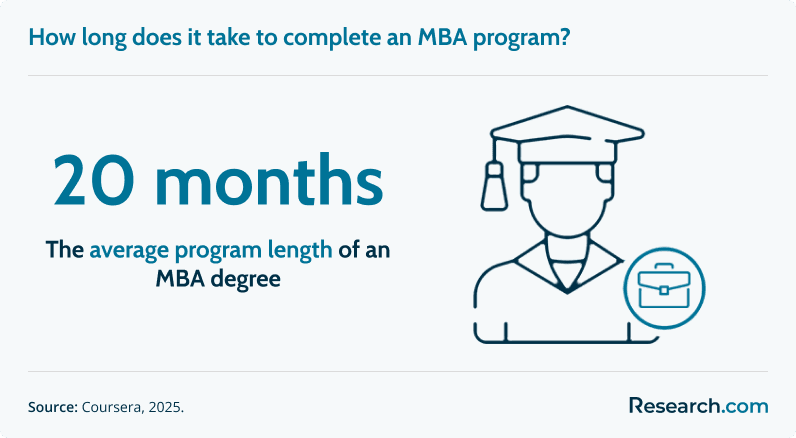
- MBA: Typically involves about 12 courses over 10 to 20 months, covering diverse business topics to build broad managerial competence.
- DBA: Usually includes about 20 courses over 2.5 to 3.5 years, with rigorous coursework and a dissertation or doctoral research project addressing real-world organizational challenges.
Research and Practical Application
- MBA: Emphasizes theoretical knowledge with practical business applications.
- DBA: Focuses heavily on applied research, where candidates collaborate with organizations to solve complex business problems, linking theory directly to practice.
In both degrees, students can choose from the top specializations in business management, including finance, leadership, supply chain management, marketing, and strategic innovation—each shaping distinct career outcomes within global industries.
How does the duration of DBA compare to an MBA program?
The duration of a DBA program is significantly longer than that of an MBA program. While an MBA, like the shortest MBA in sports management online, typically takes about 10 to 20 months to complete, offering a relatively shorter and comprehensive business education, a DBA requires a more extended commitment, usually spanning 2.5 to 3.5 years.
This difference in duration is mainly due to the DBA's research-intensive nature, involving about 20 courses and a dissertation or doctoral research project that demands deep expertise in a specific business area.
The MBA program comprises around 12 courses focused on broad managerial principles and practical business knowledge, making it shorter and more applicable for those seeking to advance quickly in general management roles.
The longer duration of the DBA reflects its focus on applied research and solving complex organizational problems, which requires extensive study and investigation beyond the scope of an MBA.
What educational background is typical for DBA vs. MBA students?
The educational backgrounds and professional profiles of students in DBA and MBA programs are distinctly different, reflecting the level and purpose of each degree, which is often a separate consideration from exploring options like top online esports business degree programs.
MBA Educational Background
- Prior Degree: A Bachelor's degree from an accredited institution is the universal requirement. This degree does not necessarily need to be in business; many successful MBA students have undergraduate degrees in liberal arts, engineering, or science.
- Professional Experience: Competitive full-time MBA programs usually look for at least 2 years of professional experience, while part-time and Executive MBA (EMBA) programs typically require 5 years or more of management experience.
DBA Educational Background
- Prior Degree: The most common and preferred prerequisite is a Master's degree, often an MBA or a Master's in a related field (e.g., Finance, Organizational Leadership, or Management).
- Professional Experience: Candidates are typically well-established senior leaders who have been working at a high strategic or executive level for many years. The program is designed for people who have already mastered management practice and now wish to contribute new, evidence-based knowledge to the field.
When applying, it helps to understand how undergraduate background types—such as BA vs BS—can shape eligibility. BA graduates may bring broader theoretical foundations in communication or humanities, while BS graduates often have stronger analytical or quantitative preparation beneficial for MBA and DBA coursework.
What is the educational cost of a DBA and an MBA degree?
The educational cost of a Doctor of Business Administration (DBA) degree varies but generally is higher than that of an MBA due to its extended duration and research intensity.
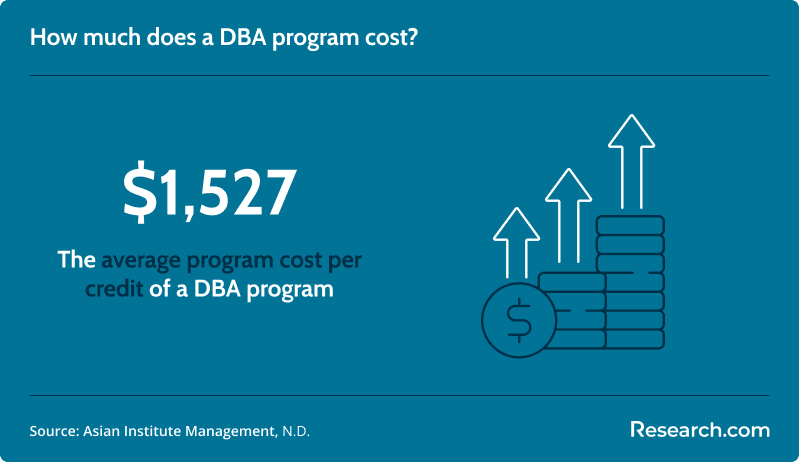
For example, executive DBA programs can cost around $56,400, as seen in some specialized institutions. Some other DBA programs, particularly those offered via distance learning, can be significantly lower. The cost per credit hour for DBA programs can also range, such as $1,527 per credit hour for specialized fields like business intelligence in some online programs.
MBA program costs typically range widely depending on the institution and program format (online, full-time, part-time). Average MBA tuition at many universities in 2025 often ranges from $30,000 to $120,000 for the entire program, with many programs costing less than the higher-end DBA fees but still representing a significant investment.
For professionals comparing business credentials, the MBA vs CPA cost question is also worth considering—MBAs often carry higher tuition but deliver broader career flexibility, while CPA certification costs less but offers narrower specialization focused on accounting and finance.
Do MBA programs offer part-time and online options like DBAs?
MBA programs, like the shortest online entertainment business degree, widely offer part-time and online options similar to DBA programs.
Part-time MBA programs provide flexibility for students to continue working full-time while earning their degree, typically taking longer to complete than full-time programs. These part-time options are often available online, allowing students to plan schedules around other commitments such as careers and family.
Online MBA programs offer convenience and accessibility from anywhere, enabling students to participate in live classes, complete coursework asynchronously, and benefit from virtual interactions with peers and faculty.
This flexibility makes MBA programs highly adaptable for working professionals seeking career advancement without pausing their employment.
What career paths can you pursue with a DBA versus an MBA?
The DBA is geared towards high-level executive leadership, consulting, academic, and research-intensive careers, often requiring substantial prior experience.
The MBA, such as the best online MBA in general business programs, prepares candidates for diverse managerial roles with a practical focus, suitable for accelerating careers in various business disciplines and industries.
Career Paths with a DBA
- Chief Executive Officer (CEO): Leads organizations, making strategic decisions to drive growth and profitability with advanced business and leadership skills.
- Corporate Trainer/Leadership Development Manager: Designs and implements training programs to enhance employee skills and develop future leaders.
- Management Consultant: Provides data-driven insights and strategies to improve organizational efficiency and solve complex business problems.
- Entrepreneur: Leverages advanced business knowledge to launch startups, develop new products, and drive business innovation.
- Professor: Teaches business courses at universities or colleges, often engaging in academic research and mentoring students.
- Healthcare Administrator: Manages business operations within healthcare organizations, focusing on efficiency, leadership, and problem-solving.
- Research Analyst: Collects and analyzes data to provide actionable insights across industries like business, science, and healthcare.
Career Paths with an MBA
- Project Manager: Oversees business projects from initiation to completion, ensuring goals, timelines, and budgets are met.
- Marketing Manager: Develops and executes marketing strategies to promote products or services and increase brand awareness.
- Financial Manager: Manages an organization’s financial health, including budgeting, forecasting, and investment decisions.
- Operations Manager: Oversees day-to-day operations to improve efficiency in production and service delivery.
- Human Resources Manager: Manages recruitment, employee relations, and organizational development to enhance workforce productivity.
- Business Development Manager: Identifies market opportunities and builds relationships to expand business operations.
- Consultant: Advises companies on improving performance, strategy, and operations, often focusing on practical business solutions.
How does the salary of DBA graduates compare to MBA holders?
The salary of DBA graduates generally tends to be higher than that of MBA holders, reflecting the advanced education and specialized expertise that a DBA represents. The median salary for someone with a DBA, which may include a specialized, advanced entertainment business degree salary, is around $128,000 per year.
Meanwhile, the median salary for an MBA graduate is approximately $85,000 per year, indicating a difference of roughly $43,000 annually. However, salaries can vary widely depending on factors such as experience, industry, job role, and location.
While MBA graduates often secure managerial and leadership roles with salaries ranging from $70,000 to $130,000 or higher, depending on the sector and experience, DBA holders are more likely to fill executive, consulting, academic, or specialized research positions where salaries can climb higher, sometimes reaching up to $150,000 or more.
In some cases, top MBA graduates, especially those from prestigious schools or in finance and consulting, can earn competitive salaries that rival DBA holders, with some roles exceeding $180,000 annually.
How do employers view DBA compared to MBA credentials?
Employers generally view MBA and DBA credentials through two different lenses, valuing each for distinct contributions to the organization based on the degree's focus and the candidate's career stage.
The MBA is the established gold standard for management, seen as a comprehensive degree that equips professionals with the broad, practical, and functional knowledge. An MBA signals a candidate is ready to execute business strategy and effectively manage teams and projects, making it universally recognized across industries for career acceleration or change.
On the other hand, the DBA is viewed as a specialized, terminal degree designed for the most seasoned professionals, often those who already hold an MBA. Employers value the DBA for the advanced scholar-practitioner skills it confers: the ability to conduct rigorous, applied research to solve complex, systemic business problems and contribute to organizational thought leadership.
While the DBA may not be explicitly listed in as many job descriptions as an MBA, it provides a competitive differentiator at the highest levels, positioning graduates for executive roles and academic positions, where the ability to challenge, innovate, and develop evidence-based business practice is paramount.
Do DBA and MBA programs offer comparable long-term returns on investment?
When evaluating long-term returns on investment, differences become apparent in both immediate and delayed benefits. MBA programs typically offer a quicker transition to enhanced managerial roles and salary increases, especially when paired with flexible options like the lowest cost MBA online. In contrast, the DBA’s extended duration and research focus may delay initial returns but can yield significant long-term value in specialized roles, strategic leadership positions, or academia. Considerations include not only tuition and opportunity costs but also the potential for network expansion, industry-specific expertise, and the alignment with individual career trajectories.
Are job growth prospects better for DBAs or MBAs?
The job growth prospects for MBAs and DBAs differ mainly by career stage, role focus, and long-term outcomes. MBAs typically offer quicker career advancement and entry into managerial roles across diverse industries, with strong demand in consulting, finance, technology, healthcare, and entrepreneurship.
MBA graduates often rise to senior management and leadership positions, experiencing significant salary growth and broad job market recognition.
DBAs, being more specialized and research-focused, cater to professionals seeking executive leadership, strategic advisory, and academic roles. They tend to lead to higher long-term pay, especially in executive positions like CEOs, consultants, or university professors.
The job outlook for DBAs is projected at around 4% growth by 2034, reflecting rising demand for strategic thinkers and researchers, particularly in data-driven industries.
Similarly, when weighing BBA vs MBA, bachelor’s graduates entering the workforce often use an MBA as a career accelerator later in life, expanding their prospects from entry-level management to executive leadership—just as DBA holders advance beyond those MBA-level roles.
What factors influence the choice between DBA and MBA degrees?
Choosing between a DBA and an MBA depends on personal career aspirations, experience level, learning preferences, and the impact one wants to make in their professional life, particularly when considering high-level careers with a DBA versus traditional management roles.
- Career Goals: MBAs suit professionals aiming for quicker advancement into managerial or leadership roles with broad business skills, while DBAs target experienced professionals seeking executive leadership, strategic advisory, or academic roles focused on in-depth expertise and research.
- Program Duration and Commitment: MBA programs typically last 1-2 years and are faster to complete, whereas DBAs require 3-4 years or more, involving rigorous coursework and a dissertation, demanding a longer time commitment.
- Skill Development Focus: MBAs emphasize practical leadership, management, and applied business skills across diverse industries. DBAs focus on advanced research, problem-solving, and strategic thinking to address complex business challenges.
- Professional Experience: DBAs are often preferred by those with over 10 years of experience who want to influence business strategy or pursue consulting and teaching. MBAs are well-suited for earlier to mid-career professionals seeking managerial roles.
- Desired Impact and Role: An MBA prepares graduates to manage teams and projects effectively, while a DBA equips professionals to lead organizational change, innovate business strategies, and contribute academically.
- Cost and Flexibility: MBAs typically have lower costs and more flexible schedules; DBAs demand greater investment of time and resources due to their depth and research requirements.
Here's what graduates have to say about their DBA or MBA degree
- Carmela: "The MBA was the indispensable bridge I needed to transition out of my technical role and into general management; it gave me the confidence to speak the language of finance and strategy while simultaneously doubling my earning potential within two years. The comprehensive program didn't just teach me management; it accelerated my professional identity shift, making the intensity feel truly worthwhile."
- Ned: "Beyond the impressive increase in my business acumen across marketing and operations, the most profound benefit of the MBA was the access to a diverse, ambitious network. Solving real-world case studies with peers from a dozen different industries fundamentally changed how I approach complex problem-solving, creating invaluable professional connections and opening doors I never knew existed. "
- Gregory: "Pursuing the DBA was a deeply rewarding journey of intellectual fulfillment; after years in the C-suite, I finally gained the advanced research skills to formally challenge existing industry paradigms and develop evidence-based strategies. Earning the highest credential in business provided the authority and credibility to transition into executive-level consulting and academia, allowing me to influence the future of my field. "
Key Findings
- MBA programs typically last 1-2 years and are faster to complete, whereas DBAs require 3-4 years or more, involving rigorous coursework and a dissertation, demanding a longer time commitment.
- The median salary for someone with a DBA is around $128,000 per year.
- The MBA program comprises around 12 courses focused on broad managerial principles and practical business knowledge.
- Average MBA tuition at many universities often ranges from $30,000 to $120,000 for the entire program.
- Professionals with a DBA typically earn about 20% more than those with an MBA.
References:
- Bureau of Labor Statistics. (2023, September 6). Management Analysts: Occupational Outlook Handbook: U.S. Bureau of Labor Statistics. Retrieved February 9, 2024, from https://www.bls.gov/ooh/business-and-financial/management-analysts.htm
- Bureau of Labor Statistics. (2023, September 6). Top Executives: Occupational Outlook Handbook: U.S. Bureau of Labor Statistics. Retrieved February 9, 2024, from https://www.bls.gov/ooh/management/top-executives.htm
- Data USA. (n.d.). Business Administration, Management, & Operations. Data USA. Retrieved February 9, 2024, from https://datausa.io/profile/cip/business-administration-management-operations
- Flynn, J. (2023, March 28). 25 Educational MBA Statistics [2023]: Average Age, Cost, And Salary For MBA Graduates. Zippia. Retrieved February 7, 2024, from https://www.zippia.com/advice/mba-statistics
Other things you should know about DBA vs MBA
In 2027, DBA specializations are typically more narrowly focused and research-driven compared to MBA concentrations. While MBA programs offer a broad overview of business disciplines, DBA programs delve deeper into specific areas of business theory and advanced management practices, ideal for those aiming for academic or advanced consultancy roles.
A DBA typically requires around 60-90 credit hours, focusing on research and dissertation work, while an MBA usually demands 30-60 credit hours, emphasizing practical business management and leadership skills. Requirements may vary between institutions.


