
2027 Easiest Criminology Degree Programs

Co-Founder and Chief Data Scientist
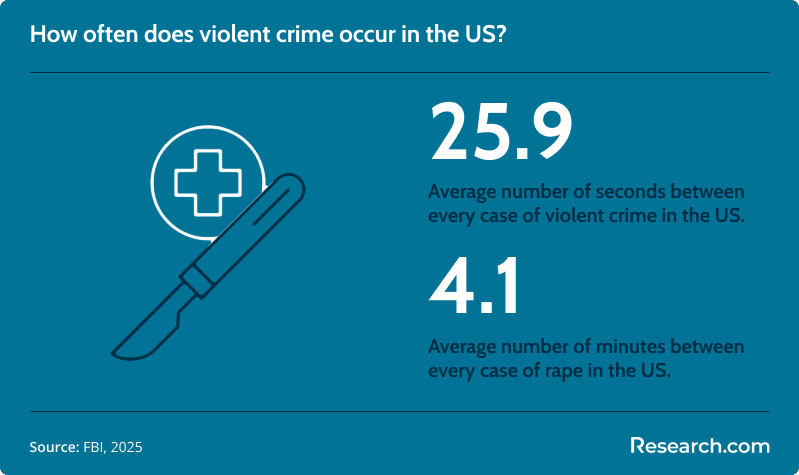
Choosing a path into criminal justice can feel overwhelming. With a violent crime occurring every 26 seconds in the U.S., the need for skilled professionals is clear, but the path to becoming one isn't. You know you need a degree, but the costs are intimidating, and the fear of making a wrong choice is a genuine concern.
This guide is designed to cut through that confusion. Our career planning experts, with 10 years of experience, will show you how to find the easiest criminal justice degree not as a shortcut, but as a strategic and accessible credential. It's the smartest first step toward a successful career in public service.
What are the benefits of getting a criminology degree?
- It makes you an eligible candidate for a wide range of rewarding careers in law enforcement, social services, and the legal system.
- It significantly increases your long-term earning potential, with roles like detectives and criminal investigators earning a median salary of over $93,000.
- Its availability in flexible online formats means you can earn this career-boosting credential while managing your current work and life commitments.
What can I expect from a criminology degree?
You can expect a criminology degree to be an academic program, not a hands-on training academy. The curriculum is designed to provide you with a comprehensive understanding of the entire justice system—from policing and courts to corrections.
Think of it this way: future academy training will teach you the “how” of your job, but this degree gives you the essential “why.” You’ll study theories about crime, legal procedures, and research methods.
This approach equips you with the critical thinking skills necessary to comprehend complex situations, make informed judgments, and adapt to the evolving landscape of the justice system. It prepares you for a career, not just a job.
Where can I work with a criminology degree?
A criminology degree opens doors to a much wider range of careers than most people realize. It prepares you for roles in law enforcement, the court system, social services, and even the private sector.
Of course, there are the traditional paths in local, state, and federal law enforcement. But you can also work within the court system as a probation or parole officer, helping to manage and rehabilitate offenders.
Many graduates find rewarding work in social services, such as victim advocacy or youth outreach programs. The private sector is another growing area, with opportunities in corporate security and loss prevention. The versatility of even the easiest criminal justice degree is one of its biggest strengths, giving you a strong foundation for any of these paths.
How much can I make with a criminology degree?
With a criminology degree, you can expect median salaries ranging from around $58,000 for correctional officers to over $93,000 for detectives and criminal investigators.
Your actual earnings will vary depending on your specific role, location, and level of experience. While some public service starting salaries may seem modest, it's essential to consider the entire picture.
These roles often come with excellent benefits, job security, and strong pension plans, which add significant value to your total compensation over the long term.
- List of the Easiest Criminology Degree Programs for 2027 List of Programs
- How long does it take to complete a criminology degree program? Completion Time
- What is the average cost of a criminology degree program? Program Cost
- What are the financial aid options for students enrolling in a criminology degree program? Financial Aid
- What are the prerequisites for enrolling in a criminology degree program? What are the prerequisites for enrolling in a criminology degree program?
- What courses are typically in a criminology degree program? What courses are typically in a criminology degree program?
- What types of specializations are available in a criminology degree program? Specializations
- How to choose the best criminology degree program? How to choose the best criminology degree program?
- What career paths are available for graduates of a criminology degree program? Career Paths
- What is the job market for graduates of a criminology degree program? Job Market
List of the Easiest Criminology Degree Programs for 2027
How do we rank schools?
Choosing a program is a major financial decision, and you deserve to have the best information to guide you. We built our rankings to give you a clear, reliable starting point for your research, ensuring you can make a choice that feels right for your career goals.
To do this, we pull data from the most trusted national sources, including the IPEDS database, Peterson’s database, the College Scorecard, and the National Center for Education Statistics. This approach ensures you’re getting a complete and accurate picture of what each program offers. For a detailed breakdown of how we analyze this data, you can review Research.com’s methodology page.
1. University of South Carolina - B.A. in Criminology and Criminal Justice
The University of South Carolina offers an interdisciplinary degree focused on analyzing the root causes of crime through a strong research and policy analysis framework. The program emphasizes experiential learning, encouraging students to complete internships or study abroad to gain practical, real-world insights into the justice system.
- Program Length: 8 semesters
- Required Credits to Graduate: 120
- Cost per Credit: $422.93 (in-state); $1,245.87 (out-of-state)
- Accreditation: Southern Association of Colleges and Schools Commission on Colleges (SACSCOC)
2. National Louis University - B.A. in Criminology and Criminal Justice
National Louis University offers a comprehensive program that examines the role of social, cultural, and economic factors in crime and its prevention. Offered in both online and on-campus formats, the curriculum is built to develop practical skills with a strong focus on ethical decision-making.
- Program Length: 4 years
- Required Quarter Credits to Graduate: 180
- Cost per Quarter Credit: $271.00
- Accreditation: Higher Learning Commission (HLC)
3. The University of Texas at Dallas - B.A. in Criminology
The University of Texas at Dallas delivers an interdisciplinary program that examines crime and societal responses from various social science perspectives. Its mission is to prepare students to become leaders who can influence crime control policies through a deep understanding of criminological theory and research.
- Program Length: 4 years
- Required Credits to Graduate: 120
- Cost per Credit: $550.40 (in-state); $1,506.67 (out-of-state)
- Accreditation: Southern Association of Colleges and Schools Commission on Colleges (SACSCOC)
4. University of Nebraska Omaha - B.S. in Criminology & Criminal Justice
The University of Nebraska Omaha offers a program designed to equip students with the skills needed for successful careers in criminal justice and related social services. The curriculum strongly emphasizes applied experience, encouraging students to complete an internship and engage in research with agency partners.
- Program Length: 4 years
- Required Credits to Graduate: 120
- Cost per Credit: $341.93 (in-state); $907.96 (out-of-state)
- Accreditation: Higher Learning Commission (HLC)
5. Appalachian State University - B.S. in Sociology (Criminology)
Appalachian State University approaches criminology through a sociological lens, investigating the social causes of crime and how society responds to criminal behavior. This program prepares graduates for a diverse range of careers, including law enforcement and the legal professions, as well as juvenile case management.
- Program Length: 4 years
- Concentrations: Criminology
- Required Credits to Graduate: 120
- Cost per Credit: $342.58 (in-state); $1,104.67 (out-of-state)
- Accreditation: Southern Association of Colleges and Schools Commission on Colleges (SACSCOC)
6. Chaminade University of Honolulu - B.S. in Criminology and Criminal Justice
Chaminade University of Honolulu offers Hawaii’s largest and oldest criminology program, distinguished by its emphasis on immersive, hands-on learning experiences. Students participate in crime scene reenactments and unique electives, such as underwater evidence recovery, to build practical investigative skills.
- Program Length: 4 years
- Required Credits to Graduate: 120
- Cost per Credit: $1,364.75
- Accreditation: WASC Senior College and University Commission (WSCUC)
7. Morehead State University - B.A. in Criminology & Criminal Justice
Morehead State University’s program familiarizes students with 21st-century best practices in the justice system, including innovations in drug and mental health treatment. The curriculum is designed to develop strong professional communication and critical thinking skills applicable to roles in courts, corrections, and law enforcement.
- Program Length: 4 years
- Required Credits to Graduate: 120
- Cost per Credit: $424.67 (in-state); $640.08 (out-of-state)
- Accreditation: Southern Association of Colleges and Schools Commission on Colleges (SACSCOC)
8. University of West Georgia - B.S. in Criminology
The University of West Georgia offers a justice-centered curriculum that focuses on developing strong analytical and communication skills essential for professional success. A key feature is its accelerated pathway, which allows highly motivated students to complete their degree in as little as three years with year-round study.
- Program Length: 3-4 years
- Required Credits to Graduate: 120
- Cost per Credit: $187.00
- Accreditation: Southern Association of Colleges and Schools Commission on Colleges (SACSCOC)
9. Florida State University - B.S./B.A. in Criminology - Criminal Justice
Florida State University’s interdisciplinary program, available both on-campus and online, prepares students for a wide variety of careers in the public and private sectors. It serves as a strong foundation for direct employment in criminal justice agencies or for pursuing graduate studies in law or a related field, such as sociology.
- Program Length: 4 years
- Required Credits to Graduate: 120
- Cost per Credit: $215.55 (in-state); $771.66 (out-of-state)
- Accreditation: Southern Association of Colleges and Schools Commission on Colleges (SACSCOC)
10. The Ohio State University - B.A. in Criminology and Criminal Justice Studies
The Ohio State University provides a sociology-based major that examines the dimensions of crime and the systems designed to control it. The program has a strong focus on applied skills, requiring every student to complete a career-related internship, service-learning experience, or an education abroad experience.
- Program Length: 4 years
- Required Credits to Graduate: 120
- Cost per Credit: $568.00 (in-state); $1,768.00 (out-of-state)
- Accreditation: Higher Learning Commission (HLC)
How long does it take to complete a criminology degree program?
A bachelor’s degree in criminology typically takes four years of full-time study to complete the required 120 credits. You’ll be in good company, as over 10,000 students earn this degree each year, preparing to enter a field with a constant need for qualified professionals.
However, that four-year timeline isn’t set in stone. You have options to make the path work for you. One important factor for students with children is finding colleges that have daycare on campus.
Accelerated and Flexible Timelines
Many universities now offer accelerated or “fast-track” programs that allow you to finish your degree in as little as three years by taking courses year-round. This is an excellent option if your main goal is to enter the workforce as quickly as possible.
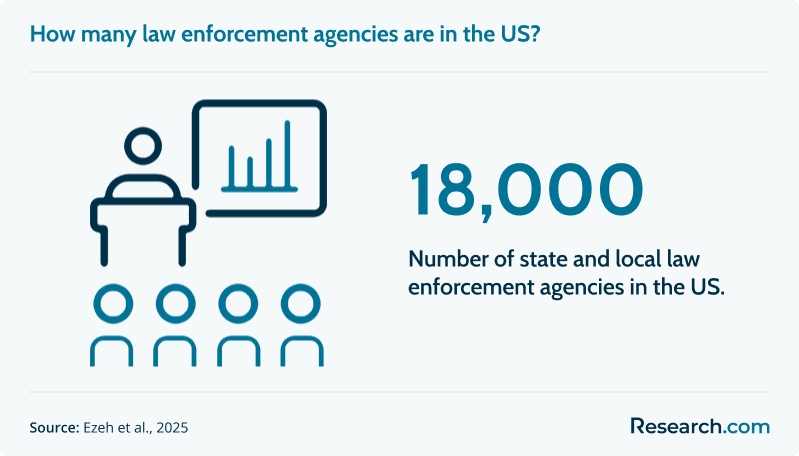
For those with previous college experience, the key is finding a program with a generous transfer credit policy. Transferring credits from an associate’s degree or prior coursework can save you a significant amount of time and money. With nearly 18,000 law enforcement agencies in the U.S., finding the most efficient path to your degree means you can start making an impact sooner.
What is the average cost of a criminology degree program?
The cost of a criminology degree varies dramatically depending on the institution. You can find affordable in-state public options with a total tuition under $25,000. At the same time, some private or out-of-state universities can cost over $100,000 for the full four years.
This wide range means it's crucial to look beyond just the sticker price. The most effective approach is to view your education as a strategic investment. This includes thinking about how advanced degrees can broaden your career options, much like considering jobs for masters in history offers varied career paths.
Thinking in Terms of Return on Investment (ROI)
The goal is to find the best value, not just the lowest price. With a violent crime occurring in the U.S. every 26 seconds, there is a constant and urgent need for well-trained justice professionals. This stable demand ensures that your degree has lasting value in the job market. Beyond the degree itself, professionals in many fields, including criminal justice, often pursue specialized certifications in health information management or other related areas to enhance their job prospects and earning potential.
Choosing an affordable, accredited program is the most effective way to get a strong return on your investment. Finding the easiest criminal justice degree is about securing a high-value credential without taking on unnecessary debt.
What are the financial aid options for students enrolling in a criminology degree program?
Several financial aid options are available to help you pay for your criminology degree. The key is knowing where to look and starting with the most crucial step.
- Submit the FAFSA. The Free Application for Federal Student Aid is the universal key that unlocks access to grants, federal loans, and many scholarships.
- Explore Federal Grants. Unlike loans, grants like the Pell Grant are funds you don’t have to pay back, making them the most desirable form of aid.
- Consider Scholarships. Many organizations and universities offer scholarships specifically for students pursuing public service careers.
- Understand Student Loans. While they must be repaid, federal student loans are a common and essential tool for financing an education.
Beyond these standard options, there are specialized programs specifically designed for individuals entering this field.
A Game Changer for Public Servants: PSLF
The Public Service Loan Forgiveness (PSLF) program is designed for people who work in government or for non-profit organizations. Under this program, if you make 10 years of qualifying payments on your federal student loans while working full-time in public service, the remaining balance of your loan could be forgiven. This can dramatically reduce the total cost of your education.
Service members and veterans have access to numerous benefits, including the Post-9/11 GI Bill. In addition, many universities actively recruit military-affiliated students by offering special tuition rates, making the cheapest bachelor’s degree for veterans online a very accessible option.
What are the prerequisites for enrolling in a criminology degree program?
The prerequisites for enrolling in a criminology degree program are typically straightforward. Most programs require a high school diploma or a GED, and you’ll likely need to meet a minimum GPA, normally ranging from 2.0 to 2.5 for more accessible programs. Students looking to boost their resume even further can also explore various criminal justice certificates.
Some universities may also require standardized test scores, such as the SAT or ACT. However, a growing number of schools have become “test-optional,” meaning they don’t need these scores for admission. This trend has made it easier than ever for students from all backgrounds to apply for admission.
Leveraging Prior Experience and Education
Admissions committees often look at more than just your academic record. Don’t underestimate the value of your life experience. Previous work, volunteer activities, or military service can make your application stand out because they demonstrate maturity and a commitment to public service. For example, many institutions value the discipline and experience gained in the armed forces, which is why some of the best online military science degree programs are designed to build on that foundation. This real-world experience can be just as valuable as your GPA.
What courses are typically in a criminology degree program?
A typical criminology curriculum is built around a core set of courses designed to give you a comprehensive understanding of the justice system. You can expect to study the foundational "why" behind crime and our response to it.
- Foundational Courses: These often include an Introduction to Criminal Justice, which provides an overview of the entire system, and Criminological Theory, which explores the root causes of criminal behavior.
- System Pillars: You will take specific courses on the three main components of the system: Policing, the Courts and Legal Process, and Corrections.
- Analytical Skills: Courses in Research Methods and Statistics are essential, as they teach you how to analyze data and understand the studies that shape modern justice policy.
This knowledge provides a strong foundation for a career anywhere in the country.
Where the Jobs Are: Top States for CJ Careers
While jobs in this field exist everywhere, some states have a much higher concentration of opportunities. States with large populations, such as California, Texas, and Florida, naturally have more extensive justice systems and, therefore, more job opportunities for professionals like probation officers and correctional treatment specialists. Understanding where the jobs are most plentiful can be a valuable part of your career planning, as you can see in the chart below.
What types of specializations are available in a criminology degree program?
While a general criminology degree is valuable, choosing a specialization allows you to develop expertise in a specific area of the field. This can give you a significant advantage when applying for jobs.
- Law Enforcement: This specialization focuses on the principles of policing, community relations, and law enforcement administration.
- Corrections: This track covers the management of correctional facilities, offender rehabilitation, and community-based corrections like probation and parole.
- Forensic Science: This area introduces the basics of crime scene investigation and the scientific analysis of physical evidence.
- Victimology: This specialization studies the impact of crime on victims and the role of victim advocacy and support services.
- Cybersecurity: This modern track focuses on digital crime, data protection, and the investigation of online criminal activity.
The Future of Justice: Technology and Data Specializations
The criminal justice field is rapidly evolving in response to technological advancements. Specializations in areas such as cybersecurity or digital forensics are becoming increasingly valuable. These skills are in high demand and can lead to positions in specialized units or with federal agencies.
As the world of artificial intelligence careers expands, its tools are being integrated into justice, making tech literacy a key to advancement. As you can see in the chart below, specialized roles often come with higher earning potential, making a tech-focused specialization a wise investment in your future.
How to choose the best criminology degree program?
The “best” criminology program isn’t about a prestigious name; it’s the one that best fits your budget, schedule, and career goals. To find the right program for you, use this straightforward four-step framework.
- Verify Accreditation. This is the most crucial step. Make sure the program is regionally accredited to ensure your degree is recognized and respected by employers.
- Calculate the Net Cost. Look beyond the advertised tuition. Factor in fees, books, and financial aid to understand the actual cost of your education.
- Assess Program Flexibility. Find a format that fits your life. Whether it’s entirely online, on-campus, or a hybrid model, the right program will work with your schedule.
- Investigate Experiential Learning. Prioritize programs that offer strong internship opportunities or partnerships with local agencies to gain valuable hands-on experience.
Beyond the Basics: Curriculum Philosophy and Internships
Once you’ve narrowed your options, take a closer look at two key factors. First, consider the philosophy underlying the curriculum. Does it provide a balanced and critical perspective on the justice system that aligns with professional ethics codes? Second, how strong is the support for internships?
A program with dedicated coordinators who can help you find a placement provides a crucial bridge from the classroom to your career. The easiest criminal justice degree for you will check all these boxes.
What career paths are available for graduates of a criminology degree program?
Your degree prepares you for a wide array of career paths that extend far beyond traditional policing. Graduates find fulfilling roles as probation officers, crime analysts, victim advocates, and federal agents.
These public service careers are the backbone of the justice system. However, the analytical and research skills you gain are also highly valuable in the corporate world, opening up another set of lucrative opportunities in areas like corporate security, fraud investigation, and risk management.
Expanding Your Skill Set for Private Sector Roles
To become a top candidate for these private sector jobs, consider pairing your degree with a technical skill. The ability to understand systems and human behavior, which is the core of your criminology education, is a powerful asset for any big organization.
For example, combining your degree with even the easiest IT certification can make you a highly competitive applicant for roles focused on internal investigations or data security. This strategy of "skill-stacking" demonstrates to employers that you possess both the theoretical knowledge and the practical tools to protect their assets.
What is the job market for graduates of a criminology degree program?
The job market for graduates with a degree in criminology is stable and consistent. Public safety and justice are essential services, which means there is a constant societal need for qualified professionals, making this a very secure career field.
While a degree is your entry ticket, the market is still competitive. Candidates who stand out are those with strong academic records, practical internship experience, and relevant specializations. An investment in the easiest criminal justice degree is a reliable foundation for a long-term career.
A Closer Look: Job Growth and Technology's Impact
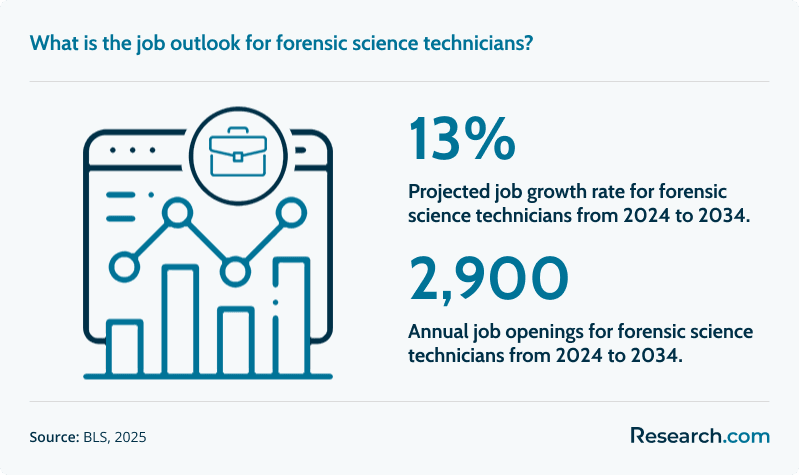
The most significant trend shaping the future of this field is technology. While overall growth is steady, high-tech specializations are seeing the most rapid expansion. For example, the demand for forensic science technicians is projected to grow by 13% over the next decade, which is significantly faster than the average growth rate for all occupations.
Graduates who are comfortable with data, digital evidence, and new analytical tools will have a distinct advantage in the job market. You can explore detailed criminology jobs salary information to see how these specialized skills are rewarded.
Here’s What Graduates Have to Say About Their Criminology Degree Program
- Kenny: "Honestly, my biggest fear was debt. I saw friends with huge student loans and I didn’t want that for myself. I found an affordable online program that let me keep my job, and I learned about loan forgiveness programs for public service. Now I have the degree I need for my career, and I’m starting on solid financial ground."
- DeShawn: "I thought the theory courses would be boring, but they ended up being the most valuable part of my education. At my internship, I started to see the concepts from my classes playing out in the real world. Understanding the "why" behind crime patterns and social issues gave me a much deeper perspective than just learning procedures. It made me a better, more thoughtful officer."
- Janus: "I was stuck in the same position for six years, watching younger guys get promoted over me. The department required a bachelor's degree to even be considered for a leadership role, and I just didn't have it. Earning my degree online was the key that unlocked that door. The day I finally pinned on my new badge felt like the start of a whole new career."
Key Findings
- The total tuition for an in-state criminology degree can be under $25,000, making an affordable credential a realistic goal for students concerned about taking on significant debt.
- The long-term earning potential in the field is strong, with median salaries for roles like detectives and criminal investigators exceeding $93,000 annually, validating the degree as a sound financial investment.
- The job market for specialized roles is expanding rapidly, with fields like forensic science projected to grow by 13% in the next decade, offering a secure career path for tech-savvy graduates.
- With a violent crime occurring every 26 seconds in the U.S., the societal need for qualified justice professionals is constant, ensuring the stability and relevance of this career choice.
- There are approximately 18,000 state and local law enforcement agencies in the United States, illustrating the vast and widespread employment landscape available to graduates across the country.
- Job opportunities are highly concentrated in populous states like California, which employs nearly 13,000 probation officers and correctional treatment specialists, providing a clear geographic target for career planning.
References:
- Academy of Criminal Justice Sciences. (n.d.). Code of ethics. Retrieved October 9, 2025, from ACJS.
- Commission on Peace Officer Standards and Training. (n.d.). Regular basic course. Retrieved October 9, 2025, from Commission on Peace Officer Standards and Training.
- Data USA. (2024). Criminology. Retrieved October 9, 2025, from Data USA.
- Federal Bureau of Investigation. (2025). FBI releases 2024 reported crimes in the nation statistics. Retrieved October 9, 2025, from FBI.
- National Conference of State Legislatures. (2025). Artificial intelligence and law enforcement: The federal and state landscape. Retrieved October 9, 2025, from NCSL.
- New York Division of Criminal Justice Services. (n.d.). Basic course for police officers. Retrieved October 9, 2025, from New York Division of Criminal Justice Services.
- U.S. Bureau of Labor Statistics. (2025a). Forensic science technicians. In Occupational Outlook Handbook. Retrieved October 9, 2025, from BLS.
- U.S. Bureau of Labor Statistics. (2025b). Occupational Employment and Wage Statistics. Retrieved October 9, 2025, from BLS.
- U.S. Bureau of Labor Statistics. (2025c). Police and detectives. In Occupational Outlook Handbook. Retrieved October 9, 2025, from BLS.
- U.S. Bureau of Labor Statistics. (2025). Probation officers and correctional treatment specialists. In Occupational Outlook Handbook. Retrieved October 9, 2025, from BLS.
- U.S. Department of Labor, Employment and Training Administration. (2025). Police and sheriff's patrol officers. O*Net OnLine. Retrieved October 9, 2025, from O*Net OnLine.
Other Things You Should Know About Criminology Degree Programs
In 2027, some of the easiest criminology degree programs are found at universities that emphasize online learning and flexible coursework, such as Arizona State University and Southern New Hampshire University. These programs focus on foundational courses, providing students with accessible paths to entering the field of criminology.
In 2027, the ease of a criminology degree program is determined by factors such as curriculum flexibility, availability of online courses, credit transfer policies, and supportive faculty. Universities with strong student support services and options for accelerated learning typically offer the easiest programs to navigate.


