
2027 What Can You Do with an MBA in Healthcare Management?

Co-Founder and Chief Data Scientist
An MBA in healthcare management is designed for professionals who want to move from clinical, administrative, technical, or business roles into healthcare leadership. The decision is important because healthcare organizations need managers who can control costs, improve operations, understand policy, lead teams, and use data without losing sight of patient care.
This guide explains what the degree can lead to, how it compares with a general MBA, what graduates may earn, and how to decide whether the investment makes sense. It is written for nurses, healthcare administrators, public health professionals, business graduates, military healthcare personnel, and career changers who want a practical view of healthcare management careers.
Quick answer: Is an MBA in healthcare management a good choice?
An MBA in healthcare management can be a strong option if your goal is to lead hospitals, clinics, insurance organizations, pharmaceutical teams, health technology companies, or healthcare consulting projects. It is most useful for professionals who already have some healthcare or management exposure and want broader business training in finance, operations, strategy, policy, and organizational leadership.
It may not be the best fit if you want a purely clinical career, are unsure about working in healthcare long term, or need a credential tied to a licensed clinical role. The degree can improve your leadership profile, but senior roles still usually require experience, measurable results, and a strong professional network.
Key Things You Should Know About an MBA in Healthcare Management
- An MBA in healthcare management typically takes 2 years to complete when pursued full-time, while some accelerated programs can be completed in 12-18 months.
- Most programs require 36 to 54 credits, depending on the curriculum, school, and delivery format.
- The cost of an MBA in healthcare management ranges from $20,000 to $100,000, depending on the institution and whether the program is online, hybrid, or campus-based.
- The median annual wage for medical and health services managers is $110,680 as of 2024.
- About 61,400 job openings for medical and health services managers are projected annually over the next decade.
- What jobs can you get with an MBA in healthcare management for 2027?
- How is a healthcare MBA different from a general MBA?
- What are the main advantages and drawbacks of this degree?
- What non-traditional careers are open to healthcare MBA graduates?
- How much do healthcare management MBA graduates earn?
- Can this MBA help you launch a healthcare business?
- How can graduates move faster into leadership roles?
- Is an MBA in healthcare management worth the cost?
- Why does accreditation matter when choosing a program?
- What challenges do healthcare managers face?
- How does healthcare policy affect management roles for 2027?
- Can an online business degree support a healthcare management career?
- What is the job outlook for healthcare managers for 2027?
- How should you compare online MBA programs in healthcare management?
- Do healthcare leaders need project management training?
- Can ideas from other industries improve healthcare leadership?
- How is healthcare management different in the US and other countries?
- Is a DBA a useful next step after a healthcare MBA?
- Which certifications can strengthen a healthcare management career?
- Should busy healthcare professionals consider an accelerated MBA?
- Key insights for choosing the right path
What are the top jobs for graduates with an MBA in healthcare management for 2027?
Graduates with this degree often pursue roles that combine business leadership with healthcare operations. The strongest opportunities are usually in hospitals, outpatient networks, insurance organizations, pharmaceutical companies, consulting firms, and health technology businesses.
| Career path | What the role involves | Average salary listed | Best fit for |
| Healthcare Administrator | Oversees facility operations, staffing, budgets, compliance, and service quality. | $75,644 | Professionals who want hands-on operational leadership in hospitals, clinics, or long-term care settings. |
| Hospital CEO | Leads organizational strategy, financial planning, executive teams, and system-wide performance. | $192,260 | Experienced leaders with a record of managing complex healthcare organizations. |
| Healthcare Consultant | Analyzes organizational problems and recommends improvements in efficiency, revenue, compliance, or patient experience. | $84,516 | Problem-solvers who enjoy project-based work and advising multiple organizations. |
| Pharmaceutical Project Manager | Coordinates drug development projects, timelines, budgets, regulatory requirements, and cross-functional teams. | $100,510 | Professionals with science, operations, or product experience who want business responsibility in pharma. |
| Health Informatics Manager | Manages data systems, electronic health records, patient information security, and healthcare IT workflows. | $63,401 | MBA graduates interested in the intersection of healthcare, analytics, technology, and operations. |
Healthcare Administrator
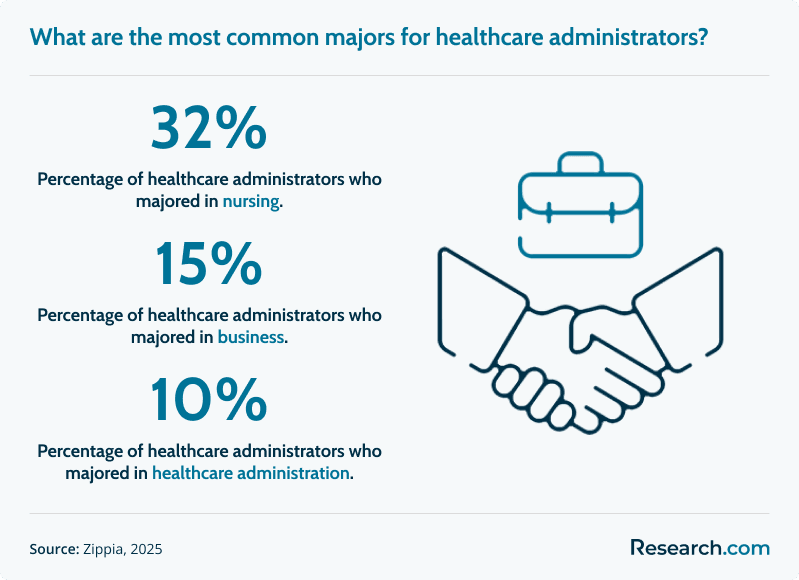
Healthcare administrators keep medical facilities running effectively. Their work may include budget oversight, staffing plans, compliance monitoring, vendor coordination, patient flow improvement, and quality initiatives. Professionals who need a faster route into this field may compare options such as an accelerated healthcare administration degree program to build management skills more quickly.
Average Salary: $75,644
Hospital CEO
Hospital CEOs are responsible for the overall direction of a healthcare organization. They work with boards, clinical leaders, finance teams, regulators, and community partners to improve performance while maintaining patient care standards. This is usually not an entry-level outcome of the MBA; it typically requires extensive leadership experience.
Average Salary: $192,260
Healthcare Consultant
Healthcare consultants help organizations solve business and operational problems. They may evaluate revenue cycles, staffing models, workflow inefficiencies, payer contracts, compliance gaps, or technology adoption. This path can suit professionals who like research, data interpretation, client communication, and measurable improvement work.
Average Salary: $84,516
Pharmaceutical Project Manager
Pharmaceutical project managers guide teams through complex development and launch activities. They coordinate scientists, regulatory specialists, marketing teams, vendors, and executives while tracking budgets and timelines. This role can be especially relevant for students with a science, life sciences, operations, or product background.
Average Salary: $100,510
Health Informatics Manager
Health informatics managers focus on healthcare data and digital systems. They may oversee electronic health records, reporting tools, privacy controls, patient data workflows, and IT implementation projects. This path is increasingly relevant for students who want to connect healthcare administration with analytics and technology.
Average Salary: $63,401
What are the differences between an MBA in healthcare and a general MBA?
A healthcare MBA and a general MBA both teach business fundamentals, but they are built for different career decisions. A healthcare MBA applies business concepts to hospitals, insurance systems, public health organizations, pharmaceutical companies, and healthcare technology. A general MBA is broader and may be better for students who want maximum flexibility across industries.
| Factor | MBA in healthcare management | General MBA |
| Primary focus | Business leadership in healthcare organizations and health-related industries. | Business leadership across finance, consulting, marketing, technology, operations, and other sectors. |
| Typical courses | Healthcare policy, hospital administration, health economics, quality improvement, medical ethics, and healthcare operations. | Finance, accounting, marketing, strategy, operations, analytics, leadership, and entrepreneurship. |
| Career direction | Hospital administration, healthcare consulting, insurance management, pharmaceutical management, health informatics, and health system leadership. | Corporate management, consulting, finance, product management, entrepreneurship, and cross-industry leadership. |
| Best for | Students committed to healthcare leadership or adjacent fields such as biotech, pharma, health insurance, or digital health. | Students who want career mobility and are not yet sure which industry they want to enter. |
| Main limitation | More specialized, which can reduce flexibility outside healthcare. | Less healthcare-specific, which may require additional experience or credentials for specialized healthcare roles. |
Program format also matters. Healthcare MBA programs often serve working professionals through online, part-time, hybrid, and executive formats. Mid-career professionals comparing flexible leadership tracks may also review an online executive MBA. General MBA programs usually offer more industry variety, but students may need to choose electives, internships, or concentrations carefully if they plan to enter healthcare.
Choose the healthcare MBA if you are confident that healthcare leadership is your target. Choose a general MBA if you want the option to move among several industries.
What are the pros and cons of an MBA in healthcare management?
The degree can be valuable, but it is not automatically the right choice for every student. The strongest candidates are usually professionals who want management responsibility in healthcare and are willing to combine the degree with experience, networking, and measurable workplace results.
| Pros | What it means for your decision |
| Strong demand for healthcare managers | Healthcare organizations need leaders who understand operations, compliance, reimbursement, staffing, and patient outcomes. |
| Competitive earning potential | Many management and executive roles pay well, although salary depends heavily on experience, employer, location, and responsibility level. |
| Specialized healthcare knowledge | The curriculum can prepare students for industry-specific problems that a general MBA may not address in depth. |
| Flexible study formats | Online, part-time, and executive options can make the degree more accessible for working professionals. |
| Useful for interdisciplinary careers | Some professionals pair the MBA with public health or clinical leadership training, including options such as online DrPH programs. |
| Cons | Why it matters |
| Less flexibility outside healthcare | If you later decide to leave healthcare, a specialized MBA may not travel as easily as a general MBA. |
| High tuition range | At $20,000 to $100,000, program cost should be evaluated against your current salary, debt tolerance, and realistic career outcomes. |
| Heavy workload | Working professionals may struggle with group projects, analytics courses, exams, and job responsibilities at the same time. |
| Leadership jobs are competitive | The degree can help, but senior roles usually require years of experience, strong references, and proven performance. |
| Complex regulatory environment | Healthcare leaders must keep up with laws, reimbursement rules, privacy obligations, and quality standards. |
The chart below lists the industries with the highest levels of employment for medical and health services managers by number of jobs, as reported by the BLS in 2024.
Are there non-traditional careers for MBA in healthcare management graduates?
Yes. A healthcare MBA does not limit graduates to hospital administration. Many roles now sit at the intersection of healthcare, data, technology, finance, policy, supply chain, and consumer experience. These paths can be a better fit for students who want healthcare impact without working in a traditional facility management role.
- Healthcare Data Analyst: Uses operational, financial, or clinical data to identify inefficiencies, reduce waste, improve reporting, and support better patient outcomes.
- Health Tech Startup Founder: Builds companies focused on telehealth, digital records, medical apps, wearable devices, or AI-enabled healthcare tools.
- Pharmaceutical Product Manager: Coordinates product strategy, market positioning, regulatory input, and cross-functional work for medications or medical devices.
- Healthcare Investment Analyst: Evaluates biotechnology companies, medical device firms, healthcare mergers, and emerging business models for investors.
- Policy Advisor or Consultant: Helps government agencies, nonprofits, advocacy groups, or research organizations assess and improve healthcare policy.
- Medical Tourism Manager: Coordinates services for patients seeking care across borders, including provider partnerships, insurance considerations, and service quality.
- Healthcare UX Designer: Improves the usability of patient portals, telehealth platforms, scheduling tools, and electronic medical record interfaces.
- Corporate Wellness Director: Designs workplace health, prevention, mental health, and employee wellness programs for organizations.
- Supply Chain Manager for Medical Equipment: Oversees procurement, distribution, inventory, vendor relationships, and risk planning for medical supplies.
- Healthcare Fraud Investigator: Uses auditing, claims review, compliance knowledge, and data analysis to detect improper billing or fraud.
How much can you earn with an MBA in healthcare management?
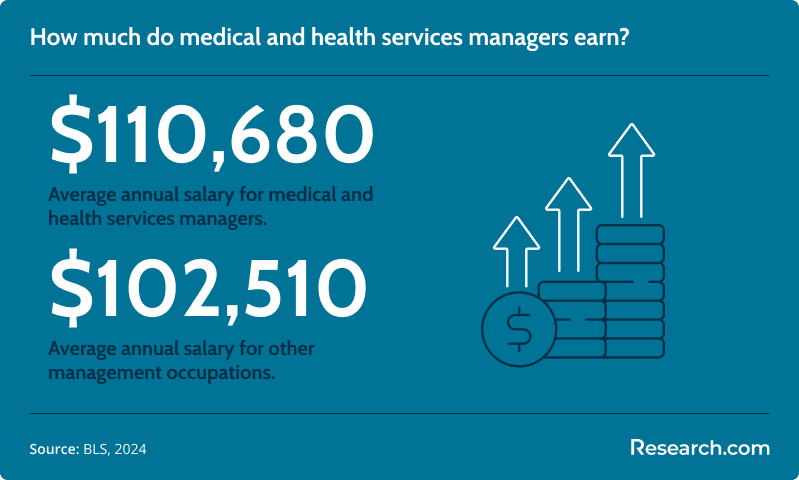
According to 2024 data, medical and health services managers earn a median salary of $110,680 per year. Entry-level salaries typically start around $80,000, while experienced executives in large hospitals or insurance companies can make over $200,000 annually. Higher-paying opportunities are often found in pharmaceuticals, biotechnology, insurance, and large health systems.
Pay varies by employer size, location, years of experience, scope of responsibility, and the type of healthcare organization. Healthcare managers in states such as California, New York, and Massachusetts often earn 15–20% more than the national average because of demand and cost-of-living differences. Rural positions may pay less, but they can offer faster access to responsibility because competition for leadership roles may be lower.
| Factor affecting salary | How it can influence earnings |
| Experience level | New managers usually earn less than executives who oversee large budgets, departments, or systems. |
| Industry | Pharmaceuticals, biotechnology, and insurance may offer higher compensation than some facility-based roles. |
| Location | High-cost and high-demand states can pay more, while rural markets may offer different trade-offs. |
| Employer size | Large hospitals, health systems, and insurers may provide more senior management layers and higher pay bands. |
| Specialized skills | Analytics, revenue cycle knowledge, compliance, technology implementation, and project management can strengthen earning potential. |
Can you start your own business with an MBA in healthcare management?
Yes. The degree can support healthcare entrepreneurship because it covers finance, operations, leadership, strategy, marketing, and organizational decision-making. However, healthcare businesses often involve licensing rules, compliance requirements, payer relationships, privacy obligations, and high trust expectations, so the MBA should be treated as preparation rather than a guarantee of business success.
Common business paths include:
- Healthcare Consulting: Advising hospitals, clinics, private practices, or health systems on operations, compliance, staffing, revenue cycle, or strategy.
- Medical Staffing Agency: Recruiting and placing healthcare professionals in hospitals, clinics, long-term care facilities, and other care settings.
- Telehealth Services: Building or managing remote care services while navigating privacy, reimbursement, and state-specific rules.
- Healthcare Tech Startups: Developing software for patient management, billing, scheduling, electronic health records, analytics, or care coordination.
- Wellness and Preventative Care Clinics: Operating businesses focused on nutrition, physical therapy, prevention, behavioral health support, or holistic services.
Additional technical credentials may help entrepreneurs understand a niche more deeply. Some graduates explore medical certificate programs in areas such as healthcare IT, medical billing, or telemedicine before launching a focused business.
How can MBA graduates accelerate career growth in healthcare management?
The fastest career growth usually comes from combining the MBA with visible workplace results. Employers often look for candidates who can improve patient flow, reduce costs, manage teams, lead technology changes, strengthen compliance, or improve quality metrics.
- Choose projects with measurable outcomes. Volunteer for initiatives tied to cost savings, quality improvement, patient satisfaction, staffing efficiency, or revenue cycle performance.
- Build healthcare-specific technical fluency. Learn reimbursement basics, value-based care concepts, HIPAA expectations, quality reporting, and healthcare analytics.
- Develop executive communication skills. Healthcare leaders must explain complex issues clearly to clinicians, boards, regulators, vendors, and patients.
- Use networking intentionally. Professional associations, alumni groups, conferences, and mentorships can lead to internal promotions and external openings.
- Target roles that match your background. Clinical professionals may move into operations or quality; business professionals may move into finance, consulting, or analytics; IT professionals may pursue informatics leadership.
Students comparing possible roles can use career resources on healthcare MBA jobs to understand where their background may fit best.
Is an MBA in Healthcare Management Worth the Investment?
An MBA in healthcare management can be worth the investment when the program aligns with your target role, your employer values the credential, and the cost does not create an unreasonable debt burden. The degree is strongest when it helps you move into management, consulting, operations, analytics, insurance leadership, pharma management, or executive-track roles.
Before enrolling, compare tuition, fees, time away from work, available employer tuition assistance, debt repayment, and the career outcomes of recent graduates. A lower-cost accredited program may produce a better return than a prestigious program if your goal is advancement within a regional health system or employer that values practical experience. Students seeking lower-cost options can compare affordable MBA programs before committing.
| The MBA is more likely worth it if... | Be cautious if... |
| You already work in healthcare and need business credentials for promotion. | You are unsure whether you want to stay in healthcare. |
| Your employer offers tuition support or promotion pathways for MBA graduates. | You would need to borrow heavily without a clear salary-growth plan. |
| The program has healthcare electives, experienced faculty, and strong employer connections. | The curriculum is generic and offers little healthcare-specific content. |
| You can complete internships, capstones, or projects tied to real healthcare problems. | You expect the degree alone to secure an executive job immediately. |
How does program accreditation influence career success in healthcare management?
Accreditation matters because it signals that a program has gone through an external quality review. For MBA students, accreditation can affect employer confidence, credit transfer, doctoral study options, and sometimes tuition reimbursement eligibility. It does not guarantee a job, but it helps reduce the risk of choosing a weak or unrecognized program.
When comparing schools, confirm both institutional accreditation and business program accreditation when available. Students who need flexibility can begin with lists of accredited online MBA programs, then narrow options by healthcare coursework, cost, faculty experience, and career support.
What are the biggest challenges of working in healthcare management?
Healthcare management is demanding because leaders must balance business performance with patient safety, workforce needs, ethics, compliance, and public expectations. The work can be rewarding, but decisions often involve trade-offs.
- Regulatory Compliance: Managers must monitor changing federal and state rules, privacy requirements, billing standards, and organizational policies.
- Rising Healthcare Costs: Leaders are expected to control expenses while protecting patient care quality and service access.
- Workforce Shortages: Facilities may struggle to recruit and retain nurses, physicians, technicians, and specialized staff.
- Technology Integration: New systems can improve care and reporting, but implementation may be expensive, disruptive, and difficult for staff.
- Crisis Management: Cybersecurity events, pandemics, supply disruptions, and financial shocks require quick, coordinated leadership.
- Patient Satisfaction: Managers must improve the patient experience while addressing staffing constraints, reimbursement limits, and clinical demands.
How does healthcare policy affect management roles for 2027?
Healthcare policy shapes how managers budget, staff, report outcomes, protect data, and design services. For 2027, healthcare leaders must continue paying attention to reimbursement policy, data privacy, cybersecurity, telehealth rules, equity initiatives, and quality measurement.
Payment policy has a direct effect on revenue. Changes in Medicare and Medicaid reimbursement rates can require managers to adjust service lines, staffing models, and financial forecasts. As payment models emphasize value-based care, managers must pay closer attention to outcomes, readmissions, quality scores, and patient experience rather than volume alone.
Data privacy and cybersecurity are also central management concerns. Healthcare organizations handle sensitive patient information, so leaders must support secure systems, staff training, vendor oversight, and compliance monitoring.
Equity and access remain important policy themes. Managers may be asked to support outreach, telehealth access, community partnerships, and programs that serve underserved populations while still meeting operational and financial targets.
The chart below lists the most supported proposed changes in healthcare policy in the US, as reported in 2024.
Can an online business degree accelerate success in healthcare management?
An online business degree can help healthcare professionals strengthen management skills without leaving the workforce. For students who are not ready for a healthcare MBA, an online business administration program may provide useful preparation in accounting, management, analytics, operations, and leadership.
This path can make sense for early-career professionals who need a business foundation before applying to MBA programs or moving into supervisory roles. Students who need speed and flexibility can compare options such as the fastest business degree online, then evaluate whether the curriculum includes healthcare-relevant electives or transfer pathways.
What is the job outlook for healthcare management professionals for 2027?
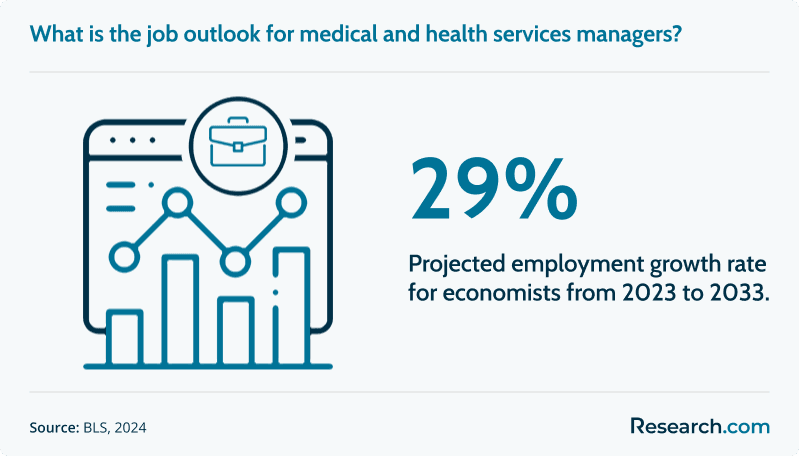
The job outlook for healthcare management professionals is strong. According to federal labor data, employment for medical and health services managers is expected to rise 29% from 2023 to 2033. This growth is much faster than the average for all jobs and is projected to create around 61,400 job openings annually.
Demand is connected to several forces: an aging population, the growth of outpatient care, telehealth expansion, technology adoption, complex reimbursement systems, and the need for leaders who can coordinate care across increasingly large organizations. Healthcare managers who understand analytics, compliance, finance, project management, and patient-centered operations may be especially well positioned.
Students who need a flexible study structure may consider a self paced online college option, especially if they are balancing work shifts, family responsibilities, or military service while preparing for healthcare leadership roles.
How Do You Evaluate an Online MBA Program for Healthcare Management?
Choosing an online healthcare MBA should involve more than comparing tuition and brand names. The best program for you is the one that fits your career goal, schedule, budget, learning style, and employer expectations.
| What to check | Why it matters | Question to ask |
| Accreditation | Helps verify academic quality and may affect employer recognition or tuition reimbursement. | Is the institution accredited, and does the business school hold recognized business accreditation? |
| Healthcare curriculum | Ensures the MBA is not just a general business program with one healthcare elective. | Which required courses focus specifically on healthcare policy, finance, operations, informatics, or quality? |
| Faculty background | Instructors with healthcare leadership experience can connect theory to real operational problems. | Have faculty worked in hospitals, health systems, insurance, consulting, pharma, or public health? |
| Career support | Networking, coaching, and employer connections can affect post-MBA opportunities. | What career services are available for online students? |
| Flexibility | Working healthcare professionals may need asynchronous courses, part-time pacing, or shorter terms. | Can I adjust my course load during demanding work periods? |
| Total cost | Fees, books, residencies, and technology costs can change the real price. | What is the full estimated cost from enrollment to graduation? |
Students who want a cost-conscious option with recognized business accreditation can review the most affordable AACSB online MBA degree programs as part of their comparison process.
Is project management training essential for healthcare leaders?
Project management training is not always required, but it is highly useful for healthcare leaders. Many healthcare initiatives involve tight timelines, multiple stakeholders, regulatory constraints, budget pressure, and patient-safety implications. Examples include launching a new electronic health record module, redesigning patient intake, opening an outpatient service line, or improving discharge processes.
Training in project planning, risk management, stakeholder communication, budgeting, and implementation can help managers deliver change without disrupting care. Students who want formal preparation may compare options such as a quick project management online degree to build these skills alongside or before an MBA.
Can cross-industry insights drive innovation in healthcare management?
Healthcare leaders can benefit from studying other industries, but they must adapt ideas carefully because healthcare has unique ethical, regulatory, and patient-safety requirements. Useful lessons can come from logistics, technology, hospitality, finance, and even sports management, where leaders often focus on team performance, audience experience, operations, and rapid decision-making.
For example, sports organizations often emphasize fan engagement, real-time analytics, talent development, and brand loyalty. Healthcare leaders can translate some of those ideas into patient engagement, staff development, service design, and operational responsiveness. Students interested in broader leadership models may review programs such as the best sports management MBA programs to compare how management frameworks vary across sectors.
How does healthcare management differ in the US vs. other countries?
Healthcare management varies by country because financing, regulation, access, and delivery systems differ. A manager in the US often works within a mixed public-private system, while managers in countries with more centralized or universal systems may face different incentives and policy constraints.
- Healthcare Systems: The US uses a combination of public and private providers, with insurance companies playing a major role. Countries such as the UK and Canada rely more heavily on nationalized healthcare systems, which changes budgeting and service delivery decisions.
- Regulatory Environment: US healthcare managers must navigate private insurance rules, Medicaid, and Medicare regulations. Managers in universal systems often work under more centralized government rules.
- Access to Care: In the US, insurance coverage can strongly influence access. In countries such as Germany or Australia, managers may focus more directly on equitable access across the population.
- Focus on Innovation: The US healthcare sector is often associated with medical technology and innovation, which managers must evaluate, fund, and implement responsibly.
- Leadership and Management: US managers may need to balance financial performance with patient care, especially in private settings. In more public systems, efficiency and population outcomes may be emphasized differently.
Is pursuing a DBA a valuable next step for healthcare management professionals?
A Doctorate in Business Administration can be useful for healthcare leaders who want advanced applied research skills, executive consulting credibility, academic opportunities, or preparation for complex strategy roles. It is not necessary for most healthcare management jobs, but it may fit professionals who want to study organizational change, healthcare operations, leadership, policy implementation, or evidence-based management at a doctoral level.
Before enrolling, compare cost, research requirements, faculty expertise, and whether the degree supports your career target. Cost-conscious professionals may start by reviewing the most affordable online DBA programs and then checking whether faculty or dissertation options align with healthcare management.
How can specialized certifications further enhance healthcare management careers?
Specialized certifications can strengthen an MBA by adding proof of skill in a narrower area. They are especially useful when a job requires expertise in analytics, project management, quality improvement, compliance, health informatics, revenue cycle, or digital transformation.
Certifications are not a substitute for leadership experience, but they can help candidates stand out when moving into a specialized management track. Students who want a faster business credential before adding certifications may also compare an accelerated MBA program online.
| Career goal | Helpful skill area to build |
| Hospital operations leadership | Quality improvement, budgeting, workforce planning, process improvement, and compliance. |
| Healthcare analytics or informatics | Data visualization, electronic health records, privacy, reporting, and healthcare information systems. |
| Consulting | Project management, financial analysis, presentation skills, change management, and performance improvement. |
| Pharma or biotech management | Regulatory awareness, product management, market access, and cross-functional team leadership. |
| Entrepreneurship | Healthcare law basics, payer strategy, privacy, operations, sales, and financial modeling. |
Is an Accelerated MBA the Right Choice for Busy Healthcare Leaders?
An accelerated MBA can make sense for professionals who already have strong work experience, clear career goals, and the discipline to manage a compressed academic schedule. The shorter format can reduce time to completion, but it also leaves less room for career exploration, internships, and slower-paced skill development.
This option is best for students who know they want healthcare leadership and can handle intensive coursework while working. It may be less suitable for career changers who need more time to build healthcare experience or professional networks. To compare faster routes, review options discussed in our guide to an accelerated MBA degree.
Common mistakes to avoid when choosing a healthcare MBA
- Choosing based only on tuition. Low cost matters, but curriculum quality, accreditation, faculty experience, and career support also affect value.
- Ignoring accreditation. Always verify institutional accreditation and, when relevant, business school accreditation before applying.
- Assuming the MBA guarantees an executive job. Senior leadership roles usually require experience, results, references, and industry credibility.
- Picking a program with too little healthcare content. A general MBA with one healthcare elective may not provide enough preparation for specialized healthcare leadership.
- Overlooking total cost. Include fees, books, travel, residencies, technology charges, and interest on loans.
- Not checking employer expectations. Ask managers, recruiters, and alumni which degrees and credentials are valued in your target organization.
- Skipping networking opportunities. Online students should still look for alumni events, industry panels, mentorship, and healthcare-focused projects.
Questions to ask before enrolling
- Does this program have healthcare-specific courses in policy, finance, operations, ethics, informatics, or quality improvement?
- Is the program designed for early-career students, working professionals, executives, or career changers?
- What healthcare employers recruit from or partner with the program?
- Can online students access the same career services as campus students?
- Are capstones, internships, consulting projects, or practicums available in healthcare settings?
- What is the total cost, and how much debt would I need to take on?
- Will my employer provide tuition assistance or promotion opportunities after completion?
- How do recent graduates use the degree, and what roles did they move into?
Key Insights
- An MBA in healthcare management is best for students who want leadership roles in healthcare organizations, not for those seeking a clinical license.
- The degree typically takes 2 years full-time, though accelerated formats may take 12-18 months, and most programs require 36 to 54 credits.
- Cost varies widely from $20,000 to $100,000, so ROI depends on tuition, debt, employer support, career stage, and realistic advancement opportunities.
- Medical and health services managers earn a median annual wage of $110,680 as of 2024, with about 61,400 openings projected annually over the next decade.
- A healthcare MBA offers more industry-specific preparation than a general MBA, but it may be less flexible outside healthcare.
- Accreditation, healthcare-focused coursework, faculty experience, career services, and total cost should drive your program comparison.
- Career growth depends on more than the credential. Employers value measurable results, leadership experience, project management ability, data fluency, and policy awareness.
- Before enrolling, define your target role, compare program outcomes, speak with alumni, and confirm that the degree aligns with the healthcare career you actually want.
References:
- Bureau of Labor Statistics (BLS). (2024a). 11-9111 Medical and Health Services Managers. Occupational Employment and Wage Statistics. BLS.
- Bureau of Labor Statistics (BLS). (2024b). Medical and Health Services Managers. Occupational Outlook Handbook. BLS.
- Statista. (2024). Share of people supporting following healthcare policy proposals in the United States as of 2024. Health System. Statista.
- Zippia. (2025a). Health Care Administrator Education Requirements. Zippia.
- Zippia. (2025b). Health Information Manager Salary. Zippia.
Other Things You Should Know About Getting an MBA in Healthcare Management
In 2027, entry into an MBA in healthcare management typically requires a bachelor's degree, with preference often given to those with a background in healthcare or business. Relevant work experience and GMAT or GRE scores may also be needed, depending on the program.
An MBA in healthcare management in 2027 equips you with skills like strategic planning, financial management, and leadership tailored for healthcare settings. These skills are crucial for positions such as healthcare administrator, policy advisor, or consultant in the healthcare industry.


