
2027 What Degree Do You Need To Be a Social Worker: Education Requirements in Minnesota

Co-Founder and Chief Data Scientist
Choosing the right social work degree in Minnesota is not just an academic decision. It determines which license you can apply for, whether you can provide clinical services, how quickly you can advance, and whether your education will be accepted by the Minnesota Board of Social Work. A BSW can open the door to supervised, entry-level practice, while an MSW is the usual route for clinical and independent roles.
This guide explains Minnesota’s social work education requirements in practical terms. You will learn which degree fits each license level, what courses and fieldwork to expect, how long programs usually take, what costs to plan for, how online degrees are treated, and how to compare schools before enrolling.
Quick answer: Minnesota social work degree requirements
- Minimum degree: A Bachelor of Social Work (BSW) from a CSWE-accredited program is the standard minimum education for entry-level social work licensure in Minnesota.
- Clinical practice: A Master of Social Work (MSW) from a CSWE-accredited program is required for advanced and clinical licensure pathways.
- Supervised experience: Minnesota requires supervised practice for higher license levels, including 3,000 supervised hours for clinical social workers in the licensure pathway described by state requirements.
- Accreditation matters: Before enrolling, confirm that the program is accredited by the Council on Social Work Education because licensure depends on it.
- Planning matters: Degree level, field placement availability, transfer credits, online format, tuition, and licensure goals can all affect your timeline and total cost.
- Minimum degree needed to become a licensed social worker in Minnesota
- Courses commonly included in Minnesota social work programs
- How long social work degrees take in Minnesota
- Expected cost of a social work degree in Minnesota
- Degree requirements by social work specialization
- Financial aid options for Minnesota social work students
- Minnesota job outlook for social workers
- Ways to move faster toward licensed counseling roles
- Alternative routes into social work in Minnesota
- Whether online social work degrees are accepted in Minnesota
- Accreditation for Minnesota social work programs
- Minnesota institutions offering social work degrees
What is the minimum degree required to become a licensed social worker in Minnesota?
In Minnesota, the degree you need depends on the license level you want. The safest rule is simple: choose a social work program accredited by the Council on Social Work Education (CSWE). Without CSWE accreditation, your degree may not satisfy Minnesota licensure requirements even if the school is otherwise legitimate.
| License level | Typical degree required | What it generally allows |
| Licensed Social Worker (LSW) | Bachelor’s degree in social work from a CSWE-accredited institution | Supervised, non-clinical social work practice in entry-level roles |
| Licensed Graduate Social Worker (LGSW) | Master’s degree in social work from a CSWE-accredited program | Generalist practice under supervision and, in some settings, supervised clinical work |
| Licensed Independent Social Worker (LISW) | Master’s degree in social work | Independent generalist practice and supervised progress toward clinical licensure |
| Licensed Independent Clinical Social Worker (LICSW) | Master’s degree in social work | Independent clinical practice, including mental health services and billing when requirements are met |
A BSW is usually the most direct starting point for entry-level social work. An MSW is the better fit if your goal is therapy, clinical assessment, diagnosis-related work, supervision, or independent practice. Minnesota has a large licensed workforce; figures cited for the state include over 14,000 licensed social workers as of 2024 and more than 17,000 licensed social workers statewide, depending on the reporting source and category counted.
If you are considering a population-specific career path, such as aging services, it can help to review what a gerontology social worker does before choosing electives, internships, or graduate concentrations.
What courses are covered in a social work degree program in Minnesota?
Social work programs in Minnesota combine classroom study with supervised field learning. The goal is to prepare students to work ethically with individuals, families, groups, organizations, and communities. Minnesota does not add a separate state-specific course list beyond national accreditation expectations, but schools often shape electives and placements around local needs such as healthcare, child welfare, mental health, substance use, rural practice, and culturally responsive services.
| Course area | What students learn | Why it matters for practice |
| Introduction to Social Work | Professional history, values, ethics, and generalist practice foundations | Helps students understand the role and responsibilities of the profession |
| Human Behavior and the Social Environment | How social, psychological, family, cultural, and community systems affect people | Supports more accurate assessment and service planning |
| Social Welfare Policy and Advocacy | Policy analysis, social welfare systems, and advocacy methods | Prepares students to address systemic barriers, not only individual needs |
| Research Methods in Social Work | Research design, program evaluation, and evidence-informed practice | Builds the ability to evaluate interventions and use data responsibly |
| Generalist Practice Methods | Interviewing, case management, intervention planning, and documentation | Connects theory to day-to-day client and community work |
| Field Practicum | Supervised practice in an approved agency or organization | Provides real-world experience required by accredited programs |
| Diversity, Equity, and Inclusion | Oppression, identity, power, access, and culturally responsive practice | Important for serving Minnesota’s varied communities ethically |
| Electives and Supporting Courses | Topics such as mental health, child welfare, substance abuse, and healthcare | Allows students to align coursework with career goals |
For example, the University of St. Thomas organizes its Bachelor of Social Work around 12 core courses plus supporting social science coursework. MSW programs follow CSWE standards and typically move into advanced content such as clinical practice, leadership, policy, or specialized populations.
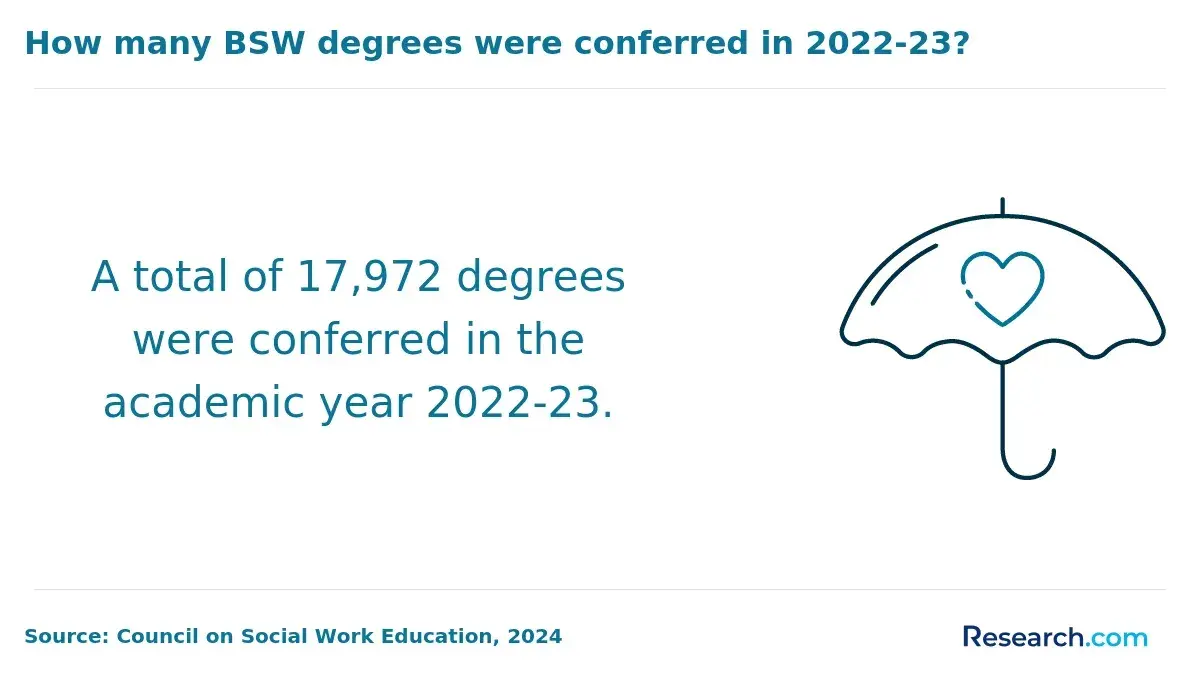
How long does it take to complete a social work degree program in Minnesota?
Your timeline depends on the degree level, whether you study full time, whether you already have a CSWE-accredited BSW, and how quickly you can complete fieldwork. Field placements are often the scheduling factor students underestimate most.
| Degree | Typical full-time timeline | Common part-time timeline | Important timing factor |
| Bachelor of Social Work (BSW/BSSW) | Usually 4 years | Often 5–6 years | Accredited programs require at least 440–480 hours of field practicum |
| Master of Social Work (MSW) | Standard programs usually take 2 years | Often 2–3 years | Advanced standing may reduce the timeline to 12–16 months full time for eligible BSW graduates |
| Doctor of Social Work (DSW) | Typically 3–4 years | Often 4–6 years | Clinical leadership work, dissertation expectations, and field demands can affect completion |
| PhD in Social Work | Generally 4–6 years | May take longer | Research requirements, dissertation work, assistantships, and employment can extend the timeline |
Several choices can shorten or lengthen your path:
- Enrollment intensity: Full-time study is faster, but part-time study may be more realistic for students working, parenting, or caring for family members.
- Advanced standing: A CSWE-accredited BSW can reduce an MSW by up to a year because prior coursework and field education may be recognized.
- Field placement logistics: BSW programs often require 440–480 practicum hours, and MSW programs may require up to 900 hours, so schedule compatibility matters.
- Transfer credit policies: Transfer credits can help, but each school decides what it will accept. General education and prerequisite gaps can also add time.
-
: "
One Minnesota social worker who completed a local BSW said the program took longer than expected because work, family responsibilities, and field placement scheduling had to fit together. She planned for about five years part time and said advisor support helped her avoid burnout while still gaining practical experience.
"
How much does a social work degree cost in Minnesota?
The cost of a social work degree in Minnesota varies widely by school type, residency status, degree level, and delivery format. Tuition is only part of the calculation. Students should also budget for books, fees, transportation, technology, background checks, field placement costs, exam fees, and licensing expenses.
| Degree or cost factor | Cost information to plan around | Decision tip |
| BSW at public universities | $8,000–$12,000 per year for in-state students; $15,000–$20,000 for out-of-state students | Residency and reciprocity can make a major difference in total cost |
| BSW at private colleges | Typically $30,000–$40,000 annually | Compare net price after scholarships, not only sticker tuition |
| MSW at public institutions | $10,000–$15,000 per year for residents; $18,000–$25,000 for non-residents | Advanced standing can reduce total credits and tuition for eligible BSW graduates |
| Private and online MSW programs | Often $35,000–$45,000 | Ask whether online students pay in-state, out-of-state, or separate online tuition |
| DSW programs | $18,000–$25,000 annually at public universities and up to $50,000 at private schools | Use a DSW when it clearly supports leadership or advanced clinical goals |
| PhD in Social Work | $10,000–$20,000 per year for residents at public universities; private schools can exceed $45,000 | Ask about teaching or research assistantships before assuming the listed tuition is your final cost |
| Online vs. campus format | Tuition may be similar, but online study can reduce commuting and housing expenses | Confirm field placement expectations before choosing based on convenience alone |
When estimating return on investment, compare the total cost of the degree against the license level and role it supports. Students who are deciding between social work and counseling may also want to compare career pathways and earnings in this guide to LPC vs LCSW salary. This chart from CSWE shows the distribution of full-time social work faculty according to gender.
What degrees are required for different social work specializations in Minnesota?
Not every social work role requires the same level of education. A BSW may be enough for some supervised case management and community service positions, while clinical, school-based, supervisory, and healthcare roles often favor or require graduate training.
| Specialization | Common degree requirement | Typical license direction | Best fit for students who want to... |
| Clinical Social Work | MSW from a CSWE-accredited program | LICSW after 4,000 hours of supervised clinical experience and passing the ASWB Clinical exam | Provide therapy, mental health assessment, and independent clinical services |
| School Social Work | BSW or MSW, though many positions prefer or require an MSW | Often LSW or LGSW at minimum; advanced roles may require LISW or LICSW plus education-related requirements | Support students, families, attendance, behavior, crisis response, and school-community coordination |
| Healthcare Social Work | BSW for some entry-level roles; MSW for many clinical responsibilities | LGSW, LISW, or LICSW depending on scope of practice | Work in hospitals, clinics, hospice, care coordination, discharge planning, or counseling |
| Child and Family Social Work | BSW for many entry-level roles; MSW for supervisory or clinical advancement | LSW for entry-level work; LGSW, LISW, or LICSW for higher-level responsibilities | Work in child protection, foster care, adoption support, family services, or family-centered intervention |
If you are unsure which specialization fits you, compare job descriptions before choosing a concentration. The right choice depends on whether you want direct clinical care, case management, policy work, school-based support, healthcare coordination, or leadership.
What financial aid options are available to social work students in Minnesota?
Social work students often combine several funding sources instead of relying on one scholarship or loan. Start with the FAFSA, then check state aid, university awards, department scholarships, employer benefits, assistantships, and loan forgiveness options tied to public service work.
- Federal grants: Pell Grants and Federal Supplemental Educational Opportunity Grants (FSEOG) are need-based awards that do not have to be repaid when eligibility rules are met.
- Minnesota aid programs: The Minnesota Office of Higher Education offers state grants and scholarships for eligible residents, and some university awards for BSW and MSW students range from $300 to $1,500 annually.
- School-based scholarships: Institutions such as Minnesota State University, Mankato and Moorhead offer awards connected to academic achievement, service, or community commitment, including examples such as the Wayne and Carol Sandee Endowed Scholarship and MSSA Region IX Scholarships.
- Work-study: Federal and state work-study can provide part-time income, sometimes in settings related to social services, student support, or administration.
- Federal and private loans: Loans can fill funding gaps, but compare interest rates, repayment terms, and whether your future role may qualify for forgiveness programs.
- Professional organization support: Groups such as the Minnesota Social Service Association (MSSA) may offer scholarships or stipends for students committed to service.
- Graduate scholarships: MSW students may qualify for specialized awards, including Augsburg University’s Aspiring Graduate Student Scholarship for first-generation and financially needy applicants.
If reducing time in school is part of your cost strategy, compare accelerated MSW programs carefully. A faster program can lower opportunity costs, but only if it is accredited, affordable, and realistic with your work and field placement schedule.
What is the job outlook for social workers in Minnesota?
Social work demand in Minnesota is supported by the continuing need for mental health care, child and family services, school-based support, healthcare coordination, aging services, and community programs. Employers tend to value candidates who graduate from accredited programs, complete strong field placements, and understand the license required for the role.
The strongest long-term strategy is to match your education level with the work you actually want. A BSW can be a practical entry point, but an MSW is often the more flexible credential for clinical work, independent practice, supervision, and advancement. For a broader step-by-step view of the pathway from education to licensure, see how to become a social worker in Minnesota.
How can I accelerate my transition to licensed counseling roles in Minnesota?
If your goal is counseling or therapy-related work, the fastest route is not always the shortest program. It is the route that meets licensing rules without requiring you to backtrack. For many social workers, that means choosing an MSW with clinical coursework, appropriate supervised experience, and field placements aligned with behavioral health or counseling settings.
- Choose the correct graduate pathway: If you already have a CSWE-accredited BSW, advanced standing may shorten your MSW.
- Prioritize clinical placements: Field education in mental health, substance use, healthcare, or community behavioral health can strengthen your post-graduate options.
- Confirm supervision requirements early: Make sure your supervisor, hours, and setting align with the license you plan to pursue.
- Avoid non-licensure shortcuts: Certificates can add skills, but they do not replace a required degree or supervised practice for clinical licensure.
For a focused comparison of options, review the fastest way to become a counselor in Minnesota.
What are the alternative pathways to become a social worker in Minnesota?
You do not always need to start over with a second bachelor’s degree to move into social work. Career changers with related academic backgrounds may be able to enter through graduate study, bridge coursework, or a traditional MSW designed for students without a BSW.
| Pathway | Who it fits | What to check before enrolling |
| Traditional MSW for non-BSW graduates | Students with a bachelor’s degree in another field | Whether the program is CSWE-accredited and how many credits are required, often about 60 credits |
| Advanced standing MSW | Students with a CSWE-accredited BSW | Whether your BSW qualifies and whether the program is around 30 credits |
| Psychology or sociology background | Career changers with related social science coursework | Prerequisites, field experience expectations, and admission requirements |
| Post-bachelor’s certificate or bridge coursework | Students who need targeted preparation before a BSW or MSW | Whether credits transfer and whether the pathway truly supports licensure goals |
| State-specific provisional route | Applicants who may qualify for provisional licensure without passing the national exam at first | Supervised practice requirements and the steps needed for full licensure |
-
: "
A Minnesota social worker who entered the field after earning a psychology degree said the transition required careful planning while working. He found that an advanced standing MSW saved time, while bridge experiences helped connect academic theory with client situations. He also described provisional licensure as useful early-career flexibility.
"
Are online social work degrees recognized in Minnesota?
Yes, online BSW and MSW degrees can be recognized in Minnesota if they meet the same accreditation expectations as campus programs. The key requirement is CSWE accreditation. An online format by itself is not the problem; lack of recognized accreditation is.
Graduates of CSWE-accredited online programs are generally treated the same as graduates of CSWE-accredited campus programs for licensure purposes. The article’s cited employer survey data indicates that nearly 70% of employers treat accredited online social work degrees as equivalent to traditional degrees, and online social work graduate enrollment increased by 21% from 2019 to 2023.
However, online does not mean entirely remote. Social work programs still require supervised field education, and students usually complete that experience in person through approved agencies in or near their communities. Before enrolling, ask who arranges placements, whether Minnesota placements are available, and whether the program has experience supporting students in the state.
| Question to ask an online program | Why it matters |
| Is the BSW or MSW program CSWE-accredited? | This is central to Minnesota licensure eligibility |
| Can I complete field placement in Minnesota? | Even online students must satisfy in-person practicum requirements |
| Who finds and approves my practicum site? | Placement support can affect your timeline and stress level |
| Are there campus visits or synchronous class times? | Hybrid requirements can affect work and family schedules |
| Does tuition differ for online, in-state, and out-of-state students? | Total cost can change significantly by residency and format |
What organizations accredit social work degree programs in Minnesota?
Accreditation protects students from spending time and money on a degree that may not lead to licensure. In social work, you need to look at both the program-level accreditor and the institution’s broader accreditation status.
- Council on Social Work Education (CSWE): CSWE is the national programmatic accreditor for social work education and is the accreditation Minnesota relies on for social work licensure eligibility.
- Regional higher education accreditation: Minnesota institutions commonly hold institutional accreditation through bodies such as the Higher Learning Commission (HLC), which reviews overall academic quality and institutional operations.
- Minnesota Board of Social Work: The board is not an academic accreditor, but it determines licensing requirements, reviews applications, and enforces professional standards for legal practice in the state.
Students who want a more accessible graduate admissions path should still begin with accreditation. Reviewing easiest MSW programs to get into may help you identify options, but admission flexibility should never come at the expense of CSWE recognition.
What are the top institutions offering social work degree programs in Minnesota?
The best Minnesota social work program for you is the one that is accredited, affordable enough to complete, compatible with your schedule, and connected to field placements in the population or setting you want to serve. Reputation helps, but licensure alignment and practicum quality are more important than name recognition alone.
- University of Minnesota Twin Cities: A highly ranked in-state option with broad research opportunities and a wide range of clinical field placement possibilities.
- University of St. Thomas: Known for the Interprofessional Center, where social work students learn alongside law and psychology students, with attention to ethics and flexible scheduling.
- Minnesota State University Moorhead (MSUM): Offers tracks such as Multicultural Clinical and Social Change & Leadership, with hybrid options that can support working students.
- University of Minnesota Duluth: Provides CSWE-accredited options, including traditional and advanced standing MSW pathways, with attention to rural and Indigenous communities.
- St. Catherine University: Features a social justice-oriented curriculum and flexible pathways, including online options that may appeal to women and nontraditional students.
Before applying, compare accreditation status, field placement support, advanced standing options, specialization fit, licensure exam preparation, and total net price. If flexibility is a priority, an accredited social worker online degree may be worth considering, especially if the program can support Minnesota-based fieldwork.
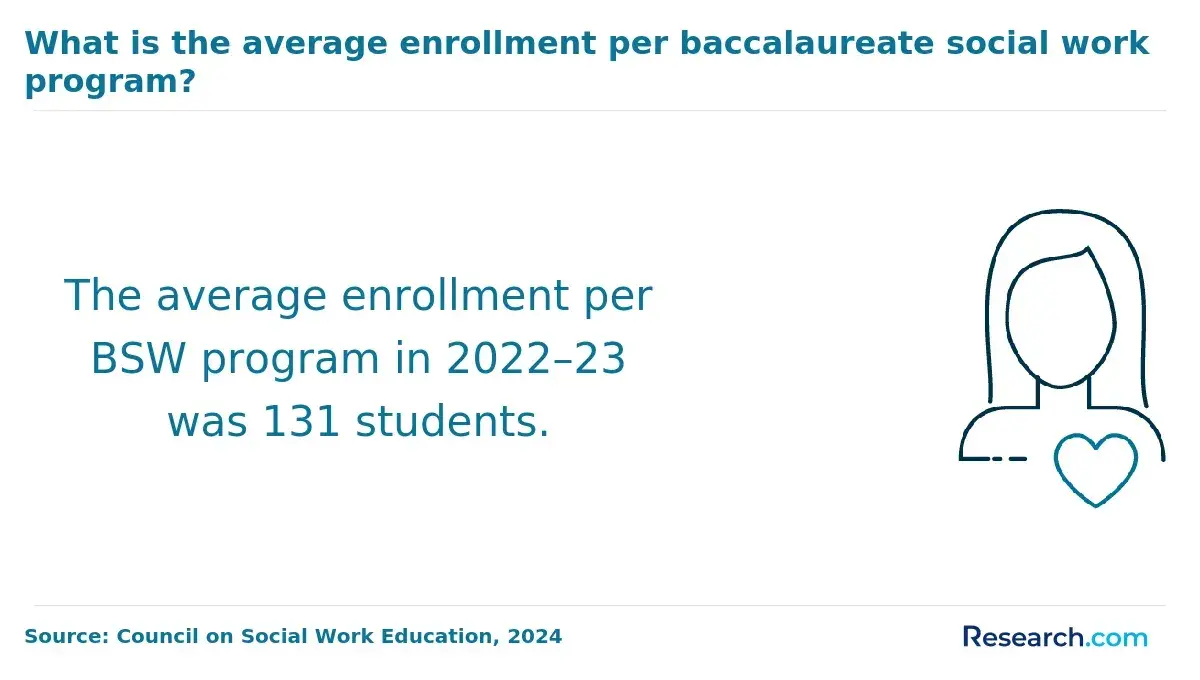
What Minnesota social workers say about their degree experience
- My social work education at the University of Minnesota gave me a strong mix of academic preparation and applied experience. When I began working in a local school, I saw how much students depend on social workers for support during difficult situations. The program’s focus on culturally responsive practice helped me build trust with students from many backgrounds. I am thankful to work in a field where I can make a direct difference in young people’s lives. Glenn
- Studying at St. Catherine University changed how I understood both myself and the communities I wanted to serve. The curriculum pushed me to examine my values and strengthened my commitment to advocacy in Minnesota’s cultural context. In my school-based role, I regularly see how resilient students are and how important individualized support can be. I am proud to help underserved communities move toward healthier futures. Linh
- The University of St. Thomas connected me with internships and local partnerships that helped me grow professionally. My first social work role in a school setting exposed me to challenges faced by rural students and communities with limited resources. Those experiences forced me to become more creative and practical. Minnesota’s collaborative service environment helped me develop as a leader in education and social services. Dawn
Related Articles for Nearby States
- 2027 What Degree Do You Need To Be a Social Worker: Education Requirements in Wisconsin
- 2027 What Degree Do You Need To Be a Social Worker: Education Requirements in Iowa
- 2027 What Degree Do You Need To Be a Social Worker: Education Requirements in North Dakota
- 2027 What Degree Do You Need To Be a Social Worker: Education Requirements in South Dakota
- 2027 What Degree Do You Need To Be a Social Worker: Education Requirements in Nebraska
- 2027 What Degree Do You Need To Be a Social Worker: Education Requirements in Illinois
- 2027 What Degree Do You Need to Be a Social Worker: Education Requirements in Missouri
- 2027 What Degree Do You Need To Be a Social Worker: Education Requirements in Michigan
- 2027 What Degree Do You Need To Be a Social Worker: Education Requirements in Kansas
- 2027 What Degree Do You Need to Be a Social Worker: Education Requirements in Indiana
References
- St. Catherine University, Social Work Accreditation: https://www.stkate.edu/accreditation/program-accreditation/social-work-ac
- NASW Minnesota, Social Work Education in Minnesota: https://naswmn.socialworkers.org/Professional-Development/Social-Work-Education-in-Minnesota
- Master of Social Work Degrees, Social Work Programs in Minnesota – No GRE/CSWE Accredited: https://www.mswdegrees.org/states/minnesota/
- University of Minnesota College of Education and Human Development, Accreditations: https://www.cehd.umn.edu/about/accreditations
- Minnesota State University Moorhead, Accreditation of Social Work: https://www.mnstate.edu/academics/majors/social-work/accreditation/
- CSWE, Accreditation Directory: https://www.cswe.org/accreditation/about/directory/
- Southwest Minnesota State University, Social Work: https://www.smsu.edu/academics/programs/socialwork/index.html
- Lutheran Social Service of Minnesota, Accreditation: https://www.lssmn.org/services/older-adults/about/accreditations
- Minnesota State University, Mankato, Accreditation & BSSW Program Outcomes: https://ahn.mnsu.edu/academic-programs/social-work/bachelor-of-science-in-social-work/accreditation-and-bssw-program-outcomes/
- Saint Mary’s University of Minnesota, Accreditation: https://www.smumn.edu/about/accreditation-saint-marys-university-of-minnesota/
Key Insights
- A BSW is the usual starting credential for entry-level Minnesota social work roles, but an MSW is the key degree for clinical and independent practice.
- CSWE accreditation is nonnegotiable. Always verify program accreditation before enrolling, especially if the program is online or outside Minnesota.
- Fieldwork affects your timeline as much as coursework. BSW programs require at least 440–480 practicum hours, and MSW programs may require up to 900 hours.
- Advanced standing can save time and money. Students with a CSWE-accredited BSW may be able to complete an MSW in 12–16 months full time instead of the standard 2 years.
- Do not choose a program based only on tuition or convenience. Compare accreditation, placement support, licensure alignment, transfer credit rules, specialization options, and total net cost.
- Online social work degrees can work in Minnesota. They must be CSWE-accredited, and you should confirm that required field placements can be completed in Minnesota.
Other Things You Should Know About Becoming a Licensed Social Worker in Minnesota
To become a licensed social worker in Minnesota in 2027, you need a Bachelor of Social Work (BSW) for entry-level positions. To practice independently or as a clinical social worker, a Master of Social Work (MSW) is necessary, along with passing the Association of Social Work Boards (ASWB) exam and completing supervised clinical hours.
In Minnesota, obtaining a doctorate is not required to become a clinical social worker. The state mandates a master's degree in social work from a program accredited by the Council on Social Work Education, along with supervised clinical experience and passing a licensing exam. While a doctorate may enhance career opportunities or academic roles, it is not necessary for licensure or clinical practice. Therefore, most clinical social workers in Minnesota enter the profession with a master's degree rather than a doctoral degree.
In 2027, to begin a career as a social worker in Minnesota, you need at least a Bachelor of Social Work (BSW) from an accredited program. This degree typically involves coursework in human behavior, social policy, and ethics, and includes fieldwork experience.


