
2027 What Degree Do You Need To Be a Social Worker: Education Requirements in Nebraska

Co-Founder and Chief Data Scientist
The challenge of entering Nebraska’s social work field lies in understanding its specific educational demands. With over 20% of Nebraskans facing mental health issues annually, qualified social workers are crucial. A mere passion without the right degree or licensure limits impact and career growth. Nebraska mandates at least a bachelor’s degree in social work, emphasizing accredited programs to ensure competence and eligibility for state licensure.
This article, crafted by career planning experts, unpacks these requirements. It offers precise guidance on degrees, licensure steps, and career pathways, empowering readers to navigate and succeed in Nebraska’s social work profession.
Key Things to Know About Social Work Education Requirements in Nebraska
- A minimum of a Bachelor of Social Work (BSW) is required for entry-level social work roles, reflecting Nebraska’s emphasis on foundational practical skills.
- To provide clinical services or advance professionally, a Master of Social Work (MSW) from a CSWE-accredited program is mandated, aligning with Nebraska’s licensing board standards.
- Continuing education and supervised hours post-degree are crucial, as Nebraska demands ongoing learning to maintain licensure and adapt to evolving community needs.
- What is the minimum degree required to become a licensed social worker in Nebraska?
- What courses are covered in a social work degree program in Nebraska?
- How long does it take to complete a social work degree program in Nebraska?
- How much does a social work degree cost in Nebraska?
- What degrees are required for different social work specializations in Nebraska?
- What financial aid options are available to social work students in Nebraska?
- What are the alternative pathways to become a social worker in Nebraska?
- What are the career prospects for Nebraska social work graduates?
- Are online social work degrees recognized in Nebraska?
- What organizations accredit social work degree programs in Nebraska?
- What are the top institutions offering social work degree programs in Nebraska?
- How does a social work degree facilitate the transition to counseling careers in Nebraska?
What is the minimum degree required to become a licensed social worker in Nebraska?
The pathway to becoming a licensed social worker in Nebraska is defined by clear educational milestones that reflect the complexity and responsibility of each licensure level. These requirements challenge the notion that minimal education alone prepares one for meaningful practice in the field. Each licensure level requires a degree from an accredited social work program in Nebraska, ensuring a consistent standard of professional preparation across the state.
- Certified Social Worker (CSW): A Bachelor's degree in Social Work (BSW) from a CSWE-accredited program is the foundational credential, permitting entry into the profession but limiting independent clinical practice.
- Certified Master Social Worker (CMSW): A Master’s degree in Social Work (MSW) is required, broadening eligibility to engage in supervised clinical work and acting as a stepping stone for further licensure.
- Licensed Mental Health Professional (LMHP): This level also requires an MSW degree and authorizes the holder to independently offer mental health services within specific boundaries of experience and supervision.
- Licensed Independent Mental Health Practitioner (LIMHP): Building on previous credentials, an MSW degree plus LMHP status is necessary, enabling full independent clinical social work practice.
The distinction between these degrees and licensures reflects Nebraska’s commitment to professional rigor. For those considering advanced roles, exploring careers with a masters in social work offers insight into the expanded possibilities afforded by graduate education. This framework embodies the minimum degree for social worker Nebraska standards, reinforcing the essential role of formal preparation in ethical and effective service delivery.
What courses are covered in a social work degree program in Nebraska?
Effective preparation in social work demands coursework that transcends basic knowledge, equipping students to navigate complex societal dynamics and advocate for change. Nebraska’s programs deliver comprehensive training to meet such challenges, balancing theory and practice through core courses designed for diverse professional demands. Key course components include:
- History of Social Work: Traces the field’s evolution and societal responses, grounding students in the profession’s foundational context.
- Human Behavior in the Social Environment: Analyzes individual development within families and communities, integrating multiple theoretical perspectives.
- Privilege and Oppression / Institutional Oppression: Investigates social structures affecting marginalized groups, emphasizing diversity awareness and advocacy.
- Social Welfare Policy and Service Delivery: Prepares students to critically evaluate and influence policies affecting social services.
- Micro Practice (Individuals and Families): Builds skills for client engagement and intervention at the individual and family levels.
- Group Practice: Focuses on group dynamics and facilitation methods critical for collective interventions.
- Macro Practice (Community Organization, Planning, and Administration): Addresses broader social change efforts, program planning, and community organizing.
- Research-Informed Practice: Develops capabilities to apply and assess research for evidence-based interventions.
- Field Practicum: Offers supervised real-world experience, typically requiring 900 hours to integrate learning with practice.
- Trauma and Advanced Practice Courses (Specialist Curriculum): Emphasizes trauma-informed care and complex case management aligned with regional priorities.
Nebraska does not impose additional state-specific coursework beyond national CSWE standards but prioritizes trauma-informed practice in response to regional needs. Advanced standing can be granted for CSWE-accredited graduates, allowing a streamlined pathway through foundational material.
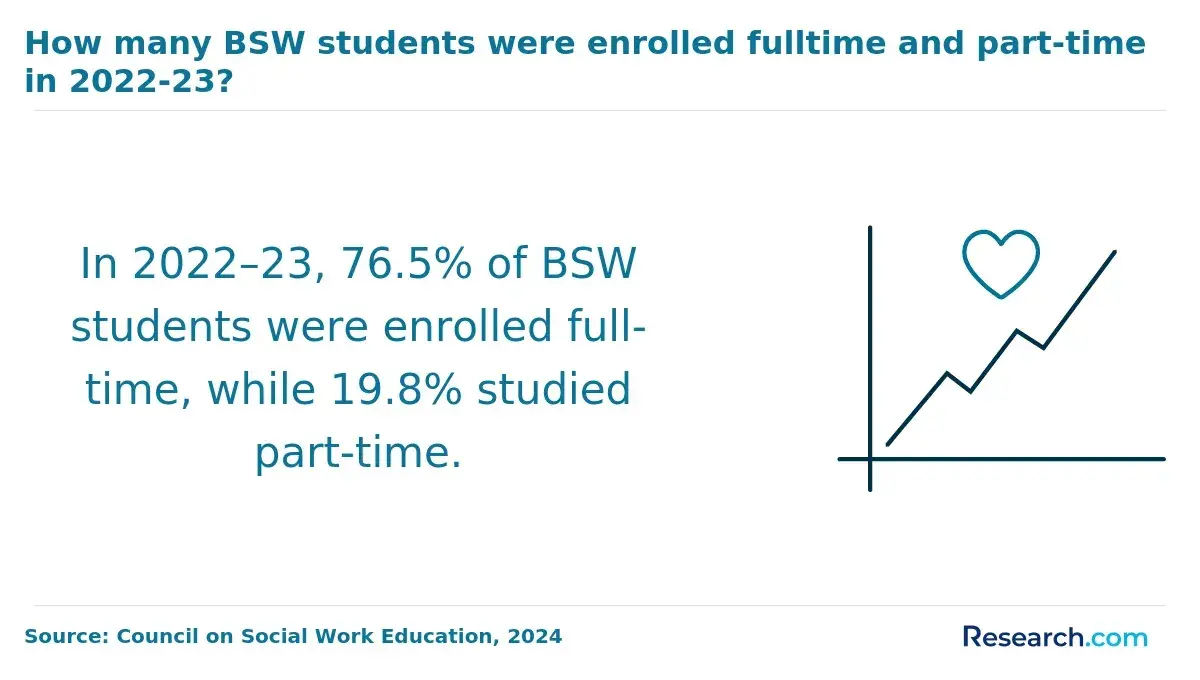
The image highlights enrollment patterns among BSW students, with most studying full-time and a smaller share part-time. This context reinforces Nebraska’s emphasis on structured, rigorous coursework that demands significant commitment while accommodating diverse student pathways into the profession.
How long does it take to complete a social work degree program in Nebraska?
The time it takes to complete a social work degree in Nebraska significantly shapes your career trajectory and life planning. It influences your readiness for practice, eligibility for licensure, and ability to balance personal commitments. Exploring typical program lengths while questioning standard assumptions reveals the complexity behind these timelines.
- Bachelor of Social Work (BSW) Completion: Usually four years full-time but can be as short as two years for transfer students with relevant credits, offering accelerated pathways for prepared learners.
- Master of Social Work (MSW) Duration: Full-time students with non-social work backgrounds typically finish in two years; part-time pathways extend up to four years, while advanced standing options reduce this to one year full-time or two years part-time.
- Doctor of Social Work (DSW) Timeline: Rare in Nebraska, these practice-focused doctorates take three to five years post-MSW, influenced by enrollment status and dissertation demands.
- PhD in Social Work Length: A research-driven degree lasting four to six years after an MSW, contingent on dissertation progress and academic responsibilities.
Multiple factors affect these durations: part-time enrollment naturally extends time; advanced standing condenses it by recognizing prior learning; and demanding practicum hours—over 900 in MSW programs—can slow progression depending on field placement opportunities. Additionally, transfer credits from community colleges or other programs may shorten the journey, while evening or hybrid formats provide flexibility but often lead to longer completion times.
When I spoke with a Nebraska social worker who graduated from a local university, she reflected on her own timeline with a blend of pride and realism. “I started as a full-time BSW student, planning for four years,” she said, “but switching jobs midway forced me into part-time study, stretching it closer to six years.” She also described the emotional challenge of juggling fieldwork hours with family obligations and how her school’s flexible scheduling ultimately helped her persevere.
How much does a social work degree cost in Nebraska?
Tuition and fees shape the actual cost of a social work degree in Nebraska in ways that often surprise prospective students. Looking beyond sticker prices uncovers how residency, institution type, and program format significantly influence the total investment required.
- Bachelor of Social Work (BSW) tuition: In-state rates at public universities like UNO usually range from $250–$350 per credit hour, totaling around $30,000 to $35,000, while out-of-state students face roughly double those costs.
- Master of Social Work (MSW) tuition: Public institutions charge $300–$450 per credit hour for residents and up to $900 for non-residents, with private schools such as Creighton pushing total costs beyond $40,000.
- Doctor of Social Work (DSW) tuition: Less common but often online or hybrid, these programs cost between $700 and $1,000 per credit hour, with total expenses reaching $36,000 to $50,000 depending on credits.
- PhD in Social Work tuition: Public universities may offer tuition waivers, yet base rates from $350 to $1,000 per credit hour remain standard, especially when factoring in additional research fees.
- Public vs. private and online vs. on-campus: Public institutions generally offer more affordable rates for residents, whereas private schools, though pricier, may provide institutional aid; online tuition sometimes uses flat rates regardless of residency, altering the typical cost dynamics.
Students exploring affordable social work programs in nebraska must weigh these variables carefully. For deeper insights into career costs and benefits, consider the comparison between social work and counseling salaries at social work vs counseling salary.
What degrees are required for different social work specializations in Nebraska?
Social work roles in Nebraska demand varying educational achievements because each specialization requires distinct competencies and regulatory credentials. These degree requirements for social work specializations in Nebraska ensure practitioners are prepared to meet the complexities of their chosen fields and comply with state licensure standards.
- Clinical Social Work: An MSW from a CSWE-accredited program plus about 900 supervised field hours are necessary to qualify as a Licensed Independent Mental Health Practitioner, allowing independent mental health diagnosis and treatment.
- School Social Work: A BSSW suffices for entry-level Certified Social Worker status, but most employers prefer or require an MSW for advanced roles, providing deeper expertise for specialized interventions in educational settings.
- Healthcare Social Work: An MSW is typically essential for hospital-based positions, emphasizing trauma-informed care and healthcare policy, equipping social workers to navigate medical system complexities.
- Child and Family Services Social Work: Entry roles may accept a BSSW with 400 hours of fieldwork, yet supervisory or clinical positions demand an MSW coupled with additional practicum experience for enhanced leadership and clinical capabilities.
Determining what degree is needed to become a clinical or school social worker in Nebraska depends on these clear but varied pathways, each designed to align academic preparation with the practical demands and responsibilities of the profession. With accreditation and supervised experience embedded in these requirements, Nebraska ensures social workers are well-positioned to serve communities effectively.
The chart shows the top employment areas for PhD-level social work graduates, with tenure-track and research positions leading. This illustrates how advanced degrees in Nebraska not only expand licensure options but also open academic, clinical, and leadership pathways across diverse practice settings.
What financial aid options are available to social work students in Nebraska?
Financial aid is crucial for students pursuing social work degrees in Nebraska, as it helps alleviate the significant burden of tuition and related costs. Accessing diverse funding options enables students to focus more on gaining essential skills rather than financial stress. Key financial aid options for social work students in Nebraska include:
- Federal Grants: These include Pell Grants and Supplemental Educational Opportunity Grants (SEOG), which are awarded based on financial need and do not require repayment, providing vital support for students.
- State-Funded Title IV-E Stipends: Specifically for BSW students in their upper years, these stipends help cover tuition for 15–16 credit hours per semester in exchange for a commitment to work in Nebraska’s public child welfare system.
- Institutional Scholarships for BSW and MSW Programs: Universities like University of Nebraska at Omaha and University of Nebraska at Kearney offer scholarships based on academic achievement and financial need, including targeted stipends for field placements.
- Susan Thompson Buffett Foundation Scholarships: Competitive scholarships for Nebraska residents attending in-state public institutions, awarded on financial and academic criteria, are key resources for social work students.
- National Fellowships and Scholarships: Numerous opportunities are available through platforms like CareerOneStop and FastWeb for social work majors seeking additional financial aid beyond Nebraska.
- Federal Work-Study Programs: These campus-based jobs help students earn money while gaining professional experience, awarded based on financial need and FAFSA completion.
- Student Loans: Federal Direct Loans and other loans offer low-interest, deferred payment options, often with income-driven repayment plans to ease post-graduation financial challenges.
- Professional Organizations and Social Work Associations: Joining groups such as the NASW Nebraska Chapter can provide access to scholarships, stipends, and conference grants, expanding financial aid avenues.
- Financial Literacy and Counseling Services: Universities provide dedicated counseling to help social work students make informed financial decisions, contributing to long-term stability and success.
Prospective students should explore all available scholarships for BSW and MSW programs early and consider options such as the online master of social work to discover flexible financial aid opportunities in Nebraska.
What are the alternative pathways to become a social worker in Nebraska?
Transitioning into social work in Nebraska doesn’t require starting over, even if your background is in psychology, sociology, or another related field. The state’s flexible system allows you to leverage existing education and experience to enter the profession through several alternative routes.
- Traditional MSW Program for Non-BSW Holders: Complete a two-year CSWE-accredited MSW program with 900+ hours of supervised fieldwork.
- Advanced Standing MSW Track: BSW holders from accredited programs can finish their MSW in one year, accelerating entry into practice.
- Using Related Degrees as Foundation: Degrees in psychology or sociology are recognized prerequisites for MSW admission and valued by many programs.
- Post-Bachelor’s Certificate or Bridge Programs: Designed to fill gaps for non-social work graduates, easing the transition to graduate-level social work education.
- Certified Peer Support Specialist (CPSS) Pathway: Mental health recovery experience plus state certification offer recognized behavioral health credentials with potential professional mobility.
A social worker from Nebraska, who transitioned from a psychology background after graduating locally, shared his reflections: “At first, it felt overwhelming to start social work after years in another field, but the bridge program helped me gain essential social work knowledge without redundancy. Navigating supervised hours under provisional certification was challenging but rewarding—it put theory into practice faster than I expected.
The flexibility in Nebraska’s pathways gave me the confidence to pursue this career shift thoughtfully. It wasn’t just about earning a degree; it was about building a new identity, step by step.” His experience highlights how these alternative routes empower career changers to make meaningful, informed transitions.
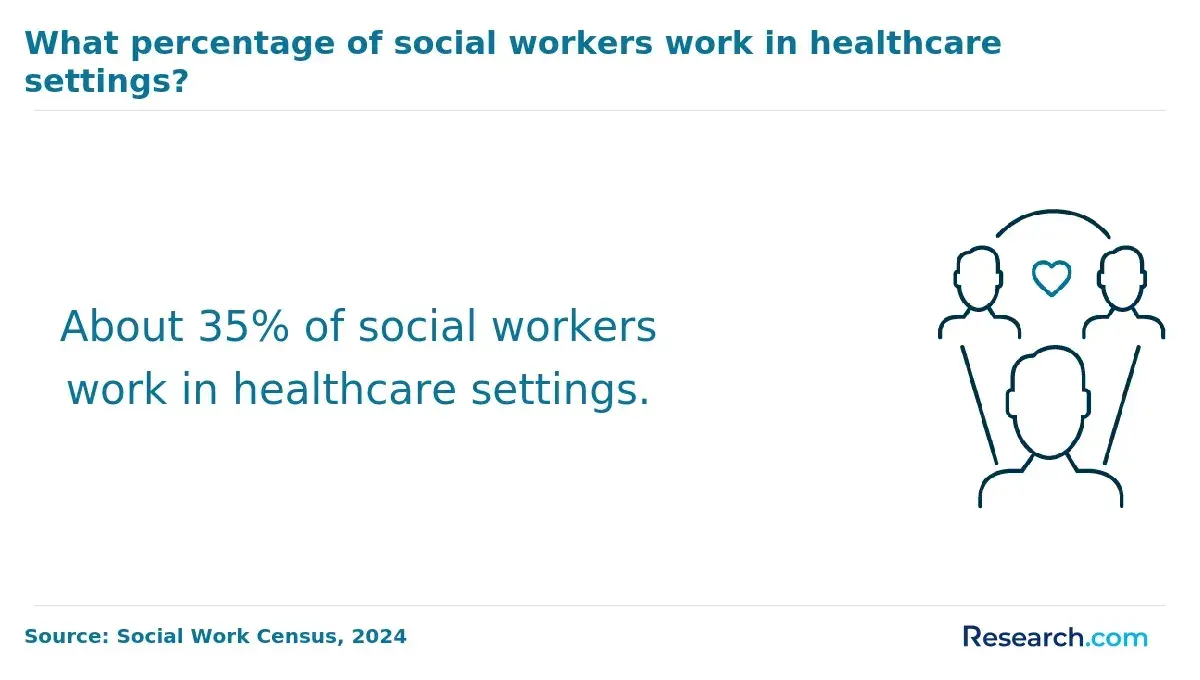
The image illustrates that about 35% of social workers practice in healthcare settings, reinforcing the value of alternative educational pathways. These routes allow career changers to enter high-demand fields like healthcare while meeting Mississippi’s licensure standards.
What are the career prospects for Nebraska social work graduates?
Nebraska social work graduates can pursue diverse roles across community mental health services, child welfare agencies, and school-based programs. These professionals often secure positions in case management, clinical social work, or policy advocacy within governmental and non-profit organizations. Market trends indicate growing demand for practitioners with specialized expertise in areas such as trauma-informed care and crisis intervention. Strategic career planning, including steps outlined on how to become a social worker in Nebraska, can facilitate vertical mobility and leadership opportunities while addressing regional community needs.
Are online social work degrees recognized in Nebraska?
Online Bachelor of Social Work (BSW) and Master of Social Work (MSW) programs have surged in popularity, responding to the demand for flexible learning amid busy lifestyles. Yet, for Nebraskans, the critical issue remains whether these degrees hold value beyond convenience. Recognition affects not only eligibility for state licensure but also the viability of employment in social work sectors, where credibility and compliance are non-negotiable.
Recognition pivots on rigorous accreditation and alignment with Nebraska's licensing board standards. The Nebraska Board of Social Work Examiners accepts degrees from Council on Social Work Education (CSWE)-accredited programs, irrespective of delivery mode. National surveys reveal that nearly 40% of MSW students pursue online or hybrid formats, and over 80% of employers treat accredited online degrees equivalently to traditional ones. This data challenges outdated biases against online study, suggesting a paradigm shift is underway.
However, credibility hinges on more than digital coursework. Supervised fieldwork—integral to licensure—must be completed locally, ensuring practical skills in Nebraska environments. Hybrid programs, blending online theory with in-person practicum and networking, offer robust preparation. Choosing a fully CSWE-accredited institution remains essential, reinforcing licensure eligibility and long-term professional acceptance.
The chart illustrates delivery methods for BSW programs, showing traditional in-person learning still dominates, though blended, hybrid, and online formats are expanding. For Nebraska students, this underscores how recognition of online degrees aligns with growing flexibility in accredited program delivery.
What organizations accredit social work degree programs in Nebraska?
Accreditation serves as a critical gatekeeper, ensuring social work programs in Nebraska maintain rigorous quality standards that directly impact a graduate’s eligibility for licensure and professional acceptance. Recognizing these accreditation organizations offers insight into the foundational criteria shaping reputable education and career pathways within the field.
- Council on Social Work Education (CSWE): As the chief accreditor of bachelor’s and master’s social work programs nationwide, CSWE accreditation is essential for students aiming to meet licensure requirements and gain employment. This is the cornerstone for identifying legitimate cswe accredited social work programs in Nebraska.
- Higher Learning Commission (HLC): The regional accreditor overseeing Nebraska institutions, HLC’s endorsement ensures that social work degrees meet comprehensive academic standards, valid beyond just the social work discipline. Recognized by employers and federal programs alike, HLC shapes institutional credibility that complements program-specific accreditation.
- Nebraska Department of Health and Human Services (DHHS): While not an accrediting body, DHHS regulates licensure in Nebraska and mandates that applicants hold degrees from programs accredited by CSWE and recognized by regional authorities such as HLC. This state oversight ties educational standards directly to professional practice regulations.
For those evaluating if is social work a good degree in Nebraska, understanding these key social work accreditation organizations Nebraska helps clarify the pathway to entering an expanding and demanding profession with growing employment opportunities.
What are the top institutions offering social work degree programs in Nebraska?
Choosing where to pursue your social work education in Nebraska goes beyond location or reputation; it shapes your eligibility for licensure, your practical readiness, and your financial return on investment. Selecting a program that balances accreditation, flexible learning, and quality field experience is critical to thrive in Nebraska’s evolving social work landscape.
The best social work schools in Nebraska are distinguished by their commitment to rigorous standards and diverse delivery options, ensuring accessibility and relevance for various student needs.
- University of Nebraska at Omaha (UNO): Home to the state’s largest social work program, UNO offers CSWE accredited social work programs Nebraska with both BSSW and MSW degrees, notable for flexible in-person and online formats and graduates earning above-average starting salaries.
- University of Nebraska at Kearney (UNK): With a fully online BSSW program and two required field placements, UNK stands out for serving both rural and urban students, recognized nationally among regional public universities.
- Nebraska Wesleyan University (NWU): Offers a trauma-conscious MSW with hybrid evening classes, advanced standing options, and extensive practicum hours, blending flexibility with hands-on learning for working students.
- Creighton University: Integrates Jesuit liberal arts values with social work education, providing small classes and strong community ties that enhance ethical practice and social justice commitment.
- Wayne State College: Known for affordable BSW programs focused on rural practice and licensure preparation, Wayne State emphasizes individualized instruction and intimate class sizes.
Educational pathways for social work in Nebraska demand not only accredited training but also a perspective that challenges traditional methods; consider exploring options including fully funded DSW programs online to advance your career in this vital profession.
How does a social work degree facilitate the transition to counseling careers in Nebraska?
Nebraska’s social work programs equip graduates with comprehensive clinical and community-focused skills that can be leveraged for counseling roles. Focused practicum experiences and elective courses provide practical exposure to therapeutic techniques while fulfilling state licensure criteria. For professionals aiming to transition seamlessly into counseling, pursuing tailored post-graduate certifications can further align academic preparation with industry needs. For further guidance on career transitions, review the fastest way to become a counselor in Nebraska.
What Do Social Workers in Nebraska Say About Their Degree
- Pursuing my social work degree at the University of Nebraska-Lincoln offered me incredible access to local community resources that truly enriched my learning experience. The program's focus on practical application helped me gain confidence, and starting my career in a local school has been rewarding beyond words. I love helping students navigate their challenges and feel deeply connected to the community. The chance to give back to Nebraska's youth and contribute to their well-being keeps me motivated every day. Isaiah
- Completing my social work education at Creighton University was a turning point in my professional journey. The curriculum emphasized professional development, preparing me to advance steadily in my career. Starting work at a local school, I quickly realized how impactful my role could be in shaping supportive environments for children and families. This experience has been both challenging and gratifying, allowing me to grow as a practitioner while fostering meaningful relationships with those I serve. Amina
- Studying social work at Nebraska Wesleyan University exposed me to the unique challenges faced by rural communities, a perspective often overlooked in other programs. This local focus gave me invaluable insight into cultural competence and community-specific issues. I’ve found personal growth through addressing these challenges head-on, which has fueled my passion to make a lasting difference here. Working in a school setting, I feel proud to serve a population that reflects Nebraska’s diverse landscape and resilient spirit. Diego
Related Articles for Nearby States
- 2027 What Degree Do You Need To Be a Social Worker: Education Requirements in Kansas
- 2027 What Degree Do You Need To Be a Social Worker: Education Requirements in South Dakota
- 2027 What Degree Do You Need To Be a Social Worker: Education Requirements in Iowa
- 2027 What Degree Do You Need To Be a Social Worker: Education Requirements in Colorado
- 2027 What Degree Do You Need to Be a Social Worker: Education Requirements in Missouri
- 2027 What Degree Do You Need To Be a Social Worker: Education Requirements in Wyoming
- 2027 What Degree Do You Need To Be a Social Worker: Education Requirements in Minnesota
- 2027 What Degree Do You Need To Be a Social Worker: Education Requirements in Oklahoma
- 2027 What Degree Do You Need To Be a Social Worker: Education Requirements in North Dakota
- 2027 What Degree Do You Need To Be a Social Worker: Education Requirements in Illinois
References:
- College Factual. Best Value Colleges for Social Work (Income $30-$48k) in Nebraska.
- Counseling Psychology. 2025 Best MSW Programs in Nebraska: Online & Affordable Options.
- DHHS Nebraska. Financial Assistance for Social Work Degrees.
- MSW Degrees. Nebraska - Master of Social Work Degrees.
- Nebraska Wesleyan University. Master of Social Work.
- Social Work Degree Center. MSW Programs in Nebraska.
- Social Work Degrees. Nebraska MSW Programs Guide.
- Social Work License Map. How to Become a Social Worker in Nebraska.
- University of Nebraska at Kearney. Social Work Comprehensive.
- University of Nebraska Omaha. Graduate and Undergraduate Social Work Degree Programs | Grace Abbott School of Social Work.
Other Things You Need to Know About Education Requirements in Nebraska
In Nebraska, becoming a social worker without a degree specifically in social work is challenging because the state requires a minimum of a bachelor’s degree in social work (BSW) or a related field for entry-level licensure. While individuals with degrees in related fields like psychology or sociology may qualify for certain roles, obtaining a licensed social worker (LSW) credential typically mandates completing a social work education program approved by the Council on Social Work Education.
This ensures professionals meet Nebraska’s standards for knowledge and ethics essential in social work practice. Therefore, pursuing an accredited social work degree remains the clearest pathway to professional social work licensure and practice in Nebraska.
To become a licensed clinical social worker (LCSW) in Nebraska, you must earn a Master of Social Work (MSW) from an accredited program, complete 3,000 hours of supervised clinical experience, and pass the Association of Social Work Boards (ASWB) clinical exam.
Internships are crucial for social work students in Nebraska, offering real-world experience necessary for licensure. Master's programs may require 900 hours of fieldwork. These internships help meet the criteria set by the Nebraska Department of Health and Human Services for professional practice.
In 2027, to become a social worker in Nebraska, you typically need at least a Bachelor of Social Work (BSW) from an accredited program. However, a Master of Social Work (MSW) is often required for clinical positions or to advance in the field.


