
2027 What Degree Do You Need To Be a Social Worker: Education Requirements in Nevada

Co-Founder and Chief Data Scientist
Nevada faces a growing demand for qualified social workers, with over 12,000 professionals needed to address mental health and social service challenges statewide. Many aspiring social workers struggle to identify the correct education pathway and licensure requirements to practice legally in Nevada. Obtaining the proper degree, typically a Bachelor's or Master of Social Work, accredited by the Council on Social Work Education, is essential for eligibility and career advancement.
This article outlines the specific degree requirements, licensure categories, and educational strategies to meet Nevada’s standards. Prepared by career planning experts, it delivers clear, actionable guidance to help prospective social workers navigate the process effectively.
Key Things to Know About Social Work Education Requirements in Nevada
- A bachelor’s degree in social work (BSW) is the minimum requirement to enter entry-level positions in Nevada’s social work field.
- To become a licensed clinical social worker (LCSW), you must earn a master’s degree in social work (MSW) and complete 3,000 supervised clinical hours.
- The Nevada Division of Public and Behavioral Health mandates passing the Association of Social Work Boards exam to obtain licensure for practice in the state.
- What is the minimum degree required to become a licensed social worker in Nevada?
- What courses are covered in a social work degree program in Nevada?
- How long does it take to complete a social work degree program in Nevada?
- How much does a social work degree cost in Nevada?
- What degrees are required for different social work specializations in Nevada?
- What financial aid options are available to social work students in Nevada?
- What are the career prospects and salary expectations for social workers in Nevada?
- What are the continuing education and licensure renewal requirements for social workers in Nevada?
- What are the alternative pathways to become a social worker in Nevada?
- Are online social work degrees recognized in Nevada?
- What organizations accredit social work degree programs in Nevada?
- What are the top institutions offering social work degree programs in Nevada?
What is the minimum degree required to become a licensed social worker in Nevada?
Becoming a licensed social worker in Nevada requires completing a degree from a Council on Social Work Education (CSWE)-accredited program, with specific levels depending on the intended license. The following degrees meet Nevada social work degree requirements for licensure.
- Bachelor of Social Work (BSW): This degree is the minimum education for social worker license in Nevada and qualifies candidates for the Licensed Social Worker (LSW) credential. It must be obtained from a CSWE-accredited program, ensuring foundational preparation for entry-level practice.
- Master of Social Work (MSW): Required for advanced licenses such as Licensed Master Social Worker (LMSW), Licensed Clinical Social Worker (LCSW), and Licensed Independent Social Worker (LISW), the MSW comes from a CSWE-accredited program and includes advanced field experiences. Those interested in clinical work or independent practice should explore MSW careers for further guidance.
- Doctorate in Social Work (DSW or PhD): While not mandatory for licensure, a doctoral degree supports specialization or academic roles within social work. It focuses on research or advanced clinical skills and helps contribute to workforce development in the field.
What courses are covered in a social work degree program in Nevada?
Having the appropriate coursework in a social work degree program is essential for building the knowledge and skills needed to work effectively in Nevada’s diverse social service environment. The curriculum must also align with state and national accreditation standards to support licensure and professional growth. Below are the core courses commonly required in Nevada social work degree programs, with attention to unique state requirements:
- Introduction to Social Work: Provides foundational understanding of social work history, values, roles, and practice settings.
- Human Behavior and the Social Environment: Studies interactions between individuals and their environments, covering micro, mezzo, and macro levels.
- Social Welfare Policy and Services: Analyzes social policies at various government levels, highlighting Nevada’s social welfare systems.
- Ethics in Social Work: Focuses on ethical decision-making and legal responsibilities in professional practice.
- Diversity and Cultural Competency: Develops skills for working with diverse populations, often requiring additional cultural diversity coursework or a foreign language.
- Social Work Practice: Teaches direct intervention skills with individuals, families, groups, and communities.
- Research Methods and Evidence-Based Practice: Introduces scientific inquiry and applying evidence in social work settings.
- Field Education/Internship: Provides supervised practical experience, typically spanning two semesters of fieldwork.
- State-Specific Requirements: Includes coursework on the U.S. and Nevada constitutions; some programs mandate cultural diversity or foreign language study.
To understand how these courses connect to student pathways, the chart below highlights the most popular certificate programs offered within BSW studies.
How long does it take to complete a social work degree program in Nevada?
Choosing the right social work degree in Nevada requires careful consideration of program length, which directly affects career timing and financial planning. Knowing typical completion times for each degree level—bachelor’s, master’s, doctoral—is essential for setting realistic goals. Various factors, such as part-time study options, advanced standing, and fieldwork demands, can also influence how quickly students finish.
- Bachelor of Social Work (BSW): Typically takes four years full-time, with part-time options extending to five or six years. Transfer pathways allow students to start with an Associate of Arts and finish a BSW online or hybrid at state universities.
- Master of Social Work (MSW): Full-time traditional programs generally require two years, while part-time students may take three to four years. Advanced Standing options shorten the timeline to 12–15 months for those holding a recent BSW.
- Doctor of Social Work (DSW): Designed for experienced professionals, these programs usually take three to five years, often offered online from out-of-state institutions. Time varies based on dissertation or capstone projects.
- PhD in Social Work: This research-focused degree lasts four to six years including coursework and dissertation research, typically pursued online or out of state due to limited Nevada-based programs.
These factors also affect the duration of your educational journey:
- Advanced Standing: Eases the path for BSW holders by reducing MSW duration to about 12–15 months, accelerating entry into the workforce.
- Fieldwork Requirements: Intensive practicum hours can extend program length, especially when balanced with work or family commitments.
- Course Delivery Format: Hybrid and online classes offer flexibility, often helping rural students and working professionals complete degrees more efficiently.
- Transfer Credits: Agreements between community colleges and universities enable credit transfers, potentially shortening degree timelines.
A social worker from Nevada shared her reflections on completing her degree at a local institution. She described the challenge of balancing coursework with a part-time job that stretched her BSW program to five years instead of the traditional four. “It wasn’t just about taking classes; managing field placements while working was exhausting at times,” she explained.
Yet, she appreciated the flexible online components that allowed her to continue without interruption and felt the experience strengthened her time management skills. Ultimately, graduating within that extended period gave her confidence and practical readiness she might not have gained otherwise.
How much does a social work degree cost in Nevada?
Knowing the tuition and fees involved in social work degree programs helps you plan effectively and avoid unexpected financial burdens. Careful comparison of costs associated with different program levels and formats is essential for choosing an affordable social work program Nevada offers.
- Bachelor of Social Work (BSW) tuition: Public universities charge about $8,500–$9,000 per year for in-state students and $24,000–$25,000 for out-of-state, while private colleges often exceed $30,000 annually.
- Master of Social Work (MSW) tuition: Tuition ranges from $9,200–$10,500 per year in-state and $26,000–$28,000 out-of-state, with online options generally priced similarly to on-campus programs.
- Doctor of Social Work (DSW) tuition: Often requiring out-of-state or online enrollment, DSW costs vary from $16,000 to $25,000 annually, higher at private or online universities.
- PhD in Social Work tuition: When available at public Nevada schools, tuition averages $9,000–$12,000 for in-state and $25,000–$30,000 for out-of-state students, with some funding opportunities possible.
- Public vs. private institutions: Public schools offer significantly lower rates for state residents compared to private colleges, which may provide scholarships but have higher base tuition.
- Residency and program format: In-state tuition is often less than half the cost of out-of-state, and while online programs can save commuting costs, they may include additional fees.
To maximize affordability in the cost of a social work degree in Nevada, prospective students should assess residency status, delivery options, and available financial aid. Understanding what qualifications do you need to be a social worker also guides smart educational choices that align with career goals.
What degrees are required for different social work specializations in Nevada?
Different social work roles in Nevada demand varying educational credentials to equip professionals with the relevant skills and knowledge required by their specialty. Knowing the degree requirements for social work specializations in Nevada helps you plan your education effectively to meet licensing standards and career goals.
- Clinical Social Work: Requires a Master’s in Social Work (MSW) from a CSWE-accredited program plus 3,000 hours of supervised clinical experience; passing the ASWB Master’s and Clinical Exams is mandatory.
- School Social Work: Typically requires a Bachelor’s in Social Work (BSW) to start, but an MSW is often preferred or required for advanced roles and licensure as an LSW or LMSW.
- Healthcare Social Work: A BSW may qualify for entry-level positions, but most healthcare social work roles, especially in hospitals, require an MSW for comprehensive patient care management.
- Child and Family Services: Entry-level roles accept a BSW, while supervisory or therapeutic positions generally need an MSW to address complex family and trauma issues.
- Licensed Social Worker (LSW): Requires a BSW from a CSWE-accredited program; LSWs work under supervision and cannot independently diagnose or treat mental health conditions.
- Licensed Independent Social Worker (LISW): Requires an MSW or doctoral degree plus 3,000 hours of supervised experience; LISWs practice independently in non-clinical fields but cannot perform clinical diagnosis or treatment.
- Specialized Roles: May require additional coursework or certifications beyond BSW or MSW depending on the focus area like substance abuse or gerontology.
What financial aid options are available to social work students in Nevada?
Financial aid is essential for students pursuing social work degrees in Nevada, as it helps alleviate the financial burden of tuition and related costs, enabling students to focus on their studies and professional goals. By accessing a variety of funding sources, students can reduce expenses and successfully prepare for careers dedicated to supporting Nevada’s communities. Key financial aid for social work students in Nevada includes:
- Federal Grants: Pell Grants provide need-based funding to undergraduate students without requiring repayment, making them a vital resource for many social work students.
- Nevada state grants for social work students: Scholarships like the Governor Guinn Millennium Scholarship and the Silver State Opportunity Grant offer tuition assistance to qualifying Nevada residents and low-income undergraduates.
- Institutional Scholarships for Social Work: Universities such as the University of Nevada, Reno provide dedicated scholarships for social work juniors, seniors, and graduate students, often requiring FAFSA completion or separate applications.
- Work-Study Programs: Federal Work-Study allows students to earn money through part-time jobs related to their field, helping offset educational expenses while gaining relevant experience.
- Student Loans: Federal Direct Loans are available to undergraduate and graduate students pursuing degrees in social work, with flexible repayment options following graduation.
- Funding from Professional Organizations: Groups like the National Association of Social Workers Nevada Chapter offer scholarships and stipends to students dedicated to serving underserved communities.
- Specialized Aid for Non-FAFSA Eligible Students: Students ineligible for federal aid, including DACA recipients, can apply for institutional financial assistance through alternative forms provided by their universities.
- Additional Resources: Prospective students seeking flexible programs can explore an MSW degree online, which may also have unique scholarship opportunities.
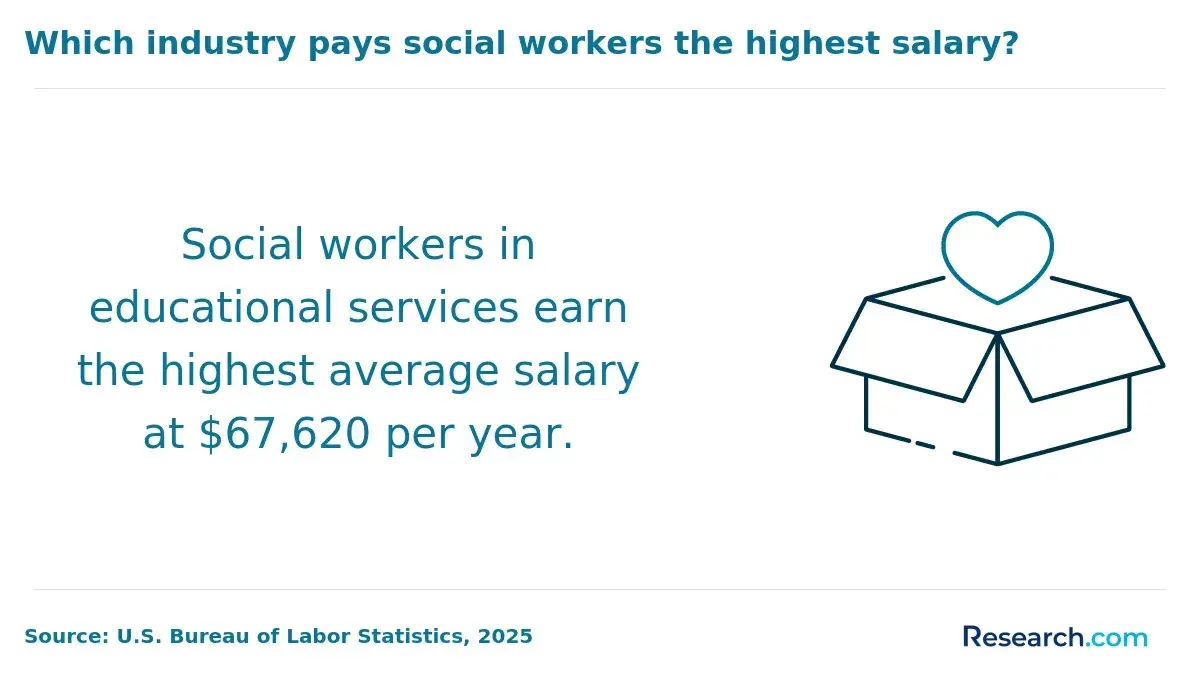
What are the career prospects and salary expectations for social workers in Nevada?
Nevada’s social work field offers robust career opportunities with competitive salary ranges that vary by specialization, experience, and location. Data from state labor statistics indicates that entry-level professionals typically earn modest starting salaries that increase significantly with advanced degrees and clinical experience. For example, positions in clinical settings or government agencies tend to offer higher compensation compared to community-based roles.
Additionally, factors such as ongoing professional development, licensure upgrades, and specialization in high-demand areas drive salary growth and advancement. Candidates are encouraged to explore diverse career paths and verify current salary ranges with local industry reports to align expectations with market conditions. For further detailed guidance on the educational pathway and licensure prerequisites, visit how to become a social worker in Nevada.
What are the continuing education and licensure renewal requirements for social workers in Nevada?
In Nevada, licensed social workers must meet specific continuing education standards defined by the state's regulatory board to maintain their credentials. Typically, professionals are required to complete a set number of accredited continuing education hours within each renewal cycle to ensure that their practice remains current with emerging social work practices, ethical guidelines, and legislative updates. Renewal procedures also emphasize timely submission of documentation and verification of completed coursework, which can include seminars, workshops, or accredited online courses. For those seeking to balance license renewal with career advancement, exploring streamlined training opportunities, such as the fastest way to become a counselor in Nevada, may provide efficient pathways while ensuring compliance and ongoing professional development.
What are the alternative pathways to become a social worker in Nevada?
Individuals with degrees or experience outside traditional social work can transition smoothly into the profession in Nevada through several alternative pathways that build on existing knowledge and skills. These options help avoid starting from scratch and offer flexible routes to licensure.
- Traditional MSW Track for Non-BSW Holders: A 2-3 year program for candidates with unrelated bachelor’s degrees, offering foundational coursework and supervised practice.
- Advanced Standing MSW Track: A fast-track 12-month program for those with a CSWE-accredited BSW, designed to accelerate graduate social work education.
- Using Degrees in Related Fields: Degrees in psychology, sociology, or human services may qualify candidates for provisional licensure if enrolled in a CSWE program.
- Post-Bachelor’s Certificate or Bridge Programs: Supplemental programs that prepare non-social work graduates for MSW admission through targeted coursework and field experience.
- Provisional “B” License Route: Allows candidates with related degrees to work under supervision while completing social work education.
A social worker from Nevada, who took the alternative pathway after a career in education, shared their experience. They described the initial uncertainty of shifting fields but found bridge programs instrumental in building confidence and relevant skills.
Graduating locally, they emphasized how provisional licensure enabled gaining hands-on experience early, easing the transition. “Balancing work and study was challenging, but knowing I could contribute meaningfully during the process made it worthwhile,” they reflected, highlighting how these flexible routes made a career change both feasible and rewarding.
Are online social work degrees recognized in Nevada?
Online Bachelor of Social Work (BSW) and Master of Social Work (MSW) programs have become increasingly popular, offering flexibility for students balancing work, family, and studies. Recognition of these degrees in Nevada is essential because licensure and job opportunities depend on having an approved credential. Without a recognized degree, students cannot meet the state’s requirements for social work licensure or compete for professional roles effectively.
The key to recognition lies in program accreditation by the Council on Social Work Education (CSWE) and meeting Nevada Board of Examiners for Social Workers standards. Employers generally view online degrees from accredited programs as equal to campus-based degrees. Recent surveys show over 60% of employers accept online social work credentials if accreditation is verified, and there are more than 300 CSWE-accredited online or hybrid MSW programs nationwide, including those offered by University of Nevada, Reno.
Students should also ensure their program includes supervised fieldwork, a required practical component for licensure, often completed locally. Hybrid options offer flexibility by mixing online study with occasional in-person sessions. Choosing a CSWE-accredited program authorized in Nevada is crucial to ensure eligibility for licensure and alignment with state rules. To see how this flexibility is built into program design, the chart below outlines the different delivery methods available for BSW programs.
What organizations accredit social work degree programs in Nevada?
Accreditation plays a critical role in ensuring social work programs in Nevada maintain high academic standards, which is vital for graduates seeking licensure and recognition by employers. Completing a degree from an accredited program validates the quality and credibility of your education and enables you to pursue professional opportunities in the state.
- Council on Social Work Education (CSWE): This national body accredits Bachelor of Social Work (BSW) and Master of Social Work (MSW) programs, making them eligible for licensure in Nevada. The Nevada State Board of Examiners for Social Workers requires applicants to hold degrees from CSWE accredited social work schools in Nevada, such as those at the University of Nevada, Reno and the University of Nevada, Las Vegas.
- Regional Higher Education Accreditors: Social work programs must be within institutions accredited by a recognized regional accreditor, ensuring overall educational quality. In Nevada, the Northwest Commission on Colleges and Universities (NWCCU) fulfills this role, confirming institutional standards and credit transferability.
- Nevada State Board of Examiners for Social Workers: While not an accreditor, this agency oversees licensure by verifying that candidates graduated from CSWE-accredited programs at regionally accredited schools. Their regulation guarantees compliance with Nevada’s legal and professional standards for social workers.
Those interested in advancing their career should also explore the benefits of obtaining a masters in social work, which can expand professional qualifications and open additional pathways in Nevada’s growing social work field.
What are the top institutions offering social work degree programs in Nevada?
Choosing the right school for your social work degree in Nevada ensures your education is fully accredited, aligns with licensure requirements, and represents a solid financial investment. The best universities combine quality preparation with practical experience to help you build a successful career in social work.
- University of Nevada, Reno (UNR): Offers CSWE-accredited BSW and MSW programs featuring an advanced generalist practice focus and flexible online MSW options, with graduates earning significantly above average salaries.
- University of Nevada, Las Vegas (UNLV): Provides CSWE-approved BSW and MSW degrees with specialization tracks in Direct Practice and Management, supported by strong community agency partnerships for field placements.
- Great Basin College (GBC): Stands out with a hybrid BSW pathway where students complete an associate degree and initial credits locally before transferring to UNR for upper-division coursework, ideal for rural learners.
- College of Southern Nevada (CSN): Does not offer a standalone BSW but provides foundational human services coursework that facilitates transfer to accredited social work programs, emphasizing affordability and flexibility.
- Truckee Meadows Community College (TMCC): Offers social work and human services courses preparing students for transfer to UNR or UNLV BSW programs, with notable support services for non-traditional students in northern Nevada.
When selecting an accredited social work program in Nevada, prioritize schools recognized for strong field placements and pathways to licensure. Additionally, consider options that offer flexible learning schedules or online tracks. For those seeking advanced degrees beyond the MSW, exploring a DSW online program can be a strategic next step in your career development.
Here's What Social Workers in Nevada Have to Say About Their Degree
- Completing my social work degree at the University of Nevada, Reno opened doors I never imagined. The program’s close-knit community made learning feel personal and supportive, and I appreciated how it integrated Nevada's unique cultural dynamics into the curriculum. Starting my career in a local school allowed me to deeply connect with students and families, fostering trust and growth. It’s rewarding to see how my efforts positively impact their lives every day, reinforcing my passion for this work. Javi
- Reflecting on my journey through the College of Southern Nevada, I’m grateful for the opportunity to grow both personally and professionally. The diverse population and resources here challenged me to develop innovative approaches tailored to the community’s needs, which has been incredibly fulfilling. Working in a local school setting gave me firsthand insight into the challenges students face in Nevada, further fueling my commitment to advocate for their well-being and success. Lalaine
- Pursuing my social work degree at Nevada State College was a transformative experience that expanded my understanding of social justice within the state’s cultural context. Nevada’s unique environment presented opportunities to develop skills in addressing rural and urban disparities. Starting my career in a local school gave me a platform to pursue professional growth while helping shape healthier futures for children and families in our community. It’s been a privilege to serve and grow alongside the people I work with. Tori
Related Articles for Nearby States
- 2027 What Degree Do You Need To Be a Social Worker: Education Requirements in California
- 2027 What Degree Do You Need To Be a Social Worker: Education Requirements in Oregon
- 2027 What Degree Do You Need To Be a Social Worker: Education Requirements in Idaho
- 2027 What Degree Do You Need to Be a Social Worker: Education Requirements in Arizona
- 2027 What Degree Do You Need To Be a Social Worker: Education Requirements in Utah
- 2027 What Degree Do You Need To Be a Social Worker: Education Requirements in Washington
- 2027 What Degree Do You Need To Be a Social Worker: Education Requirements in Montana
- 2027 What Degree Do You Need To Be a Social Worker: Education Requirements in Wyoming
- 2027 What Degree Do You Need To Be a Social Worker: Education Requirements in Colorado
- 2027 What Degree Do You Need To Be a Social Worker: Education Requirements in New Mexico
References:
- 2023 Best Value Social Work Master's Degree Schools in Nevada - Course Advisor https://courseadvisor.com/majors/public-and-social-service/social-work/rankings/best-value/masters-degrees/far-western-us/nevada/
- 2025 Best MSW Programs in Nevada: Online & Affordable Options https://www.counselingpsychology.org/social-work/degrees/msw/nevada/
- 2025 Best Social Work Schools in Nevada https://www.collegefactual.com/majors/social-services-public-administration/social-work/rankings/top-ranked/far-western-us/nevada/
- Home | School of Social Work | UNLV https://www.unlv.edu/socialwork
- How to Become a Social Worker in Nevada https://socialworklicensemap.com/social-work-licensure/become-a-social-worker-in-nevada/
- Licensing https://naswnv.socialworkers.org/Professional-Development/Licensing
- MSW Programs in Nevada - Social Work Education Center https://www.socialworkdegree.net/msw-programs/nevada/
- Nevada BSW Programs - Social Work Degrees https://www.socialworkdegrees.org/program/bachelors/nevada
- Nevada Social Work Licensure | LSW, LCSW LISW Requirements in NV https://www.publichealthonline.org/human-services/nevada-social-work-licensure/
- School of Social Work | University of Nevada, Reno https://www.unr.edu/social-work
Other Things You Should Know About Becoming a Licensed Social Worker in Nevada
In 2027, to become a licensed social worker in Nevada, a degree specifically in social work is typically necessary. A Bachelor of Social Work (BSW) is required for generalist practice, and a Master of Social Work (MSW) is essential for clinical roles and advanced practice.
In Nevada, you need at least a Bachelor of Social Work (BSW) to become a licensed social worker. A Master of Social Work (MSW) is required for clinical positions. Alternative degrees may not fulfill social work specific course requirements, and might necessitate additional coursework.
Yes, to become a social worker in Nevada, you typically need at least a Bachelor's degree in Social Work (BSW) from an accredited program. The BSW provides foundational knowledge and is required for those seeking licensure and employment in professional social work settings.
In Nevada in 2027, an associate degree is not sufficient for becoming a licensed social worker. The minimum requirement is a Bachelor's in Social Work (BSW) from an accredited institution. Further licensure requires additional qualifications and passing specific exams.


