
What Is a Title 1 School? A Guide to Funding Benefits & Requirements for 2027

Co-Founder and Chief Data Scientist
What is a Title One school? The term “title 1 school" traces its roots to President Lyndon B. Johnson’s War on Poverty policy in 1965, with Title 1 funds being one of its cornerstones. Now, it is a focal point of the No Child Left Behind Act of 2001. The program gives a fair chance of improving US students’ academic achievements through funding, holistically. To put it more clearly, Title 1 funds grant school districts federal sponsorship, which covers the provision of clothing, support personnel, and classroom materials. These center on economically disadvantaged students to which funding is apportioned.
The U.S. Department of Education affirms that Title 1 was developed to guarantee that underprivileged students obtain a just, yet high-quality education by bridging gaps in educational achievement. This funding is considered the largest federal assistance program for public schools all over the country (Spivey, n.d.).
So, what are Title 1 schools? You can learn more about these schools, their funding, eligibility requirements, and more in the article below.
What Is a Title 1 School? Table of Contents
- What does a Title 1 school mean?
- What is the Federal Loan Teacher Forgiveness program?
- Eligibility of Schools to Receive Title 1 Funds
- How the Title 1 Funds Are Used in Schools
- Other Qualified Students for the Title 1 Funds
- How Title 1 Schools Can Promote Post-Secondary Success
- Addressing Healthcare Career Opportunities for Economically Disadvantaged Students
- The 2027 List of Title 1 Schools
- How can Title 1 schools strengthen career and technical education pathways?
- How do Title 1 schools address the digital divide in education?
- How do school leaders drive success in Title 1 schools?
- What long-term outcomes do Title 1 school graduates experience?
- What advanced education opportunities are available for Title 1 educators?
- How do Title 1 programs address student mental health and overall well-being?
- How do Title 1 schools contribute to local economic development?
- How can Title 1 schools enhance student transition to higher education?
- How are evolving federal policies shaping Title 1 initiatives?
- How can Title 1 schools guide students toward specialized vocational careers?
- How do Title 1 schools support English Language Learners?
- How can Title 1 schools expand online learning opportunities?
- How can Title 1 schools create accelerated pathways to higher education?
- What research confirms the effectiveness of Title 1 initiatives?
- How can parents and communities support Title 1 schools effectively?
- How is the effectiveness of Title 1 funding evaluated?
- Can Title 1 funds be used for summer learning programs?
- What challenges do Title 1 schools face in achieving academic equity?
- What are the current trends in Title 1 schools?
What does a Title 1 school mean?
First, what does a Title 1 school mean? A school consisting of a lower-income student population is given Title 1 sponsorship to aid students who are behind or have high chances to fall behind.
Through state educational agencies (SEAs), the financial aid is delivered to local educational agencies (LEAs) and public schools.
The Goals of Title 1 Schools
Title 1 schools throughout the country provide additional educational support to students. Such support goes beyond the traditional classroom, helping low-income students satisfy state requirements in basic pedagogical subjects. They organize and consolidate services and materials from federal, state, and local sources. At least 40% of the students must be identified as low-income to be eligible for Title 1 school funding.
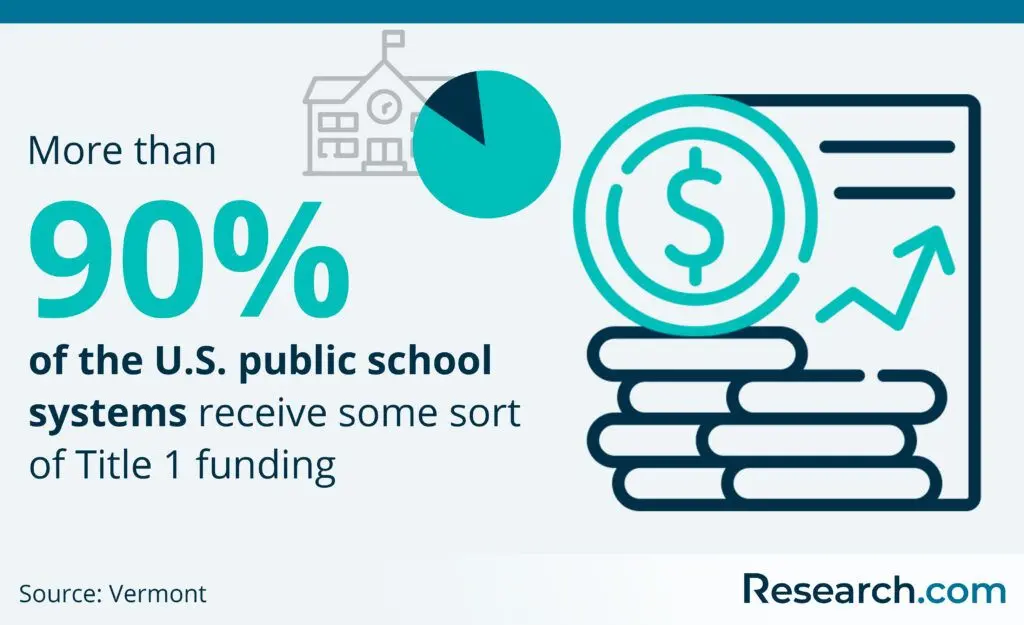
What do Title 1 schools get? According to recent U.S. public education spending statistics, Title 1 funds provide more than $14 billion annually to school systems nationwide for poverty-stricken students or students who are living near poverty.
What programs are available for Title 1 schools?
The targeted assistance school program and the schoolwide program are the two available programs for Title 1 schools. Both programs strive to enhance teaching and learning to let students meet the learning requirements. How does a school qualify for Title 1? The requirements to achieve this goal are:
- The Consolidated Application targeting procedure needs to determine qualified schools to benefit from Title 1 sponsorship.
- Students must present achievements to participate in the program.
- The regular academic program needs to be organized and supported.
- Highly eligible teachers need to provide instructions.
- The growth in parental participation must be observed.
- May offer services to students below 21 years of age who are eligible for a free public education until grade 12, and/or not yet at a grade level where the LEA offers free public education
Title 1 Targeted Assistance School Program
What does it mean to be a Title 1 school? The targeted assistance school program is provided to schools that do not comply with the schoolwide program’s 40% low-income student threshold. Title 1 teachers only offer services to selected students. The financial aid can only be used to offer services to selected students who exhibit a significant need for academic assistance.
Enactment of the Targeted Assistance School Program
- Staff uses different ways to identify which children are qualified to be included in the program.
- Various academically related goal standards are set by the LEA for grade 3 students and above.
- Criteria, like teacher judgment, parent interviews, and developmentally suited means for students from preschool through grade 2.
- The same criteria are used to identify financially disadvantaged, physically and/or cognitively disabled, and migrant children.
- Resources are used to hire staff who work only for qualified students.
- Files reporting that Part A funds are used on qualified students only must be kept.
Title 1 Schoolwide Program
The Title 1 schoolwide program aims to reform the full academic program in Title 1 schools, thus increasing educational achievement for all the students. This program is provided to schools that have at least a 40% student population from low-income households. Form the Title 1 school definition, the main objective is to guarantee that all children, specifically the disadvantaged ones, will showcase at least proficient achievement levels.
There are no differences between employees compensated with Title 1 assets and those who are not. All school employees must do their best to improve the overall academic program and student achievement, specifically the low-achieving ones. According to the Every Student Succeeds Act (ESSA), all schoolwide projects that wish to be continuously granted with funds must carry out a needs assessment and a suitable plan and perform a yearly program review.
Enactment of the Schoolwide Program
- No less than 40% of the students must come from low-income households.
- The planning schedule must be completed.
- An extensive plan must have been created in consultation with the LEA and the school support personnel for upgrading the overall school academic program. Parents and other community fellows, teachers, principals, administrators, technical assistance staff, school staff, and students must be included in planning.
The Benefits of the Schoolwide Program
Schools administering schoolwide programs cater to all students to enhance student achievement. They do not have to select particular students as all enrolled students are qualified to benefit from the Title 1 services, which include firsthand directives from employees compensated with Title 1 funds. A report showing that Part A funds are being used on services to unqualified students is not mandated.
Schoolwide programs can use their Title 1 aid in multiple ways, but they need to take part in improvement approaches that boost learning time and quality and deliver an outstanding curriculum.
Title 1 School Teachers
The ESSA states that all teaching personnel of Title 1 schools, as well as paraprofessionals, must be highly eligible and experienced. For areas with serious needs, a unique process must be observed and done.
Teachers instruct, while paraprofessional academics support and supervise students, assist teachers, and augment traditional classroom programs with more activities or offer managerial guidance for teaching.
Licensed teachers in other subjects and paraprofessionals may supplement instructional activities but not the actual instruction. The involvement of parents is also a vital element of day-to-day Title 1 school operations.
What are the requirements for Title 1 teachers and paraprofessionals?
Reading and math tests have serious implications for schools, most especially those that cater to the disadvantaged group. If results turn out bad, the reputation of the school will also gain a bad image. Many parents now ask: Are Title 1 schools bad?
The link between academic underachievement and poverty is real, and this is where competent and skilled teachers and school personnel come into the picture. Title 1 teachers are required to be aptly licensed for the grade and content, whether the program is targeted assistance or schoolwide.
Meanwhile, all paraprofessionals are required to comply with ESSA criteria to be qualified both for Title 1 targeted assistance and schoolwide program. A paraprofessional must earn a high school diploma and two years of college education or an associate’s degree or have satisfied certain standards. He or she must also be able to exemplify knowledge of and the capacity to support the teaching of reading, writing, and math.
What is the Federal Teacher Loan Forgiveness Program?
The Federal Teacher Loan Forgiveness program remains a primary financial incentive for educators. Teachers are qualified for a specific principal reduction of $5,000 to $17,000 on their loans, while many now leverage the PSLF waiver effects to achieve total discharge after 10 years of service. Under current 2024 regulations, any remaining balance is forgiven after the 120th qualifying payment. This 10-year timeline is a core component of the Public Service Loan Forgiveness program. Consequently, most teachers qualify for and maximize benefits by navigating both federal programs simultaneously (Federal Student Aid, 2024).
Requirements for Qualified Teachers
Qualified teachers and Title 1 teachers are qualified for the Federal Teacher Loan Forgiveness program. Some of the requirements include:
- Have worked as a full-time teacher for five continuous, complete school years. One of these years must have been after the 1997-98 school year at an elementary or high school in a school district that
- Is eligible for sponsorship under Title 1 of the Elementary and Secondary Education Act of 1965, or
- Has been chosen by the Department of Education based on a resolution that over 30% of the school’s population comprises students who are eligible for Title 1 services, and
- Is included in the Annual Directory of Designated Low-Income Schools for Teacher Cancellation Benefits
If one’s school or academic service company satisfies the requirements for a minimum of one year of teaching service but does not satisfy these requirements throughout the four succeeding years, the succeeding years of teaching may be considered regarding the mandated five years of teaching.
Eligibility of Schools to Receive Title 1 Funds
Schools that will qualify for Title 1 funds are selected by the federal poverty census information. The amount of funds that a school will receive depends on its population of low-income students.
LEAs administer the Title 1 funds they obtain to public schools where most low-income students reside.
Academic Challenges for Freshmen College Students

How the Title 1 Funds Are Used in Schools
Title 1 funds can be used for the advancement of academic programs, teaching activities, counseling, parental participation, staff employment, and so on. The funding aims to support schools in achieving the academic goals of low-income students. The U.S. Department of Education claims that Title 1 funds usually prompt further teaching of reading and math.
What are the services offered by Title 1 Schools?
Title 1 programs carry out services that strengthen the traditional classroom program. These services are:
- Additional teaching time and guidance for students.
- More teachers and paraprofessionals to lessen the sizes of classes.
- Purpose-built teaching methods and acquisition of teaching supplies and equipment.
- Parental participation and activities.
- Pre-kindergarten initiatives.
- After-hours and summer projects that lengthen and fortify the traditional curriculum.
Other Qualified Students for the Title 1 Funds
How does a student qualify for Title 1?
Private school students who reside in Title 1 school attendance areas or manifest educational needs can also benefit from the Title 1 funds.
Migrants, children with little English skills, homeless children, children with disabilities, abandoned children, delinquent children, at-risk children, or any children in need are also considered for the funding.
Children who perform poorly in their studies, are delayed a grade for one or more years, or are homeless are all deemed at-risk.
How Title 1 Schools Can Promote Post-Secondary Success
Bridging the gap between K-12 education and long-term opportunities is a rising focus in Title 1 schools. As studies highlight the correlation between education and economic mobility, Title 1 initiatives can be a catalyst for fostering post-secondary success among students from economically disadvantaged backgrounds. Integrating college and career readiness programs into school curriculums is one of the approaches being embraced by many institutions.
For instance, schools can leverage Title 1 funds to introduce dual-enrollment programs, mentorship opportunities, and career exploration workshops that prepare students for higher education and vocational pathways. Additionally, offering resources for developing critical skills such as teamwork, communication, and problem-solving enhances the capacity of students to thrive after high school.
Partnerships with local businesses and community colleges are also proven methods to provide hands-on experience and training, reducing barriers to employment and continuing education. Schools could even encourage pathways to higher education by advising students to explore accessible options like accelerated degree programs, which allow them to earn a bachelor’s degree faster and often more affordably.
Through these initiatives, Title 1 schools not only fulfill their mission of academic improvement but also set students up for sustainable success beyond the classroom. The focus on long-term impact makes these programs invaluable in breaking cycles of poverty and fostering generational progress.
Addressing Healthcare Career Opportunities for Economically Disadvantaged Students
Many Title 1 schools are actively exploring pathways to address disparities in career opportunities, particularly in high-demand fields like healthcare. With the ongoing healthcare workforce shortage, schools can leverage their resources to inspire and prepare students for careers in nursing, medical technology, and other allied health professions.
Title 1 funding provides a foundation for creating robust science and health programs designed to inspire low-income students. For example, schools can design initiatives that integrate STEM (Science, Technology, Engineering, and Math) with career-linked curriculums. Such initiatives often include partnerships with local hospitals, clinics, or community health organizations, offering students mentorship and exposure to real-world healthcare environments.
Additionally, aligning these programs with post-secondary planning can prove invaluable for students. Schools could guide students in exploring funding options for advanced training and higher education. For those considering nursing professions, they can be introduced to resources that detail how to secure financial assistance through nursing student loans, easing the financial burden of higher education. These strategic interventions ensure that students are academically prepared and financially supported to enter and excel in growing, sustainable fields.
By embedding such career-focused initiatives into the school environment, Title 1 institutions empower students to pursue life-changing career paths, breaking the cycle of poverty and contributing to the betterment of their communities.
The 2027 List of Title 1 Schools
Title 1 funding works toward helping disadvantaged children progress along with others (U.S. Department of Education, n.d.). Check out the estimated ESEA Title 1 LEA allocations per state.
What’s next for the Title 1 School funding?
This April, President Joe Biden issued a financial blueprint for the coming year for what makes a school Title 1 program successful. The blueprint orders Congress to increase the funding of the U.S. Department of Education by over 40%. Title 1 funding for low-income schools would increase by $20 billion, the largest year-over-year growth since the creation of the program in 1965. At the same time, there have been proposals to invest in special education, community schools, school counselors, cheap housing, and health care while offering Pell Grants to Dreamers.
National Educational Association President Becky Pringle said that President Biden and his administration are fulfilling their promise to improve the lives of the country’s most vulnerable households by providing funding that genuinely prioritizes them. Indeed, Title 1 investment is a continued devotion to creating a better nation for everyone through education. Regardless of the concentration of poverty in American schools, the fund brings kids at least a step closer to a bright future.
How can Title 1 schools strengthen career and technical education pathways?
Title 1 schools can design tailored programs that integrate academic instruction with career exploration and technical skills training. This approach enables students to gain practical insights into industry trends and secure hands-on experiences through internships, job shadowing, and mentorships with local businesses or vocational organizations. By fostering strategic partnerships, schools can align classroom learning with real-world applications, ultimately equipping students to transition seamlessly into post-secondary education or the workforce. Guidance on pursuing the best degrees to get further supports informed career decision-making and long-term success.
How do Title 1 schools address the digital divide in education?
Title 1 schools are increasingly leveraging federal funds to mitigate disparities in digital access and literacy. Institutional efforts include upgrading technological infrastructure, negotiating reduced-cost internet access, and integrating digital literacy programs into curricula. By establishing partnerships with local technology providers and educators, these schools strive to equip students with both necessary hardware and the skills to use emerging educational tools effectively. Furthermore, strategic investments in staff training enable educators to seamlessly incorporate technology-enhanced instruction, thus ensuring equitable learning opportunities. For students exploring accessible post-secondary educational options, reviewing what is the easiest associates degree to get can offer insights into streamlined career pathways.
How do school leaders drive success in Title 1 schools?
Effective leadership is critical in Title 1 schools. Administrators shape strategic planning, optimize resource allocation, and establish accountability measures that align with federal guidelines and local demands. Principals and other school leaders foster environments rooted in data-informed decision-making and continuous improvement through targeted professional development initiatives. By instituting innovative management practices and collaborative structures, school leaders ensure that Title 1 funds are effectively utilized to address unique academic challenges and sustain long-term student progress. Furthermore, some leaders advance their expertise via specialized programs and qualifications, demonstrating that are online graduate degrees respected, which reinforces their capacity to navigate the evolving demands of educational leadership.
What long-term outcomes do Title 1 school graduates experience?
Research shows that structured support in Title 1 schools correlates with higher graduation rates, increased enrollment in postsecondary education, and improved career readiness. Data-driven studies confirm that when early interventions and comprehensive academic programs are sustained over time, they contribute to measurable improvements in students’ ability to access and succeed in higher education. In many instances, graduates have benefited from targeted mentoring, career-focused training, and guidance toward affordable higher education options, such as online colleges that accept FAFSA. These outcomes underscore the importance of continuous tracking and analysis to adapt strategies that effectively bridge K–12 instruction with long-term success.
What advanced education opportunities are available for Title 1 educators?
Title 1 educators can enhance their instructional and leadership capabilities by pursuing advanced education opportunities that address the unique challenges of under-resourced environments. Tailored programs offer insights into budget management, data-driven decision-making, and innovative pedagogical strategies. In this context, pursuing dual graduate degree programs enables educators to acquire specialized skills without interrupting their current roles, ultimately fostering improved student outcomes and institutional growth.
How do Title 1 programs address student mental health and overall well-being?
Title 1 programs increasingly prioritize integrated student support services that extend beyond academics to include mental health and emotional stability. Schools implement on-site counseling, peer support initiatives, and trauma-informed practices that directly target the challenges posed by economic hardship. Collaborations with mental health professionals and community organizations facilitate proactive intervention and ensure continuous care, thereby enhancing overall student resilience and academic performance. Moreover, targeted professional development in wellness strategies enables educators to recognize and address emerging behavioral and emotional concerns effectively; some school leaders even pursue the best masters degree to get to further refine these support mechanisms.
How do Title 1 schools contribute to local economic development?
Title 1 schools serve as vital community anchors by establishing partnerships with local businesses, community organizations, and vocational institutions to align educational initiatives with regional economic needs. These schools often initiate workforce training programs, offer skill-specific workshops, and facilitate apprenticeship opportunities—efforts that not only improve student employability but also stimulate local economic growth. Additionally, collaborations with post-secondary institutions pave the way for career-advancing opportunities, such as accelerated associates degree online, further enhancing community workforce capabilities and driving long-term economic development.
How can Title 1 schools enhance student transition to higher education?
Title 1 schools can implement targeted college readiness programs that streamline guidance and counseling services, ensuring students are well informed about postsecondary opportunities. School administrators can collaborate with local higher education institutions to provide pathway programs, dual-enrollment options, and mentorship initiatives that familiarize students with the academic rigor and application procedures of college-level work. Additionally, integrating structured workshops on financial aid, college application processes, and modern digital learning tools can help demystify tertiary education. Such strategies may include highlighting alternative credentials like an online accelerated bachelor's degree, which demonstrate the potential for flexible and expedited higher education pathways.
How are evolving federal policies shaping Title 1 initiatives?
Federal policy shifts have introduced new priorities and accountability measures that Title 1 schools must integrate into their strategic planning. School leaders are reconfiguring budgeting, curriculum, and resource allocation to comply with updated federal guidelines while maintaining program integrity. Proactive adjustments—driven by regular policy reviews and performance data—ensure that schools remain agile amid legislative changes, thereby securing sustainable academic improvements. Administrators are leveraging enhanced data analytics and continuous professional development to translate policy updates into effective practices. For insights on aligning strategic investments with these changes and exploring further educational management opportunities, consider the best MBA student loans.
How can Title 1 schools guide students toward specialized vocational careers?
Title 1 institutions can integrate specialized vocational pathways into their curricula by establishing partnerships with technical institutes and industry experts. These collaborations enable students to gain direct exposure to competitive fields and practical skill sets not typically covered in standard academic programs. For instance, targeted initiatives may include career-focused workshops, mentorship programs, and hands-on training sessions that introduce students to nontraditional fields such as aviation. Such efforts help illuminate diverse funding options and career trajectories—as covered in our article on how to pay for flight school—thereby bridging the gap between academic learning and vocational readiness.
How do Title 1 schools support English Language Learners?
Title 1 schools serve culturally and linguistically diverse populations, including English Language Learners (ELLs), by implementing targeted instructional strategies and specialized support programs. Administrators and educators deploy bilingual curriculum adaptations, professional development in language acquisition methodologies, and evidence‐based interventions to improve language proficiency without compromising academic rigor. Collaborations with community organizations further enrich these initiatives by providing supplemental language resources and practical communication experiences. In some instances, educators additionally pursue innovative career advancement options, as covered in our article Which is the easy course in degree?, to continuously refine their capacity to support ELL students.
How can Title 1 schools expand online learning opportunities?
Title 1 schools can integrate innovative online learning initiatives to complement traditional classroom instruction and address diverse student needs. Strategic investment in digital platforms enhances instructional flexibility, facilitates personalized learning, and bolsters academic rigor. By allocating funds to upgrade technical infrastructure and training educators in digital pedagogy, schools can bridge gaps in access and create interactive environments that support real‐time feedback and adaptive assessments. Partnerships with reputable institutions—such as the best online accredited colleges—further enrich course offerings and expand opportunities for advanced studies, ultimately reinforcing a more resilient and future-focused educational model.
How can Title 1 schools create accelerated pathways to higher education?
Title 1 schools can strategically expand opportunities for students by collaborating with postsecondary institutions and leveraging nontraditional learning models that bridge secondary education with faster degree completion. Schools can implement dual-enrollment and credit recovery programs that provide advanced placement in rigorous subjects, while also creating partnerships that allow students to access courses typically offered at the college level. These efforts can include exploring options such as accelerated degree programs online to offer flexible, fast-track pathways for motivated students. By integrating tailored academic support with structured college-readiness initiatives, Title 1 schools enhance student access to higher education and help reduce the time and cost required to earn a degree.
What research confirms the effectiveness of Title 1 initiatives?
Empirical evidence demonstrates that focused Title 1 investments yield measurable improvements in academic proficiency and student retention over time. Peer-reviewed studies have linked targeted interventions with enhanced reading and math outcomes, lower dropout rates, and increased enrollment in postsecondary education. Data-driven analyses also indicate that integrating evidence-based practices—such as comprehensive needs assessments and continuous program adjustments—is essential for long-term program efficacy. Notably, educational researchers advocate for interdisciplinary approaches, including insights from programs like the shortest online doctoral programs, to further refine these strategies and ensure that Title 1 initiatives continue to address educational disparities effectively.
How can parents and communities support Title 1 schools effectively?
While Title 1 funding plays a significant role in improving the quality of education for students from low-income families, active involvement from parents and the broader community is essential for maximizing the benefits of these programs. Here are some ways that parents and communities can support Title 1 schools:
- Increased parental involvement: Schools with strong parental engagement often see better student outcomes. Parents can participate in school events, volunteer, attend parent-teacher conferences, and contribute to decision-making bodies like school boards or parent-teacher associations (PTAs).
- Home-based learning support: Parents can reinforce classroom learning by helping with homework, encouraging reading at home, and fostering a positive attitude toward education. Offering a quiet, structured environment for studying can also enhance academic performance.
- Collaboration with community organizations: Community groups, local businesses, and nonprofits can collaborate with Title 1 schools by providing additional resources such as tutoring, after-school programs, or enrichment activities that the school may not be able to offer through Title 1 funding alone.
- Advocacy for funding and resources: Parents and community leaders can advocate for increased funding or additional support at local and national levels, ensuring that Title 1 schools have access to the necessary resources to support their students effectively.
- Mentorship and role models: Community members, especially those who have successfully navigated the education system, can serve as mentors and role models for Title 1 students, helping to inspire and guide them through their educational journey.
How is the effectiveness of Title 1 funding evaluated?
Title 1 initiatives undergo systematic evaluation through data-driven accountability measures designed to track improvements in student performance and resource efficiency. Schools establish robust baseline metrics and implement ongoing assessments to monitor progress, while independent audits and state oversight ensure transparency in fund usage. Continuous feedback loops and digital monitoring tools enable stakeholders to fine-tune instructional strategies and adjust resource allocation based on measurable outcomes. For additional perspectives on educational financing challenges and solutions, explore how to pay for dental school.
Can Title 1 funds be used for summer learning programs?
Yes, Title 1 funds can be allocated for summer learning programs, making them a critical resource for addressing educational disparities during school breaks. Summer programs funded by Title 1 aim to prevent the "summer slide," a phenomenon where students, particularly those from low-income families, lose academic progress over the break.
Title 1 summer programs typically focus on core subjects like math and reading, helping students who struggle academically catch up with their peers. These programs often feature smaller class sizes, personalized instruction, and enrichment activities, creating a supportive learning environment.
In addition to academics, Title 1 funds can support extracurricular activities and community partnerships that promote holistic development. For families exploring other funding options for summer education, private student loans for summer classes can be a helpful solution.
By leveraging Title 1 funds for summer programs, schools can bridge the achievement gap, ensuring that students return to school prepared for success. These initiatives demonstrate the flexibility and importance of Title 1 funding in meeting diverse educational needs year-round.
What challenges do Title 1 schools face in achieving academic equity?
Title 1 schools encounter challenges that range from constrained resources to administrative complexities. Limited budgets can delay the integration of emerging instructional technologies and targeted professional development. Additionally, administrative hurdles and high personnel turnover may affect the consistency of program delivery. To overcome these issues, schools are encouraged to form strategic partnerships and reassess resource allocation by exploring further educational opportunities, such as associates degrees online. Robust evaluation frameworks are essential to ensure that Title 1 initiatives translate into measurable, long-term improvements in student outcomes.
What are the current trends in Title 1 schools?
Title 1 schools are continuously evolving to meet the needs of disadvantaged students. Several trends are shaping the future of these schools and influencing how they implement educational programs:
- Increased Use of Technology: Many Title 1 schools are integrating digital learning tools to bridge the gap in access to resources. Online platforms, learning apps, and virtual tutoring are helping to supplement in-class instruction.
- Focus on Social-Emotional Learning (SEL): Schools are placing greater emphasis on SEL programs to address the emotional and mental health needs of students. These programs help students build resilience, manage stress, and improve relationships, which ultimately supports academic success.
- Expanded Community and Family Engagement: There is a growing trend to involve families and communities in the educational process. Schools are hosting virtual workshops, parent-teacher collaborations, and community outreach programs to create a supportive environment for students.
- Integration of Culturally Responsive Teaching: Title 1 schools are increasingly adopting culturally responsive teaching methods to ensure that the diverse backgrounds of students are acknowledged and integrated into the curriculum. This helps create a more inclusive and equitable learning experience.
- Alternative Pathways to Higher Education: More Title 1 schools are encouraging students to explore non-traditional paths, such as vocational training, apprenticeships, and online education. For students interested in continuing their education, affordable online bachelor degree programs provide accessible and cost-effective options.
These trends highlight a move towards a more holistic, inclusive, and flexible approach to education, ensuring Title 1 schools better support students' diverse needs.
Key Insights
- Definition and Purpose: Title 1 schools are institutions that receive federal funding to assist students from low-income families. This funding aims to bridge educational achievement gaps and provide a high-quality education to disadvantaged students.
- Historical Context: Title 1 funding originated from President Lyndon B. Johnson’s War on Poverty in 1965 and is now a key component of the No Child Left Behind Act of 2001. It represents the largest federal assistance program for public schools in the U.S.
- Eligibility and Allocation: Schools qualify for Title 1 funds based on the percentage of low-income students, with at least 40% required to be from low-income households. The funds are distributed by state educational agencies to local educational agencies and public schools.
- Programs and Implementation: Title 1 schools can implement either a Targeted Assistance School Program or a Schoolwide Program. The former focuses on specific students in need, while the latter aims to improve the entire academic program for all students.
- Teacher Qualifications: Teachers and paraprofessionals in Title 1 schools must meet high qualification standards set by the Every Student Succeeds Act (ESSA). They play a critical role in providing instruction and support to students.
- Use of Funds: Title 1 funds are used to enhance academic programs, hire additional staff, provide counseling, support parental involvement, and offer after-school and summer programs. The focus is on improving reading and math skills among low-income students.
- Federal Teacher Loan Forgiveness: Title 1 teachers may qualify for the Federal Teacher Loan Forgiveness program, which offers significant loan reductions and complete forgiveness after ten years of service.
References:
- CollegeData. (2025). Transition to College: 13 thihngs students say about it. https://www.collegedata.com/resources/transition-to-college/transition-to-college-survey-results
- Education Dynamics. (2025). Engaging the Modern Learner: Preferences & Behaviors Shaping Higher Ed. https://insights.educationdynamics.com/modern-learner-report-2025.html
- Gatta, M., Kahn, J., Koncz, A. J., Galbraith, A., Patil, S., & Longenberger, A. (2025, November). 2026 Job Outlook. National Association of Colleges and Employers. https://www.naceweb.org/research/reports/job-outlook/2026
- National Society of High School Scholars. (2025, July). Teen Trends Survey. https://www.nshss.org/media/iwwdrktq/nshss-2025-teen-trends-survey-final.pdf
- Spivey, Becky L. (n.d.). What is Title 1? Handy Handouts.
Other Things You Should Know About What Is a Title 1 School
A Title 1 school is a school that receives federal funding to support students from low-income families, aiming to improve their academic achievement and provide a high-quality education.
Schools qualify for Title 1 funding based on the percentage of low-income students. At least 40% of the student population must be from low-income households to receive funding.
The primary goal of Title 1 schools is to ensure that all children, especially those from disadvantaged backgrounds, meet state academic standards. This involves providing additional educational support and resources.
Title 1 schools can implement either a Targeted Assistance School Program, which focuses on specific students in need, or a Schoolwide Program, which aims to improve the overall academic achievement of all students in the school.
Title 1 funds are used to enhance academic programs, hire additional staff, provide counseling, support parental involvement, and offer after-school and summer programs. The focus is on improving reading and math skills among low-income students.
Eligible students include those from low-income families, migrants, children with limited English proficiency, homeless children, children with disabilities, and other at-risk children.
Private school students can benefit from Title 1 funds under certain conditions. If a private school has students from low-income families, and their local public school district receives Title 1 funding, services such as tutoring and special education support can be provided to eligible private school students to ensure equity in educational opportunities.


