
What is Information Processing Theory? Stages, Models & Limitations for 2027

Co-Founder and Chief Data Scientist
Information processing theory helps explain a question that matters in classrooms, workplaces, product design, artificial intelligence, and everyday decision-making: how do people notice information, make sense of it, store it, and use it later? The theory is especially relevant now because students and professionals are surrounded by digital content, AI tools, notifications, dashboards, and online learning systems that compete for attention.
At its core, information processing theory describes the mental path from input to memory to action. A person receives information through the senses, pays attention to selected details, encodes them into memory, and retrieves them when solving problems or making choices. This process can shape motivation and behavior (College Board, 2025), which is why the theory is useful in psychology, education, training, user experience, organizational management, and technology design.
This guide explains what information processing theory is, where it came from, how its major memory models work, where the theory is useful, and where it falls short. It also connects the theory to learning design, organizational decision-making, ethics, AI, and career preparation. Readers considering psychology-related work can also use this topic as one lens for exploring a broader psychology career path.
Quick Answer: What Does Information Processing Theory Mean?
Information processing theory is a cognitive psychology framework that explains how people take in information, focus attention, encode information into memory, store it, and retrieve it later. The most common version describes three broad stages: sensory memory, short-term or working memory, and long-term memory. The theory is often compared to computer processing, but that comparison is incomplete because human thinking is also shaped by emotion, motivation, prior knowledge, context, and social experience.
Information Processing Theory Table of Contents
- What Information Processing Theory Explains
- Major Models of Information Processing Theory
- Career and Research Paths Connected to Information Processing Theory
- How the Theory Improves Training, Certification, and Skill Growth
- How Information Processing Skills Can Support Higher-Earning Career Paths
- Using the Theory for Lifelong Learning and Faster Career Development
- Ethical Issues in Digital Information Processing
- Information Processing Theory vs. Other Cognitive Theories
- Limitations of Information Processing Theory
- Organizational Uses of Information Processing Theory
- Practical Applications of Information Processing Theory
- Future Implications for Education and Online Learning
What Information Processing Theory Explains
Information processing theory is a way of studying cognitive development and memory. Instead of treating people as passive responders to outside stimuli, it views the mind as an active system that selects, organizes, interprets, stores, and retrieves information. This is why memorable language, distinctive design, and even creative business names can be easier to recall when they are encoded clearly and connected to meaning.
The theory begins with input from the environment. A learner sees a diagram, hears a lecture, reads a sentence, or feels an object. Attention determines which parts of that input move beyond a brief sensory trace. The information may then be held in working memory, connected with prior knowledge, and stored for later use. In research settings, understanding the difference between data collection and interpretation is also important; a primary research definition helps clarify how information is gathered before it is analyzed, stored, and applied.
The theory also helps explain why two people may respond differently to the same information. Their prior knowledge, attention, goals, mental workload, and expectations can affect how they interpret what they receive. In motivation theories, for example, a person may process information about effort, expected outcomes, and rewards before deciding how to act.
| Core concept | What it means | Why it matters |
| Input | Information received through the senses | Learning and decision-making start with what a person notices |
| Attention | The selection of information for deeper processing | People cannot process every stimulus with equal depth |
| Encoding | Turning information into a form memory can store | Strong encoding improves later recall and transfer |
| Storage | Holding information over time | Stored knowledge supports problem-solving and expertise |
| Retrieval | Accessing stored information when needed | Performance depends not only on learning but on being able to recall and use knowledge |
| Executive control | Monitoring and directing attention, strategies, and memory use | Learners improve when they know how to manage their own thinking |
Origins of Information Processing Theory
George Armitage Miller is one of the best-known early figures associated with information processing theory and cognitive psychology. His work helped shift psychology toward the study of mental processes such as attention, memory, and problem-solving. Recent neurological evidence continues to be discussed in relation to Miller’s framework, particularly in research on neural oscillation patterns and complex learning (Miller & Jensen, 2025).
Miller is widely associated with the idea that working memory can generally hold seven plus or minus two items and with the concept of “chunking.” Chunking means grouping smaller pieces of information into meaningful units so the mind can handle them more efficiently.
John William Atkinson and Richard Shiffrin expanded the field with a multi-stage memory model. Their approach remains influential because it gives students and researchers a clear structure for thinking about sensory memory, short-term memory, and long-term memory. Recent longitudinal assessments continue to identify this model as one of the major frameworks in cognitive science (Hofmann & Williams, 2025).
Alan Baddeley and Graham Hitch later developed a more detailed working memory model. Their work added components such as the phonological loop, visuospatial sketchpad, and central executive, giving researchers a more precise way to discuss how people temporarily hold and manipulate information (Baddeley & Hitch, 2025).
Key Elements of Information Processing Theory
Different models describe the mind in different ways, but most information processing approaches include three broad elements.
- Information stores: These are the mental systems where information is held, including sensory memory, short-term memory, working memory, long-term memory, semantic memory, and episodic memory.
- Cognitive processes: These are the operations that move, transform, or use information. Examples include attention, perception, encoding, rehearsal, chunking, organization, and retrieval.
- Executive cognition: This refers to a person’s ability to monitor and control their own thinking. It overlaps with metacognition because it includes awareness of strengths, weaknesses, strategies, and errors.
Major Models of Information Processing Theory
The two models most often introduced in psychology and education are the Atkinson-Shiffrin multi-store model and the Baddeley-Hitch working memory model. The first explains broad memory stages. The second explains how people actively hold and manipulate information while completing tasks.
| Model | Main focus | Best used to understand |
| Atkinson and Shiffrin multi-store model | Movement of information through sensory, short-term, and long-term memory | How information is noticed, temporarily held, and stored for later use |
| Baddeley and Hitch working memory model | Active mental processing through specialized working memory components | How people reason, read, follow instructions, solve problems, and manage multiple forms of information |
Atkinson and Shiffrin Multi-Store Model
Atkinson and Shiffrin proposed a model that organizes human memory into three major parts. It is useful for beginners because it shows how information may move from brief sensory impressions to temporary awareness and then to long-term storage.
The three stages of information processing in this model are sensory memory, short-term memory, and long-term memory.
- Sensory memory: This is the very brief holding system for information received through sight, smell, hearing, touch, and other senses. Most sensory input disappears quickly because the mind cannot process everything at once. Information that captures attention may move into short-term memory.
- Short-term memory or working memory: Information in short-term memory lasts around 30 seconds unless it is rehearsed, organized, or connected to meaning. Attention, focus, and cognitive capacity influence what can be held and encoded. Repetition can help, but deeper strategies such as elaboration and chunking are often more useful for durable learning.
- Long-term memory: Long-term memory stores information for later retrieval. It is often treated as having very large capacity. People strengthen long-term memory by connecting new material to prior knowledge, relating it to meaningful experiences, rehearsing it over time, and breaking complex information into smaller units.
Baddeley and Hitch Working Memory Model
Baddeley and Hitch refined the idea of short-term memory by showing that working memory is not just a temporary storage box. It is an active system used to reason, follow directions, solve problems, read, calculate, and coordinate information from different sources.
- Central executive: This is the control system that directs attention, switches between tasks, coordinates other working memory components, and supports decision-making. It is commonly associated with active control processes in the frontal lobe.
- Phonological loop: This component handles verbal and auditory information. It helps people remember spoken instructions, repeat words internally, and temporarily hold language-based material.
- Phonological store: This part briefly holds sound-based information before it fades.
- Articulatory rehearsal process: This process keeps sound-based information active through mental or spoken repetition.
- Visuospatial sketchpad: This component holds visual and spatial information, such as the layout of a room, the shape of an object, or the steps in a visual task.
- Episodic buffer: Added later by Baddeley, this component helps integrate information from working memory, perception, and long-term memory. Research continues to examine its precise mechanisms.
How Information Processing Theory Can Improve Online Learning
Online courses work better when they respect the limits of attention and working memory. A course that floods students with long videos, dense slides, and unclear navigation can increase cognitive load. A better design breaks content into manageable segments, uses examples before complex tasks, provides practice and feedback, and gives learners clear cues about what matters.
| Design choice | Information processing reason | Better learning practice |
| Short content segments | Working memory is limited | Use focused modules rather than overloaded lessons |
| Practice retrieval | Memory improves when learners recall information | Add quizzes, self-tests, flashcards, and applied exercises |
| Clear navigation | Confusing interfaces consume attention | Use consistent menus, labels, and progress markers |
| Worked examples | Beginners need cognitive support | Show model solutions before independent tasks |
| Spaced review | Long-term memory benefits from repeated exposure | Revisit key concepts across multiple sessions |
Students comparing online options should look beyond convenience. Program structure, cost, support services, and fit with career goals all matter. For readers evaluating flexible study options, Research.com’s guide to affordable online colleges can help frame cost as one part of a broader decision.
Career and Research Paths Connected to Information Processing Theory
Information processing theory is useful in careers that require understanding attention, learning, memory, decision-making, human behavior, or human interaction with technology. It appears in cognitive psychology, instructional design, artificial intelligence, human-computer interaction, user experience research, education, organizational learning, and data ethics.
| Field | How information processing theory is used | Useful preparation |
| Education and instructional design | Design lessons that reduce overload and improve retention | Psychology, education, learning sciences, assessment |
| UX and human-computer interaction | Create interfaces that match how users perceive, remember, and decide | Cognitive psychology, design research, usability testing |
| Artificial intelligence and cognitive science | Model aspects of human reasoning, language, and memory | Computer science, psychology, statistics, ethics |
| Organizational development | Improve knowledge sharing, decision workflows, and training systems | Business, psychology, analytics, communication |
| Clinical and counseling contexts | Understand how people interpret information and form patterns of thought | Psychology, counseling, behavioral science |
Students who want to connect cognitive science with practical work should compare majors carefully. A psychology major, computer science major, education major, human factors track, or data-focused program can all lead to different opportunities. Reviewing guides to college majors can help learners align academic choices with their goals instead of choosing a program based only on a broad interest in the mind.
How the Theory Improves Training, Certification, and Skill Growth
Training programs are more effective when they are designed around how people actually learn. Information processing theory supports training methods such as sequencing skills from simple to complex, using simulations, spacing practice over time, limiting unnecessary information, and giving feedback soon after performance.
- Start with the job task, not the content list. Identify what the learner must be able to do.
- Break complex skills into smaller steps so working memory is not overloaded.
- Use practice activities that require recall, not just recognition.
- Add realistic scenarios once the basic concepts are understood.
- Measure performance with tasks that resemble the actual work environment.
Professionals exploring short-term credentials should still evaluate outcomes carefully. A certification is most valuable when it teaches a skill employers can verify and use. Research.com’s guide to certifications that pay well can be useful when comparing options, but learners should also check employer demand, prerequisites, cost, and renewal requirements.
How Information Processing Skills Can Support Higher-Earning Career Paths
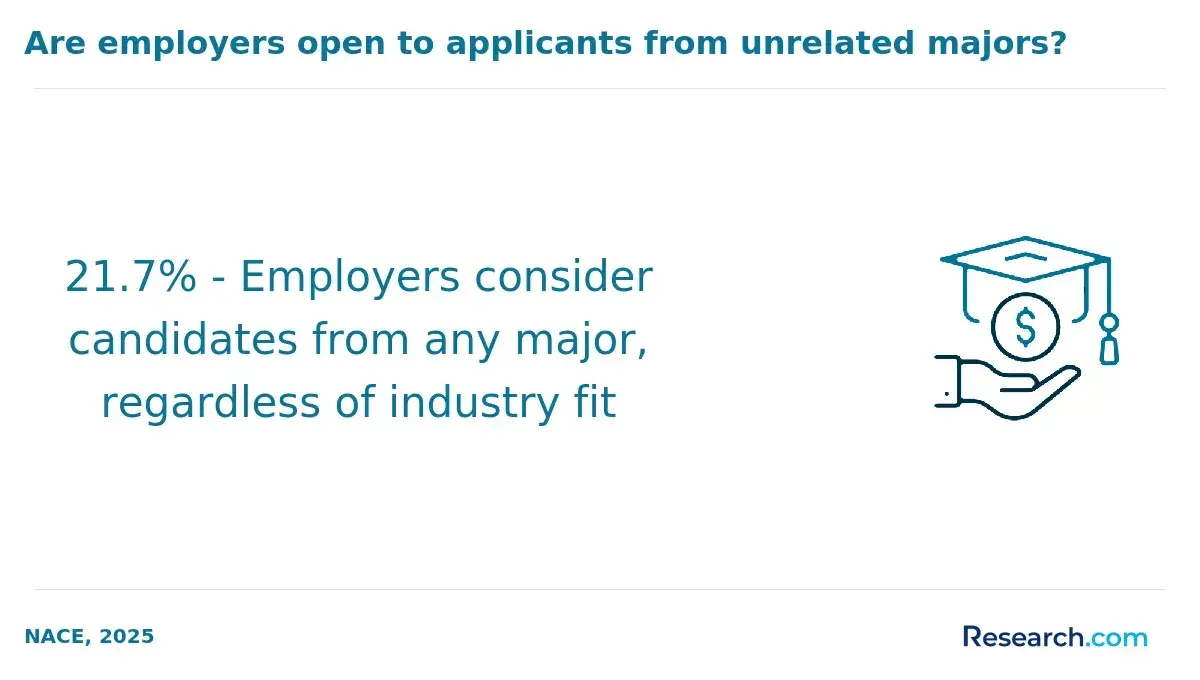
Information processing theory does not guarantee a high salary, but the skills connected to it can be valuable in complex roles. Employers often need people who can analyze information, design learning systems, test user behavior, interpret data, improve decisions, and communicate complex ideas clearly. Those abilities appear in fields such as analytics, product design, AI, organizational development, education technology, and applied psychology.
Students who are choosing a degree with income potential in mind should compare several factors: curriculum, employer demand, internship access, technical skill development, graduate outcomes, and geographic flexibility. Research.com’s guide to degree programs associated with $100k salary jobs can provide a starting point, but no degree alone guarantees a specific income.
Using the Theory for Lifelong Learning and Faster Career Development
Information processing theory gives adult learners a practical way to study more efficiently. The goal is not to spend more hours staring at content. The goal is to process information in ways that make recall and transfer easier: chunk new material, connect it to existing knowledge, test yourself frequently, practice in realistic contexts, and review over time.
| Learning goal | Strategy based on information processing theory | Why it works |
| Remember definitions | Use retrieval practice instead of rereading only | Recalling strengthens access to stored information |
| Learn procedures | Practice steps in order, then vary scenarios | Repetition builds fluency and flexibility |
| Handle complex material | Chunk concepts into categories and diagrams | Organization reduces working memory burden |
| Apply knowledge at work | Use case studies, simulations, and feedback | Realistic practice improves transfer |
| Build a new credential quickly | Choose structured programs with assessments and support | Clear sequencing helps learners avoid overload |
Some learners use accelerated programs to move faster, but speed should not be the only criterion. Before enrolling in an accelerated associate degree online, check accreditation, transfer policies, support services, workload expectations, and whether the credential fits your long-term plans.
Ethical Issues in Digital Information Processing
Digital platforms do more than display information. They decide what users see, what is recommended, what is hidden, what is stored, and what is measured. That makes information processing an ethical issue as well as a cognitive one. Designers, educators, employers, and researchers must consider privacy, informed consent, algorithmic bias, accessibility, transparency, and the risk of manipulating attention.
- Privacy: Learning platforms, apps, and workplace systems may collect sensitive behavioral data.
- Bias: Algorithms trained on incomplete or skewed data can shape what information users receive.
- Autonomy: Interface design can support informed decisions or push users toward choices they did not fully evaluate.
- Accessibility: Systems that ignore cognitive load, disability, language, or digital literacy can exclude users.
- Accountability: Organizations need clear responsibility for how information is captured, processed, and used.
Students interested in the intersection of psychology, technology, and ethics may compare pathways in psychology, education, data science, information systems, or public policy. A guide to the best online degrees to get can help readers identify flexible options, but program fit should be judged by curriculum depth, accreditation, and career relevance.
Information Processing Theory vs. Other Cognitive Theories
Information processing theory is strongest when explaining attention, memory stages, encoding, storage, and retrieval. Other cognitive theories emphasize different parts of learning and thinking. Comparing them helps educators, researchers, and professionals avoid treating one model as a complete explanation of the mind.
| Theory or approach | Main idea | Useful when |
| Information processing theory | People encode, store, transform, and retrieve information | Designing instruction, studying memory, improving training, analyzing cognitive load |
| Connectionism | Thinking emerges from networks of connected units | Modeling pattern recognition, learning from repeated exposure, and neural-network-like processes |
| Constructivism | Learners actively build meaning from experience | Designing inquiry-based, project-based, and contextual learning |
| Social cognitive theory | Learning is shaped by observation, self-efficacy, and social context | Studying motivation, behavior change, modeling, and skill development in groups |
Because these theories connect to different academic and career paths, students should choose a major based on the type of work they want to do. Research.com’s overview of highest paid majors can be useful for comparison, but salary potential should be weighed alongside interests, ability, program quality, and job-market fit.
Limitations of Information Processing Theory
Information processing theory is useful, but it should not be treated as a complete model of human thought. It explains many aspects of memory and attention, yet it can oversimplify how people learn, feel, interact, and make meaning.
The Computer Analogy Can Be Misleading
The theory often compares the mind to a computer because both systems receive input, transform information, store it, and produce outputs. The comparison is helpful for explaining memory processes, but it has limits.
- People do not simply combine new information with stored information in a mechanical way. Prior beliefs, emotions, goals, and social context affect interpretation.
- Computers have processors with measurable technical limits, while human attention and executive control vary by task, motivation, fatigue, practice, and environment.
One often-cited limitation is that the human brain is not just a storage device. The brain’s capacity to store information has been described as being on the order of 2.5 petabytes (Zeng & Bourne, 2025), but memory is not only about capacity. Human cognition includes emotion, meaning, motivation, identity, and social learning, which do not fit neatly into a computer metaphor.
Some Models Overemphasize Step-by-Step Processing
Classic information processing models often describe cognition as a sequence: input comes in, attention selects it, memory stores it, and retrieval brings it back. This serial view is easy to teach, but it can make thinking seem more linear than it really is.
The human mind can also process information in parallel. People may interpret speech, read facial expressions, monitor surroundings, and plan a response at the same time. The strength of this parallel processing depends on the task, the person’s practice level, and the amount of mental demand involved (Smith & Chen, 2025).
A skilled typist, for example, can read and type a passage with little conscious attention to each letter. A beginner may need to focus on one key or word at a time. Practice changes how much mental effort a task requires.
| Limitation | Why it matters | How to use the theory responsibly |
| Computer metaphor is incomplete | People are emotional, social, and meaning-making beings | Use the model to explain memory processes, not all human behavior |
| Serial processing is oversimplified | Many mental activities happen at the same time | Combine the theory with research on attention, expertise, and context |
| Individual differences matter | Learners vary in prior knowledge, motivation, language, and support | Design flexible instruction and avoid one-size-fits-all conclusions |
| Context is sometimes underplayed | Culture, environment, and social interaction influence learning | Pair cognitive models with social and developmental perspectives |
Organizational Uses of Information Processing Theory
Organizations process information much like individuals do, though at a larger scale. Teams collect data, store knowledge, transform information into decisions, and communicate findings. When those steps are poorly designed, organizations experience confusion, duplicated work, slow decisions, and avoidable errors.
Organizational information processing usually includes four stages, although real workplaces may move back and forth among them.
- Acquisition or retrieval: People gather information from internal systems, coworkers, customers, experts, documents, or external sources. Internal information may include knowledge bases, expert notes, employee feedback, or performance review comments. It may also include workplace writing guidance, such as whether “to whom it may concern” should be capitalized in a formal letter.
- Storage: Information may first exist in individual memory, but organizations need shared storage through documents, databases, servers, learning systems, and searchable repositories. Storage supports continuity when employees change roles or leave.
- Transformation: Information becomes useful when people interpret it, analyze it, summarize it, compare it, expand it, or compress it for decisions.
- Transmission: Information must reach the people who need it. This may happen through reports, dashboards, meetings, training materials, presentations, or collaboration tools.
The theory helps organizations reduce uncertainty. When a task is unclear, decision-makers need more information to understand its requirements and consequences. When enough relevant information has been processed, teams can plan steps, allocate resources, anticipate risks, and respond more efficiently (Chen & Huang, 2025).
This is especially important for knowledge-intensive activities in global organizations. Distributed teams must decide what information can be standardized, what requires expert judgment, and which collaboration tools support accurate knowledge sharing across locations (Miller & Zhang, 2025).
Common Mistakes When Applying the Theory
| Mistake | Why it causes problems | Better approach |
| Assuming more information always improves decisions | Too much information can overload attention and slow action | Prioritize relevance, timing, and decision need |
| Treating training as content delivery only | Learners may recognize material without being able to use it | Add practice, feedback, retrieval, and transfer tasks |
| Ignoring emotion and motivation | People process information differently when stressed, disengaged, or uncertain | Design supportive environments and clarify purpose |
| Using technology without considering cognitive load | Dashboards and platforms can overwhelm users | Simplify interfaces and highlight the most important signals |
| Relying only on rankings or salary claims when choosing programs | Outcomes vary by student, location, employer, and credential quality | Compare accreditation, curriculum, cost, support, and career fit |
Practical Applications of Information Processing Theory
Information processing theory is not only an academic concept. It can guide how teachers teach, therapists frame thought patterns, designers build interfaces, managers train employees, marketers communicate, and AI researchers think about cognition.
Education and Learning Strategies
- Manage cognitive load: Break complex content into meaningful chunks and remove unnecessary distractions so learners can focus on the essential material.
- Use active learning: Summarizing, questioning, explaining, and self-testing require deeper processing than passive rereading.
- Apply memory supports: Mnemonics, acronyms, visualization, examples, and stories help learners organize and retrieve information.
- Provide scaffolding: Give support early in learning, then gradually remove it as students become more independent.
Cognitive Behavioral Therapy
Cognitive behavioral therapy draws on the idea that people interpret information in patterns that can influence emotion and behavior. By identifying, testing, and reframing unhelpful interpretations, CBT helps individuals change responses to situations rather than simply reacting automatically.
User Experience and Product Design
- Usability design: Interfaces should reduce unnecessary mental effort, make choices clear, and organize information in a way users can understand quickly.
- Human-computer interaction: Designers consider how users notice cues, remember steps, recover from errors, and complete tasks without overload.
Training and Professional Skill Development
- Simulations and deliberate practice: Fields such as aviation and medicine use simulations so trainees can process realistic information and make decisions under pressure.
- Progressive complexity: Training should start with foundational tasks and increase difficulty only after learners can handle earlier steps.
Marketing and Communication
- Attention and recall: Clear, repeated, and visually organized messages are easier for audiences to process and remember.
- Decision support: Reducing clutter, explaining trade-offs, and limiting confusing choices can help consumers make more informed decisions.
Artificial Intelligence and Machine Learning
- Modeling aspects of cognition: AI research often draws inspiration from human information processing, especially in areas such as language, memory, retrieval, learning, and natural language processing.
Future Implications for Education and Online Learning
The next phase of educational technology will likely rely more heavily on adaptive systems, AI-supported tutoring, learning analytics, and personalized feedback. Information processing theory can help educators use these tools responsibly by asking whether a platform improves attention, supports encoding, encourages retrieval, and reduces unnecessary cognitive burden.
The theory is especially useful when evaluating online education. A strong online program should not simply digitize lectures. It should structure content, feedback, practice, assessment, and student support around how learners process and retain information. Educators who want formal preparation in these areas may explore online education degree programs that cover instructional design, learning science, assessment, and educational technology.
Information processing theory can also support digital literacy. Students need to learn how to filter sources, manage attention, evaluate credibility, organize knowledge, and apply information in changing environments. These skills are increasingly important as AI tools make information easier to generate but harder to evaluate.
Current Research Areas and Related Career Directions
Information processing theory continues to influence research and practice across psychology, education, business, artificial intelligence, and technology careers. Its value lies in giving researchers and practitioners a vocabulary for studying how individuals and systems handle information.
- Business: Organizations use information processing concepts to study how companies gather market information, identify what matters, distribute knowledge, and make strategic decisions (OECD, 2025).
- Family systems: Researchers may examine how families attend to, interpret, and respond to information as a unit and as individuals. Shared patterns can influence family dynamics, culture, and relationships (Zimmerman & Haddock, 2025).
- Artificial intelligence: AI research often intersects with cognitive psychology when studying language processing, memory, retrieval, learning, and human-like information handling (Schirrmeister et al., 2025).
Students who want a deeper foundation in these topics can compare campus-based and online psychology degrees. When comparing programs, review accreditation, faculty expertise, research opportunities, statistics or methods coursework, internship options, and whether the curriculum includes cognitive psychology, neuroscience, learning science, or human factors.
How to Use Information Processing Theory in School, Work, or Program Choice
- Define the problem first. Are you trying to learn faster, design better training, improve a website, reduce workplace errors, or choose an academic path?
- Identify the information bottleneck. Is the issue attention, overload, poor encoding, weak practice, unclear storage, or failed retrieval?
- Choose strategies that match the bottleneck. Use chunking for overload, retrieval practice for memory, feedback for skill development, and clearer interface cues for usability problems.
- Measure results. In education, look at retention and transfer. In organizations, track decision speed, error rates, knowledge access, and user performance.
- Account for human context. Motivation, stress, accessibility, culture, and prior knowledge all affect how people process information.
| If you are... | Ask these questions |
| A student | Does this study method force me to retrieve and apply information, or am I only rereading? |
| An educator | Am I reducing unnecessary cognitive load while still challenging students to think? |
| A manager | Where does information get lost, delayed, duplicated, or misunderstood in our workflow? |
| A UX designer | Can users find, understand, remember, and act on the information without confusion? |
| A degree seeker | Does the program teach practical research, analysis, technology, and communication skills connected to my goals? |
Key Insights
- Information processing theory explains the path from input to action. It focuses on how people notice, encode, store, retrieve, and use information.
- The main memory stages are sensory memory, short-term or working memory, and long-term memory. The Atkinson-Shiffrin model is useful for understanding these broad stages.
- Working memory is active, not passive. Baddeley and Hitch’s model shows how verbal, visual, spatial, and executive processes help people reason and complete tasks.
- The theory is practical for education, UX, training, therapy, AI, and organizational decision-making. Its strongest applications involve reducing cognitive load, improving retrieval, and designing information around human limits.
- The computer analogy is helpful but incomplete. Human cognition also involves emotion, motivation, social context, prior knowledge, and meaning-making.
- Good learning design requires more than content delivery. Chunking, retrieval practice, feedback, spaced review, and realistic application are central to durable learning.
- Career value comes from applying the theory, not merely knowing it. Students should connect cognitive science knowledge with research skills, design skills, data skills, communication, and ethical judgment.
- Program and credential choices require careful comparison. Check accreditation, curriculum, cost, support, transfer options, and career alignment rather than relying only on speed, rankings, or salary claims.
References
- Baddeley, A. D., & Hitch, G. J. (2025). The Working Memory Model: Fifty Years of Evolution and Empirical Integration. Annual Review of Psychology, 76(1). https://doi.org/10.1146/annurev-psych-2025-012425-094300
- Hofmann, G., & Williams, S. (2025). Paradigms of memory: A 2025 review of information processing models. Journal of Cognitive Systems, 42(1), 15-29. https://doi.org/10.1016/j.jcs.2025.01.004
- Miller, G. A., & Jensen, O. (2025). Neural oscillations and the architecture of information processing: A 21st-century perspective. Nature Reviews Neuroscience. https://www.nature.com/nrn/
- Miller, J., & Zhang, L. (2025). The evolution of distributed cognitive architectures in global enterprise networks. Journal of Organizational Information Systems, 14(2), 112-128. https://doi.org/10.1016/j.jois.2025.01.004
- OECD. (2025). Digital economy outlook 2025: Navigating the data-driven landscape. https://www.oecd.org/en/publications/2025/01/digital-economy-outlook-2025_1.html
- Smith, J., & Chen, L. (2025). Neural synchronization and parallel cognitive architectures: New insights from high-resolution neuroimaging. Journal of Cognitive Neuroscience, 37(2), 145-162. https://doi.org/10.1016/j.jocn.2025.01.004
- Schirrmeister, R. T., Etchells, P. J., & Holleman, G. A. (2025). Cognitive architectures and the evolution of deep learning: Integrating human-like processing in 2026 AI models. Journal of Cognitive Computing, 18(1), 45-62. https://doi.org/10.1016/j.jocc.2025.04.003
- Zeng, H., & Bourne, J. N. (2025). Synaptic density and the architectural limits of neural storage capacity. Nature Reviews Neuroscience. https://www.nature.com/nrn/
- Zimmerman, T. S., & Haddock, S. A. (2025). Systems Theory and Family Dynamics: Integrative Schemes for the Modern Era. Journal of Marital and Family Therapy, 51(1), 12-28. https://doi.org/10.1111/jmft.12742
Other Things You Should Know About Information Processing Theory
In 2027, the main elements of information processing theory include sensory memory, short-term memory, long-term memory, and cognitive processes like attention and perception. These elements interact to process information, forming the basis for understanding how humans receive, store, and retrieve information.
In 2027, information processing theory is applied across various fields such as cognitive psychology, education, and artificial intelligence. It helps in designing educational technologies that enhance learning and in developing AI systems that mimic human cognitive processes for more efficient data handling and decision-making.
In 2027, limitations of information processing theory include its over-reliance on mechanistic models that may not fully capture human cognition's complexity. It can also be less effective for explaining non-linear thinking patterns and creativity, which aren't easily quantified.


