2027 How to Evaluate Online MBA Rankings the Right Way

Co-Founder and Chief Data Scientist
Choosing the right online MBA program can be confusing when rankings vary widely and the criteria differ between sources. Prospective students often face conflicting information about program quality, value, and outcomes. This makes it difficult to determine which rankings to trust and how to interpret what they truly mean for career advancement.
Without understanding the methodology behind these evaluations, students risk selecting programs that do not match their goals or offer strong accreditation and support. This article explains how to critically evaluate online MBA rankings, guiding readers to identify reliable measures and make informed decisions tailored to their professional objectives.
Key Things You Should Know
- Evaluate online MBA rankings by examining methodology, including data sources like employment rates, salary growth, and student satisfaction, for accuracy and relevance in 2026 decision-making.
- Consider accreditation status and program flexibility, as over 85% of top-ranked online MBA programs in 2025 held AACSB or AMBA accreditation, ensuring quality education standards.
- Analyze post-graduation outcomes such as median starting salary increases, which rose 12% year-over-year in 2024-2025, reflecting real return on investment in online mba education.
What makes an MBA ranking source credible and trustworthy?
Credible and trustworthy MBA ranking organizations rely on rigorous, transparent methodologies rooted in relevant data. These rankings emphasize peer assessments, career outcomes, and quantifiable indicators rather than subjective surveys or promotional content.
For instance, the U.S. News 2026 Online MBA rankings assign 42.5% weight to peer assessments by business school deans, reflecting strong reliance on expert evaluations within academia and adherence to MBA program accreditation standards.
Alumni success is another critical factor. The Poets&Quants 2026 Online MBA rankings allocate 32.5% of their score to career outcomes, such as salary increases and job placements, highlighting the real-world impact beyond academic reputation. This high weighting on graduate results ensures rankings reflect the career value delivered to students.
Reliable sources disclose clear criteria and data collection methods, detailing how peer reviews are gathered, outcomes measured, and timeframes considered. Transparency allows prospective students to assess the accuracy and relevance of the rankings.
Beware of rankings that lean heavily on surveys with low response rates or undisclosed weighting, or those that mix advertising with editorial content, which can bias results toward paying programs.
To evaluate ranking credibility, consider these questions:
- Are the ranking metrics relevant to your MBA goals (academic quality, career benefits)?
- Do rankings rely on verified data and expert assessments?
- Is the methodology transparent and repeatable?
- Does the source uphold impartiality and academic rigor?
Strong rankings combine expert opinions with measurable career outcomes, helping you make informed decisions based on dependable evidence rather than marketing noise. For affordable options, explore the cheapest MBA programs available.
How do accreditation standards differ across MBA programs and ranking systems?
Accreditation differences in MBA programs play a crucial role in evaluating program quality and outcomes. Regional accreditation, such as from the Higher Learning Commission, ensures a school meets basic educational standards but does not specifically assess MBA quality.
More specialized accreditation bodies like AACSB (Association to Advance Collegiate Schools of Business), AMBA (Association of MBAs), and EQUIS (European Quality Improvement System) provide rigorous evaluations tailored to business education. AACSB is the most recognized accreditation in the United States and often a key factor in top MBA rankings.
Many MBA ranking systems' accreditation criteria emphasize AACSB when assessing program credibility. For instance, some reports prioritize AACSB-accredited schools in online MBA rankings to ensure academic rigor and qualified faculty. However, some respected programs hold AMBA or EQUIS accreditations, which can be overlooked in U.S.-centered rankings despite their global prestige.
Prospective students should verify which accreditation applies to their chosen program and whether it is factored into relevant rankings. This helps ensure the program balances flexibility with strong academic standards, enhancing career credibility.
For those seeking cost-effective options, consider exploring the cheapest online MBA AACSB programs, which combine affordability with recognized accreditation standards.
What factors should you prioritize when comparing online MBA programs?
Accreditation is the foremost criterion when comparing online MBA programs. Regional accreditation confirms adherence to high academic standards, impacting credit transfers and employer recognition. Look for credentials from bodies such as AACSB, AMBA, or EQUIS for global prestige. A strong online MBA should also feature a quality of online MBA curriculum that aligns with your career goals, offering core courses in areas like finance, marketing, or entrepreneurship alongside electives for specialization. Flexibility in scheduling and part-time options is key for working professionals.
Faculty qualifications greatly influence learning outcomes-experienced instructors with doctoral degrees and industry background tend to provide better education and networking. Additionally, robust student support services in online MBA programs, including career coaching, technical help, and alumni networks, play a vital role in post-graduation success.
Rankings vary by region: Imperial Business School (UK) leads globally in QS Online MBA Rankings, while Indiana Kelley excels in U.S.-focused lists. These rankings assess factors such as employability, faculty quality, and student satisfaction, helping students align choices with their priorities.
Cost varies widely, from $20,000 to over $100,000. It's important to weigh tuition against outcomes like employment rates and salary increases. For those seeking budget-friendly options, explore affordable executive MBA programs to optimize return on investment.
Finally, verify the technology platform and delivery style-live interactions may enhance learning and peer engagement more than recorded lectures.
How do online MBA admission requirements compare to traditional campus-based programs?
Online MBA admission requirements vs traditional programs share many similarities but also notable differences shaped by their delivery formats. Both typically expect a bachelor's degree from an accredited institution, competitive GMAT or GRE scores (though some online programs offer waivers based on work experience), and professional work experience, usually three to five years. Recommendations and personal essays help assess leadership potential and career objectives.
Differences between online MBA and campus-based admission criteria include a stronger emphasis on technological readiness and self-discipline for online applicants. Admissions offices often inquire about reliable internet access and familiarity with digital communication tools. Interviews are usually conducted via video call, requiring applicants to demonstrate clear virtual communication skills.
Cost does not directly reflect admission difficulty. For example, the Indiana Kelley direct Online MBA totals $94,944, more than 60% higher than UT Dallas Jindal's $58,198 in-state tuition, yet both rank top in many rankings. This suggests admission standards align more with each school's reputation than delivery method.
Applicants should confirm their chosen program's specific criteria and prepare for a virtual process. It's important to clarify any standardized test waivers, understand technical requirements, and tailor applications to convey readiness for online study. For those seeking flexibility, explore online MBA programs no GMAT or GRE that may offer alternative admission routes.
What is the typical cost structure and ROI for online MBA degrees?
The cost of online mba degrees varies significantly, typically ranging from $20,000 to over $120,000 in total tuition depending on factors like the institution's reputation, program duration, and delivery format. Additional expenses may include technology fees, course materials, and graduation costs, which can amount to several thousand dollars.
Tuition models differ, with some programs offering flat rates while others charge per credit hour, affecting the total cost based on course load. Many employers provide tuition reimbursement programs that can ease the financial burden substantially.
The return on investment (ROI) hinges on graduates' career paths and work experience. For example, 100% of Indiana University-Bloomington Kelley Online MBA students maintain employment while enrolled. U.S. News highlights strong retention in leadership roles post-graduation, suggesting high ROI for those leveraging their degrees effectively.
Key factors prospective students should consider when assessing ROI include:
- Salary increase relative to total program costs
- Time required to recoup tuition through higher earnings
- Career advancement opportunities enabled by the MBA
- Employer support and flexible scheduling to maintain employment during study
Comparing these elements alongside cost helps select an online program that supports professional growth and financial returns. Programs with strong alumni networks and career services often deliver better long-term outcomes.
How long does it take to complete an online MBA, and what formats exist?
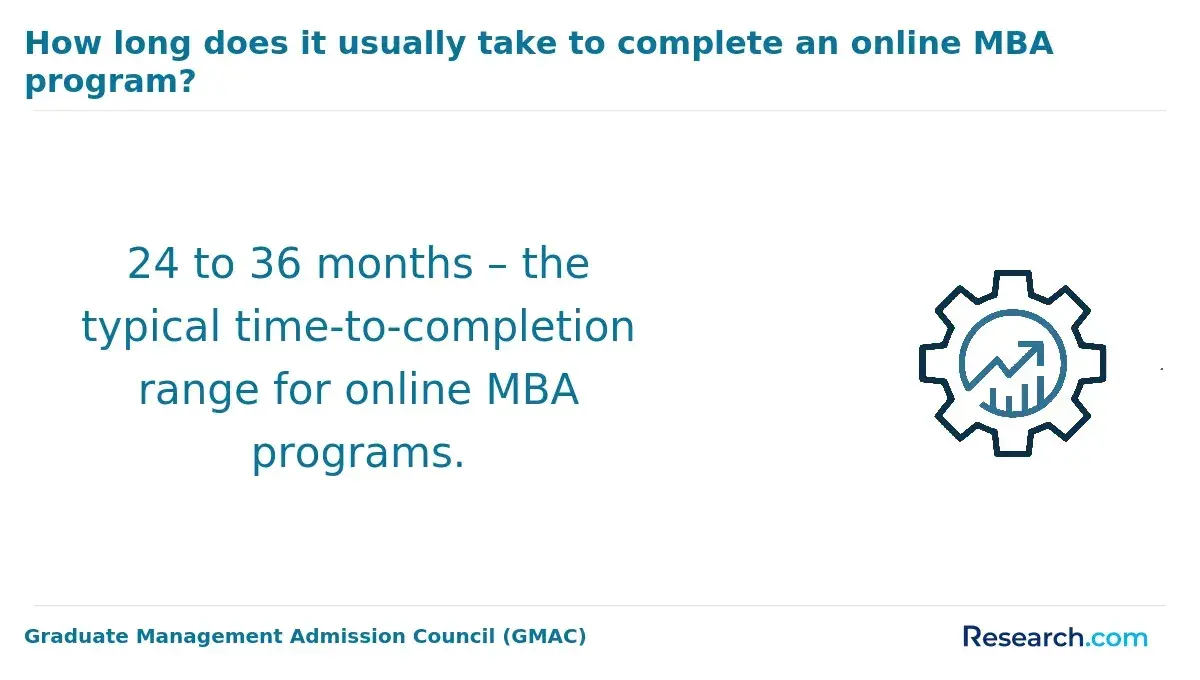
The time needed to complete an online MBA typically ranges from 1 to 3 years. Accelerated programs cater to full-time students or busy professionals, allowing completion in 12 to 18 months. Part-time options extend the duration to about 2 to 3 years, offering flexibility to those balancing work and other commitments. Some programs accommodate up to 5 years for added convenience.
Formats vary widely to suit different learning preferences:
- Fully asynchronous: Students learn independently using pre-recorded lectures and assignments, maximizing scheduling freedom.
- Synchronous or cohort-based: This format involves live virtual classes and scheduled group work, simulating traditional classroom interaction.
- Hybrid: Combines online coursework with periodic on-campus residencies for networking and hands-on experiences.
Curriculum intensity directly impacts how fast students can finish their studies. Notably, top-ranked schools like the University of Florida offer accelerated yet challenging programs.
Michigan Ross also improved significantly, reflecting a competitive push to deliver flexible, respected online MBA options. Choosing the right program means weighing format, duration, and reputation against your career objectives and lifestyle.
What career outcomes and job placement rates do top-ranked online MBAs report?
Top-ranked online MBA programs report employment rates between 85% and over 95% within three to six months of graduation, reflecting strong career outcomes and return on investment. The Financial Times 2026 Online MBA ranking shows that non-U.S. schools dominate the top spots, with IE Business School (Spain) #1 and Imperial College London (UK) #2, each reporting average salary increases of 30% to 50% within a year after graduation.
These institutions benefit from global employer networks, securing roles in consulting, finance, and technology sectors.
Career services at leading online MBA programs typically include personalized coaching, virtual job fairs, and recruiter connections worldwide. Graduates often find work in diverse functions: consulting (40%), technology management (25%), finance (20%), alongside entrepreneurship and nonprofit sectors.
Students targeting U.S. careers should review employment reports carefully, focusing on median starting salary, regional job placement rates, and industry alignment. Programs with international rankings, including seven non-U.S. schools in the FT top 15, offer advantages for global job market access but verifying U.S. employer affiliations remains important.
How do MBA rankings account for salary potential and alumni earnings data?
Salary potential and alumni earnings data play a crucial role in most MBA rankings, reflecting the financial return on investment graduates can expect. These metrics, often drawn from verified school reports and surveys, typically measure post-graduation salaries at set milestones, such as three years after completing the degree.
Rankings differ in their methodology, with some focusing on absolute salary levels that favor schools near high-paying markets, while others emphasize salary growth to highlight career advancement. Combining these approaches offers a well-rounded view of outcomes. Alumni earnings data commonly rely on median figures to reduce distortion from outliers and may incorporate tax records alongside survey responses to enhance reliability.
The rise of hybrid and flexible MBA delivery methods is reshaping salary expectations. For example, Carnegie Mellon Tepper Hybrid Online MBA's strong placement in rankings demonstrates that adaptable programs can achieve competitive financial results comparable to traditional formats.
Prospective students should consider how rankings weight salary data and factor in regional differences alongside their personal career goals. This holistic understanding can guide the choice of MBA programs aligned with desired financial outcomes.
What certifications or professional credentials complement an MBA degree?
Certifications and professional credentials complement an mba degree by enhancing specialized skills and proving expertise in specific fields, which increases marketability. Common credentials include the Project Management Professional (PMP) for leadership and organizational skills in complex project management.
Graduates focused on finance often pursue the Chartered Financial Analyst (CFA) designation, highly regarded in investment management and corporate finance. Marketing professionals commonly seek the Certified Digital Marketing Professional (CDMP) credential to demonstrate proficiency in digital strategies and analytics.
Technology integration benefits from certifications such as Certified Information Systems Auditor (CISA) and Certified Information Security Manager (CISM), important for MBA graduates entering IT management and cybersecurity. Human resources professionals enhance their credentials with the Senior Professional in Human Resources (SPHR), which complements strategic hr management knowledge with deeper legal and operational expertise.
Institutions offering online MBA programs illustrate their appeal through enrollment numbers reflecting high demand. For example, Indiana Kelley Online MBA enrolls 1,652 students, the largest in the U.S. News 2026 top programs, showing strong interest in reputable online offerings.
Choosing certifications aligned with career goals and existing skills helps address industry challenges and supports continuous professional growth. Certifications requiring continuing education foster ongoing development, essential in evolving business landscapes. Combining an MBA with targeted credentials provides a competitive edge, validates expertise, and supports advancement in specialized roles.
How should you evaluate an MBA program's curriculum quality and specialization options?
Carefully evaluating an MBA program's curriculum requires analyzing its core courses and how well they reflect modern business practices. Look for comprehensive coverage of essential subjects like finance, marketing, operations, and strategy, alongside emerging areas such as digital transformation, data analytics, and sustainability, which are crucial for staying adaptive in a rapidly evolving job market.
Specialization options should align with your career ambitions and market demands. Consider concentrations like entrepreneurship, healthcare management, or supply chain management, ensuring they offer rigorous coursework paired with practical application. Programs with customizable electives or dual specializations add valuable flexibility to meet changing career needs.
Faculty expertise and industry background are key indicators of curriculum quality. Seek out programs that boast faculty with real-world experience and maintain active industry partnerships or consulting projects, as these enrich the learning experience with direct business insights.
Program format also matters. Online MBA programs with robust digital learning platforms typically provide interactive tools and current resources, enhancing educational outcomes. For example, the University of Florida Warrington School of Business improved seven spots to #8 in the QS 2026 Online MBA Rankings, thanks largely to its enhanced digital infrastructure and strong career support.
Finally, graduation outcomes-such as employment rates, salary progression, and alumni achievements-offer important evidence about how effectively a curriculum prepares students for their chosen industries and roles.
Other Things You Should Know About MBA
Online MBA programs usually offer support services similar to those available on campus. These can include academic advising, career counseling, technical support, and access to digital libraries. Many programs also provide networking opportunities and virtual workshops to enhance student engagement and professional development.
In 2027, online MBA rankings play a crucial role in shaping employer perceptions. High-ranking programs often signify a strong curriculum and reputable faculty, which can ease concerns employers may have about online MBAs. However, real-world skills, networking, and the school's reputation often weigh more heavily in hiring decisions than rankings alone.
Yes, many online MBA programs offer options for internships or experiential projects, although availability varies by institution. Some programs partner with companies to facilitate virtual or local internships, allowing students to apply their learning in real-world business settings. Experiential learning remains a key component in developing practical management skills.
Online MBA programs are designed to accommodate working professionals by offering flexible scheduling, including asynchronous coursework and multiple start dates throughout the year. Students can often balance studies with job responsibilities, choosing workloads that fit their personal and professional lives. This flexibility is a primary reason many choose the online route.
References
- How to Interpret MBA Rankings https://www.princetonreview.com/business-school-advice/how-to-use-mba-rankings
- Imperial’s Global Online MBA ranks first in the world for alumni salaries https://www.imperial.ac.uk/business-school/news/imperials-global-online-mba-ranks-first-the-world-alumni-salaries/
- MBA Rankings Explained: Understanding the Methodology and Importance – BlackStone Tutors https://www.blackstonetutors.com/mba-rankings-explained-understanding-the-methodology-and-importance/
- Institutional vs Program Accreditation: What You Should Look For https://www.unimychina.com/article/institutional-vs-program-accreditation-what-you-should-look-for
- Online MBA Job Placement Rates: Top Specilizations https://www.onlinecu.in/blog/cu/online-mba-job-placement-rates-explained.php
- Top Certifications to Pair with Your Online MBA - LearnifyEducation https://learnifyeducation.com/blog/top-certifications-to-pair-with-your-online-mba/
- Methodology of data collection - European Association of MBA https://www.eamba.org/methodology-of-data-collection/
- How should you choose an MBA Degree? https://www.spjain.org/blog/articles/how-to-choose-mba
- Affordable Online MBA Costs for Working Professionals | Online MBA program 2025 https://ebsedu.org/blog/online-mba-costs-for-working-professionals/