2027 Most Popular Marketing Degree Programs Ranking in Michigan

Co-Founder and Chief Data Scientist
Choosing the right marketing degree program is an exciting step toward a rewarding career. For students in Michigan, understanding which programs stand out can make this decision easier and more confident.
This article presents the 2027 Most Popular Marketing Degree Programs Ranking in Michigan, developed by the Research.com team of data scientists. It offers a clear and reliable guide to the best options available in the state.
By exploring this ranking, you'll gain insight into top programs that can help unlock your potential and open doors to future opportunities in marketing.
Key benefits of getting marketing degree in Michigan
- Strong salary potential: Graduates with a marketing degree in Michigan can earn competitive salaries, such as $83,190 annually for roles like Marketing Assistant or Digital Marketing Specialist, and up to $159,420 for Public Relations Specialists. These figures demonstrate excellent earning opportunities in marketing-related careers.
- Diverse career paths: A marketing graduate from a popular Michigan university may pursue various jobs including Media Planner, Sales Associate, or PR Specialist, offering flexible options based on skills and interests. This variety helps graduates find roles they are passionate about.
- Flexibility of online degrees: Earning a marketing degree online from a well-known Michigan college allows students to balance work and study, saving time and costs compared to traditional programs. This convenience empowers learners to advance their careers without interrupting their daily lives.
- Key benefits of getting marketing degree in Michigan
- What can I expect from marketing degree in Michigan?
- Where can I work with marketing degree in Michigan?
- How much can I make with marketing degree in Michigan?
- 2027 Most Popular Marketing Degree Programs Ranking in Michigan
- Key Findings
- How long does it take to complete marketing degree in Michigan?
- Accreditation and Industry Recognition
- What's the difference between online and on-campus marketing degree?
- Student Life and Campus Culture
- What is the average cost of marketing degree in Michigan?
- Return on Investment: Is a Marketing Degree Worth It?
- What financial aid is available to marketing degree students in Michigan?
- What are the prerequisites for enrolling in marketing degree program in Michigan?
- What courses are typically in marketing degree programs in Michigan?
- What types of specializations are available in marketing degree programs in Michigan?
- How do you choose the best marketing degree in Michigan?
- What career paths are available for marketing degree students in Michigan?
- What is the job market for marketing degree in Michigan?
- Related Marketing Rankings for Nearby States
- Top Trending Marketing Rankings
- See What Experts Have To Say About Studying Marketing
What can I expect from marketing degree in Michigan?
The average cost of a marketing degree in Michigan typically ranges from about $12,000 to $45,000 per year, depending largely on the type of institution and your residency status. For example, graduates from public universities like Michigan State University often benefit from lower in-state tuition, making the financial commitment more manageable. Conversely, private colleges usually charge toward the higher end of this range but often provide targeted scholarships to offset expenses.
Many students have found that budgeting for tuition while factoring in scholarships and financial aid greatly eases the burden. One graduate recalls balancing part-time work and using internship stipends gained through university partnerships with Michigan businesses. This hands-on approach not only supplemented income but enriched their learning and expanded networking opportunities within the state's dynamic marketing sector.
When planning your education costs, consider public options for affordable tuition as well as schools that integrate practical internships in Michigan's automotive or tech industries. This combination helps turn your investment into valuable real-world experience that employers in Detroit and beyond actively seek.
Where can I work with marketing degree in Michigan?
Graduates with a marketing degree from popular Michigan schools like the University of Michigan or Michigan State University find many practical career paths available. Many start in the automotive sector, working with companies such as General Motors or Ford, where they apply skills learned in product marketing and digital campaigns to real vehicle launches. This hands-on experience creates a satisfying sense of contribution to a globally recognized industry.
Others jump into Michigan's expanding tech scene in Detroit or Ann Arbor, using social media and data analytics expertise to help startups grow. This fast-paced environment offers a rewarding challenge and broadens career options early on.
Retail and healthcare sectors are also popular, with graduates managing promotions for large retailers or crafting patient-focused campaigns at hospitals and pharmaceutical firms. These roles often combine creativity with practical impact, making the work feel meaningful and stable.
Marketing students report that internships and networking through college programs in these cities give a direct path to employment, turning classroom theory into rewarding, real-world projects.
How much can I make with marketing degree in Michigan?
Graduates with a marketing degree in Michigan can expect starting salaries around $53,280 for roles like sales associate, which often serve as stepping stones early in their careers. Those entering specialized positions such as digital marketing specialists, marketing assistants, or media planners typically earn about $83,190 annually, according to recent U.S. Bureau of Labor Statistics data.
Marketing graduates from institutions like the University of Michigan or Michigan State University report that gaining internships in Detroit's bustling corporate sector can push their starting salaries above average, sometimes reaching $90,000 within their first few years. For example, a graduate working as a marketing assistant in the Detroit metro area might earn a solid hourly wage of about $40, while gaining valuable experience that opens doors to higher-level roles.
Public relations specialists in Michigan with a marketing background have even higher earning potential, averaging $159,420 annually. Graduates who pursue additional certifications or master's degrees often find themselves prepared to advance into these lucrative roles, especially within thriving industries like automotive marketing or digital branding based out of Grand Rapids or Ann Arbor.
2027 Most Popular Marketing Degree Programs Ranking in Michigan
How do we rank schools?
Investing in your education is a significant decision that can greatly influence your career path, and the Research.com team recognizes the importance of providing trustworthy guidance. To support prospective students in Michigan, we have carefully developed the "2027 Most Popular Marketing Degree Programs Ranking in Michigan." Our dedication to quality, credibility, and accuracy is demonstrated through rigorous research and comprehensive analysis.
We utilized the following reputable data sources to create this ranking:
By reviewing this ranking, readers will gain valuable insights into the most popular marketing degree programs in Michigan, empowering them to make well-informed educational choices. For detailed information on our ranking process, please visit our Research.com methodology page.


# 10 position
Ferris State University
Bachelor of Business, Management, Marketing, and Technology Education


# 19 position
Hillsdale College
Bachelor of Science in Marketing


Key Findings
- Many Michigan universities offer accredited marketing programs through their business schools covering market research, digital marketing, and advertising strategies.
- Annual tuition at public universities ranges from $13,000 to $16,000 for in-state students, while private schools charge between $30,000 and $40,000.
- Entry-level marketing jobs in Michigan have starting salaries between $45,000 and $50,000, increasing to $75,000-$90,000 for experienced marketing managers.
- The job market in Michigan is stable with a projected 10% national growth for marketing specialists from 2022 to 2032.
- Internships and networking opportunities are widely available in metropolitan areas like Detroit and Grand Rapids to enhance career prospects.
How long does it take to complete marketing degree in Michigan?
Completing a marketing degree in Michigan typically takes about four years for most full-time undergraduates. Graduates from well-known schools like Michigan State University or the University of Michigan often share how balancing a 120 to 130 credit hour load felt manageable with a clear plan, blending core business courses and specialized marketing classes. Enrolling in summer courses or taking extra classes during regular semesters can help you finish sooner if you're eager to enter the workforce quickly.
For those juggling work or other commitments, part-time study can stretch the timeline to six years or more. Many students find this approach practical, allowing them to gain experience while studying without burnout.
Graduate marketing degrees in Michigan usually require about two years full-time, whether an MBA with a marketing focus or a specialized master's. Some programs offer part-time or accelerated options, giving you flexibility to balance studies, career, and personal life.
Accreditation and Industry Recognition
Ensuring that your marketing degree in Michigan carries the proper accreditation is vital for both academic rigor and employer trust. Accredited programs are evaluated by recognized bodies such as the Association to Advance Collegiate Schools of Business (AACSB) and the Accreditation Council for Business Schools and Programs (ACBSP), guaranteeing that curriculum, faculty qualifications, and student outcomes meet high industry standards. Many Michigan institutions prominently display their accreditation status-Michigan State University’s Broad College of Business, for example, holds AACSB accreditation, signaling to recruiters that graduates have been trained with best practices in marketing theory and application. Industry recognition also extends beyond accreditation: look for programs that partner with national marketing organizations like the American Marketing Association (AMA) or host case competitions sponsored by leading brands. These affiliations not only enrich classroom learning but also provide networking channels and resume-building opportunities. Prospective students should verify accreditation on the Council for Higher Education Accreditation (CHEA) database and inquire about professional certifications embedded in the curriculum, such as Google Analytics or HubSpot Inbound Marketing. For those weighing program costs against recognized quality, explore our Inexpensive Marketing Degree Programs Ranking in Los Angeles, CA to see how accredited programs nationwide strike the perfect balance between affordability and academic excellence. By choosing an accredited and industry-recognized marketing degree, you secure a credential valued by employers and position yourself for accelerated career growth.
What's the difference between online and on-campus marketing degree?
Choosing between online and on-campus marketing degrees in Michigan means weighing how you want to learn and connect. On-campus programs at schools like Michigan State University and the University of Michigan offer direct access to campus libraries, career centers, and lively face-to-face networking with professors and peers. Graduates often recall how collaborating during live projects and attending local business events helped them build valuable industry relationships.
Conversely, online degrees from institutions such as Central Michigan University give you flexibility to study around work or family commitments. Many online students appreciate the convenience but note it requires strong self-discipline to stay motivated without in-person interactions. Virtual simulations and lively discussion boards replace hands-on labs, providing a different but effective learning experience.
Practical cost factors matter too. On-campus students budget for housing and meals alongside tuition, while online students often save there but may face extra fees for tech tools or proctoring. Both paths cover core marketing topics, so consider which environment aligns with your lifestyle and study habits.
Student Life and Campus Culture
For many prospective marketing students, the campus environment plays a pivotal role in choosing the right program. Beyond rigorous academics and internship opportunities, the vibrant student life on Michigan campuses offers a unique blend of cultural diversity, leadership opportunities, and social engagement that shapes well-rounded professionals. Engaging in student clubs, networking events, and hands-on projects not only enhances academic learning but also builds lasting relationships and soft skills crucial for today's dynamic marketing industry. Many institutions provide dedicated career centers, mentorship programs, and community outreach opportunities that further enrich the educational journey. Additionally, students seeking a balance between quality education and affordability can explore options like the cheapest marketing programs in michigan, ensuring that their college experience is both financially sustainable and personally transformative. Embrace the energy of campus life to drive your creativity and professional growth, and let every experience contribute to a memorable and impactful college journey.
What is the average cost of marketing degree in Michigan?
The average cost of a marketing degree in Michigan typically centers around $45,000 for the entire program, considering both tuition and fees. For many students attending public universities, the in-state total cost generally stays near $16,000, making it more manageable for residents. Graduates from popular Michigan institutions often share that understanding these fees early helped them plan for expenses like textbooks and living costs beyond tuition, an important aspect when budgeting for a degree.
Out-of-state students usually experience a higher financial commitment, with total costs rising well above $45,000. Private colleges in Michigan, which attract many marketing students looking for specialized programs or smaller class sizes, usually fall within this same range or higher, reflecting the premium nature of these institutions. Still, many graduates felt confident their investment was worthwhile due to strong career support and networking opportunities, which eased their transitions into marketing roles.
Community colleges often serve as a cost-effective starting point for marketing students, with tuition averaging $4,000 to $5,000 annually for in-district students. This route allows students to complete foundational courses affordably before transferring to a four-year school in Michigan, a strategy praised by many for reducing the overall burden of Michigan marketing degree tuition and fees.
Exploring merit scholarships and financial aid is critical to offsetting costs. Numerous Michigan universities offer targeted scholarships for marketing students, a relief echoed by many graduates who successfully leveraged these opportunities. For those curious about affordable options, it's worthwhile to review the cheapest marketing programs in Michigan to balance quality and cost effectively.
Return on Investment: Is a Marketing Degree Worth It?
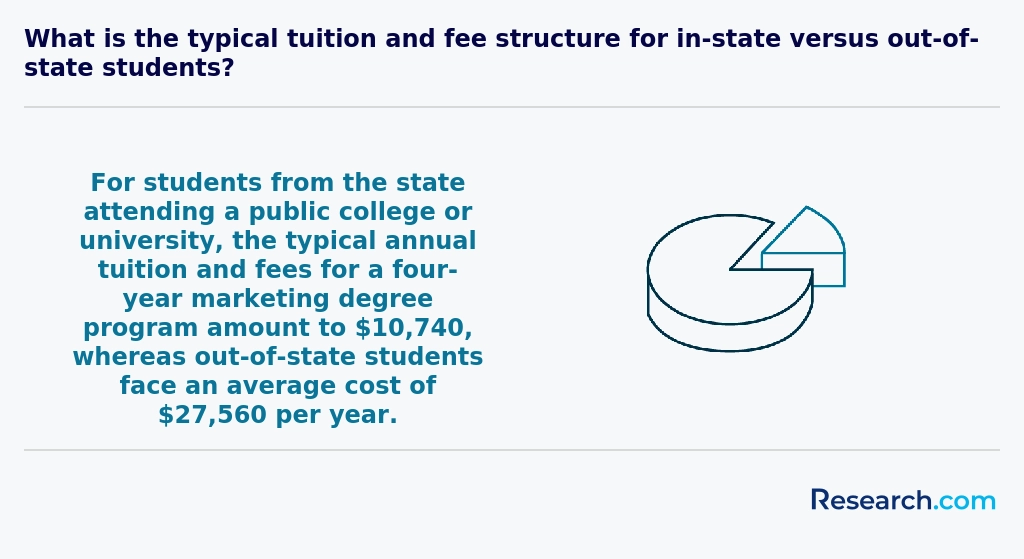
When evaluating the true value of a marketing education, one of the first questions to consider is is marketing a high paying major and how long it will take to recoup your investment. Here’s how to assess your return on investment (ROI): 1. Upfront Costs vs. Long-Term Earnings - Average Tuition: In-state public universities average $10,740 per year; out-of-state students pay roughly $27,560. - Financial Aid Impact: With scholarships like the Go Blue Guarantee and federal grants, many students reduce costs by 30–50%. - Salary Trajectory: Entry-level Marketing Assistants start around $50,000, while mid-career roles such as Marketing Managers average $138,730 annually. 2. Break-Even Analysis - Two-Year Associate vs. Four-Year Bachelor’s: Compare the total cost of each program against projected earnings. A bachelor’s degree often pays off within 3–4 years post-graduation, thanks to higher starting salaries and advancement opportunities. - Graduate Degrees: Master’s programs can add $10,000–$20,000 in tuition but yield an average salary increase of 20–30%, shortening the payback period for those targeting leadership roles. 3. Intangible Benefits - Networking Value: Alumni connections and internship pipelines often translate into job offers, reducing job search time and boosting early career earnings. - Skill Versatility: Expertise in digital marketing, analytics, and brand strategy enhances employability across industries-from tech startups to healthcare and real estate. 4. Maximizing ROI - Choose High-Impact Specializations: Focus on digital marketing, data analytics, or brand management-areas with the fastest job growth and highest salary premiums. - Leverage Financial Aid: Apply early for institutional scholarships and state grants to minimize debt. - Gain Practical Experience: Seek internships and campus projects that can lead to full-time roles before graduation. By carefully weighing program costs, expected salaries, and the value of experiential learning, you can determine how quickly a marketing degree will pay for itself-and position yourself for a financially rewarding career.
What financial aid is available to marketing degree students in Michigan?
Marketing students in Michigan often take advantage of the Free Application for Federal Student Aid (FAFSA) to access essential funding like Pell Grants, which can cover up to $6,895 for those who qualify. For example, graduates from the University of Michigan-Flint recall how this grant eased their tuition expenses, letting them focus more on internships than financial stress.
State programs like the Michigan Competitive Scholarship and the Tuition Incentive Program (TIP) also provide critical support, especially for students attending schools like Central Michigan University. TIP covers tuition and fees for eligible low-income students, reducing their financial worries throughout their studies.
Many marketing students from Michigan State University mention merit-based scholarships offered by their school or private organizations such as the American Marketing Association's local chapters. These awards reward leadership and academic excellence, making a real difference in managing costs.
Federal loans are available but should be used carefully; graduates emphasize the importance of flexible repayment plans. Meanwhile, Federal Work-Study programs give hands-on experience and extra income, helping students at Wayne State University balance work and class effectively.
What are the prerequisites for enrolling in marketing degree program in Michigan?
To start a marketing degree in Michigan, you'll need a high school diploma or GED, with a GPA usually between 2.5 and 3.0. Graduates from universities like Michigan State or University of Michigan recall how maintaining solid grades in math and English was key to meeting admission standards. Some schools may still ask for SAT or ACT scores, though many now allow test-optional applications, easing stress for those balancing work or family.
Submitting transcripts that highlight relevant coursework helps prove you're ready for college-level marketing studies. For example, a graduate from a Detroit university mentioned how taking introductory economics and business classes in high school made the transition smoother.
If you're aiming for a master's in marketing, hold a bachelor's degree-preferably in business or marketing-with at least a 3.0 GPA. Some programs at Michigan universities require GRE or GMAT scores, but waivers are becoming common for strong candidates. Strong recommendation letters and clear career goals in your statement of purpose can make your application stand out.

What courses are typically in marketing degree programs in Michigan?
Marketing degree programs in Michigan consistently include courses that equip students with practical skills needed in today's business world. Graduates from well-known Michigan universities often share how foundational classes like Introduction to Marketing and Consumer Behavior gave them clear frameworks to understand real-world customer decisions and market dynamics.
Specialized courses such as Marketing Research and Marketing Analytics teach essential techniques to gather and analyze data-skills many students used during internships at Detroit's automotive firms or local startups to create targeted campaigns. Digital Marketing is another vital course, focusing on strategies like social media management and SEO, which recent graduates found directly applicable when launching their own projects or managing clients in small Michigan businesses.
Additionally, classes in Advertising and Promotion, along with Sales Management, prepare students to handle budgets and lead teams effectively. Many Michigan marketing students appreciate how this practical knowledge helps them transition confidently from campus to competitive job markets in the Great Lakes region.
What types of specializations are available in marketing degree programs in Michigan?
If you're considering marketing degree specializations in Michigan, you'll find practical options tailored to meet real-world demands. Many graduates from universities like Michigan State or the University of Michigan focus on Digital Marketing, mastering skills like SEO, social media campaigns, and email marketing. These skills are crucial as businesses increasingly shift online, making graduates feel confident stepping into marketing roles within Michigan's growing e-commerce market.
Another popular path is Market Research and Analytics. Students develop a keen eye for data, learning how to analyze consumer trends and make data-driven decisions. For many alumni from Michigan's top colleges, this specialization opens doors to roles in automotive or tech firms, supporting Michigan's economy while providing practical, satisfying work.
For those leaning toward creative leadership, Brand Management and Advertising is ideal; graduates often describe the excitement of managing brand images for diverse industries across the state. Other students focus on Sales Management, preparing to lead teams and develop customer strategies effectively.
Exploring the best marketing majors in Michigan colleges also reveals emerging areas like international marketing and social media marketing, helping graduates stay current with global and technological shifts. For a detailed look at career outcomes, check whether is marketing a high paying major fits your goals.
How do you choose the best marketing degree in Michigan?
Start by assessing programs that fit your career aspirations and daily life. Graduates from Michigan State University often highlight how the focus on digital marketing and analytics prepared them for fast-paced jobs in Detroit's tech sector. Meanwhile, the University of Michigan's marketing curriculum, known for strong brand management courses, attracts students aiming for leadership roles in automotive marketing. Align your choice with these strengths to match your goals.
Next, consider affordability. Public universities in Michigan typically offer reasonable tuition for residents, but private institutions may be costly-graduates often recommend exploring scholarships and aid options. For more cost-conscious students, consulting the Inexpensive Marketing Degree Programs Ranking in Los Angeles, CA can provide insights on affordable marketing colleges Michigan ranking outside your state that mirror similar offerings.
Check accreditation status; AACSB accreditation is a strong indicator of program quality. Also, investigate career services and alumni networks. Michigan's marketing graduates praise how local industry connections and supportive faculty enhanced their internships and job placements. Choosing programs with online or hybrid formats can help if you balance work and study, ensuring you stay up-to-date with evolving marketing trends.
What career paths are available for marketing degree students in Michigan?
Marketing degree career opportunities in Michigan include roles such as marketing coordinator, digital marketing specialist, and brand manager. Graduates from Michigan State University or the University of Michigan often secure positions supporting campaign development or managing social media strategies for automotive and tech companies. These jobs require hands-on skills in market research and data analysis, preparing you for fast-paced environments like Detroit's growing marketing industry.
Many graduates land roles as sales managers, leading teams to hit revenue targets in manufacturing or service sectors. Real experience from internships in Ann Arbor and Grand Rapids gives students confidence to align marketing and sales strategies effectively. For those exploring jobs with marketing degree in Michigan, working in renewable energy startups adds a fresh, innovative dimension to career paths, expanding beyond traditional industries.
Considering tuition costs, some students enhance their resumes by pursuing certifications alongside degrees. Exploring options like the best online associate's degree in 6 months also helps accelerate workplace entry, making these practical steps crucial for long-term success.
What is the job market for marketing degree in Michigan?
The job market for marketing degree holders in Michigan offers steady opportunities across several key industries like automotive, healthcare, and technology. Graduates from schools such as the University of Michigan and Michigan State University often find roles in brand management and digital marketing within companies like Ford and General Motors. These positions typically pay between $45,000 for entry-level jobs in smaller firms and can exceed $90,000 for experienced marketing professionals in corporate settings, making the career prospects promising for those who study locally.
Networking with alumni and internship experiences enhance chances of landing roles focused on data-driven decisions, as employers increasingly value skills in digital marketing and analytics. Those seeking practical advice on degrees may also consider programs promoted as the easiest masters degree to get online, balancing cost and time-efficiency to enter the workforce faster.
Students looking at the marketing degree job outlook Michigan-wide will benefit from the state's economic diversity and growth rate near the national average, which supports long-term career opportunities in marketing.
Career opportunities for marketing graduates in Michigan strengthen as the digital economy expands, rewarding those with a blend of traditional and technological marketing skills.
Frequently Asked Questions About marketing
Marketing degree students in Michigan can maximize their learning experience by combining classroom theory with practical opportunities. Internships with local businesses, particularly in Detroit's growing marketing sector, provide essential real-world insights. According to the Michigan Economic Development Corporation, over 1,200 advertising and public relations jobs were added statewide between 2019 and 2023, highlighting expanding industry demand.
Engaging with student marketing organizations and networking events allows students to connect with professionals and gain mentorship. Additionally, leveraging Michigan's diverse economy-from automotive to tech-enables students to explore niche marketing fields. Utilizing university career centers and attending workshops on digital marketing tools also strengthens essential skills for future employers.
Emerging niches within the marketing field in Michigan reflect broader national trends, shaped by technological advances and evolving consumer behavior. One significant area is digital marketing, particularly search engine optimization (SEO) and social media marketing, which continue to grow as businesses increase their online presence.
Another expanding niche is data analytics in marketing. Companies in Michigan use data-driven strategies to tailor campaigns and improve customer engagement. According to the U.S. Bureau of Labor Statistics, marketing analyst jobs are projected to grow 23% nationally between 2021 and 2031.
Additionally, content marketing and influencer partnerships are gaining traction, especially in Michigan's vibrant automotive and tech sectors. Sustainability marketing, emphasizing eco-friendly practices, is also becoming important due to rising consumer demand for responsible business.
After completing a marketing degree in Michigan, graduates should focus on building practical experience alongside their academic credentials. Internships and cooperative education programs offered by many Michigan universities provide valuable workplace exposure and industry connections. According to the U.S. Bureau of Labor Statistics, Michigan's marketing-related job growth is expected to remain steady, underscoring the need for relevant skills.
Networking is essential. Joining professional organizations like the American Marketing Association's Detroit chapter can help graduates connect with local employers and marketing professionals. Additionally, sharpening digital marketing skills and gaining certifications in tools such as Google Analytics or HubSpot can improve employability.
Understanding regional market trends in Detroit and Grand Rapids will also give candidates an edge in job interviews and strategic planning roles. Michigan's diverse economy-including automotive, retail, and tech sectors-creates varied marketing opportunities.
Employers in Michigan increasingly value marketing degree graduates who demonstrate strong digital marketing skills. According to the latest data from the Michigan Economic Development Corporation, knowledge in social media strategy, search engine optimization (SEO), and data analytics are among the most requested abilities.
Effective communication and creativity remain essential. Graduates must present ideas clearly and develop innovative campaigns to stand out in Michigan's competitive markets, especially in Detroit's automotive and tech industries.
Additionally, proficiency in customer relationship management (CRM) software and adaptability to evolving marketing technologies are frequently cited by regional employers, as reported by Michigan's Talent and Economic Development Network.
Finding internships in Michigan related to a marketing degree involves leveraging both local resources and university partnerships. Many Michigan universities, such as the University of Michigan and Michigan State University, have dedicated career centers that connect students with businesses offering marketing internships. According to the Michigan Department of Labor, the state's marketing and advertising sector grew by 5% in 2023, increasing internship opportunities particularly in Detroit, Grand Rapids, and Ann Arbor.
Students should also explore online platforms like Handshake, which specialize in internships for university students in Michigan. Networking events and marketing associations, such as the American Marketing Association Michigan chapter, provide valuable contacts and job leads.
Engaging with local companies, including startups and established firms in the automotive and tech sectors, can open doors to hands-on marketing experience. Early application and tailored resumes improve chances of securing positions.
A marketing degree in Michigan significantly enhances career mobility and advancement opportunities. According to the U.S. Bureau of Labor Statistics, marketing managers in Michigan earn a median annual salary of approximately $115,000, which often correlates with higher educational qualifications. Graduates with marketing degrees frequently access diverse roles in sectors like automotive, technology, and healthcare, all prominent in Michigan's economy.
The Michigan Department of Labor highlights steady demand for marketing professionals, projecting a 6% job growth over the next decade. Holding a degree also increases chances for leadership positions, where strategic marketing skills are essential. Additionally, many employers in Detroit and Ann Arbor favor candidates with formal marketing education for career progression.
Industry networking through university programs and internships further supports upward mobility by connecting students with local businesses and agencies.
Studying for a marketing degree in Michigan equips students with skills that span multiple disciplines, preparing them for diverse roles in business environments. Michigan universities emphasize integrating marketing with fields such as data analytics, communications, and technology. This interdisciplinary approach aligns with industry demands, as nearly 40% of Michigan businesses report a need for marketing professionals proficient in digital tools and cross-functional teamwork, according to the Michigan Department of Labor.
Curricula often include courses in consumer psychology, statistics, and information systems, enabling a comprehensive understanding of market trends. Collaboration with sectors like finance and IT further broadens practical expertise, making graduates adaptable to various roles beyond traditional marketing.
When choosing between a thesis and a non-thesis marketing degree program in Michigan, consider your career goals first. A thesis program requires original research and is suitable if you plan to pursue doctoral studies or research-intensive roles. Non-thesis programs emphasize practical skills and coursework, ideal for immediate employment in Michigan's growing marketing sector.
According to the National Center for Education Statistics, about 40% of Michigan's marketing graduates enter research or academic roles, favoring thesis paths. Meanwhile, 60% join marketing firms focused on digital advertising and sales, where non-thesis programs provide relevant hands-on experience and internships.
Cost and program length also differ; thesis options may extend your study by a semester or more. Evaluate available Michigan universities' offerings and faculty expertise to match your interests and time commitment.
Students in Michigan interested in studying marketing abroad have several viable options through their home institutions. Many Michigan universities, including the University of Michigan and Michigan State University, offer exchange programs and partnerships with international business schools. These programs allow students to earn credits toward their marketing degrees while experiencing global markets firsthand.
Additionally, the Study Abroad Office at these universities provides support for placements in Europe, Asia, and Latin America, where marketing strategies differ and industries vary significantly. According to the Institute of International Education, nearly 10% of Michigan undergraduates participate in study abroad programs, with business majors making up a substantial portion of that demographic.
Such experiences enhance cross-cultural marketing skills valuable in Michigan's growing international trade sectors, especially in automotive and technology industries. Students should consult their academic advisors early to ensure course equivalency and degree requirements alignment.
Students pursuing marketing degrees in Michigan can benefit from part-time jobs that provide relevant experience and strengthen their resumes. Retail positions in cities like Detroit and Grand Rapids offer hands-on opportunities to understand consumer behavior and sales strategies. Internships with local marketing agencies or in-house corporate marketing departments are also valuable, especially in Michigan's automotive sector, which spends significant budgets on marketing.
Additionally, roles in social media management or content creation for small businesses help students apply digital marketing skills. According to the Bureau of Labor Statistics, Michigan's marketing and sales occupations are projected to grow by 5% through 2030, supporting increasing part-time openings relevant to students' studies.
Marketing students in Michigan benefit from numerous networking opportunities across universities and professional organizations. Many schools, including Michigan State University and the University of Michigan, host marketing clubs and career fairs that connect students with local industry leaders. According to the Michigan Economic Development Corporation, over 60,000 marketing professionals work in the state, providing a strong local network for internships and job placements.
Additionally, students can participate in events organized by the American Marketing Association Michigan Chapter, which regularly hosts workshops, conferences, and networking mixers. These events help students build relationships with experienced marketers and potential employers.
Regional business incubators and digital marketing meetups in cities like Detroit and Grand Rapids also offer practical opportunities to engage with marketing practitioners.
Alumni networks play a significant role for marketing degree students in Michigan by providing valuable connections within the local business community. Many universities in Michigan, such as the University of Michigan and Michigan State, have extensive alumni bases working in marketing roles across major industries. These networks often offer mentorship opportunities, internships, and job leads, increasing a student's chances of employment after graduation.
According to the Michigan Economic Development Corporation, marketing professionals are in steady demand statewide, making alumni guidance crucial for navigating the competitive market. Alumni events and online platforms also help students stay updated on industry trends specific to Michigan's economy.
Students pursuing marketing degrees in Michigan can customize their programs by selecting specialized courses aligned with career goals. Many universities, such as the University of Michigan and Michigan State University, offer concentrations like digital marketing, market research, and advertising management. Elective options allow students to focus on areas such as social media strategy or marketing analytics.
Internships and cooperative education programs provide practical experience in Michigan's diverse industries, including automotive and technology sectors. According to the U.S. Bureau of Labor Statistics, Michigan employs over 20,000 marketing professionals, emphasizing the importance of tailored skills for local job markets.
Networking events and industry partnerships further support career-specific learning opportunities.
Marketing students in Michigan often face several common challenges during their studies. One key difficulty is adapting to the rapid pace of digital marketing trends, which requires continuous learning beyond the classroom. According to the Michigan Department of Labor, the marketing field heavily emphasizes digital skills, pressuring students to stay current with evolving technologies and platforms.
Another challenge is balancing theoretical knowledge with practical experience. Many programs encourage internships, but competitive placement opportunities can be limited, especially in smaller cities. Additionally, Michigan's diverse economy means students must understand a wide range of industries, from automotive to agriculture, adding complexity to their studies.
Financial barriers also impact students. The average tuition for marketing degrees in Michigan public universities ranges between $12,000 and $15,000 per year (NCES, 2023), which may be costly without sufficient financial aid. Overall, students must navigate a challenging academic and economic environment to succeed in Michigan's marketing landscape.
With a marketing degree in Michigan, graduates can pursue several professional certifications to enhance their career prospects. Popular options include the Certified Marketing Professional (CMP) and the Professional Certified Marketer (PCM) offered by the American Marketing Association. These certifications validate skills in marketing strategy, research, and digital marketing.
Additionally, certifications in digital marketing such as the Google Ads Certification and HubSpot Content Marketing Certification are highly valued. According to the Michigan Economic Development Corporation, digital marketing jobs have grown by 15% from 2019 to 2023, reflecting strong local demand.
Furthermore, proficiency in data analysis can be demonstrated via the Certified Analytics Professional (CAP), which complements marketing knowledge with valuable insights on consumer behavior.
Writing a winning application for a marketing program in Michigan requires clear focus and preparation. Firstly, highlight relevant academic achievements and coursework, especially in business, communication, or economics. Michigan colleges value strong analytical and creative skills, so emphasize any marketing-related projects or internships.
Next, tailor your personal statement to reflect your understanding of Michigan's unique marketplace, such as automotive marketing trends centered around Detroit.
According to the Michigan Economic Development Corporation, marketing roles in the state are expected to grow by 6% through 2030, making clarity about career goals important.
Finally, secure strong letters of recommendation from professionals who can vouch for your work ethic and passion for marketing.
The global perspective on a marketing career increasingly values cross-cultural skills and digital expertise. Marketing professionals in Michigan benefit from attracting international companies and diverse markets, reflecting broader trends in the U.S. According to the U.S. Bureau of Labor Statistics, marketing managers earn a median annual wage of about $135,000 in the state, underlining the growing importance of this field.
The rise of e-commerce and social media requires marketers to understand global customer behavior and technological tools. Educational programs in Michigan often emphasize these skills, preparing students for roles in multinational firms and international trade.
Industry reports highlight strong demand for digital marketing, analytics, and global branding knowledge, essential for competing in dynamic markets worldwide.
Gaining practical experience while studying for a marketing degree in Michigan is crucial for career success. Many universities in the state offer internships with local businesses, allowing students to apply marketing theories in real-world settings. For example, institutions like the University of Michigan and Michigan State University connect students with companies in Detroit's growing marketing sector.
Students can also participate in cooperative education (co-op) programs that combine classroom learning with paid work experience. According to the National Association of Colleges and Employers, 70% of co-op students secure full-time jobs after graduation.
Additionally, joining campus marketing clubs or working on live projects through university partnerships enhances practical skills.
Choosing the right concentration within a marketing degree program in Michigan depends on your career goals and interests. Popular concentrations include digital marketing, market research, and brand management. According to the U.S. Bureau of Labor Statistics, Michigan's marketing sector is growing steadily, especially in digital and data-driven roles.
Researching job market trends in Michigan can help you decide. For example, Detroit's expanding tech industry increases demand for digital marketing skills. Meanwhile, companies in Grand Rapids often seek professionals with strong branding and consumer behavior knowledge.
Consider programs offering internships or partnerships with local businesses for practical experience. Exploring course curricula and speaking to advisors will clarify which concentration matches your aspirations best.
Related Marketing Rankings for Nearby States
- 2027 Most Popular Marketing Degree Programs Ranking in Indiana
- 2027 Most Popular Marketing Degree Programs Ranking in Illinois
- 2027 Most Popular Marketing Degree Programs Ranking in Minnesota
- 2027 Most Popular Marketing Degree Programs Ranking in Iowa
- 2027 Most Popular Marketing Degree Programs Ranking in Missouri
- 2027 Most Popular Marketing Degree Programs Ranking in New Jersey
- 2027 Most Popular Marketing Degree Programs Ranking in Connecticut
- 2027 Most Popular Marketing Degree Programs Ranking in Massachusetts
- 2027 Most Popular Marketing Degree Programs Ranking in Arkansas
- 2027 Most Popular Marketing Degree Programs Ranking in Georgia
Top Trending Marketing Rankings
See What Experts Have To Say About Studying Marketing
Read our interview with Marketing experts

John R. Meindl
Marketing Expert
Adjunct Assistant Professor of Marketing
Hofstra University

Aidin Namin, Ph.D.
Marketing Expert
Associate Professor of Marketing Analytics
Loyola Marymount University

References
- Academic Challenges of Marketing Students - Blog – Expert Tips & Insights for Students https://affordableassignments.co.uk/blog/academic-challenges-of-marketing-students/
- Women in marketing: Career growth through education | Esade https://www.esade.edu/beyond/en/women-marketing/
- Top Challenges in Digital Marketing Education and How LMS Solves Them https://dev.to/atrixware/top-challenges-in-digital-marketing-education-and-how-lms-solves-them-1adp
- What Careers Can You Expect with a Marketing Degree https://www.global-business-school.org/content-type/blog/what-careers-can-expect-marketing-degree/
- How to use growth marketing in an alumni network context? - AlumnForce https://www.alumnforce.com/en/how-to-use-growth-marketing-in-an-alumni-network-context/
- Traditional Marketing vs. Digital Marketing: What's the Difference? https://online.champlain.edu/blog/traditional-marketing-vs-digital-marketing
- 12 Major Marketing Challenges and How to Address Them | NetSuite https://www.netsuite.com/portal/resource/articles/erp/marketing-challenges.shtml
- The skills that will get you a graduate job in marketing https://targetjobs.co.uk/careers-advice/marketing-advertising-and-pr/skills-will-get-you-graduate-job-marketing
- Digital Marketing Major https://www.kozminski.edu.pl/en/digital-marketing-major
- Niche Digital Marketing Roles: Exploring Specialized Career Paths https://www.cellainc.com/insights/blog/niche-digital-marketing-roles-exploring-specialized-career-paths/