
2027 Most Popular Psychology Degree Programs Ranking in California

Co-Founder and Chief Data Scientist
Choosing the right psychology degree program in California can feel overwhelming. Our 2027 Most Popular Psychology Degree Programs Ranking in California, created by the Research.com team of data scientists, is here to help. It offers carefully analyzed insights so you can discover programs that match your goals and aspirations.
Psychology is a rewarding field that opens doors to understanding human behavior and helping others. By exploring this ranking, you'll feel more confident making informed decisions about your education and future career.
Start your journey with clear guidance and fresh inspiration.
Key benefits of getting psychology degree in California
- Salary benefits: Psychology graduates in California can expect rewarding salaries such as a Human Resources Specialist earning around $76,060 annually or a Marketing Research Analyst making approximately $83,190 per year, offering strong financial potential.
- Career paths: Graduates from popular California universities often find diverse opportunities, including roles like Clinical Research Associates or Survey Researchers, allowing for meaningful work in health, business, or social services.
- Online degree advantages: Earning a psychology degree online from respected California schools provides flexible learning schedules and the chance to balance work and study, opening doors without sacrificing personal commitments.
- Key benefits of getting psychology degree in California
- What can I expect from psychology degree in California?
- Where can I work with psychology degree in California?
- How much can I make with psychology degree in California?
- 2027 Most Popular Psychology Degree Programs Ranking in California
- Key Findings
- How long does it take to complete psychology degree in California?
- Accreditation and Licensure Requirements for Psychology Programs in California
- What's the difference between online and on-campus psychology degree?
- Insider Tips for Prospective Psychology Students
- What is the average cost of psychology degree in California?
- Cost Considerations and Financial Aid for Psychology Programs in California
- What financial aid is available to psychology degree students in California?
- Licensure and Certification Requirements in California
- What are the prerequisites for enrolling in psychology degree program in California?
- Accreditation and Licensing Requirements in California
- What courses are typically in psychology degree programs in California?
- What types of specializations are available in psychology degree programs in California?
- How do you choose the best psychology degree in California?
- What career paths are available for psychology degree students in California?
- What is the job market for psychology degree in California?
- Related Psychology Rankings for Nearby States
- Top Trending Psychology Rankings
- See What Experts Have To Say About Studying Psychology
What can I expect from psychology degree in California?
Psychology students in California often find that the cost of earning their degree depends heavily on where they choose to study. Graduates from universities within the California State University system frequently highlight the affordability and value of their education, especially as in-state tuition offers a manageable financial commitment. Many feel empowered knowing that their investment supports both rigorous academics and practical experience without an overwhelming financial burden.
In contrast, students attending private universities share how their higher tuition reflects access to smaller class sizes and extensive research opportunities, which can deeply enrich their learning journey. Scholarships and grants aimed specifically at psychology majors often help ease these costs, allowing students to focus on excelling in their internships and coursework.
Experiencing hands-on training in diverse settings-from urban hospitals in Los Angeles to community clinics in San Francisco-adds immense value that graduates cherish, often noting how these opportunities feel priceless in preparing them for rewarding careers. Overall, while prices vary, financial aid and in-state options inspire many to pursue their passion with confidence.
Where can I work with psychology degree in California?
Graduates with a psychology degree in California find a wealth of exciting career opportunities that truly make a difference. From bustling hospitals in Los Angeles to vibrant schools in the Bay Area, many have stepped confidently into roles as clinical psychologists, counselors, or behavioral specialists. Imagine working in a renowned research lab at a top university like UCLA, contributing to groundbreaking studies that shape mental health treatment nationwide.
Others have embraced the rewarding challenge of supporting underserved communities as school psychologists or nonprofit program leaders, drawing on their training to bring hope and positive change. The dynamic corporate sector also welcomes psychology grads, offering roles in human resources, marketing, and consumer behavior analysis-fields where understanding people's minds fuels innovation and success.
Whether joining government agencies fighting social issues or thriving in private practices, California psychology graduates feel empowered by the wide range of possibilities. Their education opens doors across the state, turning passion for human behavior into impactful careers filled with meaningful growth and fulfillment.
How much can I make with psychology degree in California?
Graduates with a psychology degree in California can look forward to promising career opportunities supported by solid salary prospects. For example, many find roles as human resources specialists earning a mean annual wage of about $76,060, a rewarding step into people-centered careers. Those passionate about data and insights thrive as marketing research analysts, with salaries averaging $83,190, blending psychology knowledge with market trends.
Clinical research associates and survey researchers, common roles for psychology graduates interested in data and behavioral studies, earn approximately $62,370 per year, allowing them to contribute meaningfully to scientific advancements and public well-being. Many graduates from renowned institutions like UCLA and UC Berkeley share inspiring stories of starting in such positions, leveraging their education to build confidence and grow their professional networks.
Imagine working in vibrant cities like Los Angeles or San Francisco, where higher living costs are matched by higher pay and numerous opportunities. The journey with a psychology degree in California offers not just financial rewards but a fulfilling career making a difference in communities.
2027 Most Popular Psychology Degree Programs Ranking in California
How do we rank schools?
Investing in your education is a significant decision that can shape your future, and the Research.com team understands the importance of making informed choices. To assist prospective students, we have meticulously crafted the "2027 Most Popular Psychology Degree Programs Ranking in California." Our commitment to quality, credibility, and accuracy is reflected in the extensive research and analysis conducted to compile this ranking.
We utilized the following reputable data sources to ensure a comprehensive evaluation of psychology degree programs:
By exploring this ranking, readers will gain valuable insights into the most popular psychology programs in California, enabling them to make well-informed decisions about their educational futures. For more detailed information on our methodology, please visit our Research.com methodology page.


Key Findings
- California has many accredited universities offering psychology degrees at bachelor's, master's, and doctoral levels, with options in clinical psychology, counseling, and neuropsychology.
- In-state tuition for a bachelor's degree at public universities ranges from $7,000 to $15,000 per year, while private schools may charge $30,000 or more annually.
- Graduate programs can cost over $40,000 per year, including additional expenses like books, living costs, and licensing fees.
- Entry-level psychology jobs have average salaries between $50,000 and $60,000 per year, with experienced doctoral-level psychologists earning upwards of $90,000 annually.
- Licensing in California requires a doctoral degree, supervised professional experience, and passing the Psychology Law and Ethics Exam; master's level counselors and therapists also need state licensure.
- The job market in California for psychology professionals is growing faster than the national average due to increased demand for mental health services in various settings.
How long does it take to complete psychology degree in California?
Completing a psychology degree in California is an exciting journey filled with growth and discovery. Most undergraduates at universities like the University of California or California State University finish their Bachelor of Arts or Bachelor of Science in about four years. These graduates often describe their time balancing general education, core psychology classes, and electives as a fulfilling experience that laid a solid foundation for their future.
For those eager to dive deeper, pursuing a Master's degree typically takes two to three years. Many students at California's specialized schools, such as the California School of Professional Psychology, appreciate the flexible programs that accommodate full-time or part-time study, allowing them to tailor their education to their lives.
Doctoral candidates often spend five to seven years immersed in advanced coursework, research, and practicum experiences. Graduates from these rigorous programs feel empowered by the knowledge gained and the hands-on training that prepares them to become licensed psychologists within California's dynamic mental health field.
Accreditation and Licensure Requirements for Psychology Programs in California
Accreditation is the cornerstone of a psychology degree’s credibility and your pathway to professional licensure in California. The American Psychological Association (APA) is the primary accrediting body for doctoral programs, ensuring curricula meet rigorous standards in ethics, research methodology, and clinical training. For master’s programs, regional accreditation (WSCUC or WASC) is essential, and many students opt for accredited masters in psychology online that align with California Board of Psychology requirements. To become a licensed psychologist (LP) in California, you must: 1. Earn a doctoral degree (PhD or PsyD) from an APA-accredited institution. 2. Complete a minimum of 3,000 hours of supervised professional experience, including at least 1,500 post-doctoral hours. 3. Pass the national Examination for Professional Practice in Psychology (EPPP) and the California Psychology Supplemental Examination (CPSE). 4. Submit official transcripts, supervisor evaluations, and verification of experience to the California Board of Psychology. For those pursuing roles such as Licensed Professional Clinical Counselor (LPCC) or Licensed Educational Psychologist (LEP), a master’s or specialist degree accredited by the Board’s Approved Accrediting Bodies is required, followed by 3,000 hours of supervised experience and the California Law and Ethics Exam. Maintaining licensure involves biennial renewal and at least 36 hours of continuing education, with specific coursework in ethics, child abuse assessment, and human trafficking awareness. Prioritizing accredited programs and understanding these licensure steps early will streamline your journey from classroom to clinic.
What's the difference between online and on-campus psychology degree?
Choosing between online and on-campus psychology degrees in California opens exciting paths tailored to your lifestyle and goals. Online programs from universities like California State University, Fullerton empower you to learn at your own pace, balancing family or work commitments while accessing rich digital resources. Imagine engaging in lively video discussions and submitting assignments from your favorite spot at home, all while staying connected to a vibrant academic community.
On the other hand, on-campus experiences at top institutions such as UCLA offer immersive learning with dynamic face-to-face interactions. Graduates recall energizing moments in psychology labs and local internships, where personal connections with professors and peers spark creativity and deepen understanding. The bustling campus environment encourages spontaneous conversations and networking that often lead to exciting career opportunities.
Both routes support your ambitions-whether you thrive in the flexibility of online study or the hands-on energy of campus life. California's accredited programs provide well-rounded experiences that inspire confidence and passion in every step of your psychology journey.
Insider Tips for Prospective Psychology Students
Navigating your psychology degree journey in California goes beyond meeting prerequisites and evaluating program rankings. It’s about strategically preparing yourself for a successful academic and professional future. Start by refining your application materials-ensure your resume, personal statement, and recommendation letters highlight relevant experiences such as internships, volunteer work, or research projects. Taking advantage of career counseling and mentorship opportunities offered by many institutions can provide valuable insights into emerging trends and specialization areas. In addition to traditional preparation, consider exploring accelerated programs that offer flexibility without compromising educational quality. For instance, you might check out the best 2-year psychology degree online option, an innovative pathway designed to jumpstart your career while balancing other commitments. Engaging with online forums, attending webinars, and joining professional organizations are additional effective strategies to build a robust network and stay up-to-date with the latest research and career opportunities. By integrating these proactive steps into your planning, you not only enhance your application strategy but also lay a strong foundation for academic excellence and long-term career success in the diverse field of psychology.
What is the average cost of psychology degree in California?
The average cost of a psychology degree in California offers a promising investment in your future, with in-state students typically paying around $16,414 total for their education. Graduates from public universities like those in the California State University system often share stories of managing expenses wisely while appreciating the quality education and vibrant campus life. Meanwhile, students at renowned institutions such as University of California campuses experience a dynamic research environment that justifies the slightly higher tuition costs, often falling between $14,000 and $18,000 annually for in-state residents.
Private universities, although more costly-ranging from $50,000 to $60,000 per year-provide valuable resources and extensive financial aid that many psychology students use to achieve their dreams without undue financial burden. These schools fuel inspirational journeys, where students grow into accomplished professionals ready to make a difference in the world. Thinking about the full spectrum, it's important to remember that psychology degree total expenses California 2027 will include living costs and materials, which typically range from $15,000 to $20,000 annually depending on lifestyle and location.
Exploring options and comparing costs helps make this exciting path attainable. Those interested in finding the most balanced blend of cost and quality should consider checking the most affordable psychology programs in California, where prospective students discover programs aligning with their financial and academic goals.

Cost Considerations and Financial Aid for Psychology Programs in California
When considering a psychology program in California, it's essential to think about the financial implications and explore options for making your education more affordable. For those looking for affordable options, researching the most affordable psychology programs in California can be a crucial step. Understanding the costs involved, from tuition to living expenses, and investigating financial aid opportunities such as scholarships, grants, and federal aid can significantly alleviate the burden. Many California institutions offer competitive financial aid packages, and some even provide assistance specifically for psychology students, making it more feasible to pursue a degree in this field. By carefully planning and exploring all available financial resources, aspiring psychology students in California can focus on their academic and professional goals without undue financial stress.
What financial aid is available to psychology degree students in California?
Many psychology students in California find encouragement knowing there are numerous financial aid options to support their journey. Graduates from schools like UCLA and Stanford recall how federal aid programs, especially Pell Grants, made a significant difference-these grants can provide up to $7,395 annually without the stress of repayment. Others have benefited from Federal Direct Loans, which offer flexible repayment terms tailored to each student's needs, making the pursuit of a psychology degree feel more manageable and hopeful.
State programs like Cal Grant are game-changers for many studying at UC campuses or CSU schools, covering substantial tuition costs-up to $12,570 at UC and nearly $6,000 at CSU. This support lifts financial burdens and allows students to focus on their passion for understanding the human mind. Scholarships offered by California universities further brighten the path, rewarding academic dedication and research commitment within psychology fields.
Additionally, professional organizations such as the American Psychological Association provide fellowships that many graduate students have found crucial in turning their clinical and research dreams into reality. These opportunities inspire perseverance and affirm that financial obstacles can be overcome with the right resources.
Licensure and Certification Requirements in California
Obtaining licensure in California is a critical step for psychology graduates aiming to practice professionally. The California Board of Psychology mandates a doctoral (PhD or PsyD) or master’s degree from an APA-accredited program, completion of at least 3,000 hours of supervised professional experience (including 1,750 hours of direct client contact), and passing scores on both the Examination for Professional Practice in Psychology (EPPP) and the California Psychology Supplemental Exam (CPSE). Applicants must also submit proof of coursework in ethics, assessment, and intervention techniques, and complete an application with background clearance through the Department of Consumer Affairs. After initial licensure, psychologists must renew their license every two years and complete 36 hours of approved continuing education, including courses in ethics, cultural competency, and suicide risk assessment. Staying up-to-date with evolving regulations and evidence-based practices not only ensures compliance but also enhances practitioner credibility. While California’s requirements are among the most comprehensive in the U.S., those interested in exploring cost-effective alternatives can review our Affordable Psychology Degree Programs Ranking in Maine for comparative insights into program affordability and accreditation standards.
What are the prerequisites for enrolling in psychology degree program in California?
Enrolling in a psychology degree program in California is an exciting step filled with promise and opportunity. For undergraduates, the journey begins with a high school diploma or GED, supported by strong academics in subjects like English, math, and science. Many students who gain admission to renowned campuses such as those in the University of California (UC) or California State University (CSU) systems have successfully completed the essential "A-G" requirements, covering history, lab sciences, and even the arts. These foundational courses set the stage for a rich educational experience.
Graduate programs raise the bar, welcoming applicants with a bachelor's degree and coursework in core psychology areas like research methods and biological psychology. Graduates often share how their dedication to mastering statistics or developmental psychology deeply enriched their understanding before stepping into their clinical or research roles.
The path may include standardized tests, personal statements, and meaningful volunteer work, especially for clinical tracks. Embracing these prerequisites reflects a student's passion and commitment, fueling optimism for a successful career helping others in California's vibrant communities.
Accreditation and Licensing Requirements in California
Choosing an accredited psychology program is the first step toward a successful career in California. Regional accreditation by bodies such as the Western Association of Schools and Colleges (WASC) ensures that your degree meets rigorous academic standards, while APA accreditation is essential for doctoral programs in clinical, counseling, or school psychology. Graduating from an APA-accredited program is often a prerequisite for licensure and licensure reciprocity in other states. To become a Licensed Psychologist in California, you must:
- Earn a doctoral degree (PhD or PsyD) in psychology from an accredited institution.
- Complete 3,000 hours of supervised professional experience (2,000 hours pre-doctoral and 1,000 hours post-doctoral) under a board-approved supervisor.
- Pass the Examination for Professional Practice in Psychology (EPPP) and the California Psychology Law and Ethics Examination (CPLEE).
- Submit your application to the California Board of Psychology along with official transcripts, verification of supervised hours, and background clearances. For those pursuing a master’s degree and aiming to practice as a Licensed Professional Clinical Counselor (LPCC) or Licensed Marriage and Family Therapist (LMFT), the requirements include:
- A master’s degree in counseling, marriage and family therapy, or a closely related field from a regionally accredited program.
- At least 3,000 hours of supervised post-graduate clinical experience.
- Successful completion of the National Clinical Mental Health Counseling Examination (NCMHCE) for LPCCs or the California Law and Ethics Exam for LMFTs.
- Submission of documentation to the California Board of Behavioral Sciences, including official transcripts and Supervisor Experience Verification forms. Understanding the differences in accreditation and licensure pathways will help you plan your educational and professional journey. When comparing program costs and financial aid options, don’t forget to explore our Affordable Psychology Degree Programs Ranking in Maine to gain insights into tuition benchmarks and scholarship opportunities.
What courses are typically in psychology degree programs in California?
Psychology degree programs in California offer an exciting blend of courses that open the door to understanding human behavior on a profound level. Students at universities like UCLA or San Diego State immerse themselves in foundational courses such as Introduction to Psychology, where they explore essential theories and concepts that shape the field.
Graduates recall how Research Methods in Psychology sharpened their critical thinking through real-world projects, helping them design experiments and analyze data confidently. Classes in Biopsychology and Cognitive Psychology brought the brain's mysteries to life, often linking textbook knowledge with hands-on lab experiences.
Developmental and Social Psychology courses invite students to discover how people evolve and interact, revealing the layers of human connection within California's diverse communities. Many also find great fulfillment in Abnormal Psychology and Psychological Assessment, where they learn to evaluate mental health with compassion and precision, empowering them to make a meaningful difference.
This rich curriculum, combined with practical internships, prepares California students not just for careers but for passionate, insightful lives dedicated to helping others.
What types of specializations are available in psychology degree programs in California?
California's psychology degree specializations open doors to exciting career paths tailored to your passion and strengths. Graduates from top universities often choose clinical psychology to help individuals heal and thrive, gaining hands-on experience in vibrant city clinics. Counseling psychology offers a rewarding path for those eager to provide everyday mental health support, making a real difference in community centers throughout California.
Others immerse themselves in developmental psychology, studying human growth from curious toddlers to confident teens, often collaborating with educators at well-known colleges. For those fascinated by the mind's inner workings, cognitive psychology creates opportunities in cutting-edge research and technology hubs across the state. Industrial-organizational psychology appeals to students aiming to positively transform workplace cultures and boost employee well-being, a growing focus for California's innovative companies. These California psychology program focus areas empower you to pursue meaningful work that aligns with your dreams and the needs of your community.
Many students explore forensic or health psychology, inspired by California's diverse societal landscape. If you want to advance your career quickly, consider exploring the best 2-year psychology degree online to jumpstart your journey with flexible and intensive training.
How do you choose the best psychology degree in California?
Choosing the best psychology degree in California means focusing on what truly excites and motivates you. Graduates from top programs at universities like UCLA or UC Berkeley often highlight how rich curriculum choices and strong faculty mentorship shaped their paths. By picking programs that emphasize hands-on experiences and practical internships, you position yourself for a fulfilling, impactful career.
Many find that selecting a program with solid licensing preparation is empowering, especially when you consider California's Board of Psychology requirements. Affordable psychology degrees in California, including those at community colleges or state universities, can offer a supportive and accessible route to your goals without compromising quality. One inspiring path is exploring accredited masters in psychology online for flexibility and strong curriculum that fits your lifestyle.
Real-world resources and connections matter too. Alumni often mention the advantage of studying near diverse job markets like Los Angeles or San Francisco, where access to vibrant internships helps translate learning into meaningful careers. Dive into programs where faculty are not only educators but passionate mentors guiding your unique journey.

What career paths are available for psychology degree students in California?
Graduates with a psychology degree in California find a wealth of inspiring career paths awaiting their passion and skills. Clinical psychology remains a vibrant choice, with many graduates from renowned universities stepping confidently into hospitals or private practices, helping individuals overcome mental health challenges. Counseling psychology also offers rewarding opportunities, where professionals nurture emotional well-being in schools and community centers, reflecting the growing demand throughout California's diverse regions.
Excitingly, industrial-organizational psychology is rapidly expanding in tech hubs like Silicon Valley, where graduates apply psychology to boost employee motivation and organizational success, enjoying some of the highest salaries in the state. Other hopefuls pursue school psychology roles, supporting students' growth, or forensics, contributing to the justice system with vital psychological expertise.
Exploring psychology degree career options in California is made easier with programs offered at top-rated universities, where graduates share stories of transformation and fulfillment. Investing in your education here, including options highlighted in the Affordable Psychology Degree Programs Ranking in Maine, sets you on a promising path filled with meaningful opportunities and success.
What is the job market for psychology degree in California?
The job market for psychology degree holders in California is vibrant and full of promise. Graduates from well-known universities like UCLA and UC Berkeley often share inspiring stories of landing rewarding roles in hospitals, schools, or tech companies that merge psychology with user experience. This diverse landscape offers vigorous opportunities, particularly in urban hubs such as Los Angeles and San Francisco where salaries can be notably higher, making the effort to pursue a psychology degree in California truly worthwhile.
Many psychology graduates find themselves drawn to various sectors including clinical practice, counseling, and innovative research, reflecting the broad scope of psychology degree job opportunities in California. The state's rising mental health awareness and funding amplify demand, encouraging new professionals to engage in meaningful work that impacts communities directly. The path can be challenging, especially with licensing, but the dedication pays off through fulfilling careers.
For those considering further education, exploring year long masters programs offers a practical route to quicker entry into this thriving field. Many have used these programs as stepping stones toward roles in human services and case management, blending passion with career growth prospects in California.
Frequently Asked Questions About psychology
Psychology degree students in California can maximize their learning by actively engaging in both academic and practical experiences. California is home to numerous accredited universities offering diverse psychology programs, many emphasizing research and hands-on training. According to the California Psychological Association, students benefit greatly from internships and practicum placements in varied settings such as clinics, schools, and community centers.
Networking with faculty and joining professional organizations like the California Psychological Association can enhance knowledge and career prospects. Additionally, students should take advantage of research opportunities to develop critical thinking and analytical skills, which are vital in psychology fields.
California's diverse population also provides a unique environment for studying cultural and social psychology, allowing students to gain a broader understanding of human behavior within different communities.
Emerging niches in psychology are rapidly shaping the field, especially in California, where diverse populations and technological advancements create unique opportunities. One notable growth area is neuropsychology, focusing on brain-behavior relationships, driven by increased demand for cognitive assessments related to aging and brain injuries.
Another expanding niche is health psychology, which examines how psychological factors impact physical health. California's emphasis on holistic wellness supports careers in this domain, including work in chronic illness management and behavioral medicine.
Additionally, forensic psychology is gaining prominence, as California's legal system integrates psychological expertise in criminal justice. The state's employment projections from the Bureau of Labor Statistics show growth in these subfields at rates surpassing general psychology.
Technology-focused areas like cyberpsychology also attract attention, studying human interaction with digital environments and emerging AI systems. These niches reflect evolving societal needs and offer promising career paths for psychology graduates in California.
Preparing for the job market after earning a psychology degree in California involves several strategic steps. Firstly, gaining relevant experience through internships or volunteering in clinical, educational, or research settings strengthens your resume. According to the California Board of Psychology, licensing requires supervised hours, so early practical involvement is crucial.
Networking is equally important; joining organizations like the California Psychological Association can connect graduates to local job opportunities and professional development resources. Additionally, consider obtaining certifications in specialized areas such as school psychology or substance abuse counseling to increase employability.
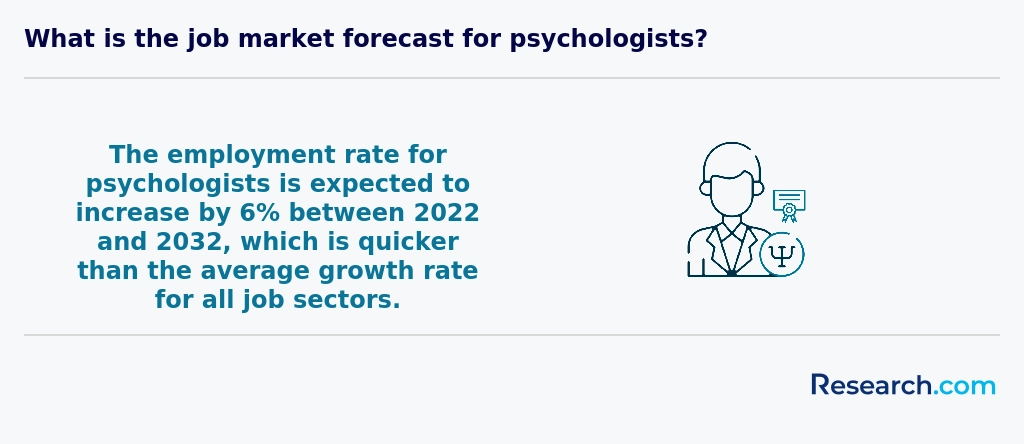
California's psychology job market grows steadily, with the Bureau of Labor Statistics projecting a 6% growth rate for psychologists statewide through 2031. Thus, continuous skill development and understanding industry demands will improve your chances of success.
Employers in California highly value psychology graduates who demonstrate strong analytical skills. The ability to interpret data and research findings is critical, especially as the state's healthcare and social services sectors expand. According to the California Employment Development Department, professionals with competency in statistical software and research methodologies are increasingly sought after.
Communication skills are essential. Graduates must convey complex psychological concepts clearly to diverse clients and interdisciplinary teams. Emotional intelligence and active listening are also vital, given the emphasis on mental health services in California, as reported by the California Mental Health Services Authority.
Finally, ethical judgment and cultural competence stand out. California's diverse population means graduates should be trained to work respectfully across cultures, which is a recurring theme in state licensing guidelines.
Finding internships in California for psychology students involves several steps aligned with the state's educational and professional standards. Many universities in California have partnerships with local hospitals, clinics, and community organizations offering psychology-focused internships. Students should consult their campus career centers for listings specifically designed for their degree level.
Additionally, the California Psychological Association and the American Psychological Association provide resources and directories for internship opportunities. According to the California Employment Development Department, jobs and internships in mental health fields are expected to grow 12% through 2030, emphasizing internship availability.
Networking through faculty, psychology clubs, and local professional events can also uncover hidden internship opportunities. Applying early and meeting state requirements, such as background checks and specific coursework, improves chances of placement.
A psychology degree in California can significantly enhance career mobility and advancement opportunities across various sectors, including healthcare, education, and business. According to the Bureau of Labor Statistics (BLS), employment of psychologists in California is projected to grow 10% from 2022 to 2032, reflecting demand for qualified professionals.
Graduates with psychology degrees often qualify for entry-level roles such as behavioral therapists, research assistants, or human resource specialists. Advanced degrees, particularly at the master's or doctoral levels, open doors to licensed clinical practice and higher salaries.
California's diverse economy offers numerous internships and networking connections, helping graduates transition into specialized fields. Licensing requirements, governed by the California Board of Psychology, also shape career advancement by ensuring practitioners meet state standards.
Studying for a psychology degree in California equips students with skills essential for interdisciplinary roles, blending knowledge from fields such as healthcare, education, and social services. California universities emphasize collaboration, offering courses that integrate psychology with neuroscience, counseling, and public health.
Many programs encourage hands-on experience through internships and research partnerships with hospitals, schools, and community organizations, reflecting the state's diverse population.
According to the California Department of Consumer Affairs, over 80% of psychology graduates pursue careers requiring interaction with other disciplines, highlighting the practical value of this education.
This interdisciplinary approach prepares graduates to adapt in varied professional environments, supporting roles beyond traditional psychology positions.
Choosing between a thesis and a non-thesis psychology degree program in California depends on your career goals and learning preferences. Thesis programs often emphasize research skills and prepare students for doctoral studies or research roles. Non-thesis programs focus more on practical knowledge and coursework, ideal for those aiming for clinical or counseling careers.
California hosts over 50 accredited psychology graduate programs, many offering both options, according to the California Psychological Association. Thesis options usually require designing, conducting, and defending original research, which can take additional time but provides valuable experience.
Non-thesis tracks may include internships or projects instead, often quicker to complete. Consider your professional plans: research-intensive careers or academia typically benefit from thesis programs, whereas applied psychology roles might prefer non-thesis paths.
Students based in California who want to study psychology abroad have several pathways available through their home institutions. Many California universities participate in exchange programs with universities in Europe, Asia, and Australia, allowing students to complete part of their psychology degree overseas. These programs are often coordinated through the university's study abroad office.
According to the California State University system, around 15% of students engage in some form of study abroad, with psychology being a popular major for these experiences. Programs usually last one semester or a full academic year and maintain credit transfer agreements to ensure coursework applies to the degree.
Additionally, students may enroll directly in foreign universities with accredited psychology programs, though they should verify that credits will be recognized by California institutions or professional licensure boards. Resources like the Institute of International Education provide updated statistics and guidance on these options.
California offers diverse part-time job opportunities that complement psychology degree education. Many students find roles as research assistants in university psychology departments, gaining hands-on experience in data collection and analysis. According to the California Psychological Association, working in clinical or counseling settings as an aide or technician can enhance understanding of patient care and therapy techniques.
Other common positions include behavioral health technicians in hospitals or community centers, supporting mental health professionals. These roles often pay between $15 and $22 per hour, according to the U.S. Bureau of Labor Statistics (2023). Additionally, tutoring psychology or related subjects for fellow students can deepen knowledge and improve communication skills.
Overall, part-time jobs focused on research, clinical support, or educational assistance align well with the skills developed in psychology degree programs across California.
Psychology students in California benefit from numerous networking opportunities across the state's extensive academic and professional communities. Many universities, like the University of California system and California State University campuses, offer active psychology clubs and honor societies, which facilitate peer connections and professional growth.
Students can also join the California Psychological Association (CPA), the state's largest organization dedicated to psychology professionals. CPA hosts conferences, workshops, and local events that allow students to meet licensed psychologists and potential mentors.
Additionally, internships, research assistantships, and volunteer positions in California's diverse clinical and research settings provide valuable experience and contacts. According to the Bureau of Labor Statistics, California employs more than 30,000 psychologists, making it an ideal region for building a professional network.
Alumni networks play a crucial role for psychology degree students in California by offering valuable professional connections and mentorship opportunities. Graduates from institutions like the University of California and Pepperdine University often stay engaged through organized alumni events and online platforms. This engagement helps current students access internships, research roles, and job openings in a competitive California market, where psychology-related fields are growing faster than the national average, according to the California Employment Development Department.
These networks foster collaboration among members, enhancing exposure to diverse specialties such as clinical, counseling, and industrial-organizational psychology. Additionally, alumni can provide insight into licensing processes governed by the California Board of Psychology, supporting students' transition from academia to professional practice.
Customizing a psychology degree program in California allows students to align their education with specific career goals. Many universities offer elective courses in areas like clinical, cognitive, developmental, or industrial-organizational psychology to help personalize study plans. Additionally, California institutions often provide research opportunities, internships, and practicum placements tailored to individual interests.
Students can also choose between bachelor's, master's, or doctoral programs depending on their professional objectives, such as becoming a licensed therapist, counselor, or research psychologist. According to the California Board of Psychology, completing supervised clinical hours is critical for licensure, so selecting programs with strong practicum components is beneficial.
Engaging with faculty expertise and utilizing campus career services further supports a customized educational path fitting diverse psychological fields.
Psychology students in California often face several challenges during their studies. One main difficulty is balancing rigorous coursework with practical fieldwork requirements, as many programs demand both strong academic performance and hands-on experience through internships or research projects.
Another challenge involves the high cost of education. According to the California Student Aid Commission, average tuition fees for in-state students at public universities have risen steadily, impacting many psychology students who may require financial aid or part-time jobs.
Additionally, competition for limited internship placements and research opportunities can be intense, particularly in popular urban centers like Los Angeles and San Francisco.
Many students also find navigating diverse career paths, from clinical psychology to counseling or research, confusing without clear guidance.
With a psychology degree in California, graduates can pursue several professional certifications that enhance their career prospects. One common path is obtaining licensure as a Licensed Professional Clinical Counselor (LPCC), which requires a master's degree, supervised experience, and passing the California Law and Ethics Exam.
Another option is becoming a Licensed Marriage and Family Therapist (LMFT), focusing on family and relationship counseling. This certification also requires specific educational and clinical experience criteria set by the California Board of Behavioral Sciences.
For those interested in school settings, the Pupil Personnel Services credential allows psychologists to work in California public schools. National certifications such as the Certified Alcohol and Drug Counselor (CADC) are also available to psychology graduates seeking specialization.
To write a winning application for a psychology program in California, begin by researching programs that fit your academic and career goals. California hosts many top-ranked psychology schools, including University of California campuses known for rigorous selection processes. Highlight your relevant academic achievements, such as strong GPA and coursework in psychology or related fields. Admissions committees value experience; include any research, internships, or volunteer work related to psychology.
Craft a compelling personal statement that clearly explains your motivation for studying psychology in California. Tailor your essay to each program's values, showing how you align with their mission.
Submit letters of recommendation from professors or professionals familiar with your work, emphasizing your skills and dedication to psychology. Lastly, ensure your application is complete and submitted before deadlines, as many California schools have competitive admissions with acceptance rates below 30% according to data from the California Postsecondary Education Commission.
The career outlook for psychology graduates in California aligns with broader global trends emphasizing the field's versatility. According to the U.S. Bureau of Labor Statistics, psychology jobs are expected to grow 8% nationally from 2022 to 2032, a rate similar to the average for all occupations. California, with its large and diverse population, offers abundant opportunities, particularly in clinical, counseling, and educational psychology.
Internationally, psychology careers are increasingly interdisciplinary, integrating technology, neuroscience, and mental health policy. Studying psychology in California exposes students to diverse cultural perspectives, an advantage in global practice.
California ranks among the top states for licensed psychologists, reflecting strong demand and earning potential, with an average annual salary around $98,000. The state's universities emphasize research and applied skills, preparing graduates for both domestic and international roles in psychology.
Gaining practical experience while studying for a psychology degree in California is essential for building relevant skills and enhancing job prospects. Many universities encourage students to participate in internships or practicum placements at local hospitals, clinics, and community organizations. These opportunities offer real-world exposure to psychological assessment, therapy, and research activities.
Additionally, California's robust mental health system provides numerous volunteer roles that complement academic learning. According to the California Bureau of Labor Statistics, internships can improve employment chances in the state's psychology field, which is projected to grow by 14% by 2030.
Students are also advised to engage with faculty-led research projects to gain hands-on experience in experimental methods and data analysis.
Choosing the right concentration within a psychology degree program in California requires careful consideration of your career goals and interests. Popular specializations include clinical, cognitive, developmental, and industrial-organizational psychology. According to the California Board of Psychology, clinical psychology remains one of the fastest-growing areas, reflecting demand for licensed therapists and counselors.
Researching faculty expertise and program resources at California universities can guide your decision. For example, schools like UCLA and UC Berkeley offer strong research opportunities in neuropsychology and behavioral science.
Also, evaluate licensure requirements if you aim to become a practicing psychologist, as these vary by concentration and impact your future options.
Related Psychology Rankings for Nearby States
- 2027 Most Popular Psychology Degree Programs Ranking in Nevada
- 2027 Most Popular Psychology Degree Programs Ranking in Arizona
- 2027 Most Popular Psychology Degree Programs Ranking in Idaho
- 2027 Most Popular Psychology Degree Programs Ranking in Washington
- 2027 Most Popular Psychology Degree Programs Ranking in New Mexico
- 2027 Most Popular Psychology Degree Programs Ranking in Colorado
- 2027 Most Popular Psychology Degree Programs Ranking in Oklahoma
- 2027 Most Popular Psychology Degree Programs Ranking in North Dakota
- 2027 Most Popular Psychology Degree Programs Ranking in Minnesota
- 2027 Most Popular Psychology Degree Programs Ranking in Iowa
Top Trending Psychology Rankings
See What Experts Have To Say About Studying Psychology
Read our interview with Psychology experts

Joann Farrell Quinn, Ph.D., MBA
Psychology Expert
Director at the College of Medicine Department of Medical Education
Morsani College of Medicine

Elizabeth L. Jeglic Ph.D.
Psychology Expert
Professor of Psychology
City University of New York

Robin M. Kowalski. Ph.D.
Psychology Expert
Professor of Psychology
Clemson University

References
- How Long Does It Take to Become a Clinical Psychologist? Career Path Timeline https://www.scuhs.edu/psyd-article/how-long-does-it-take-to-become-a-clinical-psychologist-career-path-timeline/
- A Guide to Psychology Internships | Psychology Degree Guide https://psychologydegreeguide.org/resources/internships/
- Psychology - SWPS University https://english.swps.pl/academics/warsaw/ba-programs/psychology
- Scholarships For Psychology Majors (2025) https://www.psychology.org/scholarships/
- Society for the Teaching of Psychology https://teachpsych.org/page-1784686/8675326
- Community Psychology in Global Perspective http://siba-ese.unisalento.it/index.php/cpgp
- How to help students cope with mental health challenges https://www.eaie.org/resource/help-students-cope-mental-health-challenges.html
- Estimated Total MFT Program Tuition - MFT California https://www.mftcalifornia.com/estimated-total-program-tuition
- How Psychology Students Can Get Clinical Experience Before Graduating | The Playful Psychologist https://www.theplayfulpsychologist.com/post/students-experience-how-to-get-the-experience-you-need-before-you-graduate
- Study Psychology Abroad | Go Overseas https://www.gooverseas.com/study-abroad/psychology


