
2027 Most Popular Psychology Degree Programs Ranking in Rhode Island

Co-Founder and Chief Data Scientist
Choosing the right psychology degree program in Rhode Island can feel overwhelming. To make this easier, the Research.com team of data scientists created the 2027 Most Popular Psychology Degree Programs Ranking in Rhode Island. This ranking helps you identify programs that stand out based on careful data analysis.
Reading this article will give you clear insights and confidence in selecting a program that fits your goals. A psychology degree opens doors to meaningful careers and personal growth, making this an exciting step toward your future.
Key benefits of getting psychology degree in Rhode Island
- Salary for psychology degree graduates: Jobs like Marketing Research Analyst and Human Resources Specialist offer attractive salaries, with mean annual wages around $83,190 and $76,060 respectively, reflecting strong earning potential in Rhode Island.
- Career paths: Graduates from Rhode Island College have diverse options including clinical research, childcare, and survey research roles, enabling rewarding work in both healthcare and community support fields.
- Benefits of online degrees: Earning a psychology degree online from institutions like the University of Rhode Island offers flexibility and access to expert faculty, making it easier to balance studies with personal commitments while gaining quality education.
- Key benefits of getting psychology degree in Rhode Island
- What can I expect from psychology degree in Rhode Island?
- Where can I work with psychology degree in Rhode Island?
- How much can I make with psychology degree in Rhode Island?
- 2027 Most Popular Psychology Degree Programs Ranking in Rhode Island
- Key Findings
- How long does it take to complete psychology degree in Rhode Island?
- Accreditation and Licensure Outcomes
- What's the difference between online and on-campus psychology degree?
- Financial Considerations and Funding Opportunities for Psychology Students in Rhode Island
- What is the average cost of psychology degree in Rhode Island?
- Licensure and Certification Pathways for Psychology Professionals
- What financial aid is available to psychology degree students in Rhode Island?
- Affordable Psychology Program Alternatives
- What are the prerequisites for enrolling in psychology degree program in Rhode Island?
- Licensure and Certification: Paving Your Professional Path
- What courses are typically in psychology degree programs in Rhode Island?
- What types of specializations are available in psychology degree programs in Rhode Island?
- How do you choose the best psychology degree in Rhode Island?
- What career paths are available for psychology degree students in Rhode Island?
- What is the job market for psychology degree in Rhode Island?
- Related Psychology Rankings for Nearby States
- Top Trending Psychology Rankings
- See What Experts Have To Say About Studying Psychology
What can I expect from psychology degree in Rhode Island?
Curious about the cost of pursuing a psychology degree right here in Rhode Island? Contrary to the assumption that quality education comes with an exorbitant price tag, many graduates from Rhode Island College and Brown University describe their investment as both manageable and worthwhile. Rhode Island College's undergraduate psychology programs tend to average around $8,000 to $10,000 per year for in-state students, creating an accessible path for those eager to dive into developmental psychology or research methods without overwhelming debt.
Graduate programs, especially those at Brown University, present a higher financial commitment-often $50,000 or more annually-yet many graduates emphasize that this expense translates into unmatched opportunities such as clinical internships within local community organizations and personalized mentorship from leading faculty. These experiences often spark a deep sense of confidence and connection, helping students visualize their future in psychology beyond just numbers on a tuition bill.
Ultimately, the cost invites a broader reflection: how much do you value hands-on learning and professional networking that Rhode Island's intimate academic environment uniquely fosters? For many, the price becomes a meaningful investment in a career rooted in empathy, science, and real-world impact.
Where can I work with psychology degree in Rhode Island?
With a psychology degree in Rhode Island, graduates find themselves at an exciting crossroads of opportunity, far beyond the therapy couch. Many quickly discover roles in healthcare settings like hospitals and mental health clinics, where they actively support individuals facing real-life struggles as counselors or behavioral therapists. For example, graduates from the University of Rhode Island often speak about the fulfillment that comes from working alongside dedicated teams improving community mental health day by day.
Others embrace roles in education, stepping into public and private schools as counselors or school psychologists. These positions, growing steadily throughout Rhode Island, place graduates at the heart of nurturing student well-being-turning their academic insights into tangible impacts within classrooms.
Rhode Island's corporate world-especially in Providence-also welcomes psychology graduates eager to influence employee training and organizational culture, proving that psychology crosses traditional boundaries. This adaptability excites many graduates, opening doors they hadn't initially imagined when starting their degree.
Nonprofits and government agencies provide yet more avenues, where psychology knowledge meets real-world social challenges, from supporting at-risk populations to shaping public health policies. Graduates from Rhode Island College often reflect on these paths as deeply rewarding, blending passion with purpose.
How much can I make with psychology degree in Rhode Island?
Graduates holding psychology degrees from institutions like the University of Rhode Island or Rhode Island College often step into diverse roles with salaries that reflect both their education and the state's market. For example, many find entry-level positions as childcare workers earning around $32,070 annually, a solid start for those passionate about early development and community impact.
Some graduates build on their psychology background by moving into research-related roles. Positions such as clinical research associates or survey researchers typically offer mean annual wages near $62,370, a notable increase that rewards analytical skills and understanding of human behavior.
Others leverage their communication and interpersonal expertise into careers as human resources specialists or marketing research analysts, who in Rhode Island earn mean annual wages of approximately $76,060 and $83,190 respectively. These paths highlight how a psychology degree can open doors beyond traditional clinical roles, offering gratifying work that blends science with real-world applications.
Graduates often report satisfaction not just from paychecks but from knowing their roles directly influence well-being, policy, and organizational success, reflecting the true value of studying psychology in Rhode Island's unique job landscape.
2027 Most Popular Psychology Degree Programs Ranking in Rhode Island
How do we rank schools?
Investing in your education is a significant decision that can deeply impact your future, and the Research.com team is dedicated to supporting you in making well-informed choices. To aid prospective students in Rhode Island, we have carefully developed the "2027 Most Popular Psychology Degree Programs Ranking in Rhode Island." Our team prioritized quality, credibility, and accuracy throughout the research and analysis process to deliver a trustworthy resource.
We utilized the following reputable data sources to ensure a comprehensive evaluation of psychology programs:
By consulting this ranking, readers will gain valuable insights into the top psychology degree programs in Rhode Island, enabling them to confidently choose the best educational path. For a detailed explanation of our methodology, please visit our Research.com methodology page.


Key Findings
- The average cost for a bachelor's degree in psychology in Rhode Island ranges from $13,000 to $35,000 per year, depending on whether the school is public or private.
- Entry-level psychology graduates typically start with salaries around $45,000 annually, while those with advanced degrees can earn about $75,000 or more.
- The job market in Rhode Island for psychology professionals is moderately competitive, with growing demand for mental health services.
- Licensing to work as a clinician requires completing accredited programs, supervised experience, and passing a professional exam.
- Psychology programs in the state often focus on applied fields like clinical and counseling psychology, offering practical experiences aligned with job market needs.
How long does it take to complete psychology degree in Rhode Island?
Completing a psychology degree in Rhode Island is often seen as a set timeline, but the reality experienced by many graduates from institutions like Rhode Island College and the University of Rhode Island reveals a more nuanced story. While a bachelor's degree typically takes about four years, students who choose combined or accelerated bachelor's-to-master's programs feel a surge of excitement and challenge as they compress what is usually a long academic journey into a shorter timeframe through intense coursework.
Graduate students pursuing a Master's often balance studies with work or family, stretching their programs from two up to three years. This flexibility aligns with the real-life hustle many face, turning classrooms into hubs of relatable stories and shared perseverance.
Doctoral candidates recount five to seven years marked not just by academics, but by immersive clinical experiences and rich research endeavors that deeply shape their professional identities. These extended timelines don't just measure duration - they reflect a transformative process that graduates remember with pride and anticipation.
- Typically, 4 years for a bachelor's degree
- 2 to 3 years for a master's degree
- 5 to 7 years for doctoral degrees
Accreditation and Licensure Outcomes
Accreditation is a critical factor when evaluating psychology degree programs in Rhode Island, as it directly impacts eligibility for licensure and professional practice. The University of Rhode Island’s doctoral program holds American Psychological Association (APA) accreditation, ensuring that coursework and practicum experiences meet rigorous national standards. Rhode Island College’s master’s degrees in counseling psychology are accredited by the Council for Accreditation of Counseling and Related Educational Programs (CACREP), preparing graduates for LPC licensure. Attending an accredited program also streamlines the path to sit for the Examination for Professional Practice in Psychology (EPPP) and state licensure boards. Graduates of these programs report high first-time EPPP pass rates-with URI alumni averaging an 85% success rate and RIC graduates achieving around 78% on the National Counselor Examination (NCE). Rhode Island’s Board of Mental Health Counselors and Psychologists requires 3,360 hours of supervised experience (including a minimum of 1,500 post-degree hours) and successful completion of both written and oral exams. Many students complete these requirements within a year of graduation, thanks to robust internship placements at local hospitals, schools, and community mental health centers. Key licensure milestones for Rhode Island psychology graduates:
- Complete an APA- or CACREP-accredited program.
- Pass the EPPP or NCE with scores meeting state thresholds.
- Acquire 3,360 supervised hours, with at least 1,500 hours post-degree.
- Submit verification of supervised experience and exam results to the RI licensing board. For students considering flexible degree options or aiming to specialize further, exploring an accredited psychology masters online program can provide access to the same licensure eligibility, combined with the convenience of remote coursework. Ensuring your chosen program maintains current accreditation and supports alumni in licensure preparation will maximize your career prospects and professional credibility in Rhode Island’s mental health landscape.
What's the difference between online and on-campus psychology degree?
The choice between an online and an on-campus psychology degree in Rhode Island is more than just convenience-it shapes the entire learning journey. Graduates from the University of Rhode Island often describe their on-campus experience as immersive, with direct access to professors, research labs, and practicum placements that sharpen interpersonal skills needed in clinical settings. This hands-on training is hard to replicate online and can feel like a crucial stepping stone toward licensure.
Conversely, online students appreciate the freedom to balance studies with work or family, a common reality in Rhode Island's tight-knit communities. They often share how the flexibility to revisit lectures on their own schedules fosters deeper understanding, even if it means missing out on immediate face-to-face interactions.
Both paths demand self-discipline, but online learners must also master digital tools and local networking for fieldwork. On-campus programs, particularly at Rhode Island College, often offer a structured rhythm and spontaneous peer support that bolsters motivation. Choosing between these options challenges students to weigh structure against flexibility, local engagement against remote autonomy-decisions that define how they grow personally and professionally.
Financial Considerations and Funding Opportunities for Psychology Students in Rhode Island
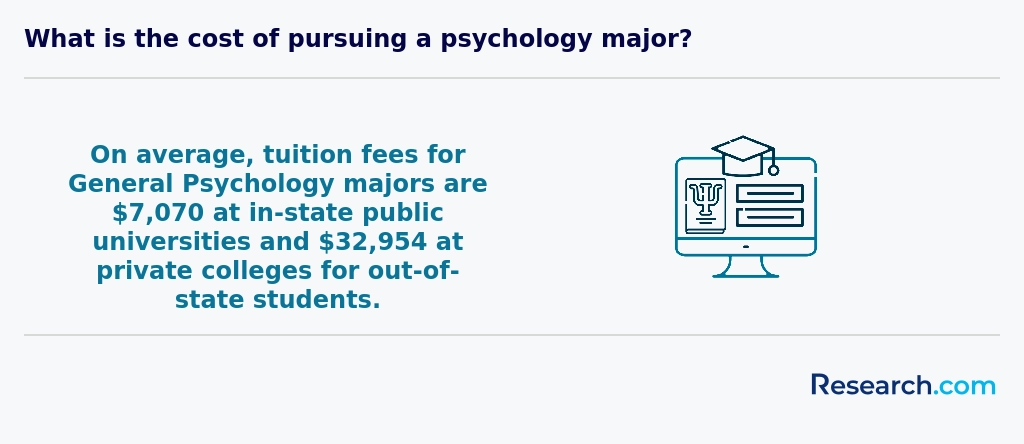
Pursuing a psychology degree in Rhode Island can be a significant investment, but there are several financial considerations and funding opportunities that students should be aware of. One crucial aspect to consider is the cost of tuition, which can vary significantly depending on the institution and program chosen. For instance, in-state students attending public colleges can expect to pay around $7,070 in tuition, while out-of-state students at private institutions may face costs upwards of $32,954. To alleviate some of the financial burdens, students can explore various funding options, such as federal financial aid by completing the FAFSA, state-specific grants, and institutional scholarships. Additionally, many institutions offer graduate assistantships that provide tuition remission and stipends, allowing students to gain valuable experience while covering living expenses. For those looking for more affordable options, considering the most affordable psychology schools in Rhode Island can be a viable path. By carefully evaluating these financial considerations and exploring available funding opportunities, students can make informed decisions about their educational journey and set themselves up for success in their future careers.
What is the average cost of psychology degree in Rhode Island?
The average cost of a psychology degree in Rhode Island challenges many assumptions about affordability. With a median total cost hovering around $55,819 for both in-state and out-of-state students, pursuing a degree here demands serious financial consideration. Graduates from the University of Rhode Island often recall the initial shock of tuition combined with living expenses, which are notably higher due to the state's coastal location. Yet, they also highlight a rewarding sense of achievement and community support that comes with studying in a state known for strong academic programs.
In-state students generally experience a lower total cost, about $43,418, which reflects the University of Rhode Island's commitment to accessible education. However, for those attending private colleges like Providence College, the cost remains substantially higher, requiring more strategic financial planning. Many students emphasize the importance of weighing tuition against the benefits of tailored academic experiences and networking opportunities offered by these institutions.
Practical realities also shape the total cost of psychology degree Rhode Island students face, including additional fees such as health insurance, certification, and licensure-related expenses. Those who have recently graduated often recommend exploring the most affordable psychology schools in Rhode Island to find balance between quality and cost, making the journey towards a psychology degree both emotionally fulfilling and financially manageable.

Licensure and Certification Pathways for Psychology Professionals
Navigating the licensure process is a critical step for psychology graduates in Rhode Island who aspire to practice clinically or provide counseling services. After earning a bachelor’s degree, many students pursue a master’s or doctoral program that’s accredited by the American Psychological Association (APA) or meets state board standards. Accreditation not only ensures curriculum quality but also streamlines eligibility for the Examination for Professional Practice in Psychology (EPPP), the nationally recognized licensure exam. Rhode Island requires aspiring psychologists to complete at least two years of supervised professional experience-typically 3,000 hours-following graduation. This supervised practice can occur in community mental health centers, hospitals, or university clinics under the guidance of a licensed psychologist. During this period, candidates develop competencies in assessment, diagnosis, and evidence-based interventions, all of which are evaluated by their supervisors to meet state board requirements. Once supervised hours are completed, candidates must pass the EPPP and the Rhode Island-specific jurisprudence exam administered by the Board of Examiners in Psychology. Successful candidates apply for licensure through the Department of Health, submitting transcripts, verification of supervised practice, and exam scores. Licensed psychologists must then fulfill continuing education requirements-30 hours every two years-to maintain their credentials and stay current with emerging research and ethical guidelines. For prospective students comparing licensure support across states, our Affordable Psychology Degree Programs Ranking in North Carolina highlights programs known for their strong licensure pipelines and mentorship opportunities, offering a benchmark for the resources you should seek when choosing a Rhode Island psychology program.
What financial aid is available to psychology degree students in Rhode Island?
Financial aid for psychology students in Rhode Island extends beyond the obvious federal grants, loans, and work-study programs. Many graduates from the University of Rhode Island recall how the Pell Grant-providing up to $7,395-became a crucial cornerstone in their funding, easing anxiety about tuition. Yet, the layers of support deepen with state programs like the Rhode Island Promise Scholarship, which many Community College of Rhode Island attendees celebrate for making their first psychology courses realistically affordable.
Institutional scholarships at schools like Providence College often feel like a lifeline, with awards blending academic merit and financial need in ways that turn daunting cost estimates of $25,000 to $35,000 for out-of-state students into achievable budgets. Former students frequently mention how consultations with RISLA loan counselors helped them navigate refinancing, transforming loan stress into strategic planning. Meanwhile, external scholarships from the Rhode Island Psychological Association add an unexpected boost, reminding aspiring psychologists that financial aid can be as diverse as the field itself, offering hope and tangible support when it feels most needed.
Affordable Psychology Program Alternatives
Balancing quality with cost is essential when choosing a psychology degree, and Rhode Island students have several strategies to minimize expenses without sacrificing academic rigor. First, consider maximizing in-state tuition benefits by enrolling in public institutions like the University of Rhode Island or Rhode Island College, where per-credit costs are substantially lower than private colleges. Look for accelerated bachelor’s-to-master’s pathways, summer courses, and credit-by-exam options to reduce total semester hours and tuition bills. Online program formats can also offer significant savings through reduced fees and flexible scheduling. Many community colleges in Rhode Island provide transferable psychology courses at a fraction of the cost, allowing students to complete prerequisites before moving to a four-year campus. Additionally, explore institutional scholarships and work-study opportunities-some psychology departments award grants based on academic merit or community service, helping to offset living expenses and materials fees. For those open to exploring options beyond state lines, the region’s affordability landscape extends into neighboring states. To compare cost-effective programs and identify highly rated but budget-friendly degrees, check out our Affordable Psychology Degree Programs Ranking in North Carolina. This resource highlights institutions that deliver strong academic outcomes while keeping tuition and fees low, offering an alternative pathway for students willing to commute or study online. By evaluating these affordable alternatives and leveraging financial aid, prospective psychologists can pursue their academic goals with confidence in both quality and cost.
What are the prerequisites for enrolling in psychology degree program in Rhode Island?
To step into a psychology degree program in Rhode Island, the pathway starts with meeting foundational criteria that may seem straightforward but are crucial for your future success. Graduates from the University of Rhode Island often reflect on how completing a solid high school curriculum in English, math, and science set the stage for their deeper psychological studies. These prerequisites aren't mere formalities-they prepare you to engage critically with complex ideas, like interpreting data or understanding human behavior through biology and social sciences.
The leap to graduate psychology programs brings sharper focus: a bachelor's degree with coursework in psychology, statistics, and research methods becomes essential. Many students at Rhode Island College highlight that having hands-on experience with research or internships, along with letters of recommendation, amplified their admissions prospects and confidence once enrolled.
- Core prerequisites include psychology, biology, statistics, and research methods courses;
- Graduate applicants often need strong personal statements and relevant experience;
- GRE scores may be optional but can enhance your application in some cases.
Understanding these requirements is not just about compliance-it's a chance to reflect on whether you are genuinely prepared and passionate enough to pursue psychology in Rhode Island's dynamic academic environments.
Licensure and Certification: Paving Your Professional Path
Achieving licensure and certification is a crucial next step for psychology graduates in Rhode Island who aspire to practice professionally. In this section, we delve into the eligibility requirements, examination processes, and additional steps necessary to secure a license to practice. Graduates must typically complete a minimum number of supervised clinical hours after their degree, pass the Examination for Professional Practice in Psychology (EPPP), and meet state-specific criteria. Detailed guidance on building a strong professional portfolio and navigating the licensure process can be especially beneficial for those seeking a swift transition into the workforce. For individuals curious about advancing in the clinical arena, exploring resources on how do i become a licensed therapist can provide valuable insight into aligning your education with practical licensure requirements. This comprehensive approach not only solidifies your credentials but also enhances your job market competitiveness in diverse settings such as healthcare, education, and corporate environments.
What courses are typically in psychology degree programs in Rhode Island?
Psychology degree programs in Rhode Island commonly include courses that challenge students to rethink human behavior from multiple perspectives. Graduates from institutions like the University of Rhode Island often recall how Introduction to Psychology felt like unlocking a map to the human mind, revealing connections between thoughts and actions that they had never actively noticed before.
Courses such as Research Methods and Statistics equip students to critically analyze psychological studies, turning abstract numbers into meaningful stories about people's lives. This often surprises learners who initially assumed psychology was just about theories and feelings.
In classrooms at Rhode Island College, students encounter Developmental Psychology by exploring growth stages that they can vividly relate to through reflections on their own families or community experiences. Meanwhile, Abnormal Psychology invites them to empathize deeply with individuals facing mental health challenges, shifting perspectives beyond stereotypes.
Electives like Biopsychology or Social Psychology push students to see the intricate dance of biology and society shaping behavior-a realization that many find both humbling and empowering as they prepare for careers or advanced studies.
What types of specializations are available in psychology degree programs in Rhode Island?
Exploring psychology degree specializations Rhode Island universities like the University of Rhode Island and Rhode Island College offer reveals a spectrum of paths that challenge traditional views on what psychology entails. Graduates who pursued clinical psychology often describe the profound fulfillment of guiding patients through mental health challenges, strengthened by hands-on internships available locally. Meanwhile, those drawn to Rhode Island psychology program concentrations such as counseling psychology share how mastering therapeutic techniques helped them develop empathy and resilience in real-world contexts, enabling them to support others effectively.
Some students find inspiration in developmental or industrial-organizational psychology, fields that illuminate human growth or workplace dynamics, which can profoundly impact education systems or corporate culture within the state. Interestingly, forensic psychology concentrations highlight the growing need for professionals bridging psychology and legal frameworks, offering exhilarating career prospects that often surprise first-time learners.
Understanding these specializations goes beyond academics; it involves reflecting on one's passion and long-term goals. For those wondering how do i become a licensed therapist, integrating practical experience during these studies in Rhode Island enhances the journey profoundly.
How do you choose the best psychology degree in Rhode Island?
Choosing the best psychology degree in Rhode Island goes beyond just picking a school name; it demands reflecting on how a program aligns with your personal career vision. Graduates from well-regarded institutions in the state often highlight how smaller class sizes and faculty who are actively involved in current psychological research profoundly shaped their learning experience. Imagine being in a classroom at a Rhode Island college where your professor is not only teaching but also conducting clinical studies in local mental health centers. Such opportunities elevate your education from theory to practice. Affordability also plays a crucial role-public four-year institutions offer more accessible tuition, but it's essential to ask whether the program's practical training and internship connections justify more costly private options. For those balancing work and study, exploring psychology masters online can be a transformative choice, combining flexibility with quality education.
When considering the best psychology degree programs in Rhode Island, remember that accreditation impacts your future licensure and employment. Graduates often share how knowing their program met APA or regional standards gave them confidence stepping into the workforce. By weighing factors like accreditation, costs, faculty expertise, and hands-on experiences, you craft a path that isn't just academically sound but deeply resonant with your ambitions.
What career paths are available for psychology degree students in Rhode Island?
Pursuing a psychology degree in Rhode Island opens up diverse career paths that extend well beyond traditional roles, inviting graduates to rethink what a psychology career can truly encompass. Many find rewarding positions as clinical psychologists or therapists, offering vital mental health services to communities. Graduates from institutions like Brown University have shared how their experiences helped them develop empathy and practical skills, gaining confidence in counseling environments. This is just one example of job prospects for psychology graduates in Rhode Island that blend human connection with professional fulfillment.
Others leverage their degree in research or academia, contributing to groundbreaking studies at the University of Rhode Island or local hospitals. These roles deepen understanding of human behavior, offering a sense of purpose for those passionate about discovery and innovation. Industrial-organizational psychology also attracts graduates eager to impact workplace dynamics across Rhode Island's vibrant economy, where they apply behavioral science to enhance productivity and employee well-being.
For prospective students weighing costs and benefits, exploring the Affordable Psychology Degree Programs Ranking in North Carolina can provide insight into balancing investment with career potential. The journey many graduates take shows that a psychology degree in Rhode Island isn't just a certificate-it's a gateway to a career rich with meaningful opportunities and personal growth.
What is the job market for psychology degree in Rhode Island?
The job market for psychology degree holders in Rhode Island presents a nuanced landscape that rewards advanced qualifications and strategic specialization. Graduates from well-regarded programs at Brown University or the University of Rhode Island often find that their advanced degrees-master's or doctorate-significantly improve prospects in healthcare and educational settings. Rather than expecting immediate entry into high-paying roles, many new graduates begin in assistant or technician positions, gaining valuable experience before advancing.
Psychology degree job outlook Rhode Island suggests mental health roles are steadily growing, particularly in underserved communities where licensed behavioral health specialists are in demand. Those who can navigate licensing and specialization often unlock opportunities in private practice or hospitals, earning around $89,000 annually, a figure that surpasses the national average. Prospective students should carefully weigh these realities alongside tuition costs, which reflect the broader U.S. averages, to make informed decisions about their future.
Many psychology students in Rhode Island balance studies with work or explore the fastest associate degree programs online to complement their credentials, creating a tailored path that blends practical experience with academic rigor.
Frequently Asked Questions About psychology
Psychology degree students in Rhode Island can maximize their learning by engaging actively with both academic and practical experiences. Local universities, such as the University of Rhode Island, offer research opportunities that complement classroom studies. Participating in internships at nearby mental health clinics or hospitals provides valuable hands-on experience and networking. Additionally, students should consider joining professional organizations like the Rhode Island Psychological Association for access to workshops and conferences. Utilizing academic resources, such as tutoring centers and counseling services, also supports learning success. Staying current with U.S. Bureau of Labor Statistics data on psychology careers can guide students toward relevant skills and specializations.
The field of psychology in Rhode Island is expanding into several emerging niches, reflecting broader national trends. One growing area is health psychology, which focuses on how behavior affects physical health. This specialization aligns with Rhode Island's aging population and increasing demand for integrative healthcare solutions.
Another important niche is forensic psychology. With Rhode Island's emphasis on criminal justice reform, psychologists trained in this area assess offenders and assist in legal processes. Additionally, industrial-organizational psychology is gaining traction as local businesses seek experts to improve workplace productivity and employee wellness.
Child and adolescent psychology remains crucial due to rising awareness of youth mental health. These areas offer unique opportunities for students interested in Rhode Island's educational and healthcare sectors, supported by data from the Rhode Island Department of Labor and Training.
Preparing for the job market after completing a psychology degree in Rhode Island involves strategic planning and practical experience. Students should pursue internships or research opportunities during their studies to build a competitive resume. According to the U.S. Bureau of Labor Statistics, employment of psychologists is projected to grow 6% nationally through 2032, with Rhode Island offering roles in healthcare, education, and social services.
Joining local professional organizations like the Rhode Island Psychological Association provides networking advantages and access to job listings. Additionally, obtaining relevant certifications or pursuing graduate education can improve employment prospects in specialized fields such as clinical or counseling psychology.
Employers in Rhode Island seeking psychology degree graduates prioritize a blend of technical knowledge and interpersonal skills. Critical thinking ranks highly, as employers expect graduates to analyze complex human behavior effectively. Communication skills are essential, given the need to convey psychological concepts clearly to clients and colleagues.
Familiarity with research methods and data analysis is also important. According to the U.S. Bureau of Labor Statistics and local employment reports, proficiency in statistical software is increasingly valued across Rhode Island workplaces. Additionally, empathy and ethical judgment are fundamental for roles in counseling, social work, and clinical settings.
Time management and teamwork capabilities are frequently highlighted by state employers, reflecting the collaborative nature of psychology-related positions in healthcare, education, and community services.
Finding internships in Rhode Island relevant to a psychology degree involves several strategic steps. Start by exploring resources at local universities such as the University of Rhode Island and Rhode Island College, both of which offer psychology programs and often partner with community organizations for internship placements. According to the Rhode Island Department of Labor and Training, healthcare and social assistance sectors are among the fastest-growing, providing diverse internship opportunities for psychology students.
Networking is crucial; attend local psychology association events and connect with professionals through platforms like the Rhode Island Psychological Association. Additionally, consider agencies such as mental health clinics, schools, and nonprofit organizations that frequently accept interns. The state's proximity to Boston also expands options for internships in larger clinical and research settings.
A psychology degree in Rhode Island can significantly enhance career mobility and advancement, especially within healthcare, education, and human services sectors. According to the U.S. Bureau of Labor Statistics (BLS), psychology-related roles are projected to grow nationally by 8% from 2021 to 2031, which aligns with regional trends in Rhode Island's expanding mental health services.
Graduates with psychology degrees often qualify for positions such as behavioral therapists, counselors, and case managers, roles that show steady demand throughout Rhode Island. Additionally, possessing a degree facilitates advancement into supervisory or specialized clinical roles, particularly with higher degrees like a master's or doctorate.
Rhode Island's focus on mental health care access increases job opportunities for psychology professionals in both urban and rural settings. Local institutions often require licensed psychologists, making advanced qualifications crucial for career progression.
Studying for a psychology degree in Rhode Island offers a strong foundation for interdisciplinary roles by emphasizing collaborative learning and applied research. Many programs integrate coursework from related fields such as neuroscience, social work, and education, which reflects the growing need for professionals who understand diverse perspectives.
For example, the University of Rhode Island's psychology curriculum includes opportunities to engage with community health initiatives and cross-departmental projects. This approach supports skills in communication, problem-solving, and data interpretation, crucial for roles in healthcare, business, or social services.
Additionally, Rhode Island's small size fosters close connections between academic institutions and local employers, enhancing internships and practical experiences. According to the Rhode Island Department of Labor, psychology graduates working in interdisciplinary settings have seen a 12% employment growth over recent years, reflecting a rising demand for versatile expertise.
Choosing between a thesis and a non-thesis psychology degree program in Rhode Island depends on your career goals and learning preferences. Thesis programs typically require conducting original research, which benefits those aiming for doctoral studies or research-based roles. Non-thesis options often focus on practical coursework and internships, appealing to students wanting to enter clinical, counseling, or applied psychology fields more quickly.
Rhode Island universities, like the University of Rhode Island, offer both paths with varying emphasis. According to the Rhode Island Board of Education, approximately 40% of psychology graduates pursue research or academic careers, favoring thesis tracks, while 60% enter professional practice, preferring non-thesis programs.
Consider your long-term plans and consult academic advisors to choose the best fit for your needs and interests.
Students based in Rhode Island who wish to study psychology abroad have several viable options. Many universities in Rhode Island, such as Brown University and Rhode Island College, offer study abroad programs that include psychology courses or research opportunities overseas. These programs enable students to earn credit toward their degree while gaining international experience.
Additionally, Rhode Island students can participate in exchange programs through established partnerships with foreign universities. These partnerships often focus on countries with strong psychology research traditions, such as the UK, Canada, and Australia.
Financial aid and scholarships may also support students pursuing psychology studies abroad, though eligibility depends on individual institutions and program specifics. According to NAFSA, about 10% of U.S. undergraduates engage in study abroad, providing a growing pool of resources and advice.
Part-time job opportunities in Rhode Island that complement psychology degree education often include positions in mental health support, research assistance, and educational roles. For example, working as a behavioral health technician or mental health aide in local clinics like those affiliated with Rhode Island Department of Behavioral Healthcare contributes practical experience. According to the Rhode Island Department of Labor and Training, healthcare support occupations are projected to grow by 15% through 2030, reflecting strong demand.
Research assistant roles at universities such as Brown University or the University of Rhode Island offer valuable exposure to data collection and analysis, enhancing research skills essential for psychology careers. Additionally, tutoring or peer mentoring in psychology courses at community colleges remains a popular option.
Psychology students in Rhode Island have multiple opportunities to develop professional networks. Universities like the University of Rhode Island and Providence College often host psychology clubs and honor societies where students connect with peers and faculty. These groups facilitate collaboration on research and community projects. Local chapters of national organizations, such as the American Psychological Association, provide students access to workshops, conferences, and internships across the state.
Additionally, Rhode Island's small size and proximity to major cities like Boston allow students to attend regional psychology events, enhancing networking possibilities. According to the Rhode Island Psychological Association, membership offers access to mentorship programs and job boards tailored to the state's psychology job market.
Alumni networks play a significant role in supporting psychology degree students in Rhode Island. These networks provide valuable connections to professionals working in clinical, counseling, and research psychology fields across the state. Members often share job leads, internship opportunities, and advice specific to the local market. For example, the Rhode Island Psychological Association offers networking events that help students meet licensed psychologists and potential employers.
Participation in alumni groups also offers mentorship programs. Experienced graduates guide current students on career paths, licensure requirements, and graduate school applications. Strong alumni ties have been linked to higher employment rates among psychology graduates nationally, a trend that holds true in Rhode Island as well.
Many universities in Rhode Island maintain active psychology alumni chapters, enhancing social support and professional development. This community approach helps students build confidence and become competitive candidates in this specialized field.
Customizing a psychology degree program in Rhode Island allows students to align their education with specific career goals. Many universities, including the University of Rhode Island, offer elective courses in areas such as clinical psychology, developmental psychology, or neuropsychology, enabling students to specialize. Internships and research opportunities, often available through partnerships with local hospitals and mental health clinics, provide practical experience tailored to career interests. According to the Rhode Island Office of Higher Education, approximately 65% of psychology students engage in experiential learning, enhancing job readiness. Students can also pursue dual majors or minors to broaden expertise, improving career flexibility within the state's job market.
Psychology students in Rhode Island often encounter several challenges during their studies. One common issue is the competitive nature of graduate program admissions, especially for clinical and counseling psychology tracks, which are in high demand nationwide. According to the National Center for Education Statistics, enrollment in psychology programs in Rhode Island has steadily increased, intensifying competition for limited faculty supervision and internship placements.
Additionally, securing practicum opportunities can be difficult due to the state's relatively small size and limited number of clinical facilities. Balancing rigorous coursework with research, practica, and part-time employment also adds to student stress.
Financial concerns are prevalent, as average tuition for psychology degrees in Rhode Island ranges from $15,000 to over $30,000 per year, often requiring loans or scholarships. Lastly, students must stay informed about licensure requirements in Rhode Island, which include specific supervised hours and examinations, contributing to their overall complexity of completing a psychology degree.
With a psychology degree in Rhode Island, graduates can pursue several professional certifications to enhance their careers. One common path is becoming a licensed psychologist, which requires a doctoral degree, supervised experience, and passing the Examination for Professional Practice in Psychology (EPPP).
For those with a bachelor's or master's degree, certifications like Certified Alcohol and Drug Counselor (CADC) or Licensed Mental Health Counselor (LMHC) are popular. Rhode Island's Department of Health sets specific requirements, including supervised hours and exams, to ensure quality.
Additional certifications include Board Certified Behavior Analyst (BCBA), especially relevant in developmental disorders and behavioral therapy fields. The U.S. Bureau of Labor Statistics notes growing demand in Rhode Island, particularly in counseling and social work specializations.
Applying to psychology programs in Rhode Island requires careful preparation to stand out. Start by thoroughly researching each school's admission criteria, as programs such as those at the University of Rhode Island emphasize both academic achievement and relevant experience. Strong undergraduate GPA, ideally above 3.5, is often expected due to competitive enrollment. Be sure to craft a compelling personal statement that clearly explains your motivation for studying psychology and how your goals align with the program's strengths.
Highlight any research or volunteer experiences related to psychology; these are highly valued and strengthen your application. According to the Rhode Island Board of Education, programs prioritize candidates demonstrating practical engagement and critical thinking. Letters of recommendation from professors or professionals familiar with your work in psychology can greatly enhance your application.
Psychology careers in Rhode Island reflect broader trends seen across the United States and global perspectives on the field. According to the U.S. Bureau of Labor Statistics, psychology is expected to grow by 8% nationally from 2021 to 2031, similar to global demand increases for mental health professionals. Rhode Island, with its strong healthcare and education sectors, provides opportunities particularly in clinical, counseling, and school psychology.
Globally, psychology professionals address diverse cultural and societal needs. While U.S. psychology programs emphasize evidence-based practice and research, international psychology careers may focus more on community interventions and public health. This global diversity enriches the field and expands career paths.
For Rhode Island students, understanding international psychology approaches can broaden perspectives, especially when working with diverse populations. The state's universities offer programs incorporating global research methodologies, aligning education with worldwide standards.
Gaining practical experience while studying for a psychology degree in Rhode Island is essential for career readiness. Many local universities encourage internships at mental health clinics, hospitals, and social service agencies, allowing students to apply theoretical knowledge in real-world settings. For instance, Rhode Island College and the University of Rhode Island have partnerships with area organizations offering supervised practicum opportunities.
Additionally, students can participate in research projects under faculty guidance, gaining skills in data collection and analysis. According to the Rhode Island Psychological Association, around 70% of psychology undergraduates engage in either internships or research before graduating. Volunteering with community programs also enhances practical experience while building professional networks.
Choosing the right concentration within a psychology degree program in Rhode Island requires careful consideration of your interests and career goals. Common concentrations include clinical, counseling, developmental, and industrial-organizational psychology. Each offers unique paths and job prospects. For example, clinical psychology often requires further graduate education and licensure but leads to roles in mental health treatment.
Rhode Island's demand for mental health professionals is growing, with the Bureau of Labor Statistics projecting a 10% increase in related jobs by 2030. Research local universities like Rhode Island College and the University of Rhode Island to see concentration options and specialized faculty.
Additionally, seek programs with internships or practicum opportunities to gain real-world experience before graduation. This practical training is crucial in the competitive Rhode Island job market.
Related Psychology Rankings for Nearby States
- 2027 Most Popular Psychology Degree Programs Ranking in Connecticut
- 2027 Most Popular Psychology Degree Programs Ranking in New York
- 2027 Most Popular Psychology Degree Programs Ranking in New Hampshire
- 2027 Most Popular Psychology Degree Programs Ranking in Delaware
- 2027 Most Popular Psychology Degree Programs Ranking in Maine
- 2027 Most Popular Psychology Degree Programs Ranking in Maryland
- 2027 Most Popular Psychology Degree Programs Ranking in North Carolina
- 2027 Most Popular Psychology Degree Programs Ranking in Georgia
- 2027 Most Popular Psychology Degree Programs Ranking in Florida
- 2027 Most Popular Psychology Degree Programs Ranking in Alabama
Top Trending Psychology Rankings
See What Experts Have To Say About Studying Psychology
Read our interview with Psychology experts

Elizabeth L. Jeglic Ph.D.
Psychology Expert
Professor of Psychology
City University of New York

Robin M. Kowalski. Ph.D.
Psychology Expert
Professor of Psychology
Clemson University

Catherine Caldwell-Harris, Ph.D.
Psychology Expert
Associate Professor of Psychology
Boston University

References
- Professional Networking For Psychologists | Psychology.org https://www.psychology.org/resources/professional-networking/
- Have You Found a Niche? https://www.apaservices.org/practice/business/marketing/building/niche
- Know more about thesis vs non- thesis: what is the difference? https://studyfans.com/en/blogs/816
- Call for papers https://www.hogrefe.com/us/journal/international-perspectives-in-psychology-research-practice-consultation
- Study Psychology Abroad https://astarfuture.co.uk/study_psychology_abroad.html
- Ontario Psychological Association - Networking and Community Resources https://www.psych.on.ca/become-a-member-(1)/member-services/networking-and-community-resources
- Alumni Perspectives - Meet Our FPN Alumni https://www.aanmelder.nl/alumni-perspectives-june-2023
- Mental Health Challenges Faced by Psychology Students | The Healthcare Guys https://healthcareguys.com/2023/11/23/mental-health-challenges-faced-by-psychology-students/
- Rhode Island Psychology Schools | Psychology Degree Guide https://psychologydegreeguide.org/state/rhode-island/
- Why Get a Psychology Degree Online? | University of Bridgeport https://www.bridgeport.edu/news/reasons-to-get-your-psychology-degree-online/


