2027 What Students Wish They Knew Before Starting SLP Graduate School

Co-Founder and Chief Data Scientist
Many students begin graduate school in speech pathology feeling unprepared for the volume and pace of coursework, clinical demands, and time management challenges. Balancing part-time work, family obligations, and intensive study often leads to burnout and stress. These hurdles can obscure the path to obtaining certification and becoming a competent clinician. Understanding these obstacles early allows students to plan strategically. This article explores key insights and practical advice to help prospective students navigate academic expectations, clinical experiences, and licensure requirements effectively, enabling a smoother transition into the speech pathology profession.
Key Things You Should Know
- Graduate programs in speech pathology have grown over 15% since 2023, increasing competition and raising the importance of strong academic and clinical experience for admissions.
- Students should prepare for approximately 400 clinical fellowship hours and comprehensive exams, as certification by the American Speech-Language-Hearing Association (ASHA) requires intensive practical training.
- Employment projections show a 21% growth in speech pathologist roles through 2030, but salary variation depends greatly on setting and geographic region, emphasizing strategic career planning early on.
What is SLP graduate school and who should pursue it?
SLP graduate school programs prepare students for certification and professional practice as speech-language pathologists. These programs combine coursework in anatomy, linguistics, cognitive science, and clinical methods with supervised clinical practicum experiences. Graduates gain essential skills to assess and treat communication disorders across diverse populations. Individuals who should apply to speech pathology graduate programs often have a passion for helping others overcome speech and language impairments, a solid foundation in sciences or communication, and readiness to engage in intensive study and hands-on training.
Admissions can be highly competitive. For instance, the University of Washington SLP program received 293 applications for only 54 spots, resulting in an 18% acceptance rate. This highlights the need for strong academic records, relevant volunteer or work experience, and outstanding letters of recommendation.
Before applying, prospective students should consider:
- Whether their undergraduate degree meets prerequisites, typically in communication sciences, linguistics, psychology, or biology
- Willingness to commit to 2-3 years of rigorous graduate training combined with clinical placements
- The interpersonal skills and empathy necessary for patient care in settings such as schools, hospitals, and rehabilitation centers
SLP graduate school suits those aiming for a healthcare or educational career addressing communication challenges. It demands both academic excellence and emotional resilience, balancing scientific rigor with clinical practice. Those interested may explore options like speech pathologist masters online programs to find affordable and flexible pathways.
What are the admission requirements for SLP grad programs?
Admission requirements for slp grad programs in the United States typically include a bachelor's degree in communication sciences and disorders or a related field. Applicants must submit official transcripts showing a minimum GPA of 3.0, though competitive programs may require higher. Prerequisite coursework usually includes anatomy, linguistics, psychology, and statistics. Many programs expect standardized tests such as the GRE, but some have adopted test-optional policies.
Master's program prerequisites for speech pathology graduate schools also involve letters of recommendation from academic or professional sources, a personal statement highlighting motivation and career goals, and sometimes a resume detailing clinical, volunteer, or research experience. Practical observation hours with individuals who have communication disorders are highly valued; for example, the Council on Academic Accreditation (CAA) recommends at least 25 observation hours before applying. Documentation of these hours enhances admission chances.
Applicants may undergo interviews assessing communication skills, professionalism, and field knowledge. Application deadlines vary, often occurring several months before the academic year begins, typically in winter or early spring. Managing the intense academic workload after admission is crucial. UMass Amherst reported a 95.83% on-time completion rate for their SLP program cohort, highlighting the importance of meeting all entry requirements and preparing fully for graduate study demands.
For those interested in the career outlook, exploring resources about the masters in speech pathology can provide valuable insights into the highest-paying jobs and career paths within the field.
How long do SLP master's programs take and what do they cost?
Master's programs in speech pathology in the U.S. usually require 2 to 3 years of full-time study, integrating coursework, clinical practica, and internships essential for state licensure. Some accelerated or part-time options, such as an accelerated speech-language pathology program, can extend or shorten this timeline depending on the student's schedule and institution. Understanding how long speech-language pathology master's programs last helps prospective students plan accordingly.
The cost of speech-language pathology graduate programs varies significantly. Public universities typically charge $10,000 to $25,000 in annual tuition for in-state students, while private institutions and out-of-state tuition can range between $30,000 and $50,000 per year. Additional expenses include fees, textbooks, clinical materials, and living costs, which may add several thousand dollars more annually.
Securing clinical placements is a common challenge, impacting timely graduation. The Monmouth University SLP program shows a 3-year average Praxis pass rate of 86.7% from 2021 to 2024, highlighting the exam's importance for licensure following clinical training. Thorough preparation for both clinical hours and the exam is crucial for success.
Evaluating program accreditation, clinical support, and financial aid options is key for managing the full financial and time commitments. Proper planning can help avoid delays caused by clinical placement shortages or exam difficulties, ensuring efficient completion of speech pathology education.
Which accreditation is essential for SLP graduate programs?
The essential accreditation requirements for SLP graduate programs in the US are governed by the Council on Academic Accreditation in Audiology and Speech-Language Pathology (CAA), overseen by the American Speech-Language-Hearing Association (ASHA). Graduating from a CAA-accredited program is mandatory to be eligible for the Certificate of Clinical Competence in Speech-Language Pathology (CCC-SLP), which sets the professional standard nationwide.
Programs without this accreditation often restrict licensure and employment options. State licensure boards usually require completion of a CAA-accredited graduate curriculum for clinical fellowships and licensure exams. Although program length and settings vary, CAA accreditation ensures consistent standards in coursework, clinical practicum hours, and faculty qualifications.
Financial pressures such as tuition increases and declining enrollment have impacted communication sciences and disorders programs, contributing to a smaller applicant pool. Total enrollment dropped to about 10,716 in 2023-2024 (ASHA Education Trend Data). Choosing a program with ASHA accreditation is important because it often increases access to scholarships and federal financial aid, benefits many non-accredited programs lack.
Questions about the importance of ASHA accreditation for speech pathology degrees also relate to program outcomes. Prospective students should check graduate Praxis exam pass rates, clinical fellowship success, and ASHA certification rates to confirm program quality. For those seeking accessible options, exploring easiest online SLP programs to get into can be a helpful starting point in selecting an accredited program.
What does the SLP graduate curriculum typically cover?
Graduate programs in speech pathology cover essential knowledge and practical skills needed for clinical practice. Key coursework often includes anatomy and physiology of speech and hearing, acoustics, phonetics, and language development across the lifespan. Students explore various communication disorders such as articulation and phonological issues, fluency and stuttering, voice and resonance problems, and aphasia. Additional studies address swallowing disorders, hearing loss, and augmentative and alternative communication (AAC) methods.
Integrated clinical practicum experiences allow students to apply their learning in real-world settings under supervision. These practicums cover pediatric, adult, and geriatric populations in schools, hospitals, and rehabilitation centers. Students gain hands-on experience in evidence-based assessment and intervention targeting speech sound production, language comprehension, cognitive-communication, and social communication challenges.
Programs also emphasize research methods and statistics, enabling students to critically evaluate scientific literature for data-driven clinical decisions. Ethics, cultural competence, and interprofessional collaboration are vital components, preparing graduates to meet diverse client needs within healthcare teams.
Maintaining strong academic performance alongside clinical demands is challenging; for example, University of Washington cohorts from 2023-2025 averaged GPAs of 3.83-3.86, with some as low as 2.83. This balance requires determination and resilience to succeed in rigorous speech pathology education.
Are online SLP programs as credible as campus-based ones?
Online SLP programs can offer the same level of credibility as campus-based options when they have proper accreditation and meet clinical practicum standards set by the Council on Academic Accreditation in Audiology and Speech-Language Pathology (CAA). The clinical experiences and supervision are critical for certification and must be equivalent to those in traditional programs.
Practical skills remain essential in speech pathology, so prospective students need to confirm that online programs provide access to quality hands-on practicum sites and supervisors who are licensed clinicians offering personalized feedback. Programs that partner with reputable clinical sites can prepare graduates equally well.
Looking at program outcomes is key. For instance, Minnesota State University Mankato's MS in Speech-Language Pathology reported a 100% employment rate within eight months for recent cohorts, illustrating that graduate success depends more on program quality than on delivery method.
- Does the online program connect students with diverse or local practicum opportunities?
- Are clinical supervisors licensed and providing individualized support?
- How does the job placement rate compare with campus-based programs?
Changes in market demand and national enrollment trends mean students should carefully research alumni employment data and clinical affiliations before committing. Rigorous standards, clinical equivalency, and strong graduate outcomes are markers of a credible online SLP program eligible for licensure and employment.
What clinical hours and practicum experiences are required?
Graduate students in speech pathology programs accredited by the American Speech-Language-Hearing Association (ASHA) must complete a minimum of 400 clock hours of supervised clinical practicum. These hours include direct client interactions and indirect work such as report writing and team meetings. Typically, students gain experience in various settings like pediatric and adult clinics, hospitals, schools, and community centers, ensuring comprehensive training.
Practicum requirements often blend on-campus clinic activities with off-site placements. Some programs require specific hours in areas like aphasia, motor speech disorders, or feeding and swallowing. Ensuring clinical experiences satisfy ASHA's standards is crucial for eligibility for the Certificate of Clinical Competence (CCC-SLP).
Opportunities for international or bilingual practicum placements can be limited and competitive. For instance, the University of Washington reported just 13% underrepresented minority enrollment for its 2023-2025 speech & hearing sciences cohort, increasing to 24% in the 2025-2027 cohort (University of Washington Speech & Hearing Sciences Student Outcome Data, 2025). This underrepresentation may affect access to culturally diverse practicum experiences.
Students are advised to seek practicum sites emphasizing cultural competence or serving underserved populations. Key questions to consider include:
- Total clinical hours required and their distribution across settings
- Availability of placements in pediatric, adult, or school-based environments
- Practicum sites' linguistic and cultural diversity
- Supervision by ASHA-certified clinicians and frequency of feedback
Careful planning to accumulate all hours with quality supervision and diverse clinical exposure supports professional goals and ASHA certification requirements.
How do you choose a reputable SLP graduate program?
Choosing a reputable speech pathology graduate program involves careful evaluation of key elements. Start by confirming program accreditation through the Council on Academic Accreditation in Audiology and Speech-Language Pathology (CAA), which ensures the program meets national standards and prepares students for certification and licensure.
Review graduate success metrics, particularly Praxis Speech-Language Pathology exam pass rates. For instance, University of Washington students achieved a 100% pass rate over three years, with median scores between 184 and 186, though scores ranged as low as 163. This illustrates the need for strong academic support to help all students succeed (University of Washington Speech & Hearing Sciences Student Outcome Data).
Key program components to consider include:
- Diverse clinical practicum experiences with supervised exposure across medical, educational, and private sectors.
- Faculty expertise actively engaged in speech pathology research and clinical practices.
- Program flexibility, offering part-time and online course options suitable for working professionals.
- Smaller class sizes for personalized mentorship and better faculty access.
- Reasonable tuition costs complemented by scholarships or assistantships to improve affordability.
What careers and job roles await SLP graduates?
SLP graduates pursue varied career paths in clinical, educational, and research environments. Common positions include clinical speech-language pathologist roles in hospitals, rehabilitation centers, schools, and private practices, often working with pediatric or adult clients facing communication disorders, cognitive-communication challenges, or swallowing difficulties. Specialty areas such as voice therapy, fluency disorders, or augmentative and alternative communication (AAC) offer additional opportunities.
Educational roles typically involve providing speech therapy services within school systems, emphasizing collaboration with educators and families to support students' speech and language needs.
Many graduates also engage in research to advance communication sciences or move into healthcare administration and policy development related to speech-language pathology services.
Networking significantly influences career success. For instance, California Baptist University's SLP program reported a 45.60% acceptance rate from 193 applications, while the University of Southern California had an 89.74% acceptance rate from 39 applicants, according to data from the r/slpGradSchool Reddit compilation of state acceptance rates. Strategic networking and targeted applications can improve outcomes in both selective and high-volume programs.
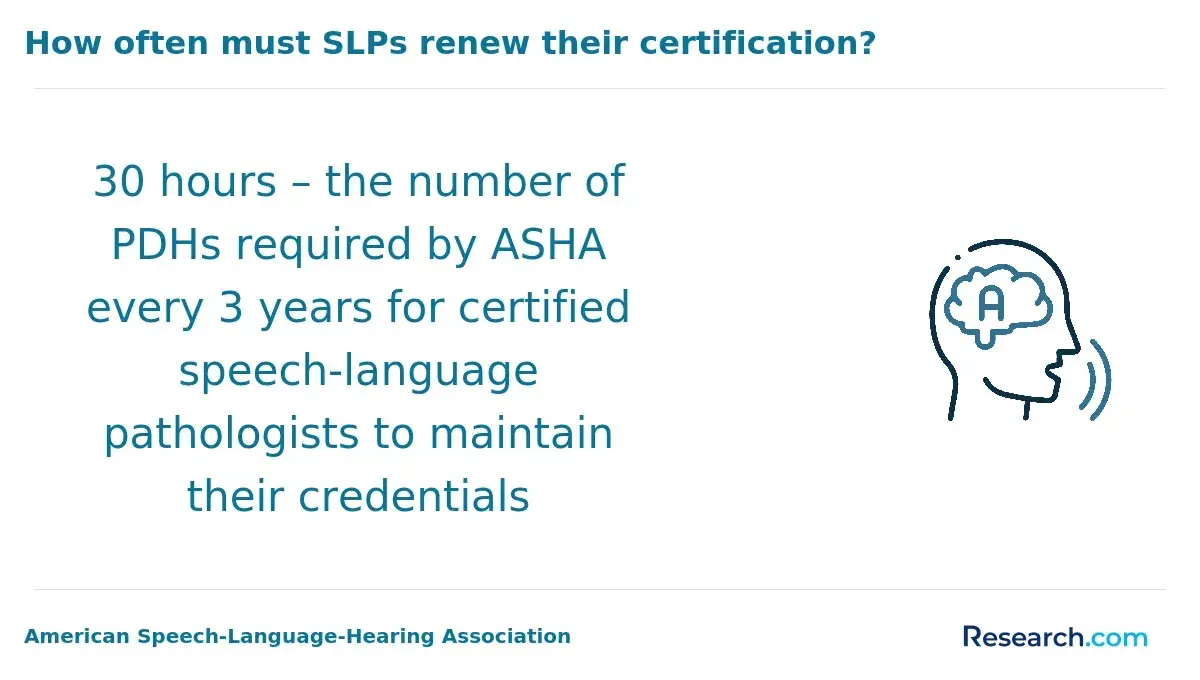
To enhance job prospects, graduates should participate in professional organizations, attend relevant conferences, and seek mentorship. Preparing for credentialing, including securing the Certificate of Clinical Competence (CCC) from ASHA and meeting state licensure requirements, is essential for employment.
- Clinical speech-language pathologist in healthcare or private practice
- School-based speech therapist collaborating with educators
- Specialty roles such as AAC or voice therapy
- Research and academic positions related to communication disorders
- Healthcare administration or policy roles in speech pathology services
What is the salary outlook and job demand for SLPs?
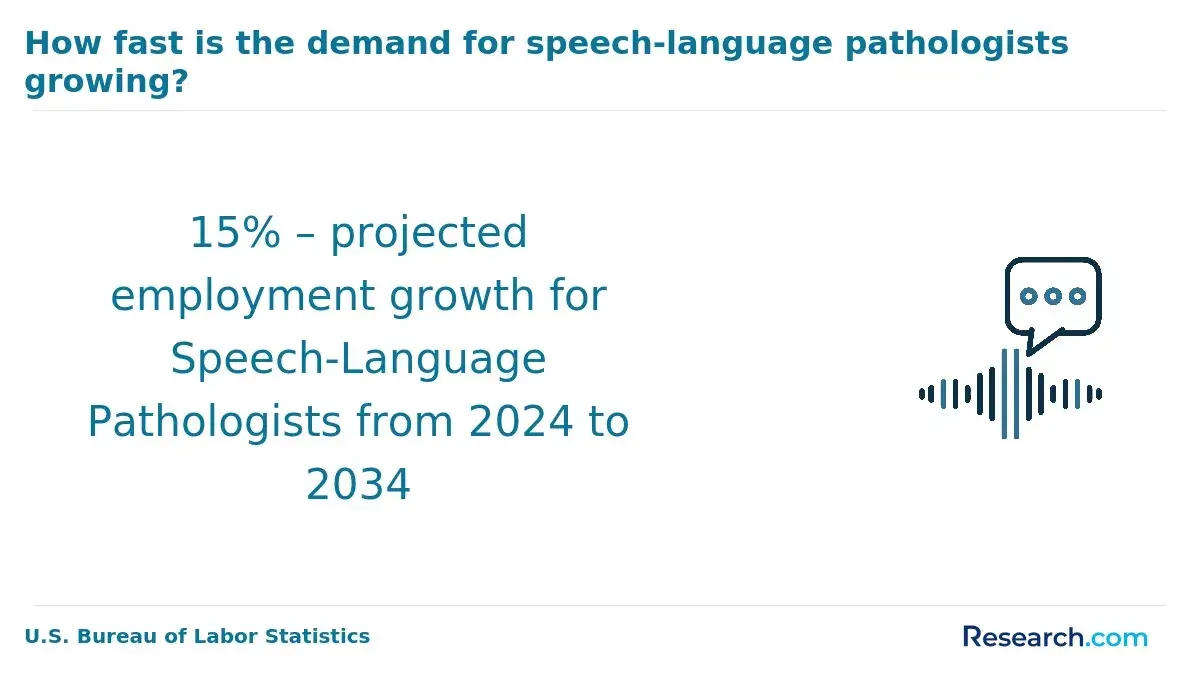
The salary outlook for speech-language pathologists (SLPs) remains robust, supported by strong demand across healthcare, education, and private sectors. According to the U.S. Bureau of Labor Statistics, median annual wages hover around $80,000, with top earners exceeding $120,000. Entry-level salaries usually range from $65,000 to $75,000 depending on location and workplace. Job growth is projected at 21% through 2031, driven by aging populations and increased awareness of communication disorders.
Academic preparation is key to employability. The University of Washington's Speech & Hearing Sciences program, for instance, boasts a 98.7% completion rate and a 100% Praxis exam passing rate over three years, signaling readiness for certification and professional work.
SLPs find opportunities in schools, hospitals, rehabilitation centers, and clinics. Urban areas often offer higher pay, while rural roles might include loan forgiveness or bonuses. Licensure and specialization-such as pediatric or neurogenic speech disorders-can improve job prospects and salary potential.
Challenges include variable state funding for educational roles and insurance reimbursement fluctuations in clinical settings. Early career professionals should focus on certifications, accumulating clinical hours, and networking. Salary growth correlates with experience, additional qualifications, and geographic mobility.
- Median salary: around $80,000 annually
- Top 10% earners: over $120,000
- Job growth: 21% through 2031
- University of Washington Praxis exam pass rate: 100%
Other Things You Should Know About Speech Pathology
Strong communication and active listening skills are essential for speech pathology students, as these abilities directly impact clinical interactions. Critical thinking and problem-solving also play a key role when assessing and designing treatment plans. Additionally, time management and organization help balance the demands of coursework, clinical hours, and research.
Students should explore scholarships specific to speech-language pathology, investigate state-funded programs, and consider part-time work where feasible. Utilizing federal and private student loans responsibly is essential, along with budgeting for textbooks and resources. Seeking financial advisement from school counselors can also be beneficial.
Many students find managing the intensity of coursework alongside clinical placements challenging due to the demanding schedule. Emotional stress can also arise from working with clients who have complex communication disorders. Developing resilience and seeking peer or faculty support are important strategies for overcoming these obstacles.
While some students choose to work part-time, balancing employment with graduate study can be difficult because of the rigorous curriculum and clinical requirements. Time commitments for practicum, classwork, and study usually limit job opportunities. It is advisable to prioritize academic and clinical performance during graduate school to ensure success in the program.
References
- How to Get Into SLP Grad School in California: An Admissions Expert Guide - California Speech Pathology https://californiaspeechpathology.org/careers/speech-language-pathologist/get-into-slp-grad-school/
- How To Choose an SLP Program: Seven Factors To Consider https://www.usa.edu/blog/how-to-choose-a-slp-program/
- Homepage https://speechpathologymastersprograms.com/
- Advice for SLP Graduate Students https://speechymusings.com/advice-for-slp-graduate-students/
- 17+ Cheap and Affordable Speech Pathology Masters Programs https://onlinespeechpathologyprograms.org/affordable-slp-programs/
- Online SLP Master's Program - Misericordia University https://www.misericordia.edu/speech-language-pathology/online-slp-masters-program
- 12 Alternative Careers for Speech Pathologists (SLPs) https://thenonclinicalpt.com/alternative-careers-speech-pathologists-slps/
- Is Speech-Language Pathology a Good Career? Salary, Demand & Outlook https://www.mghihp.edu/news-and-more/opinions/csd-discussions/speech-language-pathology-good-career-salary-demand-outlook
- Best CAA ASHA Accredited Masters Degree Programs Online https://www.speechpathologydegrees.com/online/best-caa-asha-accredited-masters-programs
- Master of Science (MS) in Speech-Language Pathology https://www.rushu.rush.edu/college-health-sciences/academic-programs/master-science-speech-language-pathology