2027 Academic Resume Tips for Speech Pathology Graduate School Applicants

Co-Founder and Chief Data Scientist
Many applicants struggle to translate their diverse experiences into a coherent academic resume that highlights their readiness for speech pathology graduate programs. This challenge often results in resumes that fail to showcase relevant skills or academic potential, especially for those coming from non-related undergraduate backgrounds. Without clear guidance, applicants risk overlooking crucial components that admissions committees seek.
This article will discuss strategic resume-building tips tailored to speech pathology graduate school hopefuls, focusing on presenting qualifications effectively and improving the chances of acceptance into accredited, flexible programs.
Key Things You Should Know
- Tailor your academic resume to highlight relevant clinical experiences and research, as 78% of 2025 graduate admissions prioritize hands-on skills and scholarly involvement.
- Include up-to-date certifications and continuing education courses, reflecting the profession's rapid evolution and the need for current best practices in speech pathology.
- Quantify achievements where possible, such as patient caseloads or research outcomes, since data-driven resumes strengthen applicants' competitiveness significantly.
What are essential resume tips for speech pathology grad school?
Creating a standout speech pathology graduate school resume requires clarity, relevance, and measurable achievements. With less than half of master's applicants admitted, showcasing your preparedness is crucial. Highlight academic credentials such as your GPA if above 3.5, and include specific coursework like Anatomy and Physiology of Speech or Phonetics to demonstrate a solid foundation.
Emphasize clinical and volunteer experience with clear descriptions and quantification, for example, "Conducted language assessments for 15 pediatric clients under supervision." Certifications or workshops like CPR or training on augmentative communication devices further strengthen your profile.
Use strong action verbs and quantify your accomplishments, such as "Assisted in preparing therapy materials for a caseload of 20 clients," to illustrate both initiative and capacity. Avoid unrelated work experience unless it highlights transferable skills like communication or teamwork.
Structuring your resume concisely, ideally one page, makes it easier to scan. Tailoring each submission to the program's mission and keywords aligns your background with their expectations, improving your chances in this competitive field. Rigorously proofread to avoid errors, as detail orientation is key to success. For prospective students seeking affordable pathways, consider exploring online SLP master programs.
Which experiences should speech pathology applicants highlight?
Graduate school applicants in speech pathology benefit from emphasizing clinical practicum experiences for speech pathology applicants, such as volunteer work, internships, or paid assistantships in hospitals, schools, or rehabilitation centers. Hands-on roles, including working as a communication aide or shadowing licensed speech-language pathologists, demonstrate practical skills in assessing and treating speech, language, and swallowing disorders and show commitment to the field.
Relevant research and volunteer activities in speech pathology, cognitive sciences, or audiology increase the strength of applications. Participation in research projects, poster presentations, or lab work highlights critical thinking and familiarity with evidence-based practice, making candidates more competitive.
Community service experience working with diverse populations-children, older adults, or people with disabilities-underscores cultural competence and empathy. Programs increasingly value bilingual or multilingual applicants due to growing demographic needs. Applicants should tailor their experiences based on program competitiveness and regional acceptance rates. For example, programs in less populated Western states like Wyoming and Montana may accept 50-85% of applicants, while highly selective schools such as CSU Fullerton have single-digit acceptance rates.
Higher-ranked programs require a well-rounded portfolio that blends clinical hours, research achievements, and specialized skills. Others may place greater emphasis on relevant experience and academic performance. Exploring potential career outcomes, prospective students can refer to insights about speech therapy salary trends to inform their educational choices.
How to format a resume for speech pathology applications?
To create the best resume format for speech pathology graduate school applications, focus on clarity, brevity, and relevance. Use a professional layout with well-defined sections such as Contact Information, Education, Clinical Experience, Research, and Skills. List your education in reverse chronological order, including GPA if above 3.5, and highlight coursework directly related to speech pathology like anatomy or language development.
Clinical experience is vital; specify your role, setting, population served, and skills gained using concise bullet points that emphasize measurable achievements such as improved patient communication or administering standardized tests. Academic resume layout tips for speech pathology applicants also include listing relevant research projects, presentations, or publications to show academic rigor. Certifications like CPR or speech therapy aide credentials should be clearly noted.
Maintain consistent fonts and bullet styles, avoid photos or graphics, and limit your resume to one or two pages. Only include unrelated work if it highlights transferable skills like communication or leadership. Given that acceptance rates per application are around 45% nationally, applying to 8-12 programs can improve your chances. Tailoring each resume to the individual program's specialty, for instance, pediatric speech pathology, by emphasizing related experience and coursework is beneficial.
Proofreading to eliminate errors is essential as mistakes undermine professionalism. For applicants researching further, exploring the best 5 year speech pathology programs can provide insights into accelerated pathways and program specifics.
What education and GPA matter for speech pathology programs?
Admissions committees for speech pathology graduate programs emphasize a strong educational foundation with specific educational prerequisites for speech pathology master's admission. Applicants typically need a bachelor's degree from an accredited institution, with majors or substantial coursework in communication sciences, hearing and speech sciences, linguistics, psychology, or closely related fields. Essential prerequisite courses often include anatomy and physiology of the speech mechanism, phonetics, audiology, and language development to ensure foundational knowledge.
The required GPA for speech pathology graduate programs generally starts at a minimum cumulative undergraduate GPA of 3.0. Competitive programs often prefer GPAs above 3.5, as a strong GPA significantly correlates with success in certification exams like the Praxis. For instance, Minnesota State University reports that students with high GPAs see a 93% pass rate on the Praxis, linking academic excellence with professional achievement.
Applicants with marginal GPAs can enhance their profiles through additional coursework or gaining relevant clinical experience. Graduate programs may also consider positive academic trends and research involvement to balance slightly lower academic metrics while maintaining the baseline educational foundation and GPA. In addition, prospective students can explore options among various SLP master's programs to find pathways that suit their academic and professional goals.
Which clinical experiences strengthen speech pathology resumes?
Clinical experience that enhances speech pathology resumes involves engaging directly with diverse populations and applying both assessment tools and intervention strategies. Prioritizing internships or volunteer roles in schools, hospitals, rehabilitation centers, or early intervention programs demonstrates versatility with pediatric, adult, and geriatric clients facing various speech, language, and swallowing disorders.
Hands-on use of standardized assessments like the Clinical Evaluation of Language Fundamentals (CELF) or the Goldman-Fristoe Test of Articulation (GFTA) is especially valuable. Being able to interpret these results and craft effective treatment plans reflects strong clinical readiness.
Work as an observer or assistant under licensed speech-language pathologists (SLPs) offers essential insights into professional practice and client interaction, crucial for graduate program applicants. Experience serving multicultural or bilingual communities further strengthens resumes due to growing patient diversity.
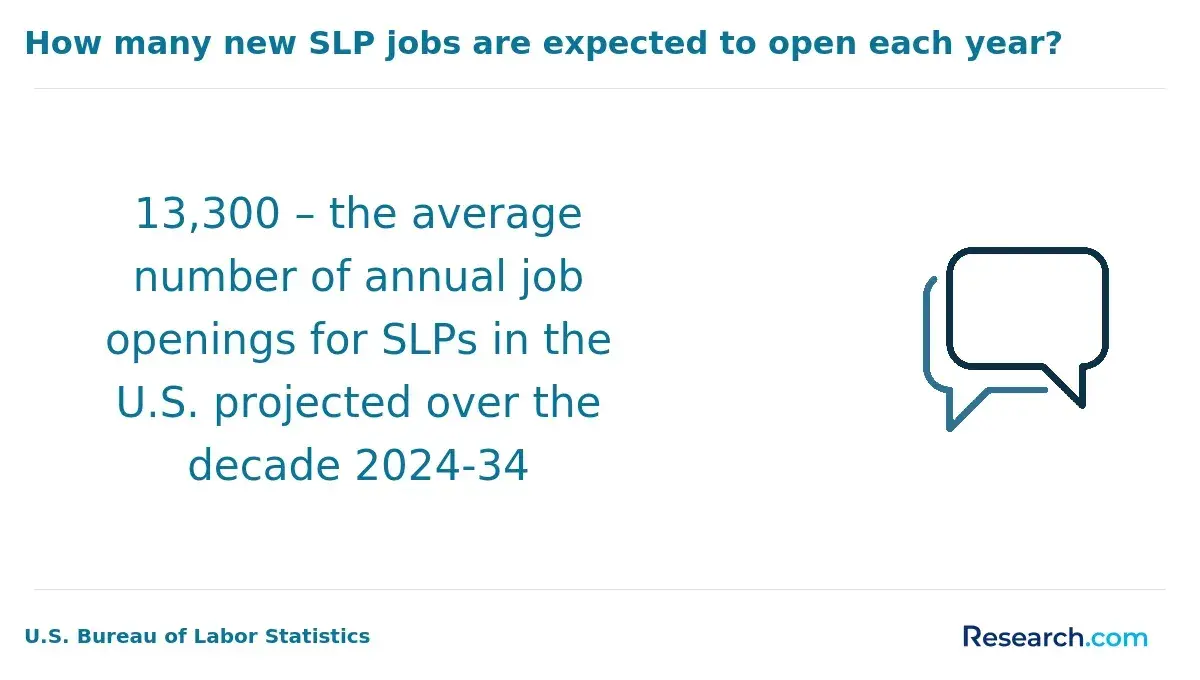
The job outlook remains strong, with employment of speech-language pathologists projected to grow 15% from 2024 to 2034 and 13,300 annual openings, according to the U.S. Bureau of Labor Statistics Occupational Outlook Handbook. Building a robust clinical background is vital for competitive graduate applications and future employment prospects in this expanding field.
How do online vs campus speech pathology programs affect resumes?
Both online and campus speech pathology programs provide accredited credentials that are valued by employers, especially when recognized by the Council on Academic Accreditation (CAA). Online formats suit candidates managing work or family commitments and showcase strong time management and motivation on resumes. In contrast, campus programs offer hands-on clinical experience with direct supervision, essential for practical skill development.
Employers focus mainly on program accreditation and the quality of clinical practicum rather than delivery mode. Some healthcare settings may favor campus-trained graduates due to perceived immersive learning. Graduates from online programs can strengthen their resumes by highlighting any in-person clinical hours and experiential learning.
The competitive median salary of $95,410 for speech-language pathologists underlines the importance of demonstrating practical competence. Candidates should emphasize specific clinical experiences, certifications, and internships to enhance their job prospects. Being transparent about skills, accreditation, and clinical experience remains more influential than program format in the speech pathology job market.
What GRE scores and tests are needed for speech pathology grad school?
Most speech pathology graduate programs require the GRE General Test, but score expectations vary by school. Competitive programs often seek combined verbal and quantitative scores above the 50th percentile, with a stronger emphasis on verbal reasoning. Some schools set minimum cutoffs, such as 150 verbal and 145 quantitative, while others review applications holistically. The GRE subject test is rarely required for speech pathology applicants.
Many successful applicants submit verbal scores between 155 and 160 to enhance their candidacy, particularly when communication skills are a focal point. A solid analytical writing score above 4.0 further demonstrates critical thinking and effective written communication. Applicants with lower GRE scores can strengthen their applications through clinical experience, strong letters of recommendation, and high undergraduate GPAs.
Programs sometimes waive the GRE requirement for candidates with advanced degrees or substantial healthcare experience, so it is important to check each program's current policies. Graduate admissions committees evaluate GRE scores as part of a comprehensive review that aligns with speech pathology's rigorous standards.
Given that 100% of Minnesota State University SLP graduates from 2023 to 2025 secured employment within eight months, maintaining competitive GRE scores alongside other qualifications is crucial for candidates aiming for high post-graduate success.
How to showcase research and volunteer work on resumes?
Separate research and volunteer work on your resume by creating distinct sections titled "Research Experience" and "Volunteer Activities." Use concise bullet points to outline each role, emphasizing your responsibilities, skills developed, and measurable outcomes. For research, include the study topic, methodology, your specific contributions, and any presentations or publications. For example, note: "Assisted in data collection and analysis on speech fluency disorders, contributing to a manuscript submitted for publication."
Quantify your impact by specifying hours committed, populations served, or project outcomes to demonstrate dedication and relevant experience. For volunteer work, highlight client demographics-such as children with communication delays-and tasks like screening, therapy assistance, or community education. Affiliations with reputable organizations or clinics, especially those connected to speech pathology hubs like Boston, MA; New York, NY; and San Diego, CA, add credibility.
Maintain reverse chronological order within each section, and highlight any teamwork or leadership roles. If space is limited, integrate volunteer work that supports research projects within the research section, but never combine distinct clinical volunteering with research to avoid confusion.
Focus on skills valued in speech pathology graduate programs, including analytical thinking, client interaction, and multidisciplinary collaboration. These strategies create a comprehensive, targeted resume reflecting competencies prioritized by admissions committees.
What common resume mistakes do speech pathology applicants make?
Applicants to speech pathology graduate programs often reduce their chances by including irrelevant positions without highlighting transferable skills tied to clinical practice. For example, part-time jobs unrelated to communication, teamwork, or problem-solving miss the opportunity to demonstrate readiness. Instead, focus on experiences featuring client interaction, research, or educational support.
Vague descriptions of clinical or volunteer work are also common mistakes. Rather than listing hours or duties, specify responsibilities, assessment tools, and types of disorders addressed. For instance, "administered language development screenings for children ages 3-5" provides concrete evidence of hands-on skills. Admissions committees look for clear, relevant exposure.
Typos and inconsistent formatting hurt professionalism. Resumes with spelling errors or poor alignment suggest a lack of attention to detail, a critical quality in this field. Rigorous proofreading and a clean, consistent layout are essential.
Overemphasizing GPA can backfire as programs value clinical aptitude and practical experience equally. High-acceptance programs in Texas private and newer schools show Praxis pass rates and employment outcomes comparable to selective institutions, highlighting the importance of well-rounded qualifications. Finally, tailoring the resume to each program's mission-such as bilingual or pediatric services-helps applicants stand out. Generic resumes often fail to demonstrate program fit.
How to tailor resumes for top speech pathology programs?
To strengthen your application for speech pathology programs, tailor your resume to highlight experiences directly related to the field. Focus on clinical exposure, research involvement, and volunteer work that align with the competencies valued by admissions committees. Examples include internships in language assessments, audiology support, or working with diverse populations, clearly defining your role and accomplishments.
Use discipline-specific keywords such as articulation therapy, communication disorders, and evidence-based practice, especially those found in program descriptions and ASHA standards. Quantify your achievements with precise details like "Conducted over 50 speech screenings with 90% accuracy" or "Assisted in pediatric fluency disorder research, contributing to data analysis for 100+ participants" to demonstrate measurable impact.
Balance academic excellence, relevant coursework, practical skills, and leadership in your resume. Include GPA if above 3.5, certifications like CPR or first aid, and memberships such as NSSHLA (National Student Speech-Language-Hearing Association). Customize your resume format based on each program's guidelines, whether they prefer a concise one-page or two-page resume, and ensure flawless spelling, grammar, and formatting to reflect professionalism.
Emerging trends from ASHA data reveal that only 7,764 of 37,594 applicants qualified for first-year entry across 260 master's programs. This competitive landscape underscores the importance of a strategic, well-crafted resume to maximize your chances in speech pathology admissions.
Other Things You Should Know About Speech Pathology
Strong communication and interpersonal skills are essential for speech pathology professionals due to the nature of patient interactions. Critical thinking and problem-solving abilities help clinicians create effective treatment plans. Additionally, patience and empathy are vital when working with individuals facing speech and language challenges.
Admission to speech pathology graduate programs is generally competitive, with many programs requiring a strong academic record and relevant clinical or volunteer experience. Applicants often need to demonstrate proficiency in foundational courses such as anatomy, linguistics, and psychology. Programs may also look for evidence of commitment to the field through hands-on experience or research participation.
Applicants should emphasize relevant coursework, research experience, and clinical exposure. Detailing skills in communication, teamwork, and problem-solving is crucial. Highlighting any volunteer work in speech and language settings can also strengthen the resume by demonstrating hands-on experience.
Yes, after graduation, most speech pathologists must obtain state licensure to practice professionally. Certification from the American Speech-Language-Hearing Association (ASHA), known as the Certificate of Clinical Competence (CCC-SLP), is widely recognized and often required by employers. Maintaining licensure and certification typically involves continuing education to stay current with best practices.
References
- Speech Pathologist Resume Sample https://www.kickresume.com/en/help-center/speech-pathologist-1-resume-sample/
- Building Your SLP Resume: Tips for Speech-Language Pathology Clinical Fellows https://epicspecialeducationstaffing.com/building-your-slp-resume-tips-for-speech-language-pathology-clinical-fellows/
- Speech-Language Pathology MS | Piedmont University https://www.piedmont.edu/program/speech-language-pathology-ms/
- Speech-Language Pathologist Resume Guide https://teach.com/online-ed/healthcare-degrees/online-masters-speech-language-pathology/speech-pathologist-professional-development/resume-guide/
- How to Include Volunteer Experience on a Resume (With Examples) - All Together https://alltogether.swe.org/2020/11/volunteer-experience-on-resume/
- The Two Most Important Variables to Consider When Choosing a Graduate Program for Speech Therapy https://speechisbeautiful.com/2018/02/two-important-variables-consider-choosing-graduate-program-speech-therapy/
- How to Get into SLP Grad School: Key Application Tips | USAHS https://www.usa.edu/blog/how-to-get-into-grad-school-for-speech-pathology/
- How to Showcase Volunteer Work to Boost Your Résumé https://www.collegexpress.com/articles-and-advice/career-search/blog/how-showcase-volunteer-work-boost-your-resume/
- Speech Pathology Statement of Purpose + Examples! https://speechymusings.com/graduate-admissions-essay/
- 20+ No GRE Masters in Speech Pathology (MSLP) Programs https://onlinespeechpathologyprograms.org/no-gre-required-mslp/