2027 Online Speech Pathology Programs With Built-In Praxis Preparation

Co-Founder and Chief Data Scientist
Many prospective students with backgrounds unrelated to communication sciences face challenges when seeking speech pathology programs that prepare them effectively for the Praxis exam. Without integrated study tools, candidates often undergo multiple attempts, delaying certification and professional entry. Online programs can offer flexibility, but not all include focused Praxis preparation, which is essential for licensure readiness. This situation complicates career transitions, especially for working adults requiring both convenience and comprehensive content. This article explores accredited online speech pathology programs that incorporate built-in Praxis exam support, aiming to guide readers toward efficient, well-structured educational pathways that streamline certification and career advancement.
Key Things You Should Know
- Online speech pathology programs in 2026 increasingly integrate built-in Praxis preparation, improving first-time pass rates, which average around 85% nationally for these programs.
- Programs accredited by the Council on Academic Accreditation offer targeted Praxis modules aligned with ASHA certification requirements, ensuring streamlined licensure readiness.
- Flexible online formats accommodate working professionals, combining asynchronous learning with live review sessions focused on Praxis content areas.
What is a speech pathology degree and what do speech-language pathologists do?
A speech pathology degree prepares students to become skilled speech-language pathologists (SLPs) who assess, diagnose, and treat communication and swallowing disorders. These programs typically culminate in a master's degree, emphasizing clinical skills and comprehensive knowledge in phonetics, language development, neuroanatomy, and audiology. Students gain experience working with diverse populations, including children with speech delays, adults recovering from strokes, and individuals with voice disorders.
Speech-language pathologist job description and responsibilities include:
- Evaluating speech, language, cognitive-communication, and swallowing abilities.
- Designing and implementing individualized therapy plans.
- Collaborating with educators, families, and healthcare providers.
- Utilizing assistive technology to enhance communication.
SLPs work across many settings such as schools, hospitals, rehabilitation centers, and private practice. For instance, school-based SLPs often address language development delays, while medical SLPs support patients with traumatic brain injuries or neurological conditions.
Master's programs frequently integrate preparation for the Praxis exam, a national certification test essential for state licensure. This integration streamlines the path to professional certification and practice.
The growth in online speech pathology degree programs reflects their convenience for working professionals. Enrollment increased by 28% over a recent period, according to the ASHA 2025 Academic Survey, highlighting the demand for flexible but rigorous training. Prospective students can explore options through SLP grad school online to find programs tailored to their needs.
What are the accreditation and licensing requirements for speech pathologists in the United States?
Speech pathologists in the United States must meet stringent accreditation and licensing criteria to practice. Central to this are accredited graduate programs, typically those accredited by the Council on Academic Accreditation in Audiology and Speech-Language Pathology (CAA) under ASHA. Completing a CAA-accredited master's or doctoral program is crucial for eligibility for certification and licensure.
Licensing criteria for speech pathologists across the US usually involve proof of graduation from an accredited program, a supervised clinical fellowship of about 36 weeks, and passing the Praxis Examination in speech-language pathology. This standardized test evaluates essential foundational knowledge for clinical practice.
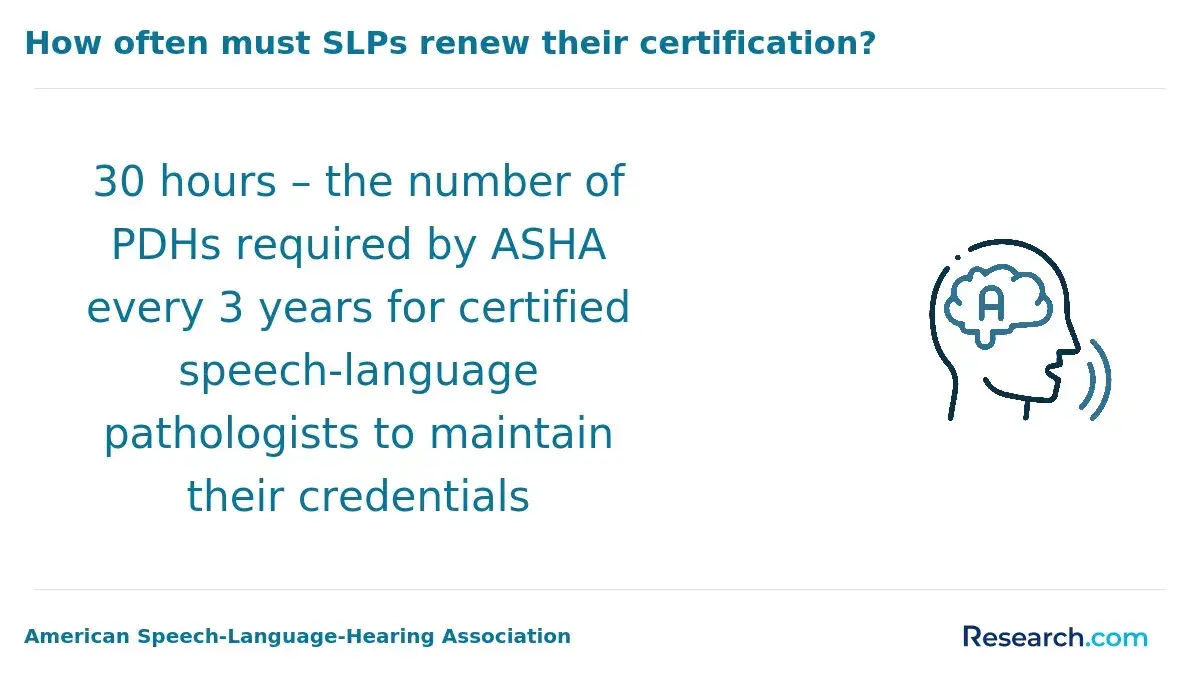
Licensure is required for practicing clinically, especially in public schools, healthcare, and private settings. While ASHA's Certificate of Clinical Competence (CCC-SLP) is voluntary, it is widely recognized and often a prerequisite for employment. Maintaining CCC-SLP status also requires ongoing continuing education.
Requirements vary by state, with some states like California requiring additional jurisprudence exams, and New York mandating supervised experience in diverse clinical settings. Prospective pathologists should research their state board's specifics to meet these standards.
The U.S. Bureau of Labor Statistics projects 19% job growth for speech-language pathologists from 2024 to 2034, highlighting strong career prospects. Those interested in how much does a speech therapist make can visit other resources for detailed salary data.
How do online speech pathology programs compare to campus-based programs for clinical training?
Online speech pathology clinical training differences from campus-based programs mainly lie in delivery and placement structure. Accredited online programs typically arrange local partnerships with clinics, schools, or healthcare facilities where students fulfill supervised clinical hours required for certification. This hybrid model provides flexibility while ensuring hands-on experience under licensed supervisors.
Campus-based versus online speech pathology practicum often differs in immediacy of access. Campus students benefit from in-person mentoring and integrated clinical resources, whereas online students use virtual simulations, telepractice training, and remote supervision to build competency. Prospective students should ask about local supervisor credentials, telehealth practice opportunities, feedback methods, and available learning resources during clinical training.
One advantage of many online programs is integrated Praxis exam preparation. Structured coursework has led to a 92% first-time pass rate, compared to 78% for self-studiers, per the ETS Praxis Annual Report. This shows comprehensive training improves both clinical skills and exam readiness.
Choosing the right online program with strong practicum networks and purposeful exam support is critical. For those exploring accelerated speech pathology programs online, verifying clinical placement quality and exam integration can enhance career readiness.
What is included in Praxis preparation within accredited speech pathology programs?
Praxis exam preparation components in online speech pathology programs commonly include comprehensive content review, targeted test-taking strategies, and simulated exams tailored to the Praxis Speech-Language Pathology test. These programs emphasize mastery of essential topics such as language development, speech sound disorders, swallowing disorders, and neurogenic communication disorders. Practice tests modeled on the official exam format help reduce anxiety and increase familiarity with the test structure.
Integrated praxis study materials for accredited speech pathology courses often feature adaptive learning tools that identify individual weaknesses. Many programs offer specialized review sessions, digital flashcards, video lectures, and in-depth case studies that connect theoretical knowledge with clinical practice. This approach enhances both exam readiness and professional skills.
Critical thinking and clinical decision-making are also key focuses, with live or recorded workshops led by experienced speech pathologists addressing exam pitfalls and time management techniques. Success in such rigorous preparation correlates with competitive career outcomes; for instance, Pepperdine University SLP graduates reported an average starting salary 15% above the national median, reflecting their program's thorough training.
Prospective students may explore online speech language pathology programs that incorporate these effective preparation strategies, aligning academic study with the demands of the Praxis exam and clinical practice.
What are the typical admission requirements for graduate speech pathology programs?
Admission to graduate speech pathology programs typically requires a bachelor's degree from an accredited institution in fields such as communication sciences, psychology, or linguistics. Applicants usually must complete prerequisite courses including phonetics, speech and hearing anatomy, language development, and statistics. Many programs expect GRE scores, with competitive candidates scoring at least in the 50th percentile on both verbal and quantitative sections.
Relevant clinical or volunteer experience with individuals who have communication disorders strengthens applications. Letters of recommendation from faculty or clinical supervisors highlighting academic and clinical potential are crucial. A well-written personal statement explaining motivation and career goals offers insight into an applicant's dedication and understanding of the field.
Requirements vary: some programs demand interviews or a minimum 3.0 GPA, while others consider research experience or leadership. International applicants often need to demonstrate English proficiency through TOEFL or IELTS scores. Completing post-baccalaureate leveling or prespeech programs, like Northwestern's Prespeech Pathway, significantly boosts acceptance chances. Data from the CAPCSD Admissions Data Brief 2025 show an 85% acceptance rate for program completers, compared to 62% for those without leveling courses.
How long does it take to complete an online speech pathology degree?
The duration to complete an online speech pathology degree varies based on program type, student status, and prior education. Full-time Master of Science programs usually take two to three years, while part-time students may require three to five years depending on course load. Accelerated tracks can allow completion within 18 to 24 months through intensive study and year-round enrollment.
Undergraduate degrees in communication sciences and disorders, often prerequisites for graduate programs, typically demand four years of full-time study. Many online programs include Praxis exam preparation to support certification readiness.
Clinical practicum hours are mandatory for certification eligibility and can significantly affect program length, especially for part-time students or those with non-sequential scheduling.
Students balancing work or family often choose part-time options but should confirm how coursework and practicum scheduling impact program length, as exceeding five years may affect federal aid eligibility and state licensure timelines.
Emerson College's online SLP program reports a 245% return on investment over five years, highlighting the value of timely completion combined with strong training, according to the Georgetown University Center on Education and the Workforce 2025 Allied Health Report.
Prospective students should compare program lengths, clinical hour requirements, and Praxis support to find the best fit for their career goals and timelines.
What is the average cost of online speech pathology programs and financial aid options?
The cost of online speech pathology programs can vary widely, but a useful reference is Baylor University's online MS program, which had an average tuition of about $45,000. This is approximately 22% lower than the national average for accredited programs, as reported by the ASHA EdFind Cost Analysis 2025. In contrast, many other programs have total tuition fees exceeding $57,000, making Baylor a comparatively affordable option.
Financial support for online speech pathology students typically includes federal loans, grants, and scholarships focused on communication disorders or graduate education. Institutional scholarships based on merit or financial need are also common, so it's important to ask schools directly about available aid. Working professionals may benefit from employer tuition reimbursement to offset costs.
- Federal Direct Unsubsidized Loans and Grad PLUS Loans are frequently accessible as primary financing methods.
- Scholarships from the ASHA Foundation and other related organizations target students in the field.
- State-specific grants may be available depending on where you live and study.
- Some programs offer payment plans that allow spreading costs without interest.
Prospective students should factor in additional expenses such as fees, materials, and Praxis exam preparation resources. Choosing programs with integrated Praxis prep can reduce extra costs. Applying early to multiple financial aid sources often increases available funding and lowers debt burdens.
What career paths and job roles are available for speech-language pathologists?
Speech-language pathologists (SLPs) work in varied settings such as hospitals, schools, and rehabilitation centers. Their clinical duties include assessing and treating communication and swallowing disorders caused by stroke, brain injury, or developmental delays. In educational environments, SLPs collaborate with educators to support children facing speech sound and language challenges, as well as social communication needs.
Specializations in speech pathology extend to pediatric feeding therapy, neurogenic communication disorders, and voice therapy. Career opportunities also include research roles that enhance evidence-based treatments and communication technologies. Many SLPs enter private practice or corporate consulting, while others provide telepractice services. Experienced professionals may advance to administrative or supervisory roles managing clinical or educational programs.
Certifications such as the American Speech-Language-Hearing Association (ASHA) Certificate of Clinical Competence (CCC) are crucial for career progression and billing. Hybrid speech pathology programs with integrated Praxis preparation can shorten time to certification, with the Council of Academic Programs in Communication Sciences and Disorders Annual Report 2025 noting a four-month acceleration for 2025 cohorts.
Typical job functions include diagnostic evaluations, designing individualized therapy plans, monitoring progress, and educating families. SLPs serve diverse populations, from infants to older adults with degenerative conditions. For advancement, maintaining licensure, earning specialty certifications, and continuing education are essential.
What is the job outlook and salary potential for speech-language pathologists?
The demand for speech-language pathologists (SLPs) is set to grow significantly, with the Bureau of Labor Statistics projecting a 21% increase in job opportunities over the next decade. This growth is largely fueled by an aging population requiring specialized treatment for speech, language, and swallowing disorders across schools, healthcare settings, and outpatient therapy centers.
Median annual wages reached $89,290 in May 2025, illustrating the strong earning potential in this field. Top earners, particularly those in high-demand urban areas, can make over $128,000 annually. Salary differences are influenced by workplace environments; for instance, hospitals and rehabilitation centers often offer higher pay compared to public schools.
Gaining certifications in subspecialties such as pediatric feeding or neurogenic communication disorders can enhance both job prospects and compensation. Candidates benefit from online speech pathology programs that provide integrated Praxis preparation, helping them meet licensing requirements efficiently. Selecting programs that align with state licensure and offering practical clinical experience is crucial for graduating into well-compensated roles.
- Employment growth driven by increased treatment needs across settings
- Competitive salaries with variation based on location and work environment
- Certification and specialization boost career advancement
- Online programs can facilitate certification preparation and practical experience
How should prospective students evaluate and choose a reputable online speech pathology program?
Prospective students must verify that online speech pathology programs hold accreditation from the Council on Academic Accreditation in Audiology and Speech-Language Pathology (CAA), ensuring they meet professional standards and qualify graduates for certification and licensure. It is also crucial to confirm if the program incorporates Praxis exam preparation, as passing the national Speech-Language Pathology Praxis is necessary for clinical certification.
Choose program formats and delivery that fit your lifestyle, since by 2026, 45% of new speech-language pathologist enrollments are expected to be fully online or hybrid, up from 32% in 2024 (ASHA Futures Project Forecast 2025). Evaluate the expertise of faculty and availability of clinical practicum opportunities near you, because practical experience is vital for skill mastery and meeting licensure prerequisites.
Key indicators of program quality include graduation rates, Praxis pass rates, and job placement statistics. Support services such as technical help and academic advising for online learners also contribute significantly to student success.
Consider the overall cost alongside financial aid options including scholarships, grants, and employer tuition reimbursement to make an informed fiscal decision.
Connecting with current students or alumni via program forums or social media provides authentic insights beyond official materials, revealing benefits and challenges firsthand.
Other Things You Should Know About Speech Pathology
Many speech pathology graduate programs offer a significant portion of their coursework online, allowing for flexible study schedules. However, due to clinical practicum requirements, students must complete in-person supervised clinical training, which cannot be done entirely online. Programs typically help arrange local clinical placements to fulfill these essential hands-on experiences.
Yes, online speech pathology programs require students to complete clinical practica in approved settings under certified supervisors. Students usually coordinate with their program and local healthcare or educational institutions to find appropriate practicum sites. Program support is important to ensure clinical hours meet the standards set by accreditation bodies and state licensure requirements.
Online programs often integrate Praxis preparation into their curriculum through dedicated test review courses, practice exams, and study materials. Some programs include webinars, tutoring, or interactive workshops specifically designed to cover the competencies tested on the Praxis. This built-in support helps students approach the exam with a comprehensive understanding and confidence.
Online speech pathology programs in 2027 often offer asynchronous coursework and flexible schedules, allowing working professionals to study at their own pace. Additionally, many programs build in support for balancing work, study, and clinical practica to minimize disruption to existing careers.
References
- Medical Speech-Language Pathologist - Explore Healthcare Careers - Mayo Clinic College of Medicine & Science https://college.mayo.edu/academics/explore-health-care-careers/careers-a-z/medical-speech-language-pathologist/
- SLP Praxis Practice Test & Speech Pathology Exam Prep https://truelearn.com/speech-language-pathology-exam-prep/
- Online Master of Science in Speech-Language Pathology - General Pathway https://slponline.ithaca.edu/programs/masters-speech-language-pathology-online
- PRAXIS Speech Language Pathology - Test Taking Strategies: PRAXIS 5331 - Free Online Tutoring - New 2020 Edition - The latest strategies to pass your exam. : Test Preparation Group, Jcm-Praxis: Amazon.pl: Książki https://www.amazon.pl/PRAXIS-Speech-Language-Pathology-Strategies/dp/1647681618
- Best Online Speech-Language Pathology (SLP) Programs 2025 https://onlinespeechpathologyprograms.org/best-online-slp-programs/
- How to Become a Speech-Language Pathologist: A Step-by-Step Guide https://eres.com/blog/how-to-become-a-speech-language-pathologist-in-the-usa
- Alternative Careers for SLPs: 13 Non-Clinical Paths Clinicians Love - SLP Transitions https://slptransitions.com/alternative-careers-speech-pathologists-slps/
- Praxis Speech-Lang. Path. Practice Tests & Exam Prep [2026] https://www.examedge.com/teaching/praxis/speech/praxis-speech-language-pathology-5331-practice-tests.cfm
- Free Praxis Speech-Language Pathology Practice Test https://www.mometrix.com/academy/praxis-ii/speech-pathology/
- Is Speech-Language Pathology a Good Career? Salary, Demand & Outlook https://www.mghihp.edu/news-and-more/opinions/csd-discussions/speech-language-pathology-good-career-salary-demand-outlook