
College Dropout Rates: 2027 Statistics by Race, Gender & Income

Co-Founder and Chief Data Scientist
Leaving college is not just an academic decision. For many students, it affects debt repayment, access to higher-paying jobs, career mobility, confidence, and the likelihood of returning to school later. At the same time, dropout statistics are often misunderstood because “dropout,” “stopout,” “retention,” “persistence,” and “some college, no credential” describe different student outcomes.
This guide explains what current college dropout statistics show, why students leave, which groups face the highest risk, and what students can do before pausing or ending enrollment. It is designed for students considering withdrawal, families trying to understand the risks, advisors supporting at-risk learners, and adults thinking about returning to finish a degree.
The broader pattern remains clear: higher education is strongly connected to employment stability and long-term earnings, although a degree does not guarantee career success. Research.com’s overview of the relationship between college education and job security provides additional context for why completion still matters in a competitive labor market.
Quick Answer: What Do College Dropout Statistics Show?
College dropout remains a major challenge in the United States. According to the Education Data Initiative, 23.3% of undergraduate students leave colleges and universities every year. Other sources report different rates depending on the population measured, the type of institution, and whether the data tracks first-time students, bachelor’s degree seekers, or all undergraduates.
The most common reasons students leave include financial pressure, weak academic support, unclear career direction, mental health challenges, family responsibilities, and difficulty balancing school with work. Dropping out can sometimes be the right short-term decision, but students should understand the trade-offs before leaving, especially if they have student loans and no completed credential.
- College Dropout Effects
- College Dropout General Statistics
- Addressing the Affordability Barrier to College Retention
- College Dropout Rates by Demographics
- How Do Academic Support Services Impact Student Success?
- College Retention and Graduation Rates by State
- Why do students drop out of college?
- What are the current trends in reducing college dropout rates?
- Can alternative education pathways support career success after dropping out of college?
- Can Accelerated Degree Programs Bridge the Gap for Non-Traditional Students?
- Can Accelerated Associates Degrees Shorten the Path to Workforce Entry?
- Can online education offer an affordable and flexible pathway to career success?
- Can a one year online master’s program pave the way to career transformation?
College Dropout Effects
Some famous founders left college and built extraordinary careers, but those stories are exceptions, not the usual outcome. Becoming a successful college dropout usually requires a rare mix of marketable skills, timing, networks, access to capital, resilience, and luck.
For most students, leaving college without a credential creates practical risks. It can limit access to jobs that require a degree, reduce earning potential, weaken professional networks, and make it harder to recover financially from education-related debt.
On average, students who drop out are expected to earn 35% less than college graduates. That gap is partly tied to the types of roles available to degree holders. For example, students exploring what they can do with a psychology degree may qualify for pathways in healthcare, education, social services, human resources, and related fields that often require postsecondary credentials.
The poverty data also shows why educational attainment matters. A 2025 report from the United States Census Bureau finds that people without a high school diploma have a 25.5% chance of living in poverty, those with only a high school diploma have a 12.8% chance, and those with at least a bachelor's degree have a 3.9% chance.
Financial literacy may also differ by completion status. Xiao, et al. (2020), writing in The Journal of Consumer Affairs, identified “differences in specific financial knowledge items among college students, graduates, and dropouts” and concluded that “college graduates are more likely to perform several specific desirable financial behaviors than college students and dropouts.” The authors also noted that “Financial educators should emphasize action they’re taking when they provide financial education for student loan holders who are college students and dropouts.”
| Potential effect of dropping out | Why it matters | What students should do before leaving |
| Lower lifetime earnings | Dropouts are expected to earn 35% less than college graduates on average. | Compare the expected earnings of your current path, an associate degree, a certificate, and full degree completion. |
| Student loan burden without a credential | Debt can remain even if the student does not complete a degree. | Talk to the financial aid office before withdrawing and confirm repayment timelines. |
| Fewer degree-required job options | Many professional roles use a degree as an initial screening requirement. | Ask career services which jobs are realistically available with your current credits and experience. |
| Harder return to college | Credits may expire, transfer poorly, or no longer apply to a new program. | Request an official degree audit and ask how long your credits remain usable. |
In short, stopping out may be necessary in some situations, but leaving without a plan can turn a temporary academic pause into a long-term financial setback.
Academic Challenges for Freshmen College Students

College Dropout General Statistics
College Dropout Rates in the United States
College dropout rates vary by source because organizations use different definitions and student populations. While high school dropout rates are decreasing, the United States still faces a substantial college completion problem.
ThinkImpact reported in 2026 that the United States experiences a 22.3% college dropout rate every year and that only 41% of students graduate after four years without delay. Education Data Initiative figures also show that 39% of first-time students seeking bachelor's degrees fail to earn the degree in eight years or less. Another way to view the issue: one in four students is at risk of leaving school without completing their degree.
The National Center for Education Statistics (NCES) reported in 2026 that the Organisation for Economic Co-operation and Development (OECD) ranked the U.S. 15th out of 38 countries in graduation rates.
Graduation Rates
College graduation rates show that 49.1% of college graduates earn bachelor's degrees and 24.5% earn associate degrees. Among bachelor’s degree earners, 22.3% took longer than four years to finish.
These numbers show why completion should not be measured only by the traditional four-year timeline. Many students need more time because they work, transfer, attend part time, change majors, or pause enrollment.
- College freshmen make up 23.3% of the total dropout rate.
- Americans with some college experience but no completed credential, often described as “Some College, No Credential” or SCNC, make up around 12.6% of the US population.
- At four-year schools, the dropout rate for first-time first-year students is 19.0%.
- Among four-year institutions, private for-profit schools have the highest dropout rate at 38%.
- Around 2-3% of SCNCs enroll again in college to complete a degree.
The chart below summarizes the highest educational attainment of young adults in the United States.
Economic Impact
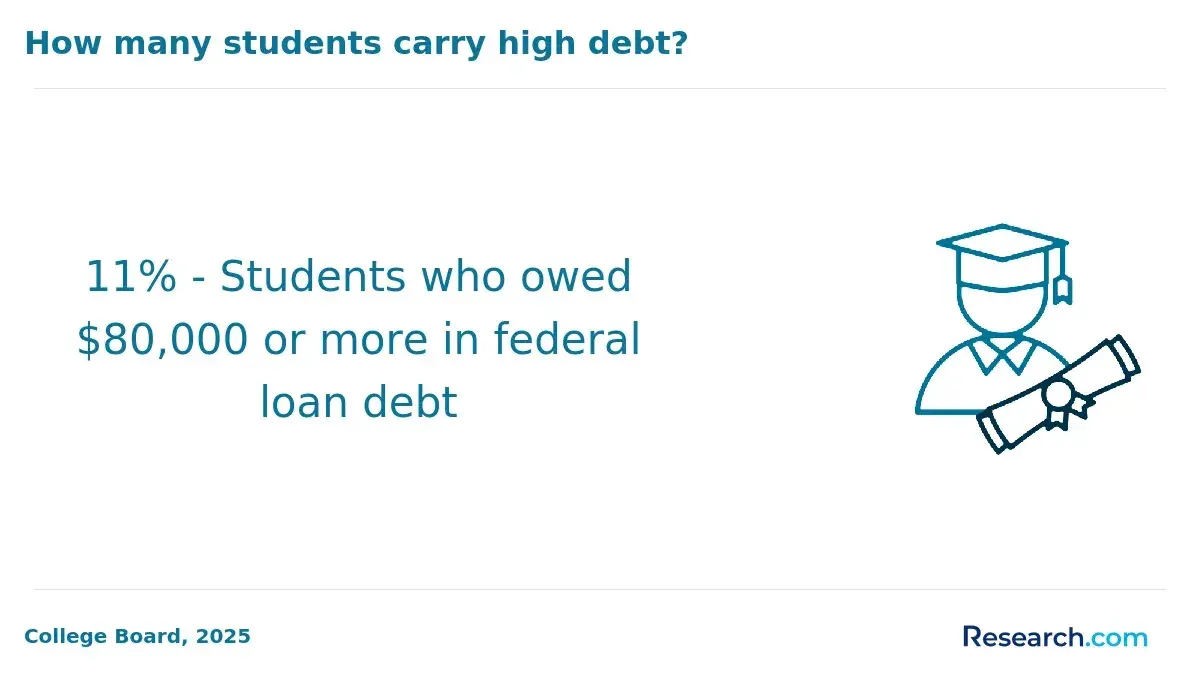
Financial strain is one of the clearest drivers of noncompletion. Students with larger student loan balances may feel pressure to leave school to reduce immediate costs, but leaving without a credential can also make repayment more difficult.
With student loan debt reaching $1.81 trillion in 2025, college dropout rates can affect not only individual borrowers but also broader economic mobility. Third Way’s analysis of the economic consequences of the college dropout rate discusses how noncompletion can create costs for students, institutions, and the public.
- Sallie Mae reported in 2025 that 49% of students consider dropping out because of financial challenges.
- Only 30% of students at risk of leaving are prepared for college costs, and only 35% are confident that their families can cover those costs.
- A 2025 College Board report on college pricing found that the average budget for a four-year private nonprofit institution is $64,360, while four-year public institutions often charge in-state students around $30,550 as of academic year (AY) 2025-2026.
- The average federal student loan balance is about $38,375, while the full balance, including private loans, can reach around $41,618.
College Dropout Rates by Country
International comparisons show that the U.S. does not lead in young adult postsecondary completion. NCES statistics show that 70% of individuals aged 25-34 in the Republic of Korea completed a postsecondary degree, placing it at the top of this measure.
The U.S. reported 51% and ranked 14th, tied with Spain, Switzerland, and Belgium.
Addressing the Affordability Barrier to College Retention
Affordability is not limited to tuition. Students also pay for housing, food, technology, books, transportation, childcare, health expenses, and lost work hours. A student may be academically capable and still leave because the total cost of attendance is unsustainable.
Lower-cost and flexible study options can reduce some of that pressure. Students who need to keep working may want to compare campus-based programs with an affordable online bachelor’s degree, especially if commuting or relocation costs are a major barrier.
However, “affordable” should be evaluated carefully. A low tuition rate does not automatically mean a program is the best value. Students should review accreditation, transfer credit policies, graduation rates, student support, required fees, technology costs, and whether the program leads to the career or licensure outcome they want.
| Cost factor | Why students often overlook it | Question to ask before enrolling |
| Fees beyond tuition | Technology, lab, clinical, course, and graduation fees can raise the real cost. | What is the total cost of attendance, not just tuition per credit? |
| Lost work income | Full-time enrollment may reduce hours available for paid work. | Can I attend part time, online, evenings, or in a hybrid format? |
| Transfer credit loss | Repeated courses increase both time and cost. | How many of my completed credits apply directly to my degree plan? |
| Financial aid gaps | Grants and loans may not cover living expenses. | What happens if my aid package changes next year? |
College Dropout Rates by Demographics
Dropout statistics are not evenly distributed. Race, income, gender, disability status, foster care background, family support, and institution type all shape a student’s likelihood of completing college. These differences should not be interpreted as ability gaps. They often reflect unequal access to advising, financial resources, academic preparation, emergency aid, healthcare, housing stability, and inclusive campus support.
College Dropout Rates by Race
Available reports indicate that Asian students are least likely to drop out of college, while Black students are more likely to do so. The figures below provide a closer look at completion and noncompletion patterns by race and ethnicity.
Asian Students
- The five-year graduation rate for Asian students pursuing bachelor's degrees is 74.8%.
- Asian students account for 2.6% of all dropouts.
- A 2026 American Council on Education status report on race and ethnicity in higher education found that Asian adults have higher educational attainment than any other racial or ethnic group. The data shows that 33.5% of Asian adults aged 25 and older have a bachelor’s degree, 20.1% completed a master’s degree, and 8.2% earned a professional or doctoral degree.
- 7.7% of Asian adults aged 25 and older have some college but no degree.
White/Caucasian Students
- The five-year graduation rate for Caucasian students pursuing bachelor's degrees is 65.6%.
- White students account for 32.9% of all dropouts.
- 53.6% of college graduates are White or Caucasian.
- 14.9% of White adults aged 25 and older have some college but no degree.
Hispanic/Latino Students
- The five-year graduation rate for Hispanic students pursuing bachelor's degrees is 55.4%.
- In a 2025 Gallup and Lumina Foundation report on higher education, 46% of Hispanic students enrolled in a degree or certificate program said they had considered pausing their studies.
- 59% of Hispanic adults say financial aid and scholarships are highly important to getting them to enroll in postsecondary programs.
- 13% of Hispanic/Latino adults aged 25 and older have some college but no degree.
American Indian/Alaska Native Students
- The five-year graduation rate for Native American students pursuing bachelor's degrees is 43.4%.
- Native American students account for 1% of all dropouts.
- 0.5% of college graduates are American Indian/Alaska Native.
- 18.4% of American Indian/Alaska Native adults aged 25 and older have some college but no degree.
Black/African American Students
- The five-year graduation rate for African American students pursuing bachelor's degrees is 42.6%.
- African American students account for 14.1% of all dropouts.
- According to the 2025 Gallup higher education survey, 35% of Black respondents said they had considered leaving their program in the last six months.
- 18.1% of Black/African American adults aged 25 and older have some college but no degree.
Students of More Than One Race
- The five-year graduation rate for students of more than one race pursuing bachelor's degrees is 57.4%.
- Individuals of two or more races make up 3.7% of college graduates.
- 18% of adults of more than one race aged 25 and older have some college but no degree.
College Dropout Rates by Gender
Gender patterns show that women are more likely than men to complete college. National Student Clearinghouse Research Center data shows that students with some college but no credential are 46.5% men and 44.5% women, with 9% missing.
Education Data Initiative found that 67.6% of females graduate in six years, compared with 61.1% of males. Its findings also state:
- In public universities, 66.2% of women graduate compared with 60.2% of men.
- In private nonprofit schools, 71.9% of women graduate, while 64.6% of men complete their postsecondary program.
- In private for-profit institutions, 34.5% more men graduate than 32.8% more women.
Harvard University history and economics professor Claudia Goldin has argued that labor market conditions can influence male dropout patterns, noting: “Historically, men have been more likely to drop out of school to work in hot economies, whether it’s in the factories of World War II or the fracking mines of the Dakotas.”
Men
- The United States Bureau of Labor Statistics (BLS) reports that the college enrollment rate of male students who recently finished high school, as of October 2025, is 59.4%.
- Of the college dropouts who re-enroll, 40.4% are men.
Women
- The college enrollment rate of female students who recently finished high school, as of October 2025, is 66.2%.
- Of the college dropouts who re-enroll, 56.6% are women.
College Completion Rates for Low-Income Students
Income strongly affects whether students can remain enrolled. Students from lower-income households may have fewer financial buffers when unexpected expenses arise.
- The 2025 Sallie Mae report on college completion in America found that 61% of students who grew up in low-income households have considered leaving school.
- By comparison, 31% of students from middle-income households and 24% of students from high-income households have considered leaving.
- 50.8% of middle-income students are likely to take out federal loans.
College Dropout Rates for Students in Foster Care
Students with foster care histories often face additional barriers, including limited family financial support, housing instability, and a difficult transition to independent adulthood.
- A 2025 report from the University of Wisconsin at Madison’s Institute for Research on Poverty found that nearly 77% of low-income, first-generation college students persist through their first year of school, compared with less than 52% of foster youth.
- Students with foster care backgrounds often have less family support when navigating adult independence and financial self-sufficiency.
- Many foster youth also experience homelessness while enrolled in college.
College Dropout Rates for Students with Disabilities
Under the federal Individuals with Disabilities Education Act, special education covers students diagnosed with one or more of 13 disabilities. In college, however, students often must disclose their disability and request accommodations themselves, which can create barriers to receiving support.
- An estimated 4.2 million students with disabilities are in college, based on a 2025 report from the National Center for Education Statistics.
- Studies suggest that college students with disabilities are more likely to drop out because of challenges with disability disclosure, limited social integration, insufficient accommodations, and lower grade point average.
- BLS reported that in 2025, approximately 23.3% of people with a disability completed a bachelor’s degree or higher, compared with about 41.6% of people with no disability.
How Do Academic Support Services Impact Student Success?
Academic support can prevent students from leaving when problems are still solvable. Tutoring, proactive advising, first-year seminars, peer mentoring, writing centers, disability services, mental health support, and career counseling all help students identify obstacles before they become reasons to withdraw.
The strongest support systems are proactive rather than reactive. Instead of waiting until a student fails several classes, colleges can use early alerts, attendance data, advising notes, and financial aid flags to connect students with help sooner.
Students who are worried about academic difficulty should not choose a program only because it appears easy. A better approach is to compare course expectations, support services, transfer policies, and career fit. Research.com’s guide to the easiest bachelor’s degree programs can help students think about workload, but the best degree is the one a student can complete and use.
| Support service | How it helps retention | Best for students who... |
| Academic advising | Helps students choose courses that count toward graduation. | Are unsure which classes to take or have changed majors. |
| Tutoring and writing support | Improves course performance before grades become unrecoverable. | Are struggling in gateway, math, writing, science, or major courses. |
| Career counseling | Connects coursework to employment goals and motivation. | Feel uncertain about why they are in college. |
| Emergency aid and financial counseling | May help students handle short-term financial crises. | Are considering leaving because of bills, transportation, food, or housing needs. |
| Mental health services | Supports students dealing with stress, anxiety, depression, burnout, or isolation. | Feel overwhelmed, disconnected, or unable to manage daily responsibilities. |
College Retention and Graduation Rates by State
Retention Rate
Retention rate refers to the percentage of first-time freshmen undergraduates who return to the same institution for the next academic year. Persistence rate is broader: it counts students who continue into a later year of college even if they transfer to another school.
In U.S. colleges, the retention rate is 68.2%, while the persistence rate is 76.5% as of Fall 2026.
A 2025 National Student Clearinghouse study reported additional progress:
- Community colleges increased retention rates by 3.8 percentage points over the past decade, reaching 57.9% for students who began in the fall of 2025.
- Public four-year institutions also improved retention since 2015, with the fall 2025 entering cohort showing a 2.1 percentage point increase in retention.
Graduation Rate
The Free Application for Federal Student Aid (FAFSA) website defines graduation rate as the percentage of first-time freshmen undergraduates who complete a degree “within 150% of the published time for the program.” Under that definition, students in a four-year program are counted as graduates if they finish within six years, while students in a two-year program are counted if they complete within three years.
Even with strong college enrollment numbers, noncompletion lowers the overall graduation rate. Research.com’s guide to the number of college graduates provides broader context on completion trends. The current graduation rate is 52% for students in four-year colleges and universities.
- 49% of all postsecondary graduates have a bachelor's degree.
- 22.3% of students with bachelor's degrees took over four years to earn the degree.
- 24.5% of postsecondary graduates earned an associate degree.
Graduation Rates by State
State-level graduation rates vary widely. According to 2025 data from World Population Review (WPR), the District of Columbia reports the highest college retention rates by state at 63.6%, while West Virginia ranks lowest at 23.3%. The chart below illustrates the highest and lowest college graduation rates by state.
Why Do Students Drop Out of College?
Students rarely leave college for just one reason. More often, several pressures build at once: tuition increases, family responsibilities, work schedules, low confidence, unclear goals, poor advising, and mental health strain. Tuition costs increasing at a five-year average annual rate of 3.08% add to the pressure for students who already lack financial flexibility.
Financial Concerns
Sallie Mae research shows that 53% of at-risk students struggle to afford tuition, while 50% have difficulty covering living costs, food, textbooks, and other expenses. Even among students expected to graduate on time, 21% cited tuition affordability concerns and 26% cited difficulty covering other expenses.
Program format can matter. For example, students pursuing social work may compare campus programs with affordable online MSW programs if flexibility and cost are major concerns. Still, students should confirm accreditation, field placement requirements, and state licensing expectations before choosing an online professional program.
Financial aid does not always solve the problem. Among at-risk learners, 42% rated the financial support they received as “fair” or “poor,” even when scholarships and school-based financial advice were available.
Planning before enrollment also matters. Only 25% of at-risk students had a plan to pay for the full duration of school before enrolling, compared with 46% of on-track students.
Motivation and Focus
Unclear goals can make persistence harder. Only 56% of students at risk of dropping out began postsecondary study with a vision for their future careers, and 30% experienced a shift in interests after enrolling.
Sallie Mae’s survey also found that 82% of at-risk students agree that having a career plan before entering college contributes greatly to success, but only 67% feel confident about their career direction while in school. In addition, only 50% of at-risk students rated their school’s resources for choosing the right degree as “excellent” or “good.”
Mental Health Challenges
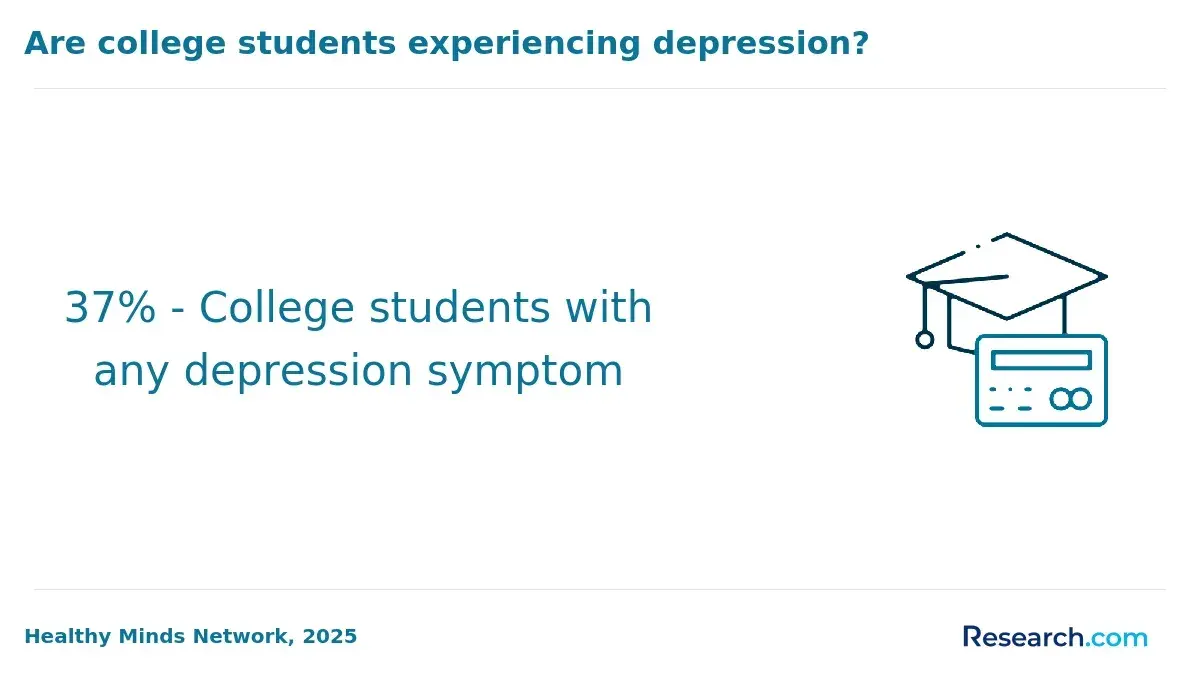
Mental health is a major completion factor. Around 18% of students said mental health challenges were a primary reason for considering leaving school. The Sallie Mae report found that only 31% of at-risk students described their mental health as “good” or “excellent,” compared with 61% of on-track students.
- 66% of at-risk students do not find it easy to make new friends.
- 67% of at-risk students do not think it is easy to stay healthy.
- 78% of at-risk students do not find it easy to prioritize mental health.
Students who feel disconnected academically, socially, financially, or emotionally may see withdrawal as the only available option. Colleges can reduce this risk by making counseling, peer connection, emergency aid, and academic support easier to access.
Students who want to support others through stress, anxiety, depression, and student success challenges may consider psychology-related pathways, such as a Texas online psychology degree, while carefully reviewing program requirements and career goals.
What Are the Current Trends in Reducing College Dropout Rates?
Colleges are increasingly focused on keeping students enrolled through earlier support, flexible formats, clearer advising, and stronger financial planning. The most effective approaches target the reasons students actually leave rather than treating dropout as a motivation problem alone.
- More flexible learning formats: Online, hybrid, evening, weekend, and part-time options can help working adults, caregivers, and commuters remain enrolled.
- Proactive advising: Advisors increasingly use early alerts to identify missed classes, failed assignments, unpaid balances, or registration problems before students disappear from the system.
- Stronger financial counseling: Colleges are placing more emphasis on helping students understand total cost, aid renewal, loan repayment, emergency grants, and realistic work-school schedules.
- Career-connected education: Programs that clearly connect coursework to jobs, internships, portfolios, licenses, or transfer goals can improve student motivation.
- Flexible transfer and stackable credentials: Certificates, associate degrees, transfer pathways, and credit for prior learning can help students make progress even if they cannot follow a traditional four-year schedule.
- Mental health and belonging initiatives: Peer mentoring, counseling, wellness programs, and first-year communities can help students build support networks.
Common Mistakes Students Make Before Dropping Out
| Mistake | Why it can hurt | Better step |
| Withdrawing without talking to financial aid | Students may trigger repayment, lose aid eligibility, or create unpaid balances. | Ask how withdrawal affects loans, grants, scholarships, satisfactory academic progress, and future aid. |
| Assuming all credits will transfer later | Credits may not apply to a new major or institution. | Request a transcript review before transferring or stopping out. |
| Leaving because of one difficult semester | A temporary academic setback may be fixable through tutoring, course repeats, or reduced course load. | Meet with an advisor and ask about academic recovery options. |
| Choosing a cheaper program without checking accreditation | Unaccredited or poorly aligned programs may not support transfer, employment, or licensure goals. | Confirm institutional accreditation and, where relevant, programmatic accreditation. |
| Ignoring mental health support | Stress, burnout, and isolation can worsen if untreated. | Contact counseling services, disability services, or a community provider before making a final decision. |
Can Alternative Education Pathways Support Career Success After Dropping Out of College?
Yes, but the right pathway depends on the student’s credits, career goals, finances, and timeline. Dropping out does not have to mean ending education permanently. Some students return to finish a degree; others complete a certificate, transfer to a community college, enter an apprenticeship, use employer-paid training, or pursue industry credentials.
Students who need a flexible and lower-cost option can explore online colleges that accept FAFSA, including certificate and degree pathways that may help them restart without relocating. The key is to choose a credential that is recognized by employers and aligned with a realistic career plan.
| Pathway | When it may make sense | Risk to check first |
| Return to the same college | You are close to finishing and your credits still apply. | Confirm readmission rules, financial aid eligibility, and academic standing. |
| Transfer to a lower-cost college | Your current school is too expensive or not a good fit. | Verify how many credits transfer into the new degree. |
| Complete an associate degree | You want a shorter credential or a transfer stepping stone. | Make sure the degree supports your employment or bachelor’s transfer goal. |
| Earn a certificate | You need job-specific skills quickly. | Check employer recognition, program outcomes, and whether credits can stack into a degree. |
| Pause and work temporarily | You need time to stabilize finances, health, or family responsibilities. | Set a return date and maintain contact with advising or admissions. |
Finishing College Can Improve Long-Term Options, But the Path Does Not Have to Be Traditional
College dropout rates are shaped by cost, academic demands, work obligations, mental health, advising quality, and personal circumstances. The goal is not to pressure every student into staying enrolled at any cost. The better goal is to help students avoid leaving without understanding their options.
A college education can support long-term mobility, and Research.com’s guide to university statistics offers additional context on higher education trends. Still, students should make completion decisions based on affordability, fit, support, program quality, and career relevance.
Can Accelerated Degree Programs Bridge the Gap for Non-Traditional Students?
Accelerated programs can help some adult learners, transfer students, and working professionals finish faster. They are best suited for students who can handle condensed coursework, stay organized, and commit consistent weekly time to study.
Students considering accelerated degree programs should compare more than speed. Important factors include accreditation, course intensity, transfer credit acceptance, faculty access, student support, total cost, and whether the program format matches work and family responsibilities.
Can Accelerated Associates Degrees Shorten the Path to Workforce Entry?
An accelerated associate degree may help students enter the workforce sooner or create a faster transfer route into a bachelor’s program. This option can be useful for students who need a recognized credential but cannot commit to a traditional four-year schedule immediately.
Before choosing an accelerated associate degree, students should ask whether the curriculum is career-focused, whether credits transfer, and whether local employers value the credential.
Can Online Education Offer an Affordable and Flexible Pathway to Career Success?
Online education can reduce commuting barriers and help working adults fit school around employment. It can also make it easier to compare programs outside a student’s immediate area. However, online learning is not automatically easier, cheaper, or better.
Students should review accreditation, course delivery format, student support, graduation requirements, total cost, and financial aid eligibility. Working adults comparing options can use Research.com’s guide to affordable online colleges for working professionals to evaluate flexible programs more carefully.
Can a One Year Online Master’s Program Pave the Way to Career Transformation?
A short online master’s program may help professionals reskill, qualify for advancement, or move into a specialized field. It is generally most useful for students who already hold a bachelor’s degree and have a clear reason for graduate study.
Before enrolling in a one year online master’s program, students should evaluate accreditation, admissions standards, workload, employer recognition, career outcomes, and whether the degree is necessary for the roles they want.
Questions to Ask Before Leaving College
- How many credits have I completed, and how many count toward my current degree?
- What would happen to my financial aid, scholarships, grants, and loans if I withdraw now?
- Can I reduce my course load instead of leaving completely?
- Would changing majors, transferring, or moving online solve the main problem?
- Is emergency aid, food assistance, housing support, tutoring, counseling, or childcare available?
- What jobs can I realistically get now, and what jobs would open up if I finished?
- If I pause, what exact semester will I return, and what must I do to stay eligible?
References
- Federal Reserve Bank of New York. (2025). Quarterly Report on Household Debt and Credit. https://www.newyorkfed.org/microeconomics/hhdc
- Gallup. (2025). The State of Higher Education 2025 Report. https://www.gallup.com/analytics/645161/state-of-higher-education.aspx
- Gallup, L. (n.d.). One in three college students consider leaving program. Gallup News. https://news.gallup.com/poll/659897/one-three-college-students-consider-leaving-program.aspx
- Hanson, M. (March 2025). Student Loan Debt Statistics. Education Data Initiative. https://educationdata.org/student-loan-debt-statistics
- Hanson, M. (January 2025). Education Attainment Statistics. Education Data Initiative. https://educationdata.org/education-attainment-statistics
- Institute for Research on Poverty. (2025). Persistence and attainment patterns among vulnerable student populations. University of Wisconsin–Madison. https://www.irp.wisc.edu/publications/factsheets/first-year-persistence-2025/
- National Center for Education Statistics. (2025). Digest of Education Statistics. U.S. Department of Education. https://nces.ed.gov/programs/digest/
- OECD. (2025). Education at a Glance 2025: OECD Indicators. OECD Publishing. https://doi.org/10.1787/eag-2025-en
- Sallie Mae. (2025). How America Pays for College 2025. https://www.salliemae.com/about/leading-research/how-america-pays-for-college/
- ThinkImpact. (2026). College dropout rates [2026] - US statistics and data. https://www.thinkimpact.com/college-dropout-rates/
- U.S. Bureau of Labor Statistics (February 2025). Persons with a Disability: Labor Force Characteristics Summary. https://www.bls.gov/news.release/disabl.nr0.htm
- U.S. Census Bureau. (2025). Educational Attainment and Poverty Status in the United States (Current Population Reports, P60-285). https://www.census.gov/library/publications/2025/demo/p60-285.html
- U.S. Bureau of Labor Statistics. (2026). College Enrollment and Work Activity of Recent High School and College Graduates. https://www.bls.gov/news.release/hsgec.nr0.htm
- World Population Review (2025). College Graduation Rates By State 2025. https://worldpopulationreview.com/state-rankings/college-graduation-rates-by-state
Key Insights
- College dropout is a financial and career issue, not only an academic one. Students who leave without a credential may still carry debt while losing access to degree-required jobs and stronger earning potential.
- Definitions matter. Dropout rate, retention rate, persistence rate, graduation rate, and “Some College, No Credential” measure different outcomes, which is why reported figures vary across sources.
- Money is the most visible barrier. Sallie Mae reported that 49% of students consider dropping out because of financial challenges, and only 30% of students at risk of leaving are prepared for college costs.
- At-risk students often need earlier intervention. Financial counseling, academic advising, tutoring, mental health support, emergency aid, and career planning can help students stay enrolled before problems become unmanageable.
- Leaving college should come with a return or replacement plan. Students should confirm financial aid consequences, credit transfer options, alternative credentials, and employment realities before withdrawing.
- Flexible pathways can reduce dropout risk. Online programs, transfer routes, accelerated degrees, associate degrees, certificates, and FAFSA-eligible alternatives can help students continue education in a format that fits their lives.
Other Things You Should Know About College Dropout Rates
The current college dropout rate in the U.S. is around 32.9%, with many students leaving their studies due to various challenges.
College dropouts tend to earn 35% less annually than graduates, are more likely to live in poverty, and often face significant financial difficulties due to a lack of higher education credentials.
Asian students have the lowest dropout rates, while Black students have the highest. Women generally have higher graduation rates than men, and low-income students are more likely to drop out compared to their higher-income counterparts.
High tuition costs, inadequate financial aid, and the need to work while studying are major financial challenges that contribute to college dropout rates.
Lack of family support is a contributing factor to student dropouts, as financial and emotional backing from family can significantly influence a student's ability to persist in their studies.
In 2027, college dropout rates show significant disparities. Minority groups, particularly African American and Hispanic students, experience higher dropout rates than their white counterparts. Gender differences are notable, with men dropping out more frequently than women. Additionally, students from lower-income backgrounds face higher dropout rates than those from more affluent families.


