
How Many Colleges Should You Apply To for 2027

Co-Founder and Chief Data Scientist
In 2024, approximately 1.42 million first-year students applied to colleges using the Common Application. This number increased by about 5% in 2025, reaching close to 1.5 million distinct first-year applicants. The growth reflects an ongoing upward trend in college applicants despite demographic shifts and changing admission policies.
This article will provide a comprehensive guide on building a well-rounded college list. We'll explore the strategic importance of creating a mix of "reach," "target," and "safety" schools, and discuss key factors to consider, such as application costs, time commitment, and personal fit. By the end, you will have the tools to create a personalized application strategy that sets you up for success.
Key things to know about applying to colleges
- Applying to more schools can improve admission odds statistically, but it also requires more time, effort, and money; this is sometimes called the "X-Factor" in admissions strategy.
- A well-balanced list includes several schools in each category: safety, match, and reach, tailored to your academic profile and preferences.
- Consider your financial capacity because application fees can total hundreds or even thousands of dollars if applying to many schools.
Popular College Degrees Worth Considering for 2027
Computer Science
A computer science program focuses on the theoretical foundations of computation and the practical application of software and hardware. Students learn about data structures, algorithms, programming languages, and a variety of subfields like artificial intelligence, cybersecurity, and software engineering. Graduates are equipped with the analytical and problem-solving skills needed to design and build technology systems.
Business Administration
A Business Administration degree provides a broad understanding of how organizations operate. The curriculum typically covers core business functions such as accounting, finance, marketing, and management. This degree is highly versatile, as it provides students with a foundational skillset that can be applied to a wide range of industries and job roles.
Management Information Systems (MIS)
Management Information Systems is an interdisciplinary program that bridges the gap between technology and business. Students learn to use information systems to solve business problems, improve processes, and support decision-making. Unlike a traditional computer science program, MIS places a greater emphasis on the strategic use of technology within an organization.
Social Work
A Social Work program prepares students to help individuals, families, and communities overcome challenges and improve their well-being. The curriculum focuses on human behavior, social justice, and policy, teaching students how to advocate for vulnerable populations. Graduates are trained to work in diverse settings, from schools and hospitals to non-profits and government agencies.
Nursing
A Nursing program is a rigorous, science-based curriculum that prepares students to provide direct patient care. Courses include anatomy, physiology, pharmacology, and clinical practice, with a strong emphasis on health promotion, disease prevention, and patient advocacy. Nurses are at the forefront of the healthcare system, and a degree in nursing provides a clear path to a stable, in-demand career.
- How many colleges should you apply to? College Applications
- What are the key factors to consider when applying to colleges? Key Factors
- How to assess your match, safety, and reach schools effectively? How to assess your match, safety, and reach schools effectively?
- How does applying to more colleges affect your acceptance chances? Acceptance Chances
- How to narrow down your list of colleges Making a List
- How much does it cost to apply to multiple colleges? Application Costs
- What are the downsides of applying to too many colleges regarding application quality? Downsides
- What’s the workload for applying to multiple colleges? Staying Organized
- How to avoid application burnout when applying to multiple schools? Avoiding Burnout
- How have application numbers changed in recent years? Application Trends
- How can I identify and compare cost-effective college programs? How can I identify and compare cost-effective college programs?
How many colleges should you apply to?
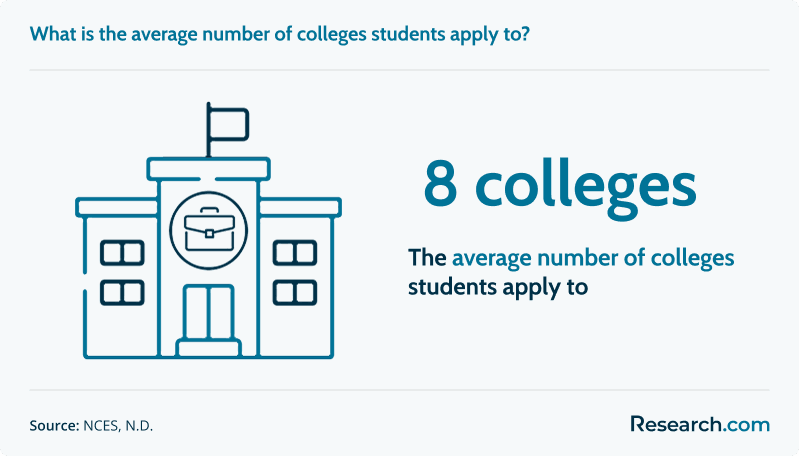
The question of how many colleges to apply to does not have a one-size-fits-all answer, as it depends greatly on each student's unique academic profile, goals, and resources. However, a common guideline suggests that applying to five to eight colleges is usually sufficient to ensure acceptance into a suitable institution.
The competitiveness of a chosen major also matters; popular majors may require applying to more schools due to increased selectivity. For example, if you're interested in a niche field like forensic science and wondering, "How do I start a career in crime scene investigation?", you'd likely want to apply to schools with strong, specialized programs in that area, which can be highly competitive.
Additionally, having a reasonable number of college applications allows students to manage time, application fees, and the stress involved in personalizing essays and applications.
To create a well-rounded and strategic list, it's crucial to categorize your choices into three groups: "reach," "target," and "safety" schools.
Reach, Target, and Safety Schools
A reach school is one where your academic profile, including GPA and test scores, falls below the average for admitted students. You would be excited to attend these schools, but your chances of acceptance are lower. Aim to include 1-3 reach schools on your list.
A target school is a great match for your academic profile, where your stats align closely with the average admitted student. You have a solid chance of getting into these institutions. A good college list should be heavily weighted with target schools, with a typical number being 2-5.
A safety school is a college where your academic profile is above the average for admitted students, giving you a very high probability of acceptance. It's important to choose safety schools that you would be genuinely happy to attend, ensuring you have a great option even if your reach and target schools don't work out. It's recommended to apply to 1-3 safety schools.
By creating a list with a mix of these three categories, you can manage the uncertainty of the admissions process and increase your chances of finding the perfect fit. Remember, quality of college applications always trumps quantity.
For students pursuing specialized fields, it’s also wise to consider how your chosen major translates into career opportunities. For instance, those interested in geography and spatial analysis might research GIS degree best jobs to understand which positions—such as GIS analyst, urban planner, or remote sensing specialist—offer strong demand and competitive salaries. This knowledge can help guide not only where you apply but also how you plan your coursework and internships.
What are the key factors to consider when applying to colleges?
For college applications, it's essential to consider a range of factors that extend beyond a school's name recognition or ranking. A holistic approach ensures you find a college that is the right fit for your academic, personal, and financial needs.
Academic and Program Fit
The most crucial factor is ensuring the college has a strong program in your intended major or a wide variety of courses if you're undecided. Look into the specific curriculum, faculty expertise, research opportunities, and hands-on learning experiences. A college with a strong reputation in your field of interest can open doors to internships and job opportunities.
Cost and Financial Aid
The total cost of attendance, including tuition, fees, and living expenses, is a major consideration. Don't be deterred by a high sticker price; instead, focus on the net price, which is what you'll actually pay after grants, scholarships, and other financial aid are factored in. Research the financial aid packages and scholarship opportunities available at each school and use their net price calculators to get a realistic estimate of the cost.
Location and Campus Environment
Consider the college's geographic location. Do you want to be close to home or farther away? Is a bustling city or a more rural, secluded campus a better fit for you? The campus size also plays a big role in your experience. A large university may offer more academic programs and social opportunities, while a smaller college might provide a more intimate, close-knit community with smaller class sizes and more one-on-one time with professors.
Campus Life and Culture
The campus culture and student life can significantly impact your college experience. Look at the types of student organizations, clubs, and extracurricular activities offered. Consider if the school's social scene aligns with your preferences. Visiting the campus, if possible, can give you a feel for the overall atmosphere, student body, and whether you can see yourself thriving there.
Career Services and Outcomes
Look for a college that provides robust career counseling, internship assistance, and alumni networking opportunities. A high job placement rate for your major and strong connections to employers in your desired field can be a significant indicator of a good return on your educational investment.
For instance, for those interested in public service, understanding the steps to becoming a parole officer is a great way to evaluate a school's offerings. A college with a strong criminal justice or social work program and connections to local law enforcement or correctional agencies is a strong choice for this career path.
How to assess your match, safety, and reach schools effectively?
Effectively assessing your match, safety, and reach schools involves examining several factors related to your academic profile and the schools' characteristics. A safety school is one where your academic credentials, like GPA and test scores, are well above the 75th percentile of admitted students, and the acceptance rate is often above 70%, making admission highly likely.
It is important that safety schools are not just easy admits but also schools you would be genuinely happy to attend, including fitting your desired programs, campus culture, and affordability.
Match (or target) schools represent colleges where your academic profile aligns closely with the average admitted student's range, usually falling between the 25th and 75th percentile, with acceptance rates around 40-70%. These schools offer a realistic chance of admission but are not guaranteed, so students typically apply to 3-4 match schools that fit their goals and preferences.
Reach schools are more competitive, often with acceptance rates below 25%, where your academic credentials fall below the average admitted profile or the school is extremely selective. Even with a strong profile, admission to reach schools is uncertain, so apply to 2-3 reach schools that excite you, but recognize these as ambitious options.
For those considering a career change, understanding how to become an NCMA (National Certified Medical Assistant) is a good example of how to assess a program's value. Balancing your list with these three types ensures a strategic application process that maximizes your chances of acceptance and provides a range of options to choose from.
How does applying to more colleges affect your acceptance chances?
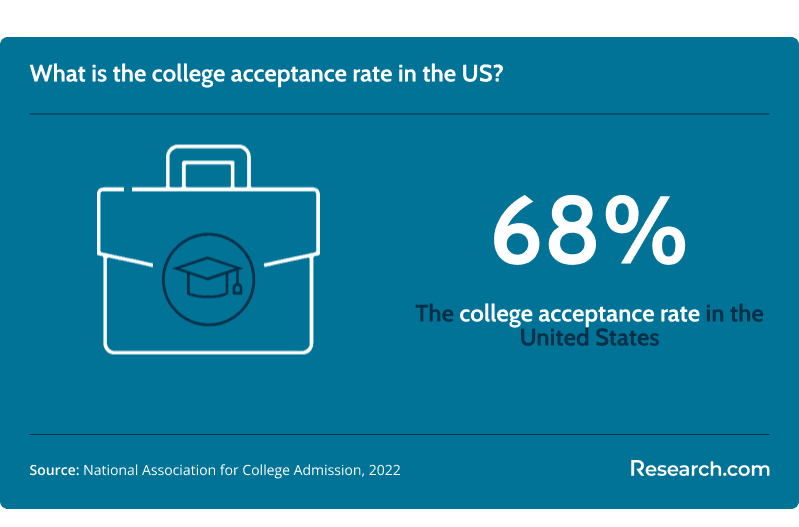
The average college acceptance rate in the United States is 68%, with more than half of all U.S. colleges and universities reporting rates of 67% or higher. Applying to a larger number of colleges can statistically increase your chances of being accepted to at least one school, particularly in the case of highly selective "reach" schools with low acceptance rates.
It can also provide more opportunities for financial aid offers, allowing you to compare packages and potentially find a more affordable option. However, there are significant drawbacks to this "shotgun" approach. Each application requires a substantial investment of time, energy, and money, with fees that can quickly add up.
More importantly, many selective schools require supplemental essays and other materials, and spreading yourself too thin can lead to lower-quality applications. This can undermine your efforts and may result in rushed, generic essays that fail to demonstrate genuine interest or showcase your unique strengths.
Therefore, it is generally recommended to focus on a smaller, well-researched list of schools that are a good fit, allowing you to submit high-quality, tailored applications that stand out from the crowd.
How to narrow down your list of colleges
To narrow down your list of colleges, you should prioritize schools that align with your personal, academic, and financial needs. This process involves a systematic evaluation of each institution based on factors that matter most to you.
Start with Your Priorities
Before you can effectively narrow your list, you need to know what you're looking for. Create a checklist of your non-negotiables.
- Academic Programs: Is your intended major or a related field of study offered? Beyond that, are there opportunities for research, internships, or a robust honors program? Researching a major can help you find out the course requirements and faculty expertise, which can make a difference in your education.
- Location and Campus Environment: Do you want to be close to home or far away? Do you prefer a bustling city, a suburban area, or a rural setting? Consider the campus size as well—a large university might feel overwhelming, while a small liberal arts college could be too intimate.
- Cost and Financial Aid: Use a college's net price calculator to get a realistic estimate of the cost after financial aid. If a college has a high sticker price, see if they offer generous scholarships or have a history of meeting a high percentage of a student's demonstrated financial need. This can help you remove schools that are not financially viable.
Deepen Your Research
Once you have a general idea of your priorities, dive deeper into the specifics of each school.
- Virtual and In-Person Visits: Attending virtual or in-person campus tours is an excellent way to get a feel for a school's atmosphere. Go beyond the official tour by reading the student newspaper, checking bulletin boards, and eating at the dining hall. This can provide invaluable insight into the day-to-day life of a student.
- Connect with Current Students and Faculty: Don't be shy about reaching out to students and professors in a department you're interested in. Ask them about their experiences, the campus culture, and what they like and dislike about the school. Their honest feedback can be more revealing than any brochure.
- Assess Your Chances: Categorize schools on your list into "reach," "target," and "safety" schools based on your academic profile (GPA, test scores) and the school's average for admitted students. This helps you build a balanced list, ensuring you have viable options if your top choices don't work out.
Additionally, for students considering career-focused programs, it’s helpful to research program length and structure. For example, if you’re exploring dental careers, you might ask, “how long is a dental assistant program” to understand the time commitment, scheduling options, and how quickly you could enter the workforce after completing your training.
How much does it cost to apply to multiple colleges?
The cost of applying to multiple colleges can add up quickly, primarily due to application fees, but there are several ways to manage or eliminate these costs.
The average college application fee in the U.S. is about $50, but this can vary widely. Highly selective private universities often have fees of $75 to $90 or more, while some public universities and smaller colleges may charge less or nothing at all.
For a student applying to an average of 6-8 colleges, the total cost for application fees alone can range from $300 to over $600. This does not include other potential expenses like standardized test fees (SAT/ACT) and fees for sending score reports to multiple schools.
Financial aid options like fee waivers (through the College Board, ACT, or individual colleges) can significantly reduce the burden for those who qualify. Families are encouraged to budget carefully and weigh the number of applications against both financial and time commitments.
Many colleges have also gone test-optional, which can save students significant money on test registration and score reporting fees. Additionally, some colleges do not charge any application fee at all, regardless of a student's financial circumstances. For students exploring skilled trades as an alternative to traditional college paths, it’s useful to consider timelines for certification or licensure, such as asking “how many years to become a master electrician” to understand the training and apprenticeship requirements before entering the workforce.
What are the downsides of applying to too many colleges regarding application quality?
Having numerous college applications can negatively impact the quality of your applications in several ways. First, the time and energy required to complete each application thoroughly can become overwhelming, leading to rushed or less polished essays and responses. When spread thin, applicants may recycle essays without properly tailoring them to each school, which reduces the personal touch critical for standing out in admissions.
Additionally, juggling numerous applications can affect the care taken for supplemental essays, recommendation letters, and other components, decreasing overall application strength.
Financially, the accumulation of application fees can add stress, leading some to cut corners. Moreover, applying to many schools can dilute demonstrated interest, as it becomes harder to engage meaningfully with each college through visits or communication, possibly disadvantaging the applicant.
The cumulative effect is that quantity may come at the expense of quality, potentially hurting admissions chances rather than helping them. For students exploring specialized fields like architecture, it’s also important to consider practical timelines and commitments, such as understanding how long does it take to study architecture, so you can realistically balance your academic preparation with a strong, focused college application strategy.
How to avoid application burnout when applying to multiple schools?
Navigating the college application process can be a demanding and stressful experience, especially when applying to multiple schools. To avoid application burnout, a strategic and organized approach is essential.
The first step is to manage your time effectively by creating a comprehensive, detailed schedule. Divide the entire process into smaller, manageable tasks, such as drafting a personal statement, requesting letters of recommendation, and writing supplemental essays. This helps prevent feeling overwhelmed by the sheer volume of work.
It is also beneficial to "front-load" a lot of the work, completing major components like your main personal essay and resume well before school begins in the fall. This way, you can focus on supplemental essays and other requirements as deadlines approach.
Secondly, create a centralized tracking system, like a spreadsheet or a digital planner, to keep all your information in one place. This should include application deadlines (for both early and regular decision), financial aid deadlines, and scholarship due dates. Use this system to track the status of each application, from submitted documents to login credentials for individual college portals.
This is particularly helpful for specialized programs, such as finding the shortest online animation degrees to accelerate your career; keeping track of different program lengths and start dates is crucial. This organization helps you avoid missing crucial deadlines and reduces the stress of trying to remember every detail for every school.
What’s the workload for applying to multiple colleges?
The workload for applying to multiple colleges is substantial and requires careful time management, organization, and a start-early approach. It's often compared to a part-time job that spans several months, with the workload becoming particularly heavy during the fall of your senior year as most application deadlines approach.
On average, students spend 10 to 15 hours per application, which includes filling out forms, writing and revising essays, gathering recommendation letters, and submitting test scores or transcripts. Applying to 10 colleges could easily add up to 100–150 hours of work spread over several months.
The college essay and supplemental essays represent the most time-intensive part of the application. The main essay, such as the Common App Personal Statement, requires significant time for brainstorming, drafting, and multiple rounds of revisions.
Gathering all required application documents also demands proactive effort. You must request letters of recommendation from teachers and counselors well in advance, often providing them with your resume and a list of your accomplishments to help them write a strong letter.
Similarly, you are responsible for ensuring that your official standardized test scores and high school transcripts are sent to each college, a process that can involve extra fees and waiting periods. Finally, completing financial aid forms like the FAFSA and the CSS Profile is a detailed process that requires gathering extensive financial information from your family.
The workload from research and application management is often underestimated but is critical for success. To stay organized, students typically use application trackers, calendars, or spreadsheets to balance their schoolwork with application tasks.
Much like weighing career options—such as asking "is being a medical assistant worth it" before committing—students need to evaluate how much time and energy they can realistically devote to applications.
How have application numbers changed in recent years?
College application numbers have generally increased in recent years, continuing an upward trend observed since the 2020-2021admission cycle.
In 2025, the total number of college applications submitted rose by about 6% compared to the previous year, with roughly 1.39 million first-year applicants submitting applications through the Common Application to over 860 institutions. This marked an increase of over 57,000 applicants compared to the 2023-24 cycle. Students are also applying to slightly more colleges on average, with the number of applications per applicant increasing by about 1%.
The growth in applications has been especially strong among underrepresented racial and ethnic minority students, with Latino applicants increasing by 13% and Black applicants by 10%. Despite previous enrollment declines during the pandemic, college enrollments began trending upward again in fall 2023 and saw a 3.2% increase in spring 2025 compared to the prior year.
These trends reflect a rebound and growing interest in college education, particularly among diverse student populations. This is true for a variety of programs, including those that are increasingly offered online.
For instance, a search for the best online digital photography degrees will show that many accredited universities are expanding their digital arts and media programs to a virtual format, making them more accessible to a wider range of students.
How can I identify and compare cost-effective college programs?
When evaluating affordable educational opportunities, focus on comparing not only tuition and fees but also long-term value indicators such as accreditation, course quality, and career support services. Analyze net costs using institutional financial aid calculators and investigate outcomes like graduation rates and employment statistics. Additionally, explore alternative formats that may offer flexibility and lower overhead—consider reviewing cheap online graduate certificate programs as a viable option for acquiring specialized knowledge without the high price tag.
Here's what graduates have to say about their college application
- Damien: "Getting my Computer Science degree online was the best decision I could have made. The flexibility allowed me to work a full-time job and gain valuable industry experience, which made me a much more competitive candidate after graduation. It taught me invaluable time management skills and gave me a sense of independence I wouldn't have gotten otherwise."
- Kristen: "I was initially worried about the social aspect of an online program, but I was surprised by how connected I felt. The online forums and group projects helped me build a strong network of peers, and the professors were always available for one-on-one virtual meetings. I received the same high-quality education as my friends in traditional programs, but with the freedom to learn at my own pace and from anywhere in the world."
- Marik: "The online format of my computer science degree was truly groundbreaking for me. It provided a level of flexibility that let me balance my coursework with my personal life, which made learning so much more enjoyable and effective. I was able to learn a variety of coding languages and build a professional portfolio of projects without the stress of a traditional campus, which ultimately helped me land my dream job as a software developer right out of school."
Key Findings
- In 2025, the total number of college applications submitted rose by about 6% compared to the previous year.
- Match (or target) schools represent colleges where your academic profile aligns closely with the average admitted student's range, usually falling between the 25th and 75th percentile, with acceptance rates around 40-70%.
- A common guideline suggests that applying to five to eight colleges is usually sufficient to ensure acceptance into a suitable institution.
- In 2024, approximately 1.42 million first-year students applied to colleges using the Common Application.
References:
- Bound, J., Hershbein, B. & Long, B.T. (2009). Playing the Admissions Game: Student Reactions to Increasing College Competition. The Journal of Economic Perspectives 23(4):119-146. Retrieved from https://www.aeaweb.org/articles?id=10.1257/jep.23.4.119
- Freeman, M., Heseung Kim, B., Magouirk, P. & Kajikawa, T. (2022, March 21). Deadline update: first-year application trends through March 15. Common App. Retrieved from https://s3.us-west-2.amazonaws.com/ca.research.publish/Research+briefs+2020/20211123_Deadline_Update_FY.pdf
- Leukhina, O., Hendricks, L. & Koreshkova, T. (2021). Selective College Admissions: Implications for Equity and Efficiency. Iowa State University. Retrieved from https://www.econ.iastate.edu/files/events/files/paper1_oksana.pdf
- Marto, R. & Wittman, Y. (2022). College Admissions and the (Mis)Allocation of Talent. The University of Pennsylvania. Retrieved from https://www.ricardomarto.com/files/College_Admissions_Misallocation_Talent.pdf
Other Things You Should Know About How Many Colleges Should You Apply To
The choice of major can influence how many colleges you apply to, but typically not in a straightforward way. For most colleges, your intended major does not significantly affect your chances of admission because many students change majors during college, and most schools do not require you to declare a major until after your first year or sophomore year.
However, there are exceptions: at some large public universities and highly competitive programs—such as engineering, nursing, business, or visual arts—admissions are impacted by major due to limited spots and resources.
In 2027, increasing selectivity at top institutions means more students might apply to a wide range of schools to enhance their chances. As acceptance rates drop, consider applying to a mix of safety, match, and reach schools, usually 8-12 colleges, to ensure options while considering resources and personal preferences.
Yes, financial aid opportunities should definitely influence the size and composition of your college list. Schools vary greatly in the kinds of financial aid packages they offer, including need-based aid, merit scholarships, and special grants.
If affordability is a major concern, you may want to apply to a broader range of colleges to maximize your chances of receiving substantial aid or scholarships that fit your financial situation. Including schools known for generous financial aid or strong scholarship programs can provide more options and reduce the risk of financial strain.


