
2027 How Long Does It Take to Become a Master Electrician?

Co-Founder and Chief Data Scientist
An electrician aiming to advance their career often faces one pressing question: how long it actually takes to become a master electrician. Without clear direction, delaying the process can mean missing out on higher wages, leadership roles, and job security in a field where the median annual pay for electricians reached $62,350. With employment projected to grow steadily through 2027, postponing the path risks losing ground to competitors who act sooner.
This article explains the full timeline, requirements, and steps toward earning a master electrician license for 2027. Backed by insights from career planning experts, it provides practical guidance to resolve this challenge and set the path forward.
Key Benefits of Becoming a Master Electrician
- Qualifies you for advanced roles such as project manager, contractor, or business owner.
- Median annual salary for master electricians is significantly higher than that of journeymen, often exceeding $80,000.
- Provides greater independence, authority to pull permits, and long-term career security in a high-demand trade.
- What is the timeline to become a master electrician? Timeline
- What are the education and training requirements? Education & Training
- What role does an apprenticeship play? Apprenticeship
- What is required at the journeyman stage? Journeyman
- What exams and licensing steps are required? Exam & Licensing
- How do state requirements vary? State Requirements
- What are the costs of becoming a master electrician? Costs
- What additional certifications can boost a master electrician’s career? What additional certifications can boost a master electrician’s career?
- What salary and career opportunities are available? Career Opportunities
- How does technology shape the electrician career path? How does technology shape the electrician career path?
- What is the future outlook for master electricians? What is the future outlook for master electricians?
- How Do Master Electricians Keep Up With Continuing Education Requirements? How Do Master Electricians Keep Up With Continuing Education Requirements?
What is the timeline to become a master electrician?
The timeline to become a master electrician usually takes about 10 to 12 years, depending on education, training, and licensing requirements. Much like understanding the difference between MFT degree and LMFT license in counseling careers, knowing the stages of electrician training helps clarify how each step builds toward full professional recognition.
Education
Most start with a high school diploma or GED. Some also attend a trade school or technical program, which can take 1–2 years.
Apprenticeship
An apprenticeship is the biggest step, lasting 4–5 years. During this time, you work under licensed electricians, gaining hands-on skills and classroom training.
Journeyman License
After completing the apprenticeship, you can apply to become a journeyman electrician. Most states require at least 2–4 years of work experience at this level before you can move forward.
Master Electrician License
To qualify as a master electrician, you usually need several years of journeyman experience plus passing a state exam. This brings the total timeline to about a decade or more.
In short, becoming a master electrician requires years of steady training, testing, and on-the-job learning before reaching the highest level of licensing.
What are the education and training requirements?
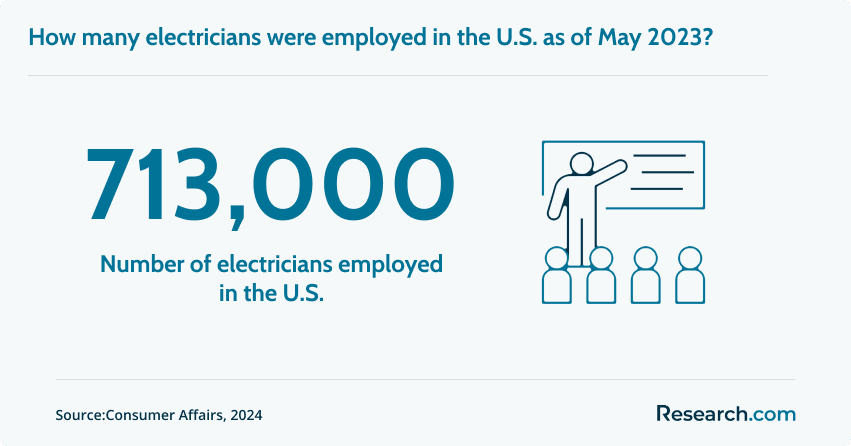
The path to becoming a master electrician combines formal education with years of practical training. You begin with basic schooling, then progress through apprenticeship and licensing stages until you reach the master level. This is a demanding career track, but the investment pays off in strong job opportunities—nearly 713,000 electricians were employed in the U.S. as of May 2023, reflecting steady demand in the field.
Similar to how a radiographer and radiologist degree program comparison highlights the importance of understanding training differences, knowing the educational path for electricians helps clarify the steps toward mastery.
- High school diploma or GED – A foundation in math, science, and technical subjects is essential.
- Trade school or technical program (optional) – Some students complete 1–2 years of coursework in electrical systems and safety.
- Apprenticeship (4–5 years) – The main stage of training, combining classroom study with thousands of hours of supervised, hands-on work.
- Journeyman license – Requires passing an exam and allows you to work independently after your apprenticeship.
- Journeyman experience (2–4 years) – Most states require several years at this level before applying for a master license.
- Master electrician exam – Tests advanced knowledge of electrical codes, design, and management responsibilities.
Overall, the process blends education with real-world experience, ensuring that master electricians have both technical knowledge and practical skills to handle complex electrical projects safely and effectively.
What role does an apprenticeship play?
An apprenticeship is the most important stage in the journey to becoming a master electrician. It provides structured, hands-on training that cannot be learned in a classroom alone. During this time, apprentices work under licensed electricians, learning how to apply electrical theory to real-world projects while following strict safety practices.
Much like asking how long does it take to get a MFT degree in the counseling field, understanding the time commitment of an apprenticeship helps clarify the dedication required to advance in this trade.
Apprenticeships usually last 4–5 years and combine paid on-the-job experience with classroom instruction. This dual approach allows apprentices to earn a wage while building practical skills. They cover topics such as wiring, circuit testing, blueprint reading, and local electrical codes, all while practicing these skills on actual job sites.
Beyond technical training, apprenticeships also prepare future electricians for licensing exams and long-term career growth. The supervised work ensures that apprentices develop confidence, problem-solving ability, and knowledge of industry standards. By the end of this stage, they are fully qualified to test for the journeyman license and continue progressing toward master electrician status.
What is required at the journeyman stage?
The journeyman stage is the first point where an electrician can work independently after completing an apprenticeship. To reach this level, candidates must finish their 4–5 years of training and pass a licensing exam that tests electrical knowledge, safety codes, and practical skills. This step confirms they are ready to handle jobs without constant supervision.
Once licensed, journeymen electricians can install, maintain, and repair electrical systems on their own. They are trusted to manage projects, read blueprints, and ensure work meets state and local codes. However, they are not yet allowed to design large-scale electrical systems or run their own contracting business, responsibilities reserved for master electricians.
The journeyman stage is also a period of professional growth. Most states require 2–4 years of experience at this level before applying for master status. During this time, electricians refine their technical skills, take on greater responsibility, and gain the practical expertise needed to advance to the highest level of licensing.
Much like the electrician career pathway, other professions follow multi-stage training and licensing progression. For example, individuals exploring how long to become an architect also encounter structured education, supervised experience, and licensure exams before practicing independently.
With more than 700,000 electricians in the U.S. workforce in 2023, 97.5% were men and just 2.53% were women, showing how male-dominated the field remains even at this stage of career progression.
What exams and licensing steps are required?
Becoming a master electrician involves several exams and licensing stages that build on each other. Each step confirms that you have the knowledge, skills, and experience to handle electrical work safely and professionally.
Just as researching an affordable online masters in homeland security degree requires understanding program prerequisites and certification requirements, the electrician pathway relies on knowing the exact testing and licensing steps involved.
- Apprenticeship completion – You must first finish a 4–5 year apprenticeship that includes classroom hours and supervised work.
- Journeyman exam – After apprenticeship, you take a licensing exam that tests electrical theory, the National Electrical Code (NEC), and safety practices.
- Journeyman license – Passing the exam allows you to work independently as a journeyman electrician.
- Work experience – Most states require 2–4 years of journeyman-level work before moving forward.
- Master electrician exam – This advanced test covers complex electrical systems, state and local codes, load calculations, and project management.
- Master license application – After passing the exam, you can apply for your master electrician license through the state licensing board.
In short, the path to licensing is step-by-step, with each stage building expertise and proving readiness for the next. By the time you earn a master license, you’ve demonstrated years of knowledge, experience, and professional skill.
How do state requirements vary?
The journey to becoming a master electrician follows the same basic steps everywhere, but the exact rules differ by state. Licensing boards set their own standards for training, experience, and exams. Because of this, what qualifies you in one state may not be enough in another. Below are the main ways state requirements can vary.
Education and Training
Some states accept only formal apprenticeships registered with state boards, while others allow trade school programs to count toward required training hours. In certain places, additional classroom study may be mandatory.
Data shows that the most important knowledge areas for electricians include building and construction (73.4%) and administration and management (71.6%), highlighting the mix of technical and organizational skills states may emphasize in their requirements.
Work Experience
The amount of journeyman experience needed before applying for a master license can range from 2 to 4 years. A few states require even more, especially for contractors who want to run their own business.
Exams and Licensing
Most states use the National Electrical Code (NEC) as the exam standard, but testing formats and passing scores can vary. Some states also require separate business or law exams for master electricians who plan to hire workers.
Reciprocity Agreements
Certain states have reciprocity, meaning they recognize licenses from other states. However, many still require you to pass their state-specific exam before granting a license.
In short, while the overall path is consistent, state-by-state differences make it important to check local requirements before starting your training or applying for a license.
This kind of variation in qualifications and professional pathways is also seen in other fields that value technical skill and regional knowledge. For example, exploring the types of jobs with degree in GIS shows how different states or sectors may emphasize environmental planning, utility mapping, emergency response, or land development work depending on local priorities and regulations.
What are the costs of becoming a master electrician?
The costs of becoming a master electrician add up over several years of training and licensing. At the start, expenses often include trade school or community college programs, which can range from $1,000 to $12,000 depending on the length and type of program.
While not always required, these courses help build a strong foundation in electrical theory and safety. Much like comparing the value of an HVAC technician salary against training costs, understanding the investment in electrician education helps weigh long-term career returns.
Apprenticeships are more affordable since apprentices earn a wage while training, but there are usually fees for tools, safety gear, and classroom instruction. These costs can run from a few hundred to a few thousand dollars over the course of the program. Some apprenticeships are sponsored by unions or employers, which may reduce or cover training expenses.
Licensing and exam fees are another ongoing cost. The journeyman exam typically costs between $50 and $200, while the master electrician exam may range from $100 to $300. Application and renewal fees also vary by state. Overall, while the financial investment can be significant, electricians usually earn strong salaries that make the path worthwhile in the long run.
What additional certifications can boost a master electrician’s career?
Master electricians seeking to expand their expertise and marketability are increasingly turning to industry-recognized certifications. These additional credentials can help professionals specialize in cutting-edge areas such as renewable energy systems, smart technology integration, or advanced safety protocols. Pursuing targeted certification not only provides up-to-date technical knowledge but also signals a commitment to quality and leadership in a competitive market. For instance, obtaining certificates with high pay can pave the way for diversified career roles and improved salary prospects while addressing evolving regulatory and safety standards.
What salary and career opportunities are available?
Becoming a master electrician opens the door to higher pay and leadership roles in the electrical field. With advanced licensing, you can take on more complex projects and even run your own contracting business. Below are the main salary expectations and career paths available.
Salary Potential
Master electricians earn some of the highest wages in the trade. According to national data, the average annual salary for electricians is around $65,000, but master electricians often make $75,000 to over $100,000 depending on location, experience, and specialization.
For comparison, electrical apprentices earn significantly less while in training—for example, in 2023, apprentice salaries ranged from about $51,000 to $54,000 in top-paying states such as Washington and New York. Those who run their own business as master electricians can earn far beyond the averages.
Career Growth
Master electricians can move into roles such as project manager, electrical inspector, or contractor. They are also qualified to supervise apprentices and journeymen, making them key leaders in the industry.
Self-Employment Opportunities
With a master license, electricians can open their own businesses, bid on large projects, and hire employees. This path offers flexibility, independence, and the chance to grow income beyond standard wages.
Industry Demand
The demand for electricians remains steady due to ongoing construction, renewable energy projects, and the need to update aging infrastructure. This ensures long-term job security and strong career prospects for master electricians.
As with many skilled professions, salaries and opportunities can vary based on region and specialty. Those interested in comparing earnings across technical fields often look at what engineers make the most money, since engineering and electrical trades both reward expertise, advanced credentials, and experience. This comparison can help individuals understand how master electricians fit into the broader landscape of high-paying technical careers.
How does technology shape the electrician career path?
Technology is changing how electricians learn, work, and grow in their careers. Modern training programs now include advanced tools like digital simulations and smart devices, giving apprentices and journeymen exposure to real-world situations before they even step on a job site. This helps them build confidence and adapt to new technologies early in their careers.
On the job, electricians are increasingly working with smart home systems, renewable energy setups, and advanced electrical panels. Skills in installing solar panels, electric vehicle chargers, and energy-efficient systems are becoming highly valuable. Master electricians who stay up to date with these technologies often find more opportunities and higher-paying projects.
In the long run, technology also creates new career paths. Electricians can specialize in areas like automation, green energy, or data wiring, which are growing fields. Those who embrace these changes not only stay competitive but also expand their career options well beyond traditional electrical work.
Additionally, as education pathways continue to evolve, many future electricians begin their training at technical schools or community colleges rather than traditional universities. Some prospective students even explore colleges that don't require standardized test scores, providing more flexible entry points into skilled trades and allowing a wider range of learners to pursue electrical careers without unnecessary barriers.
What is the future outlook for master electricians?
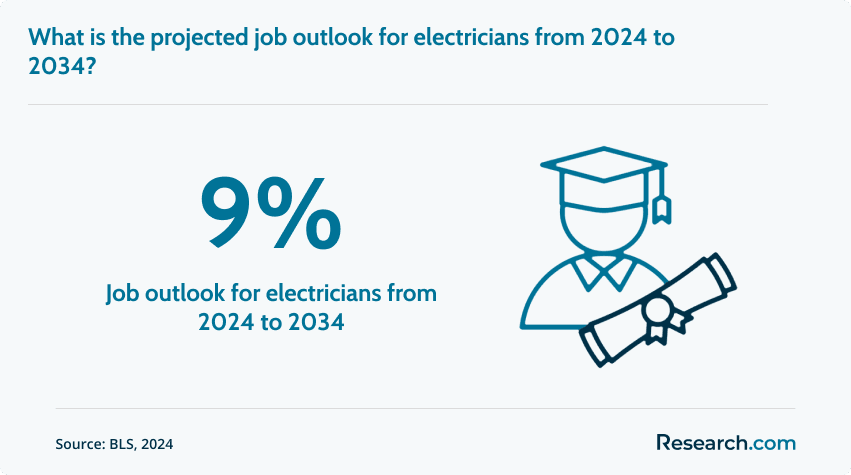
The future outlook for master electricians is very promising, with steady job growth and increasing demand. According to the U.S. Bureau of Labor Statistics, employment of electricians is expected to grow 9% from 2024 to 2034, adding more than 77,400 new jobs across the country. This growth is faster than the average for all occupations and reflects the ongoing need for skilled electrical workers.
Master electricians, in particular, benefit from higher earning potential and broader opportunities. National data shows that the median annual wage for electricians was $62,350 in 2023, with the top 10% earning more than $99,800. Master electricians typically fall into the higher end of this range, especially those who supervise teams, manage large-scale projects, or run their own contracting business.
The shift toward renewable energy and advanced technology is also shaping future opportunities. The demand for skills in solar installations, electric vehicle charging stations, and smart building systems continues to rise. These trends ensure that master electricians will remain in demand, with strong job security and the ability to specialize in high-growth areas of the industry.
How Do Master Electricians Keep Up With Continuing Education Requirements?
Master electricians reinforce their expertise through structured continuing education programs that address evolving safety codes, technological innovations, and regulatory updates. These professionals often engage in specialized courses, hands-on workshops, and industry seminars to ensure technical proficiency and compliance with ever-changing standards. Many also leverage flexible learning options available from cheap online colleges to supplement mandatory training. This ongoing professional development not only supports license renewal but also enhances leadership and problem-solving skills vital for managing complex electrical projects.
Key Findings
- 713,000 electricians were employed in the U.S. as of May 2023.
- The electrician workforce is overwhelmingly male, with 97.5% men and only 2.53% women.
- The most important knowledge areas for electricians include Building and Construction (73.40%), Administration and Management (71.60%), and Mechanical (68.40%).
- Electrical apprentices earn competitive salaries, with the highest averages in Washington ($53,741), D.C. ($53,619), and New York ($51,911).
- Employment for electricians is projected to grow by 9% from 2024 to 2034, faster than the average for all occupations.
Here’s What Graduates Have to Say About Becoming a Master Electrician
- Carlo: "Reaching the master electrician level gave me the confidence to manage large projects and mentor younger apprentices. The pay increase was significant too, with master electricians often earning $75,000 to $100,000 a year. I feel proud knowing my skills are respected and in demand everywhere. "
- Thomas: "Becoming a master electrician was a long road, but it opened doors I never thought possible. I now run my own contracting business, choosing the projects I want and building a career with independence and stability. The sense of freedom is unmatched. "
- Roy: "What I value most about becoming a master electrician is the trust people place in me. From designing safe electrical systems to leading teams, I know my work makes a real difference. It’s rewarding to see my years of training turn into leadership and impact. "
References:
- ConsumerAffairs. (2024). Electrical industry statistics: Lack of electricians. ConsumerAffairs.
- Data USA. (2023). Electricians. Data USA.
- Texas Career Check. (2024). Occupation summary: Electricians (47-2111.00). Texas Workforce Commission.
- U.S. Bureau of Labor Statistics. (2024). Electricians. Occupational Outlook Handbook. U.S. Bureau of Labor Statistics.
- ZipRecruiter. (2024). What is the average electrical apprentice salary by state? ZipRecruiter.
Other Things You Should Know About Becoming a Master Electrician
To become a master electrician by 2026, you typically need about 7-10 years of combined education and experience. This includes completing an apprenticeship, accumulating journeyman experience, and fulfilling any specific state or local licensing requirements.
To become a master electrician in 2027, it typically takes about 7 to 10 years. This includes completing an apprenticeship of approximately four years, gaining around three to six years of work experience, and passing a state or local licensing exam.
In 2027, master electricians need to complete ongoing continuing education courses, commonly mandated by state licensing boards. This may include up to 16 hours of coursework every two years to stay updated on electrical codes and safety regulations.
In 2027, to become a master electrician, candidates need to complete several years of apprenticeship and work experience, typically ranging from 7 to 10 years, pass a licensing exam, and often meet specific state or country requirements. Continuous education on evolving technologies is also crucial.


