2027 Highest-Paying Engineering Careers to Consider

Co-Founder and Chief Data Scientist
Engineering sits at the heart of progress, shaping solutions to some of today’s most pressing challenges – from clean energy and sustainable infrastructure to advanced technologies that power daily life. As industries evolve, the demand for skilled engineers continues to rise, but not all paths in the field offer the same rewards. Some engineering careers stand out not only for their impact but also for their earning potential.
Understanding which roles lead the salary charts can be a decisive factor for students choosing a major or professionals planning their next move. This article highlights the highest-paying engineering careers to consider, helping you align your expertise with opportunities that bring both purpose and prosperity.
What are the benefits of pursuing an engineering career?
- High Earning Potential: Engineering consistently ranks among the top-paying fields, with many specialties offering six-figure salaries and strong long-term financial security.
- Global Demand: Engineers are needed across industries worldwide, creating diverse opportunities in technology, healthcare, energy, construction, and more.
- Innovation and Impact: A career in engineering allows you to contribute to solutions that address climate change, healthcare advancements, and future technologies.
- Career Flexibility: With multiple branches and specializations, engineers can move between industries or roles as their interests and skills evolve.
- Continuous Growth: Ongoing technological change ensures engineers are always learning, adapting, and staying at the forefront of innovation.
What can you do with an engineering career?
An engineering career opens the door to a wide range of possibilities that go far beyond traditional job roles. Engineers are problem-solvers and innovators, applying technical knowledge to improve lives and industries. With skills that are in demand worldwide, you’ll find that an engineering degree can serve as a springboard into many exciting paths.
- Work in Specialized Industries: From aerospace and biotechnology to renewable energy and software development, engineers can build careers in fields that match their passions.
- Pursue Leadership Roles: Many engineers advance into management or executive positions, where they lead teams, oversee projects, and shape company strategies.
- Engage in Research and Development: Engineers often contribute to cutting-edge discoveries, designing new technologies, products, and systems.
- Start Your Own Business: With strong problem-solving and analytical skills, engineers are well-equipped to launch startups or work as independent consultants.
- Contribute Globally: Engineering careers often involve projects with international impact, from building sustainable infrastructure in developing regions to working on global tech innovations.
Where can you work as an engineering graduate?
The work setting for engineering graduates largely depends on their chosen specialization. Each branch of engineering equips professionals with unique skills that align with different industries, environments, and career paths. Whether indoors at a design desk or out in the field overseeing projects, engineers have the flexibility to work in settings that match both their expertise and interests.
- Technology and Software Companies: Computer, software, and electrical engineers often work in tech firms developing cutting-edge systems and applications.
- Construction and Infrastructure Firms: Civil and structural engineers play key roles in designing, managing, and building large-scale projects like bridges, roads, and buildings.
- Manufacturing and Industrial Plants: Mechanical, chemical, and industrial engineers are frequently employed in factories, plants, and production facilities.
- Energy and Environmental Organizations: Petroleum, renewable energy, and environmental engineers contribute to sustainable power and resource management.
- Research Institutions and Universities: Engineering graduates may pursue academic or research roles, driving innovation through experiments and technological development.
How much can you earn with an engineering career?
Your earning potential as an engineer is closely tied to the branch of engineering you pursue. While all engineering fields generally provide competitive salaries, some specialties, particularly those in high-demand industries, offer significantly higher pay. Factors like experience, education level, and location also influence how much you can earn, making engineering one of the most dynamic and rewarding career paths.
- Petroleum Engineers: Among the top earners, often making well over six figures due to the high demand for energy expertise.
- Computer and Software Engineers: Competitive salaries driven by the growing reliance on technology and innovation.
- Aerospace Engineers: Strong pay for those designing aircraft, spacecraft, and defense systems.
- Civil Engineers: While not the highest-paying, civil engineers enjoy stable salaries with steady demand worldwide.
- Biomedical Engineers: Competitive earnings with the added reward of contributing to advancements in healthcare technology.
- List of 10 Highest-Paying Engineering Careers for 2027 Highest-Paying Careers
- Why should you pursue an engineering career? Benefits
- How do you choose an engineering major? How do you choose an engineering major?
- What are the prerequisites for enrolling in an engineering program? Requirements
- What skills are essential in engineering careers? Core Skills
- How much does an engineering degree cost? Program Cost
- What financial aid is available to engineering students? Financial Aid
- Why do engineering careers have high earning potential? Why do engineering careers have high earning potential?
- What is the job outlook for engineering careers? Job Outlook
- What challenges are common in engineering careers? What challenges are common in engineering careers?
- Are online degree programs a viable supplement to traditional engineering education? Are online degree programs a viable supplement to traditional engineering education?
List of 10 Highest-Paying Engineering Careers for 2027
When determining the highest-paying engineering careers, we considered the median or average annual salary in the U.S. based on recent and reputable figures from sources like the United States Bureau of Labor Statistics. We also looked into the scope and relevance of each engineering discipline. These engineering careers cover both traditional and modern/tech-forward roles.
1. Environmental Engineer
Environmental engineers apply principles of engineering, biology, and chemistry to develop solutions for environmental challenges. They design systems for waste management, water treatment, air pollution control, and sustainable infrastructure, helping protect public health and ecosystems. Their work often involves ensuring compliance with environmental regulations while innovating greener technologies for industries and communities.
You can check out accelerated environmental engineering online degree programs if you want a faster and flexible option.
Average Annual Salary: $110,570
2. Health and Safety Engineer
Health and Safety Engineers develop systems and processes that protect people, equipment, and the environment from harm. They apply engineering principles to identify risks, design safety protocols, and ensure compliance with regulations in industries such as manufacturing, construction, and healthcare. Their work helps prevent accidents, improves workplace safety, and promotes sustainable, efficient operations.
Average Annual Salary: $113,770
3. Biomedical Engineer
Biomedical Engineers combine engineering principles with biology and medicine to design technologies that improve healthcare. They create medical devices such as artificial organs, prosthetics, imaging systems, and diagnostic equipment, as well as develop biomaterials and innovative treatment methods. Their work bridges medicine and engineering, playing a vital role in advancing patient care and shaping the future of healthcare technology.
You can look into our separate article on biomedical engineering specializations for more information.
Average Annual Salary: $115,020
4. Materials Engineer
Materials engineers develop, test, and improve materials – such as metals, ceramics, polymers, and composites – to ensure they meet specific performance criteria for products ranging from electronics and aerospace components to medical devices and infrastructure. Their work involves choosing or engineering materials that can withstand stress, temperature, corrosion, and wear, enabling innovations across industries from manufacturing to high-tech research and development.
Average Annual Salary: $116,380
5. Electrical/Electronics Engineer
Electrical and Electronics Engineers design, develop, and test electrical systems, electronic devices, and control equipment used in industries from power generation and telecommunications to consumer electronics and aerospace. They work on technologies such as circuits, sensors, communication systems, and renewable energy solutions, ensuring efficiency, safety, and innovation. Their expertise helps power modern life, enabling everything from household gadgets to advanced industrial and defense systems.
There are accelerated electrical engineering degree online programs if you want to specialize in this field and would want to earn your degree at a faster pace and with a flexibility that traditional, on-campus programs do not offer.
Average Annual Salary: $124,810 (Electrical Engineers: $120,980; Electronics Engineers: $132,500)
6. Chemical Engineer
Chemical engineers apply principles of chemistry, physics, biology, and engineering to design processes for producing fuels, pharmaceuticals, food, and many other products. They develop and optimize large-scale manufacturing systems, improve safety and efficiency, and create sustainable solutions for industries ranging from energy and healthcare to materials and consumer goods. Their work bridges science and practical application, turning raw materials into valuable products that impact everyday life.
Average Annual Salary: $128,430
7. Nuclear Engineer
Nuclear engineers research and develop processes, instruments, and systems that harness the power of nuclear energy and radiation. They design and operate nuclear power plants, develop medical imaging technologies, and create safety protocols for handling nuclear materials. Their work focuses on improving efficiency, ensuring safety, and minimizing environmental impact, making them essential in energy production, healthcare, and national security.
Average Annual Salary: $134,980
8. Aerospace Engineer
Aerospace engineers design, test, and improve aircraft, spacecraft, satellites, and defense systems. They work on everything from aerodynamics and propulsion to materials and control systems, ensuring safety, efficiency, and performance. Their expertise supports industries such as aviation, national defense, and space exploration, making them vital contributors to advancing transportation and technology.
Average Annual Salary: $141,180
9. Petroleum Engineer
Petroleum engineers design and develop methods to extract oil and gas from underground deposits. They evaluate drilling decisions, devise efficient recovery strategies, and collaborate closely with geologists, engineers, and field operators to optimize production. Often working both in offices and at drilling sites, they tackle challenges like safety, environmental impact, and resource management.
Average Annual Salary: $153,560
10. Computer Hardware Engineer
Computer hardware engineers research, design, develop, and test physical components of computer systems, such as processors, circuit boards, memory devices, networks, and routers. They ensure that hardware components integrate smoothly with software, enhance system performance, and meet the demands of evolving technology. Their work is crucial in industries ranging from consumer electronics and telecommunications to aerospace and healthcare, driving innovation in modern computing.
Average Annual Salary: $156,770
Why should you pursue an engineering career?
Choosing an engineering career means stepping into a profession that blends creativity, technical skill, and real-world impact. Engineers are at the forefront of solving global challenges – whether it’s developing clean energy solutions, designing smarter technologies, or building resilient infrastructure. The field offers more than just stability; it provides the chance to shape the future in meaningful ways.
- Strong Earning Potential: Engineering consistently ranks among the highest-paying career fields, with opportunities to grow financially as you advance.
- Global Relevance: Engineering skills are in demand worldwide, opening doors to careers across industries and countries.
- Problem-Solving and Innovation: Engineers get to tackle pressing issues like sustainability, healthcare, and technology advancement.
- Diverse Specializations: With branches ranging from civil to biomedical to aerospace, there’s a path to match every interest.
- Long-Term Career Growth: Rapid technological progress ensures continuous learning and professional development.
For those interested in cybersecurity or IT infrastructure, engineering also intersects with digital defense and systems protection. Many professionals explore the best certifications for security engineers to strengthen their skill sets, qualify for advanced roles, and remain competitive in a rapidly evolving technology landscape. These certifications can demonstrate expertise in areas such as network security, encryption, threat assessment, and cloud architecture, helping engineers stand out in a high-demand field.
A big part of why you should pursue an engineering career is the high earning potential. This chart lists down the highest-paying engineering jobs or careers in terms of their annual median wage.
How do you choose an engineering major?
Choosing the right engineering major is an important step, as it shapes the direction of your studies and the career opportunities that follow. The best choice balances your personal interests, strengths, and long-term goals with the realities of the job market. Since engineering spans a wide range of fields – from civil and mechanical to software and biomedical – understanding what drives you is key to finding the right fit.
- Identify Your Interests: Consider which subjects excite you most, whether it’s technology, the environment, medicine, or large-scale design.
- Assess Your Strengths: Match your skills in math, science, creativity, or problem-solving with majors that rely on them.
- Explore Career Outcomes: Research what industries hire graduates of each major, and the roles you might qualify for after graduation.
- Factor in Salary and Demand: Engineering degrees, in general, are high paying bachelor degrees, but some majors offer higher earning potential or faster job growth than the rest, and this may influence your decision.
- Seek Guidance: Talking with professors, career counselors, or professionals can provide valuable insight into what each path really involves.
The chart below shows the most popular engineering majors among current engineering professionals. Note that this list does not exactly follow the majors with the highest salaries.
What are the prerequisites for enrolling in an engineering program?
Before being admitted into an engineering program, students are expected to demonstrate strong academic preparation, especially in math and science. Because engineering involves problem-solving, technical skills, and analytical thinking, most universities set clear prerequisites to ensure students are ready for the rigor of the curriculum. Specific requirements may vary by school and program, but the following are the most common:
- High School Diploma or Equivalent: Completion of secondary education with a competitive GPA.
- Math Proficiency: Courses such as algebra, geometry, trigonometry, and calculus are often required or strongly recommended.
- Science Background: Physics and chemistry are essential; some programs may also expect biology for fields like biomedical engineering.
- Standardized Tests: Some universities require SAT or ACT scores, especially strong performance in math sections (though many schools are now test-optional).
- Additional Requirements: Letters of recommendation, personal statements, or portfolios (for specialized programs) may also be part of the application process.
What skills are essential in engineering careers?
Success in engineering requires more than just technical knowledge—it calls for a blend of analytical, creative, and interpersonal skills. Engineers often work on complex projects that demand both precision and innovation, while also collaborating with teams across disciplines. The following skills are especially important for thriving in engineering careers:
- Analytical Thinking: Ability to break down complex problems and find logical, effective solutions.
- Mathematics and Technical Proficiency: Strong foundation in math, physics, and specialized software tools.
- Creativity and Innovation: Designing new systems, processes, and products often requires thinking beyond conventional methods.
- Communication Skills: Explaining technical concepts clearly to non-technical audiences and working effectively in teams.
- Project Management: Organizing tasks, meeting deadlines, and balancing resources in large-scale engineering projects.
- Attention to Detail: Precision is critical, as small errors can have significant consequences in engineering designs or systems.
For those interested in leadership roles within engineering-related fields like construction, infrastructure, or project coordination, pursuing certifications for construction management can further strengthen project oversight capabilities. These credentials help professionals formalize their expertise in planning, budgeting, safety standards, and workforce coordination—skills that are essential for successfully managing complex engineering environments.
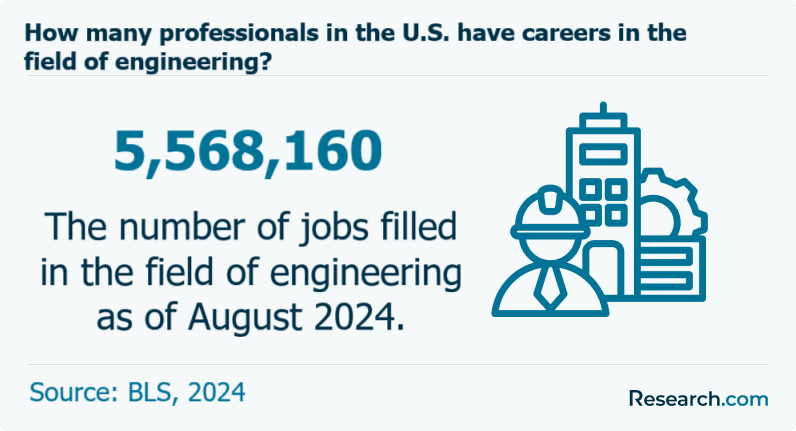
The image below shows the number of workers in the field of engineering. These are the professionals who possess these skills.
How much does an engineering degree cost?
The cost of earning an engineering degree in the U.S. can vary widely depending on the type of institution, location, and whether you attend as an in-state or out-of-state student. Generally, engineering programs are among the more expensive majors because of their rigorous coursework, lab requirements, and specialized equipment. Still, many students see it as a worthwhile investment given the strong earning potential and career stability that follows.
- Public Universities (In-State): Tuition typically ranges from $10,000 to $15,000 per year.
- Public Universities (Out-of-State): Costs can increase significantly, averaging $25,000 to $30,000 per year.
- Private Universities: Tuition often ranges between $35,000 and $60,000 per year, depending on the institution.
- Additional Expenses: Books, lab fees, technology, and living costs can add $10,000–$20,000 annually to the total.
- Financial Aid and Scholarships: Many engineering schools offer support that can reduce overall expenses.
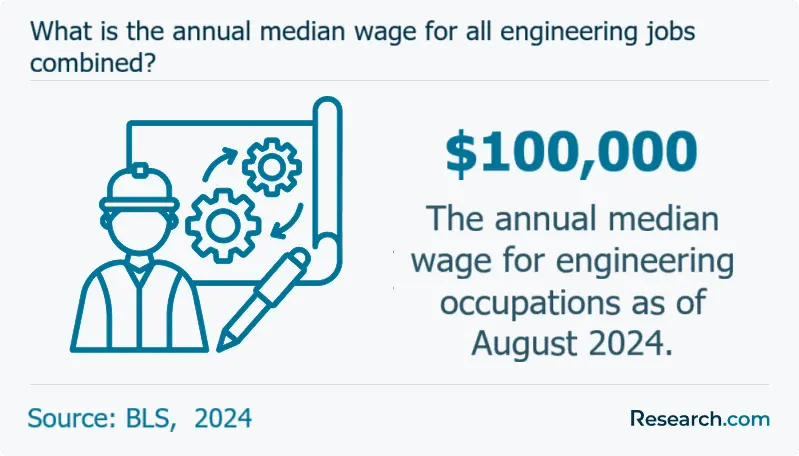
Overall, engineering degrees may cost a lot, but you will soon see that ROI, or return on investment, is fast, especially if you choose majors that make the most money. The infographic below gives you a glimpse of the earning potential of engineering occupations.
What financial aid is available to engineering students?
Financing an engineering degree can be challenging, but there are many forms of financial aid designed to make it more accessible. Engineering students often qualify for the same federal and state aid as other majors, while also having access to scholarships and grants targeted specifically at STEM fields. Understanding these options can help ease the financial burden and make pursuing an engineering career more manageable.
- Federal Student Aid: Grants, loans, and work-study programs offered through the FAFSA are the most common source of support.
- State-Based Programs: Many states provide additional scholarships or tuition assistance for residents studying engineering.
- University Scholarships: Colleges often award merit- or need-based scholarships, with some reserved for engineering majors.
- Professional and Industry Scholarships: Organizations like the American Society of Mechanical Engineers (ASME) or IEEE offer awards for students in specific engineering fields.
- Research and Fellowship Opportunities: Graduate and upper-level students may receive stipends or tuition coverage through research assistantships or fellowships.
Why do engineering careers have high earning potential?
Engineering careers consistently offer strong salaries because they require a unique mix of technical knowledge, problem-solving skills, and specialized training. Engineers are responsible for designing systems, products, and solutions that impact entire industries, making their expertise highly valuable. The complexity of their work, along with the demand for innovation in technology, healthcare, energy, and infrastructure, drives compensation upward.
- Specialized Expertise: Engineers develop skills that are not easily replaceable, making their contributions critical to success.
- High Industry Demand: From renewable energy to software development, industries rely heavily on engineers to stay competitive.
- Significant Responsibility: Their work often involves large-scale projects where safety, efficiency, and performance are crucial.
- Innovation-Driven Fields: As technology advances rapidly, engineers are needed to create, maintain, and improve cutting-edge solutions.
- Return on Investment: Employers are willing to pay more because engineering work directly boosts productivity, safety, and profitability.
All of these contribute to engineering careers having a high earning potential. And this earning potential even goes higher if you pursue advanced education, such as a master of science or master of engineering degree. Explore the difference between master of science and master of engineering to make more informed decisions about future career moves.
What is the job outlook for engineering careers?
Engineering careers remain in strong demand, as industries continue to rely on innovation and technology to solve modern challenges. From developing sustainable energy systems to advancing healthcare technology and building smarter infrastructure, engineers play a key role in shaping the future. The U.S. Bureau of Labor Statistics projects steady growth across many engineering fields, though the rate varies depending on the specialty.
- Growing Fields: Specializations like software, biomedical, environmental, and civil engineering are projected to see above-average growth due to global needs in healthcare, technology, and sustainability.
- Stable Demand: Core fields such as mechanical, electrical, and industrial engineering will remain essential, offering consistent job opportunities.
- Emerging Opportunities: New technologies like artificial intelligence, renewable energy, and space exploration are creating fresh demand for engineers with cutting-edge skills.
- Overall Outlook: Employment for engineers is expected to grow about as fast as or faster than the average for all occupations, with some branches seeing even higher growth.
Overall, the employment of engineers is projected to grow 7% from 2024 to 2034, which is more than twice as fast as the average for all occupations.
As new security vulnerabilities and cyber-related threats increase, engineering roles connected to information security and systems protection are expanding as well. Professionals looking to build expertise in this rapidly growing area may find programs such as a masters in network security online especially valuable, as they provide advanced skills that align directly with employer needs in cybersecurity and critical infrastructure protection.
The table below shows the projected employment growth rate for the highest paying engineering careers from 2024 to 2034, as well as their projected number of openings every year over that 10-year period.
| Engineer Career | Projected Employment Growth Rate (2024-2034) | Projected Annual Openings |
| 1. Environmental Engineers | 4% | 3,000 |
| 2. Health and Safety Engineers | 4% | 1,500 |
| 3. Biomedical Engineers | 5% | 1,300 |
| 4. Materials Engineers | 6% | 1,500 |
| 5. Electrical and Electronics Engineers | 7% | 17,500 |
| 6. Chemical Engineers | 3% | 1,100 |
| 7. Nuclear Engineers | -1% | 800 |
| 8. Aerospace Engineers | 6% | 4,500 |
| 9. Petroleum Engineers | 1% | 1,200 |
| 10. Computer Hardware Engineers | 7% | 4,700 |
What challenges are common in engineering careers?
While engineering offers rewarding opportunities, it also comes with challenges that professionals must navigate throughout their careers. The field demands continuous learning, adaptability, and resilience, especially as technology and industry needs evolve. Understanding these common challenges can help aspiring engineers prepare for the realities of the profession:
- Complex Problem-Solving: Engineers often face difficult technical issues that require time, research, and innovative thinking to resolve.
- Keeping Up With Technology: Rapid advancements in software, materials, and processes mean engineers must constantly update their knowledge.
- High Responsibility: Mistakes in design or execution can have serious safety, financial, or environmental consequences.
- Workload and Deadlines: Large projects may involve long hours, strict timelines, and pressure to deliver accurate results.
- Interdisciplinary Collaboration: Engineers frequently work with professionals from different fields, which can present communication and coordination challenges.
It helps to know and understand these challenges before you pursue on-campus or online engineering programs so you can come well-prepared.
Are online degree programs a viable supplement to traditional engineering education?
In today’s competitive landscape, leveraging online education can help engineers stay ahead of rapidly evolving technologies. For software engineering professionals, targeted online programs offer flexible ways to acquire specialized skills and remain competitive. Many of these programs are designed to bridge the gap between theoretical concepts and practical applications, ultimately enhancing professional growth. Exploring options such as the cheapest software engineering online degrees can provide a cost-effective pathway to expanding expertise without compromising work commitments.
Key Findings
- In May 2024, the median annual wage for architecture and engineering occupations was $97,310, significantly above the median for all occupations combined, which was $49,500. The median annual wage for engineering jobs was $100,000 as of August 2024.
- The overall employment of architecture and engineering occupations in the U.S. is projected to grow faster than the average for all occupations from 2023 to 2033. About 195,000 openings are projected each year in this field over this 10-year period.
- According to data from the United States Bureau of Labor Statistics, 5,568,160 engineering jobs were filled as of August 2024.
- Around 73% of professionals in the field of engineering were employed in occupations that require at least a bachelor's degree.
- Of all engineering professionals, 42% hold an advanced degree.
- Of all engineering professionals, 8% are employed part-time.
- Of all engineering professionals, 75% focused on these concentrations: electrical engineering, mechanical engineering, general engineering, civil engineering, and computer engineering.
- Among workers with an engineering degree, only 30% belong to the architecture and engineering occupational group. The rest have management occupations (19%), computer and mathematical occupations (15%), business and financial operations occupations (7%), sales-related occupations (5%), and other occupations (24%).
Here’s What Professionals Have to Say About Their Engineering Careers
- Jonathan: "When I first became a civil engineer, I knew the projects would be challenging, but I didn’t realize how fulfilling it would feel to see roads, bridges, and buildings come to life from my designs. The work often requires long hours and precision, but the financial rewards make the sacrifices worthwhile. Knowing that my career provides both stability and strong earning potential has given me peace of mind for the future."
- Ophelia: "As a chemical engineer in the energy sector, I’ve had the chance to work on large-scale projects that directly impact sustainability. The technical challenges are intense, but the compensation reflects the level of responsibility I carry. The strong salary not only supports my family comfortably but also allows me to keep pursuing further training and certifications without financial worry. "
- Cyrus: "Working as a software-focused electrical engineer has opened doors to exciting innovation and cross-industry opportunities. The projects demand constant learning and adaptation, but the financial rewards make every challenge worth tackling. The high earning potential gives me freedom to invest, travel, and live comfortably while knowing I’m in a career that will remain in demand for years."
References:
- Case Western Reserve University. (2025, August 2). 12 of the Highest-Paying Engineering Jobs. Case Online Engineering Blog.
- United States Bureau of Labor Statistics. (2025, September 11). Occupational Employment and Wage Statistics Query System. BLS.
- United States Bureau of Labor Statistics. (2025, August 28). Occupational Outlook Handbook | Aerospace Engineers. BLS.
- United States Bureau of Labor Statistics. (2025, April 18). Occupational Outlook Handbook | Architecture and Engineering Occupations. BLS.
- United States Bureau of Labor Statistics. (2025, August 28). Occupational Outlook Handbook | Biomedical Engineers. BLS.
- United States Bureau of Labor Statistics. (2025, August 28). Occupational Outlook Handbook | Chemical Engineers. BLS.
- United States Bureau of Labor Statistics. (2025, August 28). Occupational Outlook Handbook | Computer Hardware Engineers. BLS.
- United States Bureau of Labor Statistics. (2025, August 28). Occupational Outlook Handbook | Electrical and Electronics Engineers. BLS.
- United States Bureau of Labor Statistics. (2025, August 28). Occupational Outlook Handbook | Environmental Engineers. BLS.
- United States Bureau of Labor Statistics. (2024, August 29). Occupational Outlook Handbook | Field of degree: Engineering. BLS.
- United States Bureau of Labor Statistics. (2025, August 28). Occupational Outlook Handbook | Health and Safety Engineers. BLS.
- United States Bureau of Labor Statistics. (2025, August 28). Occupational Outlook Handbook | Materials Engineers. BLS.
- United States Bureau of Labor Statistics. (2025, August 28). Occupational Outlook Handbook | Nuclear Engineers. BLS.
- United States Bureau of Labor Statistics. (2025, August 28). Occupational Outlook Handbook | Petroleum Engineers. BLS.
Other Things You Should Know About the Highest-Paying Engineering Careers
In 2027, software engineering is anticipated to offer the highest salaries, driven by the growing demand for expertise in artificial intelligence, machine learning, and cloud computing. The technology sector's rapid expansion and innovation are key factors contributing to high remuneration in this field.
While an advanced degree can enhance specialization and competitiveness, it is not strictly necessary for achieving the highest-paying engineering roles in 2027. Experience, industry demand, and technical skills often hold more weight in determining salary potential.
Certifications and licenses, such as the Professional Engineer (PE) license, can significantly enhance an engineer’s earning potential. They demonstrate advanced expertise, credibility, and the ability to take on greater responsibility, including signing off on projects and leading teams. Employers often reward these qualifications with higher salaries and leadership opportunities. Specialized certifications in areas like project management, cybersecurity, or renewable energy can also open doors to better-paying positions.