
2027 Biomedical Engineering Specialization Options

Co-Founder and Chief Data Scientist
Biomedical engineering is one of the fastest-evolving fields, blending medicine, biology, and technology to improve healthcare solutions. Professionals in this area work on everything from medical devices and diagnostic tools to prosthetics and regenerative therapies.
As healthcare demands grow and innovation accelerates, biomedical engineers will find opportunities in hospitals, research labs, manufacturing, and startups focused on cutting-edge treatments. Specializing in areas such as biomechanics, medical imaging, or biomaterials allows graduates to tailor their expertise to industry needs and patient care.
In this guide, I'll outline the top biomedical engineering specialization options and their career potential.
What are the benefits of pursuing a biomedical engineering specialization?
- Specializations such as biomechanics, medical imaging, or biomaterials help you develop advanced knowledge in high-demand areas.
- Specialized skills open doors to leadership roles in research, product development, or healthcare technology.
- Employers value engineers with targeted expertise who can immediately contribute to niche projects.
- Specializations allow you to work on cutting-edge technologies that directly impact patient care and medical outcomes.
- You gain exposure to both engineering and medical sciences, broadening your career flexibility.
- Which specialization options are most in demand in biomedical engineering? Specializations
- What career paths are available for each biomedical engineering specialization? Career Paths
- Do specialized biomedical engineers need certification or licensure for their focus area? Certifications
- How can graduates demonstrate expertise in their chosen biomedical engineering specialization? How can graduates demonstrate expertise in their chosen biomedical engineering specialization?
- Which biomedical engineering specializations offer the highest ROI in 2027? ROI Comparison
- Why pursue a career in a specific biomedical engineering specialization? Why pursue a career in a specific biomedical engineering specialization?
- Which industries and employers value specialized biomedical engineering skills the most? Top Employers
- What is the employment outlook for each biomedical engineering specialization in 2027? Job Outlook
- What earning potential can you expect in different biomedical engineering specializations? Earning Potential
- What challenges are unique to building a career in a biomedical engineering specialization? What challenges are unique to building a career in a biomedical engineering specialization?
- What alternative career paths exist for specialized biomedical engineers? What alternative career paths exist for specialized biomedical engineers?
- How can complementary online degrees elevate a biomedical engineering specialization? How can complementary online degrees elevate a biomedical engineering specialization?
Which specialization options are most in demand in biomedical engineering?
The most in-demand biomedical engineering specialization options today reflect both healthcare needs and rapid advances in technology. Here are the key areas:
- Medical Device Design and Development: Creating and improving devices like surgical robots, wearables, and diagnostic tools.
- Tissue Engineering and Regenerative Medicine: Using biomaterials, stem cells, and 3D bioprinting to develop artificial organs and advanced therapies.
- Biomechanics and Rehabilitation Engineering: Designing prosthetics, orthopedics, and exoskeletons to improve mobility and recovery.
- Biomedical Imaging and AI Analytics: Innovating with MRI, CT, ultrasound, and machine learning to enhance diagnostic accuracy.
- Biomaterials Engineering: Developing safe, effective materials for implants, scaffolds, and drug delivery systems.
- Clinical Engineering and Regulatory Affairs: Ensuring safe, compliant integration of medical technologies in hospitals and healthcare systems.
- Bioinformatics and Data Science: Applying big data and computational tools to genomics, personalized medicine, and predictive healthcare.
- Neural Engineering: Advancing brain–computer interfaces and neuroprosthetics for neurological conditions.
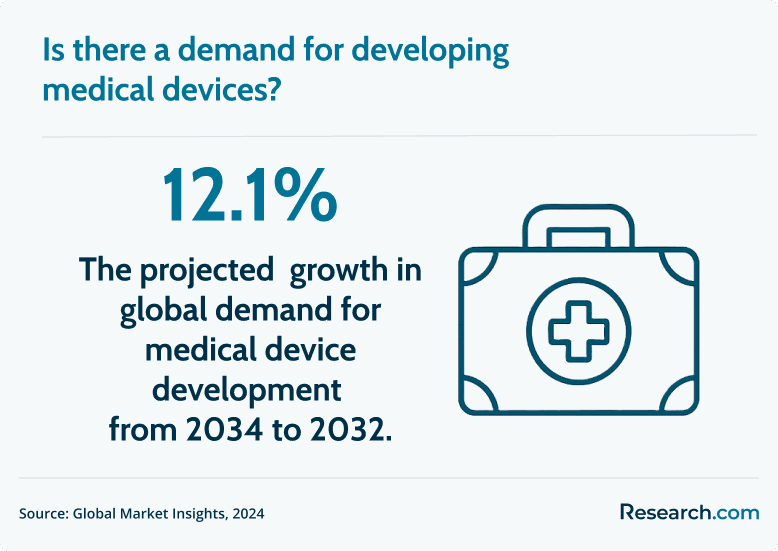
These areas are not only expanding academic opportunities but also driving strong industry growth. According to Global Market Insights, the world's demand for medical device design and development is expected to increase by 12% over the next decade.
What career paths are available for each biomedical engineering specialization?
Biomedical engineering offers a wide range of career paths that vary depending on a professional’s chosen specialization. From designing medical devices and developing biomaterials to advancing tissue engineering, neural technologies, and AI-driven diagnostics, each focus area opens unique opportunities across healthcare, research, and industry.
For those considering further study, options like the shortest online biotechnology master’s programs can provide a flexible pathway to build advanced expertise and transition into high-demand roles.
Here’s a clear breakdown of career paths for each biomedical engineering specialization so you can see how these fields translate into real jobs:
1. Medical Device Design and Development
This specialization focuses on designing and improving tools that support patient care, from surgical instruments to wearable health trackers.
Potential Job Roles:
- Product Design Engineer
- R&D Engineer
- Quality Assurance Engineer
- Manufacturing Engineer
2. Tissue Engineering and Regenerative Medicine
Specialists here work on developing artificial tissues and organs using biomaterials, stem cells, and 3D bioprinting to advance treatment options.
Potential Job Roles:
- Research Scientist
- Bioprocess Engineer
- Clinical Trials Manager
- Biotech Entrepreneur
3. Biomechanics and Rehabilitation Engineering
This field applies mechanical principles to the human body to improve mobility, recovery, and performance.
Potential Job Roles:
- Prosthetics/Orthotics Designer
- Rehabilitation Engineer
- Sports Biomechanist
- Exoskeleton Engineer
4. Biomedical Imaging and AI Analytics
Engineers in this area enhance medical imaging systems and use AI to improve diagnostic accuracy and speed.
Potential Job Roles:
- Imaging Systems Engineer
- Machine Learning Engineer
- Clinical Imaging Specialist
- Healthcare Data Scientist
5. Biomaterials Engineering
This specialization focuses on creating materials for implants, prosthetics, and controlled drug delivery systems.
Potential Job Roles:
- Biomaterials Scientist
- Implant Designer
- Drug Delivery Engineer
- Regulatory Specialist
6. Clinical Engineering and Regulatory Affairs
Specialists ensure medical devices are safe, effective, and properly integrated into healthcare facilities.
Potential Job Roles:
- Clinical Engineer
- Biomedical Equipment Technician
- Regulatory Affairs Specialist
- Healthcare Technology Manager
7. Bioinformatics and Data Science
This area combines biology, computing, and big data to drive discoveries in genomics, diagnostics, and personalized medicine.
Potential Job Roles:
- Bioinformatics Analyst
- Computational Biologist
- Healthcare Data Scientist
- AI in Genomics Specialist
8. Neural Engineering
A cutting-edge field focused on the nervous system, developing technologies like brain–computer interfaces and neuroprosthetics.
Potential Job Roles:
- Neuroprosthetics Engineer
- Brain–Computer Interface Developer
- Neuroengineering Researcher
- Neurotech Consultant
Do specialized biomedical engineers need certification or licensure for their focus area?
Unlike clinical professions, biomedical engineers typically do not need formal licensure to practice. A Professional Engineer (PE) license is optional and generally pursued only in roles tied to public safety, consulting, or government projects.
Most careers rely on academic preparation at the bachelor’s, master’s, or doctoral level, with some professionals also pursuing fast track online master’s in bioinformatics programs to build specialized expertise more efficiently.
That said, certifications such as the ones outlined below can be highly valuable for advancing in specific focus areas:
- Clinical Engineering: Certified Clinical Engineer (CCE) demonstrates expertise in hospital technology and patient safety.
- Regulatory Affairs: Regulatory Affairs Certification (RAC) validates knowledge of FDA/CE regulations for medical devices.
- Medical Device Design and Development: Quality-focused credentials such as Certified Quality Engineer (CQE) or ISO 13485 training strengthen career prospects.
- Bioinformatics and Data Science: Certifications in AI, data analytics, Python, or R programming are often sought after.
- Biomedical Imaging: Training in imaging system safety, MRI/CT operation, or AI in healthcare adds a competitive edge.
- Biomechanics and Rehabilitation: Some roles may require prosthetics/orthotics certifications, depending on region.
Overall, while certification or licensure is not required across most biomedical engineering specializations, earning recognized credentials can help engineers demonstrate expertise, gain a competitive edge in hiring, and qualify for leadership roles.
Moreover, to further inform your decision on pursuing additional license or certification, the US BLS reports that nearly a quarter of biomedical engineers work in research and development.
How can graduates demonstrate expertise in their chosen biomedical engineering specialization?
Graduates can stand out by combining education, certifications, and practical achievements with visible contributions to research, innovation, and professional networks.
In some cases, pairing their specialization with complementary programs, such as the shortest online master’s degree engineering management, can also strengthen leadership and project management skills valued in multidisciplinary teams.
Here’s how biomedical engineering graduates can demonstrate expertise in their chosen specialization for employers, research institutions, and industry leaders:
- Advanced Education: Earning a master’s or PhD focused on their specialization (e.g., biomaterials, neural engineering) shows depth of knowledge and research ability.
- Certifications and Training: Obtaining credentials like the Certified Clinical Engineer (CCE), Regulatory Affairs Certification (RAC), or certifications in data science, AI, and imaging technologies builds professional credibility.
- Internships and Research Projects: Hands-on experience in labs, hospitals, or biotech companies demonstrates practical application of classroom knowledge.
- Publications and Presentations: Publishing research in academic journals or presenting at conferences highlights expertise to both academic and industry audiences.
- Portfolio of Work: Showcasing design projects, prototypes, or software tools (e.g., medical device designs, computational models) provides tangible proof of skills.
- Professional Memberships: Joining organizations like the Biomedical Engineering Society (BMES) or IEEE’s Engineering in Medicine and Biology Society reflects active engagement in the field.
- Industry Collaborations: Partnering with healthcare providers or tech companies on innovation projects demonstrates real-world impact.
It’s also helpful for biomedical engineering professionals to understand broader workforce data, such as health sciences salary by state, to identify regions where their expertise is most in demand or where advanced biomedical roles offer higher compensation. This awareness can guide career decisions, contract negotiations, and even choices about graduate programs or certifications that align with market needs.
Which biomedical engineering specializations offer the highest ROI in 2027?
While many biomedical engineering specializations offer meaningful career opportunities, Medical Device Design, Clinical Engineering, and Bioinformatics currently provide the highest ROI, balancing salary, industry demand, and long-term growth potential.
For students preparing to enter these fields, pursuing complementary programs like an accelerated online biochemistry degree can also strengthen foundational knowledge and support faster entry into high-demand roles.
Here’s a clear breakdown of biomedical engineering specializations with the highest return on investment (ROI):
- Medical Device Design and Development: Offers strong earning potential, driven by demand for innovation and regulatory-compliant products. The U.S. average salary for Medical Device Engineers is $86,586 annually, with the 25th to 75th percentile range between $79,133 and $91,182.
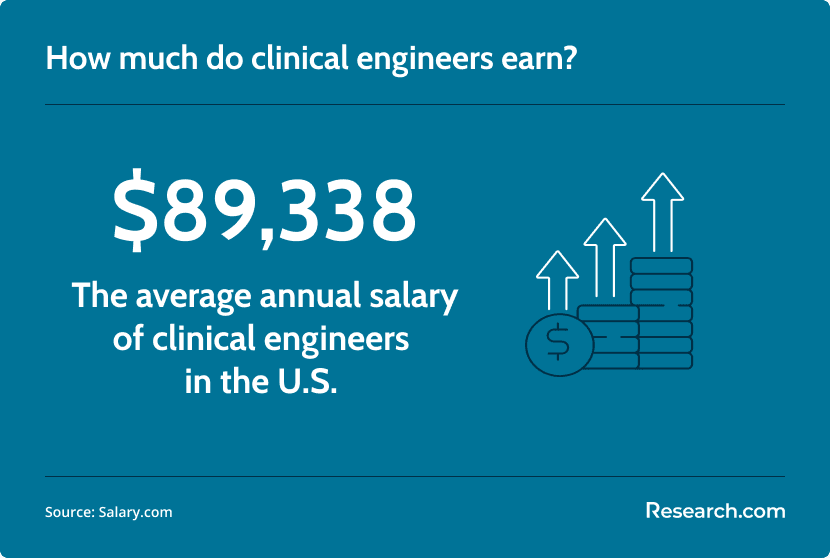
- Clinical Engineering and Healthcare Technology Management: High ROI stems from critical roles in hospital operations and patient safety. Clinical Engineers earn an average of $89,338 annually in the U.S., with typical ranges from $79,873 to $99,169.
- Bioinformatics and Computational Biology: Taps into booming demand for data expertise in genomics and healthcare. While specific U.S. salary data is limited, anecdotal reports suggest that experienced bioinformaticians with an MS or PhD can earn $150,000 to $170,000, especially in competitive industry settings.
Why pursue a career in a specific biomedical engineering specialization?
Choosing a specialization in biomedical engineering allows professionals to align their technical expertise with areas of greatest personal interest and industry demand.
For some, pairing their specialization with complementary programs, such as the fastest master's in industrial engineering online, can further strengthen skills in systems optimization, management, and interdisciplinary collaboration.
Instead of working as generalists, specialized engineers develop deeper knowledge that can make them more competitive in the job market, improve career flexibility, and accelerate advancement into leadership roles.
Specialization also creates opportunities to contribute directly to transformative areas of healthcare innovation, from personalized medicine to advanced medical devices.
Key reasons to specialize include:
- Career Advancement: Specialized knowledge can fast-track engineers into senior, managerial, or research-focused positions.
- Higher Earning Potential: Many high-demand specialties, such as medical devices and bioinformatics, offer above-average salaries.
- Industry Relevance: Staying aligned with emerging fields like computational biology or regenerative medicine ensures long-term career stability.
- Impact on Healthcare: Specializations give engineers the ability to drive change in patient care, improving outcomes and shaping the future of medicine.
Which industries and employers value specialized biomedical engineering skills most?
Biomedical engineering specializations are increasingly prized by employers across sectors that harness healthcare, innovation, and technology. Graduates with niche expertise are positioned for in-demand roles and impactful work.
For many students considering biomedical engineering, a common question arises -- is a biology major hard? The answer depends on one’s interests and strengths. Since biomedical engineering blends biology with physics, chemistry, and advanced mathematics, those with a solid foundation in biology often find it an excellent and manageable stepping stone. This overlap makes biology majors particularly well-prepared to transition into biomedical engineering careers, where their understanding of living systems enhances their ability to design medical devices, therapies, and diagnostic tools.
- Biotechnology and Pharmaceuticals: The global biotechnology market is forecast to surge from around $1.95 trillion in 2024 to between $5.71 and $5.90 trillion by 2034, reflecting a compound annual growth rate (CAGR) of approximately 13 to 14%. The U.S. biotech sector similarly shows robust expansion, with double-digit growth projections.
- Medical Device Manufacturing: In the United States alone, the medical device industry exceeds $110 billion annually, representing a major segment of global biomedical engineering employment.
- Hospitals and Healthcare Systems: Healthcare facilities continue to expand services and infrastructure, generating a sustained need for clinical engineers and biomedical tech experts (e.g., new hospital expansions and specialized labs).
- Tech and Data-Driven Healthcare: AI-powered platforms are transforming drug discovery and diagnostics. The AI-in-drug-discovery market is projected to grow from $1.94 billion in 2025 to $16.49 billion by 2034, at a CAGR of 27%.
- Academic and Research Institutions: These sectors play a key role, especially as bioinformatics and tissue engineering segments expand rapidly within R&D settings.
Top Employers in Biomedical Engineering
- Major Medical Device Firms: Medtronic, Boston Scientific, Stryker, Philips Healthcare.
- Biopharmaceutical Leaders: Pfizer, Johnson & Johnson, Amgen, Novartis.
- Hospital Systems and Clinical Centers: Mayo Clinic, Cleveland Clinic, Kaiser Permanente.
- Research and Government Bodies: NIH, DARPA, university-affiliated labs.
- Tech Companies in Health Data: Google Health, Microsoft AI for Health, IBM Watson Health.
According to the Medical Device and Diagnostic Industry, Medtronic ranks as the top medical device company in 2024, bringing in approximately $33 billion in revenue for the 2024 fiscal year.
What is the employment outlook for each biomedical engineering specialization in 2027?
The overall job market for biomedical engineers is expanding, with the U.S. Bureau of Labor Statistics (US BLS) projecting 5% growth from 2022 to 2032, faster than the average for all occupations. Demand is fueled by an aging population, rising healthcare needs, and advances in biotechnology and medical devices.
In many ways, biomedical engineering overlaps with other high-demand healthcare disciplines. For example, professionals exploring the highest paying jobs with health science degree backgrounds often find that biomedical engineering offers similar earning potential—especially in roles involving research, medical device design, and biotechnology innovation. Both fields attract employers seeking technically skilled problem-solvers capable of improving patient outcomes through science and technology.
Outlook varies by specialization, with some fields experiencing particularly strong growth:
- Medical Devices and Implants: Consistently high demand as healthcare providers adopt advanced surgical and diagnostic tools.
- Biomaterials: Growing with applications in prosthetics, regenerative medicine, and tissue engineering.
- Biomechanics: Increasing need for rehabilitation technologies, wearable devices, and sports medicine applications.
- Medical Imaging and Bioinstrumentation: Expanding with AI-powered diagnostics and non-invasive imaging technologies.
- Bioinformatics and Computational Biology: Rapid growth driven by precision medicine and big data in genomics.
- Neural Engineering: Emerging demand linked to brain-computer interfaces and treatments for neurological disorders.
Specialized biomedical engineers are expected to see continued opportunity across industries ranging from healthcare and research to biotechnology startups. Those who align with cutting-edge areas such as bioinformatics and medical devices may enjoy the strongest career stability and growth.
What earning potential can you expect in different biomedical engineering specializations?
Biomedical engineering is a versatile field where earning potential often depends on one’s chosen specialization. Areas such as medical device design, tissue engineering, and neural engineering not only differ in their focus but also in the types of employers and salary ranges they offer.
Advanced roles that require doctoral training or industry expertise often yield higher compensation, especially in sectors like biotechnology and pharmaceuticals. Below is an overview of expected earnings across key biomedical engineering specializations:
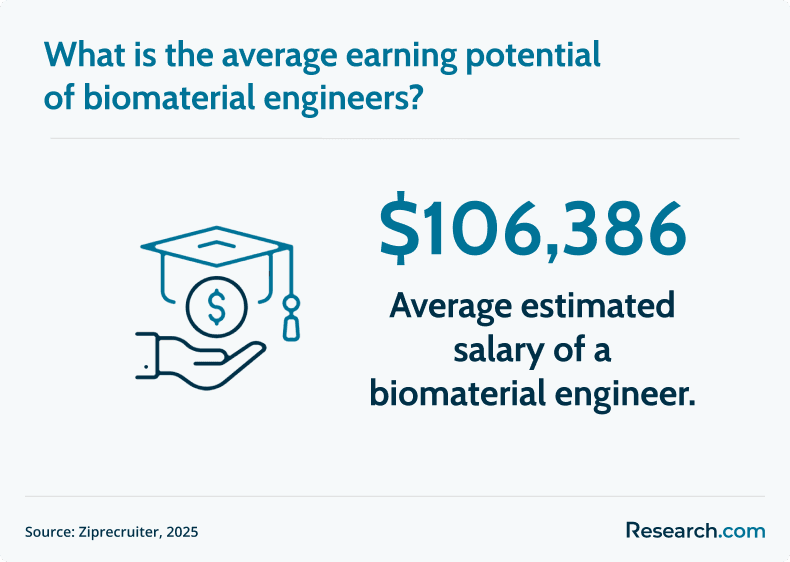
- Biomaterials Engineering: Specialists earn around $44,000 to $173,500, with opportunities to increase in medical device manufacturing.
- Tissue Engineering and Regenerative Medicine: Salaries typically fall between $75,000 and $100,000, often rising with research and development roles.
- Neural Engineering: Earnings average $90,000 to $120,000, reflecting the demand for brain-computer interface and neuroprosthetics expertise.
- Clinical Engineering: Salaries range from $70,000 to $95,000, with growth tied to healthcare systems and hospital technology management.
- Systems and Computational Biology: Professionals can earn $95,000 to $125,000, especially in biotech and AI-driven health analytics.
These figures highlight how specialization can influence long-term return on investment (ROI), with emerging fields such as computational biology and neural engineering standing out for both demand and salary potential.
What challenges are unique to building a career in a biomedical engineering specialization?
While biomedical engineering specializations open doors to rewarding careers, graduates must navigate several challenges that are distinct to the field. These hurdles often stem from the highly interdisciplinary nature of the work, rapid technological advancements, and evolving industry demands.
- Interdisciplinary Knowledge Requirements: Success in biomedical engineering requires a mix of engineering, biology, computer science, and healthcare expertise. Graduates may struggle to master such diverse skill sets, especially when transitioning from one domain (e.g., mechanical engineering) into biomedical applications.
- Rapid Technological Change: Specializations like computational biology, neural engineering, and medical imaging evolve quickly. Professionals must commit to continuous learning through certifications, advanced degrees, or industry training to remain competitive.
- High Educational Investment: Many advanced roles require master’s or doctoral degrees, particularly in areas like tissue engineering or regenerative medicine. This creates financial and time barriers, especially when compared to other engineering fields with quicker entry pathways.
- Regulatory and Ethical Challenges: Careers in medical device development or neural engineering face strict FDA and international regulations. Ethical concerns (e.g., gene editing, neural implants) also add complexity, requiring specialized knowledge of compliance and bioethics.
- Limited Entry-Level Opportunities in Some Specializations: Fields such as regenerative medicine or computational genomics are highly research-driven, with fewer immediate job openings for recent graduates. Many entry points are in academia or startups, which may mean lower initial pay and less job security.
- Intense Competition for High-ROI Specializations: Popular areas like systems biology and AI-driven healthcare solutions attract strong interest, leading to competitive job markets. Graduates must often distinguish themselves through research publications, patents, or specialized internships.
These challenges highlight why strategic career planning—including networking, advanced education, and active involvement in professional societies—can make the difference between simply entering the field and building a thriving, long-term career.
What alternative career paths exist for specialized biomedical engineers?
Not all biomedical engineering graduates pursue traditional roles in research labs, hospitals, or medical device companies. With their unique combination of engineering, biology, and problem-solving skills, specialized biomedical engineers have access to a wide range of alternative career paths across industries.
These options allow them to apply their expertise beyond the standard healthcare and academic settings.
- Regulatory Affairs Specialist: Biomedical engineers in this role help companies navigate FDA, EMA, or other global regulatory approval processes for biomedical devices, pharmaceuticals, or biotech products, ensuring compliance with safety and legal frameworks.
- Clinical Engineer: Professionals in this career manage the implementation, maintenance, and safe use of medical technologies in hospitals, making sure that imaging systems, prosthetics, and other devices operate effectively and reliably.
- Intellectual Property (IP) and Patent Consultant: Specialized biomedical engineers can guide inventors, universities, and companies in securing patents for biomedical innovations by combining technical expertise with legal or consulting skills.
- Healthcare Data Analyst: Engineers in this path apply computational biology or bioinformatics knowledge to analyze large-scale health data for predictive modeling, diagnostics, or personalized medicine, often working with tech companies, insurers, or public health agencies.
- Entrepreneur or Startup Founder: Biomedical engineers with an entrepreneurial mindset can launch startups in areas such as regenerative medicine, wearable devices, or telehealth technologies, leveraging their technical expertise along with business acumen.
- Technical Sales or Product Specialist: In this role, biomedical engineers act as the link between technology developers and healthcare providers by using their in-depth knowledge to explain, sell, and support advanced medical products.
- Academic or Industry Educator: Some biomedical engineers choose to teach or develop training programs, particularly in growing fields such as neural engineering or artificial intelligence in medicine, working in universities, technical colleges, or corporate environments.
- Government or Policy Advisor: Engineers who pursue this path apply their biomedical expertise to influence public health policies, establish technology standards, and shape ethical guidelines for emerging fields such as genomics and neural devices.
These alternative pathways highlight the adaptability of biomedical engineers and demonstrate how specialized skills can open doors in areas ranging from public policy to entrepreneurship.
Many students considering biomedical engineering early in their studies often wonder, can you have two majors in college — for example, combining biomedical engineering with computer science, business, or data analytics. This kind of academic pairing can open even more alternative career opportunities, from biotechnology entrepreneurship to healthcare data analysis and product innovation.
How can complementary online degrees elevate a biomedical engineering specialization?
Biomedical engineering is increasingly integrated with digital and computational techniques to drive innovation in healthcare. Advancing proficiency in areas like AI, machine learning, and data analytics can create a competitive edge, allowing professionals to bridge the gap between traditional biomedical applications and emerging digital solutions. Pursuing targeted online degrees supports the development of these interdisciplinary skills. For instance, obtaining the cheapest software engineering online degree can enhance one’s ability to develop robust software solutions, optimize data management, and improve device integration, thereby broadening career opportunities and fostering leadership in innovative healthcare environments.
What Biomedical Engineering Graduates Say About Specializing in Their Careers
- Franco: "Specializing in bioinformatics gave me the edge I needed to stand out in a competitive job market. Within a year of graduation, I was working on precision medicine projects that directly impact patient care. The combination of technical skills and healthcare knowledge opened doors I never imagined."
- Adam: "My focus on medical device engineering meant I was able to design prototypes during my studies that are now being tested in real clinics. It’s rewarding to see classroom theory translate into tools that improve people’s lives. The specialization made my work feel purposeful and practical."
- Charlie: "Choosing neural engineering as a specialization was challenging, but it gave me skills that are in demand across both research and industry. I’ve been able to work remotely on global projects, which has given me incredible flexibility. The constant learning keeps me motivated and excited for the future."
Key Findings
- The demand for medical device development is expected to increase globally from 2024 to 2032 by 12.1%.
- About 22% of biomedical engineers and bioengineers work in research and development.
- Clinical engineers can earn nearly $90,000 on average per year.
- Biomedical engineers will experience a 5% growth in demand between 2024 and 2034.
- The top medical device company, Medtronic, brought in $33 billion in revenue in 2024.
References:
- BioSpace. (2025). Biotechnology market size expected to reach USD 5.90 trillion by 2034. https://www.biospace.com/press-releases/biotechnology-market-size-expected-to-reach-usd-5-90-trillion-by-2034
- Indeed. (2023). What is clinical engineering? (With job outlook and skills). Indeed Career Guide. https://www.indeed.com/career-advice/finding-a-job/what-is-clinical-engineering
- IntelMarketResearch. (2025). Biotechnology market – Market outlook 2025–2032. https://www.intelmarketresearch.com/Biotechnology-Market-Global%20-2802
- Mordor Intelligence. (n.d.). Biotechnology market size, share & industry forecast 2030. https://www.mordorintelligence.com/industry-reports/biotechnology-market
- Payscale. (2024). Average biomedical engineer salary. https://www.payscale.com/research/US/Job=Biomedical_Engineer/Salary
- Precedence Research. (n.d.). Biotechnology market size research and forecast report 2025–2034. https://www.precedenceresearch.com/biotechnology-market
- Salary.com. (2024). Biomedical engineer salary in the United States. https://www.salary.com/research/salary/listing/biomedical-engineer-salary
- Salary.com. (n.d.). Clinical engineer salary. Salary.com. https://www.salary.com/research/salary/hiring/clinical-engineer-salary
- Salary.com. (n.d.). Medical device engineer salary. Salary.com. https://www.salary.com/research/salary/posting/medical-device-engineer-salary
- US BLS. (2024). Biomedical engineers: Occupational outlook handbook. U.S. Department of Labor. https://www.bls.gov/ooh/architecture-and-engineering/biomedical-engineers.htm
- Zippia. (2024). Biomedical engineer demographics and statistics in the U.S. https://www.zippia.com/biomedical-engineer-jobs/demographics
- ZipRecruiter. (2025). Biomaterials Engineer Salary. https://www.ziprecruiter.com/Salaries/Biomaterials-Engineer-Salary
Other Things To Know About Pursuing A Biomedical Engineering Specialization
In 2027, some of the leading biomedical engineering specializations include bioinformatics, biomedical imaging, tissue engineering, and neuroengineering. These fields offer cutting-edge opportunities as they integrate innovative technology with healthcare, catering to the evolving needs of the medical industry.
In 2027, emerging trends in biomedical engineering specialization include neural engineering, focusing on brain-machine interfaces, and personalized medicine, leveraging genomics and data analytics for tailored healthcare solutions. Additionally, rehabilitation engineering is gaining traction with advancements in prosthetics and assistive technologies to improve patient outcomes and quality of life.


