
2027 Highest-Paying Jobs in Health Science

Co-Founder and Chief Data Scientist
Choosing a career in health science in the U.S. can feel overwhelming, especially when trying to find reliable information on salaries and job growth. As an expert in career planning, I know that accurate data is often scattered across various sources, making it hard to get a clear picture.
Many sources can be misleading, and understanding the true earning potential of a career requires looking at more than just a single number. This guide is designed to help you make informed decisions about your educational path and future career by providing well-researched information.
What are the benefits of getting a health science degree?
- Career Versatility: A health science degree provides a broad foundation, opening up various career pathways in both clinical and non-clinical roles, from patient care to administration, research, and public health.
- Earning Potential: The degree is a stepping stone to some of the highest-paying careers in the U.S. As of 2025, professionals with advanced health science degrees often command six-figure salaries.
- High Job Growth: The healthcare industry is experiencing significant growth, with a high demand for skilled professionals in many fields, which offers greater job security and abundant opportunities.
What can I expect from a health science degree program?
- Rigorous Curriculum: Expect a demanding curriculum that covers foundational sciences like human anatomy and physiology, chemistry, and biology, as well as specialized topics related to public health, research methods, and healthcare administration.
- Clinical and Hands-On Experience: Programs often require or recommend hands-on experience through clinical rotations, internships, and laboratory work to prepare students for real-world scenarios.
- Focus on Communication and Ethics: The curriculum emphasizes effective communication skills for interacting with patients and colleagues, as well as a strong focus on professional ethics and compliance in healthcare.
- Interdisciplinary Learning: The degree often incorporates knowledge from various disciplines, including sociology, psychology, and statistics, to provide a holistic understanding of health and wellness.
- Preparation for Graduate School: The degree is designed to serve as a strong pre-professional track for a range of graduate programs, including medicine (MD/DO), physical therapy (DPT), and physician assistant studies (PA).
Where can I work with a health science degree?
- Hospitals and Clinics: Work in traditional healthcare settings in roles such as a registered nurse, physical therapist, or medical and health services manager.
- Government Agencies: Opportunities exist at agencies like the Centers for Disease Control and Prevention (CDC) or the National Institutes of Health (NIH) in roles like epidemiologist or public health analyst.
- Pharmaceutical and Biotech Companies: Professionals can work in research and development, clinical trials, or as medical science liaisons.
- Academic and Research Institutions: Contribute to scientific discovery and health-related studies in a university or private research lab setting.
- Corporate and Private Companies: Apply your skills in occupational health and safety, corporate wellness programs, or healthcare consulting for various industries.
How much can I make with a health science degree?
- Bachelor's Level Roles: Entry-level positions for those with a bachelor's degree typically offer median salaries ranging from $58,780 for a clinical laboratory technologist to over $110,680 for a medical and health services manager.
- Master's-Level Roles: With a master's degree, salaries significantly increase. For example, a physician assistant can earn a median of over $130,020, while a nurse practitioner's median salary is around $129,480.
- Doctoral and Professional Roles: Careers requiring a doctoral degree or extensive professional training are among the highest paying in the U.S. A physician's median salary is over $239,200, and a pharmacist earns a median of $136,030 as of 2025.
- What are some alternative career paths for health science majors? Alternative Careers
- How do the various health science disciplines differ? How do the various health science disciplines differ?
- What are some specializations within health science? Specializations
- What internship and research opportunities are available in health science? What internship and research opportunities are available in health science?
- Which universities offer top-ranked health science programs? Which universities offer top-ranked health science programs?
- Which Additional Certifications Can Boost Career Growth in Health Science? Which Additional Certifications Can Boost Career Growth in Health Science?
- What are the biggest challenges faced by students pursuing a health science degree? Challenges
- What are some current and future trends in the health science field? Trends
Highest-Paying Jobs in Health Science for 2027: Salaries, Degree Paths, and Career Fit
Choosing a health science career is not just a question of which job pays the most. The better question is which path matches your tolerance for school, licensing exams, clinical pressure, patient contact, debt risk, and long-term career goals. Some of the highest-paying health science jobs require medical school and residency. Others can be reached through a bachelor’s, master’s, professional doctorate, or specialized certification.
This guide is for students comparing health science majors, working adults considering healthcare careers, and graduates trying to decide whether to pursue clinical practice, research, health technology, public health, or healthcare management. You will learn which health science roles offer the strongest earning potential, what education they typically require, how the major disciplines differ, which alternative career paths exist, and what questions to ask before committing to a program.
Quick Answer: What Are the Highest-Paying Health Science Careers?
The highest-paying health science careers are generally physician and advanced clinical roles. Anesthesiologists, OB/GYNs, and surgeons report median salaries of >$457,500, while psychiatrists, family medicine physicians, nurse anesthetists, podiatrists, optometrists, pharmacists, physician assistants, and nurse practitioners also offer strong earning potential. However, the best option depends on how much education you are willing to complete and whether you want direct patient care, surgery, diagnostics, leadership, research, or technology-focused work.
| Career | Median Salary | Typical Education Path | Best Fit For |
| Anesthesiologist | >$457,500 | 4 years medical school + 4-year residency | Students comfortable with high-stakes procedural care and long medical training |
| OB/GYN | >$457,500 | 4 years medical school + 4-year residency | Future physicians interested in reproductive health, childbirth, and surgery |
| Surgeon | >$457,500 | 4 years medical school + 5–7 year residency | Students seeking operating-room careers with intensive training demands |
| Psychiatrist | $256,930 | 4 years medical school + 4-year residency | Students interested in mental health, diagnosis, and medication-based treatment |
| Family Medicine Physician | $229,130 | 4 years medical school + 3-year residency | Future doctors who want broad primary care across age groups |
| Nurse Anesthetist (CRNA) | $212,650 | 36 months after BSN and critical care experience | Registered nurses seeking advanced anesthesia practice |
| Podiatrist | $148,720 | 4 years professional doctorate + 3-year residency | Students interested in foot, ankle, and lower-leg care, including surgery |
| Perfusionist | ~$150,000 (Varies) | 18–24 months certificate or master’s degree | Students who want a specialized operating-room role without becoming a physician |
What Is Health Science?
Health science is an interdisciplinary field that uses biology, chemistry, technology, behavioral science, public health, and healthcare management to understand disease, improve care, prevent illness, and support healthcare systems. It includes clinical professions, laboratory work, health administration, medical research, health informatics, rehabilitation, wellness, and population health.
Because the field is broad, a health science degree can lead in several directions. Some students use it as preparation for medical, pharmacy, physician assistant, physical therapy, occupational therapy, or nursing graduate programs. Others move into non-clinical roles in healthcare operations, public health, medical sales, data analytics, clinical research, or health education.
Highest-Paying Jobs in Health Science
The roles below show how widely health science careers can differ. Salary is only one part of the decision. Program length, admissions competition, licensing requirements, work environment, and emotional demands should carry equal weight when comparing options.
Anesthesiologist
Anesthesiologists are physicians who administer anesthesia, manage pain control, and monitor vital functions before, during, and after procedures. This role requires deep medical training and the ability to make rapid decisions in surgical and emergency settings.
- Median Salary: >$457,500
- Leading Programs: Harvard Medical School, Johns Hopkins University School of Medicine
- Program Duration: 4 years medical school + 4-year residency
Biomedical Engineer
Biomedical engineers apply engineering, design, materials science, and medical knowledge to create devices, software, equipment, and technologies used in diagnosis, treatment, and patient monitoring. Students exploring biomedical engineering specialties should compare whether they prefer device design, imaging, biomaterials, rehabilitation engineering, or research and development.
- Median Salary: $99,550
- Leading Programs: Johns Hopkins University, Georgia Institute of Technology
- Program Duration: 4 years (Bachelor's degree)
Family Medicine Physician
Family medicine physicians deliver primary care for children, adults, and older patients. They diagnose common conditions, manage chronic disease, provide preventive care, and often serve as the first medical contact for patients.
- Median Salary: $229,130
- Leading Programs: University of North Carolina, University of Washington
- Program Duration: 4 years medical school + 3-year residency
Genetic Counselor
Genetic counselors evaluate inherited health risks, explain genetic testing results, and help patients and families understand medical, reproductive, and emotional decisions related to genetic conditions.
- Median Salary: $86,510
- Leading Programs: Sarah Lawrence College, Northwestern University
- Program Duration: 21–24 months (Master's degree)
Health Services Manager or Hospital Executive
Health services managers oversee healthcare operations, staffing, budgets, compliance, and service delivery in hospitals, clinics, public health agencies, and other medical organizations. This path can suit professionals who want leadership responsibility without providing direct clinical care.
- Median Salary: $110,680 (top 10% >$220,380)
- Leading Programs: University of Michigan, Johns Hopkins Bloomberg School of Public Health
- Program Duration: 24 months (Master's degree)
Nurse Anesthetist (CRNA)
Nurse anesthetists are advanced practice nurses who provide anesthesia care and monitor patients throughout surgical and procedural treatment. This is one of the strongest-paying nursing paths, but it requires prior nursing preparation and critical care experience.
- Median Salary: $212,650
- Leading Programs: Virginia Commonwealth University, Johns Hopkins University
- Program Duration: 36 months (after BSN and critical care experience)
Nurse Practitioner (NP)
Nurse practitioners provide primary or specialty care, diagnose conditions, order tests, prescribe medications, and manage treatment plans. Their scope of practice can vary by state and specialty area.
- Median Salary: $126,260
- Leading Programs: Duke University, University of California-San Francisco
- Program Duration: 24–36 months (Master's degree)
Obstetrician/Gynecologist (OB/GYN)
OB/GYN physicians specialize in pregnancy, childbirth, reproductive health, preventive care, and gynecologic surgery. The work can involve routine care, urgent decision-making, and surgical procedures.
- Median Salary: >$457,500
- Leading Programs: Mayo Clinic Alix School of Medicine, Brigham and Women's Hospital
- Program Duration: 4 years medical school + 4-year residency
Occupational Therapist (OT)
Occupational therapists help patients develop, recover, or adapt the skills needed for daily activities, work, school, and independent living. Students comparing practice areas can review the highest paying OT specialties to understand how settings and populations may affect career direction.
- Median Salary: $96,370
- Leading Programs: Washington University in St. Louis, Boston University
- Program Duration: 2–3 years (Master's or Clinical Doctorate)
Optometrist
Optometrists provide vision care, prescribe corrective lenses, diagnose eye conditions, and prescribe medications when allowed by their scope of practice. This career combines patient care with diagnostic testing and long-term management of eye health.
- Median Salary: $137,530
- Leading Programs: Ohio State University, UC Berkeley
- Program Duration: 4 years (Professional Doctorate)
Perfusionist
Perfusionists operate heart-lung machines during cardiac surgery and other procedures that require circulation and oxygenation support. The role is highly technical and closely tied to surgical teams.
- Median Salary: ~$150,000 (Varies)
- Leading Programs: Medical University of South Carolina, Texas Heart Institute
- Program Duration: 18–24 months (Certificate or Master's degree)
Pharmaceutical Project Manager
Pharmaceutical project managers coordinate drug, device, or therapy development by managing timelines, budgets, regulatory milestones, and cross-functional teams. This role is often a fit for professionals who understand science but prefer business, operations, and product development over direct patient care.
- Median Salary: ~$125,000 (Varies)
- Leading Programs: Northeastern University, University of Pennsylvania – Wharton
- Program Duration: 18–24 months (Master's degree)
Pharmacist
Pharmacists dispense medications, review drug interactions, counsel patients, support medication safety, and collaborate with clinicians. The role can exist in retail, hospital, clinical, industry, and managed care settings.
- Median Salary: $136,030
- Leading Programs: UC San Francisco, University of North Carolina at Chapel Hill
- Program Duration: 4 years (Professional Doctorate)
Physical Therapist (PT)
Physical therapists help patients improve mobility, reduce pain, recover from injury, and manage functional limitations through rehabilitation and prevention-focused care.
- Median Salary: $99,710
- Leading Programs: University of Southern California, University of Delaware
- Program Duration: 3 years (Clinical Doctorate)
Physician Assistant (PA)
Physician assistants diagnose illnesses, order and interpret tests, create treatment plans, assist in procedures, and prescribe medications within their practice setting and supervisory requirements.
- Median Salary: $130,020
- Leading Programs: Duke University, University of Iowa
- Program Duration: 24–27 months (Master's degree)
Podiatrist
Podiatrists treat conditions affecting the foot, ankle, and lower leg. Their work may include surgery, wound care, sports injury treatment, diabetic foot care, and long-term disease management.
- Median Salary: $148,720
- Leading Programs: Temple University, Kent State University
- Program Duration: 4 years (Professional Doctorate) + 3-year residency
Psychiatrist
Psychiatrists are physicians who diagnose and treat mental health and substance use disorders. Because they are medical doctors, they can prescribe medication and manage complex psychiatric treatment plans.
- Median Salary: $256,930
- Leading Programs: Yale School of Medicine, Columbia University
- Program Duration: 4 years medical school + 4-year residency
Radiation Therapist
Radiation therapists deliver prescribed radiation treatments, commonly for cancer care, using specialized equipment and strict safety protocols.
- Median Salary: $94,200
- Leading Programs: MD Anderson Cancer Center, Johns Hopkins University
- Program Duration: 2–4 years (Associate's or Bachelor's degree)
Speech-Language Pathologist
Speech-language pathologists assess and treat communication, speech, language, voice, cognitive-communication, and swallowing disorders in children and adults.
- Median Salary: $84,140
- Leading Programs: Vanderbilt University, University of Iowa
- Program Duration: 2 years (Master's degree)
Surgeon
Surgeons perform operations to treat disease, injury, and structural problems. Many specialize in fields such as general surgery, orthopedic surgery, neurosurgery, cardiovascular surgery, or other procedural areas.
- Median Salary: >$457,500
- Leading Programs: UPenn (Perelman School of Medicine), Massachusetts General Hospital
- Program Duration: 4 years medical school + 5–7 year residency
The chart below summarizes the listed salaries so you can compare the earning range across clinical, technical, administrative, and research-oriented health science careers.
The highest salaries tend to require the longest training, the most competitive admissions process, and formal licensure. Shorter paths can still lead to strong careers, especially when they align with growing needs in anesthesia support, rehabilitation, pharmacy, imaging, informatics, and healthcare operations.
What Career Opportunities Can You Pursue With a Health Science Degree?
A health science degree can prepare graduates for entry-level healthcare roles, graduate study, or career paths that combine science with communication, operations, data, policy, and patient support. The right opportunity depends on whether your program includes clinical prerequisites, lab experience, internships, data coursework, public health training, or preparation for professional school.
| Career Area | Typical Work | When This Path Makes Sense |
| Healthcare Administration and Management | Coordinating staff, budgets, operations, compliance, and services in healthcare organizations | Choose this if you want leadership responsibility and prefer systems-level work over clinical care. Research.com also explains how much does a health administrator make by state. |
| Clinical Research Coordinator | Supporting clinical trials, tracking data, coordinating participants, and following study protocols | Choose this if you are interested in research, drug development, or graduate study in medicine or public health. |
| Public Health Specialist | Designing programs, analyzing health data, supporting prevention initiatives, and informing policy | Choose this if you want to improve community health rather than focus only on individual patient treatment. |
| Health Educator | Teaching wellness, disease prevention, and healthy behavior strategies in community or clinical settings | Choose this if you are strong in communication and want a public-facing role. |
| Medical Laboratory Technologist | Testing blood, tissue, and body fluid samples to support diagnosis and treatment | Choose this if you prefer laboratory work and diagnostic science. |
| Healthcare Informatics Specialist | Managing and analyzing healthcare data, electronic records, and information systems | Choose this if you want to blend healthcare knowledge with technology. Many IT and nursing professionals explore health informatics careers when shifting into data-driven roles. |
| Rehabilitation Sciences | Supporting patients with mobility, daily living, recovery, and function | Choose this if you want patient-facing work in physical therapy, occupational therapy, or related support roles. |
| Pharmaceutical and Medical Device Sales | Explaining and selling healthcare products to clinicians, hospitals, and medical organizations | Choose this if you combine scientific literacy with sales ability and relationship-building skills. |
| Respiratory Therapist | Helping patients with cardiopulmonary conditions through emergency and ongoing breathing support | Choose this if you want hands-on clinical work involving breathing, ventilation, and acute care. |
| Diagnostic Medical Sonographer | Using imaging equipment to create internal images that assist physicians with diagnosis | Choose this if you want a technical patient-care role centered on imaging. |
| Occupational Health and Safety Specialist | Inspecting workplaces, identifying hazards, and recommending safety practices | Choose this if you are interested in prevention, worker safety, and regulatory compliance. |
| Medical and Health Services Manager | Managing departments, clinics, facilities, or service lines | Choose this if you want healthcare leadership and are willing to build management experience. |
Health science graduates work in hospitals, clinics, research centers, public agencies, pharmaceutical companies, medical device firms, nonprofit organizations, and health technology settings. For many students, the degree is also a launchpad into specialized graduate programs rather than a final credential.
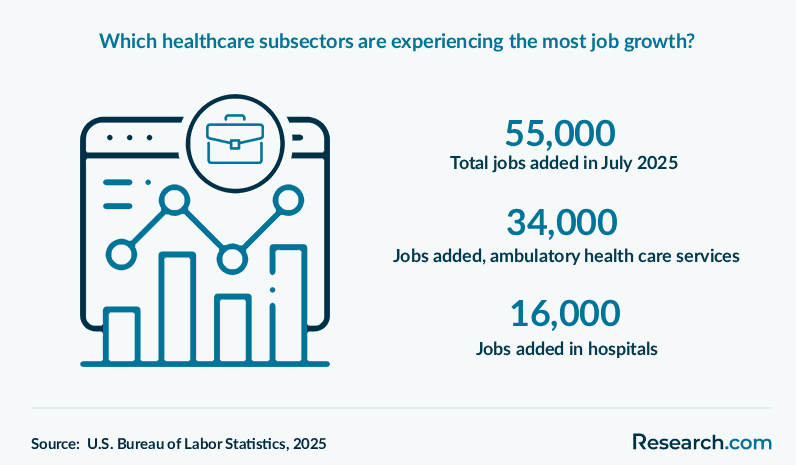
In July 2025, the U.S. healthcare sector added 55,000 jobs, well above the 12-month average of 42,000. Ambulatory health care services led with 34,000 new positions, hospitals added 16,000, and nursing and residential care facilities gained 6,000. The graphic below shows why healthcare remains one of the most employment-resilient sectors, while also revealing that growth is not evenly distributed across every setting.
Alternative Career Paths for Health Science Majors
Not every health science major becomes a clinician. Many graduates use their background in anatomy, healthcare systems, medical terminology, research methods, and public health to move into analytical, regulatory, communication, business, or advocacy roles.
| Alternative Path | What You Would Do | Useful Strengths |
| Biostatistician | Apply statistical methods to health, disease, clinical trial, and public health data | Quantitative analysis, study design, coding, research interpretation |
| Clinical Research Coordinator | Coordinate trial operations, collect data, communicate with participants, and maintain protocol compliance | Organization, ethics, patient communication, documentation |
| Epidemiologist | Study disease patterns, identify risk factors, and recommend public health interventions | Data analysis, population health, research methods |
| Genetic Counselor | Interpret genetic risks and support patients making health and family decisions | Science communication, empathy, counseling, genetics |
| Health Educator | Create programs and campaigns that teach wellness and prevention | Teaching, communication, community outreach |
| Health Informatics Specialist | Improve care delivery through health data, records systems, and analytics | Technology, workflow analysis, data governance |
| Healthcare Compliance Officer | Help organizations follow legal, ethical, privacy, and billing requirements | Detail orientation, regulation, documentation, risk management |
| Hospital Administrator | Manage finances, staffing, operations, planning, and service quality | Leadership, budgeting, communication, healthcare operations |
| Medical Sales Representative | Promote medical products, devices, or pharmaceuticals to healthcare providers | Sales, product knowledge, relationship management |
| Medical Writer | Write or edit scientific, educational, regulatory, or patient-facing medical content | Writing, research literacy, accuracy, audience awareness |
| Occupational Health Specialist | Assess workplace risks and design programs to prevent injuries and illness | Safety analysis, prevention, compliance, training |
| Patient Advocate | Help patients understand care options, communicate with providers, and access services | Empathy, communication, healthcare navigation |
| Pharmaceutical Project Manager | Oversee development timelines, budgets, teams, trials, and regulatory milestones | Project management, science literacy, coordination |
| Public Health Analyst | Use data to evaluate programs, identify trends, and improve public health policy | Analysis, policy, communication, prevention focus |
| Wellness Coach | Support clients with health goals related to exercise, nutrition, behavior, and stress | Motivation, coaching, wellness education |
If public health is your strongest interest, comparing affordable options can matter because graduate study may be part of your plan. Research.com’s guide to the cheapest online public health degree programs can help you evaluate cost-conscious routes into population health.
How Do Health Science Disciplines Differ?
Health science is not a single career lane. It is a group of disciplines that differ by setting, patient contact, scientific focus, technology use, and credential requirements. Before choosing a major or concentration, identify whether you want to work with individual patients, whole populations, health data, healthcare organizations, laboratory research, or medical technology.
| Discipline | Main Focus | Common Career Direction |
| Allied Health | Specialized support for diagnosis, treatment, rehabilitation, and patient services | Dental hygiene, radiologic technology, dietetics, therapy support |
| Biomedical Sciences | Human health, disease mechanisms, laboratory research, and treatment development | Research, graduate study, biotechnology, medicine preparation |
| Biostatistics | Statistical analysis of biological, clinical, and public health data | Clinical trials, epidemiology, research analytics |
| Clinical Psychology | Assessment, treatment, and prevention of psychological disorders | Mental health practice, research, counseling-related pathways |
| Health Administration | Business, management, finance, operations, and policy in healthcare organizations | Healthcare management, hospital administration, clinic leadership |
| Health Informatics | Healthcare data, electronic records, information systems, analytics, and security | Health IT, clinical data, informatics management |
| Kinesiology | Human movement, exercise science, biomechanics, and performance | Physical therapy preparation, sports medicine, exercise physiology |
| Medical Physics | Physics applications in imaging, radiation oncology, and nuclear medicine | Radiation therapy planning, imaging science, clinical physics |
| Medicine | Diagnosis, treatment, and prevention of disease in individual patients | Physician, surgeon, specialist |
| Public Health | Population-level health, disease prevention, policy, epidemiology, and health education | Community health, government agencies, nonprofits, global health |
| Therapeutic Services | Recovery, function, rehabilitation, and hands-on patient support | Physical therapy, occupational therapy, speech-language pathology |
Students aiming for management roles may prefer health administration over a heavily clinical major. Those who already work in healthcare and want to move faster into leadership can compare accelerated healthcare administration degree online options, while still checking accreditation, admissions standards, and employer recognition.
Common Health Science Specializations
A specialization helps you connect a broad health science degree to a clearer career outcome. It can also strengthen applications for internships, graduate programs, and entry-level roles by showing a focused area of preparation.
- Biomedical Engineering: Combines engineering and medical science to develop devices, equipment, software, and assistive technologies.
- Epidemiology: Studies how diseases spread, which populations are affected, and which interventions can reduce risk.
- Genetics: Focuses on inherited conditions, genetic testing, counseling, and genetic research.
- Gerontology: Examines health, social, policy, and care issues related to aging. Students interested in older adult services can explore careers in gerontology as the U.S. population ages.
- Health and Wellness Services: Prepares students for health promotion, wellness programming, nonprofit work, and prevention-focused services.
- Health Education: Trains students to design, deliver, and evaluate health education programs for communities and organizations.
- Leadership and Policy: Builds preparation in healthcare management, finance, health systems, informatics, and policy decision-making.
- Medical Dosimetry: Focuses on calculating and planning radiation doses used in cancer treatment.
- Neuroscience: Studies the brain, nervous system, neurological conditions, cognition, and behavior.
- Nutrition and Dietetics: Prepares students to understand diet, health, nutrition planning, and food-related disease prevention.
- Pre-Professional: Supports students planning to apply to medical, dental, pharmacy, or other professional programs.
- Public Health Nursing: Connects nursing practice with community health, prevention, education, and population-level interventions.
- Rehabilitation Sciences: Prepares students for therapy-related careers focused on mobility, function, prosthetics, orthotics, and recovery.
Internship and Research Opportunities in Health Science
Internships, shadowing, research assistantships, and clinical exposure can be decisive in health science. They help students test career fit, build references, develop practical skills, and strengthen applications for graduate or professional programs.
- American Medical Student Association International Health Opportunities: The American Medical Student Association offers resources for students exploring clinical and global health experiences, including options such as observerships.
- Camp Cardiac and Camp Neuro: These programs, run by local medical students, introduce high school students to medical and neuroscience-related careers.
- CVS Health Internships: Students may find opportunities connected to pharmacy, healthcare operations, dietetics, nursing, and related areas.
- FDA Summer Student Program: This program gives students exposure to research tied to food, drug, and public health safety.
- Hospital and Clinic Internships: Local hospitals, physician offices, and clinics may offer shadowing, volunteer, administrative, or patient-support experiences.
- Mayo Clinic Internships: Mayo Clinic offers opportunities in areas such as biomedical statistics, informatics, clinical exercise physiology, and engineering.
- NIH Summer Internship Program in Biomedical Research: Students can work with researchers at the National Institutes of Health in biomedical research settings.
- Nonprofit Organizations: Groups such as the American Heart Association and Planned Parenthood may offer internships in outreach, education, advocacy, and research.
- Pharmaceutical and Medical Device Companies: Companies in these sectors may offer co-ops or internships in research, sales, marketing, regulatory affairs, and product development.
- Public Health Student Intern Program: The Health Resources and Services Administration offers a one-semester rotation through different bureaus and offices.
- University-Based Research: Students can work with faculty, graduate students, labs, and clinical research teams on studies related to health and medicine.
When evaluating opportunities, ask what you will actually do. Observing professionals is useful, but roles that involve data collection, patient interaction, documentation, lab methods, community outreach, or project coordination can create stronger evidence of readiness.
Which Universities Offer Strong Health Science Programs?
Universities with strong health science ecosystems often provide access to research labs, academic medical centers, public health schools, faculty mentorship, clinical partnerships, and interdisciplinary programs. A school’s reputation can help, but it should not replace a careful review of accreditation, prerequisites, graduate placement, advising, costs, and experiential learning.
- Brown University: Offers interdisciplinary health science study within an Ivy League academic environment.
- Columbia University: Provides health science and public health pathways, including a combined MD-MPH option.
- Duke University: Known for competitive medical and health science programs with a strong research orientation.
- Johns Hopkins University: Recognized for medical and public health strength, with extensive research opportunities.
- Stanford University: Offers competitive health science programs shaped by research, innovation, and a broad alumni network.
- University of California System: UCLA and UC Berkeley are among the institutions known for research depth, competitive programs, and clinical training opportunities.
- University of Florida: Provides health science study connected to UF Health and related research opportunities.
- University of Michigan: Combines public university scale with strong academic programs and clinical partnerships.
- University of North Carolina System: Offers accredited health science degrees with research and clinical training supported by hospital partnerships.
- University of Texas System: Includes institutions with access to major research centers and teaching hospitals.
- University of Washington: Known for public health and global health strengths.
- Yale University: Offers rigorous health science education and research opportunities.
If you are comparing online options, verify that the institution is properly recognized and that the program fits your career goal. Research.com’s list of accredited online degree programs can help you begin that review, but you should still confirm program-specific requirements for licensure or graduate admission.
Certifications That Can Strengthen a Health Science Career
Certifications can help health science graduates demonstrate job-ready skills, especially in areas where employers value practical knowledge in billing, coding, compliance, data, project management, or clinical support. They are not substitutes for licenses in regulated professions, but they can improve credibility for certain roles and help career changers show focused preparation.
For example, students interested in administrative healthcare roles may compare affordable medical billing and coding certification courses to build practical knowledge in documentation, reimbursement, and coding workflows. Before enrolling, check whether the certification is recognized by employers in your target area and whether it aligns with your desired role.
How to Choose the Right Health Science Career Path
The best health science path is the one that matches your goals and constraints, not simply the one with the highest listed salary. Use the questions below to narrow your options before committing to a degree or graduate program.
| Decision Factor | Ask Yourself | Why It Matters |
| Length of training | Am I prepared for graduate school, residency, or professional doctorate requirements? | High-paying clinical careers often require long timelines and competitive admissions. |
| Patient contact | Do I want daily patient interaction, occasional patient contact, or no clinical care? | Health science includes both hands-on care and non-clinical roles. |
| Stress tolerance | Can I handle emergency, surgical, intensive care, or emotionally difficult situations? | Some roles offer high pay partly because they carry high responsibility and pressure. |
| Licensure requirements | Will the program qualify me for the exam or license required in my state? | Completing a degree does not automatically make you eligible for every licensed role. |
| Academic strengths | Am I stronger in science labs, data analysis, communication, management, or direct care? | Your strengths should shape your discipline and specialization. |
| Work setting | Do I want hospitals, clinics, research labs, public agencies, schools, industry, or remote data work? | Workplace preferences affect job satisfaction and career fit. |
| Cost and debt | How much education can I afford, and what funding options are available? | Return on investment depends on cost, completion time, borrowing, and realistic job outcomes. |
Biggest Challenges for Health Science Students
Health science can be rewarding, but students should understand the barriers before choosing a program. The difficulty often comes from the combination of rigorous science coursework, experiential requirements, competition for graduate programs, and uncertainty about which credential is needed for each career.
- Credentialing and Licensing: Many healthcare careers require board exams, state licensure, supervised experience, or professional certification beyond the degree itself.
- Demanding Coursework: Anatomy, physiology, organic chemistry, statistics, and lab-based courses can require sustained study habits and strong time management.
- Emotional Stress: Clinical exposure may involve illness, trauma, death, family distress, and high-pressure decision-making.
- Ethical Dilemmas: Students in clinical or research settings may face issues involving consent, privacy, equity, patient autonomy, and professional boundaries.
- Financial Investment: Health science pathways can become expensive, especially when graduate or professional school is required.
- Gaining Experience: Competitive programs often expect shadowing, volunteer hours, internships, research, clinical exposure, or patient-care experience.
- High Competition: Admission to medicine, dentistry, pharmacy, physician assistant, physical therapy, and other professional programs can be selective.
- Information Overload: Students must absorb large volumes of scientific and clinical information quickly.
- Navigating Career Paths: Because the field is broad, students can lose time if they do not map prerequisites and career requirements early.
- Staying Current: Healthcare changes quickly as new research, technology, regulations, and care models emerge.
- Time Management: Students may juggle labs, lectures, clinical hours, research, work, and graduate application preparation.
- Work-Life Balance: Clinical rotations, exams, and admissions pressure can make personal balance difficult.
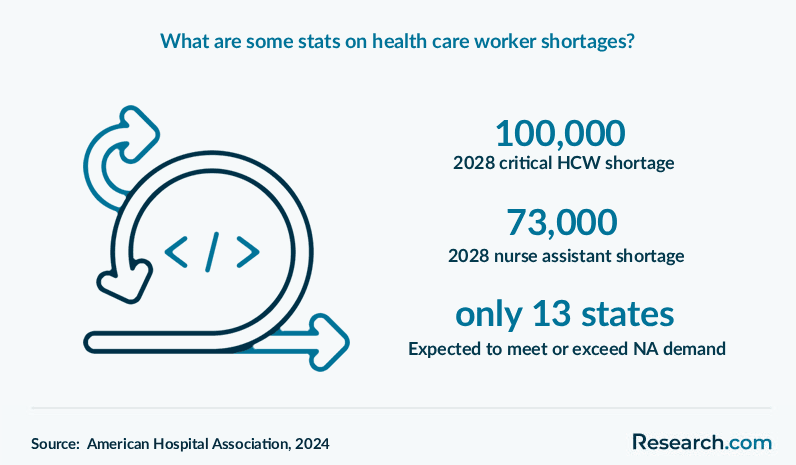
By 2028, the U.S. is projected to face a shortage of 100,000 healthcare workers, including a deficit of 73,000 nurse assistants, with only 13 states expected to meet future NA demand. Although a national surplus of 28,000 physicians is forecast, states like California (-2,580), Texas (-2,830), and New York (-2,706) are expected to experience significant physician shortfalls.
The graphic below shows why students should look beyond national averages. Workforce shortages can be highly regional, meaning job availability, competition, and access to care may vary by state, specialty, and care setting.
Biggest Opportunities for Health Science Students
Health science remains attractive because it connects stable social need with many career formats. Students can pursue clinical care, analytics, leadership, prevention, technology, research, education, or entrepreneurship without leaving the broader healthcare ecosystem.
- Career Versatility: A health science foundation can support movement between clinical, administrative, public health, research, and industry roles.
- Community Impact: Graduates can improve health through direct care, prevention programs, education, access initiatives, or policy work.
- Entrepreneurship: Health technology, wellness services, medical devices, and mobile health tools create room for innovation-minded professionals.
- Global Health Initiatives: Students interested in international work can focus on disease prevention, health systems, outbreak response, or health disparities.
- High Demand: Healthcare continues to need trained professionals across many service and support areas.
- High Earning Potential: Many advanced health science roles offer competitive compensation, especially after graduate training. Research.com provides more detail on health science salary differences by state.
- Preventive Care Growth: Wellness, chronic disease prevention, public health education, and population health management create opportunities beyond hospitals.
- Interdisciplinary Collaboration: Health science professionals increasingly work with data scientists, engineers, policy experts, social workers, and business leaders.
- Professional Development: Healthcare rewards lifelong learning because standards, tools, and treatments continue to change.
- Research and Innovation: Students can contribute to new treatments, diagnostics, medical devices, and care models.
- Technological Advancement: Medical imaging, telehealth, robotics, data platforms, and connected devices create new skill needs.
Between 2024 and 2033, U.S. National Health Expenditures (NHE) are projected to grow at an average rate of 5.8%, outpacing GDP growth of 4.3%, and raising health spending’s share of GDP from 17.6% in 2023 to 20.3% by 2033. In 2024, NHE growth hit 8.2%, driven by increased service use and a high insured rate of 92.1%, despite a 7.9% drop in Medicaid enrollment (to 84.5 million) following the end of FFCRA’s continuous coverage provision.
By 2026, direct-purchase enrollment is expected to fall by 4.7 million (12.3%) due to the expiration of IRA’s enhanced subsidies and temporary SEP.
Taken together, these trends show that healthcare spending is growing faster than the broader economy while insurance enrollment patterns continue shifting in response to federal policy changes. The graph below summarizes these expenditure and enrollment dynamics.
Current and Future Trends in Health Science
Health science careers are being reshaped by technology, workforce pressure, policy changes, and changing patient expectations. Students who combine healthcare knowledge with data literacy, communication, ethics, and adaptability will be better positioned than those who prepare for a narrow version of the field.
- 3D Printing: Custom prosthetics, surgical models, and bioprinting research are expanding how clinicians and engineers design patient-specific solutions.
- Big Data Analytics: Healthcare organizations use large datasets to study outcomes, identify risks, improve operations, and guide population health decisions.
- Blockchain in Healthcare: Some organizations are exploring blockchain for health records, billing, trial transparency, and supply chain tracking.
- Cloud Computing: Cloud-based systems support data storage, application development, scalability, and broader access to healthcare tools.
- Digital Biomarkers: Wearables and mobile apps can collect physiological signals that may support monitoring and earlier detection.
- Digital Twins: Researchers use digital models of biological systems to simulate drug effects and support pharmaceutical development.
- Focus on Health Equity: Healthcare organizations are paying more attention to social and economic factors that influence access, outcomes, and disparities.
- Healthcare Cybersecurity: As patient information becomes more digital, protecting health data from cyber threats is increasingly important.
- Integration of AI in Healthcare: AI tools are being used to support diagnostics, analyze patient information, reduce administrative burden, and improve productivity.
- Internet of Medical Things: Connected medical devices and wearables collect real-time patient data and support remote monitoring.
- Personalized Medicine: Treatments are increasingly tailored using genetic, clinical, and health data.
- Robotic Surgery: Robotic systems can support precision, control, and minimally invasive procedures in surgical settings.
- Telehealth and Remote Patient Monitoring: Virtual care and connected devices continue to affect access and care delivery. Students comparing mental health training can review how online Masters in Clinical Psychology programs address clinical practice requirements.
- Value-Based Care: Healthcare payment and delivery models increasingly emphasize quality, outcomes, and efficiency rather than volume alone.
- Virtual Reality and Augmented Reality: VR and AR are being used in medical education, rehabilitation, pain management, and simulation-based training.
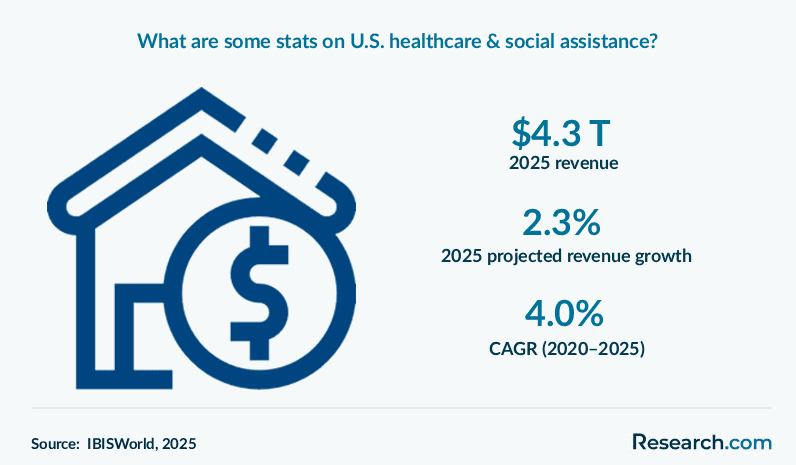
Between 2020 and 2025, U.S. healthcare and social assistance revenue grew at a 4.0% CAGR, reaching an estimated $4.3 trillion, with a projected 2.3% increase in 2025, as shown in the graphic below. Providers face persistent labor shortages, rising wage pressures, and increased consolidation, while social assistance organizations struggle to meet growing demand.
Digital health, AI, and regulatory changes are accelerating transformation in care delivery, especially in densely populated regions such as the Southeast. Even with labor, wage, and access challenges, the sector remains essential and continues to expand.
Online vs. Campus Health Science Programs: Which Is Better?
Both online and campus health science programs can be worthwhile, but they serve different students. The key is whether the format supports your intended career. A fully online program may work well for health administration, public health, informatics, or degree completion. Clinical careers usually require in-person labs, supervised practice, practicums, or rotations.
| Program Format | Advantages | Risks to Check |
| Online | Flexible scheduling, often better for working adults, can support non-clinical paths | May not include required labs, clinical placements, or licensure preparation |
| Campus | Direct access to labs, faculty, clinical sites, student organizations, and research | May be less flexible and require relocation or commuting |
| Hybrid | Combines online coursework with required in-person labs, intensives, or clinical work | Travel requirements and placement rules may vary by program |
Common Mistakes to Avoid When Choosing a Health Science Program
- Choosing a program without checking accreditation: Accreditation can affect transfer credits, graduate school eligibility, financial aid, and licensure preparation.
- Assuming every health science degree leads to a licensed clinical role: Many clinical careers require a specific professional degree, supervised hours, exam eligibility, or state approval.
- Focusing only on salary: High-paying roles may require long training, debt, night shifts, emotional pressure, or high liability.
- Ignoring prerequisites: If you plan to apply to medical, PA, PT, OT, pharmacy, or dental school, verify required courses early.
- Overlooking clinical or internship access: Experience can be critical for graduate applications and job readiness.
- Relying only on rankings: A top-ranked school is not automatically the best choice if it lacks your specialization, placement support, or affordable path.
- Assuming online programs meet licensure rules everywhere: State requirements can differ, especially for regulated health professions.
- Not comparing total cost: Tuition is only part of the financial picture; fees, commuting, supplies, exam costs, lost work time, and graduate school plans also matter.
Questions to Ask Before Enrolling
- Is the institution accredited, and is the specific program recognized for my intended career path?
- Does the curriculum include the prerequisites required for my target graduate or professional program?
- What clinical placements, internships, research opportunities, or practicum experiences are available?
- Does the program prepare graduates for any required licensure, certification, or board exam?
- What advising support exists for medical school, PA school, PT school, OT school, pharmacy school, or public health graduate programs?
- Can transfer credits, prior healthcare experience, or military training reduce the time to completion?
- What are the realistic career outcomes for graduates who do not go directly to graduate school?
- How does the program support job placement, networking, resume development, and interview preparation?
- Are online students eligible for the same services, faculty access, and experiential opportunities as campus students?
- How much will the full pathway cost if graduate school or certification is required?
What Graduates Say About Health Science Degrees
- Jenna: "My health science program helped me compare clinical and administrative options before I chose public health. I now help design community wellness programs, and I can see how the work reaches far beyond one patient at a time."
- Marcus: "Health science gave me a path into neuroscience research that I did not expect. Working in a lab focused on brain recovery after trauma gave me practical skills, stronger mentoring relationships, and a clearer graduate school plan."
- Rachel: "As a first-generation student, I was unsure where I belonged in healthcare. The health science major gave me a foundation in anatomy, patient care, and career planning, and I am now preparing for physical therapy school with more confidence."
Key Insights
- The highest-paying health science jobs are typically physician or advanced clinical roles, but they also require the longest and most competitive training paths.
- Strong-paying alternatives exist outside medical school, including CRNA, physician assistant, pharmacist, optometrist, podiatrist, perfusionist, and health services manager roles.
- A health science degree is versatile, but it is not automatically a direct route to licensure. Always verify program-specific and state-specific requirements.
- Students who want patient care should prioritize clinical experience, prerequisites, and licensure preparation. Students who prefer systems-level work should compare administration, informatics, public health, compliance, and research paths.
- Healthcare employment and spending trends show continued demand, but shortages and opportunities vary by region, occupation, and setting.
- AI, data analytics, telehealth, cybersecurity, robotics, personalized medicine, and value-based care are changing employer expectations across the health science field.
- The smartest program choice balances salary potential with training length, cost, accreditation, practical experience, career fit, and realistic next steps.
References:
- American Hospital Association. (2024, September 10). 5 health care workforce shortage takeaways for 2028. AHA Center for Health Innovation.
- Brocker, M. (2025, August). Healthcare and Social Assistance in the US – Market Research Report (2015–2030). IBISWorld.
- Centers for Medicare & Medicaid Services. (2025, June 24). National Health Expenditure Fact Sheet. U.S. Department of Health & Human Services.
- U.S. Bureau of Labor Statistics. (2025, August 8). Health care added 55,000 jobs in July 2025. The Economics Daily. U.S. Bureau of Labor Statistics.
Other Things You Should Know About Health Science Degrees
To qualify for the highest-paying health science jobs in 2027, candidates typically need a master's or doctoral degree, depending on the role. Specialized fields like anesthesiology require rigorous training and licensing exams administered by recognized medical boards.
The salary range for the highest-paying health science jobs in 2026 varies from $100,000 to $250,000 annually, depending on the specific role, level of experience, location, and additional qualifications. Positions such as physicians and dentists typically fall at the higher end of this spectrum.


