
2027 Healthcare Administrator Salary by State

Co-Founder and Chief Data Scientist
Healthcare administrators are the behind-the-scenes strategists who keep the healthcare system moving. They juggle budgets, policies, and people, all while making sure patients receive quality care. But what they earn for this demanding role largely depends on where they are.
One of the biggest factors shaping salaries is geography. States differ widely in cost of living, demand for healthcare services, and competition in the job market. These differences can make the same role far more lucrative in one region than another.
In this guide, I will break down healthcare administrator salaries by state, highlighting where professionals earn the most and why. Let’s explore how location can shape not just your paycheck, but your career path.
Key Points About Healthcare Administrator Salaries
- Top earners can make as much as $150,000 annually, reflecting the high value placed on skilled healthcare administrators.
- Employment for healthcare administrators is projected to grow 23% from 2024 to 2034, creating strong career security and opportunity.
- Beyond salary and growth, it’s a noble profession that allows you to shape patient care and improve community health on a large scale.
- How much does a Healthcare Administrator make? Average Salary
- What are the salary drivers for Healthcare Administrators? Salary Drivers
- What are the top-paying states for a Healthcare Administrator? Top-Paying States
- What are the top-paying cities for a Healthcare Administrator? Top-Paying Cities
- How much does a new Healthcare Administrator earn in their first year? Entry-Level Salary
- What are the highest-paying industries for Healthcare Administrators? Top-Paying Industries
- Which US companies pay Healthcare Administrators the most? Top-Paying Employers
- What advanced degrees can boost Healthcare Administrator salaries? What advanced degrees can boost Healthcare Administrator salaries?
- How can supplemental certificate programs enhance Healthcare Administrator career prospects? How can supplemental certificate programs enhance Healthcare Administrator career prospects?
- What industry certifications can affect Healthcare Administrator salaries? What industry certifications can affect Healthcare Administrator salaries?
- What is the outlook for Healthcare Administrator salaries in the future? What is the outlook for Healthcare Administrator salaries in the future?
How much does a Health Administrator make?
ZipRecruiter (n.d.) reports that healthcare administrators make an average of $94,295 per year, or about $45 per hour. This figure reflects the national pay scale, with some roles paying significantly more depending on scope and responsibility.
Of course, averages can shift based on factors like state, city, and type of facility. Salaries often align with the cost of living and the demand for healthcare services in a particular region. This means two administrators with the same job title might earn very different amounts depending on where they work.
Understanding the average salary helps set realistic expectations for anyone in or entering the field. For those looking to (quickly) boost earning potential, options like fast-track online MBA programs in healthcare administration can provide a competitive edge.
What are the salary drivers for Healthcare Administrators?
No two healthcare administrator roles are exactly the same, which is why salaries can differ so dramatically. An administrator running a major urban hospital faces a very different set of challenges than one managing a small rural clinic. These differences, shaped by environment, expertise, and responsibility, directly impact how much they earn.
Here are the key factors that influence healthcare administrator pay:
- State-Level Healthcare Demand: Administrators in states with high patient populations or aging demographics often command higher salaries due to greater system pressures.
- Facility Size and Complexity: Managing a large hospital with multiple departments usually pays more than overseeing a single-specialty clinic or community health center.
- Educational Pathways: Healthcare administrators with advanced credentials, such as accelerated online master of science in healthcare management, often secure higher-paying leadership roles.
- Regulatory Environment: States with stricter healthcare laws and compliance standards may offer higher compensation to attract administrators capable of navigating complex regulations.
- Specialized Services: Facilities that focus on high-revenue specialties like surgery or oncology often pay administrators more because of the financial and operational stakes involved.
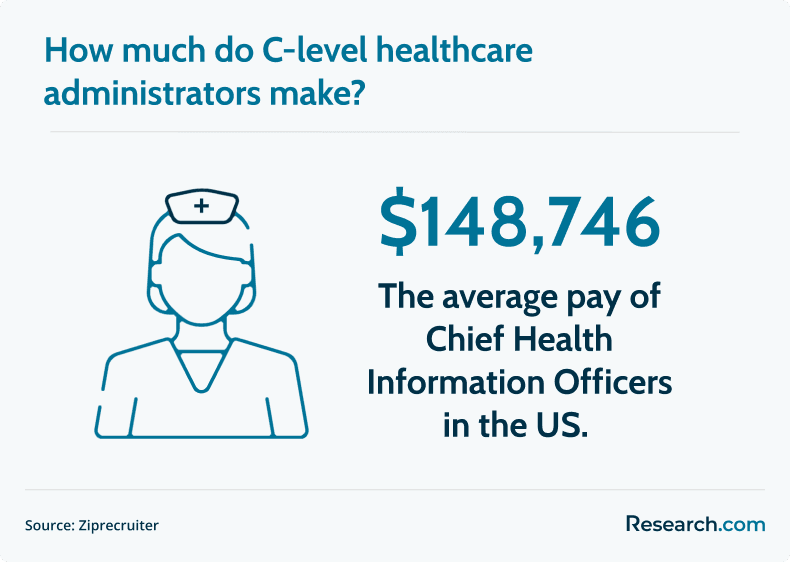
Executive roles in healthcare administration, such as Chief Health Information Officer, earn an average salary of $148,746 (ZipRecruiter, n.d.). The C-level position highlights how critical advanced expertise is in managing data, technology, and strategy in today’s healthcare systems.
This also reflects a broader trend across the field, where individuals who leverage leadership training and health systems knowledge often qualify for some of the highest paying jobs with a health science degree, particularly in hospital administration, clinical operations management, and healthcare informatics leadership.
What are the top-paying states for a Healthcare Administrator?
When it comes to healthcare administrator salaries, some states clearly stand out above the rest. On top is Nevada, where healthcare administrators earn an average of $80,693 annually or $38.79 hourly. This reflects the state’s growing demand for healthcare services and the need for skilled professionals to manage expanding facilities.
Close behind are Connecticut and Massachusetts, with average salaries of $80,584 and $79,601 respectively. Both states are known for their high concentration of hospitals, research centers, and teaching facilities, which drive up demand for experienced administrators.
Rounding out the top 5 are Maryland at $79,287 and Oregon at $78,936. Maryland benefits from its proximity to federal healthcare agencies and major medical institutions, while Oregon’s rapidly growing population creates steady demand for healthcare management.
Here’s a full breakdown of the 10 top states by pay for healthcare administrators:
What are the top-paying cities for a Healthcare Administrator?
Diving deeper into regional differences in pay, certain cities also offer significantly higher salaries for healthcare administrators due to strong demand and concentrated healthcare systems. At the top of the list is Sacramento, CA, where administrators earn an average of $80,549 annually. This reflects the city’s large healthcare network and its role as a regional medical hub.
Next is Baltimore, MD, averaging $79,604 per year, thanks to its world-renowned hospitals and research institutions like Johns Hopkins. Las Vegas, NV follows closely at $79,570, driven by rapid population growth and expanding healthcare needs in the metro area.
These variations show how location can dramatically influence hospital administration salary trends, as urban centers with large healthcare infrastructures often offer higher pay to attract experienced administrators capable of managing complex systems.
Let’s look at the full breakdown of the top 10 highest-paying cities for healthcare administrators.
How much does a new Healthcare Administrator earn in their first year?
New healthcare administrators entering the field typically earn around $49,000 annually, which equals about $24 per hour. This reflects the entry-level compensation for professionals just starting to take on management responsibilities. While lower than the national average, it provides a solid foundation for career growth.
First-year salaries often depend on factors such as the size of the facility, regional demand, and the specific responsibilities assigned. For example, administrators working in large hospitals may earn slightly more than those starting out in smaller clinics or community practices.
As administrators gain experience, pursue advanced degrees, and specialize in areas like information systems or nursing leadership, salaries increase substantially. In fact, comparing early career pay like nurse administrator salary shows how additional expertise and responsibility can quickly boost earning potential in healthcare leadership.
What are the highest-paying industries for Health Administrators?
Healthcare administrators can find opportunities across a wide range of industries, but some sectors consistently offer higher pay than others. Salaries often reflect the complexity of managing operations, the scale of facilities, and the regulatory environment. Choosing the right industry can have as much impact on long-term earnings as education or certifications.
Here are the industries where healthcare administrators earn the highest salaries, along with their annual averages:
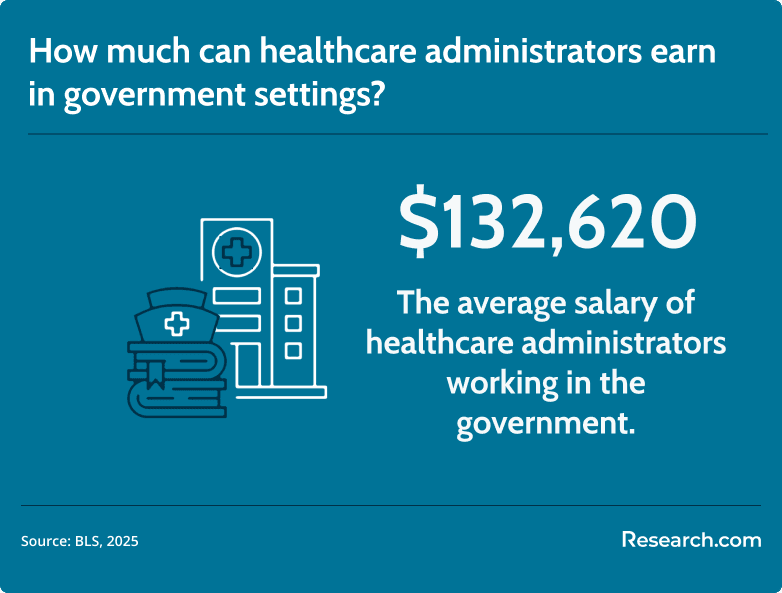
- Government ($132,620): Administrators in federal or specialized government healthcare programs command the highest salaries, often due to the complexity of oversight and policy-driven responsibilities.
- Hospitals ($130,690): Hospitals remain one of the top employers for administrators, with high pay reflecting the challenge of managing large staff, budgets, and critical patient services.
- Outpatient Care Centers ($106,990): Rapidly growing as healthcare shifts toward outpatient services, these centers offer competitive salaries to administrators who can balance efficiency with patient care.
- Offices of Physicians ($100,780): While smaller in scale than hospitals, physician group practices rely on skilled administrators to manage operations, billing, and compliance.
- Nursing and Residential Care Facilities ($99,250): These facilities require specialized leadership to meet both regulatory standards and the needs of vulnerable populations, which supports steady salaries for administrators.
Selecting the right industry is more than a salary decision; it shapes your career path and professional impact. By aligning your skills with the highest-paying sectors, you can maximize both earnings and long-term growth. Many professionals strategically pursue the best healthcare management degree that fits their career goals and target industry, since choosing a program with strong internships and administrative leadership training can directly influence opportunities and salary potential in these top-paying sectors.
Which US companies pay Healthcare Administrators the most?
Certain healthcare organizations are known for offering higher-than-average pay to attract and retain skilled administrators. These companies recognize the importance of strong leadership in keeping operations efficient and patient care at its best.
Here are the top US companies that pay healthcare administrators the most:
- One Brooklyn Health: Offers an average salary of $77,601 ($37.31 hourly), reflecting the high demand for administrators in New York’s healthcare system.
- King County: Pays around $76,016 annually ($36.55 hourly), supported by the region’s strong investment in public health infrastructure.
- Access Physical Therapy & Wellness: Provides an average of $75,182 ($36.15 hourly), showing how specialized care facilities value experienced administrators.
- Woods Services: Compensates administrators at about $75,125 per year ($36.12 hourly), emphasizing the need for effective leadership in behavioral health and social services.
- Hospice of Holland: Pays $73,843 annually ($35.50 hourly), underscoring the vital role administrators play in coordinating end-of-life care services.
If you want to explore other related career paths and their earning potential, healthcare offers many rewarding options beyond administration. For example, comparing a healthcare administrator’s earnings with a flight nurse salary provides valuable perspective on how different career paths in the industry stack up financially.
What advanced degrees can boost Healthcare Administrator salaries?
Earning an advanced degree is one of the most effective ways to increase a healthcare administrator’s salary. These programs provide specialized knowledge and leadership skills that open doors to higher-paying roles. The investment in education often leads to significant financial returns over the course of a career.
Here are some advanced degrees and how much they can boost healthcare administrator salaries:
- Master of Healthcare Administration (MHA): Raises average salaries to about $104,000 annually, representing a 10% increase over the baseline.
- Master of Business Administration (MBA) with a Healthcare Focus: Increases salaries to around $110,000 annually, a 17% boost, especially valuable for administrators in large hospitals or multi-site systems.
- Master of Public Health (MPH): Lifts average pay to approximately $101,000 annually, about a 7% increase, with strong opportunities in policy, community health, and nonprofit sectors.
- Doctor of Healthcare Administration (DHA): Can elevate salaries to $125,000 annually, a 25% increase, positioning professionals for executive-level roles.
- Doctor of Philosophy (PhD) in Health Services or Policy: Pushes salaries up to $120,000 annually, reflecting a 20% boost, often tied to leadership in research, academics, or policy organizations.
If you’re curious about clinical careers, check out our cardiac nurse salary guide to see how compensation compares across different healthcare professions.
How can supplemental certificate programs enhance Healthcare Administrator career prospects?
Healthcare administrators seeking to refine operational efficiency and boost strategic value can benefit from focused certificate programs. These programs offer hands-on expertise in areas such as revenue cycle management, digital health solutions, and compliance protocols—skills that complement advanced degrees and industry certifications. For instance, obtaining an affordable medical billing and coding certificate program can provide practical competencies that streamline billing procedures and reduce claim errors, ultimately contributing to better financial performance. This targeted education not only sustains competitive advantage but also addresses evolving industry demands and technological advancements without the extended time commitment of traditional degrees.
What industry certifications can affect Healthcare Administrator salaries?
Earning an advanced degree isn’t the only way healthcare administrators can strengthen their careers and improve their earning potential. Industry-recognized certifications provide a more specialized edge, signaling expertise in areas like healthcare management, compliance, and patient safety.
Below are some of the most impactful certifications healthcare administrators can pursue:
- Certified Medical Manager (CMM): Offered by the Professional Association of Health Care Office Management (PAHCOM), this certification validates expertise in managing medical practices.
- Certified Professional in Healthcare Quality (CPHQ): Recognized by the National Association for Healthcare Quality (NAHQ), this credential emphasizes patient safety, regulatory compliance, and quality improvement.
- Fellow of the American College of Healthcare Executives (FACHE): This prestigious certification signals executive-level knowledge and leadership in healthcare administration.
- Certified Healthcare Financial Professional (CHFP): Offered by the Healthcare Financial Management Association (HFMA), this certification is ideal for administrators with a focus on budgeting, financial strategy, and healthcare economics.
- Certified in Healthcare Compliance (CHC): Provided by the Compliance Certification Board (CCB), this certification highlights expertise in healthcare regulations and compliance.
Pursuing certifications not only enhances credibility but also opens doors to higher-paying roles and leadership opportunities. By investing in specialized credentials, healthcare administrators can set themselves apart in a competitive job market while strengthening their long-term career trajectory. This can be especially valuable for those seeking entry level healthcare administration jobs no experience, as certifications can help demonstrate readiness and professional commitment even before formal workplace experience is accumulated.
What is the outlook for Healthcare Administrator salaries in the future?
The future of healthcare administrators is defined by growth, stability, and rising salaries. Demand is accelerating as healthcare systems expand to meet the needs of aging populations and new technologies. For professionals in the field, the coming decade offers exceptional opportunities for advancement and financial reward.
Here are the key trends shaping the future outlook for healthcare administrator salaries:
- Rapid Job Growth (23% by 2034): Employment of medical and health services managers is projected to grow much faster than the average for all occupations, creating opportunities nationwide.
- 62,100 Openings Annually: On average, more than 62,000 positions will open each year, driven by retirements, career shifts, and new demand across healthcare facilities.
- Steady Salary Growth (+$13,032 in 10 Years): Over the last decade, average pay has risen by 8%, reflecting both inflation and the increased value of skilled healthcare leadership.
- Regional Comparisons Matter: Salaries vary significantly by state and city, making it important to compare local pay trends against the national average when planning your career path.
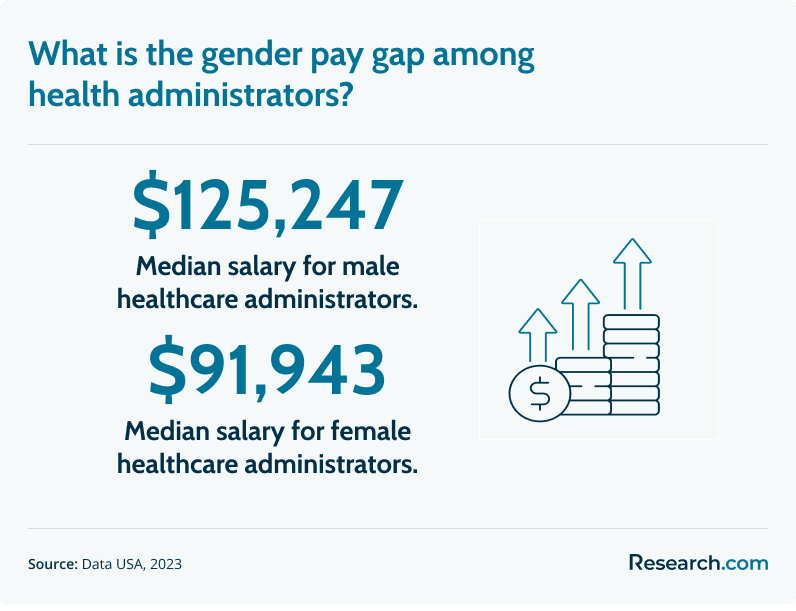
Furthermore, gender also plays a role in salary trends for healthcare administrators, highlighting an important consideration for the future of the field. Recent data shows a substantial gender pay discrepancy of $33,304 with male administrators earning an average of $125,247 and female administrators earning an average of $91,943.
Addressing this gap will be essential not only for equity but also for ensuring that healthcare leadership attracts and retains top talent across the board.
Key Findings
- Healthcare administrators make an average of $94,295 per year, or about $45 per hour.
- Recent data shows a substantial gender pay discrepancy of $33,304 with male healthcare administrators earning an average of $125,247 and female healthcare administrators earning an average of $91,943.
- The top-paying role in healthcare administration is the Chief Health Information Officer, with an average salary of $148,746.
- The highest paying state is Nevada, where healthcare administrators earn an average of $80,693 annually or $38.79 hourly
- The highest paying US city is Sacramento, CA, where healthcare administrators earn an average of $80,549 annually or $38.73 hourly.
References:
- American College of Healthcare Executives. (n.d.). Fellow of the American College of Healthcare Executives (FACHE). Ache.org. Retrieved 8 September 2025.
- Data USA. (n.d.). Medical & health services managers profile. Datausa.io. Retrieved 8 September 2025.
- Healthcare Compliance Association. (n.d.). Certified in Healthcare Compliance (CHC). Hcca-info.org. Retrieved 8 September 2025.
- Healthcare Financial Management Association. (n.d.). Certified Healthcare Financial Professional (CHFP). Hfma.org. Retrieved 8 September 2025.
- National Association for Healthcare Quality. (n.d.). Certified Professional in Healthcare Quality (CPHQ). Nahq.org. Retrieved 8 September 2025.
- Professional Association of Health Care Office Management. (n.d.). Certified Medical Manager (CMM). My.pahcom.com. Retrieved 8 September 2025.
- US Bureau of Labor Statistics. (n.d.). Medical and health services managers. U.S. Department of Labor. Bls.gov. Retrieved 8 September 2025.
- ZipRecruiter. (n.d.). Healthcare administrator salary. Ziprecruiter.com. Retrieved 8 September 2025.
- Zippia. (n.d.). Health care administrator salaries. Zippia.com. Retrieved 8 September 2025.
Other Things You Should Know About Healthcare Administrator Salaries
In 2027, a healthcare administrator's educational background significantly affects their salary. While a bachelor's degree may suffice for entry-level positions, those with a master's degree, particularly in fields like Health Administration or Business Administration, often command higher salaries, varying by state due to differing regional demands and cost of living factors.
Experience significantly impacts healthcare administrator salaries in 2027, with those having over 10 years earning up to 30% more. Salary variation also occurs state-wise, reflecting regional demand, cost of living, and healthcare facility sizes influencing pay scales.
In 2027, salaries for healthcare administrators vary based on several factors. These include the state's cost of living, demand for healthcare services, level of experience, and the specific health sector they work in. For example, administrators in states with high demand and cost of living, like California, may earn more than those in less populous states.


